
Review · MUSEUMS
Hellenic Motor Museum Entrance Ticket
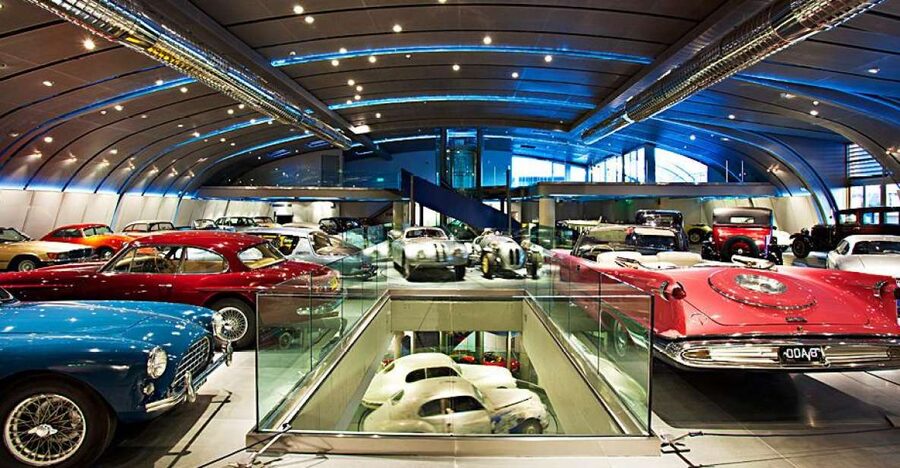
The Hellenic Motor Museum packs more than 110 cars into three floors above Capitol Mall, with everything from early motoring examples to polished classics and playful film-inspired displays. I like the unusual mix of famous marques and cars from companies that disappeared, plus the old workshop setting that makes the collection feel more hands-on than a simple row of vehicles. The museum’s rotating collection also means the exact display can change.
I especially like the history of the wheel on the spiral ramp, which begins with examples dating to 300 B.C., and the cool, air-conditioned interior on a hot Athens day. The main drawback is finding the entrance: the museum is in a building with offices, and outside signs are not especially clear. Some cars are also displayed close together, so you may not be able to see every side.
Key points to know before you go
- Three floors in central Athens: The museum occupies space in Capitol Mall at Ioulianou 33 to 35 and C’ Septemvriou 74 to 78.
- More than 110 vehicles: The display covers the 19th and 20th centuries, with rare cars from makers that no longer exist.
- A separate wheel story: The spiral ramp includes 72 wheel-related exhibits, dating from 300 B.C. through the 20th century.
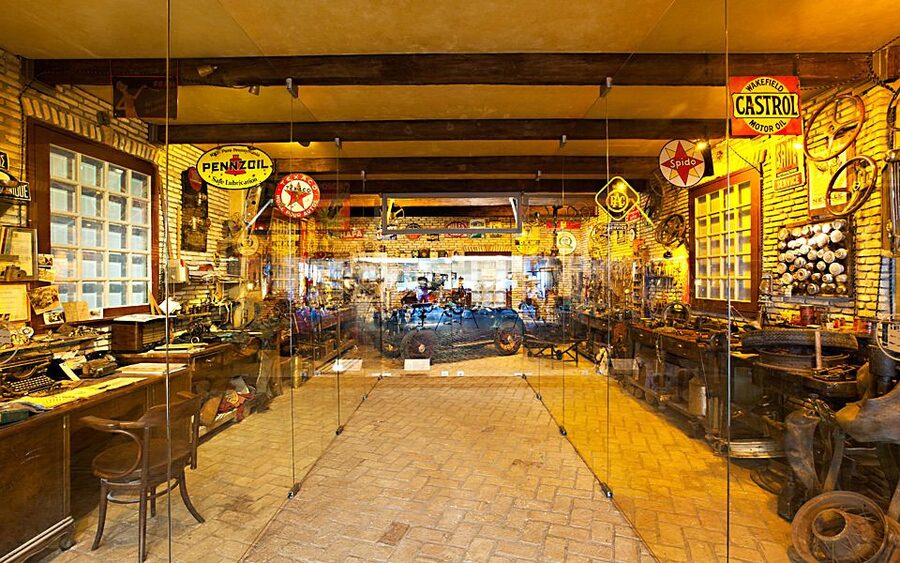
- A vintage workshop setting: You can walk through an old car workshop with its period features.
- Useful in summer: Air conditioning and bright lighting make this a practical escape from Athens heat.
- Flexible one-day admission: The $14 ticket is valid for one day, with an English audio guide and wheelchair access included.
Finding the museum above Capitol Mall
The first challenge is simply getting inside the right building. The Hellenic Motor Museum is at Ioulianou 33 to 35 and C’ Septemvriou 74 to 78 in central Athens, but the museum sits on the uppermost floor of a building that also contains offices.
I would allow a few extra minutes to get your bearings. The outside road signage is not very strong, and the museum can be easy to miss if you are expecting a large, street-level entrance. Look for Capitol Mall and follow the building access upward rather than assuming the museum will be visible from the pavement.
That slightly obscure location is also part of the appeal. You do not walk into a grand museum complex with a huge forecourt. Instead, a working city building opens onto an unexpectedly serious car collection. Once you reach the museum, the layout is easier to understand.
The museum was created by the Theodore and Joanne Charagionis Foundation in 1977. It occupies three floors, giving the collection room to cover both the machines themselves and the long development of the automobile.
More Museum Tours in Athens
- Athens: Acropolis, Parthenon & Acropolis Museum Guided Tour
★ 4.8 · 9,316 reviews - Athens: Acropolis, Parthenon & Acropolis Museum Guided Tour
★ 4.8 · 3,579 reviews - Acropolis monuments & Parthenon Walking Tour with Optional Acropolis Museum
★ 5.0 · 2,678 reviews
Starting with the wheel, from 300 B.C. onward
The museum does not treat the car as an isolated invention. As you ascend the building’s spiral ramp, you see 72 exhibits tracing the development of the wheel from 300 B.C. to the end of the 20th century.
That sequence gives the visit a useful framework. Before you reach the automobiles, you are reminded that transport developed through many small changes in design, materials, and purpose. The wheel display helps explain why the car became possible, rather than presenting it as a sudden modern miracle.
I like this part because it gives non-car enthusiasts something to follow. You do not need to recognize a particular engine or know the difference between generations of a famous model. The basic idea is clear: start with the wheel, then watch the automobile take shape.
The spiral route also breaks up what could otherwise feel like a large indoor parking area. You keep moving upward, with exhibits appearing along the ramp and on the three main museum levels. Plan to read as you go, since the written information adds context to the visual display.
Three floors of cars from famous and forgotten makers
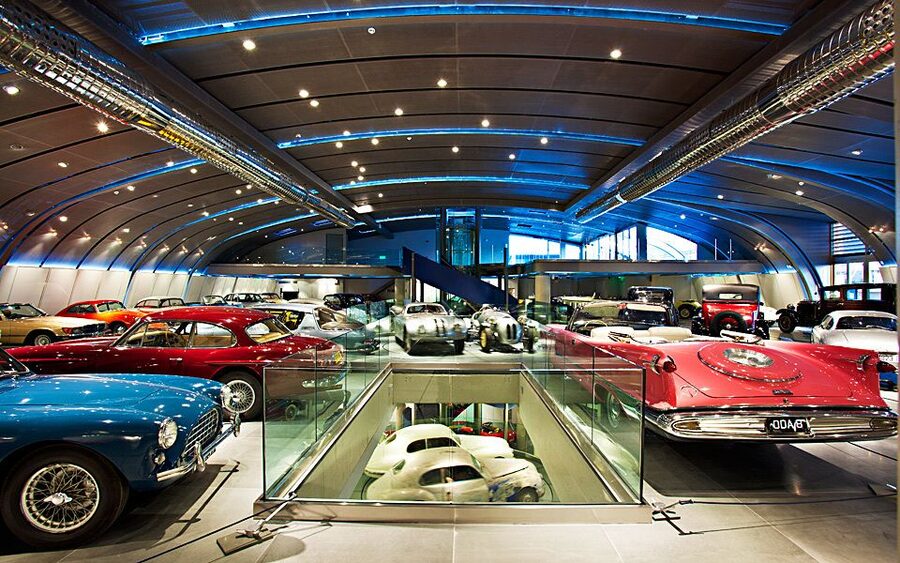
The main attraction is the collection of more than 110 vehicles from the worldwide automobile industry. The selection includes classic models from famous manufacturers, but the less familiar names may be the most interesting part.
You can see cars made by companies that no longer exist. Those vehicles show how crowded and uncertain the early motor industry was. Not every manufacturer survived, and a badge you have never heard of may represent a once-serious attempt to shape the future of transport.
The collection rotates, so the precise lineup is not fixed. That is useful if you return to Athens, but it also means you should not assume every car pictured elsewhere will be on display during your visit. The main promise is variety across the 19th and 20th centuries, not one permanent list of models.
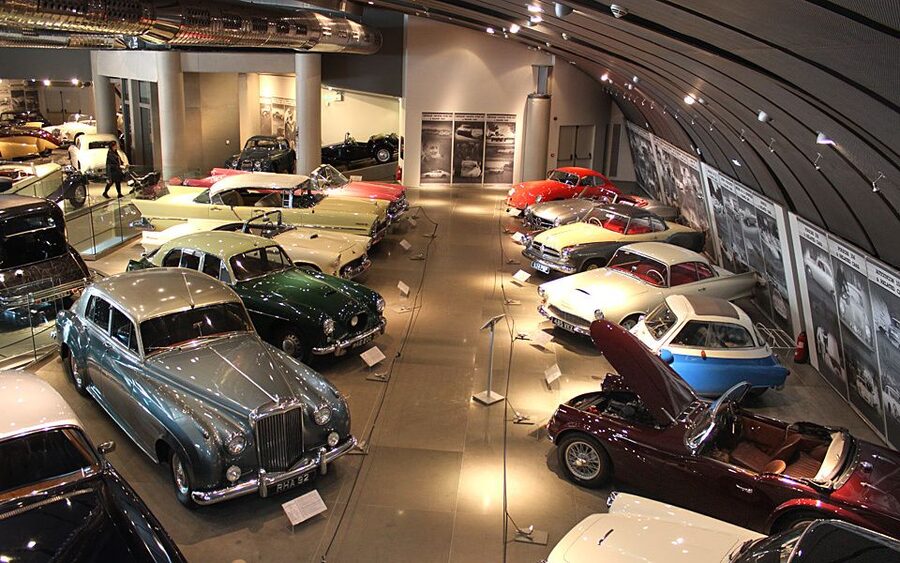
The cars are neatly arranged and well maintained. Bright lighting helps you study body shapes, interiors, and details without the dim conditions found in some older museums. The layout is attractive for photographs, although the close spacing has a practical downside. A few vehicles can be viewed mainly from the front, with limited room to walk around them.
If you are a serious automobile enthusiast, that may bother you more than it would a casual visitor. You will want to inspect every angle, while a family visit may be perfectly happy with the broad range of shapes, colors, and eras.
Rare marques and memorable display pieces
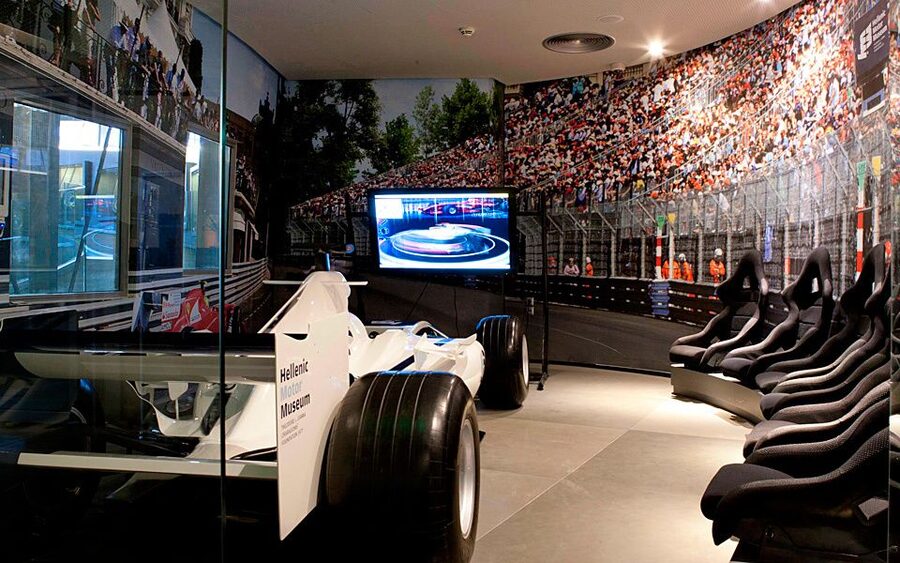
The appeal here is not limited to the best-known Italian, German, British, or American names. The museum’s extinct manufacturers give the collection a sense of discovery. You may recognize a celebrated carmaker, then find yourself more curious about the badge you have never seen before.
One especially eye-catching model is a Ferrari Testarossa. It gives the collection a strong classic performance-car moment, even if you arrive hoping to see a larger selection of Italian classics. The Testarossa is the sort of car that can hold attention on its own, with its unmistakable shape and place in popular car culture.
The museum also includes lighter, more familiar references. Lightning McQueen and the Flintstones Mobile add humor to the display and can help younger children connect with the subject. These pieces do not replace the historical exhibits, but they keep the museum from feeling too serious or technical.
That balance matters if you are visiting with family. One person can focus on engineering and design while another looks for the most recognizable or unusual vehicle. You may not share the same favorite car, but the collection gives you plenty of possible entry points.
Close by, and nothing like it:
- Athens: Acropolis & up to 5 Archaeological Sites Combo Pass
★ 4.4 · 12,619 reviews - Athens: Acropolis Ticket with Optional Audio or Live Guide
★ 4.2 · 11,055 reviews - Athens: Acropolis and Parthenon Guided Walking Tour
★ 4.6 · 5,882 reviews - Athens, Piraeus, and Coastline: Blue Hop-On Hop-Off Bus
★ 3.9 · 4,849 reviews
Walking through the old car workshop
The old car workshop is one of the museum’s most effective settings. Rather than showing vehicles as isolated sculptures, it gives you a glimpse of the environment in which cars were repaired and maintained.
You can walk through the workshop and see its features as part of the museum visit. The setting adds practical context: cars were not only symbols of speed or status, they were machines that needed regular work, tools, and skilled hands.
For me, this is valuable because it changes the mood of the visit. The polished display cars can seem almost too perfect. The workshop brings back the messier, more practical side of motoring and helps connect the vehicles to everyday mechanical work.
The supplied information does not promise a working demonstration or an active repair session, so I would treat this as a preserved display rather than a live workshop. Still, it is a worthwhile stop, especially if you enjoy machinery and want more than a line of finished cars.
How long to allow for the visit
The ticket is valid for one day, but most people can make the museum a compact Athens stop. A visit of around an hour is realistic if you move steadily through the three floors. You can stay longer if you read the descriptions closely, use the audio guide, and examine the cars from different angles.
The one-day validity gives you flexibility. You do not need to turn the museum into an all-day commitment, and you can fit it around other central Athens plans. If the heat is intense, it also works well as a planned indoor pause rather than an afterthought.
Opening hours are Monday through Friday from 10:00 to 17:00, and Saturday and Sunday from 11:00 to 18:00. Last admission is 30 minutes before closing, so do not arrive at the final moment and expect the full visit.
The museum is closed on January 1, January 6, Easter Sunday, Easter Monday, August 15, and December 25. Check the date carefully if your Athens trip falls near a Greek public holiday or major religious celebration.
Is $14 good value in Athens?
At $14 per person, the ticket is reasonably priced for a specialist museum with more than 110 vehicles, three floors, an audio guide, and an unusual wheel display. I would consider it good value if you have a real interest in cars, design, engineering, or industrial history.
The value is also strong for families. The collection offers enough visual variety to hold attention, and the Lightning McQueen and Flintstones Mobile displays add an easy point of recognition for children. The air conditioning can be a practical benefit, not just a comfort, during a hot Athens afternoon.
You may find the price less compelling if you are only mildly curious and have a packed sightseeing schedule. This is not a major archaeological site, and the visit will not replace Athens’ ancient monuments. It works best as a focused museum stop, a break from the sun, or an activity chosen by someone in your group who genuinely likes cars.
The included English audio guide adds useful value, especially if you want more explanation than the labels provide. English and Greek are available for the museum experience, and the host or greeter can speak English or Greek.
Accessibility and practical comfort
The museum is wheelchair accessible, which makes the three-floor layout more usable for a wider range of visitors. The building’s vertical design and spiral ramp are central to the presentation, so accessibility is an important practical detail rather than a minor extra.
The bright lighting makes the exhibits easy to see. Air conditioning is another advantage in summer, when a cool indoor museum can restore your energy after walking around Athens.
Food and drinks are not included. Hotel pickup and drop-off are also not part of the ticket, so you arrange your own way to the address. This is a straightforward admission ticket rather than a guided city tour with transport.
Free cancellation is available up to 24 hours before the visit for a full refund. You can also reserve now and pay later, which helps if your Athens schedule is still changing. The ticket itself is valid for one day, with starting times dependent on availability.
Who will enjoy the Hellenic Motor Museum most?
I would recommend this museum first to car enthusiasts, especially anyone interested in classic design, extinct manufacturers, and the way automobiles changed across the 19th and 20th centuries.
It also suits:
- Families looking for an indoor Athens activity
- Visitors who need a cool break from the summer heat
- People curious about engineering and industrial design
- Anyone who enjoys unusual museum collections
- Couples where one person loves cars and the other is not normally a car-museum regular
The museum may be less suitable if you want a large, open display with plenty of space around every vehicle. The cars are arranged fairly close together, and some are easier to see from the front than from the sides or rear.
You should also know that the museum is not presented as a guided walking tour. The audio guide is in English, while hosts or greeters speak English and Greek. That gives you independence, but you should expect to set your own pace and choose how much information to absorb.
Should you book this Athens museum ticket?
Book it if you want a well-kept car collection with more range than the usual famous classics. The extinct marques, the 72 wheel exhibits, and the old workshop give the visit more substance than a simple showroom.
I would also book it as a smart hot-weather stop, particularly if you are traveling with children or with someone who needs an hour away from Athens’ busy streets. At $14, the combination of three floors, more than 110 vehicles, air conditioning, accessibility, and an English audio guide is solid value.
Skip it if your schedule is already crowded with Athens’ major ancient sites and nobody in your group has much interest in automobiles. Also allow extra time to locate the entrance, and do not expect every car to have generous viewing space.
FAQ
Where is the Hellenic Motor Museum?
The museum is at Ioulianou 33 to 35 and C’ Septemvriou 74 to 78 in Athens, inside Capitol Mall.
How much does admission cost?
The entrance ticket costs $14 per person.
How many cars are on display?
The museum displays more than 110 vehicles from the global automobile industry. The collection rotates, so the exact cars may change.
What are the museum opening hours?
It is open Monday through Friday from 10:00 to 17:00, and Saturday and Sunday from 11:00 to 18:00. Last admission is 30 minutes before closing.
Is an audio guide included?
Yes. An English audio guide is included with admission. Hosts or greeters speak English and Greek.
Is the museum wheelchair accessible?
Yes, the Hellenic Motor Museum is wheelchair accessible.
New on the Athens shelf
- Acropolis of Athens, Parthenon and Acropolis Museum private tour with dinner★ 5.0 · 77 reviews
- Small-Group Wine Tour in Athens with Tasting★ 5.0 · 33 reviews
- Private Athens Transfer Airport/Port -Greek Tours-Hourly service★ 5.0 · 88 reviews
- VIP Private Guided Tour of Athens Acropolis & Plaka in a Sidecar★ 5.0 · 108 reviews
- Athens Moonlight Waling Tour with Drinks and Meze Dishes★ 5.0 · 259 reviews
- Private Athens Landmarks Layover Tour★ 4.5 · 41 reviews
- Departure Transfer from Athens City to Athens Airport★ 5.0 · 41 reviews
- Mercedes Transfer Athens Airport★ 5.0 · 26 reviews
Museums, compared.
Mythology of Delphi, Museum and Arachova Guided Tour
Read our verdict →
Acropolis, Parthenon & Acropolis Museum Guided Tour
Read our verdict →
Acropolis monuments & Parthenon Walking Tour with Optional Acropolis Museum
Read our verdict →
Athens All Included: Acropolis and Museum Guided Tour with Ticket
Read our verdict →
Acropolis Museum Ticket with optional Audio Guide
Read our verdict →
Small-Group Delphi, Museum & Arachova Day Trip
Read our verdict →
Parthenon & Acropolis Museum with Audio or Live Tour Option
Read our verdict →
Acropolis, Parthenon and Acropolis Museum Guided Tour
Read our verdict →Browse the lists this tour appears in