
Review · ACROPOLIS TOURS
Athens: Acropolis, Parthenon and Acropolis Museum Guided Tour
The best thing about this tour is the way it connects the stones on the hill with the original art displayed below. You see the Parthenon, Erechtheion, and Propylaea in place, then examine the statues and frieze pieces that make their design easier to understand. The guide turns scattered ruins into a story, with mythology, politics, religion, and daily life all tied together.
I like the central meeting point near the Acropolis Metro and the steady pace, with pauses for photos, questions, and rest. I also like the guide quality: Angel, Maria, Natasha, Bernie, Chrysa, and others are praised for clear explanations, humor, and a knack for answering questions. The main drawback is the limited time inside the museum for anyone who wants to study every gallery at leisure, plus the steep, slippery climb to the Acropolis.
Key points before you book
- Museum and hill in one half-day: See the Acropolis monuments and original objects in roughly 3 to 4 hours.
- Strong guide-led experience: Expect mythology, archaeology, architecture, and stories about changing uses of the Acropolis.
- Central check-in: Meet at Mitseon 2, a short walk from the Acropolis Metro station.
- Ticket choice matters: The $41.12 base price may not include the €30 Acropolis ticket and €20 museum ticket.
- A real uphill walk: Wear firm, comfortable shoes and carry water, a hat, sunglasses, or rain protection.
- Maximum group of 24: Large enough to be social, but still manageable for a guided visit.
Why the Acropolis makes more sense with a guide
You can walk up the Acropolis on your own, take photos, and admire the view. What you may miss are the connections: why the Parthenon was built, how the hill changed over time, what the temples meant to ancient Athenians, and why the museum displays replicas beside original pieces.
This tour gives you that framework. Guides explain the Acropolis as more than a collection of white marble columns. The monuments reflect fifth-century B.C. Athens, the age of Pericles, when the city promoted democracy, military power, religious devotion, and artistic skill at the same time.
The strongest guides make the information easy to follow. Angel is praised for mixing humor with solid facts. Natasha brings mythology and religion to life. Maria is described as friendly, timely, and especially good at explaining the theaters and temples. Bernie uses archaeology and human stories to make complicated subjects feel approachable. Your guide will vary, but the general style is lively and question-friendly.
That matters because the Acropolis can be crowded and visually overwhelming. A guide helps you know where to look, what you are seeing, and why a broken wall or half-visible carving deserves your attention.
More Museum Tours in Athens
- Athens: Acropolis, Parthenon & Acropolis Museum Guided Tour
★ 4.8 · 9,316 reviews - Athens: Acropolis, Parthenon & Acropolis Museum Guided Tour
★ 4.8 · 3,579 reviews - Acropolis monuments & Parthenon Walking Tour with Optional Acropolis Museum
★ 5.0 · 2,678 reviews
Starting near Acropolis Metro
You meet at the Athenian Tours office at Mitseon 2, Athens 117 42, at least 15 minutes before departure. The location is close to the Acropolis Metro station and is described as easy to find, which is useful when you have an early entry time and no patience for a last-minute hunt through city streets.
Punctuality is important. Acropolis entry times are fixed, and late arrivals cannot be accommodated or refunded. If you are coming from the Port of Piraeus, allow 30 to 40 minutes by taxi, with extra time during morning traffic.
The tour does not include hotel pickup or drop-off. That is normal for a central Athens walking tour, but you should plan your route before leaving your hotel. The end point is at the Acropolis Museum on Dionysiou Areopagitou Street.
The group can include up to 24 people. That is not a private visit, so you will be sharing stops and explanations with others. Still, the size is reasonable for a major site, especially when the guide keeps the group together and pauses at set points.
The climb begins at the Theater of Dionysus
The route takes you uphill through the southern side of the Acropolis, beginning near the Theater of Dionysus. This is one of the most important stops for understanding Greek drama. Ancient comedies and tragedies were performed here, and the theater connects the Acropolis to the civic and religious life of Athens.
This is not simply a quick photo stop. Your guide can explain how drama, festivals, religion, and public life overlapped in ancient Athens. It gives the climb a human beginning before you reach the grand marble monuments above.
The path is uphill and can feel demanding in hot weather. The Acropolis is a steep archaeological site, and some surfaces become slippery when wet. You should wear shoes with a firm sole rather than smooth casual footwear.
There are rest pauses along the way. Use the restroom during the offered break because facilities are limited once you are on the hill. There are no cafés inside the site, although a water fountain is available. Bring your own water, particularly in warm months.
Herodes Atticus and the approach to the summit
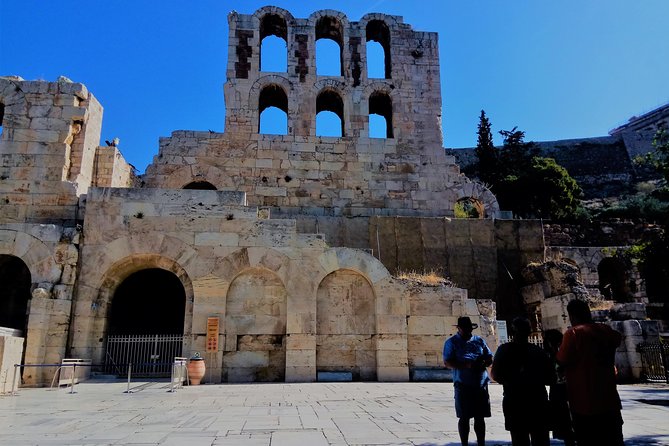
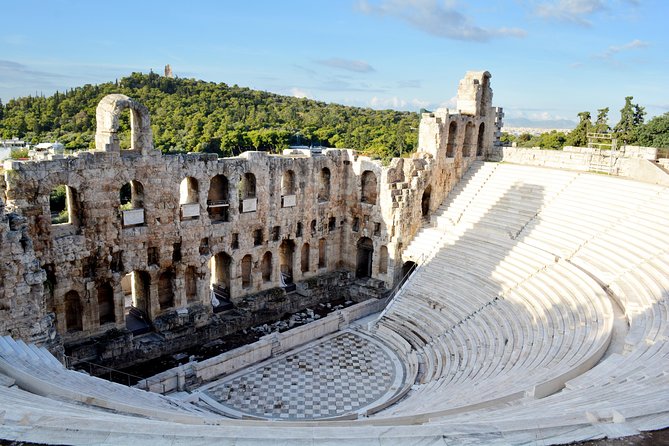
The next major sight is the Odeon of Herodes Atticus, often called the Herodion. This Roman theater was built in memory of the wife of Herodes Atticus and remains one of the most striking structures on the southern slope.
The theater is still used for performances, but the guided stop focuses on its ancient setting and design. From the approach, you get a strong sense of how the Acropolis rises above the city. It is also a good place to pause before the final climb.
Your guide may adjust the order of the sites to make the route more comfortable. That flexibility is useful when heat, crowd levels, or entry procedures affect the flow. Do not expect the tour to follow every stop in a rigid sequence.
The climb itself is part of the experience. It gives you time to see the hill from different angles, but it is not suitable for everyone. The group tour does not permit elevator use at the Acropolis, and the activity is not suitable for people with mobility impairments or children under six.
More Acropolis tickets and guided visits:
- Athens: Acropolis & up to 5 Archaeological Sites Combo Pass
★ 4.4 · 12,619 reviews - Athens: Acropolis Ticket with Optional Audio or Live Guide
★ 4.2 · 11,055 reviews - Athens: Acropolis and Parthenon Guided Walking Tour
★ 4.6 · 5,882 reviews - Athens: Acropolis Ticket with Audio Guide
★ 4.0 · 3,575 reviews
Propylaea, Temple of Athena Nike, and the first great view
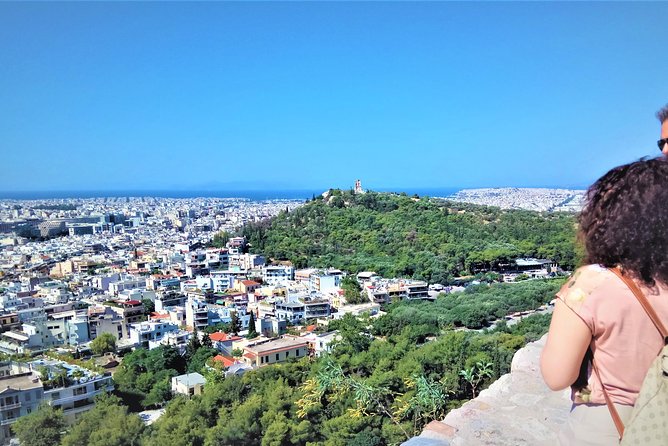
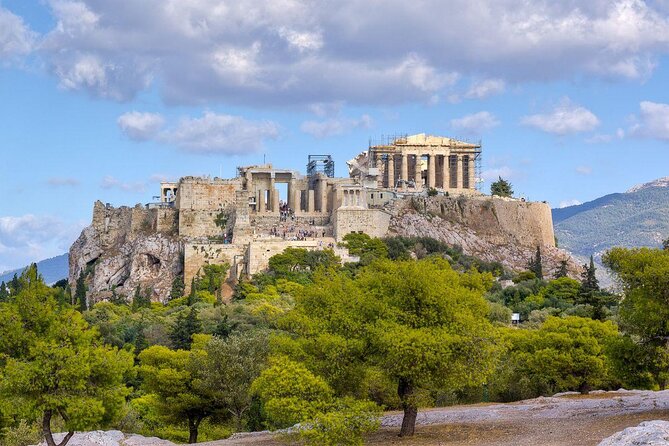
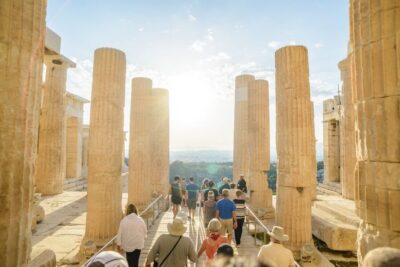
At the top, you pass through the Propylaea, the monumental gateway to the Acropolis. Its scale prepares you for the temples beyond. Even in a partly ruined state, the gateway shows how carefully the ancient builders controlled movement into the sacred area.
Nearby is the Temple of Athena Nike, a small but elegant temple linked to victory. It sits by the entrance, so you may see it before fully entering the main plateau. Your guide can help you spot details that are easy to miss while the group is moving through the gateway.
The views from the top are a major reward for the climb. Athens spreads around the hill, and the height helps you understand why this location mattered for religion, defense, identity, and civic pride. Bring sunglasses and a hat in bright weather. In winter, the top can feel cold and windy, so pack an extra layer.
Audio can occasionally be affected by equipment used by nearby groups. Your guide may need to gather everyone close or repeat a point. Staying near the guide is wise, especially at crowded stops.
The Parthenon and the symbol of Athens
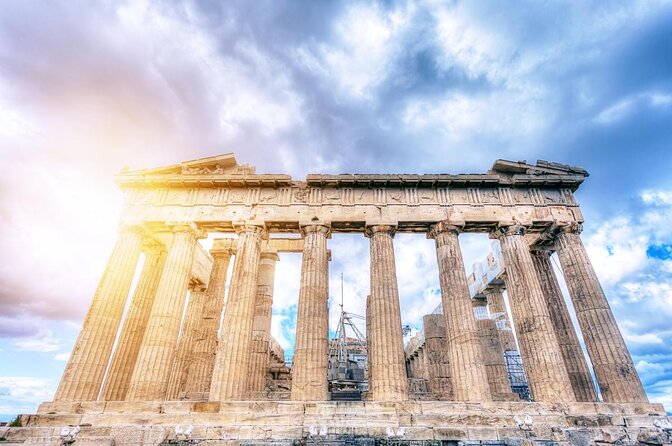
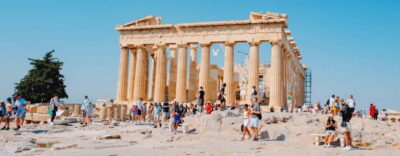
The Parthenon is the center of attention, and rightly so. Dedicated to Athena, the city’s patron goddess, it represents the high point of fifth-century B.C. Doric architecture.
You will not walk inside the temple, and restoration work and barriers shape the viewing areas. Even so, the building is impressive at close range. Look beyond its size. The columns, proportions, sculptural program, and careful visual corrections show how much thought went into making the structure appear balanced.
A guide adds useful context here. The Parthenon was not built as a detached art object. It belonged to a working religious complex and carried messages about Athens, Athena, victory, and civic power. The explanations also help you separate what is ancient from what has been repaired or reconstructed.
Crowds are a practical concern. The site can become packed, particularly during popular time slots. The tour cannot skip the security or entry lines at the Acropolis, even though some ticket arrangements skip the ticket-office line. This distinction is important when comparing options.
The Erechtheion and its famous Caryatids

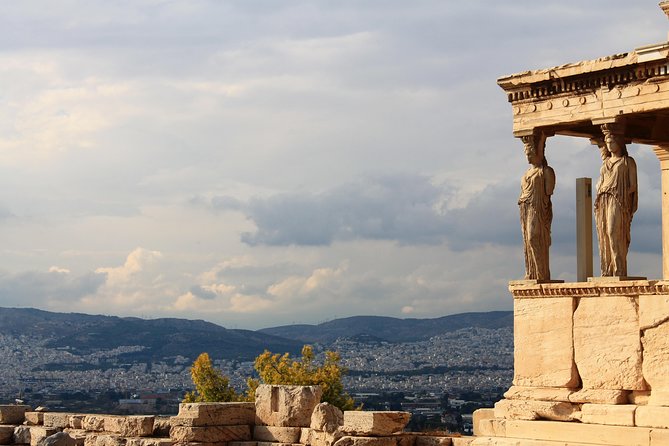
The Erechtheion is one of the most interesting buildings on the hill because it does not have the straightforward shape of the Parthenon. Its uneven plan reflects the difficult terrain and the many sacred traditions attached to this part of the Acropolis.
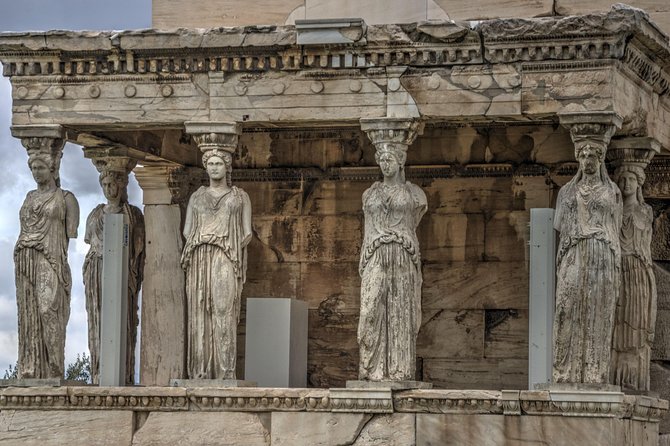
The best-known feature is the Porch of the Caryatids, supported by six sculpted female figures. The figures you see outside are copies, while the originals are protected in the Acropolis Museum. That fact gives the later museum visit a clear purpose.
Your guide will likely explain the connection between the Erechtheion, Athena, Poseidon, and the old religious traditions of Athens. This is where mythology becomes especially useful. The stories are not just entertaining extras. They help explain why several sacred places and traditions were gathered within one unusual structure.
Allow time for photos, but listen before moving on. The Caryatids are easy to photograph, yet their meaning, posture, and architectural role are more interesting than a quick snapshot.
The Acropolis Museum puts the ruins back together
After the hill, the tour continues a few minutes downhill to the Acropolis Museum. This change of setting is one of the strongest parts of the experience. On the rock, you see weathered structures and open spaces. In the museum, you see original sculptures, architectural pieces, and objects protected from the elements.
The lower galleries introduce everyday Athenian life. Displays cover wedding customs, children’s toys, healing methods, and religious practices. These objects broaden the story beyond famous temples. You begin to picture the people who lived, prayed, worked, and raised families in the city.
On the first floor, the archaic statues from the sixth century B.C. are the main attraction. Their formal poses and patterned hair look different from the later classical sculptures associated with the Acropolis. The contrast helps you see how Greek art changed over time rather than treating ancient Greece as one unchanging period.
You also see original Caryatids and large pieces connected to the Acropolis entrance. Seeing the originals after the hill is especially useful. It explains why some objects are absent from the outdoor monuments and why museum protection matters.
The top floor presents the Parthenon frieze, along with views back toward the Acropolis. This is the moment when the two halves of the tour come together. You have seen the temple from outside, and now you can examine the sculpted program at close range.
The museum portion is guided, but the schedule is not designed for an entire day of independent study. Some people find the pace just right for a first visit. If you want to read every label and spend long periods with individual sculptures, you may want to return to the museum later on your own.
You can stay longer in the museum after the guided portion ends, according to the tour information. That gives you some breathing room, though the main guided experience still fits into a half-day schedule.
What the $41.12 price really means
The advertised price of $41.12 per person can be good value if it includes the admission option you select. A licensed English-speaking guide, a 3 to 4-hour route, two major Athens sights, and organized timed entry make this more useful than simply paying for a guide at the gate.
Read the ticket choice carefully. The base option may be without entrance tickets. In that case, the stated adult prices are €30 for the Acropolis and €20 for the museum, or €50 total. You must arrange the correct time slot in advance or notify the operator at least 24 hours ahead if you want the company to reserve and provide the tickets.
If tickets are included in your selected option, the guide hands them over at the meeting point. If you book without tickets, ask for the correct entry time before buying them yourself. This is not a detail to leave until the morning of the tour.
The value is strongest for a first visit, for anyone who prefers clear explanations, and for people who do not want to research the monuments in advance. It is less compelling if you already know the Acropolis well or want to spend most of the day alone inside the museum.
Group discounts are available, and private tours offer a more flexible starting time. Free-entry days may also affect the price, with tour prices adjusted when the sites offer complimentary admission.
Who should book this half-day tour
I would choose this for a first Athens visit, especially if you want the main ancient sights explained without giving up an entire day. The route combines the headline monuments with smaller stops that you might otherwise rush past.
It also suits people who learn best through stories. The guides regularly use mythology, humor, historical periods, and everyday details rather than delivering only dates and architectural terms. Guides such as Chrysa and Jon are praised for keeping a comfortable pace while leaving room for questions and photos.
You should think twice if steep hills are difficult for you, if you need elevator access, or if you strongly prefer an independent visit. You should also reconsider the basic ticket option unless you are prepared to handle timed admission rules yourself.
Go early if you can choose among available times. Morning visits can reduce heat and may feel less crowded. January has been described as a calmer period, though winter weather can be cold and windy at the summit.
Bring comfortable shoes, water, sun protection, and rain gear if the forecast calls for showers. There are rest pauses, but this is still a walking tour on uneven ancient ground.
Should you book it?
Book this tour if you want the Acropolis and museum to make sense as one connected story. The guide is the main reason to choose it, and the repeated praise for clear explanations, humor, patience, and strong historical storytelling suggests that the experience depends less on flashy extras than on who leads your group.
Skip it if you want a slow, self-directed museum visit or need a completely flexible schedule. For most first-time visitors, though, the combination of the Theater of Dionysus, Herodion, Propylaea, Athena Nike, Parthenon, Erechtheion, and Acropolis Museum offers a solid introduction to Athens in one well-organized half-day.
FAQ
How long does the tour last?
The experience lasts approximately 3 to 4 hours, including the Acropolis and Acropolis Museum.
Where does the tour begin?
It begins at the Athenian Tours office at Mitseon 2, Athens 117 42, a short walk from the Acropolis Metro station.
Where does the tour end?
The tour ends at the Acropolis Museum at Dionysiou Areopagitou 15, Athens 117 42.
Are entrance tickets included?
Tickets are included only if you select the ticket option when booking. Without that option, the stated adult prices are €30 for the Acropolis and €20 for the Acropolis Museum.
Can I use an elevator to reach the Acropolis?
Elevator use is not permitted on group tours. The route includes a steep climb, and the activity is not suitable for people with mobility impairments.
What should I bring?
Bring water, comfortable shoes, a hat, sunglasses, and an umbrella if rain is expected. There are no cafés on the Acropolis site, although a water fountain is available.
New on the Athens shelf
- Acropolis of Athens, Parthenon and Acropolis Museum private tour with dinner★ 5.0 · 77 reviews
- Small-Group Wine Tour in Athens with Tasting★ 5.0 · 33 reviews
- Private Athens Transfer Airport/Port -Greek Tours-Hourly service★ 5.0 · 88 reviews
- VIP Private Guided Tour of Athens Acropolis & Plaka in a Sidecar★ 5.0 · 108 reviews
- Athens Moonlight Waling Tour with Drinks and Meze Dishes★ 5.0 · 259 reviews
- Private Athens Landmarks Layover Tour★ 4.5 · 41 reviews
- Departure Transfer from Athens City to Athens Airport★ 5.0 · 41 reviews
- Classic Athens Food Tour with Local Drink & Market Visit★ 5.0 · 34 reviews
Acropolis Tours, compared.
Acropolis & up to 5 Archaeological Sites Combo Pass
Read our verdict →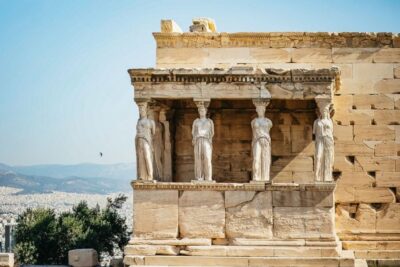
Acropolis, Parthenon & Acropolis Museum Guided Tour
Read our verdict →
Acropolis: Acropolis and Parthenon Guided Walking Tour
Read our verdict →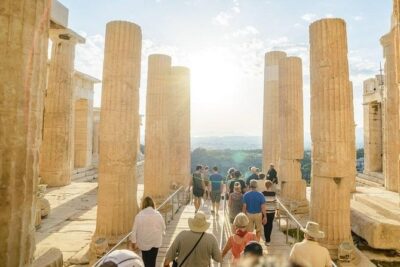
Acropolis monuments & Parthenon Walking Tour with Optional Acropolis Museum
Read our verdict →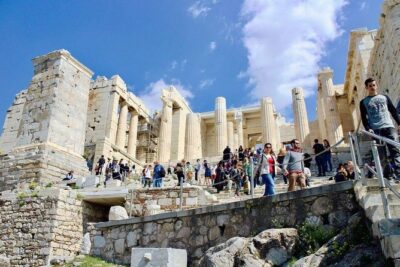
Athens All Included: Acropolis and Museum Guided Tour with Ticket
Read our verdict →Browse the lists this tour appears in