
Review · WALKING TOURS
Athens Highlights: Myths & Philosophers Private Walking Tour
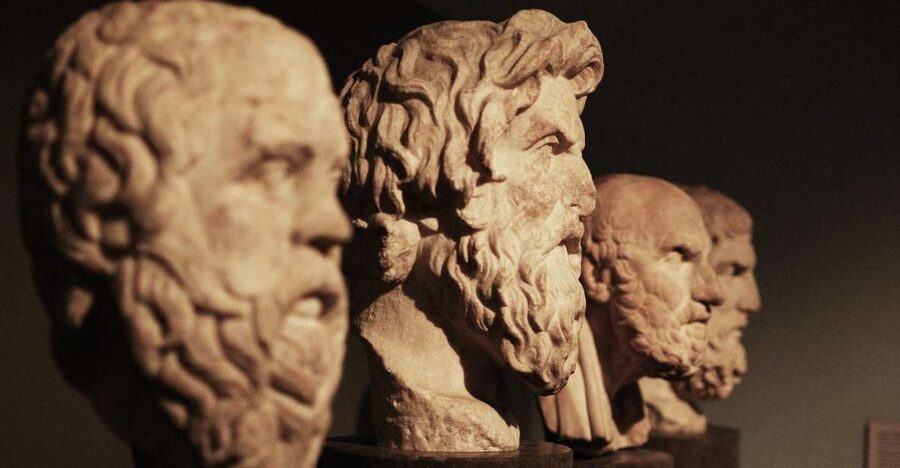
Athens makes more sense when you walk it as a city of ideas, not just a collection of ruins. This private tour links Socrates and Plato with the Academy of Athens, Epicurus with the National Garden, Aristotle with Ermou Street, and the Stoics with the Ancient Agora. I like the way philosophy is tied to real places, and I like the chance to discuss how those old arguments still fit modern life.
The private format is another strong point. Guides such as Bianca and John have adjusted the conversation to suit a student preparing a philosophy class, a former philosophy student, or someone simply curious about mythology. The main caution is the pace: four hours on foot, with several uphill or uneven sections near Plaka and Areopagus, is not a good match for anyone with limited mobility.
Key points to know before you book
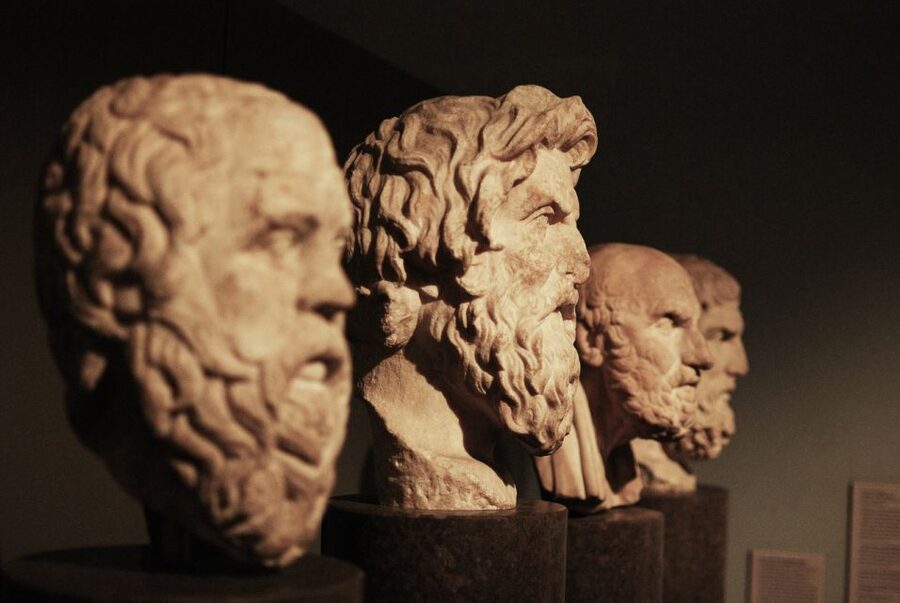
- Philosophy meets the city: Socrates, Plato, Aristotle, Epicurus, the Stoics, and Pre-Socratic thinkers are discussed beside relevant Athens landmarks.
- A private English-language walk: Your guide can shape the conversation around your interests instead of following a fixed group script.
- Greek coffee is part of the tour: A traditional refreshment gives you a seated break in the Thissio area or at a similar café setting.
- Myths are woven into the route: Apollo, Athena, Hermes, Aiolos, and the Olympian gods appear alongside temples, streets, and monuments.
- The finish is scenic: Areopagus Hill gives you a close view of the Acropolis and a natural place to wrap up the discussion.
- Bring practical gear: Comfortable shoes, sunscreen, and sunglasses matter, especially in the warmer months.
Starting near Panepistimio and meeting Athens on foot

The tour begins outside Panepistimio Metro Station, also called University, although the exact meeting point can vary with the option you book. This is a useful starting area because it puts you near the grand civic buildings of central Athens rather than dropping you straight into the ancient ruins.
You meet an English-speaking local guide and spend the next four hours walking. This is not a coach tour with occasional photo stops. The point is to connect streets, buildings, myths, and schools of thought through conversation.
The route covers a lot of ground. The published plan lists about 30 minutes of walking between several stops, so you should treat this as an active city walk rather than a gentle stroll. The guide can keep the talk lively, but your feet still do the work.
More Mythology Tours in Athens
- Athens & Acropolis Highlights: Greek Mythology Small-Group Tour
★ 5.0 · 2,370 reviews - Athens: Acropolis and Mythology Highlights Small Group Tour
★ 4.8 · 2,275 reviews - Athens: Mythology Tour for Families
★ 4.8 · 173 reviews
The Academy of Athens and the beginning of philosophy
The first major stop is the Academy of Athens, part of the famous Athenian Trilogy created by architect Theofilus Hansen. Its grand neoclassical design and sculpted figures give you an elegant opening to a tour about ideas, education, and public life.
This is where the conversation turns to Socrates and Plato. Rather than presenting them as names to memorize, the guide uses the setting to explain how philosophical thinking began as a habit of questioning. That approach gives the subject a practical edge. You are not just hearing what Plato wrote. You are considering how his ideas developed from the questions and arguments of his time.
The statues and formal architecture also create a useful contrast with the rougher, more crowded parts of Athens later in the walk. If you enjoy architecture, this early section adds a visual layer to the discussion. If you came mainly for archaeological sites, you should know that the Academy is admired from the outside rather than treated as a museum visit.
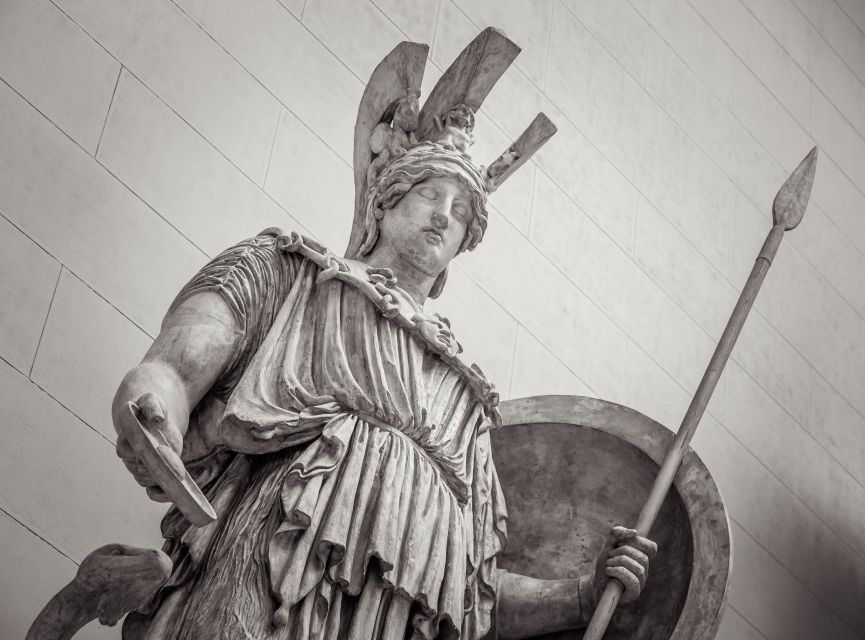
The tour also introduces Apollo and Athena here. Their different roles make a good starting point for Greek mythology: Apollo is linked with qualities such as order and prophecy, while Athena is associated with wisdom and strategic thought. The guide uses the two gods to show that Greek myths are not one tidy belief system. They are a group of stories with overlapping meanings and tensions.
Central Athens, the Parliament, and Epicurus in the Garden
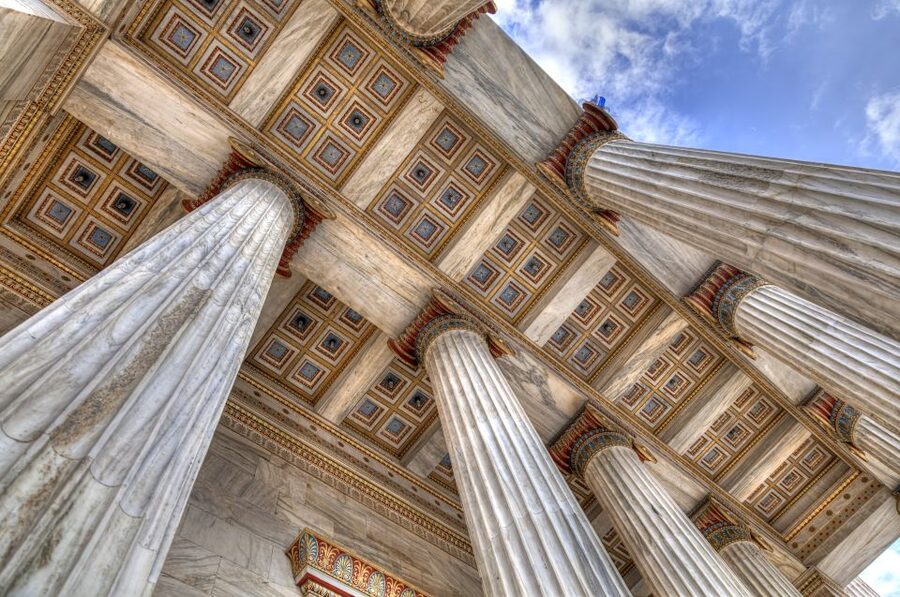
From the Academy area, the walk continues toward the Numismatic Museum, the Greek Parliament, and the National Garden. The Numismatic Museum is included as a route stop, while the Parliament and National Garden provide the main setting for the next philosophical theme.
At Parliament, you see one of central Athens’s best-known public buildings and get a sense of the modern capital around its ceremonial heart. The tour is not presented as a dedicated Parliament visit, so expect exterior discussion rather than an indoor tour.
The National Garden gives the guide a natural place to explain Epicurus and his philosophical school, known as the Garden. That name is especially fitting here. Epicurean philosophy is often reduced to luxury or constant pleasure, but the discussion can help you understand its more measured concern with happiness, friendship, simple living, and freedom from needless fear.
This is one of the tour’s better ideas: the setting changes the feel of the subject. A garden encourages a calmer conversation than a formal lecture hall would. You can think about why a school might choose such a space and how philosophy once worked as a way of living, not only as an academic subject.
Ermou Street, Hermes, and a medieval church
Next comes Ermou Street, Athens’s major commercial street. It is named after Hermes, the god associated with trade and merchants, so the street offers a neat connection between ancient mythology and present-day city life.
You then pass Kapnikarea, an 11th-century church set along Ermou. This small Byzantine-era building can feel almost tucked into the commercial surroundings, creating one of the route’s sharper contrasts. Modern shops and city traffic press in around a much older place of worship.
The guide uses this section to discuss Aristotle and the Lyceum, his philosophical school. Aristotle’s work touched logic, ethics, politics, biology, and many other fields, so this portion can become wide-ranging. A private guide is useful here because you can ask for more on the subjects that interest you instead of getting a fixed speech on every part of his life.
The route does not take you inside an ancient Lyceum site as a main attraction. Instead, it uses the city itself as a prompt for conversation. That is a strength if you want context. It may disappoint you if you expect each philosopher to be paired with a preserved archaeological structure.
More Walking Tours in Athens
- Athens: Acropolis and Parthenon Guided Walking Tour
★ 4.6 · 5,882 reviews - Greek Food Walking Tour in Athens
★ 5.0 · 4,740 reviews - Acropolis: Acropolis and Parthenon Guided Walking Tour
★ 4.7 · 3,442 reviews - Acropolis monuments & Parthenon Walking Tour with Optional Acropolis Museum
★ 5.0 · 2,678 reviews
Coffee and the Pre-Socratic thinkers in Thissio
The tour includes one Greek coffee or another traditional refreshment per person. The break takes place in the Thissio area, where you can sit down and continue the conversation rather than stopping only for a quick drink.
This pause matters more than it may sound. Four hours of walking and sustained discussion can be tiring, especially under the strong Athens sun. A café break gives you time to rest, ask follow-up questions, and let the earlier ideas settle.
The discussion here turns to the Pre-Socratic philosophers. These thinkers came before Socrates and asked basic questions about nature, matter, change, order, and the way the world works. Their questions helped shift Greek thought toward reasoned explanation, even though mythology and religion remained part of the wider culture.
Several people who took the tour with Bianca or John found the conversation especially valuable because the guides did not keep philosophy sealed in the ancient past. You can ask how an idea applies to school, work, relationships, or daily choices. That interactive quality is central to the tour. It is also why the private setting is worth more here than on a simple landmark walk.
The exact café setting can vary, so you should think of the coffee as a built-in rest and conversation stop rather than a food tour. The included drink is modest, but it breaks up the route in a useful way.
The Ancient Agora and the Poikile Stoa
Near the Ancient Agora, the tour turns to Stoicism and the Poikile Stoa, the painted porch associated with the birth of Stoic philosophy. The Agora was a public center of ancient Athenian life, making it a fitting place to discuss a school concerned with reason, self-control, and how to respond to events beyond your control.
Entrance fees to points of interest are not included. The walk takes you around the area and explains its importance, but you should not assume that the tour ticket includes entry into the Ancient Agora or any other paid site.
This distinction is important when comparing the tour with a standard Athens sightseeing ticket. You are paying for a guide-led conversation and a city route, not for a series of museum admissions. If your main aim is to spend hours inside archaeological sites, you may want to pair this walk with separate visits to the Acropolis Museum and Ancient Agora.
If you enjoy asking questions, the Agora section can be one of the most rewarding parts. The setting makes Stoicism less abstract. You can discuss how people deal with uncertainty, disappointment, and public pressure while standing near the place where public debate once shaped Athenian life.
Plaka, Anafiotika, and the Tower of Winds
The route continues into Plaka and Anafiotika, at the foot of the Acropolis. These areas change the mood again. Narrow lanes and whitewashed houses in Anafiotika give you a more intimate side of central Athens, while Plaka brings you close to the city’s most familiar Acropolis views.
The tour connects this area with Cynic philosophers. Cynicism challenged social convention and placed value on living simply and honestly, often through deliberately provocative behavior. The private format helps here because the guide can explain the difference between ancient Cynic philosophy and the modern meaning of the word cynical.
You also stop near the Tower of Winds, the octagonal ancient monument known for its weather-related features. Here the guide tells the story of Aiolos, keeper of the winds. Myth and science sit close together in this part of the walk: the tower reflects an interest in measuring the natural world, while Aiolos belongs to the mythic tradition used to explain forces people could not control.
Plaka and Anafiotika are pleasant places to walk, but they can be crowded and uneven. Wear shoes with a firm sole. This is not the moment for flimsy sandals if you want to stay comfortable.
Areopagus Hill and the final Acropolis view
The walk ends on Areopagus Hill, also called the Hill of Ares. From here, you get a strong view toward the Acropolis and a fitting final setting for more stories about the Olympian gods.
The rock surface can be uneven, and the climb is part of the physical demand of the tour. Anyone with mobility limits should take the warning seriously. Even people in good shape should bring water, protect themselves from the sun, and allow time for a careful ascent.
As a final stop, Areopagus works well because it combines a view with reflection. The tour has moved from architecture and public institutions to gardens, shops, churches, cafés, ancient schools, myths, and hilltop scenery. You finish with Athens spread around you rather than ending inside a lecture or at a transport stop.
The listed drop-off point is Areopagus Hill, so plan your next move from there. You are well placed for continued sightseeing around the Acropolis and Plaka, but the tour does not provide transport back to your hotel.
How the private format changes the experience
The strongest practical reason to choose this tour is the private group. Philosophy is not a subject that always works well in a large crowd. In a private setting, you can ask why Plato matters, challenge a point about Epicurus, or shift the talk toward mythology without waiting for a group consensus.
Bianca has been described as warm, clear, and skilled at storytelling. John has a background as a translator of philosophy books and has adjusted the tour for people with a serious academic interest. Effie has also led the walk. Guide availability can change, but these names show the range of people who may lead it.
The tone is active rather than classroom-like. One participant preparing a high school class received more detail suited to that purpose. Another person with a background in philosophy and rhetoric used the walk as a way to reconnect with familiar ideas and see them from new angles.
You do not need prior study to enjoy it. The better question is whether you like conversation. If you prefer a guide to deliver short facts while you take photos in silence, this may feel too talk-heavy. If you enjoy asking questions and making connections, the format is a strong match.
Is $100 per person good value?
At $100 per person, this is not the cheapest way to see Athens. The price makes more sense for a private four-hour guide than for a basic sightseeing walk, especially because the guide can tailor the subject to your interests and the fee includes a Greek coffee or another traditional refreshment.
No entrance fees are included, so budget separately if you want to visit the Ancient Agora, museums, or other paid attractions. That can make the total cost higher than the headline price.
I would judge the value by what you want from the day. For a couple, family, teacher, student, or small group that wants serious conversation and a flexible route, the price is easier to justify. For a solo visitor focused mainly on seeing as many monuments as possible, a less expensive group tour may suit you better.
The perfect audience is someone who wants Athens explained through ideas. You will see major central areas, but the value lies in understanding why Socrates, Plato, Aristotle, Epicurus, the Stoics, and Greek gods still appear in modern discussions.
Practical advice for a comfortable four hours
Wear comfortable walking shoes. The route includes long stretches through central Athens, uneven ground in older areas, and the climb up Areopagus Hill.
Bring sunglasses and sunscreen. Much of the walk is outdoors, and the Greek sun can be strong even when the air feels mild. A bottle of water is also sensible, although only the coffee or traditional refreshment is specifically included.
Cancellation is free up to 24 hours before the tour for a full refund, and you can reserve now and pay later. Check the available starting times before booking, since the duration is four hours and meeting details may vary by option.
The tour is offered in English and is designed for a private group. It is not suitable for people with mobility impairments. Entrance fees and personal purchases, such as souvenirs, are separate.
Should you book this Athens philosophy walk?
Book it if you want a thoughtful way to see Athens and enjoy talking as much as sightseeing. The route gives you famous landmarks, lesser-discussed philosophical connections, Greek mythology, a coffee break, and a fine Acropolis view from Areopagus Hill.
I would especially recommend it to teachers, students, readers of philosophy, couples, and curious first-time visitors who want their guide to follow their questions. Bianca and John appear particularly well suited to an interactive conversation, though the guide assigned to your date may differ.
Skip it if you want extensive time inside archaeological sites, a low-walking day, or a quick list of facts. At four hours and $100 per person, it asks for both time and money. For the right audience, though, it gives you something a standard ruins tour often misses: a way to connect Athens’s streets with the questions that shaped Western thought.
FAQ
Where does the tour begin?
The tour begins outside Panepistimio Metro Station, also known as University. The exact meeting point may vary depending on the option booked.
How long does the tour last?
The walking tour lasts four hours.
What language is the tour offered in?
The live tour guide speaks English.
Is this a private tour?
Yes. The activity is for a private group rather than a large shared group.
Which philosophers are discussed?
The tour covers Socrates, Plato, Epicurus, Aristotle, Pre-Socratic philosophers, Stoic philosophers, and Cynic philosophers.
Which Greek gods and myths are included?
The discussion includes Apollo, Athena, Hermes, Aiolos, and the Olympian gods.
Is Greek coffee included?
Yes. Each person receives one Greek coffee or another traditional refreshment.
Are entrance fees included?
No. Entrance fees to points of interest are not included.
Is the tour suitable for people with mobility impairments?
No. The tour is not suitable for people with mobility impairments.
What should I bring?
Bring comfortable shoes, sunglasses, and sunscreen. These are especially useful for the long outdoor walk and the uneven sections near Areopagus Hill.
Can I cancel for a full refund?
Yes. You can cancel up to 24 hours in advance for a full refund.
New on the Athens shelf
- Acropolis of Athens, Parthenon and Acropolis Museum private tour with dinner★ 5.0 · 77 reviews
- Small-Group Wine Tour in Athens with Tasting★ 5.0 · 33 reviews
- Private Athens Transfer Airport/Port -Greek Tours-Hourly service★ 5.0 · 88 reviews
- VIP Private Guided Tour of Athens Acropolis & Plaka in a Sidecar★ 5.0 · 108 reviews
- Athens Moonlight Waling Tour with Drinks and Meze Dishes★ 5.0 · 259 reviews
- Private Athens Landmarks Layover Tour★ 4.5 · 41 reviews
- Departure Transfer from Athens City to Athens Airport★ 5.0 · 41 reviews
- Classic Athens Food Tour with Local Drink & Market Visit★ 5.0 · 34 reviews
Walking Tours, compared.
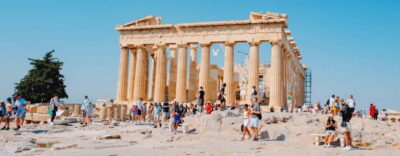

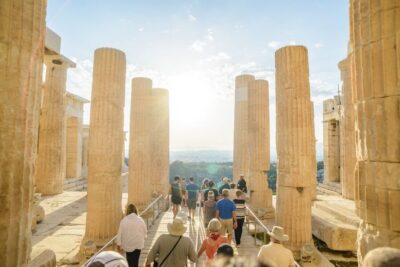
Acropolis: Acropolis and Parthenon Guided Walking Tour
Read our verdict →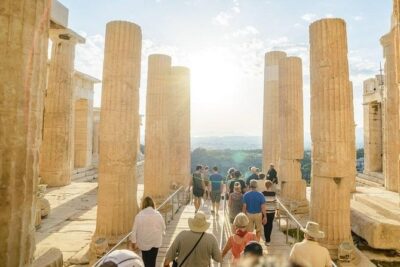
Acropolis monuments & Parthenon Walking Tour with Optional Acropolis Museum
Read our verdict →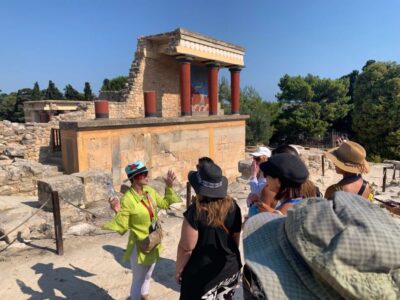
Knossos: Knossos Palace Skip-the-Line Guided Walking Tour
Read our verdict →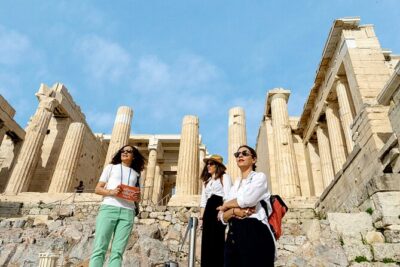

Athens Authentic Greek Food Walking Tour (Small Group)
Read our verdict →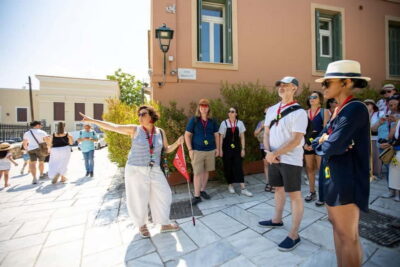
Early Morning Acropolis & Old Athens Guided Walking Tour
Read our verdict →Browse the lists this tour appears in