

Review · ACROPOLIS TOURS
Athens: Acropolis and Mythology Highlights Small Group Tour
Athens makes more sense when you hear the stories behind the stones. This walking tour links Athena, Zeus, Dionysus, and the other Greek gods to real places, political struggles, and daily life, so the Acropolis feels like more than a hill covered in ruins. The mythology is the hook, but the history gives the tour its weight.
I like the small groups, which make it easier to ask questions and stay close to the guide. I also like the way guides such as Antonia, Alex, Danae Kousouri, Vicky, and Stellios have used humor, visual aids, and clear storytelling for both adults and children. The main drawback is the heat, uneven ground, and noise around the Acropolis, where even a good guide can sometimes be hard to hear.
Key points before you book
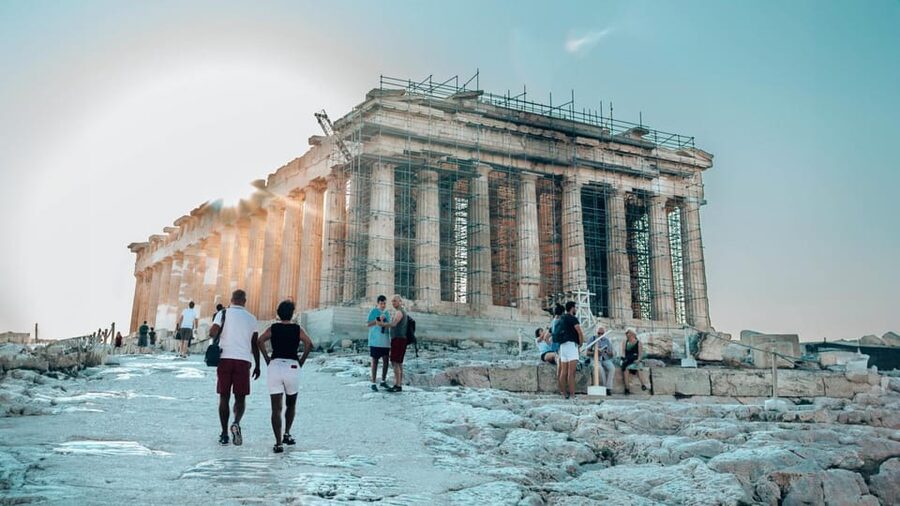
- Mythology with historical context: Learn how stories about Athena and the gods connect with monuments, rituals, politics, and ancient society.
- A genuinely small-group format: Groups can be as small as seven, and on some departures the experience may feel almost private.
- Major Acropolis sights in one walk: See the Parthenon, Erechtheion, Temple of Athena Nike, Theatre of Dionysus, and Sanctuary of Asclepius.
- The Ancient Agora adds a second chapter: Finish among the old civic buildings and the Temple of Hephaestus, often in a calmer setting than the Acropolis.
- Good for families: Guides use stories, humor, and visual aids that can work for adults, older children, and mythology fans.
- Plan for the conditions: Bring water, wear sturdy shoes, leave backpacks and strollers behind, and consider an early start.
Why the mythology makes the Acropolis easier to understand
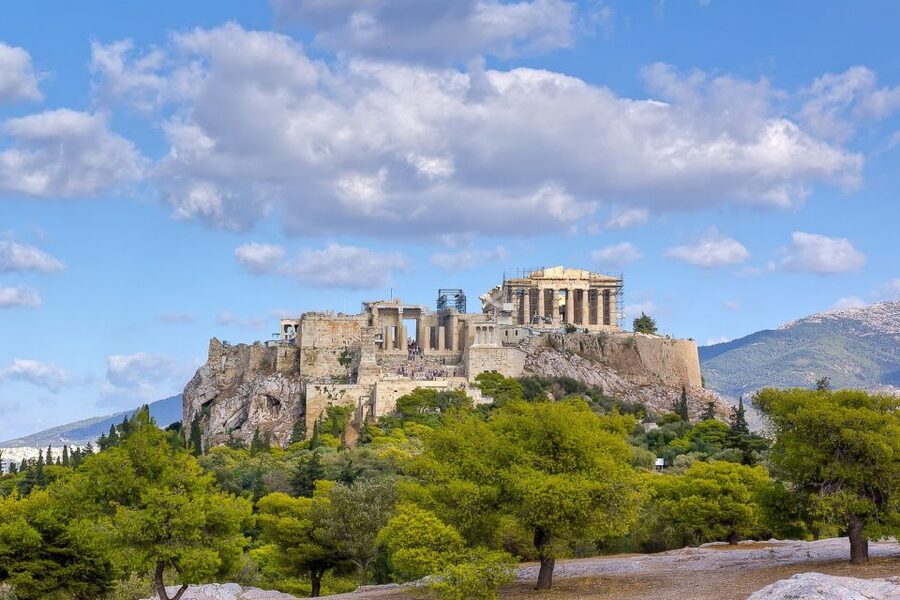
The Acropolis can be overwhelming. You arrive at a famous hill, see columns and carved stone, and quickly realize that the site covers several buildings from different periods. Without help, it is easy to remember the Parthenon and forget how the whole hill functioned.
This tour gives you a story line. You hear about the birth of Athens, the city’s rise during its Golden Age, and its eventual defeat by Sparta. The myths are not treated as loose fairy tales. Your guide explains how ancient Greeks used gods and legends to understand war, family, disease, nature, civic duty, and human weakness.
That approach suits me because it puts the buildings into their original setting. The Parthenon was not simply an old temple. The Agora was not just a collection of broken columns. These places formed part of a city where religion, politics, trade, theater, and public debate overlapped.
The guides also seem comfortable adjusting their style. Danae Kousouri used visual aids showing how buildings once looked and how the gods were related, which can help if you are a visual learner. Other guides, including Alex, Antonia, Vicky, Christina, and Athina, have been praised for mixing clear explanations with humor and vivid stories.
More Mythology Tours in Athens
- Athens & Acropolis Highlights: Greek Mythology Small-Group Tour
★ 5.0 · 2,370 reviews - Athens: Mythology Tour for Families
★ 4.8 · 173 reviews - The History of Athens: Greek Mythology Private Tour
★ 5.0 · 138 reviews
Meeting under Hadrian’s Arch
The tour begins beneath the Arch of Hadrian at Leof. Vasilisis Amalias 50. The Acropolis metro station is the nearest stop, followed by a walk of about five minutes. Your guide waits with an Alternative Athens sign.
This is a practical meeting point because Hadrian’s Arch sits beside the Acropolis area and near the Temple of Olympian Zeus. Arrive with time to spare. The arch is a busy landmark, and it is better to be standing in the right place than searching along the road at the last minute.
The opening talk usually sets up the city’s story before you enter the main archaeological zone. You begin with the relationship between old Athens and the Roman period, then move toward the earlier world of the Acropolis.
The advertised duration ranges from two to four hours. That difference matters. A shorter walk can cover the main Acropolis highlights at a brisk pace. A longer version may include more time at the Ancient Agora or more room for questions and photographs.
Temple of Olympian Zeus from outside
The Temple of Olympian Zeus is seen from outside rather than entered as part of the standard route. Even from the edge, the surviving columns give you a sense of the scale ancient builders aimed for.
The short stop works well as an introduction to Zeus and the ambition of Athens. It also shows that the city’s ancient monuments were not all on the Acropolis. Athens spread across a much larger religious and civic area, with temples and public spaces serving different purposes.
Do not expect a long visit here. The tour gives the temple around 15 minutes, so this is a context stop rather than a full exploration. If you want to study the site closely, you would need separate time and admission.
Climbing into the Acropolis complex
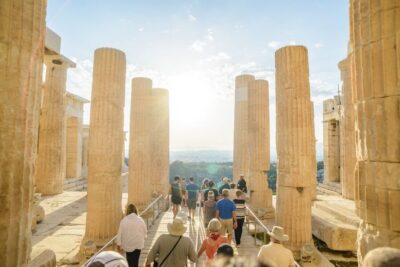
The walk toward the Acropolis takes about 15 minutes before the main guided visit. This is where sensible shoes become important. Ancient paving can be uneven, and the route includes slopes and exposed ground.
The guide then leads you through about 90 minutes at the Acropolis. That is enough time to cover the principal buildings, but not enough to linger everywhere. You will need to stay with the group and listen while moving between viewpoints.
Crowds can affect the experience. The Acropolis is often noisy, and several groups may gather around the same monuments. Some departures provide earpieces, which helps, but the equipment is not clearly promised for every tour. Stay near your guide and speak up if you cannot hear.
Summer heat is another real concern. Several guides have built in shade, water breaks, and slower pacing when needed. Still, there is limited shade on parts of the hill. An early departure is the best choice if you are visiting with children, older family members, or anyone sensitive to heat.
More Acropolis tickets and guided visits:
- Athens: Acropolis & up to 5 Archaeological Sites Combo Pass
★ 4.4 · 12,619 reviews - Athens: Acropolis Ticket with Optional Audio or Live Guide
★ 4.2 · 11,055 reviews - Athens: Acropolis, Parthenon & Acropolis Museum Guided Tour
★ 4.8 · 9,316 reviews - Athens: Acropolis and Parthenon Guided Walking Tour
★ 4.6 · 5,882 reviews
Theatre of Dionysus and the Sanctuary of Asclepius

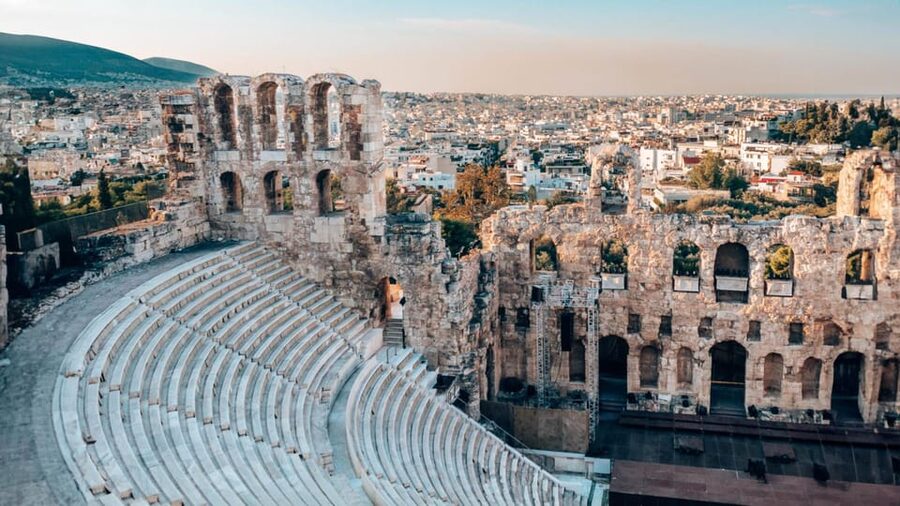
The Theatre of Dionysus sits on the southern slope of the Acropolis. This is one of the most useful stops for understanding how religion and public life worked together.
Here, the guide can connect the god Dionysus with theater and explain why performances mattered so much to Athenian society. You begin to see that ancient theater was not simply evening entertainment. It was part of a public culture tied to worship, civic identity, and debate.
Nearby, the Sanctuary of Asclepius offers a different view of ancient belief. Asclepius was associated with healing, and the sanctuary reminds you that people came to sacred places seeking help with very practical problems.
These are easy places to rush past if you are exploring alone. A short explanation gives them purpose and helps you notice how many different needs the Acropolis area served.
Temple of Athena Nike
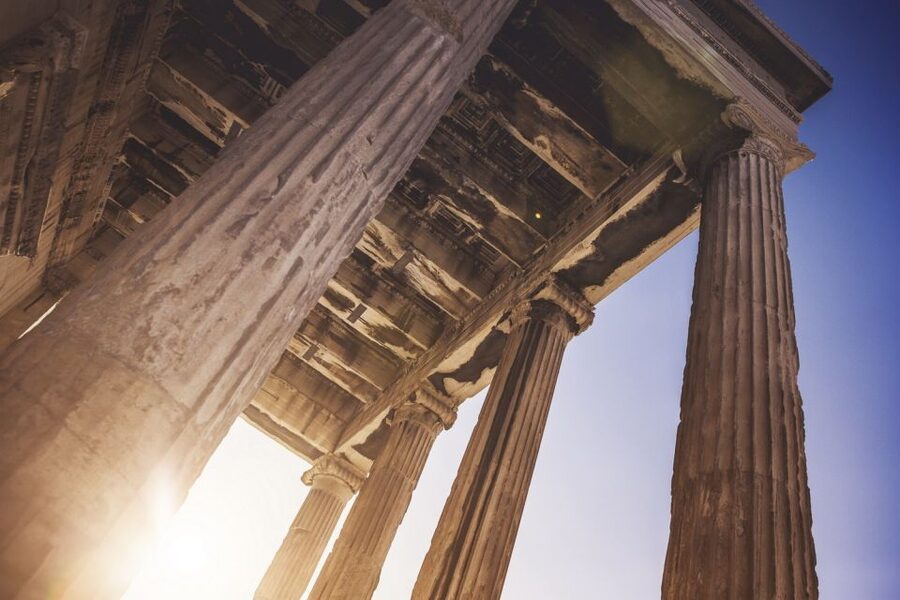
The Temple of Athena Nike is small compared with the Parthenon, but its position near the entrance makes it especially memorable. It was dedicated to Athena in her role as a bringer of victory.
This is a good point for the guide to explain how the Athenians linked religion with military success and civic pride. The temple’s name and placement tell you something about what the city wanted visitors and citizens to see first.
The stop lasts about 15 minutes. That is enough for a focused explanation and photographs, though not a long architectural study. If you are especially interested in sculpture or restoration work, take note of the monument and return later with more time.
Erechtheion and the competing claims to Athens
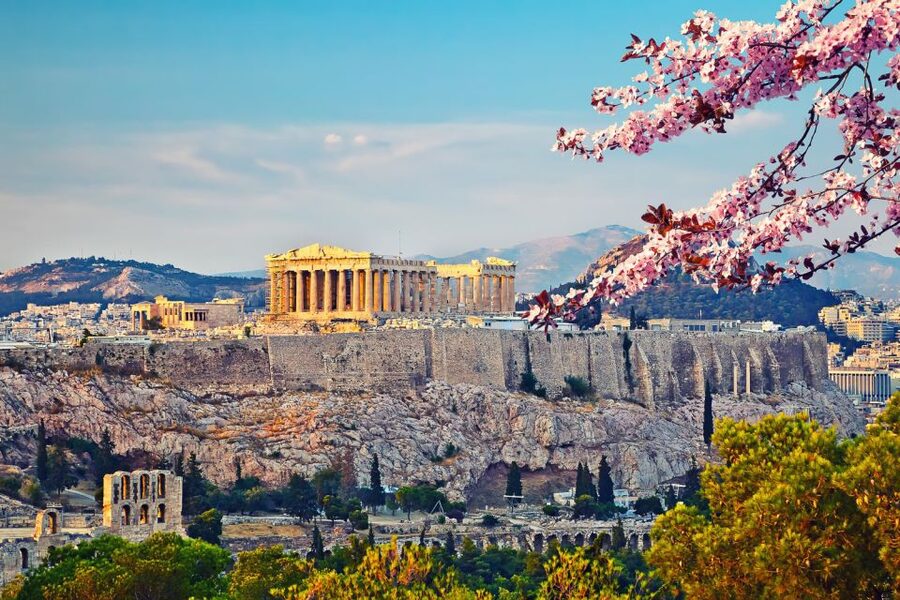
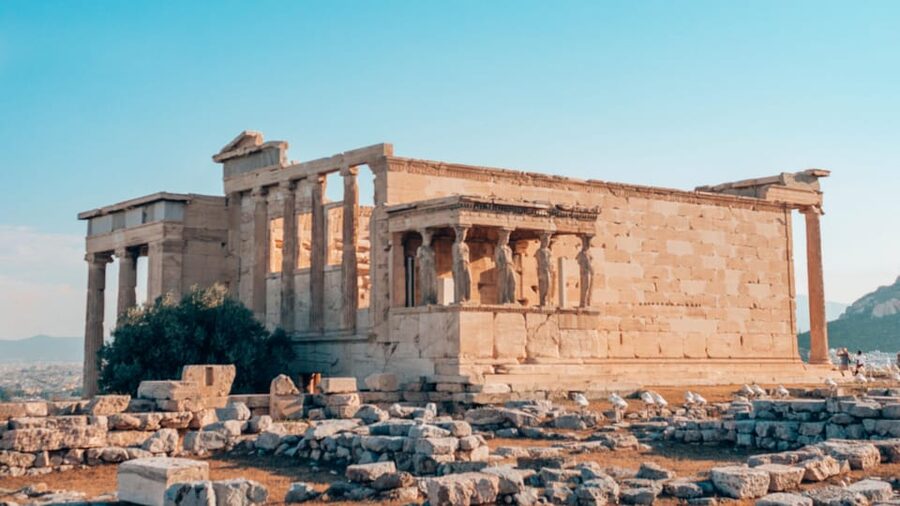
The Erechtheion is one of the most distinctive buildings on the Acropolis. Its irregular plan reflects several sacred traditions gathered into one structure, rather than a single simple temple design.
This is where the contest between Athena and Poseidon for the city becomes especially useful. The myth explains why Athens was associated with Athena, while the physical site points to the layered religious practices that developed over time.
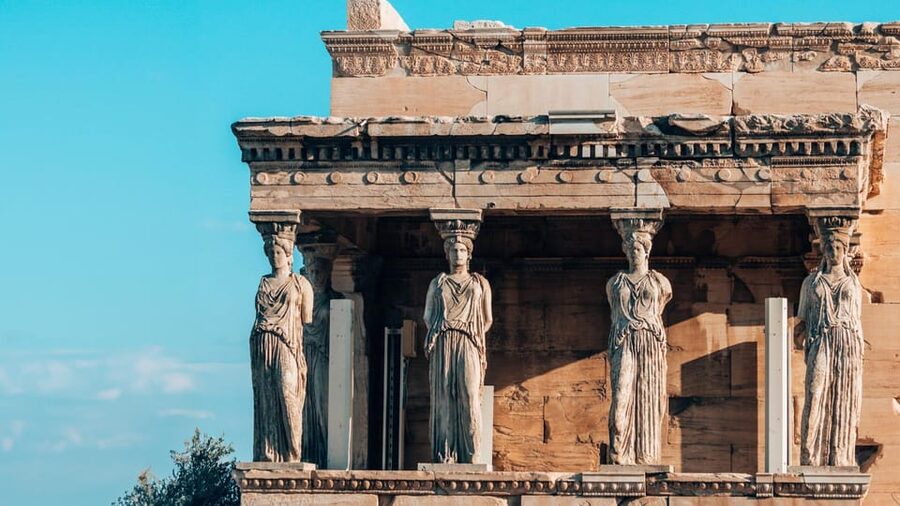
The guide also covers the temple’s famous caryatids, the sculpted female figures used as architectural supports. You will see the well-known porch, but do not assume every original piece is still outside. The Acropolis Museum protects important originals, while the hill displays copies in some locations.
The Erechtheion is a favorite stop for visitors who want something beyond the straight lines of the Parthenon. It has more visual variety, and its stories help explain why ancient religion was rarely simple.
The Parthenon in half an hour

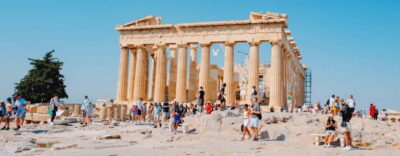
The Parthenon receives about 30 minutes of guided attention. That may sound brief, but it is a sensible amount of time when the whole route includes several monuments.
Your guide explains the building’s role, design, and connection with Athena. You also learn how the Parthenon fits into Athens during its Golden Age, when the city held enormous cultural and political influence.
This is the moment when a guide adds real value. A quick look at the columns tells you that the building is impressive. An explanation of its purpose, proportions, decoration, and place in Athenian identity gives you a way to read what remains.
Expect to stop at viewing points rather than enter the building itself. The Acropolis is an active archaeological site, and movement is controlled. You should have time for photographs, but the group will not wait indefinitely while everyone searches for the perfect angle.
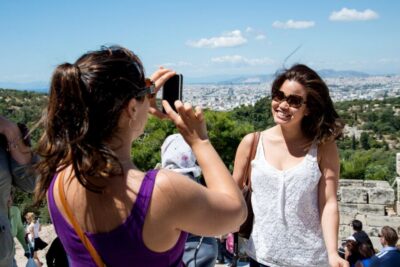
The views from the hill are a major reward. You can see Athens spreading far beyond the ancient center, which makes the old city’s position easier to understand. It is also a good reminder to look away from the ruins now and then.
Walking down to the Ancient Agora
After the Acropolis, the route moves toward the Ancient Agora. The walk takes about 30 minutes, so this tour is not a sit-down sightseeing experience. You should be comfortable walking for several hours, often on hard or uneven surfaces.
The Agora was the center of public life in ancient Athens. It was a place for commerce, political discussion, social meetings, religious activity, and legal business. After the sacred hill, it gives you a more everyday picture of the city.
This change of setting is one of the tour’s best features. The Acropolis shows the grand religious and political image Athens wanted to project. The Agora helps you imagine how people actually moved through the city and dealt with one another.
The route description includes the Agora as a walking visit, while entry tickets may depend on the option you choose. Check the exact booking choice carefully. Acropolis entry and Acropolis plus Ancient Agora entry are not always handled in the same way.
Temple of Hephaestus and the final lesson
The Temple of Hephaestus is the main guided stop in the Agora, with about 30 minutes set aside. Dedicated to Hephaestus, the god of metalworking and craft, it adds another side to ancient religious life.
The temple is especially useful after the Parthenon because it lets you compare two different sacred buildings. Your guide can point out how temples served particular gods and communities, while also showing how much ancient Athens valued skilled work, production, and practical trades.
The Agora often feels less pressured than the Acropolis. You may have more room to take in the setting and ask questions. One useful feature is the chance to explore parts of the Agora at your own pace after the guided explanation, depending on the departure and access arrangement.
This ending leaves you with a fuller picture of Athens. You have seen the city’s most famous monument, but you have also visited spaces tied to theater, healing, politics, trade, craft, and daily routines.
What the $53 price really buys you
At $53 per person, the tour is priced as a guided introduction rather than a simple ticket. You are paying for a licensed guide, a walking route, historical interpretation, and the convenience of joining a small group.
The value is strongest if you are visiting the Acropolis for the first time. A bare admission ticket gets you inside, but it will not explain why the buildings matter or how the myths connect with the city’s development. The guide also helps you use limited time well.
Check the ticket option before paying. Some choices include Acropolis entry, while others include Acropolis and Ancient Agora admission. The general information also says entrance fees can be pre-purchased on request, so confirm what is covered in your selected departure. Entry fees are non-refundable and non-exchangeable.
The tour includes an Ancient Athens city map, which is a small but useful extra. Food and drinks are not included, so carry water and plan any meal before or after the walk.
Who will get the most from this walk
I would choose this tour for a first visit to Athens, especially if you want the Acropolis explained rather than simply photographed. It is also a strong match for anyone who enjoys mythology but wants more than a list of gods and monsters.
Families can benefit from the storytelling format. Guides have worked well with children and tweens, including groups with children aged five and ten. The route is still physically demanding, so small children may tire, and strollers are not allowed.
You should also consider it if you like asking questions. Small groups make that easier than a large coach tour. The group size can be as small as seven, and some departures have felt nearly private when only a few people booked.
This is less suitable if you want a slow photographic session, a private route, or a tour focused only on architecture. The group must keep moving, and the Acropolis can be crowded. It is also not a good match for anyone unable to manage several hours of walking on uneven ground.
Guides speak English or French. Individual guide assignments vary, but names associated with this experience include Antonia, Alex, Danae Kousouri, Stellios, Vicky, Christina, Athina, Sophia, and others. The strongest pattern is a lively, story-led approach, with guides often stopping for shade, water, questions, and photographs when conditions require it.
Practical advice for a better visit
Wear shoes with a firm grip. Comfortable clothes matter too, since you will be outside for most of the tour.
Bring a passport or identity card. European Union citizens under 25 and non-EU citizens under 18 can receive free access to the Acropolis and Ancient Agora with valid identification, where the relevant entry rules apply.
Leave backpacks, large bags, and strollers at your accommodation. They are not allowed at the Acropolis and should not be brought along. Assistance dogs are allowed, but other pets are not.
Book an early time if you can. Morning conditions are often easier for walking, families, and listening. In hot weather, an early start can make the difference between an enjoyable history walk and a tiring climb.
The tour allows free cancellation up to 24 hours before the start, and you can reserve now and pay later. Those terms are useful if your Athens schedule is still changing, but always check the exact conditions attached to your chosen option.
Should you book the Acropolis and Mythology Highlights tour?
I would book it if you want the Acropolis to make sense as part of a living ancient city. The combination of mythology, politics, theater, religion, and everyday life gives you far more than a quick look at the Parthenon.
The strongest reasons are the small groups, the skilled storytelling, and the addition of the Ancient Agora. At $53, it offers good value when admission and guiding are included in your selected option.
Skip it if you prefer to explore alone, need a very slow pace, or want to spend most of your time taking photographs. For everyone else, especially first-time visitors, families, and Greek mythology fans, this is a practical way to meet Athens on foot and understand why the Acropolis still matters.
FAQ
Where does the tour meet?
Meet your guide under Hadrian’s Arch at Leof. Vasilisis Amalias 50. The nearest metro station is Acropolis, about a five-minute walk away. The guide will hold an Alternative Athens sign.
How long does the tour last?
The activity lasts between two and four hours, depending on the selected departure and tour option.
Which languages are available?
The tour is offered in English and French.
Are Acropolis and Ancient Agora tickets included?
Ticket inclusion depends on the option selected. Some choices include Acropolis entry, while others include Acropolis and Ancient Agora entry. You can also ask for tickets to be pre-purchased.
What should I bring?
Bring a passport or identity card, comfortable shoes, and comfortable clothing. Water is also a sensible choice, particularly in warm weather.
Can I bring a stroller or backpack?
No. Baby strollers, backpacks, and large bags are not allowed at the Acropolis and should not be brought on the tour. Assistance dogs are allowed, but other pets are not.
New on the Athens shelf
- Acropolis of Athens, Parthenon and Acropolis Museum private tour with dinner★ 5.0 · 77 reviews
- Small-Group Wine Tour in Athens with Tasting★ 5.0 · 33 reviews
- Private Athens Transfer Airport/Port -Greek Tours-Hourly service★ 5.0 · 88 reviews
- VIP Private Guided Tour of Athens Acropolis & Plaka in a Sidecar★ 5.0 · 108 reviews
- Athens Moonlight Waling Tour with Drinks and Meze Dishes★ 5.0 · 259 reviews
- Private Athens Landmarks Layover Tour★ 4.5 · 41 reviews
- Departure Transfer from Athens City to Athens Airport★ 5.0 · 41 reviews
- Classic Athens Food Tour with Local Drink & Market Visit★ 5.0 · 34 reviews
Acropolis Tours, compared.
Acropolis & up to 5 Archaeological Sites Combo Pass
Read our verdict →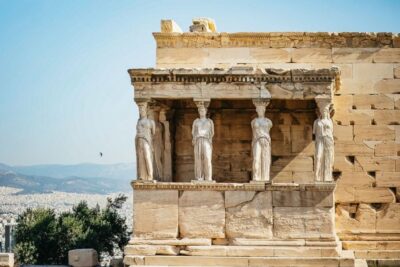
Acropolis, Parthenon & Acropolis Museum Guided Tour
Read our verdict →
Acropolis: Acropolis and Parthenon Guided Walking Tour
Read our verdict →
Acropolis monuments & Parthenon Walking Tour with Optional Acropolis Museum
Read our verdict →
Athens All Included: Acropolis and Museum Guided Tour with Ticket
Read our verdict →Browse the lists this tour appears in