
Review · WALKING TOURS
Athens: Guided Mythological Walking Tour & Creation Stories
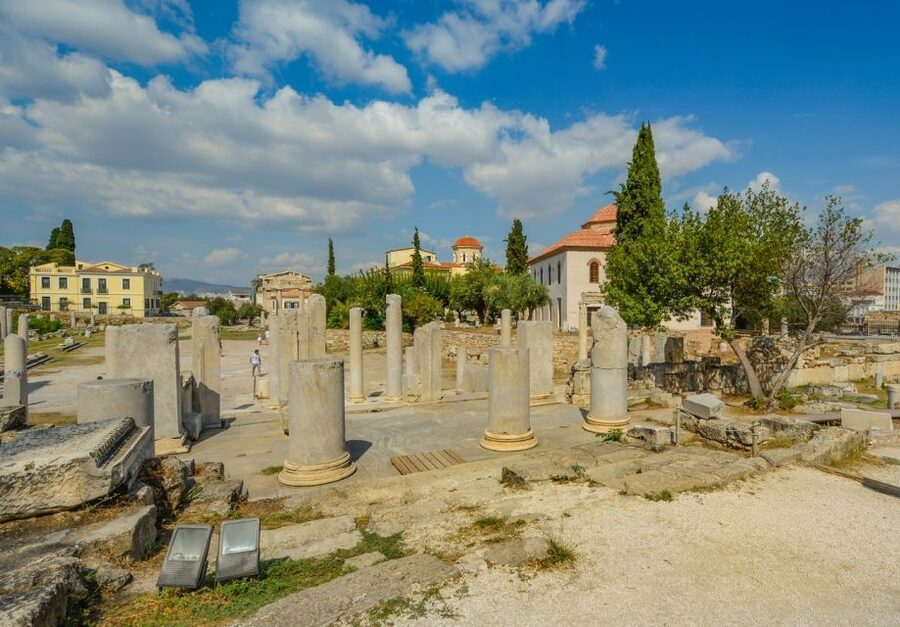
Athens becomes more than a collection of ruins when you follow the stories of Athena, Poseidon, and Theseus through the city. This two-hour Spanish walking tour connects mythology with street names, building decoration, religion, love, trade, and the ancient places around central Athens.
I like the small-group format, which should make it easier to ask questions, and I like the focus on stories rather than a dry list of dates. Guide Juan Pablo is praised for being interactive, funny, and well prepared. The main consideration is language: the tour is offered in Spanish, so it is not suitable if you need an English-speaking guide.
Key points to know before booking
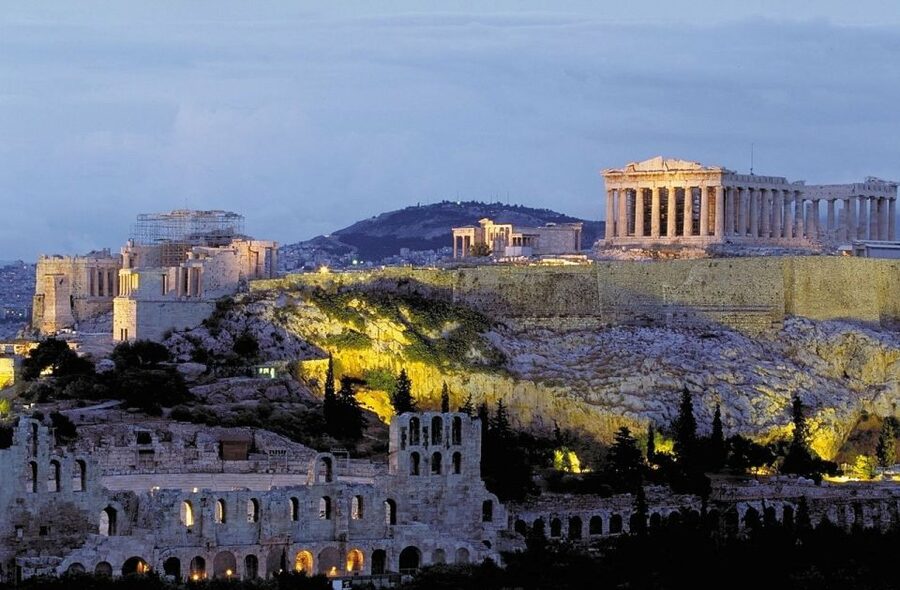
- Athena and Poseidon take center stage: Learn why Athens is tied so closely to the goddess Athena and the god of the sea.
- Theseus adds a heroic thread: The legendary king and hero is linked directly to the city’s identity.
- Mythology meets daily life: The guide explains how religion shaped commerce, romance, language, and public life in ancient Greece.
- The meeting point is easy to identify: Look for the stairs in front of the Academy in central Athens.
- Spanish is the tour language: A live heritage interpreter leads the walk.
- Two hours and $28: This is a fairly focused introduction, with free cancellation up to 24 hours before departure.
Why mythology is a smart way to see Athens
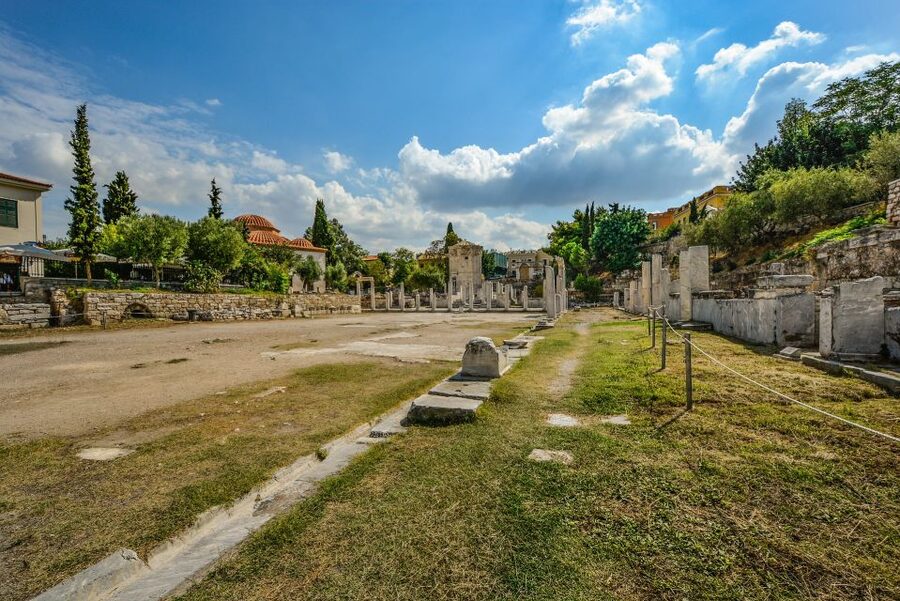
Many first visits to Athens begin with monuments, museums, and stones. Those matter, but mythology gives you another way to understand the city. Ancient Greeks did not keep religion in a separate box. Their gods were tied to political power, family life, business, love, war, farming, and the natural world.
That is the useful promise of this walk. You are not simply hearing the story of Athena and then moving on. You are shown how old beliefs shaped the city around you. A street name or carved figure can become a clue. A building detail can connect to an ancient god. An everyday expression may carry an old idea forward into the modern world.
I like this approach because it gives you a mental map, not just a sightseeing checklist. You leave with stories that can help the Acropolis, the surrounding streets, and later museum visits make more sense.
The tour is also a good fit for visitors who find traditional archaeology tours a little formal. The emphasis here is on clear storytelling and conversation. One highly praised guide, Juan Pablo, is described as especially interactive, funny, and enthusiastic about both mythology and Athens. Another booking refers to Pablo, so the exact guide may vary, but the listed experience is led by a Spanish-speaking heritage interpreter.
More Mythology Tours in Athens
- Athens & Acropolis Highlights: Greek Mythology Small-Group Tour
★ 5.0 · 2,370 reviews - Athens: Acropolis and Mythology Highlights Small Group Tour
★ 4.8 · 2,275 reviews - Athens: Mythology Tour for Families
★ 4.8 · 173 reviews
Meeting the gods at the Academy
The walk begins at the stairs in front of the Academy. That gives you a clear central meeting point and places the tour in an area where grand civic architecture and classical references are close at hand.
The Academy is more than a practical place to meet. It sets the mood for a walk about Greek ideas, learning, and the old stories that still shape how people talk about Greece. From here, your guide begins linking the modern capital to the mythic world of Olympus.
Do not expect a single enclosed attraction or a long museum visit. This is a city walk. The experience comes from listening while moving through central Athens and noticing details you might otherwise pass without a second thought.
The exact stops are not fixed in the information provided, so I would not book this expecting a detailed room-by-room tour of a particular monument. Instead, think of the route as a guided reading of the city, using its buildings, streets, and ancient places as prompts for stories.
Athena, Poseidon, and the contest for Athens
The central story is the contest between Athena and Poseidon. It is one of the best myths for understanding why Athens carries Athena’s name and identity.
Your guide brings you closer to the legend of the two powerful gods and explains their connection to the city. The story is entertaining, but it also shows how ancient communities used myths to explain ownership, protection, power, and civic pride.
Poseidon brings the force of the sea, storms, and earthquakes. Athena represents the city’s own identity as a place connected with wisdom, craft, and practical skill. The point is not simply to decide which god is more exciting. The story shows how a city could explain its special character through a divine patron.
This part should appeal to families and to anyone who knows the basic Greek gods from school, films, or childhood stories. You will recognize familiar names, but the guide places them back into their ancient setting.
I especially like that the tour does not treat mythology as a children’s subject. The stories are dramatic, sometimes strange, and occasionally hard-edged. They also reveal what ancient Athenians valued and feared. That makes them useful for understanding culture, not just entertaining tales.
Theseus and Athens as a heroic city
Theseus is another important thread. The hero is permanently linked to Athens, and his story gives the city a human figure to balance the gods.
Athena and Poseidon explain divine power. Theseus brings questions of courage, identity, leadership, and heroic reputation. His place in the city’s story shows how Athens connected its civic identity to legendary figures as well as deities.
The guide uses Theseus to show that myths were not floating stories with no connection to place. They were tied to the city and used to explain where Athens came from, who belonged to it, and what kind of behavior people admired.
You may already know Theseus as the hero associated with the Minotaur. This tour is not advertised as a full account of every episode in his life, so expect a city-focused look at his connection to Athens rather than a complete biography. That narrower focus is useful because it keeps the walk moving and ties the story to the streets around you.
More Walking Tours in Athens
- Athens: Acropolis and Parthenon Guided Walking Tour
★ 4.6 · 5,882 reviews - Greek Food Walking Tour in Athens
★ 5.0 · 4,740 reviews - Acropolis: Acropolis and Parthenon Guided Walking Tour
★ 4.7 · 3,442 reviews - Acropolis monuments & Parthenon Walking Tour with Optional Acropolis Museum
★ 5.0 · 2,678 reviews
From divine drama to ordinary Greek life
The most valuable part of the experience may be its wider look at religion. Ancient Greek beliefs reached into nearly every part of life, from commerce to romantic relationships.
That means the walk is not only about famous Olympians. It also asks how people made sense of business, family, desire, luck, duty, and the unknown. The guide explains how these ideas left marks on language and expressions that have survived into the present.
This is where a good guide can make a two-hour walk feel worthwhile. A list of gods is easy to forget. A story about why people prayed, traded, married, competed, or named places in certain ways gives the myths a job to do.
I would pay close attention to the links between the story and the modern city. The tour promises examples in building decoration and street names, so keep your eyes up and watch for references as you walk. The guide’s explanation is likely to be more useful than trying to identify every symbol by yourself.
The walk also gives you a simple way to compare ancient and modern Athens. The city has changed, but the names, images, and stories still appear in public spaces. That continuity is one of the pleasures of a mythology tour.
What the two-hour format gives you
Two hours is long enough for a proper introduction without taking over your day. You can fit the walk into a morning or afternoon and still have time for a museum, meal, or independent sightseeing.
The short format also keeps the theme under control. Greek mythology can spread in every direction. There are dozens of gods, heroes, family disputes, monsters, and competing versions of old tales. A focused city walk can select the stories that matter most to Athens.
The tradeoff is depth. You will not get every myth or a full archaeological explanation of every site. If you want detailed architectural analysis, a specialist Acropolis tour, or a long museum lecture, this is not the right product by itself.
I see it as a strong first layer. It gives you the names and connections that help the rest of your visit click into place. You can then explore the major monuments with a better sense of the stories behind their symbols.
The Spanish guide makes the difference
This is a Spanish-language tour, led live by a heritage interpreter. That matters more than it may seem. Mythology depends on tone, wordplay, family relationships, and small details. You will get more from the walk if Spanish is the language in which you can comfortably follow a long explanation.
The guide is not just there to lead you from one point to another. The experience depends on storytelling. Juan Pablo is specifically praised for making the walk feel like a conversation between people who share an interest in mythology. He is also described as prepared, friendly, and humorous.
A separate booking names Pablo, so guide assignments may change or the two references may point to the same person using different forms of his name. In either case, you should expect the guide to be central to the experience.
Small groups are another advantage. They usually make it easier to hear the explanation in city streets and to ask about a myth that catches your attention. The supplied information does not give a maximum group size, so I would not assume a private tour. Still, the small-group design suggests a more personal setting than a large coach excursion.
Is $28 a fair price?
At $28 per person, the tour offers two hours with a live heritage interpreter in central Athens. I consider that reasonable if you enjoy guided storytelling and want cultural context before visiting more major sites.
The value depends on your interest. If you already know Greek mythology well and prefer to explore at your own pace, you may find the walk less essential. But if Athena, Poseidon, and Theseus are names you recognize without knowing how they connect to Athens, the guide can save you a lot of scattered reading.
The price is also easier to justify because the subject is focused. You are paying for interpretation, not just a route through the city. A good explanation of why a myth mattered can change how you see decorations, names, and public spaces for the rest of your stay.
The free cancellation policy adds useful flexibility. You can cancel up to 24 hours before the tour for a full refund, and the reserve now, pay later option means you do not have to pay at the time of booking. Starting times depend on availability, so check the schedule before building the rest of your day around it.
Who should book this Athens walk?
I would recommend it to:
- Spanish-speaking visitors who want a lively introduction to Athens
- Families with older children who enjoy gods, heroes, and dramatic stories
- First-time visitors who want context before touring ancient sites
- People who prefer a small walking group to a large organized excursion
- Anyone interested in the way religion shaped daily life, language, and civic identity
I would be more cautious if you need English, dislike walking tours, or want a highly technical archaeology lesson. The exact route and stops are not fully specified, so you should choose this for its theme and guide-led interpretation, not for a promised list of named monuments.
Wear comfortable shoes and arrive at the stairs in front of the Academy with enough time to find the meeting point. The tour lasts two hours, and the format works best when you are ready to listen, look around, and ask questions rather than rush from one major attraction to the next.
My recommendation for the mythology-minded visitor
I would book this tour if you want Athens to feel like a city of stories, not only a city of ruins. The strongest features are the clear focus on Athena, Poseidon, and Theseus, the connection between ancient religion and everyday life, and the friendly Spanish-speaking guide style associated with Juan Pablo and Pablo.
The main limit is simple: it is a Spanish walking tour with a broad mythology theme, not a detailed monument tour. For the right audience, $28 is a fair way to get your bearings and add meaning to the streets around the Academy. If you can follow Spanish comfortably and enjoy a good story, this is a sensible two-hour addition to an Athens itinerary.
FAQ
Where does the tour meet?
The meeting point is at the stairs in front of the Academy in central Athens.
How long does the tour last?
The walking tour lasts two hours.
What language is the tour conducted in?
The live tour is conducted in Spanish.
What does the tour focus on?
The tour explores Greek mythology in Athens, with special attention to Athena, Poseidon, Theseus, the gods of Olympus, and the role of religion in ancient daily life.
Is a guide included?
Yes. The experience includes an accompanying heritage interpreter and a live Spanish-speaking guide.
How much does the tour cost?
The listed price is $28 per person.
Can I cancel the booking?
Yes. You can cancel up to 24 hours in advance for a full refund. You can also reserve now and pay later.
New on the Athens shelf
- Acropolis of Athens, Parthenon and Acropolis Museum private tour with dinner★ 5.0 · 77 reviews
- Small-Group Wine Tour in Athens with Tasting★ 5.0 · 33 reviews
- Private Athens Transfer Airport/Port -Greek Tours-Hourly service★ 5.0 · 88 reviews
- VIP Private Guided Tour of Athens Acropolis & Plaka in a Sidecar★ 5.0 · 108 reviews
- Athens Moonlight Waling Tour with Drinks and Meze Dishes★ 5.0 · 259 reviews
- Private Athens Landmarks Layover Tour★ 4.5 · 41 reviews
- Departure Transfer from Athens City to Athens Airport★ 5.0 · 41 reviews
- Classic Athens Food Tour with Local Drink & Market Visit★ 5.0 · 34 reviews
Walking Tours, compared.

Acropolis: Acropolis and Parthenon Guided Walking Tour
Read our verdict →
Acropolis monuments & Parthenon Walking Tour with Optional Acropolis Museum
Read our verdict →
Knossos: Knossos Palace Skip-the-Line Guided Walking Tour
Read our verdict →

Athens Authentic Greek Food Walking Tour (Small Group)
Read our verdict →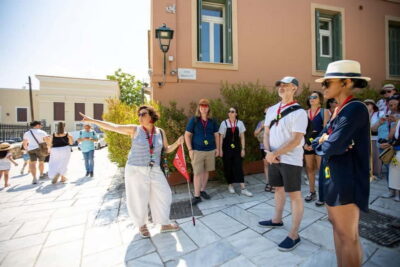
Early Morning Acropolis & Old Athens Guided Walking Tour
Read our verdict →Browse the lists this tour appears in