
Review · WALKING TOURS
Athens: Guided Street Art Walking Tour
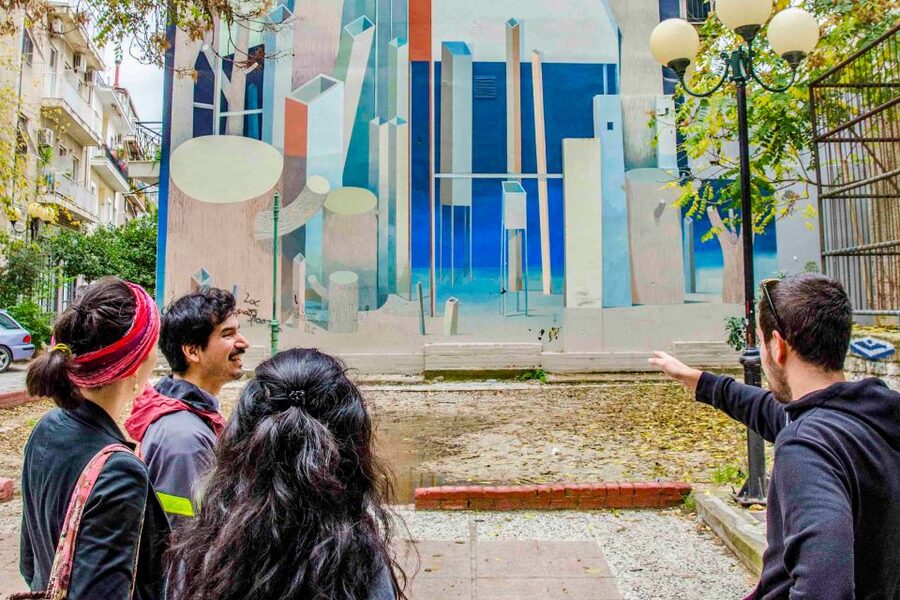
Athens reveals its modern character on its walls. This three-hour walk takes you beyond the Acropolis and into Psyri, Gazi, and Monastiraki, where murals, tags, stencils, and large-scale pieces tell stories about politics, hardship, identity, and daily life. Your guide is a working or former street artist, not simply someone reciting dates.
I like two things right away: the chance to learn how to read street art, and the way the walk uses art to explain present-day Greece. Guides such as Nikos, also known as Rude, have earned especially warm praise for their humor, local insight, and ability to explain artists such as WD, iNO, and Moralez. The main drawback is practical: this is a three-hour city walk through areas that may include uneven pavement, so it is not suitable for wheelchair users or people with mobility impairments.
Key points to know before you book

- A street artist leads the walk: Guides such as Nikos, Pavlina, Elisabeth, and others bring first-hand knowledge of the local art scene.
- Three central neighborhoods provide the setting: The route connects Thiseio, Psyri, Gazi, and Monastiraki, finishing in Psyri.
- The art comes with context: You learn how works relate to Greece’s economic and social crisis, politics, architecture, and everyday life.
- It suits families with older children: Several participants specifically enjoyed it with children and teenagers, including ages 11, 12, and 15.
- You pay for interpretation, not transport: At $57 per person, the value comes from access to local knowledge and places you might miss on your own.
- Comfortable shoes matter: You will walk for three hours, and the tour is not designed for wheelchair users or people with mobility limitations.
Why Athens street art deserves three hours

Athens is often introduced through ancient stone: the Acropolis, the Agora, marble columns, and archaeological museums. Those places matter, but they do not tell the whole story. The city’s walls offer a different record, one shaped by young artists, political anger, financial pressure, neighborhood change, and a strong urge to be seen.
This walk gives you tools for understanding that record. You are not simply taken from one colorful wall to the next for photographs. The guide explains different styles, points out recurring symbols, and discusses the people behind the work. That makes a major difference. Without context, graffiti can look like decoration or visual noise. With context, you begin to notice choices in color, scale, placement, and subject.
The best part is the link between art and modern Greek life. The economic crisis of recent decades appears in the concerns of many artists, along with protest, uncertainty, and social criticism. The tour does not replace a history lesson, but it gives you a direct way to see how public art responds to events that still shape Athens.
Nikos Rude is often singled out for his ability to explain both the art and the city around it. Other guides named in the feedback include Pavlina, Elisabeth, and Achilles. The exact guide depends on the departure, but the central idea remains the same: you explore with someone close to Athens’s street art scene.
More Walking Tours in Athens
- Athens: Acropolis and Parthenon Guided Walking Tour
★ 4.6 · 5,882 reviews - Greek Food Walking Tour in Athens
★ 5.0 · 4,740 reviews - Acropolis: Acropolis and Parthenon Guided Walking Tour
★ 4.7 · 3,442 reviews
Starting at Thiseio near the Greek Archaeologists’ Association
The meeting point is in front of the Association of Greek Archaeologists in Thiseio. This is a useful place to begin because it sits close to major central sights while leading you toward a less formal side of Athens.
You can reach the meeting point by taking the green line to Thissio. Another option is the blue line to Monastiraki, followed by a walk along Adrianou Street. Check the exact start time and allow a few extra minutes for the walk from the station, especially if you are unfamiliar with central Athens.
The starting point also creates a nice contrast. You begin near one of the city’s archaeological centers, then move into neighborhoods where the story is written in paint on shutters, walls, abandoned buildings, and working streets. That shift is part of the experience.
Bring comfortable shoes. Three hours on foot can feel long in hot weather, and the route is not suitable for wheelchair users or people with mobility impairments. The tour does not include transportation, so you are responsible for getting to Thiseio and making your own way onward after it ends.
Psyri: Athens told through walls and side streets

Psyri is the tour’s finishing area and one of its main settings. It is close to Monastiraki, but it can feel quite different from the main sightseeing paths. Here, street art sits among older buildings, small businesses, cafes, bars, and narrow streets.
The guide helps you distinguish between different kinds of wall work. A large mural made for public viewing has a different purpose from a quick tag or an image placed in response to another artist. You may also hear about how works change over time, since new pieces can cover older ones and city walls are never entirely fixed.
This is where local interpretation becomes important. The guide can explain not only what an image might represent, but also why its location matters. A work placed in a busy passageway sends a different message from one painted on a neglected wall. A political image may speak to the neighborhood around it, not just to the person holding a camera.
Psyri also gives you useful options after the tour. Several guides have recommended nearby restaurants, bars, and cafes, and one guide included a coffee stop during the walk. These suggestions are not an official part of the itinerary, but they can help you continue exploring the area after the group separates.
The drawback is that Psyri is not a gallery with a neat display order. You may need to look up, down side streets, and across building fronts. That is part of the charm, but it means the experience depends on paying attention rather than waiting for a fixed sequence of exhibits.
Gazi: industrial character and large-scale work

The walk also visits Gazi, a neighborhood with a strong connection to contemporary Athens and a more industrial feel. The area is known for cultural venues and nightlife, but the street art gives you another way to understand it.
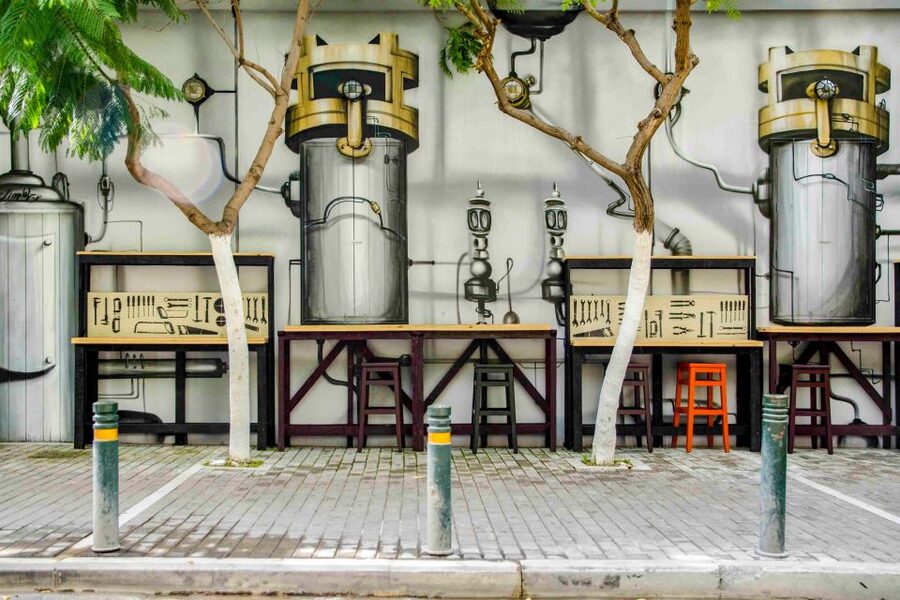
Here, the scale of some works can help you see how artists use a building as a canvas. A guide familiar with the local scene can point out technique, style, and authorship, including work linked to artists such as iNO, WD, Moralez, and others. The focus is not simply on naming an artist. You learn what makes one piece different from another.
That matters if you are new to graffiti. A guide can show you how lettering, portraiture, stencils, abstract shapes, and political images function in public space. You may also hear about the difference between commissioned work and unauthorized pieces, although the exact discussion can depend on the guide and the art present on the day.
Gazi is one of the places where the tour can feel most different from a standard Athens sightseeing walk. You are still in the central city, but the focus is on recent creative life rather than temples and ancient monuments. This contrast is especially useful if you already plan to visit the Acropolis and archaeological sites.
More street art walks in Athens:
- Athens Street Art Walk
★ 5.0 · 309 reviews - Awesome Street Art Tour in Athens with a Local Expert Small-Group
★ 5.0 · 150 reviews - Athens Urban Street Art Tour
★ 5.0 · 98 reviews - Athens street art tour
★ 5.0 · 27 reviews
Monastiraki: a busy center with a different view

Monastiraki is one of Athens’s best-known central areas, with easy metro access and a heavy concentration of shops, food spots, and sightseeing traffic. It can feel more familiar than the smaller streets of Psyri or parts of Gazi.
The tour uses Monastiraki as part of its wider street art story rather than treating it as a stand-alone attraction. The guide can show you how art appears beside historic structures, commercial streets, and everyday city movement. You may pass walls that many people photograph without understanding what they are seeing.
This section is useful for learning how Athens mixes old and new. A painted wall can sit close to a historic building, and the visual clash is not accidental. It reflects the city itself, where ancient monuments, modern businesses, political messages, and informal art occupy the same limited space.
If you have already walked around Monastiraki, the tour can still add value because you are likely to notice details you missed. If you have not yet visited, the stop gives you a practical introduction to one of central Athens’s key areas. The tradeoff is that this part may feel less quiet and less offbeat than the smaller neighborhood streets.
What the guide adds to the art

The guide is the heart of this experience. A general city guide may identify a mural, but a street artist can discuss how the work was made, how styles differ, and what might be happening beneath the surface.
Nikos is the name that appears most often in the available feedback, sometimes identified as Nicos or Nikos Rude. He is described as relaxed, funny, open, and highly informed about Athens’s art scene. His background as an artist helps him explain why particular works matter instead of offering only a basic description.
Pavlina is also praised for linking street art to struggle, revolution, and the places where younger Athenians gather. Elisabeth has been described as an engaging guide, while Achilles led earlier departures. The provider offers tours in English and French, so check the language when you book.
The strongest teaching point is that the guide encourages questions and personal reactions. You do not need an art degree. In fact, the tour works partly because the guide gives you simple ways to look at the work, then lets you form your own view.
The style of the tour can vary with the individual guide and the group. Some departures may feel like a lively conversation, while others may focus more on explanation. If you prefer a more personal outing, a private group is available.
How the tour connects art with modern Greece
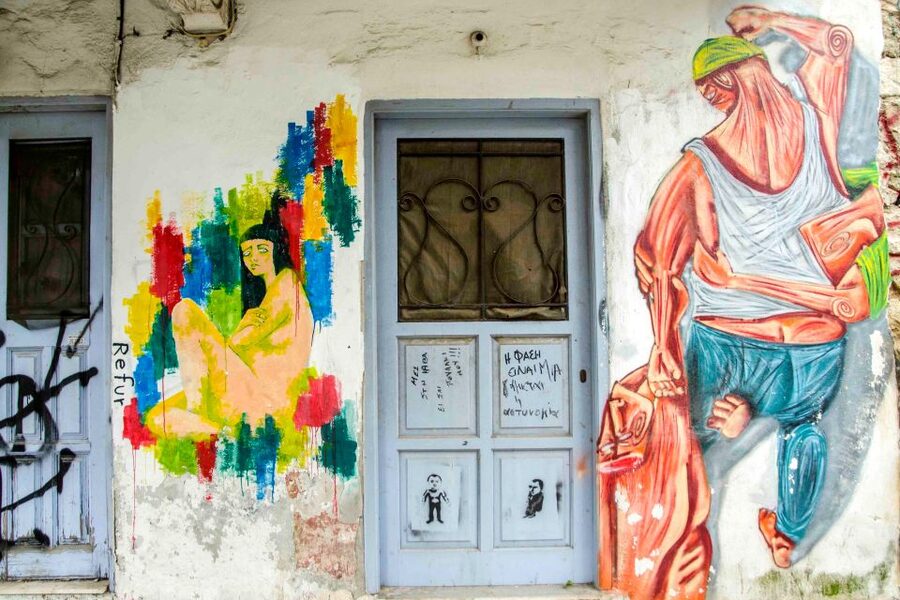
The subject reaches beyond painting technique. Athens street art often responds to the country’s economic and social troubles, and the guide explains how those pressures appear in public images.
You may discuss protest, frustration, solidarity, political ideas, and the changing identity of the city. The art offers an immediate way to talk about issues that can seem abstract in a book. A symbol on a wall may communicate anger, grief, humor, or resistance in a few square meters.
That does not mean every image has one official meaning. Good interpretation leaves room for uncertainty. The guide can explain the background and likely references, but you also get to consider what the piece says to you.
I particularly like this approach for anyone who has already seen Athens’s ancient sights. The city’s classical past is unavoidable, but modern Athenians live amid current pressures and debates. This tour gives you a view of that present-day city without pretending that one walk can explain everything.
Is $57 a fair price?
The price is $57 per person for three hours. That is not the cheapest way to see Athens, especially since transportation, food, and drinks are not included. Still, the price can make sense if you value interpretation and access to local areas more than a simple self-guided walk.
You could see plenty of graffiti for free by wandering through central Athens. The problem is knowing who made it, what it refers to, and which works are worth seeking out. You might also miss smaller streets or spend time looking at pieces that have already been altered or painted over.
This tour buys you a focused route and an informed companion. It is particularly good value if you are interested in art, architecture, politics, photography, or contemporary culture. Families with artistic teenagers may also find the cost worthwhile because the subject gives younger people a direct way into Athens.
The value drops if you are only mildly curious about street art or want a classic sightseeing tour. You will not spend the walk inside museums or at major archaeological monuments. Choose it because you want modern Athens, not because you are trying to check off the Acropolis.
Who will enjoy this walk most?

I would recommend it to:
- Art lovers who want to understand graffiti rather than only photograph it
- Visitors who have already seen the main ancient attractions
- Teenagers and older children who may prefer a visual, current subject
- Anyone interested in Greek politics, social change, and everyday city life
- Photographers looking for a different way to explore central Athens
- Independent-minded visitors who enjoy local cafes, side streets, and neighborhood recommendations
It is less suitable for anyone who needs a step-free route or finds three hours of walking difficult. The tour also requires curiosity. If you want a tightly scripted list of famous sights, this is not the right match.
The route can work early in an Athens stay because it helps you understand the city’s central neighborhoods. It can also work near the end of a visit, when you are ready to move beyond ancient history and see Athens with fresh eyes.
Practical details that affect your day
The tour lasts three hours and has three starting location options listed in Thiseio. The meeting point is in front of the Association of Greek Archaeologists. You can arrive on the green line at Thissio, or use Monastiraki on the blue line and walk along Adrianou Street.
English and French are available. A private group can be arranged, which may suit families or friends who want more control over questions and pace. The standard experience is on foot, with no transportation included.
The route finishes in Psyri. That is convenient for finding food or continuing around central Athens, but you should not assume the tour returns to Thiseio. Plan your onward route from Psyri instead.
Cancellation is free up to 24 hours before the start, and you can reserve now and pay later. Those terms are useful if your Athens schedule is still shifting, but the key practical decision is still the walking requirement. Wear comfortable shoes and consider the heat when choosing your start time.
Should you book the Athens street art walk?
Book it if you want to understand Athens as a living city, not only as an archaeological destination. The guide’s first-hand connection to street art, the visits to Psyri, Gazi, and Monastiraki, and the discussion of Greece’s economic and social crisis give the walk a clear purpose.
I would be especially inclined to book if you are traveling with teenagers, enjoy political art, or have already planned the major ancient sights. The high score of 4.9 from 182 ratings also fits the consistent strengths of the experience: engaging guides, a good pace, unusual neighborhoods, and strong explanations.
Skip it if mobility is a concern, if you dislike walking for three hours, or if your main goal is ancient Athens. For everyone else, $57 is a reasonable price for a focused look at a side of the city that is easy to pass without understanding.
FAQ
How long is the Athens street art walking tour?
The tour lasts three hours.
How much does the tour cost?
The listed price is $57 per person.
Which neighborhoods does the tour visit?
The route includes Psyri, Gazi, and Monastiraki, with the meeting area in Thiseio and the finish in Psyri.
Where does the tour meet?
The meeting point is in front of the Association of Greek Archaeologists.
How can I reach the meeting point?
You can take the green line to Thissio. You can also take the blue line to Monastiraki Metro Station and walk along Adrianou Street.
Where does the tour finish?
The tour finishes in Psyri.
Which languages are available?
The tour is offered in English and French.
Is a private group possible?
Yes. A private group option is available.
Is transportation included?
No. The experience includes the street artist guide and walking tour, but not transportation.
Is the tour suitable for wheelchair users?
No. The activity is not suitable for wheelchair users or people with mobility impairments. Comfortable shoes are recommended.
New on the Athens shelf
- Acropolis of Athens, Parthenon and Acropolis Museum private tour with dinner★ 5.0 · 77 reviews
- Small-Group Wine Tour in Athens with Tasting★ 5.0 · 33 reviews
- Private Athens Transfer Airport/Port -Greek Tours-Hourly service★ 5.0 · 88 reviews
- VIP Private Guided Tour of Athens Acropolis & Plaka in a Sidecar★ 5.0 · 108 reviews
- Athens Moonlight Waling Tour with Drinks and Meze Dishes★ 5.0 · 259 reviews
- Private Athens Landmarks Layover Tour★ 4.5 · 41 reviews
- Departure Transfer from Athens City to Athens Airport★ 5.0 · 41 reviews
- Classic Athens Food Tour with Local Drink & Market Visit★ 5.0 · 34 reviews
Walking Tours, compared.

Acropolis: Acropolis and Parthenon Guided Walking Tour
Read our verdict →
Acropolis monuments & Parthenon Walking Tour with Optional Acropolis Museum
Read our verdict →
Knossos: Knossos Palace Skip-the-Line Guided Walking Tour
Read our verdict →

Athens Authentic Greek Food Walking Tour (Small Group)
Read our verdict →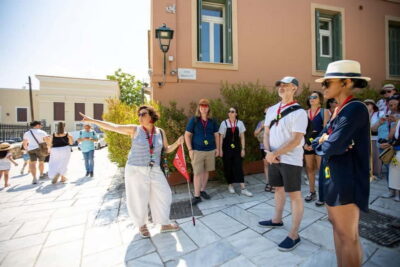
Early Morning Acropolis & Old Athens Guided Walking Tour
Read our verdict →Browse the lists this tour appears in