Review · STREET ART
Awesome Street Art Tour in Athens with a Local Expert Small-Group
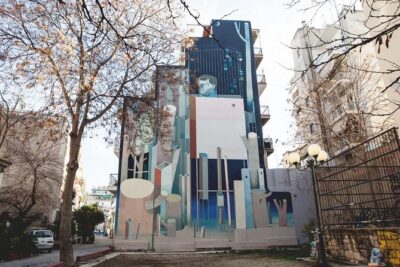
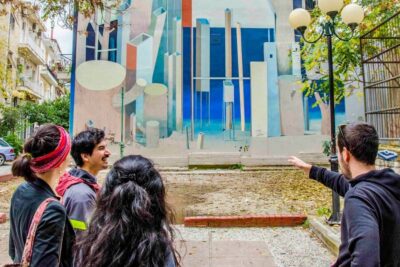
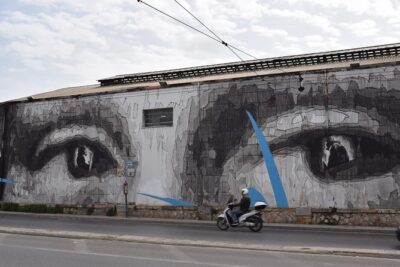
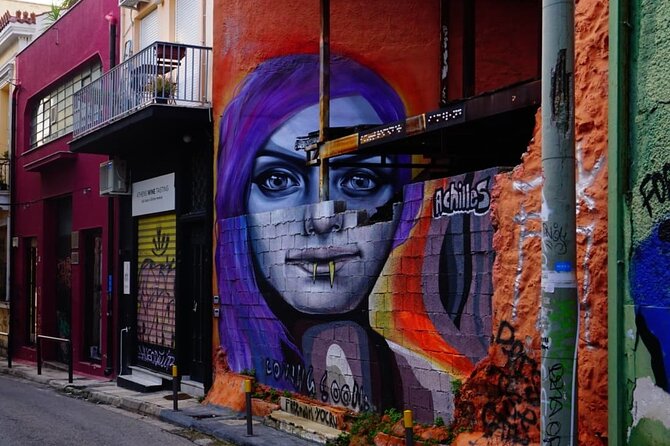
Athens reveals a different face when you look above the shopfronts and down the side streets. This three-hour street art walk links Gazi, Psirri, Monastiraki, Omonia Square, and Kerameikos, with guides such as Kalliopi, Thomas, Katerina, and Athena explaining the artists, symbols, politics, and local stories behind the walls.
I like two things right away: the small limit of eight people, which gives you room to ask questions, and the guide’s local advice on food, coffee, cocktails, culture, and less touristy places. The tour can also help you get your bearings in central Athens before you explore on your own.
The main consideration is the walking time and schedule. The route may last close to three hours, sometimes longer, but one evening departure ended in darkness, making some artwork hard to see. Choose a morning or earlier start if the murals matter more to you than Athens after dark.
Key points at a glance
- More than 30 artworks: Expect a broad look at murals, graffiti, and large-scale street pieces across central Athens.
- Five contrasting areas: The route moves through Gazi, Psirri, Monastiraki, Omonia Square, and Kerameikos.
- Local guides with different strengths: Kalliopi is especially praised for explaining artists, styles, politics, and technique. Thomas adds a friendly, informal approach and often shares personal recommendations.
- Small-group format: The maximum is eight people, so questions and photo stops are manageable.
- Useful city advice: Guides can suggest places to eat, drink, explore, and find alternative cultural spots.
- Flexible timing: Morning and evening choices help you fit the walk around archaeological sites and other plans.
Athens street art is more than decoration

The best reason to take this tour is that it gives you a way to read Athens from the walls outward. A mural may show a face, animal, political slogan, or abstract pattern, but the guide adds the missing pieces: who made it, what style it uses, and how it fits into the city’s social and political life.
That context matters because street art changes quickly. A piece can be painted over, damaged, or hidden by parked cars. On your own, you may notice the color but miss the artist’s name or the reason the work appeared there. With a local expert beside you, the streets become a kind of open-air gallery without entrance fees.
I also like that the walk is not limited to famous monuments. You still move through well-known central districts, but the focus shifts to side streets, building walls, local businesses, bakeries, and everyday Athens. It is a useful counterpoint to the Acropolis and the ancient Agora.
The guides bring different personalities to the route. Kalliopi is repeatedly praised for explaining artistic styles, techniques, symbolism, and the motives behind individual works. Thomas is described as warm and entertaining, and he has sent personal lists of favorite places after the walk. Katerina has been especially attentive to practical needs, including shade and an earlier bathroom stop.
The experience is not dependent on having a full group. It can still operate with only two people, and there has even been a private-feeling departure for one person. That makes the small-group promise meaningful, rather than just a marketing line.
More street art walks in Athens:
- Athens Street Art Walk
★ 5.0 · 309 reviews - Athens: Guided Street Art Walking Tour
★ 4.9 · 182 reviews - Athens Urban Street Art Tour
★ 5.0 · 98 reviews
Gazi: a strong opening among converted industrial spaces
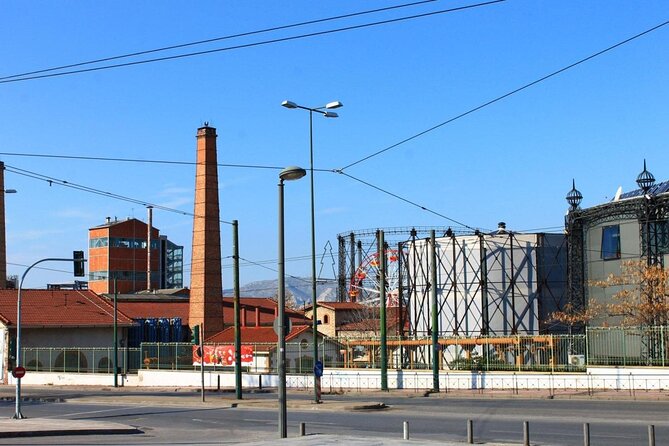
The walk begins in Gazi, where the first section lasts about 30 minutes. This is a good place to start because the area has a more alternative feel than the postcard center, with former industrial character, nightlife, restaurants, and large walls that suit murals.
At this point, your guide will begin explaining how to distinguish quick graffiti tags from more developed street art. That difference is useful throughout the afternoon or evening. The tour is not simply a hunt for colorful walls. It gives you a basic vocabulary for looking at composition, lettering, scale, technique, and intent.
Gazi is also a practical starting point for the route. The meeting point is at Persefonis 41, in Athens 118 54. Check the exact location before setting out, since a wrong turn in central Athens can cost you the first part of the walk.
Expect a short stop here rather than a long gallery-style presentation. The main value is orientation: you begin to understand the visual language of Athens before moving into denser neighborhoods.
Psirri: the longest stretch and the most street-level atmosphere
The Psirri section takes about an hour, making it the longest stop. This is where the tour has time to slow down and connect art with the surrounding streets, shops, food businesses, and local life.
You may see several different approaches to street art in a short distance. Some works are carefully planned murals, while others are rougher, smaller, or more political. The guide’s explanation helps you see why those differences matter instead of treating every painted wall as the same kind of work.
Psirri is also a good place to ask questions. The longer stop gives you time to ask about an artist’s background, the meaning of a symbol, or why a particular wall was chosen. Several guides have been praised for answering questions patiently and for adding history and culture beyond the artwork itself.
The district can be lively and crowded, so keep your attention on the group as you walk. The route is urban, not a quiet museum visit. You will be moving along ordinary streets, and the quality of a view may depend on parked vehicles, pedestrians, or the angle of the wall.
Monastiraki: familiar Athens with a different focus

The Monastiraki section lasts about 30 minutes. Many people already plan to visit this central area for its market, food, views, and access to ancient sites, but the street art route shows you another layer.
This stop works well because it connects the alternative art scene with one of Athens’s busiest visitor zones. You can see how old neighborhoods and modern public art share the same streets. The contrast is part of the appeal: an ancient city center is not frozen in the past.
Do not expect a formal museum collection here. The attraction is the changing relationship between wall, neighborhood, and passerby. A guide can point out details that are easy to ignore when you are shopping, looking for a restaurant, or trying to reach the Acropolis.
Monastiraki is also a useful mental marker in the walk. By this stage, you should have a clearer sense of the artists and styles introduced earlier. If you find a piece especially interesting, ask the guide to explain what separates it from a simple tag or advertisement.
A few more Athens options worth putting side by side
- Athens: Acropolis & up to 5 Archaeological Sites Combo Pass
★ 4.4 · 12,619 reviews - Athens: Acropolis Ticket with Optional Audio or Live Guide
★ 4.2 · 11,055 reviews - Athens: Acropolis, Parthenon & Acropolis Museum Guided Tour
★ 4.8 · 9,316 reviews - Athens: Acropolis and Parthenon Guided Walking Tour
★ 4.6 · 5,882 reviews
Omonia Square: urban change and political expression
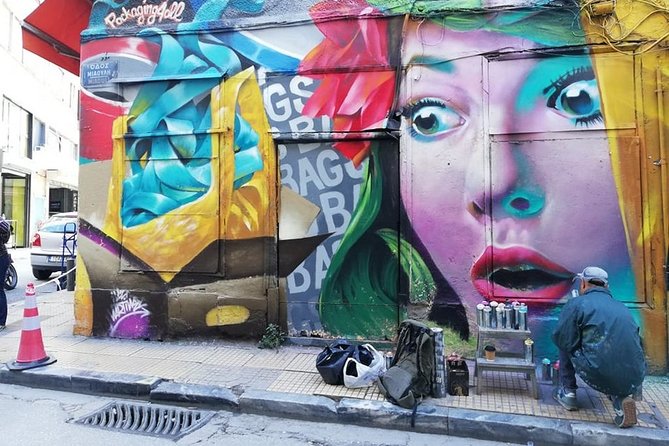
The route continues to Omonia Square for roughly 30 minutes. This part brings the tour into a large, highly urban setting and helps place street art within the wider story of Athens.
The art here can feel more direct and political. Guides have discussed the cultural and political meaning of works in a reflective way, without reducing every mural to a single message. That approach is valuable because public art often has several readings, and the person looking at it brings part of the meaning too.
Omonia also shows why this is a walking tour rather than a list of picture stops. You are seeing how art sits alongside traffic, commerce, apartment buildings, and public space. It is less polished than an indoor exhibition, but that is precisely the point.
This section may feel more urban and less charming than Psirri or Kerameikos. If you want only pretty walls and picturesque lanes, this may not be your favorite part. If you want to understand how Athens uses public space, it earns its place on the route.
Kerameikos: finishing near the alternative side of Athens
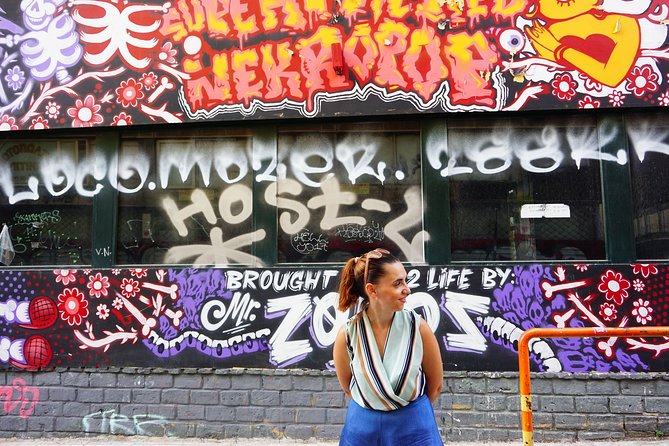
The walk ends in Kerameikos, with about 30 minutes devoted to the neighborhood. The endpoint is at Giatrakou 9, Athens 104 36, so you finish in Kerameikos rather than returning to the starting point.
That matters when you plan the rest of your day. You will need to make your own way onward after the tour, and public transportation tickets are not included. The area is a useful place to continue exploring, especially if you want more food, drinks, or alternative cultural stops.
Kerameikos gives the tour a fitting finish because it combines archaeological associations with a modern creative scene. The route does not ask you to choose between old Athens and new Athens. Instead, it lets you see how both exist on the same city streets.
Your guide may also use the final section to share personal recommendations. Thomas has sent favorite-place suggestions after the walk, while Kalliopi has offered practical advice on food, coffee, cocktails, and places outside the standard sightseeing circuit.
What the three-hour timing really means
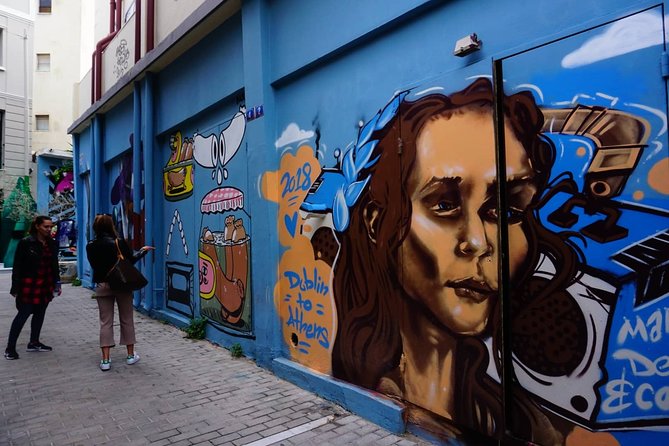
The advertised duration is about three hours, but you should treat that as an estimate. The walk has sometimes run beyond three hours, especially when the group moves slowly, asks many questions, or takes a rest stop. In hot weather, a pause is sensible rather than wasteful.
It can also finish earlier. One departure ended after roughly two hours and 20 minutes, and the guide explained that the total time can change with the group’s pace and the conditions. That flexibility may suit you if you have dinner plans, but it can disappoint if you expect a fixed three-hour program.
You will be walking across several neighborhoods, so comfortable shoes matter. Bottled water is included, but food and snacks are not. A coffee stop may happen, as one group experienced, but you should not treat that as a guaranteed included break.
The time of day deserves careful thought. Morning departures give you the best chance of seeing details clearly and leave your evening free. Evening departures may be appealing in summer or if your daytime is reserved for museums and archaeological sites, but one departure became too dark for the art to be easy to see by the end.
Why the small group changes the experience

The group maximum is eight people. That is a strong number for an urban walk because everyone can usually stand close enough to hear, ask questions, and see the wall being discussed.
Small groups also make the practical parts easier. The guide can help take photographs so nobody has to disappear from every group picture. If someone needs shade, a bathroom break, or a slower pace, the guide has more ability to adjust than on a large coach-style tour.
The format is especially useful for families and mixed-age groups. One family used the walk to give two teenage daughters a different way to understand Athens. Children and teenagers may not want another formal history lecture, but the combination of large images, city streets, and stories about artists can hold their attention.
Still, a small group does not turn the walk into a private tour. You remain in public streets, and the guide has to balance different interests and walking speeds.
The price and what you receive for $59.28
At $59.28 per person, this is not the cheapest way to spend three hours in Athens, especially since all the street art itself is free. The value comes from the interpretation, route planning, local orientation, and personal advice.
You are paying for an expert who knows where to look, which artists to discuss, and how to connect the art with Greek culture and current issues. You also receive bottled water, photos of murals from the walk, and optional help taking pictures during the experience.
The tour may be good value if you would otherwise wander without understanding what you are seeing. It is less compelling if you are already familiar with Athens street art or prefer to explore independently with a camera and no fixed pace.
Group discounts may lower the cost for some bookings. The experience is commonly reserved about 24 days ahead, which suggests that planning early is sensible if your dates are fixed, especially for a maximum group of eight.
Who will enjoy this walk most
I would choose this tour for you if you like art, city neighborhoods, politics, photography, or local food advice. It suits repeat visitors who have already seen the major ancient sites and want to understand present-day Athens from another angle.
It also works well early in a stay. The route crosses several central districts, and the guide can point you toward places to eat, drink, and explore later. Think of it as both an art walk and a useful orientation to the city’s alternative side.
Families with older children and teenagers can get more from this than from another conventional sightseeing circuit. Couples and groups of friends may also appreciate the relaxed pace and photo help.
I would be more cautious if you have limited mobility, dislike walking in busy city streets, or need a precise finish time. Most people can participate, and service animals are allowed, but the route covers multiple neighborhoods and may include pauses or timing changes.
Should you book the Athens street art tour?
Book it if you want more than a list of murals. The strongest part is the guide’s explanation of artists, technique, symbolism, politics, and neighborhood life, particularly when Kalliopi or another engaged guide leads the group.
Choose a morning or earlier departure if seeing every detail is important. Bring comfortable shoes, use the included water, and leave room in your schedule for the walk to run long. Remember that you finish in Kerameikos, not at the starting point.
Skip it if you want a short, fixed-time activity or if you already know Athens street art well. For most curious visitors, though, the combination of a tiny group, more than 30 works, and practical local advice makes this a worthwhile way to see a less formal side of Athens.
FAQ
How long does the Athens street art tour last?
The tour lasts about three hours. The actual time can change depending on walking speed, questions, rest stops, and weather.
What neighborhoods does the tour visit?
The route includes Gazi, Psirri, Monastiraki, Omonia Square, and Kerameikos.
How many people can join the tour?
The group has a maximum of eight people.
Is the tour offered in English?
Yes. The experience is offered in English.
Are morning and evening departures available?
Yes. You can choose between morning and evening tour times.
What is included in the price?
The tour includes a guided street art walk, bottled water, photos of murals from the tour, artist background stories, local recommendations, and optional help taking photographs.
Are food and snacks included?
No. Snacks and food are not included, though the guide can suggest local places to eat.
Is public transportation included?
No. Public transportation tickets needed before or after the tour are not included.
Where does the tour begin and end?
The tour begins at Persefonis 41, Athens 118 54, Greece. It ends at Giatrakou 9, Athens 104 36, in the Kerameikos neighborhood.
What happens if the weather is poor?
The experience requires good weather. If it is canceled because of poor weather, you can choose another date or receive a full refund.
New on the Athens shelf
- Acropolis of Athens, Parthenon and Acropolis Museum private tour with dinner★ 5.0 · 77 reviews
- Small-Group Wine Tour in Athens with Tasting★ 5.0 · 33 reviews
- Private Athens Transfer Airport/Port -Greek Tours-Hourly service★ 5.0 · 88 reviews
- VIP Private Guided Tour of Athens Acropolis & Plaka in a Sidecar★ 5.0 · 108 reviews
- Private Athens Landmarks Layover Tour★ 4.5 · 41 reviews
- Athens Moonlight Waling Tour with Drinks and Meze Dishes★ 5.0 · 259 reviews
- Departure Transfer from Athens City to Athens Airport★ 5.0 · 41 reviews
- Classic Athens Food Tour with Local Drink & Market Visit★ 5.0 · 34 reviews