
Review · ACROPOLIS TOURS
Athens: Parthenon, Acropolis and Museum Small Group Tour
The best part of this Athens tour is the pairing of the hilltop monuments with the Acropolis Museum. You first see the Parthenon, Erechtheion, and Temple of Athena Nike in their original setting, then examine surviving sculptures and the Parthenon frieze in a calm, well-lit museum. Pre-reserved tickets also remove one major hassle at a busy Athens sight.
I like the clear three-hour structure and the steady pace. Guides such as Eva, Vicky, Frosso, and Lisa are praised for making mythology and architecture easy to follow, while the headsets help you hear even when the Acropolis is crowded. The main drawback is physical: this is a steep, uneven walk with no elevator, and a group advertised as small may still contain around 20 people on a busy departure.
Key points to know before booking
- Two essential Athens sights in one visit: See the Acropolis first, then connect its ruins with original works in the Acropolis Museum.
- Reserved entry saves time: You skip the regular ticket-buying line, though high-season timed-entry queues can still form.
- Guides give the ruins meaning: Expect stories about Greek gods, democracy, architecture, drama, and daily life.
- Headsets are genuinely useful: They let you hear explanations above the noise of the site.
- Early departures are smartest: The 8 a.m. option can mean fewer people and a more comfortable climb.
- Prepare for a real uphill walk: Wear proper shoes, bring water and a sun hat, and leave strollers and large bags behind.
Starting at the Acropolis Metro Station
Your meeting point is outside the Acropolis Metro Station at Makrigianni 7. If you arrive by metro, take the Makrygianni or Dionysiou Areopagitou exit, go up to street level, and look for the sign marked Akropoli. Your guide should be waiting with a sign showing your names.
Arrive five to ten minutes early. This matters here because your Acropolis admission is tied to a specific entry time. Tickets can expire within five to ten minutes, and the group cannot wait for late arrivals once the tour has started.
The meeting point is convenient if you are staying in central Athens. Transport is not included, so you make your own way there. Allow extra time if you are walking from another neighborhood or transferring by metro.
More Museum Tours in Athens
- Athens: Acropolis, Parthenon & Acropolis Museum Guided Tour
★ 4.8 · 9,316 reviews - Athens: Acropolis, Parthenon & Acropolis Museum Guided Tour
★ 4.8 · 3,579 reviews - Acropolis monuments & Parthenon Walking Tour with Optional Acropolis Museum
★ 5.0 · 2,678 reviews
Walking up the Acropolis Hill
The tour begins with the climb toward the Acropolis. The route is not a gentle museum stroll. You will walk uphill over uneven ground, often in full sun, with plenty of stopping for explanations and photographs.
Your guide uses headsets, which is one of the practical strengths of this outing. Instead of pressing close to hear every word, you can keep a little space while still following the commentary. This is especially helpful when several groups are gathered around the same monument.
The pace is generally manageable. Guides are praised for pausing for water, photographs, questions, and short rests. On hot days, that care matters. Still, you should be honest about your fitness before booking. The tour is not suitable for wheelchair users or people who need walkers, and there is no elevator access during the route.
The Acropolis: more than a viewpoint
At the Acropolis, you get the broad setting first. The hilltop is not just a single temple. It is a collection of sacred buildings, gateways, theaters, and sanctuaries that reflect how ancient Athens used this high point for worship, civic identity, drama, and public memory.
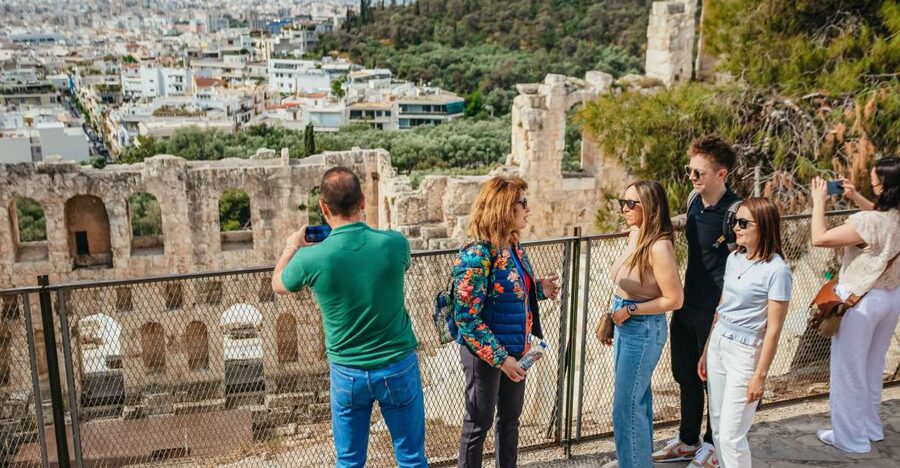
The views are a major reward. From the summit, you can look across Athens and see why this rocky hill has shaped the city’s identity for centuries. Your guide also helps you look past the famous postcard image and notice the layout of the site.
The ruins can be hard to read on your own. Columns, foundations, and reconstructed sections make more sense when someone explains what each space was built to do. Guides such as Eva and Vicky are praised for linking the stones to Greek mythology, political life, philosophy, literature, and the city’s changing fortunes.
The Parthenon and its enduring power
You spend about 30 minutes with a guided focus on the Parthenon. That may sound brief, but it is enough for a clear introduction without turning the visit into a long lecture in the sun.
The temple is usually the emotional center of the tour. Your guide explains its design, purpose, and place in Athenian identity while giving you time to take in the scale of the building. The Parthenon is often described as a symbol of democracy and Western civilization, but the useful part is understanding how those ideas connect to the city that built it.
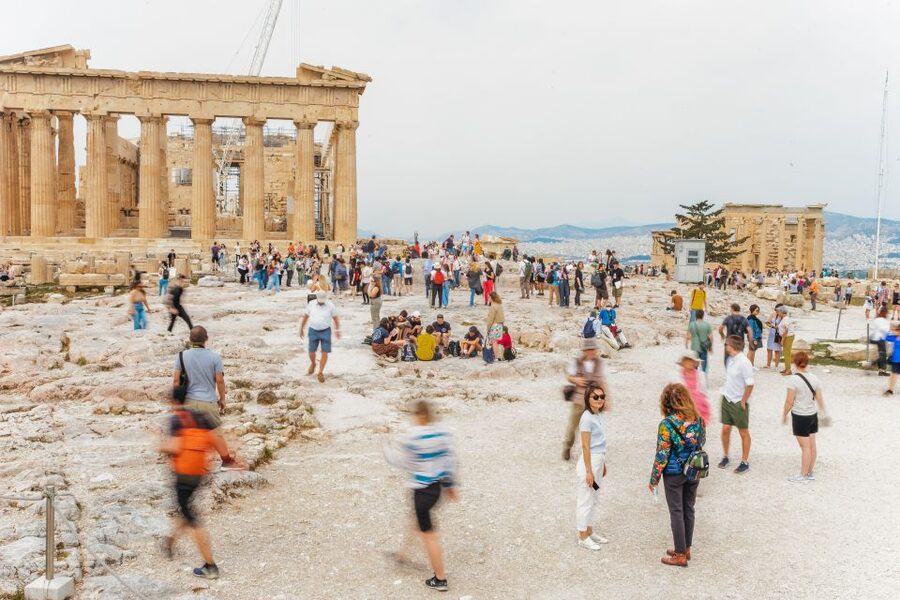
Do not expect to walk inside the Parthenon. The experience is about seeing the temple from the Acropolis grounds, studying its architecture, and hearing the stories that shaped its meaning. Crowds can make close viewing difficult, especially later in the morning, so an early start is worth considering.
More Acropolis tickets and guided visits:
- Athens: Acropolis & up to 5 Archaeological Sites Combo Pass
★ 4.4 · 12,619 reviews - Athens: Acropolis Ticket with Optional Audio or Live Guide
★ 4.2 · 11,055 reviews - Athens: Acropolis and Parthenon Guided Walking Tour
★ 4.6 · 5,882 reviews - Athens: Acropolis Ticket with Audio Guide
★ 4.0 · 3,575 reviews
Theater, temples, and the route across the hill
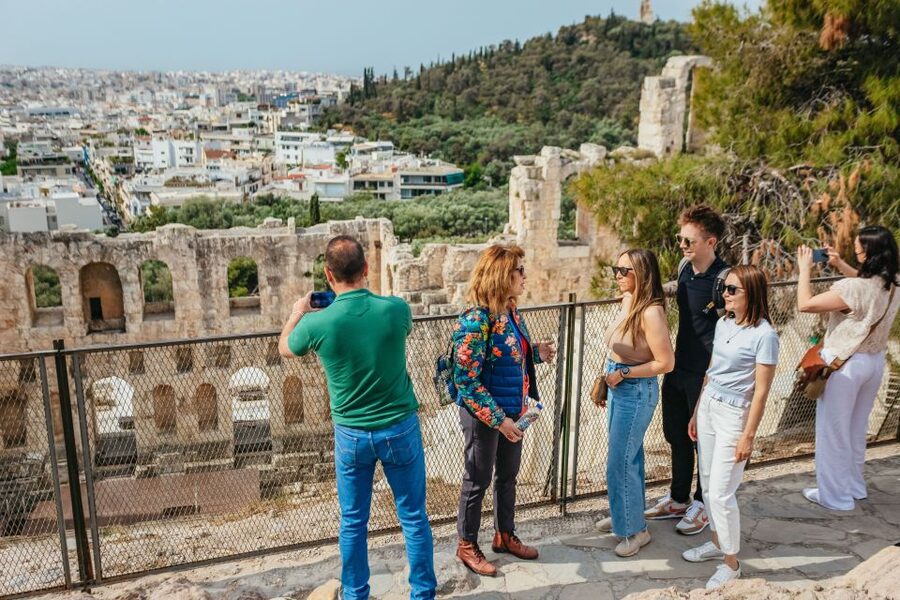
The itinerary also takes you past several important monuments. The exact amount of time at each one depends on the crowd and the guide’s pacing, but each adds a different piece to the story.
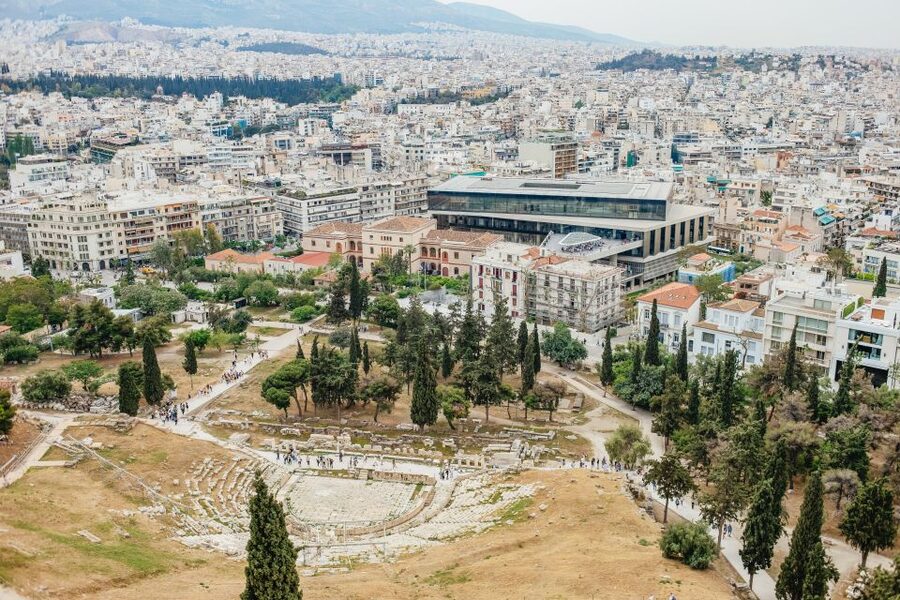
The Theater of Dionysus is where ancient Greek drama took form. You pass by the theater rather than receive a separate long stop, yet the setting helps explain the importance of tragedy and comedy in Athenian public life.
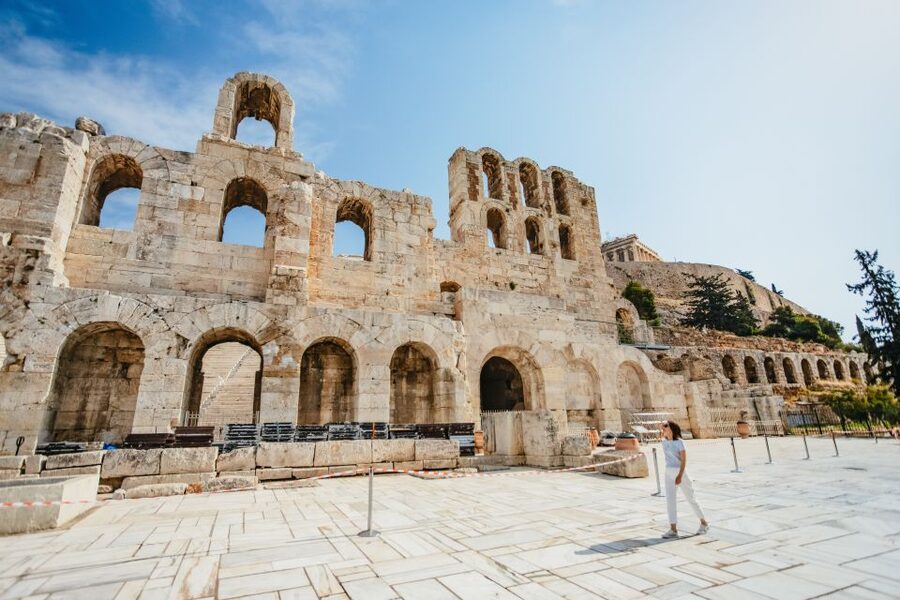
The Odeon of Herodes Atticus is another memorable sight along the approach. Its curved structure remains a striking reminder that the Acropolis was connected to performance and public gatherings, not only temples.
Near the summit, you see the Propylaea, the monumental gateway into the sacred area. You also pass the Temple of Athena Nike, a smaller structure with a powerful name: Athena in her role as victory-bringer.
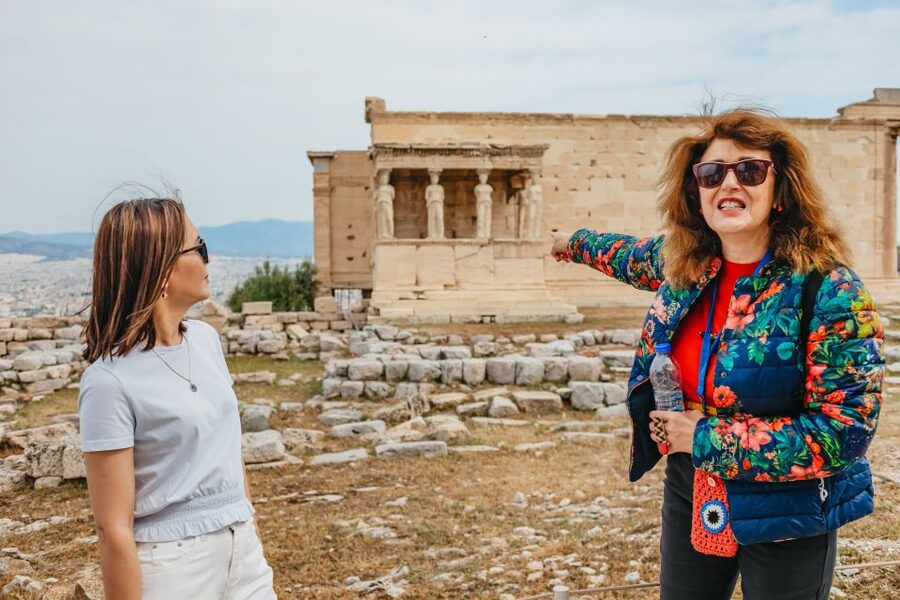
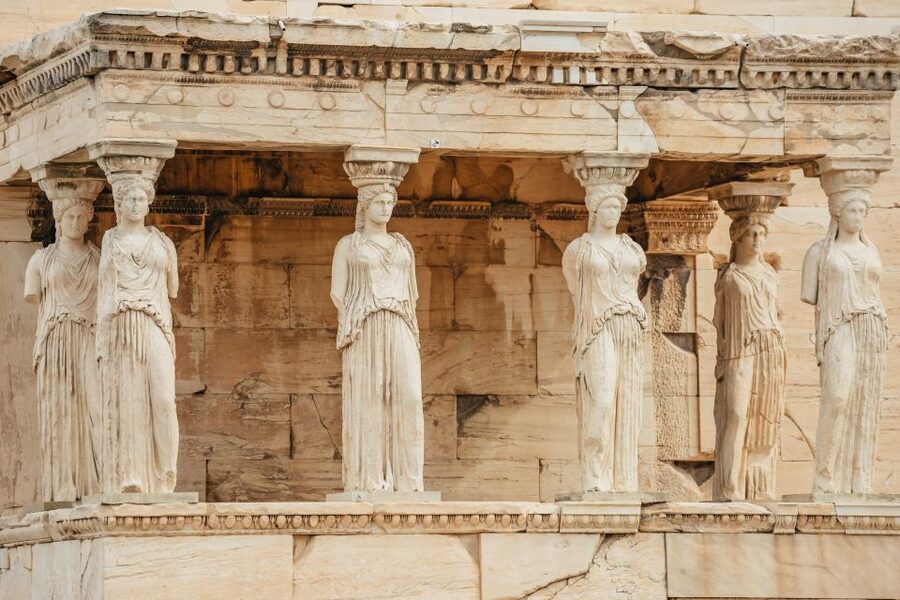
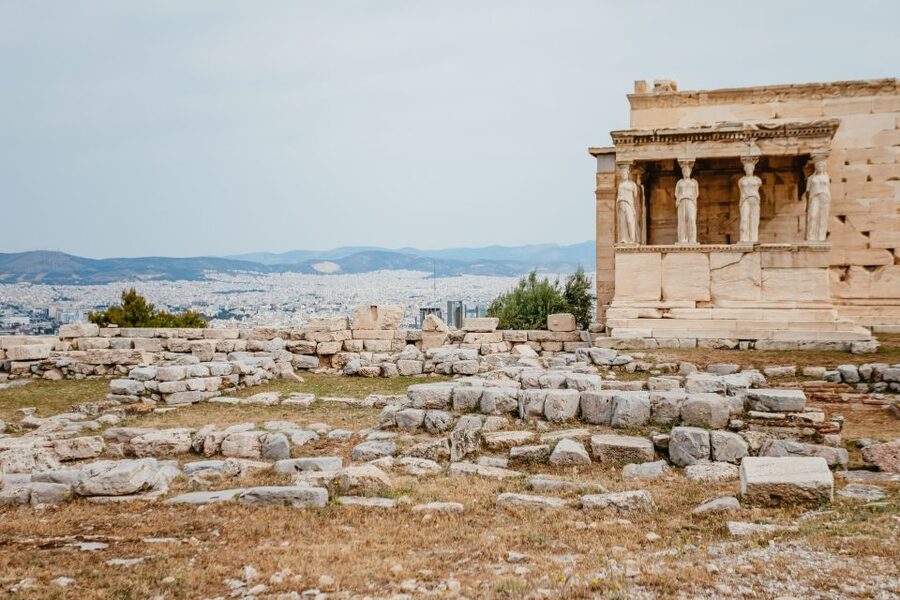
The Erechtheion is especially recognizable for its Porch of the Caryatids. Its unusual plan and sculpted female figures make it one of the most visually engaging stops, and a guide can explain why this building differs so sharply from the regular geometry of the Parthenon.
The Acropolis Museum completes the picture
After the hill, the group enters the Acropolis Museum for about 90 minutes. This order is smart. You see the buildings first, then encounter original sculptures and architectural pieces in a setting designed for close study.
The museum’s natural light helps you examine details that are difficult to see outdoors. Sculptures, reliefs, and fragments from the Acropolis temples are displayed with room to look closely. The museum also presents excavations beneath glass floors and walkways, giving you a glimpse of earlier layers beneath modern Athens.
The Parthenon gallery is a key reason to keep the museum portion. Your guide points out the original Parthenon frieze and explains how its scenes fit into the temple’s design. Seeing those pieces indoors gives you a better sense of the craft and storytelling than you can get from the monument alone.
You also get a strong view back toward the Acropolis. That visual connection matters. You can look at the museum displays, then turn toward the hill and understand how the fragments once belonged to the buildings you have just visited.
Guides including Lisa are praised for making the museum as engaging as the Acropolis itself. That is important because many visitors expect the outdoor ruins to be the main event and rush through the museum. I would not do that. The museum is where the details become easier to see and the larger story comes together.
How the guides shape the experience
The guide is the main reason to choose a tour rather than simply buy admission. The most frequently praised qualities are clear explanations, strong command of Greek history and mythology, a sense of humor, and careful group management.
Eva is noted for warm storytelling, cultural context, and attention to comfort. Vicky is praised for turning facts into memorable stories and for explaining the museum with the same care as the Acropolis. Frosso is described as lively, fluent, and good at keeping a group together, while Lisa receives praise for detailed explanations and friendly help with photographs.
The guide names available on your departure may differ. What you should expect is a licensed English or German-speaking guide, not a self-guided audio recording. The best guides ask questions, leave room for photographs, and adjust the pace to the group.
One small warning: a few guides may use questions to involve the group. Some people enjoy this, while others find repeated questions irritating. It is a minor style issue, but it shows why guide personality can affect a tour.
Group size, timing, and crowd control

The small-group format gives you a better chance to hear the guide and stay connected than a large coach excursion. The headsets add another layer of comfort, especially around the Parthenon, where several groups may gather at once.
Do not assume small means intimate. One departure had about 20 people, which still worked well because the guide kept checking that nobody had fallen behind. If you want a quieter and more personal experience, choose the private option if available for your date.
Start time matters more than many people expect. A morning departure, especially around 8 a.m., can make a clear difference at the Acropolis. Later visits may bring heavier crowds and stronger heat. Pre-reserved tickets help with access, but they do not create an empty site. During high season, even timed-entry ticket holders may wait in their own queue.
The tour lasts three hours, with roughly one hour at the Acropolis, a focused half hour at the Parthenon, and about 90 minutes in the museum. Some visits may run closer to three and a half hours depending on the pace and conditions, so avoid scheduling a tight connection immediately afterward.
Is $57 a fair price?
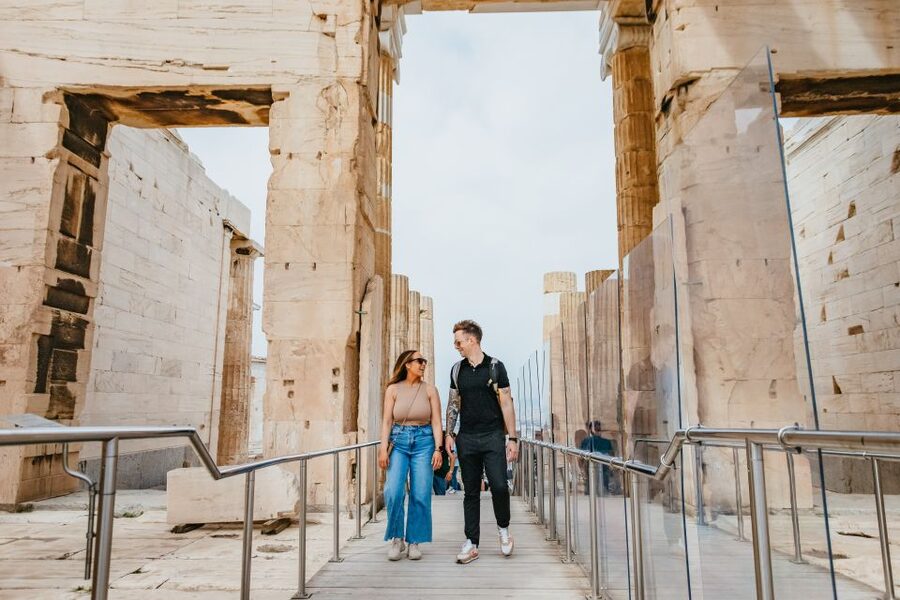
At $57 per person, this tour is not the cheapest way to enter the Acropolis. You are paying for reserved admission to both sites, a licensed guide, headsets, and a planned route that fits two major sights into one morning or afternoon.
I think the value is good if you want context and have limited time in Athens. The Acropolis can feel like a field of beautiful but confusing stones without explanation. A good guide shows you where to look, explains what survived, and helps connect the hilltop monuments to the objects in the museum.
The price is less compelling if you prefer to explore slowly on your own or already have strong knowledge of ancient Greek architecture. It is also worth checking the exact option before booking. Some versions may be offered without tickets, in which case you must bring the exact cash amount for Acropolis and museum admission. Alternative tickets are not accepted for that option.
What to bring and what to leave behind
Wear sturdy walking shoes. Sandals and flip-flops are not allowed, and the uneven uphill route makes proper footwear a sensible choice anyway.
Bring water and a sun hat. Rain is also possible, and one guide kept a group engaged through heavy rain, but wet stone can make the climb less comfortable. Large bags and luggage are not permitted, and baby strollers cannot enter the Acropolis. Families with very young children should note that the activity is not suitable for children under six, and a baby pouch is recommended instead of a stroller.
The tour is not suitable for pregnant women, people with heart problems, people with pre-existing medical conditions, or anyone with mobility limitations. Read that restriction as practical advice, not fine print. The hill requires steady walking and there is no elevator access during the tour.
Who should book this Athens tour?
I would choose this tour for a first visit to Athens, a short city break, or a cruise stop when you want the major ancient sights explained without spending a full day. It works particularly well for people who like history but do not want to read every museum label alone.
It also suits families with older children and adults who value an organized pace. The guide’s help with photographs, rest stops, and crowd navigation can make a real difference.
I would choose the private option for a family or group that wants maximum flexibility. I would skip the tour if you need step-free access, dislike fixed starting times, or want to linger for hours at one sculpture or architectural detail.
Should you book it?
Book it if you want the Acropolis and museum understood together, not simply photographed. The strongest features are the expert storytelling, useful headsets, reserved entry, and sensible route from the hilltop ruins to the original works indoors.
Choose an early time, arrive early at the metro meeting point, and wear shoes meant for uneven ground. At $57, it offers solid value for a focused introduction to Athens, provided you are comfortable with the climb and the possibility of a group larger than you expect.
FAQ
Where does the tour meet?
The meeting point is outside the Acropolis Metro Station at Makrigianni 7. Use the Makrygianni or Dionysiou Areopagitou exit, go to street level, and look for the sign marked Akropoli.
How early should I arrive?
Arrive five to ten minutes before the scheduled start. The Acropolis tickets are timed, and the group cannot accommodate late arrivals after the tour begins.
How long does the tour last?
The stated duration is three hours. Some visits may take closer to three and a half hours depending on the pace and conditions.
Are admission tickets included?
The standard experience includes pre-reserved tickets for the Acropolis and the Acropolis Museum. If you select an option without tickets, you must pay the entry fees in exact cash at the meeting point.
Does the tour include transportation?
No. You are responsible for reaching the meeting point.
Which languages are available?
Live guiding is available in English and German.
Is a private tour option available?
Yes. A private group option is available, depending on the choice you book.
Are headsets provided?
Yes. Headsets are included so you can hear the guide more clearly during the walking tour.
Can I bring a stroller or large bag?
No. Baby strollers, luggage, and large bags are not allowed at the Acropolis. A baby pouch is recommended instead of a stroller.
Is the tour suitable for wheelchair users?
No. The tour has no wheelchair, walker, or elevator access and is not suitable for people with mobility impairments.
Can I cancel the booking?
You can cancel up to 24 hours in advance for a full refund. Reserve-now, pay-later booking is also available.
New on the Athens shelf
- Acropolis of Athens, Parthenon and Acropolis Museum private tour with dinner★ 5.0 · 77 reviews
- Small-Group Wine Tour in Athens with Tasting★ 5.0 · 33 reviews
- Private Athens Transfer Airport/Port -Greek Tours-Hourly service★ 5.0 · 88 reviews
- VIP Private Guided Tour of Athens Acropolis & Plaka in a Sidecar★ 5.0 · 108 reviews
- Athens Moonlight Waling Tour with Drinks and Meze Dishes★ 5.0 · 259 reviews
- Private Athens Landmarks Layover Tour★ 4.5 · 41 reviews
- Departure Transfer from Athens City to Athens Airport★ 5.0 · 41 reviews
- Classic Athens Food Tour with Local Drink & Market Visit★ 5.0 · 34 reviews
Acropolis Tours, compared.
Acropolis & up to 5 Archaeological Sites Combo Pass
Read our verdict →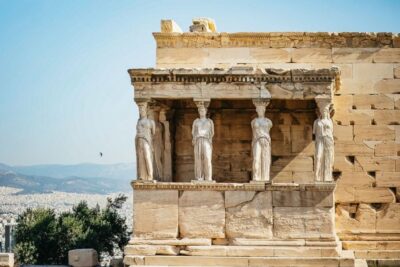
Acropolis, Parthenon & Acropolis Museum Guided Tour
Read our verdict →
Acropolis: Acropolis and Parthenon Guided Walking Tour
Read our verdict →
Acropolis monuments & Parthenon Walking Tour with Optional Acropolis Museum
Read our verdict →
Athens All Included: Acropolis and Museum Guided Tour with Ticket
Read our verdict →Browse the lists this tour appears in