
Review · ACROPOLIS TOURS
Athens: Panoramic Tour with Guided Acropolis & Museum Visit
The real strength of this tour is its combination of big-picture Athens and close-up ancient sites. In five hours, you move from Panathinaikos Stadium and Parliament to the Acropolis, then finish among more than 4,000 artifacts at the Acropolis Museum.
I like that the Acropolis and museum tickets are included, so you are not left sorting out two major admissions on your own. I also like the audio devices, especially at the Acropolis, where stone walls, tour groups, and city noise can make a guide hard to hear. The main consideration is pace: this is a packed half-day, and a large group or busy meeting point can make the opening minutes feel untidy.
Key points to know before booking
- The tour links three Athens experiences: a panoramic city circuit, the Acropolis monuments, and the Acropolis Museum.
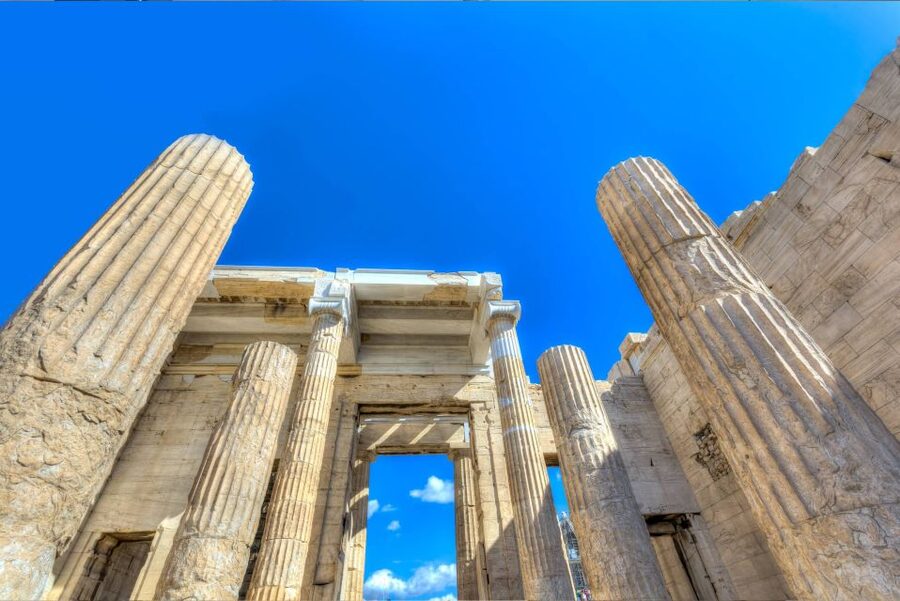
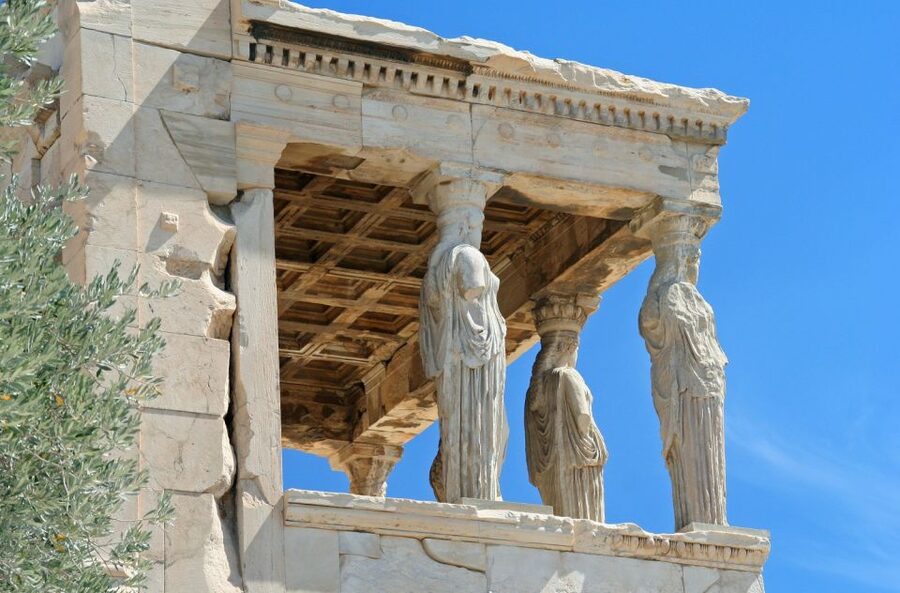
- The Acropolis visit is the main event: see the Propylaea, Temple of Athena Nike, Parthenon, and Erechtheum with its Porch of Maidens.
- Early timing can help: morning departures may reach the Acropolis before the worst heat and crowds.
- Strong guides make the difference: Michael, Dimitrios, Anastasia, Aegli, Evan, Katerina, and Giorgos have been singled out for clear, engaging explanations.
- The $129 price covers the essentials: admission, air-conditioned transport, a licensed guide, and audio equipment.
- Expect walking and steps: the tour is not suitable for wheelchair users, and the Acropolis requires a gradual uphill walk.
A useful first look at central Athens
The tour begins with a panoramic ride through the center of Athens. This is not a long photo-stop itinerary. You see many places from the bus, with a short stop at Panathinaikos Stadium, so the city tour works best as an orientation before the main archaeological visit.
Panathinaikos Stadium is one of the most memorable stops. Built almost entirely of marble, it hosted the first modern Olympic Games in 1896. You have a chance to see the stadium rather than simply passing it, though this portion is brief. If the Olympics matter to you, the stop gives the rest of Athens a useful modern connection.
The route then passes the Prime Minister’s residence and the former Royal Palace, now the Parliament building. Evzone soldiers in their traditional uniforms guard the area. Their ceremonial dress is colorful and distinctive, but the tour does not promise a dedicated changing-of-the-guard viewing, so think of this as a passing look rather than a formal ceremony.
You also see the Zappion building, the National Gardens, and the Temple of Olympian Zeus. The temple was completed in 131 A.D., after a construction story that stretched across centuries. Its surviving columns help you understand the scale of Roman Athens, even from the bus.
The route continues by Hadrian’s Arch, Parliament, Constitution Square, the National Academy, the National Library, the Old Parliament, and the Russian Orthodox Church. This sequence gives you a quick sweep of Athens from ancient temples to neoclassical public buildings. I find that useful on a first day, because you can later return to the areas that catch your eye.
The trade-off is simple: you see a lot, but you do not explore every stop. If your priority is wandering through neighborhoods, shopping, or spending time inside the National Library, this is not that kind of tour. It is a guided introduction designed to save your limited Athens time for the Acropolis and museum.
More Museum Tours in Athens
- Athens: Acropolis, Parthenon & Acropolis Museum Guided Tour
★ 4.8 · 9,316 reviews - Athens: Acropolis, Parthenon & Acropolis Museum Guided Tour
★ 4.8 · 3,579 reviews - Acropolis monuments & Parthenon Walking Tour with Optional Acropolis Museum
★ 5.0 · 2,678 reviews
The Acropolis is the heart of the morning
The group reaches the Acropolis entry area and begins a short but uphill walk toward the monuments. You should wear sturdy shoes, bring sun protection, and expect exposed stone underfoot. Athens can be brutally hot, and one June tour had to adjust its order because the Acropolis was closing at noon during extreme temperatures.
The skip-the-ticket-line arrangement matters here. It does not mean there will never be other lines. You still need to move through the site entrance and security procedures, and the Acropolis can be crowded. It does mean the guide handles the included admission, saving you from joining the long ticket-buying queue reported during busy summer visits.
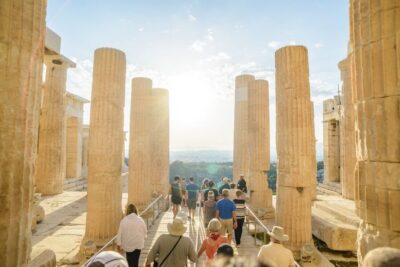
At the top, the Propylaea forms the grand gateway. The Temple of Athena Nike sits nearby, compact but beautifully placed at the edge of the rock. Your guide explains how these buildings fit into the wider plan of the Acropolis rather than treating each one as an isolated ruin.
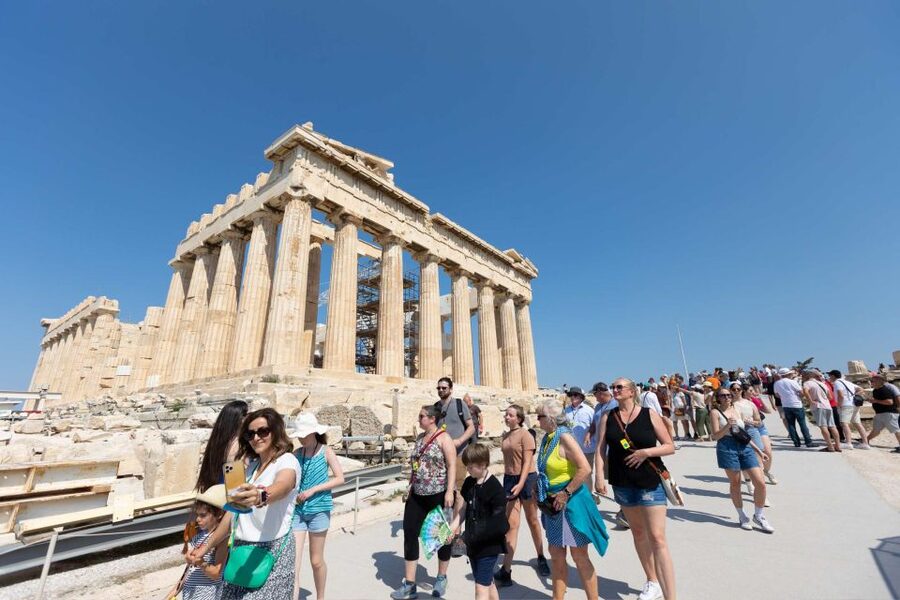
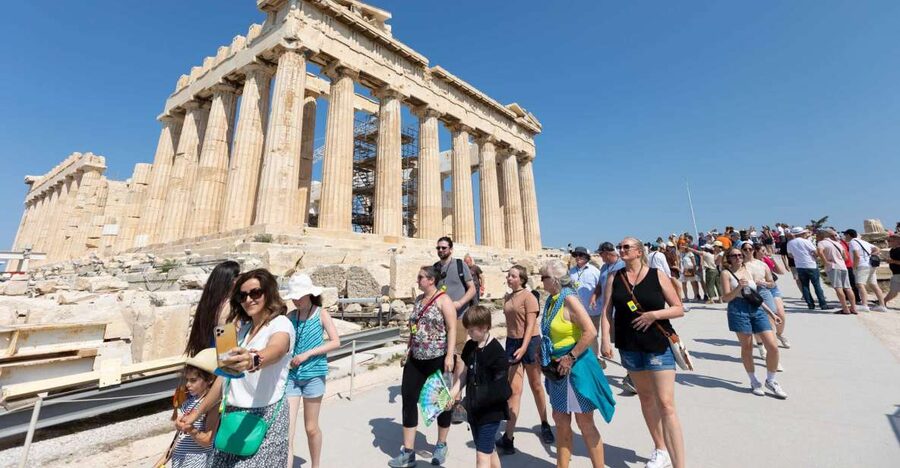
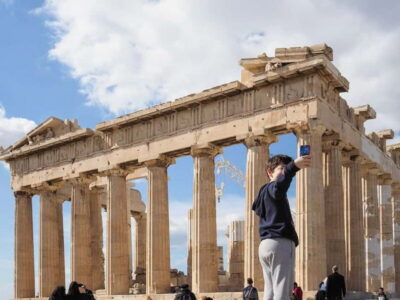
Then comes the Parthenon. Even with scaffolding or crowds, its proportions and position are powerful. The guide can point out the architectural choices that make the building appear more balanced than it really is, along with its religious and civic role in fifth-century B.C. Athens. This is where a guided visit earns its keep. Without context, you may see columns and broken stones. With clear explanation, you begin to understand the design, purpose, and later changes.
The Erechtheum offers a different mood. Its uneven plan reflects the many sacred traditions connected with the Acropolis, and its Porch of Maidens is one of the most recognizable views on the hill. The guide also helps you separate original ancient material from later restoration and museum displays.
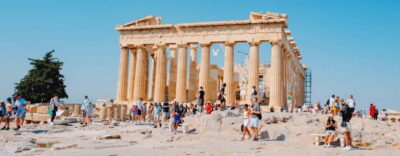
You will have impressive views across Athens, but do not expect a quiet personal visit. The Acropolis is one of Europe’s busiest archaeological sites. Groups gather, paths narrow, and the guide must keep everyone together. The audio devices help, especially when you stand away from the guide or when another group is speaking nearby.
Several tours have handled difficult heat well by putting the Acropolis first. That is a practical advantage of joining an organized itinerary: the route can be changed when site conditions require it. Still, bring water. Bottled water has been available for purchase near the site, but it is wiser to arrive prepared.
Walking from the Acropolis to the museum
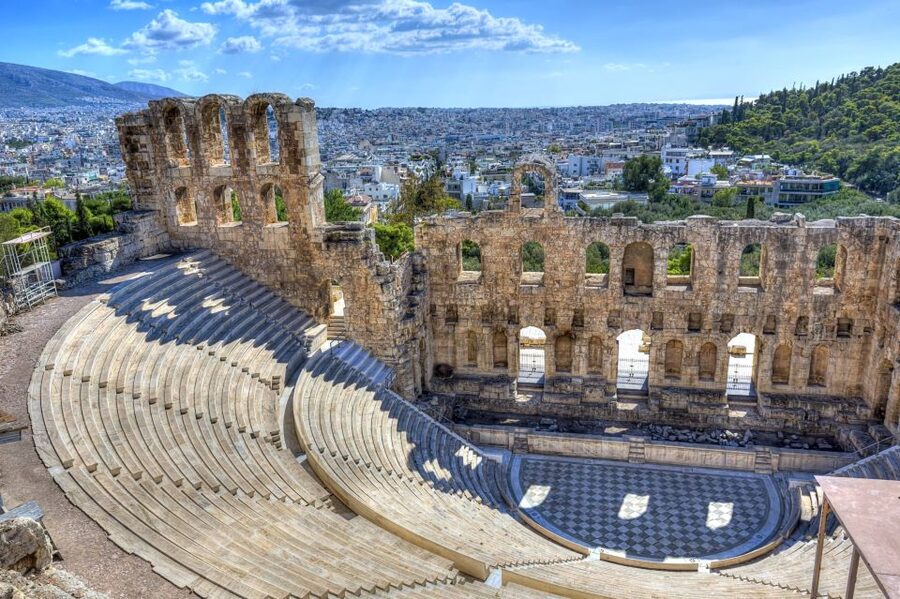
After the hilltop visit, you take a short, pleasant walk past the Herodion and Dionysos theaters to the Acropolis Museum. This transition is one of the best parts of the schedule. You leave the ancient stones behind and move directly into a modern building designed to display them.
The walk also gives you a short change of pace after the exposed Acropolis. You are still in the historic center, but the museum offers shade, a controlled indoor setting, and a chance to study objects that are difficult to understand when seen only in their original locations.
This is not a separate ride or a complicated transfer. Your guide stays with the group and leads you to the museum entrance. The included admission again saves you from arranging a second ticket, and the skip-the-line setup can be valuable when the area is busy.
Why the Acropolis Museum improves the site visit
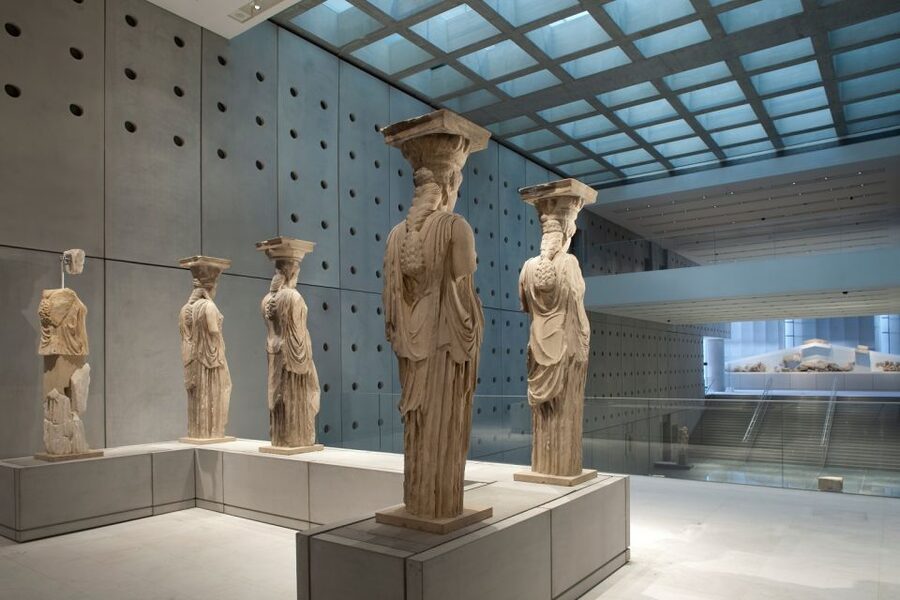
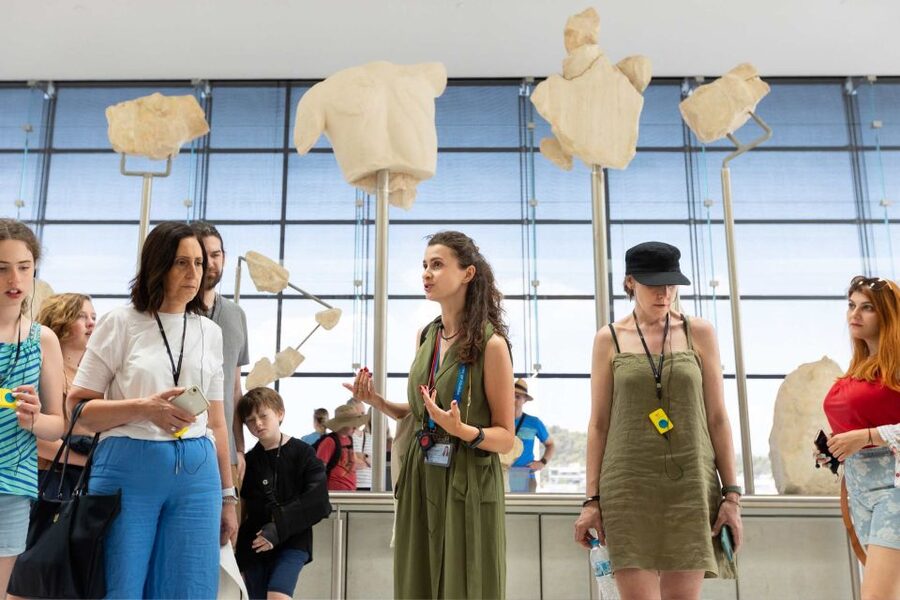
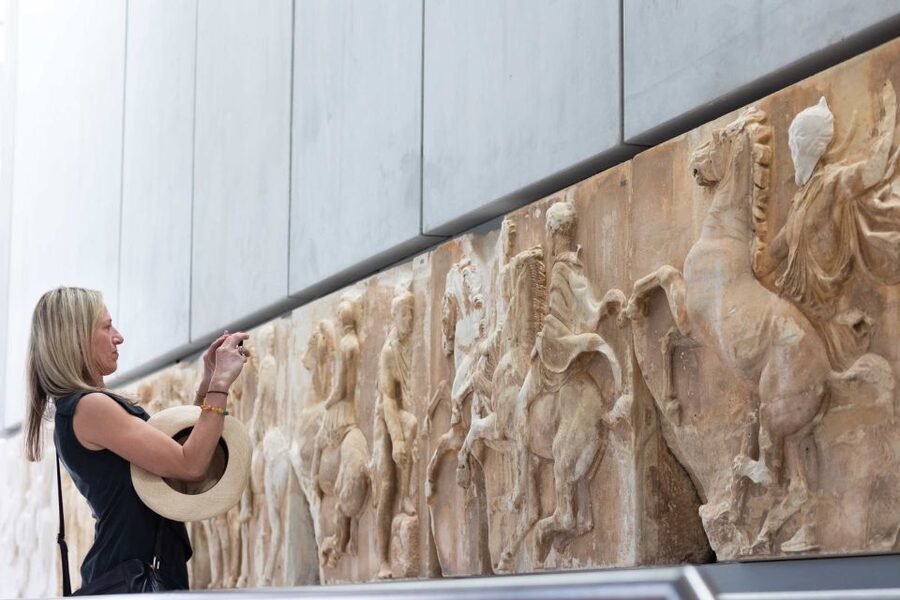
The museum contains more than 4,000 artifacts from the Acropolis. Its displays cover the Greek Bronze Age, as well as Roman and Byzantine periods, so the story extends well beyond the famous fifth-century monuments.
I especially like the order of the experience. You first see the buildings on the hill, then view sculpture and objects in a museum setting. That pairing gives you a better sense of what once filled the temples and how the site changed over time.
A guide can also prevent museum overload. There is a lot to see, and it is easy to move past important pieces without knowing why they matter. Guides such as Anastasia, Aegli, Giorgos Panagos, and Evan have been praised for explaining mythology, history, and individual objects in a way that made the museum easier to follow.
The museum portion may feel information-heavy if you want free time for photographs or quiet browsing. One visitor found the amount of explanation tiring and wished for more time to take pictures. That is a fair criticism of any guided museum visit. You gain structure and context, but you give up some freedom to set your own pace.
If you want to continue exploring after the tour, the museum is a useful place to finish because it gives you a natural starting point for independent time. The advertised duration is five hours, though exact timing can vary with crowds, weather, and group movement.
More Acropolis tickets and guided visits:
- Athens: Acropolis & up to 5 Archaeological Sites Combo Pass
★ 4.4 · 12,619 reviews - Athens: Acropolis Ticket with Optional Audio or Live Guide
★ 4.2 · 11,055 reviews - Athens: Acropolis and Parthenon Guided Walking Tour
★ 4.6 · 5,882 reviews - Athens: Acropolis Ticket with Audio Guide
★ 4.0 · 3,575 reviews
Guides and audio equipment
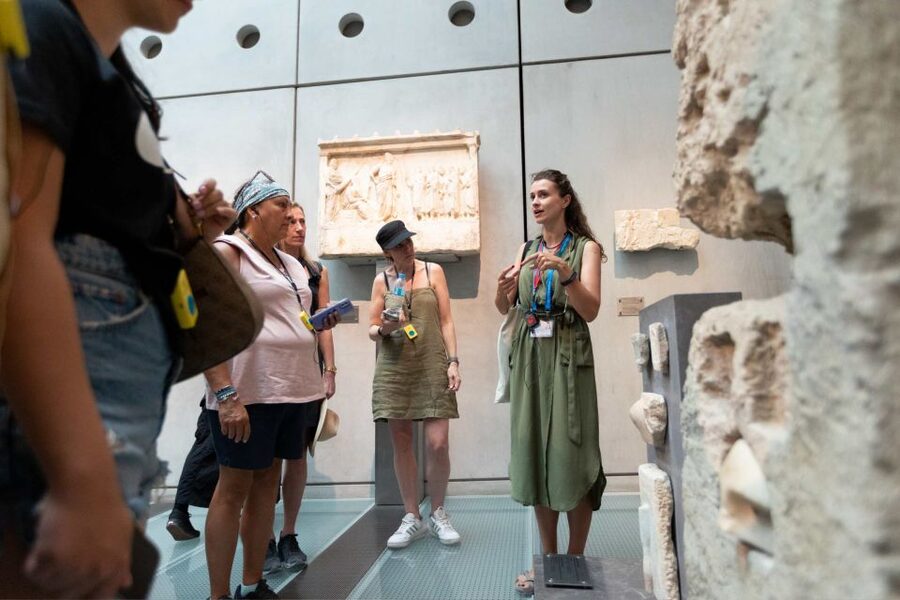
The guide is the most important variable in this experience. The operator uses licensed professionals in English and Spanish, and the strongest guide experiences have included Michael, Dario, Dimitrios, Evan, Anastasia, Katerina, Aegli, and Giorgos Panagos.
The best guides do more than recite dates. They connect mythology to architecture, explain why the monuments look as they do, and keep the group moving through hot and crowded conditions. Giorgos, for example, has been praised for handling a large group patiently in Spanish. Michael has been noted for combining humor with substantial historical detail.
The audio devices are a practical feature, not a luxury. On the Acropolis, you may be several steps behind the guide or standing beside another group. The device lets you hear the commentary without pressing close to the guide. Clear audio also helps when the group is large.
The tour may be offered as a private group, but the standard experience can involve a sizable coach group. That affects the atmosphere and the amount of time available for questions. A small group gives you more room to ask follow-up questions, while a larger group usually keeps the price more accessible.
Transport, pickup, and the meeting point

The air-conditioned bus is welcome during Athens summers. The panoramic section is conducted from the vehicle, and the ride between stops gives your feet a break before the Acropolis walk.
The regular meeting point is the Keytours office across from the Temple of Olympian Zeus. You should arrive at least 15 minutes before departure. The office can be busy because several tours may gather there at once, and some people have had difficulty working out which bus or group they belonged to.
Read the pickup instructions carefully and arrive early. If you choose hotel or Airbnb pickup, it is available from many centrally located properties, but pickup is optional and drop-off is not included in the basic details. Some organized pickups have worked smoothly and arrived on time, while others have felt less clear before reaching the main tour group.
This is not a reason to avoid the tour. It is a reason to allow extra time at the beginning. Once the correct bus and guide are sorted out, the day generally follows a clear route.
Is $129 a fair price?
At $129 per person, the cost is not the cheapest way to see the Acropolis. You are paying for more than transport, though. The price includes admission to both the Acropolis and Acropolis Museum, an air-conditioned bus, a licensed guide, and audio equipment.
That bundle can be good value if you want a guided introduction and prefer not to manage tickets, transport, and site logistics yourself. It is especially useful for a first visit, a short stay, or a hot day when waiting in ticket lines is a poor use of energy.
The value is weaker if you already know Athens well, want long stretches of independent time, or plan to spend a full day at the Acropolis and museum. In that case, a self-guided visit may give you more flexibility. The private group option can make sense for families or friends who want more control, though the price may differ.
The carbon-offset element is another positive detail. Bookings from January 1, 2023 onward are carbon offset by the operator. It does not erase the impact of transport, but it shows an effort to account for it, and the bus can be a practical way to connect several central sights in one outing.
Who should book this Athens tour?
I would choose this tour for a first visit to Athens, especially if you have only a few days. It gives you a useful city orientation, the essential Acropolis monuments, and a guided museum visit without making you arrange separate tickets.
It also suits you if ancient history is more interesting when someone explains the setting, symbols, and stories. Guides have received particularly strong praise for their command of Greek history and mythology, and that can change the Acropolis from a famous viewpoint into a place with meaning.
Families and older adults may appreciate the bus between sites, though the uphill walk and uneven surfaces at the Acropolis still require reasonable mobility. The tour is not suitable for wheelchair users.
I would hesitate if your main goal is photography, slow museum browsing, or a quiet visit. The schedule is efficient rather than leisurely, and a large group can limit the time you spend at each object. You should also consider the weather. Summer heat makes an early departure much more attractive.
Cancellation is free up to 24 hours before departure, and reserve-now-pay-later booking keeps the initial payment flexible. Check the available starting times before booking, since the best choice may be the earliest departure on a hot or crowded day.
Should you book it?
Book this tour if you want the main Athens sights explained clearly and handled in one half-day. The strongest reasons are the Acropolis and museum combination, included admissions, air-conditioned transport, and guides who can make the architecture and mythology easier to understand.
Skip it if you prefer to set your own pace or already have a detailed Athens plan. For most first-time visitors, though, $129 buys a practical introduction with enough historical context to make the Parthenon, Erechtheum, and museum objects far more meaningful.
FAQ
How long does the Athens panoramic and Acropolis tour last?
The tour lasts five hours. Exact timing can vary depending on the departure time, crowds, weather, and group movement.
What admissions are included?
Admission to the Acropolis and the Acropolis Museum is included in the tour price.
Which languages are available?
Live guided tours are available in English and Spanish.
Where does the tour meet?
The standard meeting point is the Keytours office across from the Temple of Olympian Zeus in Athens. You should arrive 15 minutes before departure.
Is hotel pickup available?
Optional pickup is available from most centrally located hotels and Airbnb apartments in Athens. Pickup and drop-off service is not included as a standard part of the basic tour details, so check the option when booking.
Is the tour suitable for wheelchair users?
No. The activity is listed as not suitable for wheelchair users, and the Acropolis visit includes an uphill walk over uneven archaeological surfaces.
New on the Athens shelf
- Acropolis of Athens, Parthenon and Acropolis Museum private tour with dinner★ 5.0 · 77 reviews
- Small-Group Wine Tour in Athens with Tasting★ 5.0 · 33 reviews
- Private Athens Transfer Airport/Port -Greek Tours-Hourly service★ 5.0 · 88 reviews
- VIP Private Guided Tour of Athens Acropolis & Plaka in a Sidecar★ 5.0 · 108 reviews
- Athens Moonlight Waling Tour with Drinks and Meze Dishes★ 5.0 · 259 reviews
- Private Athens Landmarks Layover Tour★ 4.5 · 41 reviews
- Departure Transfer from Athens City to Athens Airport★ 5.0 · 41 reviews
- Classic Athens Food Tour with Local Drink & Market Visit★ 5.0 · 34 reviews
Acropolis Tours, compared.
Acropolis & up to 5 Archaeological Sites Combo Pass
Read our verdict →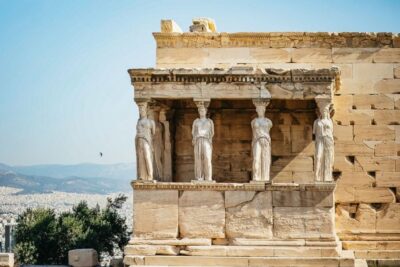

Acropolis, Parthenon & Acropolis Museum Guided Tour
Read our verdict →
Acropolis: Acropolis and Parthenon Guided Walking Tour
Read our verdict →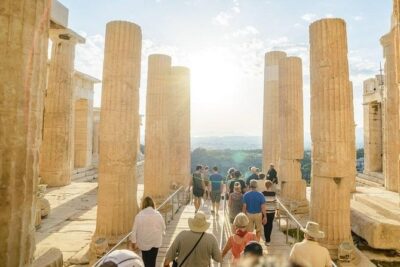
Acropolis monuments & Parthenon Walking Tour with Optional Acropolis Museum
Read our verdict →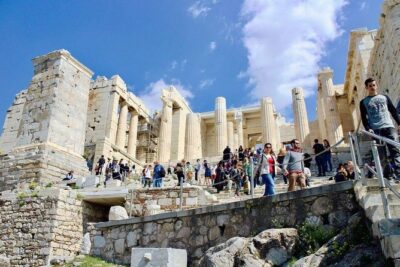
Athens All Included: Acropolis and Museum Guided Tour with Ticket
Read our verdict →Browse the lists this tour appears in