
Review · ACROPOLIS TOURS
Athens: Acropolis Museum and Acropolis Tour in the Afternoon
The smartest feature here is the order: museum first, Acropolis second. You see the statues, pottery, temples, and Parthenon sculptures indoors, then walk uphill and recognize what you have just learned. It is a much better way to make sense of scattered ruins than arriving at the hill with no context.
I like the afternoon start, which helps you avoid the morning rush and the worst heat. I also like the short café pause, headsets, map, and guidebook, small touches that make a four-hour history lesson easier to follow.
The main catch is ticket planning. If you choose the option without tickets, you must buy two separate admissions at the correct times and citizenship category before booking. Miss the Acropolis entry slot, and the group cannot wait.
Key points to know before booking
- Museum before the hill: The indoor galleries give you a clear visual key for the monuments you see later.
- Afternoon timing: The later start can mean cooler conditions and thinner crowds, though security lines may still be long.
- Parthenon finish: The tour builds toward the Acropolis summit and ends with the best-known monument in Athens.
- Strong guide element: Apollo, Ellenica, Jordan, and Margarita are praised for clear storytelling, good English, and helpful pacing.
- Strict ticket rules: The Acropolis entry is scheduled for 90 minutes after the tour begins, so your tickets must match exactly.
- Serious walking: Uneven stone, hills, steps, and crowds make this a poor choice for wheelchair users or anyone with limited mobility.
Why the museum-first route makes sense
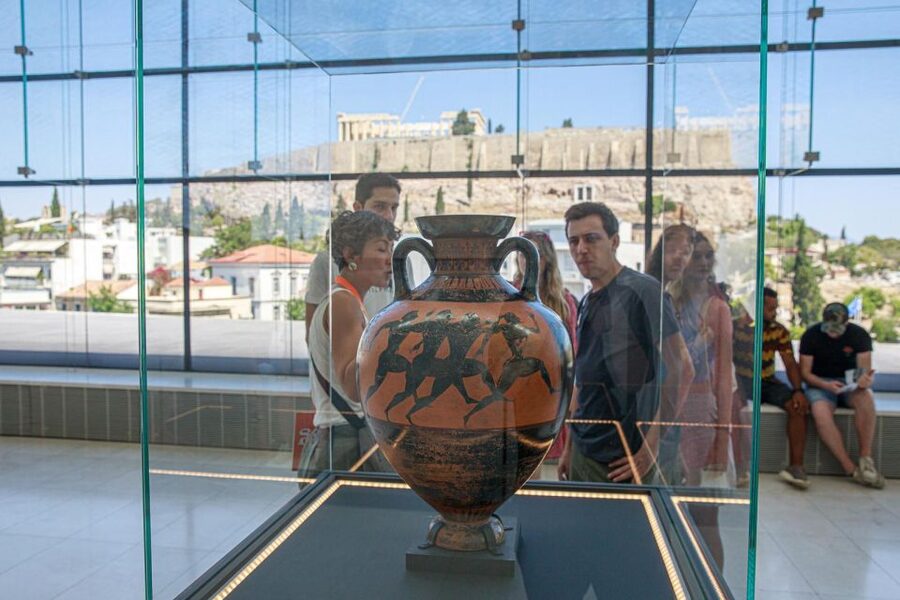
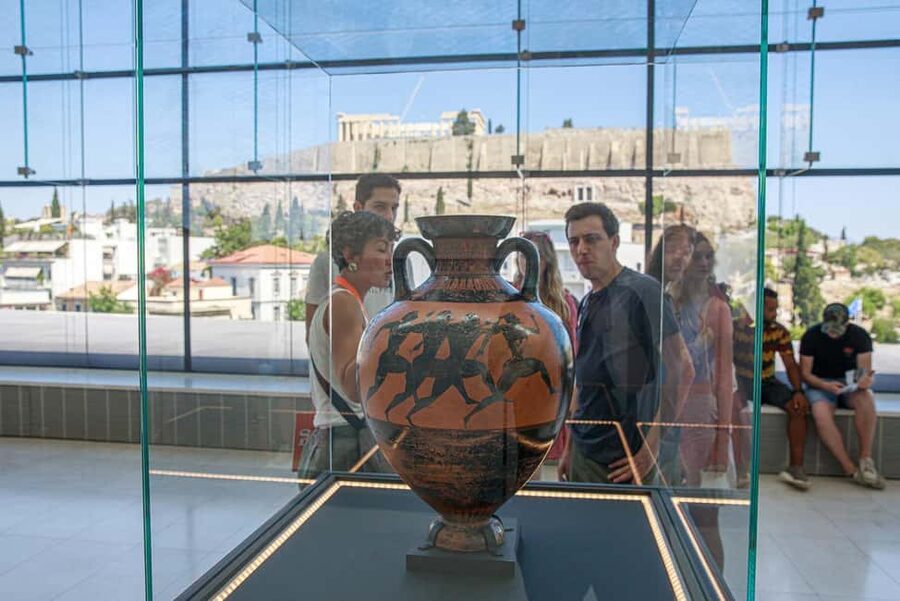
The Acropolis Museum sits beside the ancient hill, with large windows that keep the ruins in view. That setting matters. You are not studying Greek sculpture in an unrelated gallery, then trying to remember it later. The hill is right there, waiting across the glass.
Your guide leads you through several periods of Greek art and history, including the Archaic, Classical, Hellenistic, and Roman eras. The collection includes statues, pottery, architectural fragments, and the Parthenon Marbles. Greek mythology also helps tie the objects together, so the stories of gods and heroes are connected to the buildings and images in front of you.
The museum visit lasts about 75 minutes. That is enough time for a guided overview, but not enough for every case and inscription. I see this as a strength for a first visit. You get a useful framework without spending half a day indoors before reaching the Acropolis.
Pay attention to the architectural pieces. Once you see how a temple was decorated and how its sculpture fit into the larger design, the Parthenon becomes more than a pile of columns. You begin to read the building as a planned work of art, even though time, war, weather, and human choices have altered it.
The museum is also a welcome break from Athens heat. Starting indoors at noon or in the early afternoon gives you air-conditioned comfort before the exposed climb. The exact starting time changes, so check availability for your date.
More Museum Tours in Athens
- Athens: Acropolis, Parthenon & Acropolis Museum Guided Tour
★ 4.8 · 9,316 reviews - Athens: Acropolis, Parthenon & Acropolis Museum Guided Tour
★ 4.8 · 3,579 reviews - Acropolis monuments & Parthenon Walking Tour with Optional Acropolis Museum
★ 5.0 · 2,678 reviews
Meeting at Dionysiou Areopagitou Street
The meeting point is at 3 Dionysiou Areopagitou Street. Look for the orange Athens Walking Tours sign at the beginning of the pedestrian walkway leading toward the Acropolis from Hadrian’s Arch and Syngrou Avenue, also written as Siggrou.
This is a central location, but allow time to find the exact sign. You do not want to arrive at the museum entrance and discover that the group has already moved on. The tour begins at the museum, not at the Acropolis summit.
Bring water, a hat, sunscreen, a camera, comfortable shoes, and clothing suited to the weather. Backpacks, baby strollers, food, and drinks are not allowed according to the tour instructions. Security screening can resemble airport checks, and in busy periods it may add 30 minutes or more.
The group uses headsets so you can hear the guide while standing among other groups. That is especially useful in the museum, where several guides may be speaking at once, and on the Acropolis, where wind and crowds can scatter a group.
The 75-minute Acropolis Museum visit

The museum is the intellectual heart of this experience. Your guide starts with the collection rather than rushing straight to the famous hill, and that gives the later walk a clear purpose.
Expect to see material from:
- The Archaic period, including early statues and architectural decoration
- The Classical period, when Athens produced much of the art associated with the Acropolis
- Hellenistic and Roman-era objects that show how later cultures continued to use and interpret Greek traditions
- Parthenon sculpture and architectural fragments
- Pottery and objects tied to daily life, worship, and mythology
The guide’s job is to select what matters. Ellenica, for example, is praised for giving information at a comfortable pace, with enough explanation to make the objects meaningful without burying you in dates. That balance is important in a museum this dense.
The museum also prepares you for the rivalry between Athena and Poseidon over the protection of Athens. On the Acropolis, that story comes alive at the Erechtheion, where the building’s unusual design reflects several sacred traditions rather than one simple purpose.
You may wish you had more free time to return to favorite galleries. The guided schedule is designed to move onward, so this is not the right format for a detailed museum study. If you want to linger over every sculpture, plan a separate museum visit.
A short café break before the climb
After the museum, the itinerary allows about 10 minutes at a local café. This is not a meal stop, and food and drink are not included. Think of it as a chance to catch your breath, use the facilities if available, and refill your own water before the exposed walk.
That pause is more useful than it sounds. The second half takes place on uneven ground and includes uphill walking. In hot weather, even a short rest helps.
The route then enters the Acropolis from the south slope. The Acropolis ticket is scheduled for 90 minutes after the tour starts, which explains the carefully arranged sequence. Your museum entry, café pause, and walk to the hill all need to fit inside that window.
More Acropolis tickets and guided visits:
- Athens: Acropolis & up to 5 Archaeological Sites Combo Pass
★ 4.4 · 12,619 reviews - Athens: Acropolis Ticket with Optional Audio or Live Guide
★ 4.2 · 11,055 reviews - Athens: Acropolis and Parthenon Guided Walking Tour
★ 4.6 · 5,882 reviews - Athens: Acropolis Ticket with Audio Guide
★ 4.0 · 3,575 reviews
Theater, sanctuary, and the south slope
The first major stop on the hill is the Theatre of Dionysus. This is where your guide can explain the origins of theater and connect performance to the religious life of ancient Athens. The stop lasts about 15 minutes, enough for an introduction and questions rather than a long lecture.
The remains are open to the sky, and the stone seating gives you a direct sense of how public performance worked in the ancient city. You are not simply looking at a monument. You are standing in a place linked to drama, festivals, and civic life.
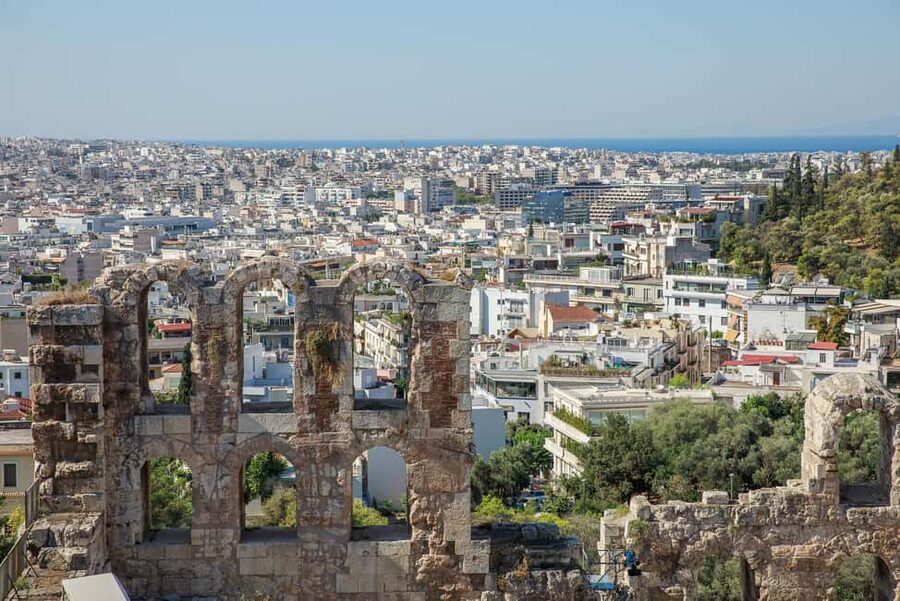
Next comes the Odeon of Herodes Atticus, a smaller performance venue with a striking arched facade. The scheduled explanation is brief, around five minutes, but its position along the route makes it an easy place to pause and imagine the Acropolis as a center of music and public ceremony.
The Asclepius Sanctuary adds a different subject. Your guide explains ancient healing practices, the early hospitals associated with Asclepius, and the unusual remedies used in that world. This is one of the more distinctive parts of the tour because it moves beyond temples and famous statues into ancient ideas about illness and care.
The route is not a flat museum walkway. Expect slopes, worn stone, and changing footing. Keep your attention on the ground as well as the monuments, particularly when the group is moving through a crowd.
Propylaea and the first great view
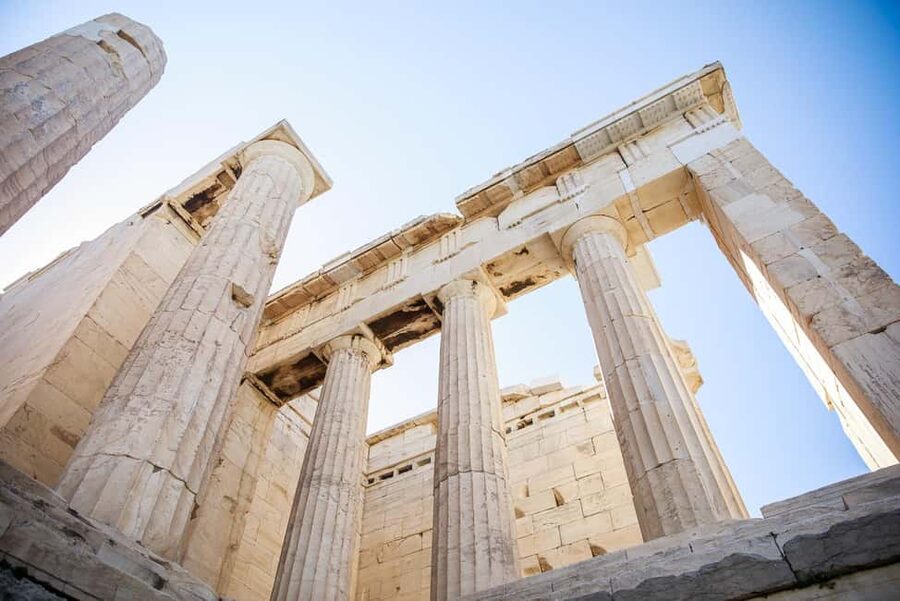
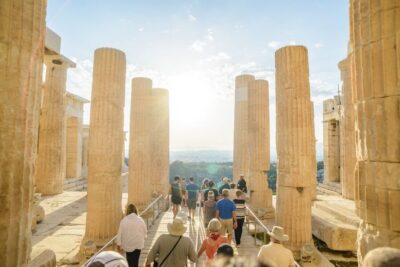
The Propylaea is the monumental gateway to the upper Acropolis. The guided stop is short, but the approach itself is part of the experience. You pass through the entrance that framed arrival at the sacred hill, then move toward the central monuments.
This is also where crowds can become a problem. One guide, Jim, was difficult for some participants to keep up with in the crush around the Acropolis. Stay close, listen through the headset, and make sure you know the guide’s appearance before the group begins walking.
The Propylaea is not only a photo stop. It shows how carefully the ancient builders controlled movement and perspective. The entrance prepared worshippers for what waited above, and you get a similar reveal as the Parthenon and Erechtheion come into view.
The Erechtheion and the Athena story
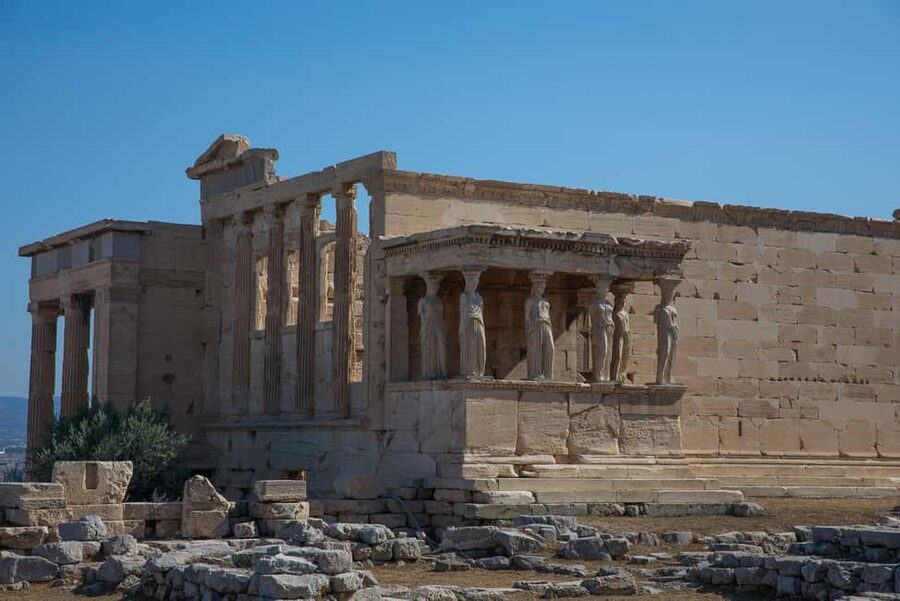
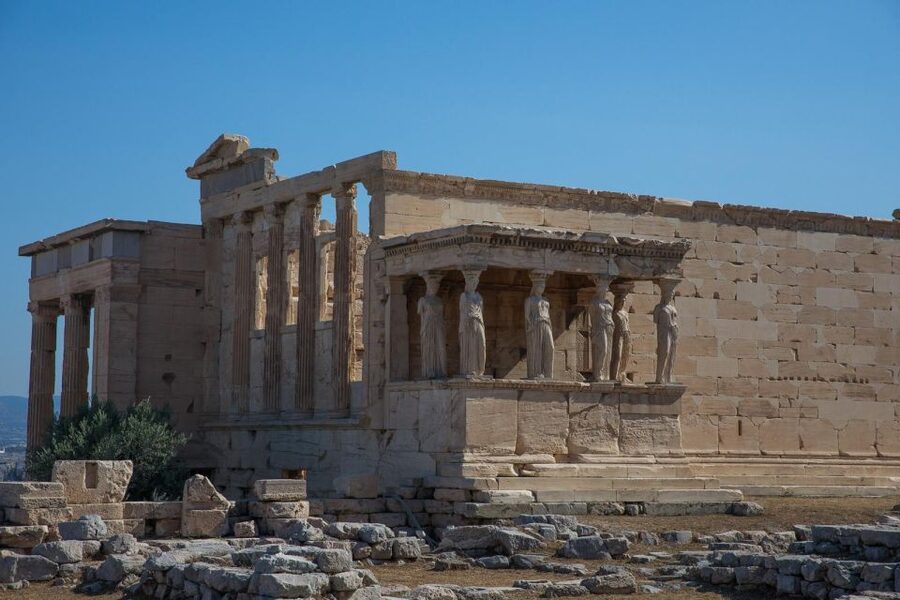
The Erechtheion is one of the most interesting buildings on the summit because it is not a simple rectangular temple. It served several sacred traditions, and its uneven plan reflects the older holy places that had to be respected.
Here your guide can explain the contest between Athena and Poseidon for the city’s protection. The story helps explain why Athena became central to Athens and why the Acropolis is more than a collection of buildings from one construction campaign.
The famous Caryatid porch is an obvious focus, but look at the building’s irregular shape and different levels too. The details make more sense after the museum visit, where you have already seen how Greek architects and sculptors treated the human figure, clothing, and architectural decoration.
The stop lasts about 10 minutes. You will get a clear explanation and photographs, but not unlimited time to study every angle.
The Parthenon at the end
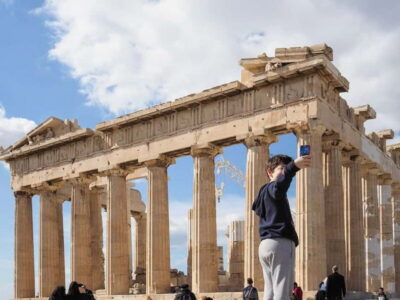
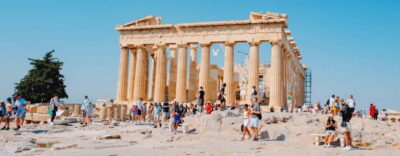
The tour saves the Parthenon for the climax, with about 20 minutes devoted to it. That is a good choice. By now, you have seen the objects associated with the Acropolis, heard the myths, and walked through the approach buildings. The Parthenon feels like the answer to the questions raised earlier.
Your guide explains the building’s design, purpose, and place in Athenian history. You can gaze across the columns, damaged sculpture, and open sky while also looking back toward the city. The structure remains powerful even in its incomplete state.
The late timing can make this stop more pleasant than a morning visit. Depending on the season and starting time, you may see softer light as the tour finishes. The information describes sunset views from the museum exit, but exact sunset conditions depend on the date and schedule, so treat this as a possibility rather than a promise.
The final stop is the Temple of Athena Nike, a small temple near the entrance. Its size makes a useful contrast with the Parthenon. It is easy to overlook when you are eager to reach the summit, but the guide gives it a short explanation before the tour ends.
What $115 gets you
At $115 per person, this is not the cheapest way to see the Acropolis. The value depends on how much structure you want.
You are paying for a four-hour guided experience, an English-speaking guide, headsets, skip-the-ticket-line service, an Athens map, and a guidebook with local recommendations. Pre-booked entry tickets are included only if you select that option.
The ticket choice matters a great deal. If you choose the ticketless option, you must purchase museum admission from the official museum site and Acropolis admission from the official Acropolis ticket site. The dates, times, citizenship category, and student status must be correct. You also need your passport for verification.
The Acropolis ticket is needed for an entry time 90 minutes after the tour begins. Buy the tickets before booking the tour, because the tour fee is non-refundable if you arrive without a valid admission. This extra planning makes the cheaper option less convenient than it first appears.
If you want someone else to handle the timing, select the option with pre-booked tickets. That costs more within the stated price structure, but it can be worth it for a first visit or a tight Athens schedule.
Guide style and group pace
The guide is the main reason to choose this tour instead of walking through the sites alone. Apollo is described as informative and fun, and he even helped a solo participant with a photograph. Ellenica is praised for clear explanations delivered at a comfortable pace. Jordan receives strong marks for making the afternoon timing work well, while Margarita is noted for excellent English and extensive subject knowledge.
Guide assignments can change, so you should not book solely to get one named person. What you can expect is a live English guide, supported by headsets and a route that gives stories a clear order.
The pace is generally active. The tour covers a museum, a café pause, the south slope, several monuments, and the summit in four hours. Some guides may stop for shade and breathing breaks in hot weather, as one guide did during a particularly warm afternoon, but do not treat this as a leisurely stroll.
Who should choose this afternoon tour?
I would choose it if you want a guided introduction to both the museum and the hill, especially if the Acropolis is your first major stop in Athens. The museum-first order is the strongest reason to book.
It also suits solo visitors who want help with photos, families with older children who benefit from stories, and people who prefer a later start. The guidebook and map are useful if you plan to continue exploring Athens afterward.
I would not choose it for anyone using a wheelchair or for a person with a mobility impairment. The route includes slopes, uneven ancient surfaces, and crowded passages. It is also not ideal if you want to spend hours independently in the museum or take an unhurried set of photos at every monument.
Book only after checking the exact starting time and ticket requirements. The Acropolis operates on strict entry slots, tours run in rain or shine, and late arrivals may be turned away without a refund. Cancellation is free up to 24 hours in advance, and the reserve-now-pay-later option keeps payment flexible.
Should you book it?
Book this tour if you want the Acropolis to make sense, not just appear in your photographs. The museum gives you the background, the guide supplies the mythology and architectural clues, and the hill provides the unforgettable setting.
Skip it if you already know the museum and monuments well, prefer to move alone, or dislike timed schedules. For most first-time visitors who can manage the walking, the museum-first route and cooler afternoon start make the $115 price reasonable, especially when pre-booked tickets are included.
FAQ
How long does the tour last?
The experience lasts four hours. Starting times vary, so check availability for your chosen date.
Where does the tour begin?
Meet at 3 Dionysiou Areopagitou Street. Look for the orange Athens Walking Tours sign at the start of the pedestrian walkway leading toward the Acropolis from Hadrian’s Arch and Syngrou Avenue.
Does the tour visit the Acropolis Museum first?
Yes. The tour begins with a guided visit of about 75 minutes in the Acropolis Museum, followed by a short café break and then the Acropolis.
Are admission tickets included?
Tickets are included only if you select the option with pre-booked tickets. If you choose the other option, you must buy your own museum and Acropolis tickets before booking the tour.
When do you enter the Acropolis?
The Acropolis entry is scheduled for 90 minutes after the tour begins. Your ticket date, time, and citizenship category must be correct.
What language is the tour in?
The live guided tour is in English.
What should I bring?
Bring comfortable shoes, a hat, sunscreen, water, a camera, and clothing suited to the weather.
Are backpacks, food, and drinks allowed?
The activity information says that backpacks, food, and drinks are not allowed. Baby strollers are also not permitted.
Is the tour suitable for wheelchair users?
No. The tour is not suitable for wheelchair users or people with mobility impairments because of the uneven surfaces, slopes, and walking required.
New on the Athens shelf
- Acropolis of Athens, Parthenon and Acropolis Museum private tour with dinner★ 5.0 · 77 reviews
- Small-Group Wine Tour in Athens with Tasting★ 5.0 · 33 reviews
- Private Athens Transfer Airport/Port -Greek Tours-Hourly service★ 5.0 · 88 reviews
- VIP Private Guided Tour of Athens Acropolis & Plaka in a Sidecar★ 5.0 · 108 reviews
- Athens Moonlight Waling Tour with Drinks and Meze Dishes★ 5.0 · 259 reviews
- Private Athens Landmarks Layover Tour★ 4.5 · 41 reviews
- Departure Transfer from Athens City to Athens Airport★ 5.0 · 41 reviews
- Classic Athens Food Tour with Local Drink & Market Visit★ 5.0 · 34 reviews
Acropolis Tours, compared.
Acropolis & up to 5 Archaeological Sites Combo Pass
Read our verdict →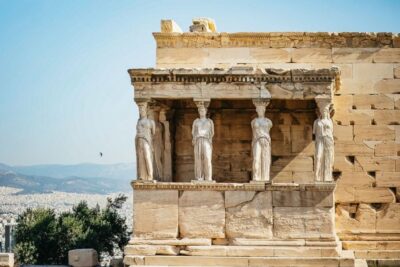
Acropolis, Parthenon & Acropolis Museum Guided Tour
Read our verdict →
Acropolis: Acropolis and Parthenon Guided Walking Tour
Read our verdict →
Acropolis monuments & Parthenon Walking Tour with Optional Acropolis Museum
Read our verdict →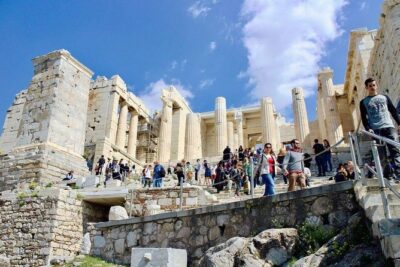
Athens All Included: Acropolis and Museum Guided Tour with Ticket
Read our verdict →Browse the lists this tour appears in