
Review · ACROPOLIS TOURS
Athens: Acropolis and Parthenon Guided Walking Tour
The best part of this Acropolis walking tour is the way it follows the natural climb through ancient Athens. You enter near the South Slopes, pass the Theater of Dionysus and the Roman Herodion, then rise through the Propylaea toward the Parthenon and Erechtheion. I like the skip-the-line entry, and I like that the guide explains the smaller monuments instead of rushing straight to the famous temple.
The main consideration is the hill itself. The route includes uneven ground, stairs, sun, and a steady climb, and the group cannot use the Acropolis elevator. At $35.57 per person, the price is reasonable for an entrance ticket plus a two-hour guide, but you are paying for a shared group experience rather than a private visit.
Key points to know before you book
- South Slopes entry can save time: The meeting point is at Athenian Tours’ office on Mitsaion 2, close to the easier South Slopes approach.
- The route covers the major monuments: You see the Theater of Dionysus, Asklepieion, Herodion, Propylaea, Temple of Athena Nike, Parthenon, and Erechtheion.
- The guides add context: Guides including Simon, Iris, Alexia, Kostas, Angel, and Christos have been praised for clear explanations, humor, archaeology and art history knowledge, and thoughtful pacing.
- Morning is the smart choice in summer: August heat can make the climb and exposed summit tiring, so an early starting time is worth considering.
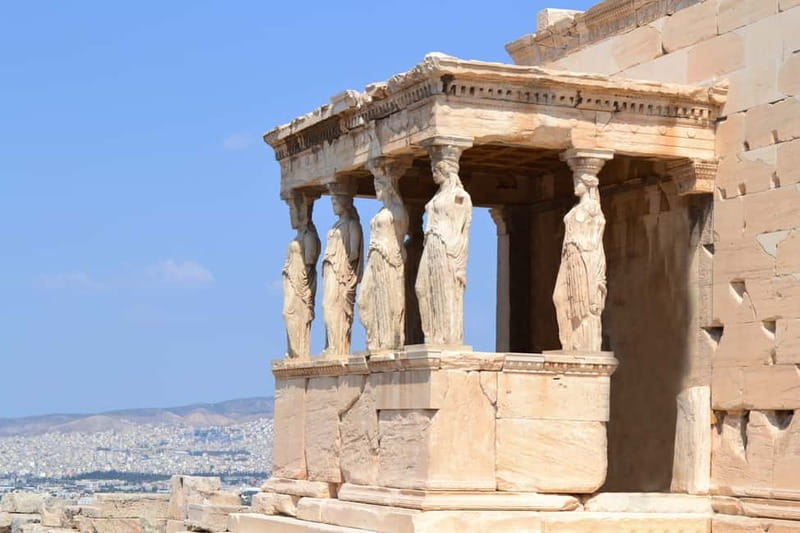
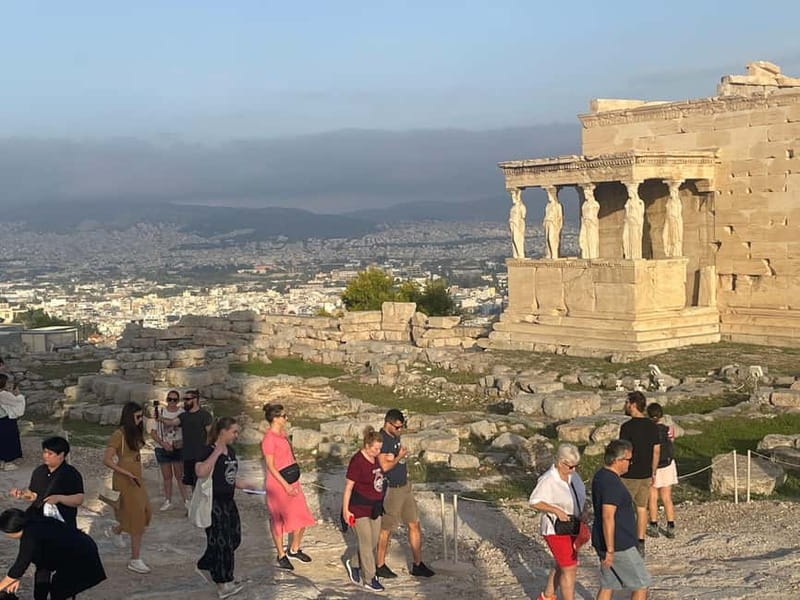
- The famous Caryatids are part of the visit: At the Erechtheion, you’ll see the six sculpted female figures that support part of the temple.
- Pack light and dress for the hill: Bring water, sunscreen, a hat, and comfortable shoes. Large bags, luggage, pets, and baby strollers are not allowed.
Starting at Mitsaion 2 near the South Slopes
Your tour begins at the Athenian Tours office at Mitsaion 2, postal code 11742. The group then walks toward the Acropolis, entering through the South Slopes area rather than approaching from the busier North Slope route.
That starting point matters. The Acropolis is not a single building with a neat front door. It is a rocky hill with several approaches, and the South Slopes route lets you meet the ancient site gradually. You begin among the remains below the summit, then climb toward the great monuments above.
The advertised duration is two hours, with about an hour and a half listed for the Acropolis visit itself. That is enough time for a guided overview, but not enough for a slow archaeological study of every stone. I would treat this as an efficient first visit, not a substitute for spending a full day around the Acropolis Museum and hill.
The group size is not specified. For groups of more than five, disposable earphones are supplied. That is useful at a busy site, though sound quality can suffer when other groups nearby are using their own audio equipment.
More Walking Tours in Athens
- Athens: Acropolis and Parthenon Guided Walking Tour
★ 4.6 · 5,882 reviews - Greek Food Walking Tour in Athens
★ 5.0 · 4,740 reviews - Acropolis: Acropolis and Parthenon Guided Walking Tour
★ 4.7 · 3,442 reviews
Theater of Dionysus: where Greek drama began
The first major stop is the Theater of Dionysus, set on the southern slope of the Acropolis. This is one of the most meaningful places on the route because it connects the stones under your feet with the plays of ancient Athens.
Your guide can point out the shape of the theater and explain how famous comedies and tragedies were performed here. The setting also helps you understand ancient Athens as a city of public gatherings, performance, debate, and religious ceremony, not just temples on a hill.
This is a good example of why a guide adds value. Without explanation, the theater can look like a broad arrangement of worn stone seats. With context, it becomes a place where drama was tied to civic and religious life.
The route is already uphill, so pace yourself from the start. You do not need to race ahead for photographs. The best experience comes from listening in the quieter spots, then taking pictures when the guide finishes explaining the site.
Asklepieion and the Herodion reveal a wider Acropolis
The walk continues past the remains of the Asklepieion of Athens, a healing temple associated with Asclepius and Hygeia. This stop adds a practical side of ancient life to the visit. The Acropolis was not only a place for grand monuments and political symbolism. It also included sacred spaces connected with health and healing.
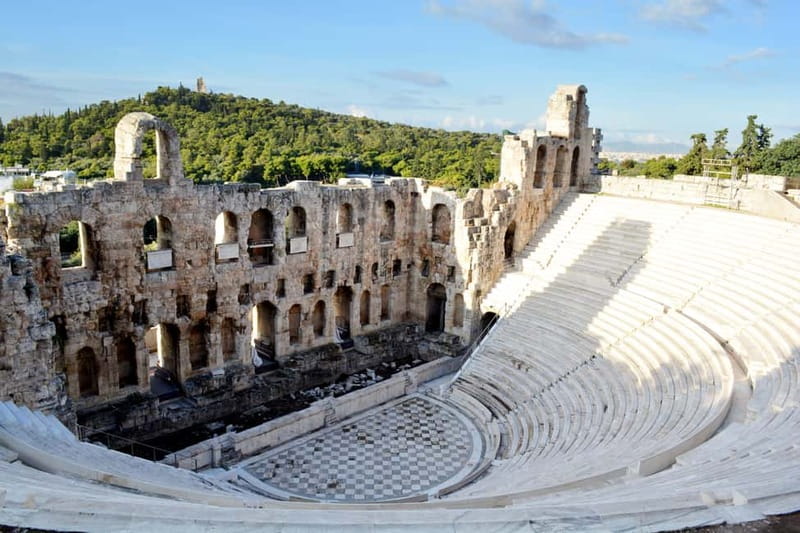
Next comes the Odeon of Herodes Atticus, usually called the Herodion. This Roman theater was built in memory of the wife of Herodes Atticus. Its scale and surviving stonework give you a useful contrast with the older Greek theater below.
I like this sequence because it prevents the visit from becoming a single long explanation of the Parthenon. You encounter theaters, a healing sanctuary, and Roman architecture before reaching the summit. Each stop gives the hill a different purpose.
The exact amount of time spent at each site depends on the guide and the pace of the group. Guides such as Iris have been praised for finding shaded places to explain what you are seeing, while other guides have kept groups moving smoothly through crowds. That matters on a hot day, when standing still in full sun can be harder than walking.
The Propylaea marks the climb to the summit
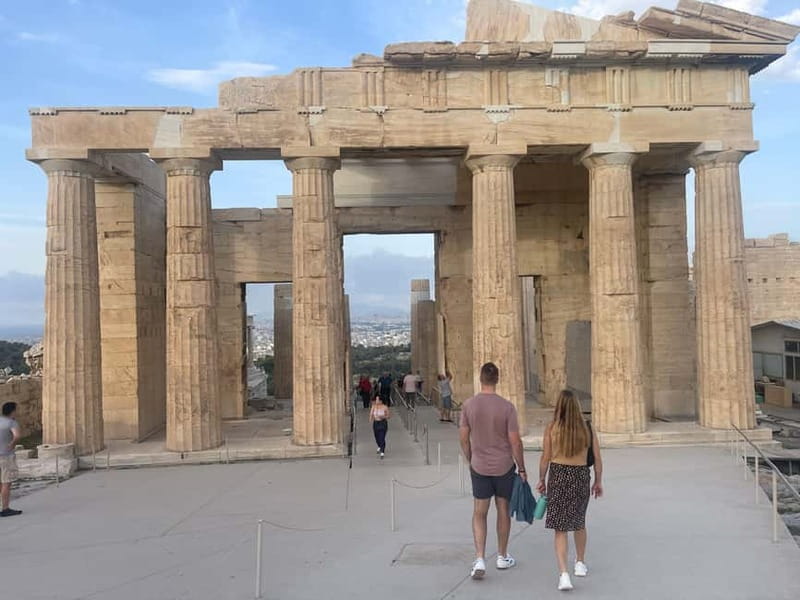
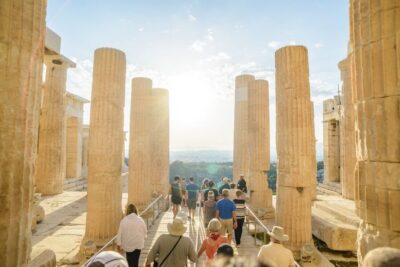
The Propylaea is the monumental gateway to the Acropolis. Reaching it gives you the feeling of crossing from the lower hillside into the sacred upper complex.
The approach is part of the drama. You climb toward a broad stone entrance, with the Temple of Athena Nike visible nearby. The Propylaea is not just a functional gate. It was designed to make arrival feel important, and it still does that work after centuries of damage and repair.
This is also where the physical demands of the visit become more noticeable. The ground is uneven, the stone can be slippery, and the route includes steps and inclines. Comfortable shoes are essential. People with mobility impairments, wheelchair users, heart problems, or limited tolerance for steep walking should choose a different way to see the site.
The tour does not include use of the Acropolis elevator. Group tours cannot use it, so you should plan on taking the standard walking route. The activity is also not suitable for children under six.
More Acropolis tickets and guided visits:
- Athens: Acropolis & up to 5 Archaeological Sites Combo Pass
★ 4.4 · 12,619 reviews - Athens: Acropolis Ticket with Optional Audio or Live Guide
★ 4.2 · 11,055 reviews - Athens: Acropolis, Parthenon & Acropolis Museum Guided Tour
★ 4.8 · 9,316 reviews - Athens: Acropolis, Parthenon & Acropolis Museum Guided Tour
★ 4.8 · 3,579 reviews
Temple of Athena Nike gives you a smaller masterpiece
Near the Propylaea, the Temple of Athena Nike is easy to overlook because it is much smaller than the Parthenon. Do not let its size fool you. Its position at the gateway made it an important symbol for anyone entering the Acropolis.
The guide explains the temple as part of the larger religious and civic design of the hill. You get a better sense of how the monuments were arranged, rather than seeing each one as an isolated ruin.
This is one of the stops where a live guide is particularly useful. The structure itself is compact, and some details can be hard to read from ground level. A clear explanation helps you understand why this small temple deserves attention.
The Acropolis can become crowded around the main monuments. Guides who know when to pause and where to stand can make a real difference. The strongest guide feedback for this tour focuses on clear storytelling, steady movement, and finding quieter or shaded places when possible.
The Parthenon remains the central event
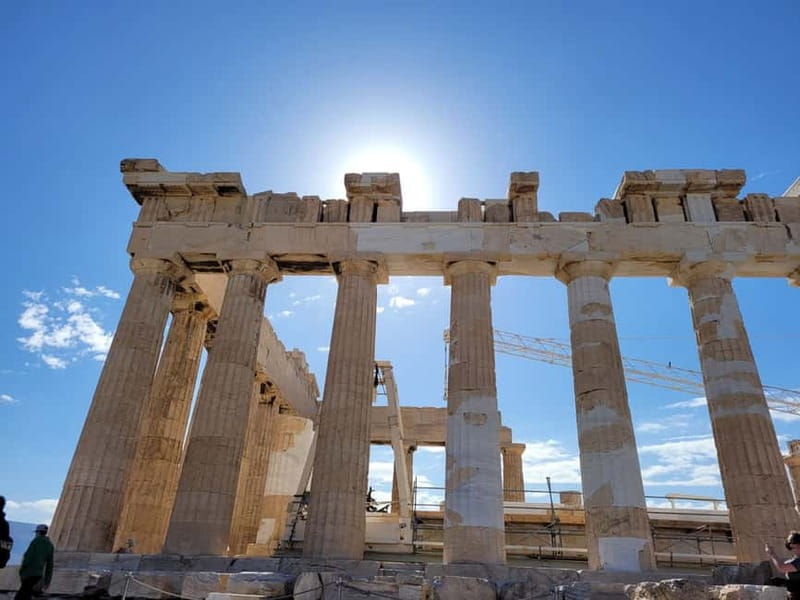
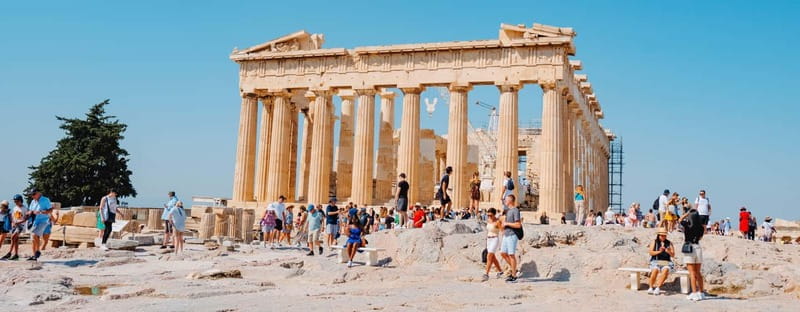
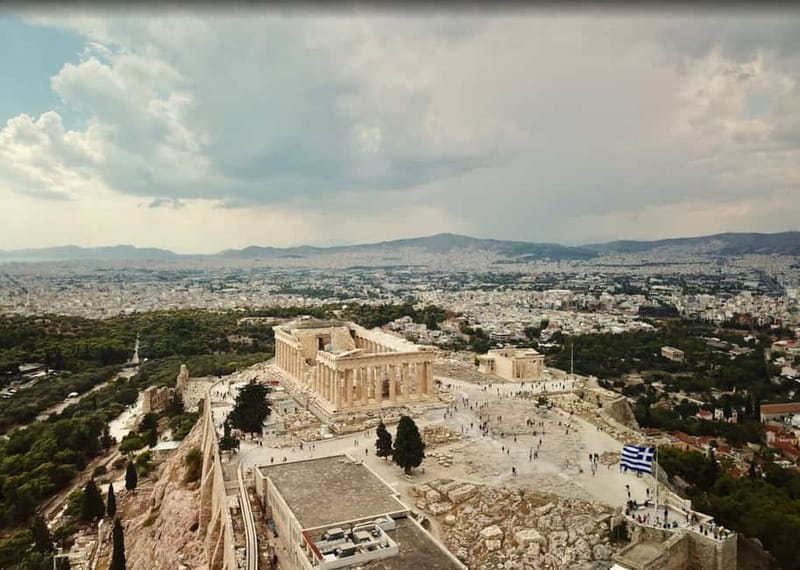
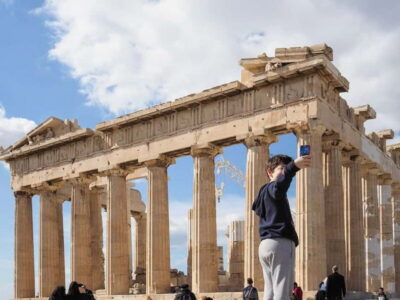
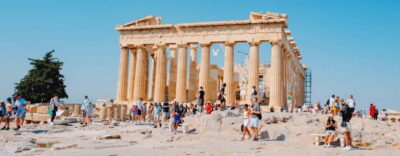
The Parthenon is the main reason most people visit the Acropolis, and the tour gives it the attention it deserves. Dedicated to Athena, the city’s patron goddess, it represents the height of fifth-century BCE Doric architecture.
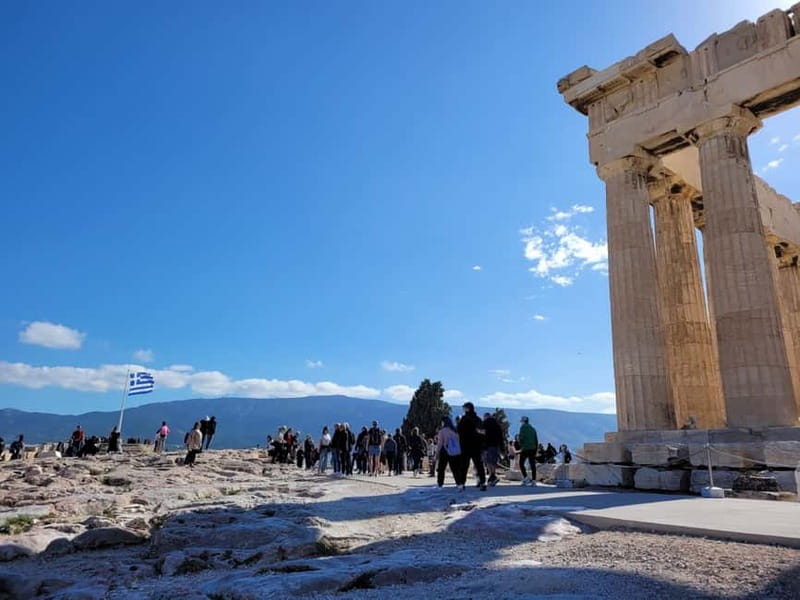
You will not see the building in its original condition. The temple has suffered damage, removal of sculptures, war, weather, and centuries of change. Even so, its scale and design remain powerful. The columns, surviving structure, and open views make it easy to understand why the Parthenon became a lasting symbol of Athens, democracy, and Western civilization.
A guide can help you look beyond the familiar postcard image. Listen for explanations of the temple’s purpose, architectural order, and place in the wider Acropolis plan. Guides such as Simon have been praised for linking architecture, Greek history, and mythology in clear language, while Christos has been noted for connecting ancient ideas with modern words and customs.
The Parthenon area is also the most exposed part of the route. There may be little shade, and the stone can feel hot under the Greek sun. If you have flexibility, book a morning time. A summer morning slot is usually easier on your legs and attention than the same climb later in the day.
Allow time for photographs, but remember that the guide cannot stop the entire group for every picture. You can take photographs throughout the tour, but recording the guide on video is not permitted.
The Erechtheion and its six Caryatids
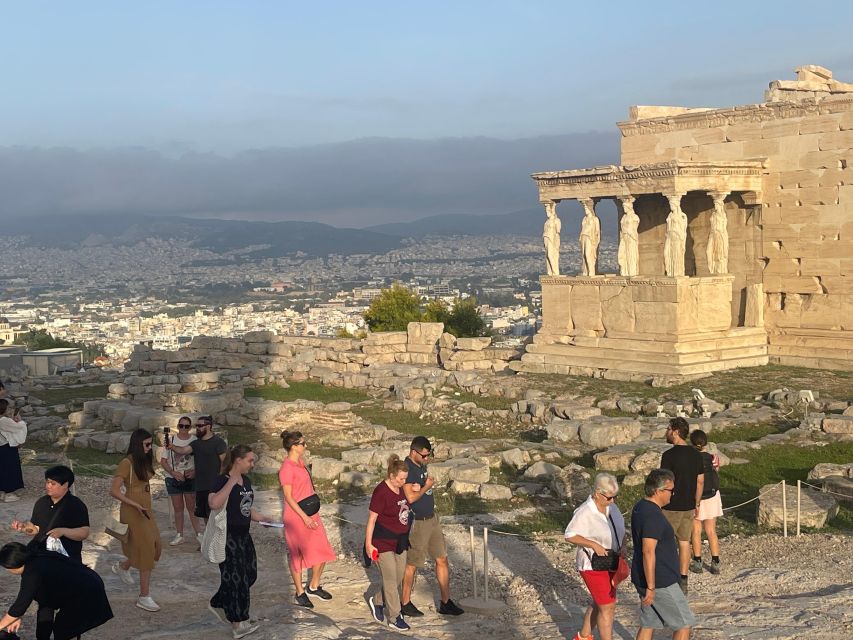
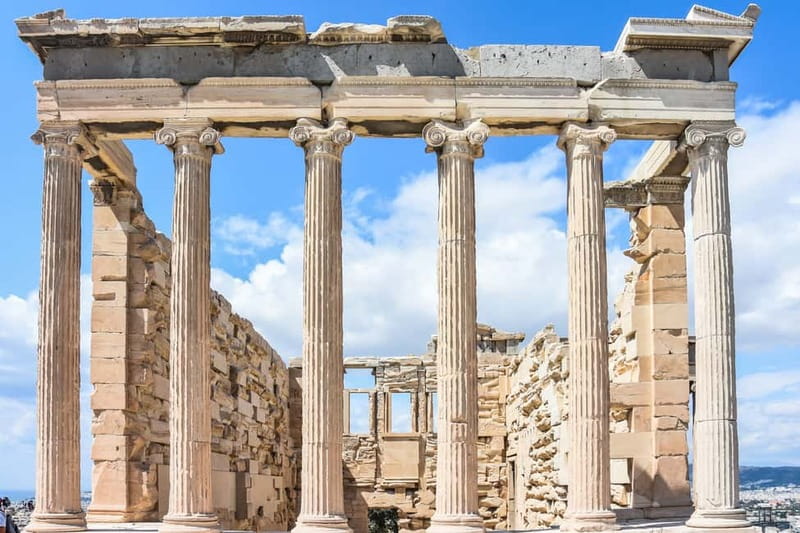
The final major stop is the Erechtheion, one of the most unusual buildings on the Acropolis. Unlike the balanced, commanding form of the Parthenon, it has an irregular plan shaped by the complicated sacred traditions of the site.
The building is especially famous for its porch supported by six sculpted female figures, known as Caryatids. Their calm posture and detailed clothing make them among the most memorable figures on the hill.
Your guide can explain why the Erechtheion was built in such an asymmetrical form and how its different sacred associations shaped the design. This is the sort of information that is easy to miss when you visit alone and focus only on the Parthenon.
The figures you see at the site are not all original ancient sculptures. The tour description specifically highlights the six female supports, but it does not promise access to every original piece or a separate museum visit. If you want a closer look at Acropolis sculpture, plan additional time for the Acropolis Museum on your own.
What the guides add to the experience
The tour is sold with an English-speaking live guide, and the guide is the main reason to choose it over simply buying an entry ticket. The strongest guide experiences have been associated with Simon, Iris, Alexia, Kostas, Angel, and Christos, though the guide assigned to your time can vary.
The praised qualities are practical rather than theatrical. Simon has been described as strong on architecture, Greek history, and mythology. Iris has been noted for using shade, suggesting good photo spots, and reminding the group about safety. Alexia has been singled out for warmth and helpful Athens recommendations, while Christos has brought archaeology and art history into the conversation without making the tour feel stiff.
You should expect differences from one guide to another. A live tour is not a recorded script, so the amount of detail, humor, and time at each monument may vary. The overall route remains focused on the main Acropolis sights.
The tour also appears to keep a manageable rhythm. Several guides are praised for explaining clearly without overwhelming the group and for moving people through crowds efficiently. That balance matters. Too much detail can make a hot uphill visit drag, while too little leaves you with pictures but no understanding.
Is $35.57 a fair price?
At $35.57 per person, the price includes the Acropolis entrance ticket, skip-the-ticket-line access, and an English-speaking guide. It does not include transport, food, drinks, hotel pickup, or the elevator.
The value depends on what you want. If you only need access to the hill and prefer to read about the monuments yourself, a guided tour may cost more than necessary. If you want the route explained as you walk, the added fee is sensible, especially for a first visit.
Skip-the-line access is useful, but it does not mean the site will feel empty. The Acropolis is one of Athens’ busiest sights, and crowding can still affect the walk and the sound of the earphones. The real benefit is avoiding the ordinary ticket queue, not having a private Acropolis.
Check the booking option carefully. The activity information refers to a ticketed option and also mentions a Without Tickets option. If you choose the latter, you must buy your Acropolis and museum entry tickets at least a day before the tour, confirm the correct time slots, and arrive with the tickets ready. Guides can supply only adult, full-price tickets at the meeting point, payable in cash.
The company adjusts prices on days when the Acropolis or Acropolis Museum offers free entry, so you should not be charged for complimentary admission.
What to bring and what to leave behind
Wear comfortable shoes with a secure sole. You will walk uphill over ancient and uneven surfaces, and the route is not suited to anyone who needs step-free access.
Bring water, sunscreen, and a sun hat. These are not optional extras in the warmer months. The guides may find shade for explanations, but much of the summit is exposed.
Carry only what you need. Luggage, large bags, pets, and baby strollers are not allowed. Bring your passport or ID card, as identification may be required for entry.
There is no hotel pickup or drop-off. You make your own way to Mitsaion 2 and return to the meeting point when the activity ends.
Free cancellation is available up to 24 hours before the tour for a full refund. You can also reserve now and pay later, which is useful if your Athens plans are still shifting.
Who should book this Acropolis tour?
I would choose this tour for a first-time visitor who wants the essential monuments explained in a short, organized visit. It suits you best if you enjoy walking, want a human guide, and do not want to spend your first hour sorting out the entrance process.
It is also a good fit for anyone who wants more than the Parthenon alone. The Theater of Dionysus, Asklepieion, Herodion, Propylaea, Temple of Athena Nike, and Erechtheion create a fuller picture of the hill.
I would not choose it if you need an accessible route, dislike group pacing, want to use the elevator, or hope to spend a long time at each monument. The two-hour format gives you a strong overview, but it cannot provide the freedom of an independent full-day visit.
FAQ
How long does the Acropolis walking tour last?
The activity lasts two hours. The Acropolis visit itself is listed as about one and a half hours within that time.
Where does the tour begin?
You meet the guide at Athenian Tours’ office at Mitsaion 2, postal code 11742. The tour ends back at the meeting point.
What language is the tour conducted in?
The live tour guide speaks English.
Does the price include Acropolis admission?
The standard activity includes an entrance ticket to the Acropolis and skip-the-ticket-line access. If you select the Without Tickets option, you must buy your own Acropolis and museum tickets in advance and confirm the correct time slots.
Which monuments will I see?
The route includes the Theater of Dionysus, Asklepieion of Athens, Odeon of Herodes Atticus, Temple of Athena Nike, Propylaea, Erechtheion, and Parthenon.
Are earphones provided?
Disposable earphones are provided for groups of more than five people. Audio quality can be affected by equipment used by nearby groups during crowded periods.
Can I use the Acropolis elevator?
The group cannot use the elevator at the Acropolis Hill. The tour requires walking uphill and is not suitable for wheelchair users or people with mobility impairments.
What should I bring?
Bring your passport or ID card, comfortable shoes, a sun hat, sunscreen, and water.
Can I cancel the tour?
You can cancel up to 24 hours in advance for a full refund. The activity also offers a reserve-now, pay-later option.
Should you book it?
Book this tour if you want the major Acropolis sights put into context without spending half a day planning the route yourself. The South Slopes start, skip-the-line entry, and strong guide style make it a practical choice for a first visit, especially in a morning time slot.
Skip it if you want complete independence or need an accessible route. For most fit first-time visitors, though, $35.57 buys a useful introduction to Athens’ most important ancient site, with enough time to see the Parthenon without ignoring the remarkable monuments along the way.
New on the Athens shelf
- Acropolis of Athens, Parthenon and Acropolis Museum private tour with dinner★ 5.0 · 77 reviews
- Small-Group Wine Tour in Athens with Tasting★ 5.0 · 33 reviews
- Private Athens Transfer Airport/Port -Greek Tours-Hourly service★ 5.0 · 88 reviews
- VIP Private Guided Tour of Athens Acropolis & Plaka in a Sidecar★ 5.0 · 108 reviews
- Athens Moonlight Waling Tour with Drinks and Meze Dishes★ 5.0 · 259 reviews
- Private Athens Landmarks Layover Tour★ 4.5 · 41 reviews
- Departure Transfer from Athens City to Athens Airport★ 5.0 · 41 reviews
- Mercedes Transfer Athens Airport★ 5.0 · 26 reviews
Acropolis Tours, compared.
Acropolis & up to 5 Archaeological Sites Combo Pass
Read our verdict →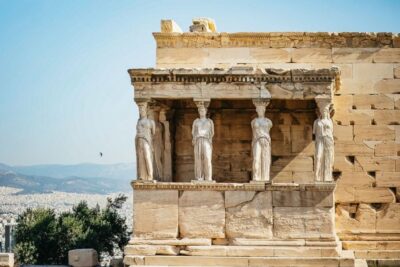
Acropolis, Parthenon & Acropolis Museum Guided Tour
Read our verdict →
Acropolis: Acropolis and Parthenon Guided Walking Tour
Read our verdict →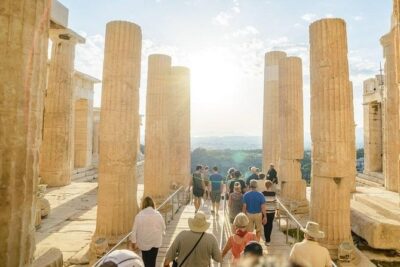
Acropolis monuments & Parthenon Walking Tour with Optional Acropolis Museum
Read our verdict →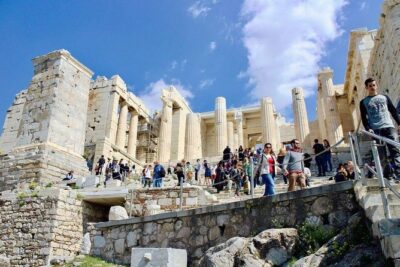
Athens All Included: Acropolis and Museum Guided Tour with Ticket
Read our verdict →Browse the lists this tour appears in