
Review · ACROPOLIS TOURS
Athens: Acropolis and Acropolis Museum Premium Guided Tour
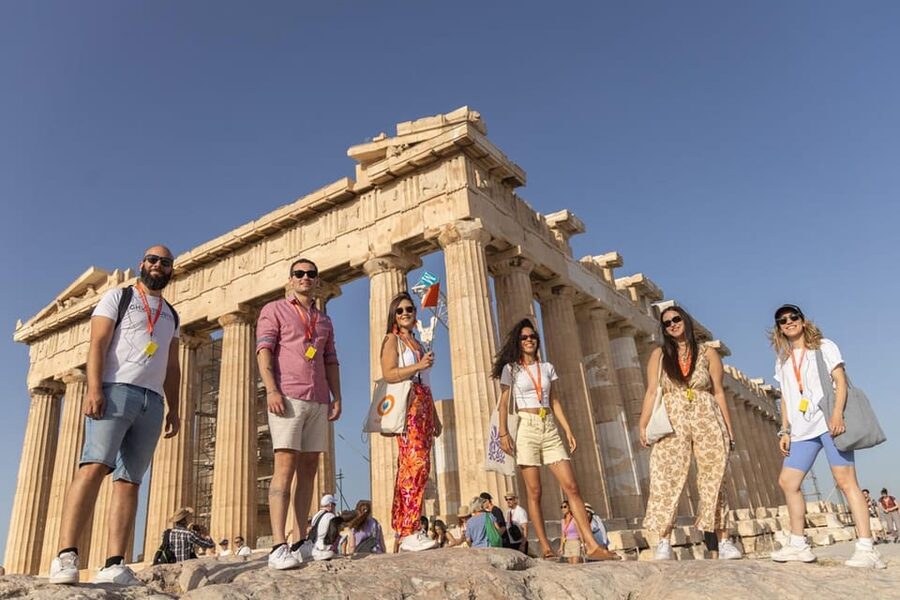
The best part of this tour is the way it links the Acropolis ruins with the objects now displayed in the Acropolis Museum. You see the Parthenon, Erechtheion, and Temple of Athena Nike on the hill, then examine the sculpture and archaeology in a modern museum nearby. I like the south-slope approach and the guide’s storytelling, especially when the Theatre of Dionysus turns ancient drama from a textbook subject into a real place.
I also like the practical pace. You get about two hours on the Acropolis, time for photos, and 90 minutes in the museum, with a licensed English-speaking guide throughout. Guides such as Yolanda, Apollon, Maria, and Philippina have been praised for clear explanations and good crowd management. The drawback is simple: 3.5 hours is a long stretch on steep, uneven ground, and some people may feel ready for a break before the museum begins.
Key points to know before booking
- The south slope gives your visit a useful opening: You begin near the Theatre of Dionysus rather than walking straight into the busiest upper entrance area.
- The Theatre of Dionysus is more than a quick photo stop: Your guide explains why this fifth-century amphitheater is linked with the birth of Western theater.
- The main Acropolis monuments are all covered: Expect the Propylaea, Temple of Athena Nike, Erechtheion, and Parthenon.
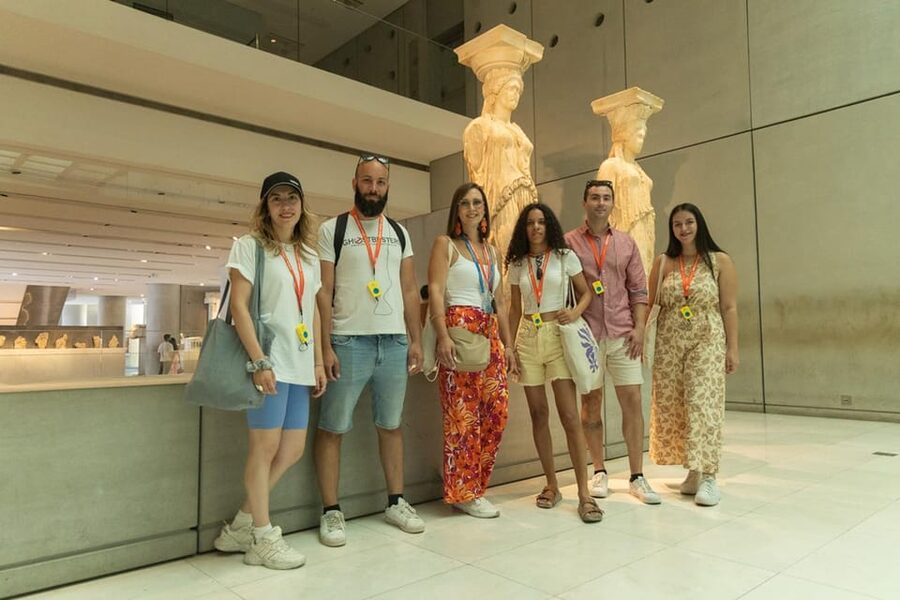
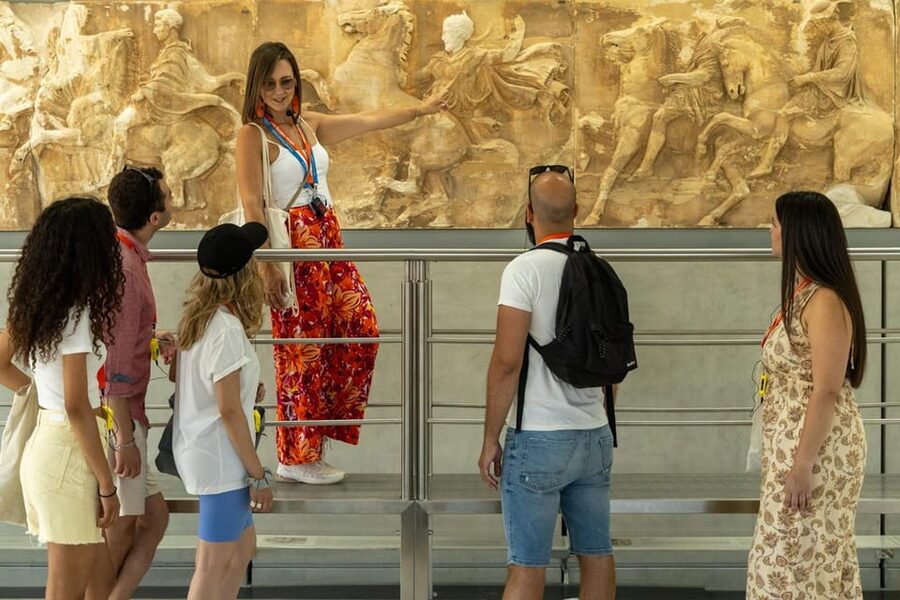
- The museum adds meaning to the stones above: Glass floors reveal excavations, while the galleries provide sculpture and artifacts that help fill in the gaps.
- Timing matters: Acropolis entry is strict, and late arrivals cannot be accommodated or refunded.
- The route is demanding: Wear sturdy, comfortable shoes and leave large bags, luggage, and strollers behind.
Why pairing the hill and museum works so well

The Acropolis can look straightforward at first: a hill, several famous ruins, and a wide view over Athens. Once you hear how the buildings fit into Athenian politics, religion, art, and daily life, the site becomes much easier to understand.
That context is the main reason I see value in a guided visit. On your own, it is possible to walk past a column, a carved figure, or a weathered foundation without knowing what you are seeing. A good guide gives you a framework, points out details you might miss, and helps you separate the classical buildings from later additions and ongoing archaeological work.
The museum then answers questions the hill cannot. The Acropolis is an exposed archaeological site, with many objects missing or badly damaged. In the museum, you can look closely at sculpture and architectural pieces in a controlled setting. The two parts are strongest together, even though the combined visit demands energy.
The advertised cost is $55 per person. That is a reasonable price if you want a licensed guide and entrance tickets included in your chosen option. You are paying for more than admission: you get a structured route, explanations at each major stop, and help navigating one of Athens’s most crowded attractions.
Check the booking option carefully. With Tickets includes the entrance tickets. With the Without Tickets option, you receive a link after booking so you can purchase the Acropolis and museum admission yourself. If you buy tickets separately, the Acropolis entry time must match the tour start time exactly.
More Museum Tours in Athens
- Athens: Acropolis, Parthenon & Acropolis Museum Guided Tour
★ 4.8 · 9,316 reviews - Athens: Acropolis, Parthenon & Acropolis Museum Guided Tour
★ 4.8 · 3,579 reviews - Acropolis monuments & Parthenon Walking Tour with Optional Acropolis Museum
★ 5.0 · 2,678 reviews
Meeting near Hadrian’s Arch
The meeting point is at 3 Dionysiou Areopagitou Street, in front of the Lukumades and Pilino stores. It is at the start of the pedestrian walkway leading from Hadrian’s Arch toward the Acropolis, and it is about a three-minute walk from Acropolis Metro Station.
Look for the orange Athens Walking Tours sign. Arrive 20 minutes before departure. This is not a tour where arriving at the last moment is a smart gamble. The Acropolis uses timed admission, and latecomers cannot join later or claim a refund.
The meeting area is central and easy to reach, but give yourself extra time if you are coming by metro, walking from Plaka, or coordinating a family group. The tour begins with a walk of about 10 minutes toward the Acropolis area, so the early meeting time also helps the group enter together.
The Theatre of Dionysus and the south slope
The south slope is a sensible way to begin. It brings you first to the Theatre of Dionysus, a fifth-century amphitheater often described as the birthplace of the performing arts. Your guide can help you picture the space filled with ancient spectators rather than treating it as a pile of old stone seats.
Nearby is the Sanctuary of Dionysus, dedicated to the god associated with wine and fertility. This opening section gives the Acropolis a human setting. Before you reach the grand temples above, you encounter theater, religious practice, and public life.
The route is not flat. You will walk over uneven surfaces, climb stairs, and handle inclines. Some stones can be slippery, particularly if conditions are wet. If you have mobility limitations, this tour is not recommended, and it is not suitable for wheelchair users.
The guides have received repeated praise for choosing shady places for explanations on hot mornings and warning the group about difficult footing. That kind of small practical care matters here, because Athens heat and bare stone can wear you down quickly.
Entering the Acropolis through the Propylaea
Once inside the Acropolis, the Propylaea gives you the grand entrance to the sacred hill. It is not simply a doorway. Its scale and position help explain how the Acropolis was meant to impress people approaching the summit.
The Temple of Athena Nike follows as one of the key monuments. It is smaller than the Parthenon, but its position near the entrance makes it an important part of the ceremonial route. Your guide explains the temple’s connection to Athena and helps you notice how much meaning the Athenians placed on the hilltop.
Expect pauses for photographs, but this is still a group tour. You will not have unlimited time at every monument, and the guide must keep the group moving through a site with timed access and shifting crowds. That is a fair trade if your priority is understanding the major points rather than wandering without a plan.
Security can also slow the entrance. Skip-the-ticket-line access does not mean skipping security. Waiting is often between zero and 10 or 30 minutes, but peak periods can bring longer delays, including waits of 30 minutes or more.
More Acropolis tickets and guided visits:
- Athens: Acropolis & up to 5 Archaeological Sites Combo Pass
★ 4.4 · 12,619 reviews - Athens: Acropolis Ticket with Optional Audio or Live Guide
★ 4.2 · 11,055 reviews - Athens: Acropolis and Parthenon Guided Walking Tour
★ 4.6 · 5,882 reviews - Athens: Acropolis Ticket with Audio Guide
★ 4.0 · 3,575 reviews
The Erechtheion, Parthenon, and Athens views
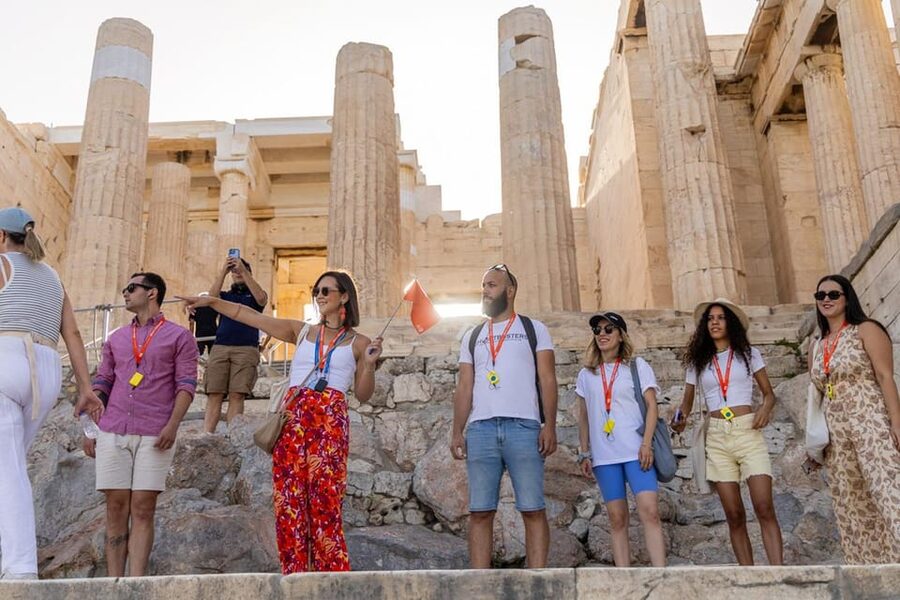
The Erechtheion is one of the most visually distinctive buildings on the hill. Its unusual plan and famous porch make it easy to recognize, but the details are more useful when someone explains the religious traditions connected with the site.
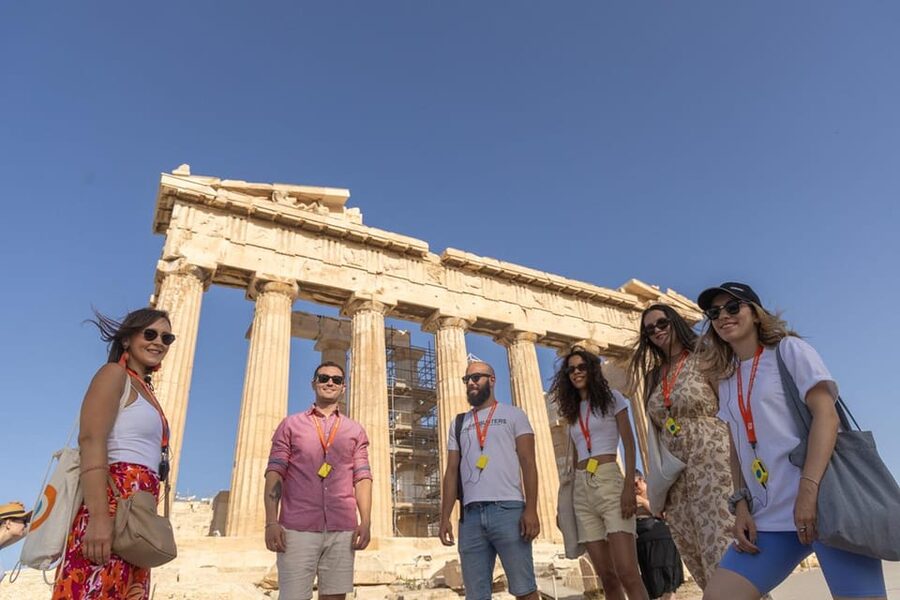
Then comes the Parthenon, the monument most people picture before arriving in Athens. You will see the building from several angles, hear about its design and purpose, and have time to take photographs. The guide’s job here is not merely to repeat dates. The strongest explanations connect architecture with the city’s political and religious ambitions.
At the summit, the views are a major reward. You can look across Athens and take in nearby landmarks such as Mars Hill, the Odeon of Herodes Atticus, and the ancient Agora. Your guide also discusses excavations and the work of interpreting and preserving the citadel.
The schedule includes a break and photo stop of about 15 minutes. That pause is welcome, but do not mistake it for a long rest. Bring water, wear a hat in hot weather, and expect the sun to be strong on the open hill. The tour operates in rain or shine.
Why the Acropolis Museum completes the visit
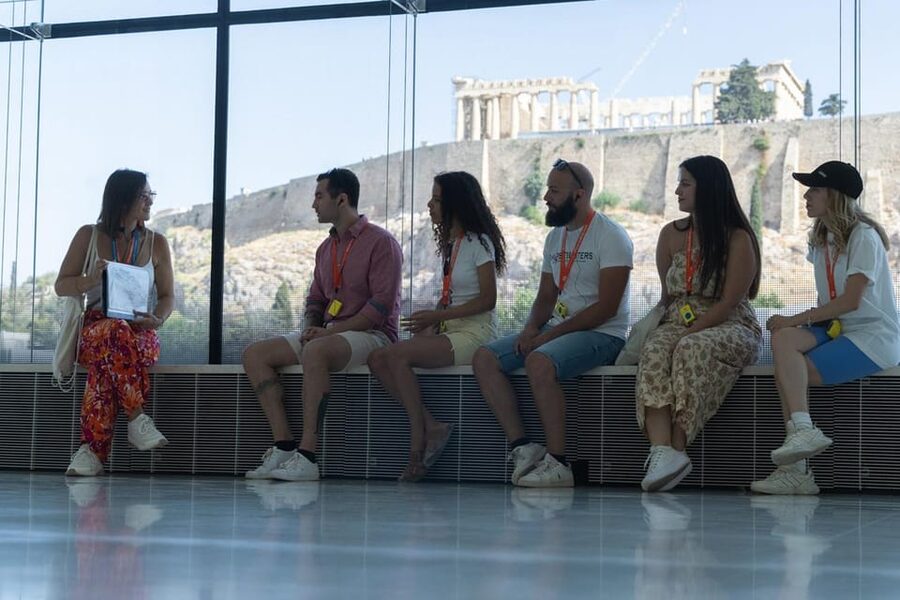
After the hill, the tour continues to the Acropolis Museum for about 90 minutes. This is not an afterthought. The museum helps you see the Acropolis as more than architecture by putting statues, reliefs, and other remains into a clearer setting.
One especially useful area is the Gallery of the Slopes of the Acropolis. Glass floors reveal excavation sites beneath the building, giving you a direct look at archaeology in progress rather than hiding the earlier layers below the museum.
The museum is large enough to reward extra time. The guided portion ends inside, so you can continue exploring after the official tour if your energy and schedule allow. That arrangement is convenient because you do not have to leave with the group immediately after the guide finishes.
The main drawback is physical and mental fatigue. After climbing the Acropolis in the sun, listening to explanations, and stopping for photographs, the museum can feel like a second major attraction rather than a gentle finale. One person found the combined outing too much at once, while others felt both sites were essential. I would choose the pairing if you have half a day and a strong interest in ancient Greece. If you prefer a lighter schedule, visit the Acropolis first and save the museum for another time only if the booking setup permits it.
The guide makes the difference
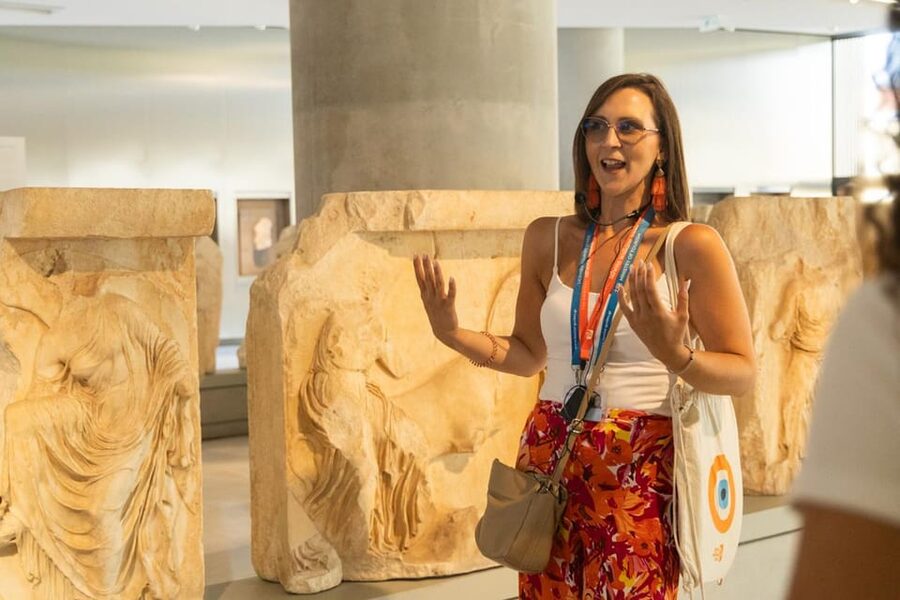
This experience depends heavily on the individual guide, as any group tour does. The strongest examples have included Yolanda, Apollon, Maria, Sissy, Angelica, and Philippina, with praise for clear English, humor, patience, and storytelling.
Several guides have been noted for balancing information with movement. That matters because a nonstop lecture on a hot, exposed hill is hard to enjoy. The better approach is to explain a monument, move the group to a useful viewpoint, pause in shade when possible, and leave room for photographs and questions.
Some guides have added insight into archaeological reclamation work. Others have connected the site with theater, philosophy, politics, spirituality, and everyday life. That range is useful because the Acropolis is not only an architecture stop. It reflects how Athenians thought about worship, public identity, art, and power.
Group size can vary, but one outing had fewer than 20 people, a manageable number for a walking tour. Do not assume it will feel private. You may need to stay close to the guide and listen carefully, especially when other groups are nearby.
What to bring and what to leave behind
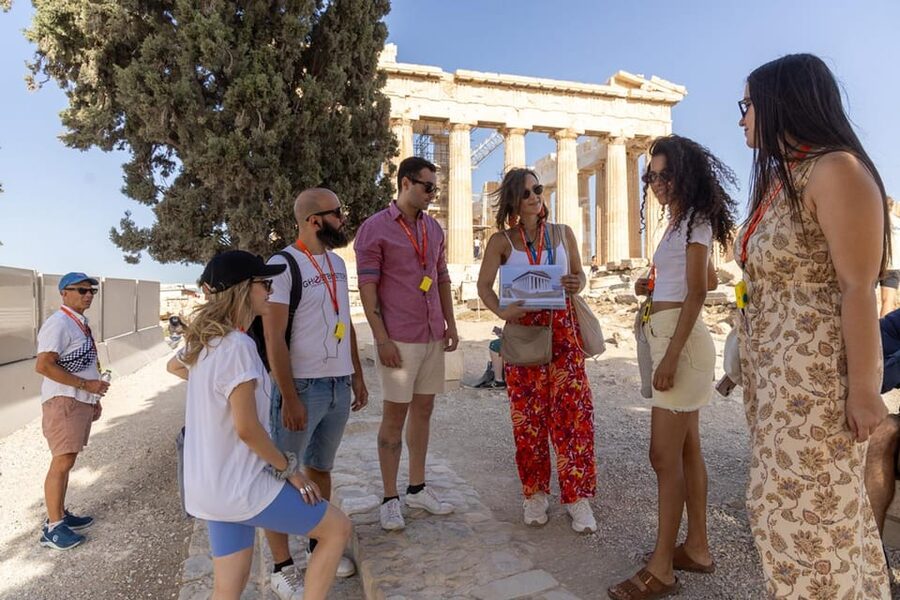
Your shoes matter more than your outfit. Choose comfortable footwear with a firm sole, since the route includes stairs, inclines, and slippery or uneven rocks.
Bring water, especially in summer, and consider a hat for the exposed summit. Comfortable clothes are recommended. The site can be hot, and shade is not guaranteed at every stop.
Do not bring luggage, large bags, big backpacks, pets, baby strollers, or other bulky items. The museum requires backpacks to be checked, so a smaller bag is easier. If you qualify for a reduced or free entrance ticket, bring official documentation and a valid ID showing your age and nationality.
Families should pay particular attention to the identification rule. Children may need official documentation for entry, and a failure to present the required ID can lead to denied admission or payment of the full ticket price if tickets are available. The tour fee is not refundable in that situation.
Who will get the most from this tour
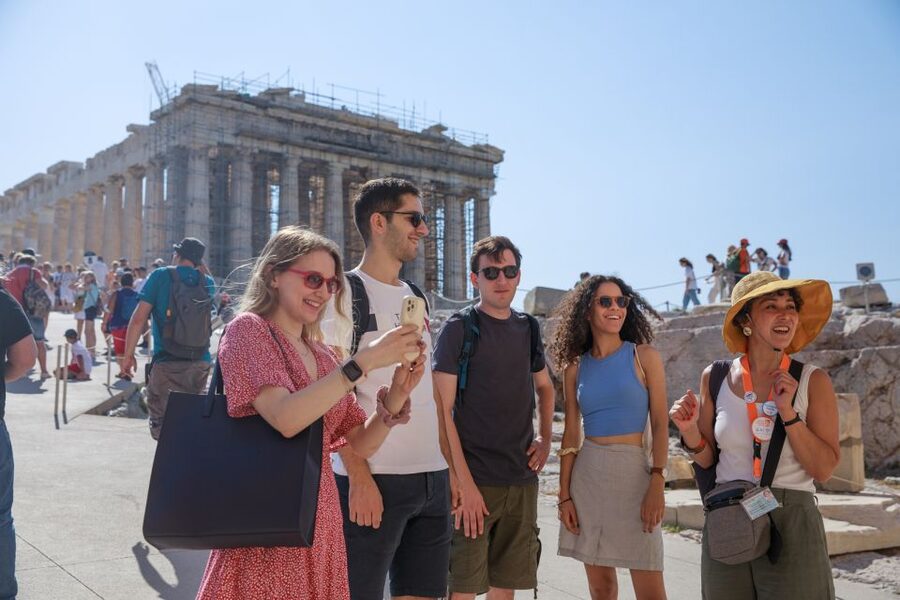
I would recommend this outing to a first-time visitor who wants the major Acropolis sights explained in a logical order. It is also a good choice if you have limited time in Athens and want the hill and museum covered in one morning or afternoon.
It suits people who enjoy history, architecture, mythology, and strong visual landmarks. The guide adds value for anyone who wants the meaning behind the buildings instead of simply taking photographs and moving on.
It is less suitable if you dislike group schedules or prefer long, quiet pauses at individual monuments. It is also a poor match for anyone with mobility problems, since the route includes rough footing and inclines. If you are sensitive to heat, an early start is wise. A morning beginning around 8:30 has been a popular choice because it can reduce the worst heat and some of the crowd pressure, though even shoulder-season mornings can be busy.
The free cancellation policy allows cancellation up to 24 hours before the start for a full refund. You can also reserve now and pay later, which helps if your Athens plans are still shifting.
Should you book the Acropolis and museum tour?
Book it if you want a well-organized introduction to Athens’s defining archaeological site and prefer clear explanations to self-guided reading. The $55 price makes good sense when entrance tickets are included and you value a licensed guide, timed access, and a route that covers both the hill and museum.
Think twice if you want a slow day or already have a strong background in ancient Greek history. The outing is active, the museum comes after the climb, and security or crowd delays can stretch the schedule.
For most first-time visitors, I would choose the ticket-included option, arrive early, wear solid shoes, and treat the museum as an essential second half rather than an optional add-on. That gives you the best chance of seeing the Acropolis as both a powerful monument and part of a larger Athenian story.
FAQ
How long does the Acropolis and Acropolis Museum tour last?
The scheduled duration is 3.5 hours. About two hours are spent on the Acropolis, followed by roughly 1.5 hours in the museum.
What language is the tour conducted in?
The live guided tour is conducted in English by a local, licensed guide.
Are entrance tickets included?
Tickets are included only if you select the With Tickets option. With the Without Tickets option, you receive a link after booking to purchase the Acropolis and Acropolis Museum tickets.
Where is the meeting point?
Meet at 3 Dionysiou Areopagitou Street, in front of the Lukumades and Pilino stores. The location is near Hadrian’s Arch and about three minutes from Acropolis Metro Station. Look for the orange Athens Walking Tours sign.
How early should I arrive?
Arrive 20 minutes before the scheduled departure time. The Acropolis has strict timed entry, and late arrivals cannot be accommodated or refunded.
Is the tour suitable for wheelchair users or people with mobility impairments?
No. The tour is not suitable for wheelchair users or people with mobility impairments because the route includes stairs, inclines, and uneven or slippery surfaces.
What should I bring?
Bring comfortable clothes, sturdy comfortable shoes, water, and any required official ID or documentation for reduced or free admission. Do not bring pets, strollers, luggage, large bags, or big backpacks.
New on the Athens shelf
- Small-Group Wine Tour in Athens with Tasting★ 5.0 · 33 reviews
- Acropolis of Athens, Parthenon and Acropolis Museum private tour with dinner★ 5.0 · 77 reviews
- Private Athens Transfer Airport/Port -Greek Tours-Hourly service★ 5.0 · 88 reviews
- VIP Private Guided Tour of Athens Acropolis & Plaka in a Sidecar★ 5.0 · 108 reviews
- Athens Moonlight Waling Tour with Drinks and Meze Dishes★ 5.0 · 259 reviews
- Private Athens Landmarks Layover Tour★ 4.5 · 41 reviews
- Departure Transfer from Athens City to Athens Airport★ 5.0 · 41 reviews
- Classic Athens Food Tour with Local Drink & Market Visit★ 5.0 · 34 reviews
Acropolis Tours, compared.
Acropolis & up to 5 Archaeological Sites Combo Pass
Read our verdict →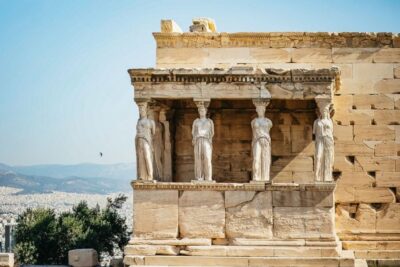
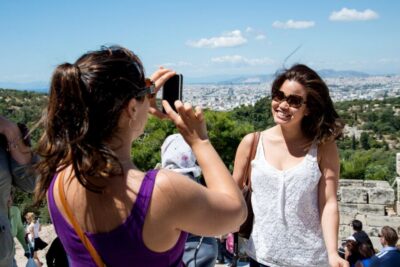
Acropolis, Parthenon & Acropolis Museum Guided Tour
Read our verdict →
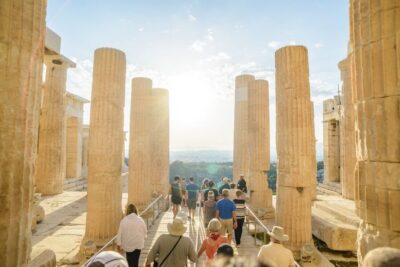
Acropolis: Acropolis and Parthenon Guided Walking Tour
Read our verdict →
Acropolis monuments & Parthenon Walking Tour with Optional Acropolis Museum
Read our verdict →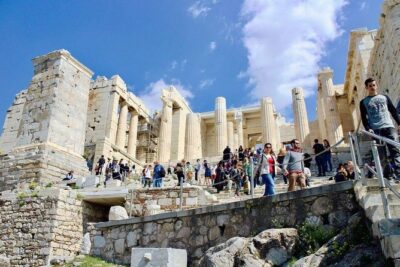
Athens All Included: Acropolis and Museum Guided Tour with Ticket
Read our verdict →Browse the lists this tour appears in