
Review · WALKING TOURS
Corfu: History and Culture Walking Tour
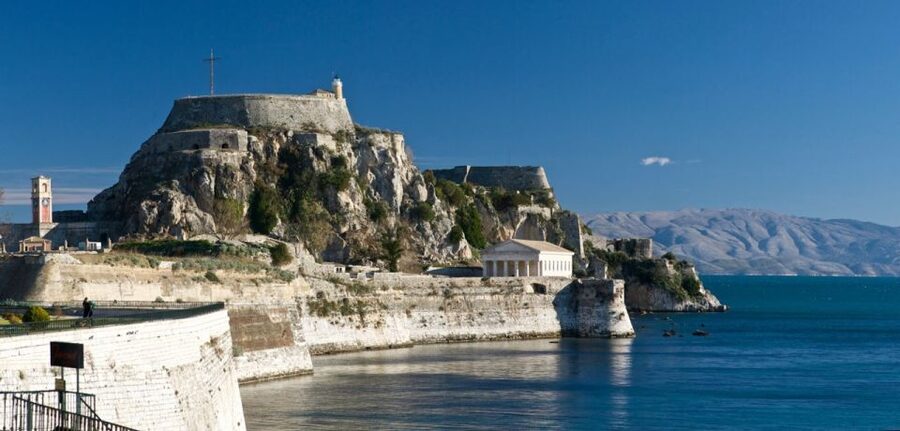
Corfu Town tells its story in layers. Venetian fortifications, French-style squares, British monuments, and Greek Orthodox traditions all meet within a compact historic center. This three-hour walk begins at the Old Venetian Fortress and follows the city’s narrow lanes to St. Spyridon Church and Town Hall Square.
I like the small group of up to eight because it gives you a better chance to ask questions and hear the guide clearly. I also like the way the tour connects buildings with daily life, explaining how outside powers shaped Corfu’s customs, food, faith, and sense of identity.
The main drawback is physical rather than cultural: this is a walking tour through old streets and fortress grounds, and it is not suitable for people with mobility impairments. At $93 per person, it is not a budget stroll, so the value depends on how much you want historical context rather than a quick look at the sights.
Key points to know before you book
- The Old Fortress is the anchor: You begin inside one of Corfu’s defining Venetian landmarks, with the entrance fee included.
- The tour covers several eras: Venetian, French, British, and Greek influences are tied together rather than treated as separate facts.
- St. Spyridon Church adds a living local focus: You see its 16th-century architecture and tall bell tower while learning about Corfu’s Orthodox traditions.
- A small group keeps the walk personal: The maximum group size is eight, and guides such as Nausica, Alice, Valia, Arita, and Ariti have led this experience.
- Allow three hours on foot: Comfortable shoes matter, and the tour is not designed for people with mobility impairments.
- The finish is useful for the rest of your day: Town Hall Square puts you near Corfu’s historic center, restaurants, and further sightseeing options.
Starting by the Schulenburg statue at the Old Fortress
Meet your English-speaking guide by the statue of Schulenburg in front of the Old Fortress. This is a clear starting point in the historic center, and it puts you beside the first major sight instead of spending the opening part of the tour getting there.
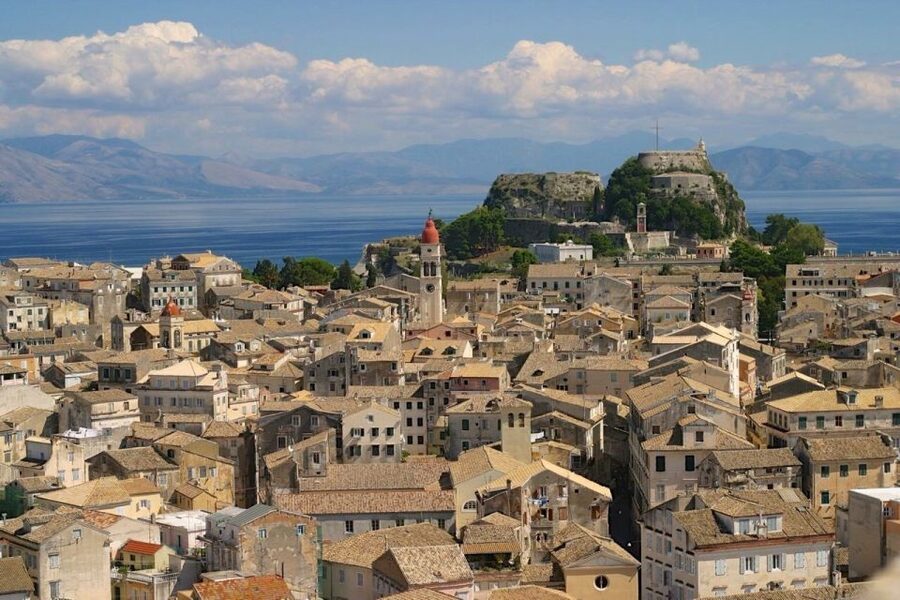
The fortress dates from the Venetian period, when Corfu occupied an important position in the Ionian Sea. Its location and defenses help explain why the island attracted outside powers for so long. You do not simply pass the walls and take a photograph. The guided visit gives you a framework for understanding how Venetian rule left its mark on Corfu’s buildings, customs, and traditions.
The included entrance fee is a small but useful benefit. You do not need to arrange a separate ticket, and the tour is set up to skip the ticket line. Check the available start time when booking, since the activity lasts three hours and starting times vary.
More Walking Tours in Corfu
- Corfu Town: Guided Walking Tour and Local Food Tastings
★ 4.9 · 313 reviews - Taste Corfu: Private Corfu Food Walking Tour
★ 5.0 · 82 reviews - Corfu: Gastronomy Walking Tour
★ 4.9 · 78 reviews
Inside the Old Venetian Fortress
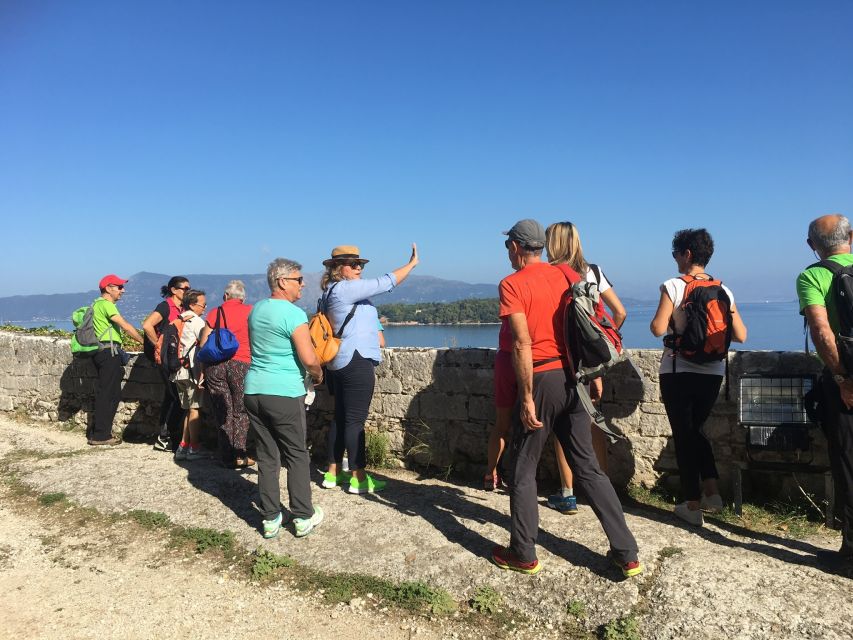
The Old Fortress is the most substantial stop on the route. You can expect a guided walk through the site, time for views along the way, and explanations of its place in Corfu’s past.
The fortress is valuable early in the tour because it gives you a physical sense of Corfu’s strategic position. Stone walls and open views make the island’s history easier to grasp than a list of dates in a guidebook. You can see why control of Corfu mattered, and why Venetian influence remained so strong.
The site also sets up one of the tour’s main ideas: Corfu is not defined by a single outside culture. Venetian rule is prominent, but it is only one part of the story. The French and British later left their own architectural and social marks, while Greek language, religion, and local customs continued to shape everyday life.
Expect a little uneven ground and walking around a historic site. The available information does not give a detailed step count or route grade, so anyone concerned about mobility should treat the fortress visit as a serious consideration before booking.
Walking Corfu Town’s lanes and squares
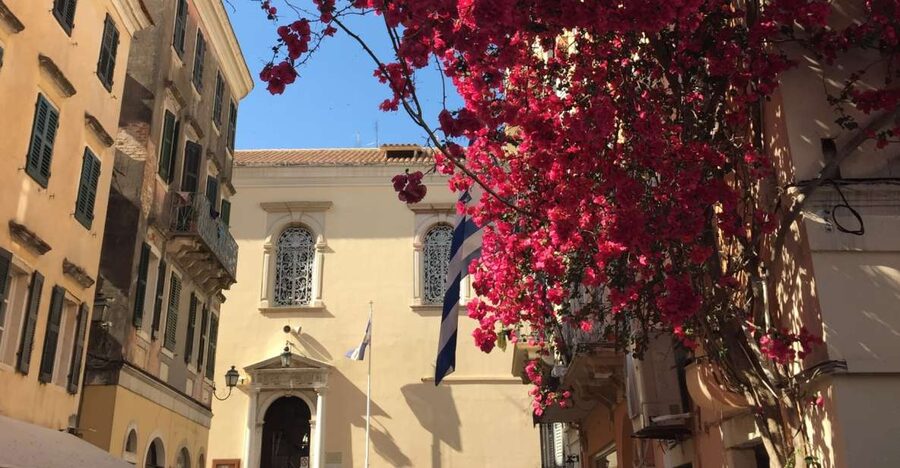
After the fortress, the route continues through Corfu Town. The change in mood is part of the appeal. You move from a defensive structure into lanes, small squares, fountains, and streets where the city’s mixed past appears in a more domestic form.
Some lanes may feel quiet, while the squares offer more open space and activity. This gives the walk a useful rhythm. You are not looking at one monument after another with no connection between them. Instead, the guide helps you notice how architecture and public spaces reflect the different groups that governed or influenced Corfu.
The tour is especially helpful if you are seeing Corfu Town for the first time. A guide can point out details that are easy to miss when you wander alone, then explain why they matter. If you have visited before, the historical connections may give familiar streets a new meaning.
This portion is also where a small group can make a real difference. With no more than eight participants, you should have a better chance of stopping briefly for questions without holding up a large crowd. Guides have been praised for adjusting the time spent in different areas, which is useful when your group wants more detail at the fortress or has extra questions about local customs.
St. Spyridon Church and Corfu’s Orthodox identity
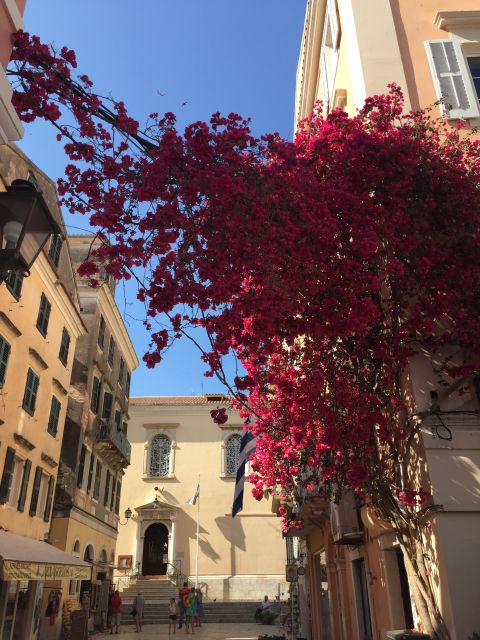
The route leads to St. Spyridon Church, a 16th-century Greek Orthodox church in the historic center. Its architecture and bell tower provide a clear change from the military character of the Old Fortress.
The bell tower is described as the highest in the Ionian Islands, making it an easy landmark in the city. The church also adds an important religious and local dimension to the tour. Corfu’s story is not only about Venetian walls or foreign rulers. Greek Orthodox practice and local devotion remain central to the island’s identity.
You should dress and behave respectfully when visiting a church. The supplied details do not specify a dress code or whether the interior is always accessible during the tour, so your guide will be the best source of direction on the day.
This stop is one reason the walk feels broader than an architectural tour. You learn how Corfu’s past affected its people and traditions, not just how its buildings look. Guides such as Valia and Arita have been praised for explaining the island’s identities, heritage, and customs in a clear way, which is exactly the sort of context that makes a church visit more meaningful.
More Historical Tours in Corfu:
- Small-Group Food and Cultural Tour in Corfu
★ 5.0 · 299 reviews - Historical Delphi One Day Tour with Arachova Stop & Expert Guide
★ 4.5 · 1,247 reviews - Historic Athens: Small Group Electric Bike Tour
★ 4.9 · 740 reviews - Naxos Half Day History and Culture Guided Tour
★ 5.0 · 491 reviews
Town Hall Square and Corfu’s former elite
The walk finishes at Town Hall Square, once considered Corfu’s most exclusive neighborhood. Here, the focus turns to monuments, public life, and the people who held social power in the city.
This is a smart ending because it moves beyond fortifications and religion. You get a look at the civic side of Corfu, including the places where the island’s elite met and displayed their position. The square helps explain how wealth and influence shaped the city’s public face.
The tour returns to the Agoniston Politechniou area, according to the stated route. Since the tour ends in the historic center, you can continue exploring on your own afterward. One guide has recommended the Asian Museum and local lunch spots to participants, but those suggestions are not included as formal parts of the tour.
That kind of local advice can be useful at the end of a walking tour. You are already oriented to the center, and you can decide whether to keep sightseeing, stop for food, or return to another attraction.
What the guides add to the experience
The guide is the key factor here. The fortress and churches are worthwhile on their own, but the tour’s value comes from having someone explain the links between them.
Guides named in past bookings include Alice, Nausica, Valia, Arita, and Ariti. The strongest pattern is a mix of historical detail, local perspective, and an easy manner. Nausica has been particularly noted for her enthusiasm and affection for Corfu, while Alice was praised for making the culture and history easy to understand. Arita has also offered practical help with Greek coffee and restaurant choices during past tours.
You should not assume that a particular guide will lead your departure. Still, the range of named guides gives you a useful idea of the experience: this is intended to be a personal, discussion-friendly walk rather than a recorded audio route.
The guides have also shown some flexibility. One group received help adapting the tour during bad weather, and another found the guide willing to shift time between different areas. That does not guarantee a custom itinerary, but it suggests that questions and group interests are part of the format.
The tour may occasionally include extra local touches. A past outing included liquor tasting and samples of local food, but these are not listed as guaranteed inclusions. Book this for the history and walking route, not for food tasting.
Does $93 offer good value?
At $93 per person, the tour sits in the premium range for a three-hour city walk. The price includes the Old Fortress entrance fee and a licensed English-speaking guide, but not food or hotel pickup and drop-off.
I think the value is strongest for visitors who want a guided introduction to Corfu Town and prefer a small group. You are paying for the guide’s interpretation, not transportation. The route brings together the fortress, historic center, St. Spyridon Church, and Town Hall Square in one organized experience.
The price is harder to justify if you only want to see the major sights quickly. Corfu Town is walkable, and you can explore some areas independently. A self-guided visit will cost less, though it will not provide the same direct access to a local guide’s explanations or recommendations.
The experience is also good value for a first day in town. You can learn how the city fits together, then use that knowledge for the rest of your stay. If you are staying longer, you might use the tour to decide which museums, churches, and squares deserve a second visit.
Who should take this walk?
I would recommend it to first-time visitors who want a clear introduction to Corfu’s history and culture without committing to a full-day excursion. Three hours is long enough to cover the main sites but short enough to leave room for lunch or independent sightseeing.
It also suits repeat visitors who have already walked Corfu Town but want more context. One past participant had visited before and still found that the tour changed their view of the city. That makes sense: a local guide can connect familiar buildings with the island’s changing political and cultural identity.
History-minded visitors will get the most from it, especially those interested in Venetian rule, Greek Orthodox traditions, or the French and British presence. It is also a practical choice for anyone who likes to ask questions and receive restaurant or museum suggestions from a local guide.
I would not choose it if you have difficulty walking on historic surfaces or cannot comfortably spend three hours on foot. It is also not the best pick if your main goal is food, since food is not included and tastings are not guaranteed.
Timing, group size, and what to bring
The activity lasts three hours, with starting times available according to the booking calendar. Plan to arrive at the statue of Schulenburg in front of the Old Fortress, rather than expecting hotel pickup.
Wear comfortable shoes. That is the one stated packing requirement, and it is sensible given the fortress grounds, old lanes, and continued walking through the center.
The group is limited to eight participants. This makes the experience more intimate than a large coach-style city tour and should make it easier to hear the guide in narrow streets and busy squares.
The tour is conducted in English only. If you need another language, this is not the right choice based on the available information.
You can cancel up to 24 hours before the activity for a full refund, and you can reserve now while paying later. Those terms are useful if your Corfu plans are still shifting, especially when weather or ferry schedules may affect your day.
My verdict on the Corfu history walk
Book this tour if you want Corfu Town explained by a local guide, not simply photographed from the outside. The Old Fortress, St. Spyridon Church, and Town Hall Square make a strong three-hour route, and the guide’s role is to connect Venetian, French, British, and Greek influences into one understandable story.
The small group and included fortress entry help support the $93 price, though the cost will feel high if you prefer independent sightseeing. Choose it early in your stay if possible, so the local suggestions and city orientation can shape the rest of your visit.
Skip it if mobility is a concern or if you are looking mainly for a food tour. For everyone else, this is a focused way to meet Corfu through its streets, faith, monuments, and many-layered past.
FAQ
How long does the Corfu History and Culture Walking Tour last?
The tour lasts three hours.
Where does the tour begin?
Meet your guide by the statue of Schulenburg in front of the Old Fortress.
What sights are included?
The route includes the Old Venetian Fortress, Corfu Town’s historic center, St. Spyridon Church, and Town Hall Square.
Is the Old Fortress entrance fee included?
Yes. The Old Fortress entrance fee is included in the tour price.
What language is the tour conducted in?
The tour is conducted in English with a licensed English-speaking guide.
How many people are in the group?
The group is limited to eight participants.
Is hotel pickup included?
No. Hotel pickup and drop-off are not included.
Is the tour suitable for people with mobility impairments?
No. The activity is not suitable for people with mobility impairments. Comfortable shoes are recommended.
New on the Corfu shelf
- Symphony of Flavors – Olive Oil & Food Pairing at Corfu Town★ 4.9 · 66 reviews
- Corfu: Stand Up Paddle Board in Sidari★ 4.7 · 37 reviews
- Corfu: Northwest Coast and Village Charms 4×4 Tour★ 4.7 · 44 reviews
- Agios Gordios: Corfu ATV Quad Tour with Lunch at Pink Palace★ 4.3 · 108 reviews
- Corfu: Shore & Shared – Palaiokastritsa, Lakones, Kratsalo★ 4.9 · 137 reviews
- Corfu: Shore & Shared Tour – Achilleion, Mon Repos, Old Town★ 5.0 · 45 reviews
- Saranda: Corfu Town and Palaiokastritsa Day Trip with Cruise★ 4.4 · 313 reviews
- From Lefkimmi: Corfu, Kavos Party Booze Cruise★ 4.6 · 49 reviews
Walking Tours, compared.

Acropolis: Acropolis and Parthenon Guided Walking Tour
Read our verdict →
Acropolis monuments & Parthenon Walking Tour with Optional Acropolis Museum
Read our verdict →
Knossos: Knossos Palace Skip-the-Line Guided Walking Tour
Read our verdict →

Athens Authentic Greek Food Walking Tour (Small Group)
Read our verdict →
Early Morning Acropolis & Old Athens Guided Walking Tour
Read our verdict →Browse the lists this tour appears in