
Review · ACROPOLIS TOURS
Athens: The Acropolis Guided Walking Tour in German
The best part of this tour is the route through the southern side of the Acropolis. You begin at the Theatre of Dionysus, pass the remains of an ancient hospital, look into the Herodes Atticus Odeon, and then climb toward the Parthenon with the city opening below you. It puts the famous temples into a much larger story.
I like the fact that you get a German-speaking licensed guide, rather than trying to piece together the site from signs. I also like the ticket setup: your entry is arranged in advance, and the ticket remains useful for free time after the guided walk. The main drawback is the uphill route over uneven, sometimes slippery ground, with no elevator. The 1.5-hour schedule can also feel brisk if you want long photo stops.
Key points
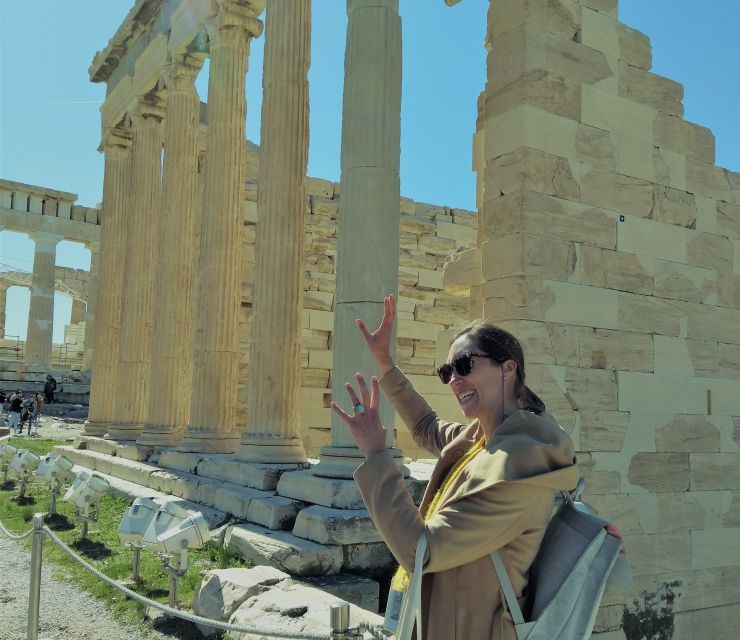
- German guidance with clear explanations: Jessica has led tours that mix history, humor, questions, and visual aids.
- A smart southern approach: Start at the Theatre of Dionysus before climbing to the temples.
- See more than the Parthenon: The route includes the Asklepieion, Herodes Atticus Odeon, Propylaea, Erechtheion, and Temple of Athena Nike.
- Tickets are handled for you: Entry and ticket pre-booking fees are included, helping you avoid the ticket line.
- Free time after the tour: Finish near the Parthenon and continue exploring independently with the same day’s ticket.
- Plan for a real uphill walk: Comfortable shoes, water, sunglasses, and a hat are practical essentials.
Why this Acropolis route works so well
Many Acropolis visits become a quick march to the Parthenon, followed by a few hurried photos. This tour takes a better approach. It begins below the summit, at the Theatre of Dionysus, and builds the visit as a walk through the southern slope before reaching the main temples.
That order matters. You see the Acropolis not only as a collection of marble buildings, but also as a sacred hill with theatres, healing spaces, ceremonial entrances, and civic monuments. By the time you reach the top, the famous temples have more context.
The tour lasts about 90 minutes, which is enough time for a guided introduction without taking over your entire day in Athens. You will need to keep moving, though. This is not a slow, private visit with unlimited time at every stop. It suits you best if you want a well-organized first look, then plan to use the included free time for your own photographs and closer inspection.
More Walking Tours in Athens
- Athens: Acropolis and Parthenon Guided Walking Tour
★ 4.6 · 5,882 reviews - Greek Food Walking Tour in Athens
★ 5.0 · 4,740 reviews - Acropolis: Acropolis and Parthenon Guided Walking Tour
★ 4.7 · 3,442 reviews
Starting at the Theatre of Dionysus
The walk begins at the side entrance of the Acropolis hill, with two possible starting locations listed around Acropoli. Check your exact meeting point carefully before setting out, since it can vary with the option you book.
The first major stop is the Theatre of Dionysus. You can take in the curved rows of ancient seats and imagine the theatre as the birthplace of Greek drama. This is one of the most useful opening stops because it immediately shows that the Acropolis was not simply a temple platform.
Your guide can explain how theatre, religion, and public life overlapped here. You may also get a chance to sit briefly on one of the ancient seats, though the guide controls the pace and site rules still apply. The theatre is open and exposed, so bring water and sun protection, especially during warmer months.
Passing the Asklepieion and Herodes Atticus Odeon
From the theatre, the route follows the sunny southern side of the hill. You pass the Asklepieion, described as one of the first hospitals in ancient Greece. Its presence adds an important human detail to the visit. Ancient people came to sacred places not only to worship, but also to seek healing.
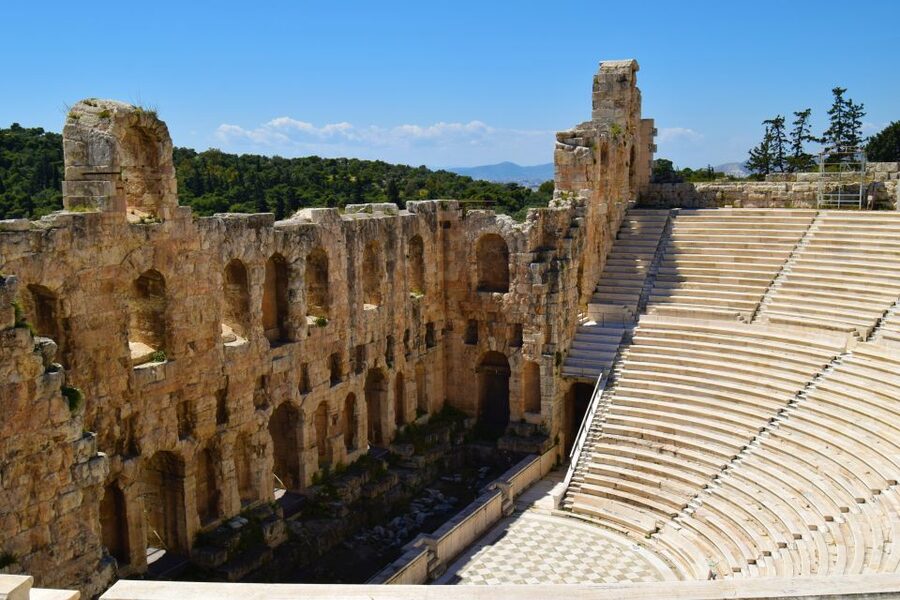
The walk continues toward the Odeon of Herodes Atticus. This large stone theatre is one of the most memorable sights on the lower slope. Its scale helps you understand how public performances once fit into the life of Athens, even though you view it as an archaeological monument today.
The southern path is also where the physical nature of the visit becomes clear. You are walking uphill, often in full sun, over uneven surfaces. The distance itself is manageable, but the combination of stone, slope, and heat can make the climb tiring. Wear shoes with a firm grip and avoid bringing anything you do not need.
The Propylaea and the moment of arrival
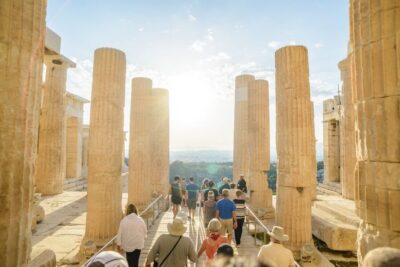
The Propylaea is the monumental gateway to the upper Acropolis. Passing beneath it gives the visit a strong sense of arrival. Instead of simply appearing beside the Parthenon, you approach the summit through the same grand entrance zone used by ancient visitors.
This is a good place to listen closely to the guide’s explanation of the building challenges. The Acropolis monuments are not simple blocks of stone placed on a level platform. Their builders adjusted forms and proportions to create a balanced appearance from below and across the hill.
The path can be crowded, and the ground is not perfectly even. Stay close enough to hear the guide and be ready to pause when the group stops. A small group makes this easier. One December tour had nine people, a size that allowed the group to remain together while still leaving room for questions.
More Acropolis tickets and guided visits:
- Athens: Acropolis & up to 5 Archaeological Sites Combo Pass
★ 4.4 · 12,619 reviews - Athens: Acropolis Ticket with Optional Audio or Live Guide
★ 4.2 · 11,055 reviews - Athens: Acropolis, Parthenon & Acropolis Museum Guided Tour
★ 4.8 · 9,316 reviews - Athens: Acropolis, Parthenon & Acropolis Museum Guided Tour
★ 4.8 · 3,579 reviews
The Temple of Athena Nike
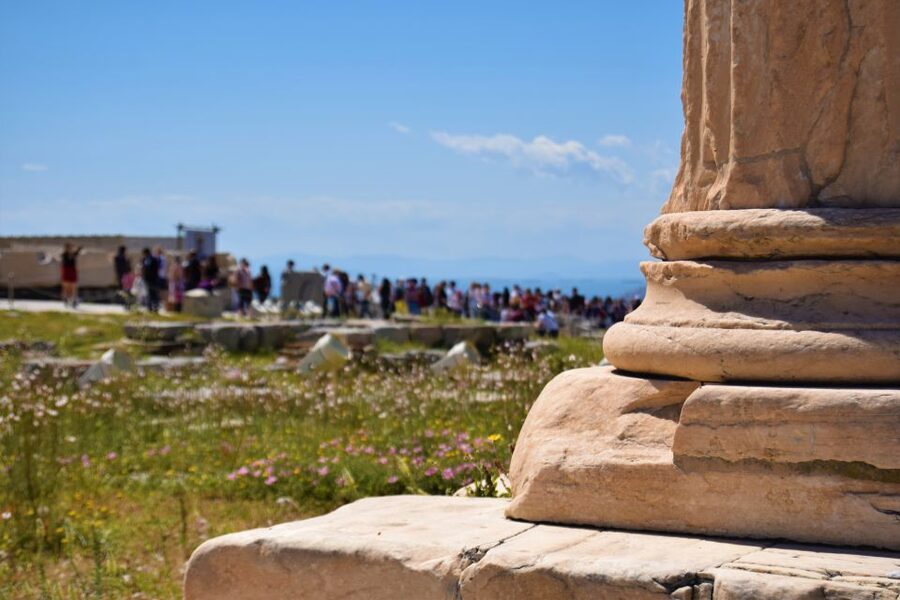
Near the entrance, you see the Temple of Athena Nike. It is smaller than the Parthenon, but its position gives it great visual importance. The temple sits by the approach to the Acropolis, so ancient and modern visitors encounter it at a key point in the climb.
The guide explains the myths connected with the temples and points out architectural details that are easy to miss when you are focused on getting to the Parthenon. This is one of the strengths of a live German-language tour. You can ask for clarification in your own language instead of relying on a short caption or a translated audio track.
The temple is also a reminder that the Acropolis is not one single monument. Several buildings served different religious purposes, and each had its own place within the wider sacred complex.
The Erechtheion and its unusual design
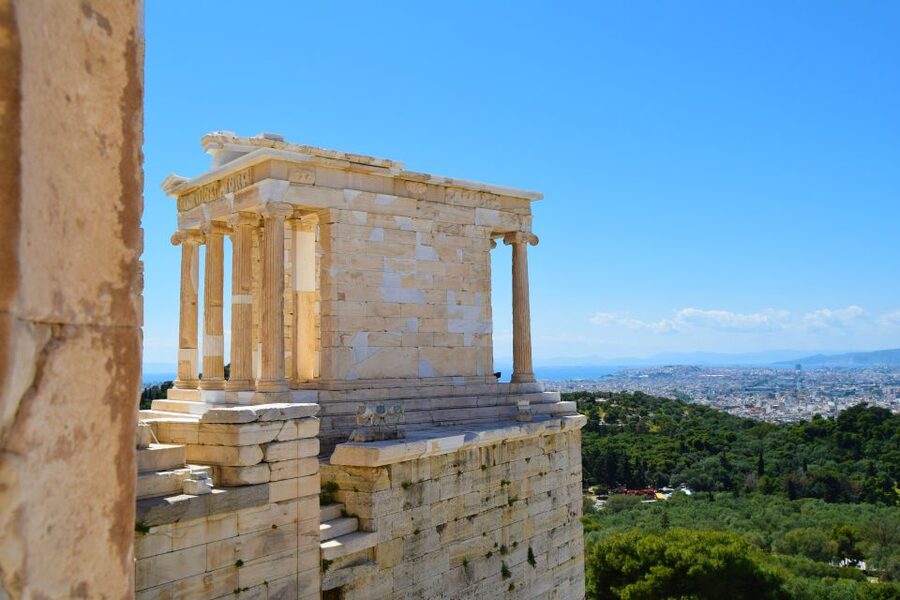
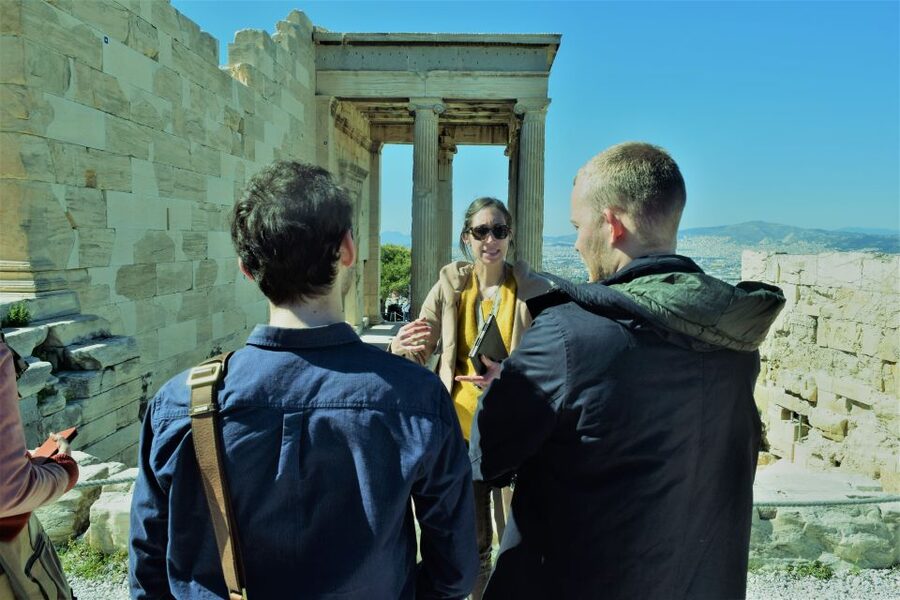
The Erechtheion is one of the most distinctive buildings on the summit. Its unusual shape and the famous Caryatid porch make it an important counterpoint to the Parthenon’s broad, regular form.
This is where the architectural explanations become especially useful. The guide discusses the methods used to make the monuments appear harmonious, along with the myths tied to the Acropolis. You will hear why visual details matter, not just what each structure is called.
The Erechtheion can be harder to appreciate in a quick walk because its design is less immediately familiar. Give yourself time to look at its different levels and angles. The guided portion may not allow a long pause, but your free time afterward gives you another chance to return to the area if conditions and access permit.
The Parthenon, the main event
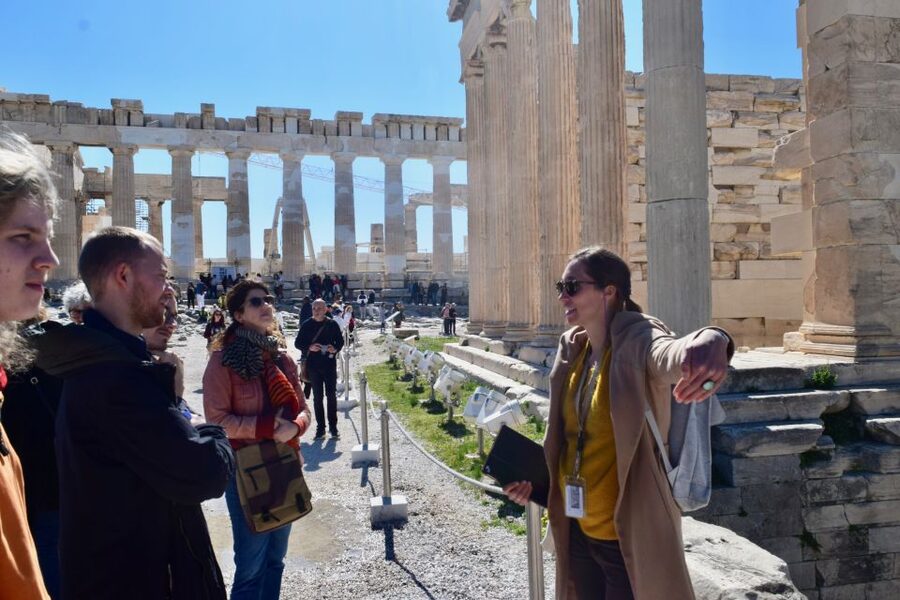
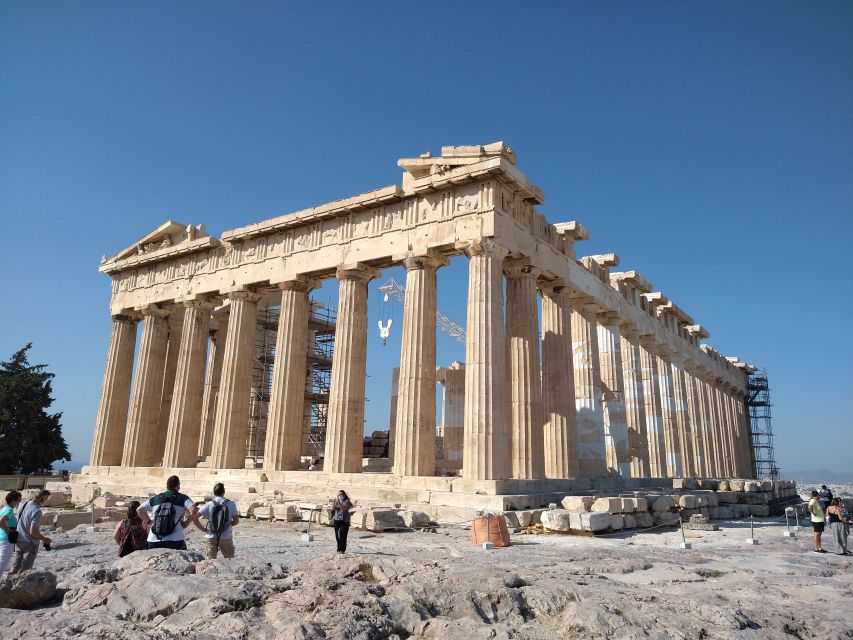
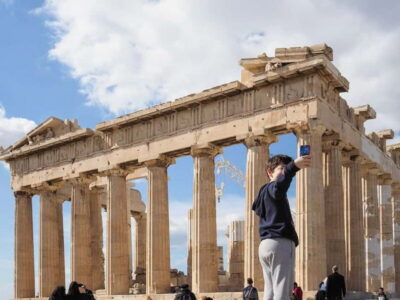
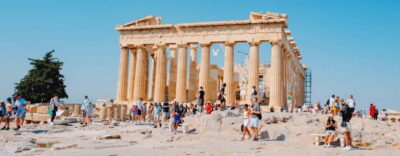
The Parthenon is the centerpiece of the visit, and the tour saves it for the top. That makes the arrival feel earned. You have already seen the theatre, hospital site, lower theatre, gateway, and smaller temple, so the largest monument becomes part of a connected story rather than an isolated photo stop.
The guide points out architectural tricks used by the builders. These details help explain why the building appears so balanced despite its size and position on a rocky hill. You also hear the myths associated with the Acropolis, adding a human layer to what might otherwise feel like a wall of columns and scaffolding.
The Parthenon is an active archaeological site, not a perfectly preserved ancient building. You should expect restoration work and restricted areas. The tour gives you a strong orientation, but it cannot remove crowds or guarantee a clear photograph from every angle.
After the guided walk ends near the Parthenon, you have free time to explore independently. This is valuable. You can take photographs, revisit the Erechtheion, look back toward the city, or simply slow down after following the guide’s pace.
The 360-degree view over Athens
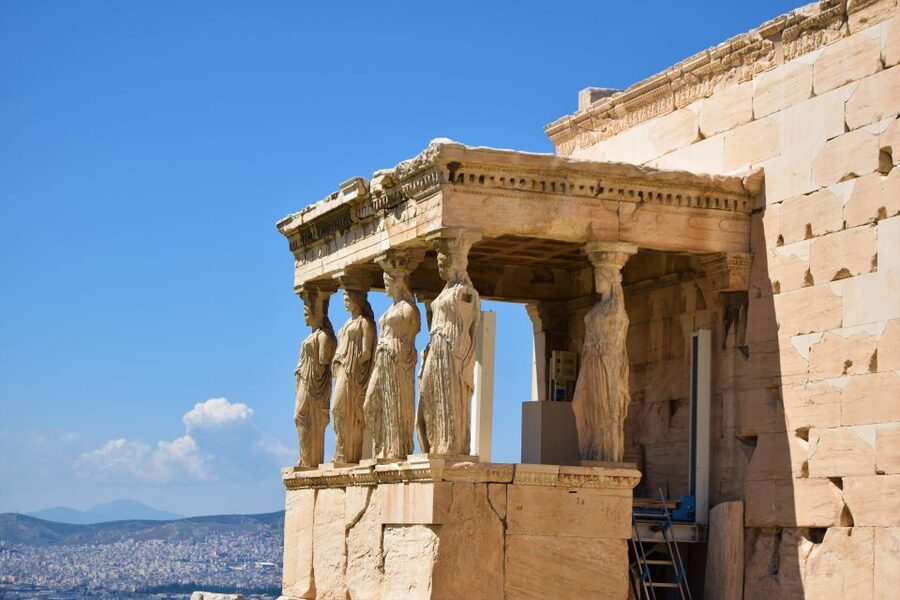
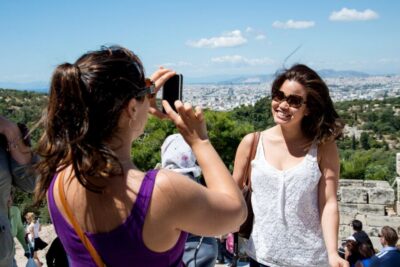
The summit provides the visual payoff. From the Acropolis, you can look across Athens in every direction and see how the ancient hill relates to the modern city.
This broad view is more than a photo opportunity. It shows why the site mattered. The Acropolis is both a religious center and a commanding high point above Athens. A guide can help connect the monuments on the hill with the city below, while you get a clear sense of the site’s position.
The light and heat can change the experience. Sunglasses and a sun hat are not decorative extras here. Bring water, since food and drinks are not allowed within the archaeological site. You should also avoid large bags and luggage, which are not permitted.
A German-language guide makes a real difference
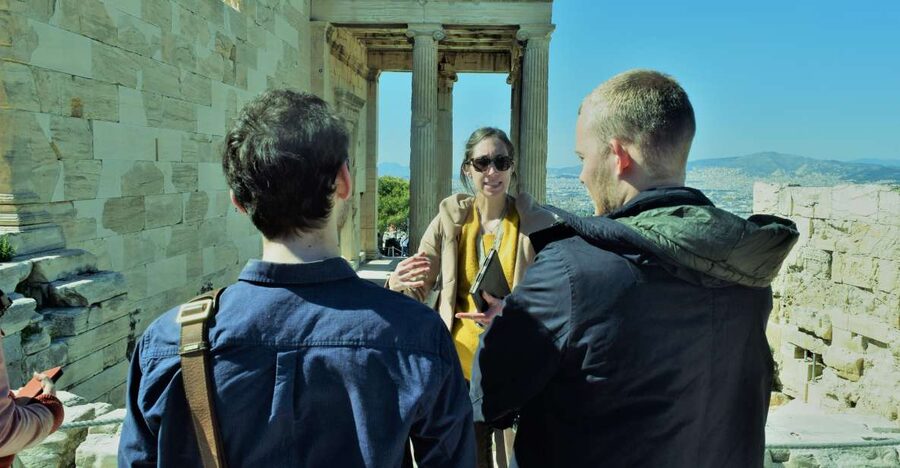
The tour is conducted in German by a live licensed guide. That is the main reason to choose it over a standard English-language walk if German is your preferred language.
Jessica has led this experience with an engaging style that includes humor, questions, and images to make complex points easier to follow. She also allows time for questions rather than delivering one long speech while the group trails behind. That matters at a site where names, myths, dates, and architectural terms can quickly blur together.
The format is friendly and conversational, but the tour is still structured. You move from the Theatre of Dionysus up to the summit, stopping at the main monuments in a sensible order. A recent group of nine found the size comfortable, though group size can change by date and season.
If you want complete control over your pace, this will feel more restrictive than visiting alone. If you want a clear explanation in German and help making sense of a complicated site, the guide is a strong reason to book.
Is $95 a fair price?
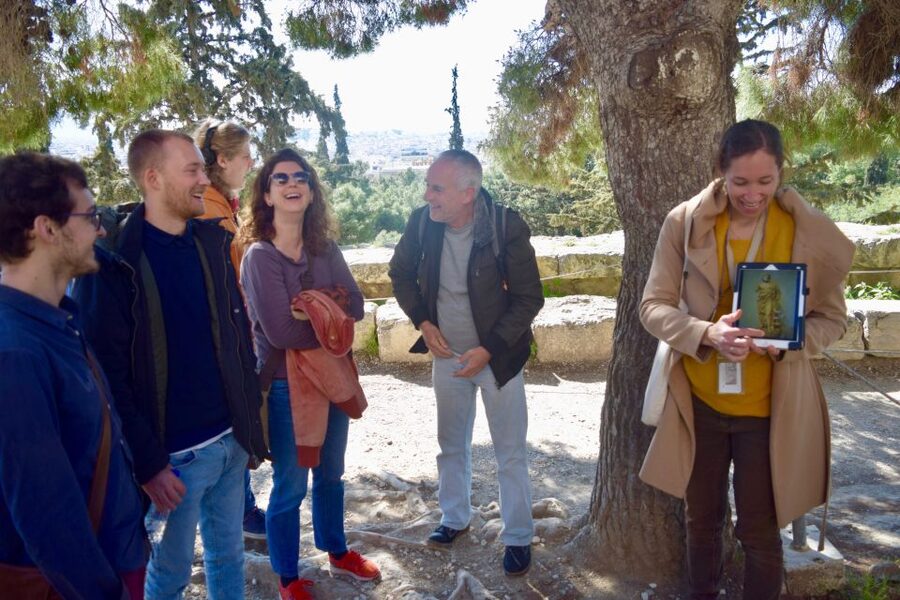
At $95 per person, this is not the cheapest way to enter the Acropolis. The price includes the entry ticket, a licensed guided walk, ticket pre-booking administration fees, and free time afterward. You are also paying for a German-language service, which narrows the comparison.
The value is strongest if you would otherwise spend time arranging entry and then depend on signs or a guidebook. Skip-the-ticket-line access can save hassle, particularly when you have a tight Athens schedule. It does not mean you skip every security or site control, but your admission is arranged before you arrive.
The price is less attractive if you already know the Acropolis well, speak another available tour language comfortably, or prefer to explore without a set pace. In that case, independent entry may suit you better.
For a first visit in German, I consider the price reasonable if you care about explanation and organization. The free time after the guided portion also helps protect the value of your ticket. You are not simply shown the Parthenon and sent away.
Who should book this walk?
I would choose this tour for a first-time visitor who wants the major Acropolis sights explained in German. It is also a good fit for anyone who prefers a short, focused tour and wants the rest of the day free for Athens museums, neighborhoods, or meals.
The route works well for couples, families with older children, and small groups of friends who want someone else to handle the entry arrangements. The guide’s use of questions and visual material can keep the history moving, rather than turning the visit into a list of dates.
I would not choose it for anyone with limited mobility. There is no elevator, the walk climbs uphill, and the stone surface can be slippery. Baby strollers, large bags, luggage, food, and drinks are not allowed. Assistance dogs are allowed, but other pets are not.
Bring comfortable shoes, water for before or after the site rules allow it, sunglasses, and a sun hat. You should also carry a passport or ID card, or a copy, since identification is required.
Booking flexibility and timing
You can cancel up to 24 hours before the tour for a full refund, and the reserve-now-pay-later option lets you hold a place without paying immediately. Starting times vary, so check availability for your chosen date.
The meeting point may change depending on the option booked. Do not assume that every departure uses the exact same spot around Acropoli. Confirm the final instructions and arrive ready to walk, since the tour begins near the side entrance rather than with hotel pickup.
There is no hotel pickup or drop-off, and food and drinks are not included. That is normal for a short central Athens walking tour, but you should plan your transport and refreshments around it.
Should you book the Acropolis tour in German?
Book it if you want the Acropolis explained in German, prefer a licensed guide, and value having entry arranged ahead of time. The southern route is well planned, and the combination of theatre, hospital site, theatres, gateways, temples, and city views gives you more than a quick Parthenon visit.
Skip it if you need step-free access, dislike group schedules, or want to spend several hours examining every corner at your own pace. For everyone else, the 1.5-hour format offers a practical introduction, with enough independent time afterward to make the ticket useful for the rest of the day.
FAQ
How long does the Acropolis walking tour last?
The guided tour lasts 1.5 hours. Afterward, you have free time to continue exploring the archaeological site.
What language is the tour conducted in?
The tour is conducted in German by a live licensed guide.
Is the Acropolis entry ticket included?
Yes. The price includes entry to the Acropolis and administration fees for ticket pre-booking.
Where does the tour start?
The tour begins at the side entrance of the Acropolis hill. The precise meeting point may vary depending on the option booked, so check the instructions for your selected departure.
Is the tour suitable for people with limited mobility?
No. The route includes an uphill walk over uneven surfaces, and there is no elevator. The experience is not recommended for people with mobility impairments.
What should I bring to the tour?
Bring comfortable shoes, sunglasses, a sun hat, water, and a passport or ID card. A copy of your identification is accepted. Baby strollers, food and drinks, luggage, large bags, and pets are not allowed, although assistance dogs are permitted.
New on the Athens shelf
- Acropolis of Athens, Parthenon and Acropolis Museum private tour with dinner★ 5.0 · 77 reviews
- Small-Group Wine Tour in Athens with Tasting★ 5.0 · 33 reviews
- Private Athens Transfer Airport/Port -Greek Tours-Hourly service★ 5.0 · 88 reviews
- VIP Private Guided Tour of Athens Acropolis & Plaka in a Sidecar★ 5.0 · 108 reviews
- Athens Moonlight Waling Tour with Drinks and Meze Dishes★ 5.0 · 259 reviews
- Private Athens Landmarks Layover Tour★ 4.5 · 41 reviews
- Departure Transfer from Athens City to Athens Airport★ 5.0 · 41 reviews
- Classic Athens Food Tour with Local Drink & Market Visit★ 5.0 · 34 reviews
Acropolis Tours, compared.
Acropolis & up to 5 Archaeological Sites Combo Pass
Read our verdict →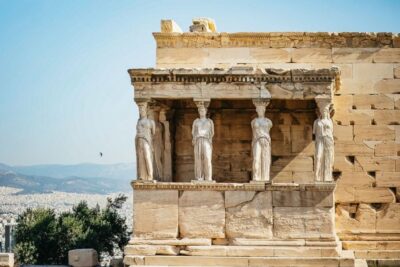
Acropolis, Parthenon & Acropolis Museum Guided Tour
Read our verdict →
Acropolis: Acropolis and Parthenon Guided Walking Tour
Read our verdict →
Acropolis monuments & Parthenon Walking Tour with Optional Acropolis Museum
Read our verdict →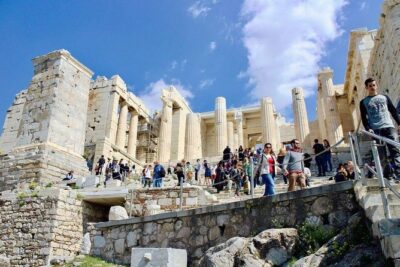
Athens All Included: Acropolis and Museum Guided Tour with Ticket
Read our verdict →Browse the lists this tour appears in