
Review · ACROPOLIS TOURS
Athens: Private Guided Skip-the-Line Tour of the Acropolis
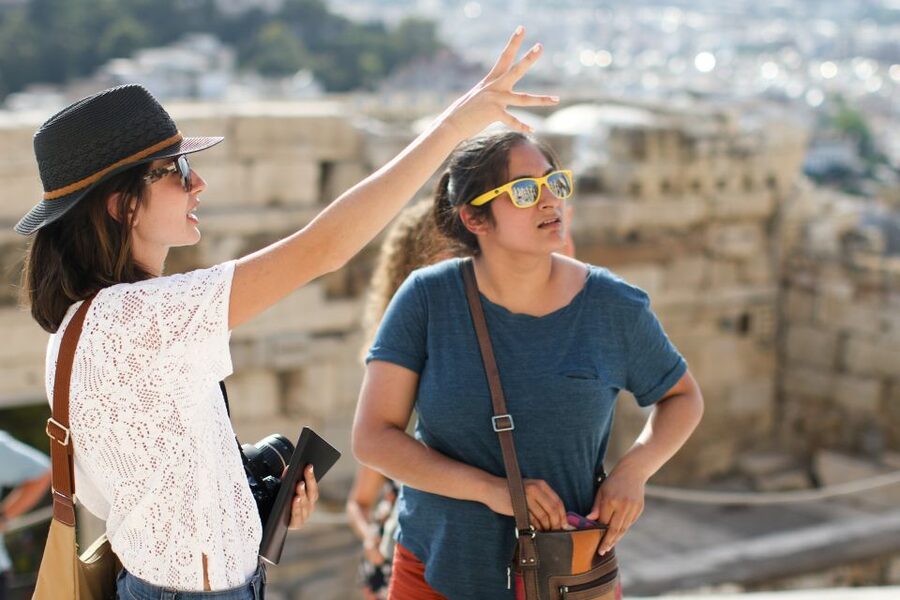
The best thing about this Acropolis tour is the way it turns a pile of ancient stones into a story about democracy, drama, philosophy, and power. With an archaeologist guide beside you, you move from the Dionysus Theatre to the Parthenon while hearing how Athens grew into a cultural force. The private format lets you ask questions and set the pace, and the skip-the-ticket-line entry saves precious time at one of Athens’ busiest sights.
I like the practical care built into the tour. Guides such as Alex, Vasilis, Efi, and Dimitri have been praised for clear explanations, good photo spots, family-friendly pacing, and attention to shaded places in hot weather. The drawback is the short 1.5-hour schedule: it covers the major monuments, but you will need a longer visit if you want a slow look at every corner.
Key points to know before you book
- A private group for up to two people: You get direct time with your guide instead of joining a large crowd.
- A 1.5-hour route through the Acropolis: Expect the Parthenon, Erechtheion, Athena Nike Temple, Propylaia, Dionysus Theatre, and Odeon of Herodes Atticus.
- An archaeologist guide: The tour focuses on context, ancient Greek ideas, mythology, and the people behind Athens’ cultural rise.
- A useful early start: One guide met a group at 8 a.m. so they could enter as soon as the site opened.
- A family-friendly approach: Guides have adapted explanations and pacing for children.
- A high cost for a short visit: At $352 for two, the value rests on private attention, time saved, and the quality of the guide.
Why a private Acropolis tour can be worth the price
The Acropolis is not a place where the main challenge is simply finding the monuments. You can see the Parthenon from many points in Athens. The harder part is understanding what you are looking at while managing crowds, heat, uneven ground, and a limited amount of time.
That is where a private guide earns the fee. You can stop when a question comes up, ask for a clearer explanation, or move on when the children lose interest. A guide can also point out details you might pass without noticing, from the purpose of a building to the way Athenian myths shaped public life.
At $352 for a group of up to two, this is not a budget tour. It makes more sense for a couple, two friends, or a parent and child who want a focused introduction rather than a large group experience. Split between two people, the cost buys a personal guide and skip-the-ticket-line entry, not just transportation or a standard audio explanation.
The 1.5-hour length keeps the price from becoming an all-day commitment, but it also limits how much time you have on the hill. I see this as a strong introduction, not a complete Acropolis day. If you want to study every monument, visit the Acropolis Museum separately, or linger for photography, plan extra time beyond this tour.
More Skip-the-Line Tickets in Athens
- Athens Skip the Line: Open Air Ancient Greek Theatre Performance
★ 4.5 · 520 reviews - Half Day Athens Private Tailor-Made City Tour (Skip the line of Acropolis)
★ 4.5 · 198 reviews - Acropolis Of Athens & Acropolis Museum Skip The Line Private Guided Tour
★ 5.0 · 102 reviews
Meeting at the Dionysus Theatre approach
The meeting point is at the paved route designed by architect Dimitris Pikionis, opposite the Dionysus Zonars restaurant. This places you near the southern side of the Acropolis and close to the ancient Theatre of Dionysus.
Pay attention to the exact meeting instructions. The Acropolis area has several entrances, paths, restaurants, and crowded walking routes, so arriving at the wrong point can cost you the first part of a short tour. The guide’s ability to find you matters here, and Efi has been praised for clear pre-tour communication and meeting her group quickly.
The route begins in a useful place for understanding Athens. The Theatre of Dionysus is tied to the birth of classical drama, so it gives the visit a human and civic starting point before you reach the grand temples above. You are not only looking at architecture. You are considering how a city used theater, religious festivals, debate, and public space to shape its identity.
Walking up through Athens’ sacred hill
The Acropolis is reached on foot over original cobblestones and ancient paths. You should wear shoes you can walk in comfortably and bring water, even though bottled water is included.
The climb and uneven surfaces are part of the setting, but they also affect the pace. Guides have paid attention to safety and have looked for shaded spots when explaining the site, a useful detail during Athens’ warmer months. The experience takes place in all weather, so bring protection from sun or rain according to the forecast.
The guide’s role is especially valuable during this approach. Without context, the buildings can seem scattered: a theater here, a gateway there, a temple at the top. With a strong explanation, the route becomes a progression through public life, religion, art, and political power.
The stories also reach beyond the stones. You can expect references to Socrates, Aristotle, Pericles, and other figures connected with Athenian thought and government. The tour uses ancient Greek ideas and quotations to explain how philosophy, science, art, theater, and democracy grew together in this city.
The Parthenon, Athens’ great visual anchor
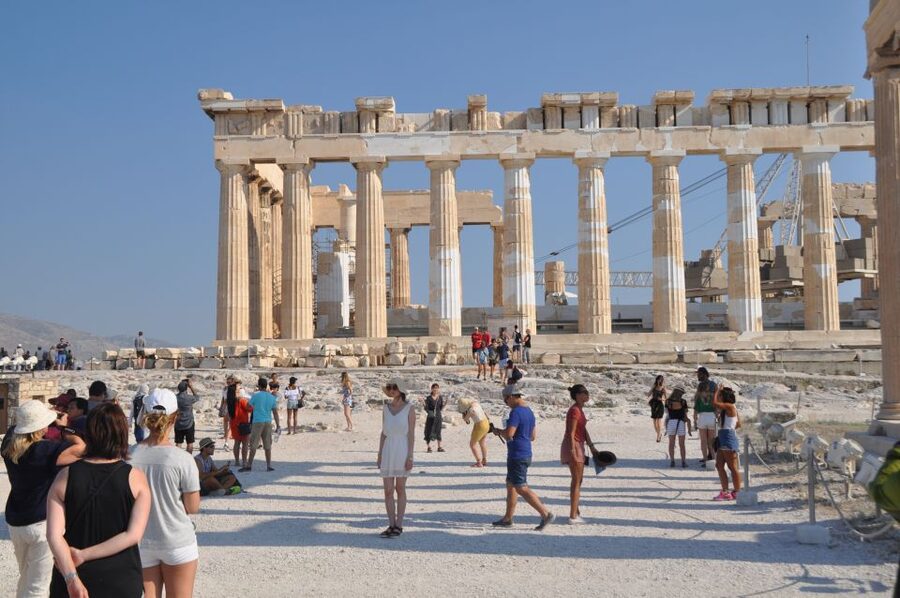
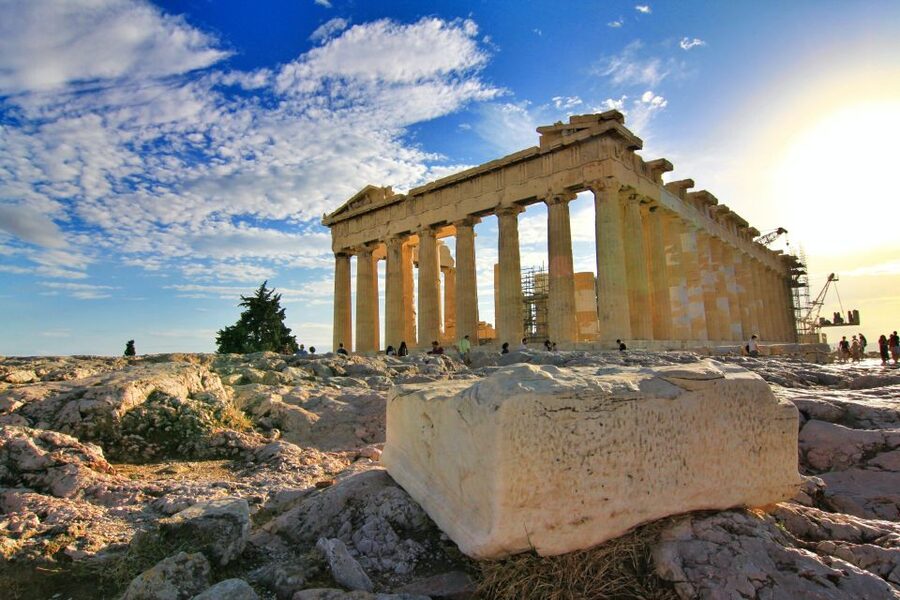
The Parthenon is the main event for most people, and rightly so. Its scale, position, and surviving columns make it easy to understand why it became the symbol of Athens.
A guide helps you look past the familiar postcard view. The building was dedicated to Athena, the city’s patron goddess, and its design reflects the confidence of fifth-century Athens. You will hear about the wider cultural setting that produced it, including the leadership of Pericles and the city’s role as a center of public debate and artistic work.
The short visit means you should not expect a minute-by-minute study of every architectural feature. Instead, the guide gives you a framework for understanding the monument and its place on the Acropolis. That is the right approach for a first visit, especially if you want memorable explanations rather than a dense lecture.
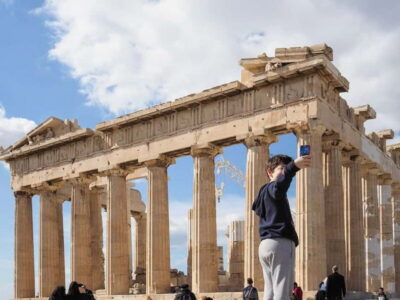
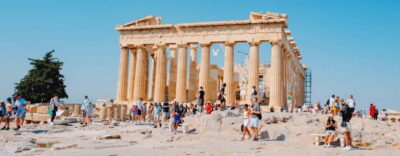
The Parthenon is also one of the busiest areas. A private guide can help you find better angles for photographs and explain while you are positioned away from the thickest knot of people. Alex, one of the guides associated with this experience, has been praised for finding shaded places and useful photo positions.
More Acropolis tickets and guided visits:
- Athens: Acropolis & up to 5 Archaeological Sites Combo Pass
★ 4.4 · 12,619 reviews - Athens: Acropolis Ticket with Optional Audio or Live Guide
★ 4.2 · 11,055 reviews - Athens: Acropolis, Parthenon & Acropolis Museum Guided Tour
★ 4.8 · 9,316 reviews - Athens: Acropolis and Parthenon Guided Walking Tour
★ 4.6 · 5,882 reviews
Athena Nike and the Propylaia

The Temple of Athena Nike is a small building compared with the Parthenon, but its location gives it unusual force. It sits near the entrance area and is tied to Athena in her role as a bringer of victory.
The tour finishes at this temple, which makes the final stop a compact architectural detail rather than another long monument. That can work well after the Parthenon, since you end with a closer look at one of the Acropolis’ more refined structures.
Before reaching the upper monuments, you pass through the Propylaia, the grand gateway to the sacred hill. It was designed to make arrival feel important. Even today, moving through this entrance changes the mood of the visit. You leave the city below and enter the ceremonial heart of ancient Athens.
Your guide can connect the practical route with the political meaning of the site. The Acropolis was not simply a hill filled with temples. It expressed the city’s wealth, religious beliefs, artistic ambition, and sense of itself.
The Erechtheion and its unusual story
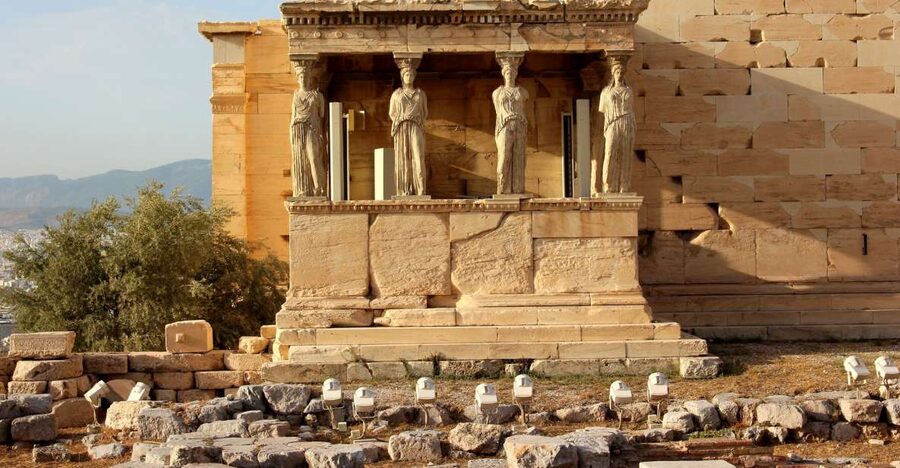
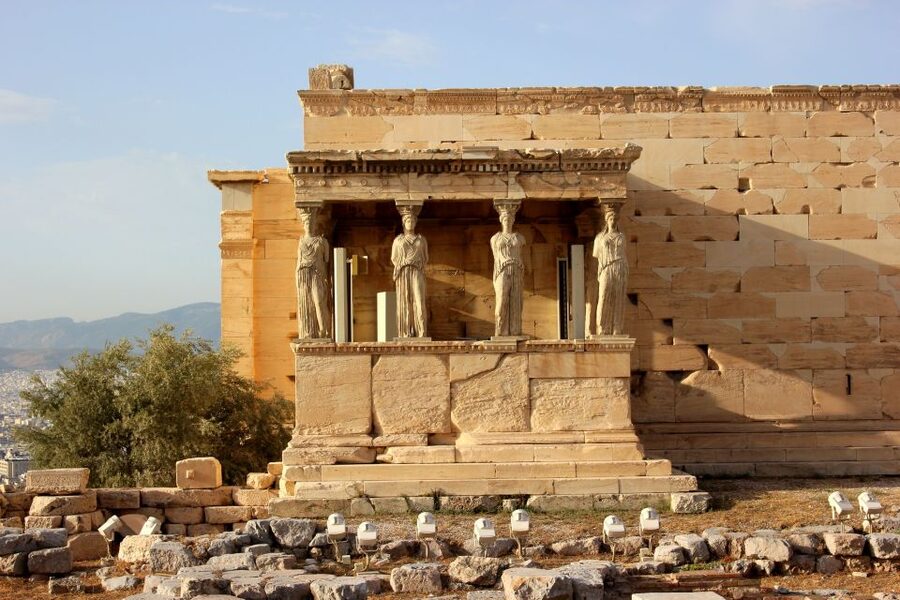
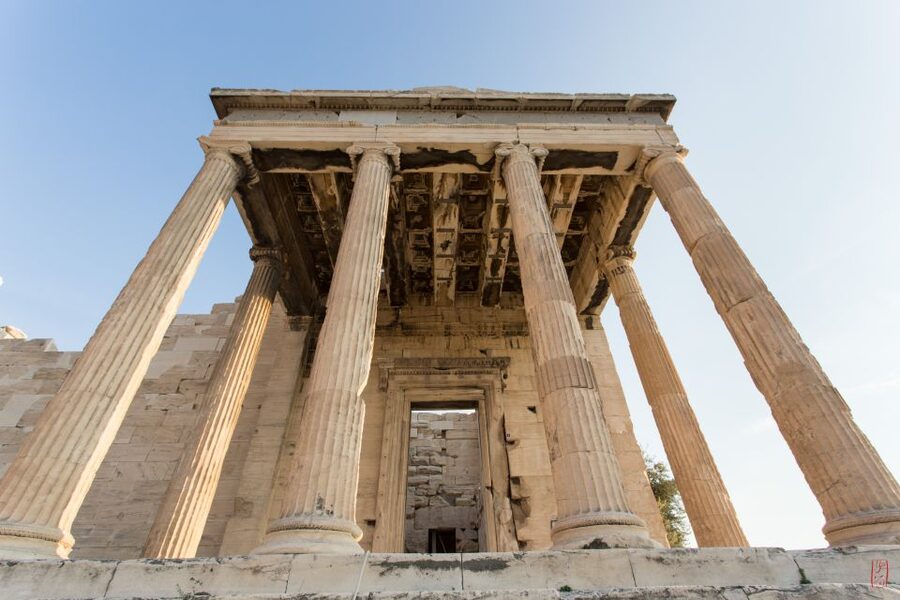
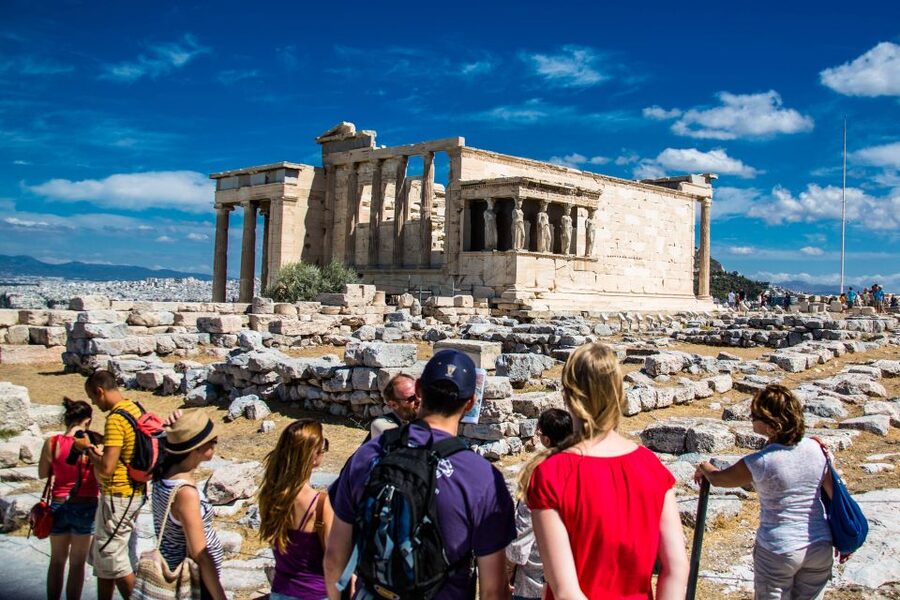
The Erechtheion is one of the most distinctive buildings on the Acropolis. Its uneven layout reflects the complex sacred traditions attached to the hill, rather than the simple symmetry many people expect from classical Greek architecture.
This is the place where a good storyteller makes a real difference. The building is associated with several ancient traditions and figures, including Athena and Poseidon. The guide can explain how myth and civic identity overlapped, giving you a clearer idea of why the Acropolis held such importance.
The famous female figures supporting part of the structure are often a highlight. Your guide can help you understand the building’s design and explain what you are seeing without reducing the visit to a quick photo stop.
Vasilis has been praised for organizing the tour thematically before moving through the monuments. That approach suits the Erechtheion particularly well because its meaning is easier to grasp when you first understand the myths, religious practices, and competing stories connected with the hill.
Theater, philosophy, and the wider Acropolis story
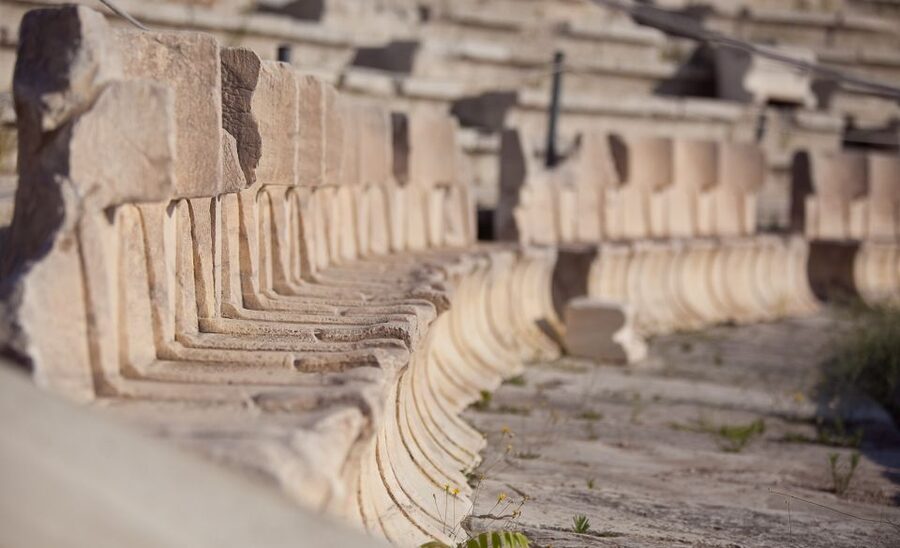
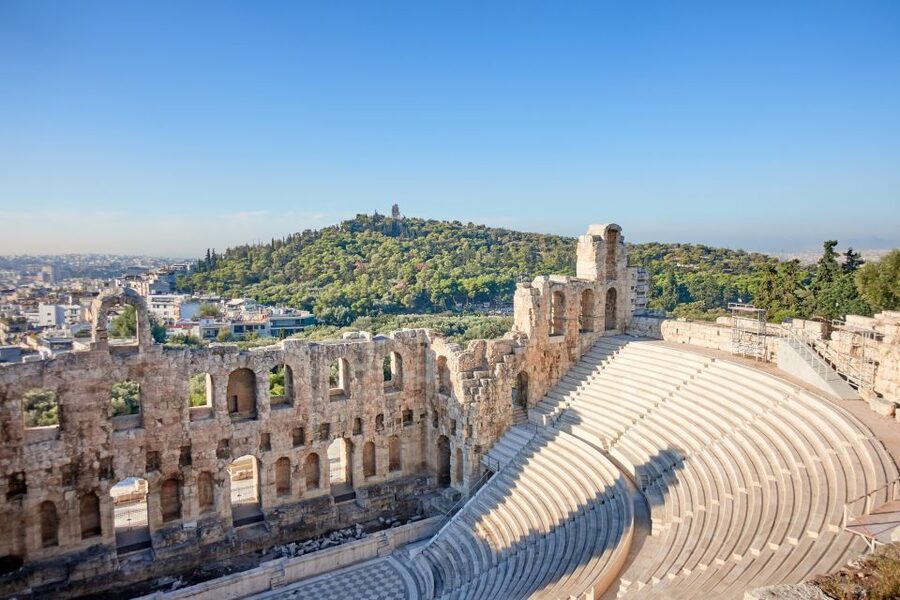
The Dionysus Theatre offers a different view of Athenian achievement. It is linked with drama, public performance, and the festivals that helped make theater a central part of Greek culture.
This stop gives the tour useful variety. You are not simply moving from one temple to another. You are considering how Athenians gathered to watch plays, reflect on moral questions, and participate in a shared civic culture.
The Odeon of Herodes Atticus adds another layer. It reminds you that the Acropolis continued to serve as a place for performance and public life long after the great classical period. From the hill, you can connect the ancient buildings with the continuing life of modern Athens below.
The tour also brings in Socrates and Aristotle, though this is not a walking route through places where every philosopher taught. Their presence is intellectual rather than tied to a single building. That distinction matters. You are learning how Athenian thinking influenced later ideas about politics, ethics, science, and education.
What the guide adds to the experience
The guide is the heart of this tour. The monuments are fixed, but the quality of the visit depends on how clearly someone explains them and responds to you.
Several guides have been praised for different strengths. Alex has been described as warm, well prepared, good with questions, and skilled at finding shade and photo spots. Vasilis has been singled out for strong organization, broad knowledge of the Acropolis, and an easy manner with children. Efi has been noted for safety awareness and communication before the meeting. Dimitri has been praised for keeping a whole family engaged while linking archaeology with larger ideas.
These details point to the main benefit of a private tour: the guide can adjust. Families with young children can ask for shorter explanations. Adults interested in architecture can ask for more detail. A group that wants mythology can spend more time on myths, while another can focus on democracy and philosophy.
The experience is offered in English or Greek. If you need a different language, this tour is not presented as a match for you. The private format also means you should use the guide actively. Ask questions, request a photo, and say if you need a short pause.
Families, couples, and first-time visitors
I would especially consider this tour if you are visiting Athens for the first time and want a clear introduction without committing to a long group excursion. The compact route gives you the main story of the Acropolis, then leaves time for your own plans.
Families can benefit from the private setting. Children are more likely to stay involved when the guide can respond directly to them rather than delivering a fixed speech to a large crowd. The tour is still a walking visit over ancient surfaces, so parents should judge their children’s stamina and comfort.
Couples and friends who dislike large groups are another good match. You get more control over the conversation and do not need to wait for a crowd to gather before moving to the next point.
It is less suited to you if you want a leisurely archaeological study. The 90-minute schedule moves quickly, and the price is high if you mainly want entry tickets and a short orientation. Independent visitors who already know the Acropolis well may prefer to explore on their own.
Timing, tickets, and practical details
The skip-the-ticket-line entry is one of the clearest practical benefits. At a major sight such as the Acropolis, time spent waiting can be frustrating, particularly during busy periods. Skip-the-line access does not mean you should arrive late. Meet at the stated point on time, since the group has a short schedule and the guide may be coordinating entry.
An early start can improve the experience. One group met Vasilis at 8 a.m. and entered as the site opened, avoiding some of the day’s pressure. Starting times vary, so check the available option when booking.
Bring your passport or identity card, as required for the activity. Bottled water is included, but you should still dress for walking and changing weather. Since the tour runs regardless of weather, sun protection or rain gear may be important.
You can cancel up to 24 hours before the activity for a full refund, and you can reserve now while paying later. Those terms are useful when your Athens schedule is still shifting.
Should you book this Acropolis tour?
Book it if you want a private, story-led introduction to the Acropolis, especially if you value an archaeologist guide, dislike large groups, or are visiting with children. The strongest part is the personal attention, backed by guides who have been praised for clear explanations, thoughtful pacing, family skills, safety awareness, and good photographs.
Think twice if $352 for two feels steep or if you want several hours to explore every monument. The 1.5-hour route is focused and efficient, not leisurely.
For many first-time visitors, I see this as a useful way to get the big picture: democracy below, drama and philosophy in the city, temples above, and the Parthenon tying it all together. Add extra independent time if you want to linger, but choose this tour when you want the ancient stones to make sense.
FAQ
How long does the Acropolis tour last?
The guided tour lasts 1.5 hours.
How much does the private tour cost?
The price is $352 for a private group of up to two people.
Is entry to the Acropolis included?
Yes. Acropolis skip-the-ticket-line entry tickets are included.
Is the tour private?
Yes. The activity is for a private group.
Which languages are available?
The live guide is available in English and Greek.
What type of guide leads the tour?
An archaeologist guide leads the experience.
Where is the meeting point?
The meeting point is opposite the Dionysus Zonars restaurant, at the paved route designed by architect Dimitris Pikionis.
Where does the tour finish?
The stated finishing point is the Temple of Athena Nike.
What should I bring?
Bring your passport or identity card. Bottled water is included.
Does the tour run in bad weather?
Yes. The tour takes place regardless of the weather.
Can I cancel for a refund?
You can cancel up to 24 hours in advance for a full refund.
Can I reserve now and pay later?
Yes. You can reserve your place and pay later.
New on the Athens shelf
- Acropolis of Athens, Parthenon and Acropolis Museum private tour with dinner★ 5.0 · 77 reviews
- Small-Group Wine Tour in Athens with Tasting★ 5.0 · 33 reviews
- Private Athens Transfer Airport/Port -Greek Tours-Hourly service★ 5.0 · 88 reviews
- VIP Private Guided Tour of Athens Acropolis & Plaka in a Sidecar★ 5.0 · 108 reviews
- Athens Moonlight Waling Tour with Drinks and Meze Dishes★ 5.0 · 259 reviews
- Private Athens Landmarks Layover Tour★ 4.5 · 41 reviews
- Departure Transfer from Athens City to Athens Airport★ 5.0 · 41 reviews
- Classic Athens Food Tour with Local Drink & Market Visit★ 5.0 · 34 reviews
Acropolis Tours, compared.
Acropolis & up to 5 Archaeological Sites Combo Pass
Read our verdict →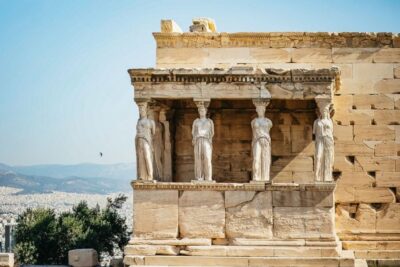

Acropolis, Parthenon & Acropolis Museum Guided Tour
Read our verdict →
Acropolis: Acropolis and Parthenon Guided Walking Tour
Read our verdict →
Acropolis monuments & Parthenon Walking Tour with Optional Acropolis Museum
Read our verdict →
Athens All Included: Acropolis and Museum Guided Tour with Ticket
Read our verdict →Browse the lists this tour appears in