
Review · ACROPOLIS TOURS
Athens: Private 4-Hour Tour with Acropolis and Old Town
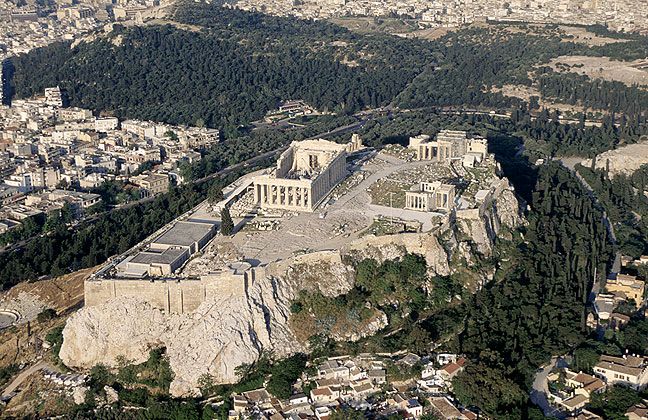
Athens comes into focus quickly on this private walk. In four hours, you move from the Acropolis and Parthenon to the old lanes of Plaka, the Pnyx, Monastiraki, and several ancient sites below the hill. I like the way the tour connects famous monuments with the city people live in today, rather than treating the Acropolis as an isolated stop.
I also like the private format, which gives your guide room to answer questions and adjust the pace. Christos is praised for clear explanations, useful Athens tips, and stories that reach from ancient Greece to modern life. The main consideration is cost: $377 covers up to six people, but each person still needs a EUR 20 Acropolis ticket, and transport, food, and drinks are extra.
Key points at a glance

- A private Acropolis walk: Explore the Parthenon, Propylaea, Erechtheion, Karyatides, and Temple of Athena Nike with a licensed guide.
- More than the Acropolis: The route also takes in the Pnyx, Areopagus, Roman Agora, Tower of the Winds, Hadrian’s Library, and Temple of Olympian Zeus.
- Old Athens on foot: Walk through Plaka, Monastiraki Square, the flea market, and Metropolitan Square.
- A strong guide option: Christos Theodoropoulos leads the experience, with tours available in English, German, Greek, and Turkish.
- Good for a first day: The combination of landmarks, neighborhoods, food suggestions, and practical advice can help you get your bearings.
- Plan for the extras: Acropolis admission is EUR 20 per person, while transport and food are not included.
Why this four-hour Athens walk works
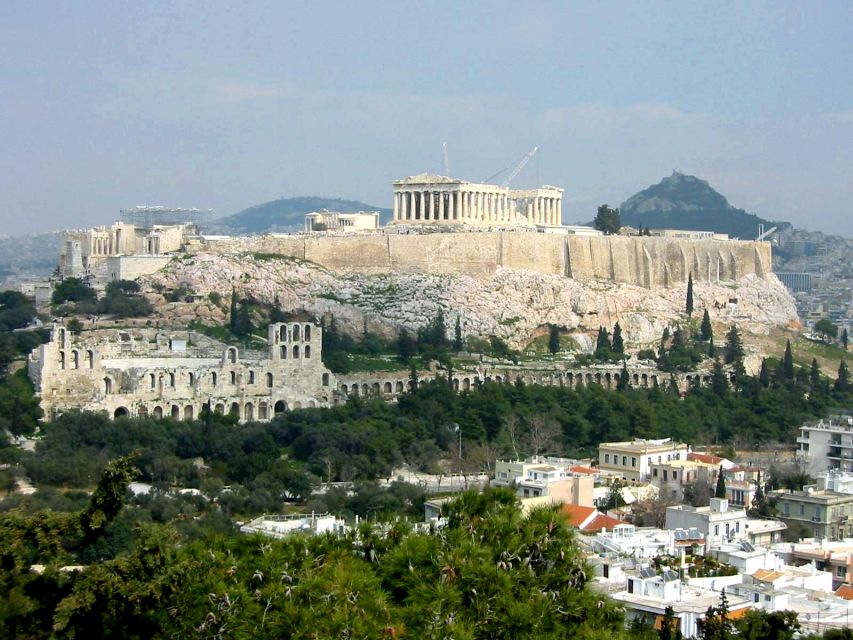
This tour is built around a useful Athens idea: see the ancient city, then walk into the modern one. The Acropolis gives you the grand setting, but Plaka and Monastiraki show you how central Athens feels at street level. That combination makes the experience more useful than a monument-only visit.
You meet at Crescendo Cafe near the Akropolis Metro Station. From there, the route is on foot, with the Propylaea listed as the main guided stop. The tour description also includes a broad collection of sights around the Acropolis and old town, so you should expect a walking tour with frequent explanations rather than a simple entrance and exit at one monument.
A private group of up to six is especially helpful here. Athens has many layers, and the questions that come up can be quite different: one person may want ancient politics, another may care about architecture, and someone else may want food or neighborhood advice. A private guide can spend more time on what interests your group.
Christos Theodoropoulos is the named provider. The praise attached to his tours focuses on clear storytelling, solid knowledge of Greek history and culture, and a willingness to answer questions. One German-language experience was led by a guide called Christophorus, so confirm the guide’s name and language when booking if that matters to you.
More Acropolis tickets and guided visits:
- Athens: Acropolis & up to 5 Archaeological Sites Combo Pass
★ 4.4 · 12,619 reviews - Athens: Acropolis Ticket with Optional Audio or Live Guide
★ 4.2 · 11,055 reviews - Athens: Acropolis, Parthenon & Acropolis Museum Guided Tour
★ 4.8 · 9,316 reviews
Entering the Acropolis through the Propylaea
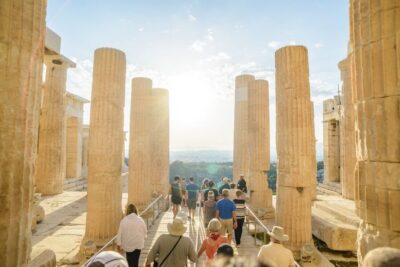
The Propylaea is the natural gateway to the Acropolis, and it gives the tour a strong beginning. Rather than walking straight toward the Parthenon without context, you can learn how visitors entered the sacred hill and why the approach itself was designed to feel impressive.
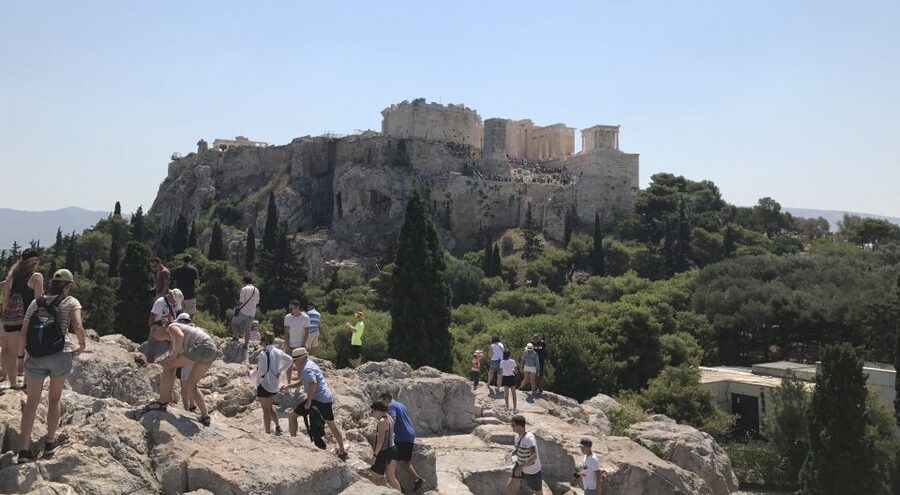
The Acropolis is more than one temple. Your guide explains the relationship among the Propylaea, Parthenon, Erechtheion, and Temple of Athena Nike, helping you read the hill as a planned collection of buildings. That matters because the site can otherwise become a blur of columns, marble, and crowds.
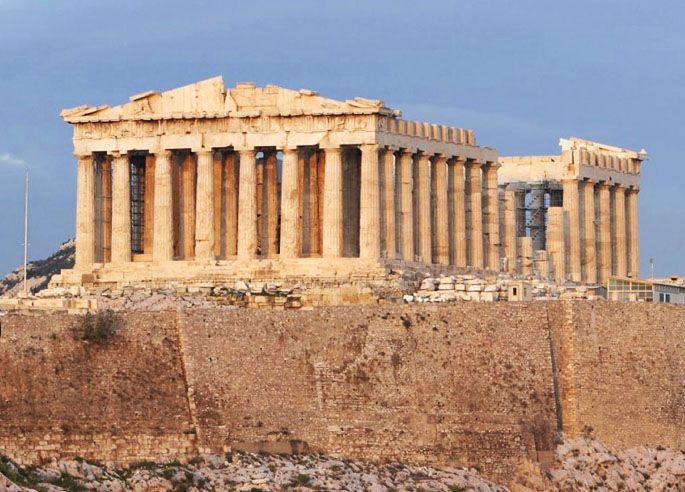
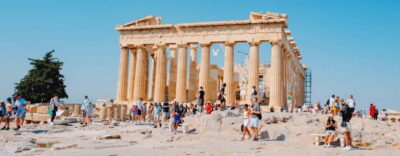
The Parthenon is the visual centerpiece. It was dedicated to Athena and is famous for its engineering, proportions, and position above Athens. Your guide’s value here is not just naming the building. Good interpretation helps you notice how the temple’s setting, decoration, and construction choices shaped its power.
The Temple of Athena Nike is smaller, but its position near the entrance makes it an important part of the approach. The Erechtheion is known for its unusual layout and the Karyatides, the sculpted female figures used as architectural supports. These details give the Acropolis variety, and they help explain why the site cannot be understood from the Parthenon alone.
You should wear rubber-soled shoes. The stone surfaces can be uneven, and the advice to bring a hat is practical in exposed areas. The supplied information does not specify an accessibility plan, so anyone with mobility concerns should ask the provider about the walking route before booking.
Acropolis admission is not part of the tour price. Budget EUR 20 per person on top of the group rate, and check the current ticket arrangements when you reserve. The guide is included, but the entry fee is separate.
The Pnyx and Areopagus: Athens beyond the postcard
The Pnyx gives the tour an important political angle. It is identified as the birthplace of democracy, so this stop moves the conversation away from temples and toward how ancient Athenians organized public debate and civic life.
The value of seeing the Pnyx with a guide is the setting. You are not simply looking at another ruin. You are being asked to connect the physical ground with the idea of citizens gathering to discuss decisions. That makes the stop especially useful if you want political and social context, not only architecture.
The Areopagus adds another layer to the Acropolis area. Together, the Pnyx and Areopagus help you picture Athens as a city of public spaces, arguments, courts, religion, and power. I like this part of the route because it gives the ancient city a human scale.
The Acropolis section is still a walking experience, not a seated lecture. Keep your attention on your footing and be ready for a steady amount of movement. Four hours is enough for an overview, but not enough for every monument to receive a long, scholarly treatment.
Plaka, Monastiraki, and the feel of old Athens
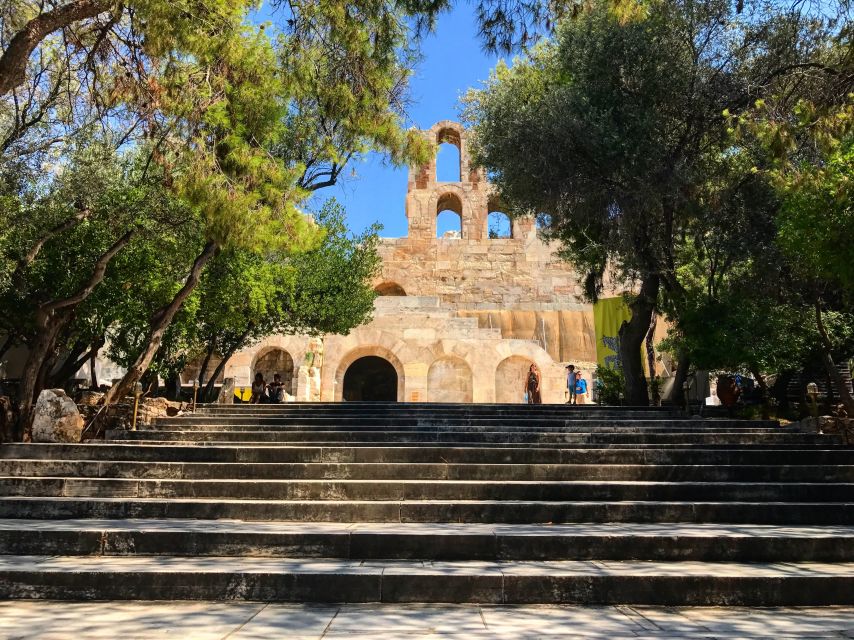
After the Acropolis, the tour reaches Plaka, one of the oldest neighborhoods in Athens. Its streets offer a change of pace from the open archaeological hill. You get a chance to see how old Athens is presented through lanes, shops, restaurants, and everyday city movement.
Plaka is useful for first-time visitors because it helps connect the Acropolis to places where you might return later. You can ask your guide where to eat, what streets are worth revisiting, and how the old center fits together. The tour does not include food, but the route mentions souvlaki, the familiar Greek grilled meat dish, as something you can sample in Monastiraki.
Monastiraki is a popular shopping area, and the walk includes its flea market and square. This is one of the more practical parts of the experience. The market gives you a look at souvenirs, local shopping, and the lively commercial side of central Athens.
You should keep your expectations sensible. A four-hour walking tour cannot provide a full food tour or extended shopping time. Instead, you get an introduction and can return later if a shop, cafe, or restaurant catches your eye.
The route continues toward Metropolitan Square. The exact amount of time at each location can depend on the guide, the group’s questions, and the pace of the walk. That flexibility is one of the reasons to choose a private tour, but it also means you should ask at the start which sights matter most to your group.
A few more Athens options worth putting side by side
- Athens: Acropolis and Parthenon Guided Walking Tour
★ 4.6 · 5,882 reviews - Athens, Piraeus, and Coastline: Blue Hop-On Hop-Off Bus
★ 3.9 · 4,849 reviews - Greek Food Walking Tour in Athens
★ 5.0 · 4,740 reviews - Athens: City Sightseeing Hop-On Hop-Off Bus Tour
★ 4.3 · 4,520 reviews
Roman Agora, Tower of the Winds, and Hadrian’s Library
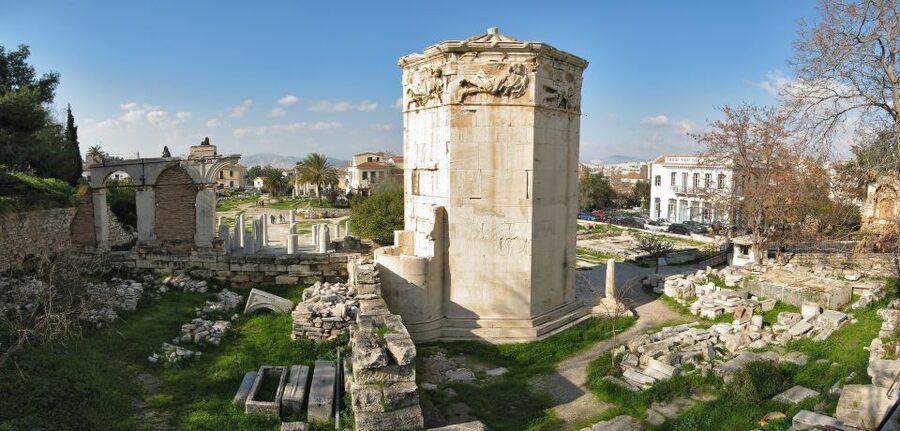
The ancient story does not stop with classical Athens. The Roman Agora, Tower of the Winds, and Hadrian’s Library show how the city continued to grow and change under Roman rule.
The Tower of the Winds is a particularly memorable stop because it is both practical and decorative. Its design connects timekeeping, weather, and architecture. With a guide, you can better understand why this small building matters within the larger old-town area.
Hadrian’s Library introduces the role of the Roman emperor Hadrian in Athens. The name alone can sound abstract, but seeing the site alongside the Agora helps you follow the city’s changing priorities. Public spaces, libraries, markets, and religious buildings all occupied the same urban center at different points.
The Temple of Olympian Zeus is also included among the sights to see. Its scale helps balance the more intimate structures in Plaka and Monastiraki. The tour description does not say that you enter every site, so treat some of these locations as exterior viewing or guided stops unless your guide confirms otherwise.
This distinction matters when you compare the tour with a ticketed archaeological tour. The Acropolis admission is clearly listed as an extra, while the exact entry arrangements for other monuments are not specified. Ask your guide what you will enter and what you will view from outside if that is important to you.
What the guide adds to the experience
A private guide earns the fee by turning separate ruins into a readable story. The most praised qualities here are clear explanations, historical and cultural context, entertaining anecdotes, and time for questions. Christos is described as giving advice that helps with the rest of an Athens visit, not just reciting facts at each stop.
The language choice is another practical advantage. Tours are available in English, German, Greek, and Turkish. If you want German, the information includes strong feedback about the quality of the German explanations, but you should confirm your preferred language and guide at booking.
I would use the private format actively. Tell the guide if your group cares most about democracy, mythology, architecture, food, modern Athens, or photography. You are paying for a group of up to six, not for six unrelated seats in a large party, so make the conversation work for your interests.
The tour also suits families and mixed-age groups in principle because a private guide can adjust explanations. Still, the published information does not give a minimum age, child rate, stroller policy, or detailed accessibility information. Ask before booking if any of those points affect your plans.
Is $377 good value for up to six people?
The listed price is $377 per group, with a maximum of six people. Divided six ways, that is about $63 per person before the Acropolis ticket. Add the EUR 20 admission per person, and the total becomes a more serious expense, especially for a couple or solo visitor.
For six people, the private format can make good financial sense. You get four hours with a licensed guide, a tailored group experience, and a route that covers the Acropolis plus several central neighborhoods and ancient sites. Compared with arranging separate guides or trying to piece together the story alone, the price may be reasonable for a full group.
For two people, the value depends on your priorities. If you want direct answers, a flexible pace, and a strong introduction to Athens, the cost can be justified. If you mainly want to enter the Acropolis and take photographs, a lower-cost group option or self-guided visit may suit you better.
Transport is not included, though the meeting point is near the Akropolis Metro Station. Food and drinks are also extra. Set aside time and money for the separate Acropolis entry, and do not expect the tour price to cover a souvlaki stop.
Free cancellation is available up to 24 hours before the tour for a full refund. You can also reserve now and pay later, which helps if you are still arranging a larger Greece itinerary. Starting times vary, so check availability for your date.
Who should book this Athens experience?
I would recommend it to first-time visitors who want the major sights explained in one concentrated morning or afternoon. It is also a good choice for a small family or group of friends that wants one guide rather than several audio guides or a large walking party.
The tour is especially useful if you want ancient Athens and present-day Athens in the same outing. The Pnyx and Areopagus add civic history, while Plaka and Monastiraki give you food, shopping, and neighborhood context. The result is a practical introduction to how the center fits together.
You might skip it if you have already spent several days studying the Acropolis and prefer slow, independent exploration. Four hours on foot can also feel full if your group wants long stops, extended shopping, or a leisurely meal.
My recommendation
Book this tour if you want the Acropolis to be the starting point for understanding Athens, not the whole story. The strongest reasons are the private group size, the broad route, the choice of four languages, and Christos’s reported habit of answering questions and offering useful city advice.
Before paying, confirm the guide’s name and language, the exact entry arrangements for each monument, and the total cost of Acropolis tickets. Wear rubber-soled shoes, bring a hat, and arrive ready to walk. For a small group beginning an Athens visit, this can provide a clear and lively framework for the rest of your stay.
FAQ
How long is the Athens private tour?
The tour lasts four hours.
Where does the tour begin?
It begins at Crescendo Cafe near the Akropolis Metro Station.
Is the Acropolis entrance ticket included?
No. Admission to the Acropolis costs EUR 20 per person and is not included in the tour price.
What does the tour price include?
The price includes a licensed tour guide and a private group experience for up to six people.
Are transport, food, and drinks included?
No. Transport costs, food, and drinks are not included.
Which languages are available?
The tour is available in English, German, Greek, and Turkish.
What sights can I expect to see?
The route includes the Acropolis and Parthenon, Propylaea, Erechtheion, Karyatides, Temple of Athena Nike, Pnyx, Areopagus, Roman Agora, Tower of the Winds, Hadrian’s Library, Temple of Olympian Zeus, Plaka, Monastiraki, and Metropolitan Square.
What should I wear for the walk?
Rubber-soled footwear and a hat are recommended.
Can I cancel the tour for a refund?
Yes. You can cancel up to 24 hours in advance for a full refund.
New on the Athens shelf
- Acropolis of Athens, Parthenon and Acropolis Museum private tour with dinner★ 5.0 · 77 reviews
- Small-Group Wine Tour in Athens with Tasting★ 5.0 · 33 reviews
- Private Athens Transfer Airport/Port -Greek Tours-Hourly service★ 5.0 · 88 reviews
- VIP Private Guided Tour of Athens Acropolis & Plaka in a Sidecar★ 5.0 · 108 reviews
- Athens Moonlight Waling Tour with Drinks and Meze Dishes★ 5.0 · 259 reviews
- Private Athens Landmarks Layover Tour★ 4.5 · 41 reviews
- Departure Transfer from Athens City to Athens Airport★ 5.0 · 41 reviews
- Classic Athens Food Tour with Local Drink & Market Visit★ 5.0 · 34 reviews
Acropolis Tours, compared.
Acropolis & up to 5 Archaeological Sites Combo Pass
Read our verdict →
Acropolis, Parthenon & Acropolis Museum Guided Tour
Read our verdict →
Acropolis: Acropolis and Parthenon Guided Walking Tour
Read our verdict →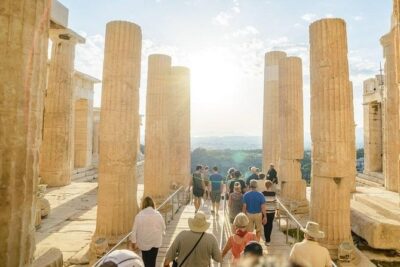
Acropolis monuments & Parthenon Walking Tour with Optional Acropolis Museum
Read our verdict →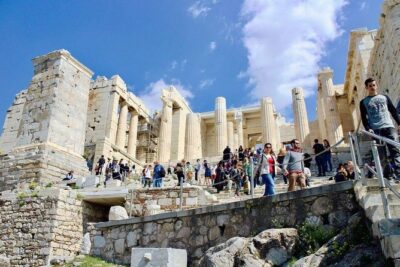
Athens All Included: Acropolis and Museum Guided Tour with Ticket
Read our verdict →Browse the lists this tour appears in