
Review · ACROPOLIS TOURS
Visit of the Acropolis with an official guide in Spanish
The best part of this Spanish-language Acropolis tour is the way it links the stones to the people, myths, wars, and political choices behind them. In about two hours, an official guide leads you from the Theatre of Dionysus up to the Parthenon and explains why each ruin matters, not just what it is called.
I like the early 8:30 am start, which helps you reach the hill before the day becomes as hot and crowded. I also like the wireless audio system, since it lets you hear the guide while standing near a busy monument. Guides named Efi, Ari, Simon, and Maria have all received especially warm praise for clear, lively storytelling.
The main catch is simple but important: your Acropolis entry ticket is not included in the $44.03 tour price. You must arrange admission separately, and the group can include up to 27 people, so this is a structured group visit rather than a private walk.
Key points to know before you book
- Spanish only: The entire guided visit is designed for Spanish speakers.
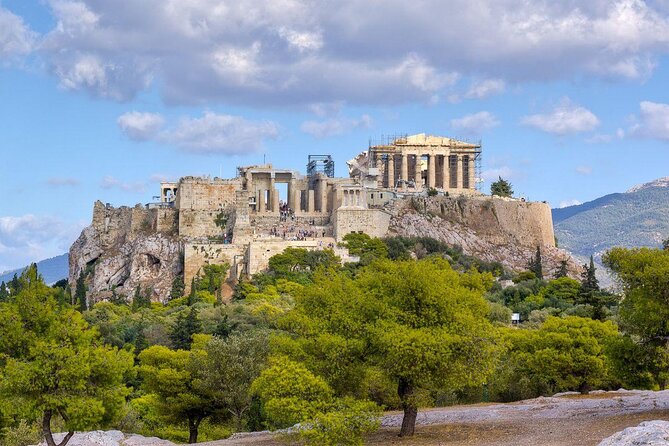
- Six major sights in two hours: You cover the Parthenon, Propylaea, Erechtheion, Odeon of Herodes Atticus, Theatre of Dionysus, and Temple of Asclepius.
- Entry costs extra: The tour fee pays for the guide, audio system, and service taxes, not admission to the Acropolis.
- Start at 8:30 am: Meet at the Greek National Tourism Organisation Information Point on Dionysiou Areopagitou Street.
- Finish at the top: The walk ends at the summit, leaving you free to take photographs and continue at your own pace.
- Moderate fitness is needed: The visit is entirely on foot across ancient stone surfaces and sloped ground.
Why a Spanish guide changes the Acropolis visit
The Acropolis is easy to admire and surprisingly easy to misunderstand. You see columns, broken marble, and grand views, but without context, the hill can become a parade of names: Parthenon, Propylaea, Erechtheion, and Theatre of Dionysus.
This tour gives those names a story. The guide begins with the historical, mythological, and cultural setting of ancient Athens, then uses the monuments to explain how the city developed. That approach is useful if you want more than a photo stop but do not want a long academic lecture.
Spanish-speaking guides are the central reason to choose this experience. Efi is repeatedly praised for her passion, questions, and ability to make the group imagine ancient events. Other highly regarded guides include Ari, Simon, Maria, and Elfi, with particular praise for their enthusiasm and clear explanations.
The exact guide assigned to your group may differ. Still, the experience is built around official Spanish-speaking guides, not a recorded commentary or a self-guided route. That matters at a site where small details can easily get lost.
The audio system is another practical advantage. With as many as 27 people, you might not always be beside the guide. A wireless receiver helps you follow the explanation while the group gathers around a monument or moves through a tight passage.
More Acropolis tickets and guided visits:
- Athens: Acropolis & up to 5 Archaeological Sites Combo Pass
★ 4.4 · 12,619 reviews - Athens: Acropolis Ticket with Optional Audio or Live Guide
★ 4.2 · 11,055 reviews - Athens: Acropolis, Parthenon & Acropolis Museum Guided Tour
★ 4.8 · 9,316 reviews
Starting at the Acropolis entrance
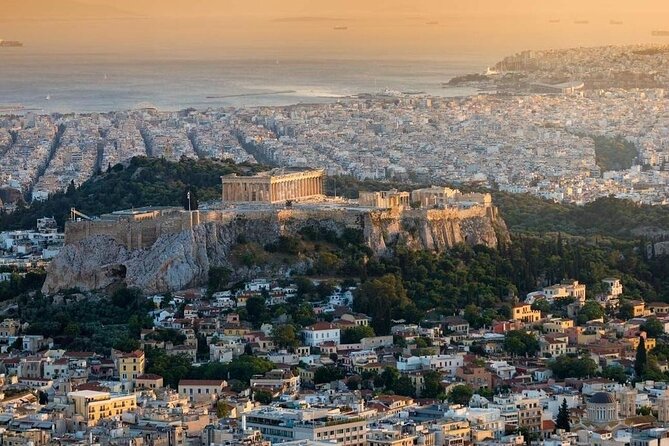
The meeting point is the Greek National Tourism Organisation Information Point at Dionysiou Areopagitou 18. The tour begins at 8:30 am, and you should treat that time as firm. The group does not include hotel pickup or transport, so you need to make your own way to the meeting point.
The visit is conducted entirely on foot. That sounds obvious, but the Acropolis is not a flat museum complex. You will walk uphill, cross uneven ancient surfaces, and move between monuments on exposed ground. A moderate level of fitness is required, and sturdy shoes are a sensible choice.
The early start is one of the strongest features here. Athens can become hot, bright, and crowded around the Acropolis, especially in the warmer months. Beginning at 8:30 am does not guarantee quiet conditions, but it gives you a better chance of enjoying the first part of the visit before the busiest hours.
Have your entry arranged before you arrive. The tour price of $44.03 covers the guided service, wireless audio system, and state taxes. It does not include admission, and the information provided says an entry ticket is required. This split arrangement is less convenient than a package with admission included, but it also makes the guide fee clear.
The Theatre of Dionysus and the lower slope
The route includes the Theatre of Dionysus Eleuthereus, one of the oldest theaters in the world. Built largely from marble and set into the slope of the Acropolis, it could hold about 17,000 spectators.
This is where the first performances of works by Euripides, Aeschylus, Sophocles, and Aristophanes took place. That fact gives the lower part of the visit a useful human scale. Before you reach the temples above, you learn about the civic and artistic life that made Athens more than a collection of monuments.
The theater also shows how the Athenians used the hill itself. Its slope helped with seating and acoustics, while the open setting allowed the audience to look toward the stage and the wider city. The guide can connect architecture with drama, religion, and public life in a way that a quick photograph cannot.
The stop lasts about 10 minutes. That is enough for an explanation and a look around, but not enough for a long independent exploration during the guided portion. You can return later if you want more time, since the tour finishes at the top and leaves you free afterward.
The Temple of Asclepius and ancient healing
Near the theater, the tour pauses at the Temple of Asclepius. This sanctuary was dedicated to Asclepius, the ancient god of medicine.
The stop is short, about five minutes, but the subject adds variety to the visit. Instead of focusing only on rulers, war, and architecture, the guide explains how people sought treatment and how they gave votive offerings in thanks.
This is the kind of detail that gives the Acropolis a broader human meaning. Ancient Athens was not only a place for grand temples. It was also a place where people came with illness, hope, fear, and gratitude.
Because the stop is brief, do not expect a long examination of medical practices. Its value is as a compact piece of context within the larger route.
A few more Athens options worth putting side by side
- Athens: Acropolis and Parthenon Guided Walking Tour
★ 4.6 · 5,882 reviews - Athens, Piraeus, and Coastline: Blue Hop-On Hop-Off Bus
★ 3.9 · 4,849 reviews - Greek Food Walking Tour in Athens
★ 5.0 · 4,740 reviews - Athens: City Sightseeing Hop-On Hop-Off Bus Tour
★ 4.3 · 4,520 reviews
The Odeon of Herodes Atticus
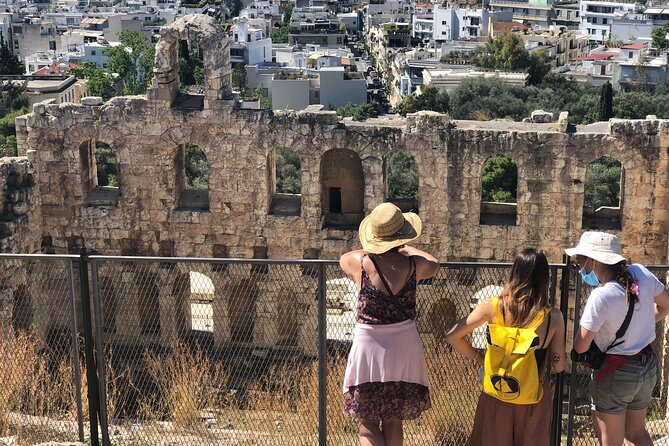
The Odeon of Herodes Atticus is one of the most striking structures on the Acropolis slope. Built by the Roman governor Herodes Atticus, it could seat about 5,000 people and was dedicated to his wife, Regilla.
Unlike many ancient buildings, this auditorium is fully restored and still used for performances during the Athens Festival. That present-day use helps bridge the gap between ancient Athens and modern city life. You are not looking at a ruin that has lost all purpose. You are looking at a performance space that still functions.
The stop lasts about 10 minutes. You will generally view the auditorium from outside rather than attend a performance. Even so, its curved stone seating and dramatic setting make it one of the most memorable sights along the route.
The guide’s explanation is particularly helpful here because the building belongs to the Roman period, not the classical age most people associate with the Parthenon. That distinction adds depth without requiring a specialist background.
The Propylaea and the Temple of Athena Nike
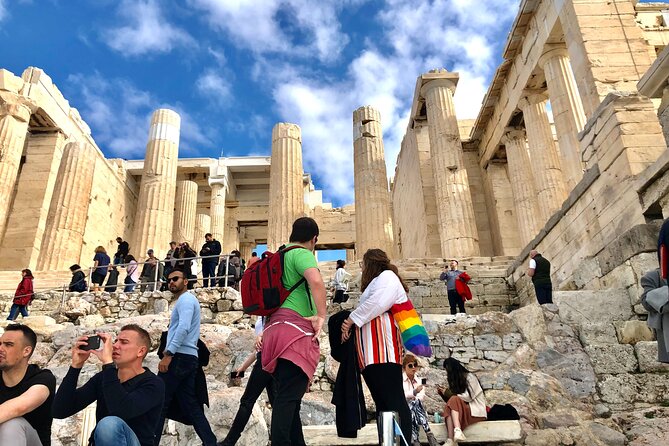
The Propylaea is the monumental gateway to the Acropolis. Built mainly from marble, it was designed to impress anyone approaching the sacred hill.
The guide explains its strategic role as well as its appearance. Because of its position and narrow approach, the gateway could act as a funnel during conflict. Its different column types also offer a quick lesson in how the architects handled function, symbolism, and visual balance.
You spend about 10 minutes here. That may seem short, but the Propylaea is a busy passage, and the group needs to keep moving toward the upper monuments. The guide’s job is to point out the details you could easily pass without noticing.
The route also includes the small Temple of Athena Nike, built beside the entrance. It honored Athena as a bringer of victory and commemorated Athenian success after the Persian Wars. The temple is easy to overlook because it is smaller than the Parthenon, but its location gives it an important role. It welcomes you to the sacred area with a message of military confidence and civic pride.
The Parthenon, the central stop
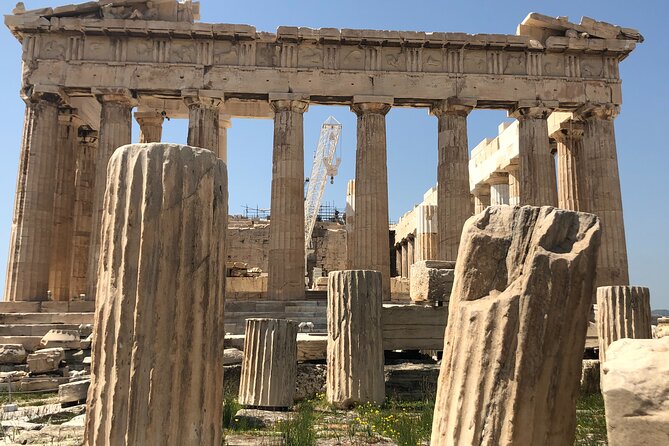
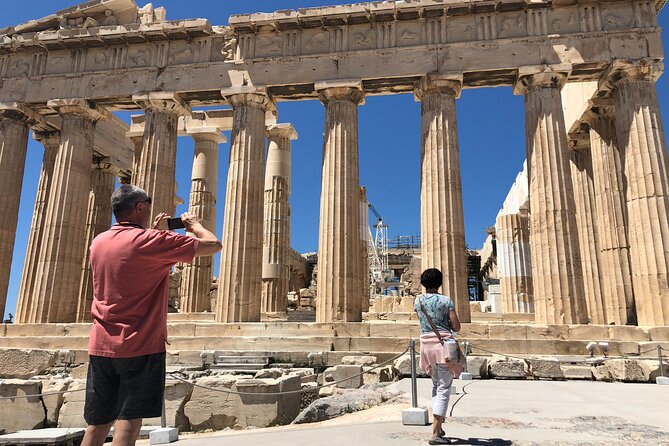
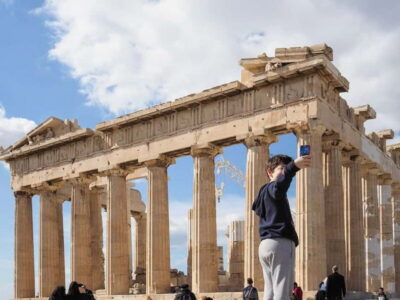
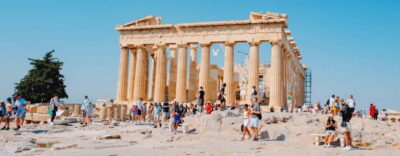
The Parthenon receives the longest explanation, about 20 minutes, and rightly so. Built roughly 2,500 years ago, it is the monument most people picture when they think of Athens.
The guide covers its construction, decoration, later uses, and damage. The building became a church during the Byzantine period and later a mosque during Ottoman rule. Its story did not end with classical Greece, and those later chapters help you see it as a structure repeatedly adapted by different societies.
You also learn about its optical refinements. The Parthenon appears simple at first glance, with rows of columns and a strong rectangular form. In fact, its builders used subtle adjustments to create a more balanced visual effect. The guide can explain why the lines are not as mechanically straight as they may seem.
The tour also addresses the building’s decoration, looting, and ongoing restoration. This is important because the Parthenon is not a frozen relic. What you see reflects construction, later damage, removal of sculpture, conservation work, and the limits of preserving a monument exposed to time and weather.
A 20-minute explanation will not cover every detail. It should give you a solid framework, then allow you to spend your own time looking closely after the group portion ends. Guides such as Efi have been praised for showing precise photo locations, which can help you balance listening with getting the views you came for.
The Erechtheion and the Caryatids
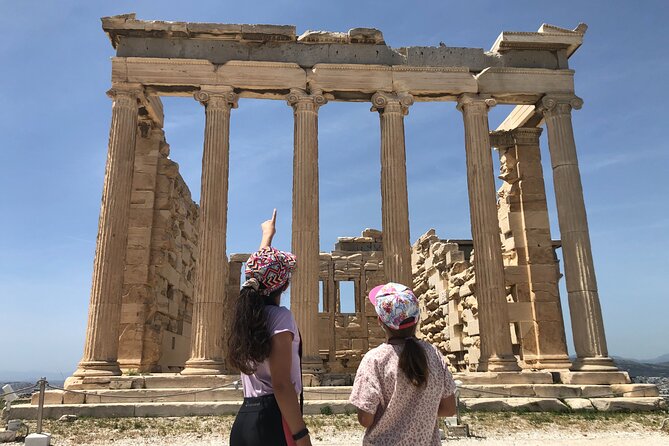
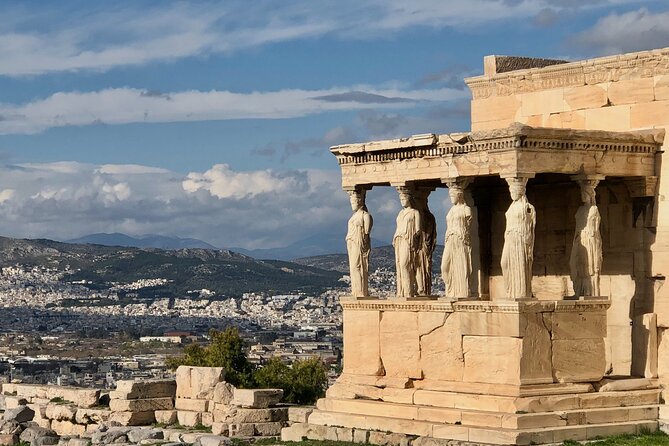
The Erechtheion is often the most photogenic building on the Acropolis. Its porch supported by the Caryatids, sculpted female figures used as columns, is instantly recognizable.
The guide explains the temple’s connections to Athena, Poseidon, and Erechtheus, a mythological king of Athens. This is also where you hear why the olive tree connected with the site remains sacred in Athenian tradition.
The stop lasts about 10 minutes. That is enough to explain the main legends and architectural features, though you may want extra time to study the Caryatids and compare the details of their clothing, posture, and hair.
The Erechtheion also helps correct the idea that the Acropolis is simply a single grand temple. It was a complex sacred area connected with several gods and local myths. Its unusual design reflects those layered religious traditions.
Views, photographs, and the end of the walk
The excursion ends directly at the top of the Acropolis. This is a useful arrangement because you are not marched back to the starting point after the final explanation. Once the guided portion ends, you can remain in the area for free time and photographs.
That extra time matters. Two hours is enough for a strong overview, but the Acropolis rewards slow looking. You may want to revisit the Parthenon, examine the Erechtheion, or simply take in the city from the hill.
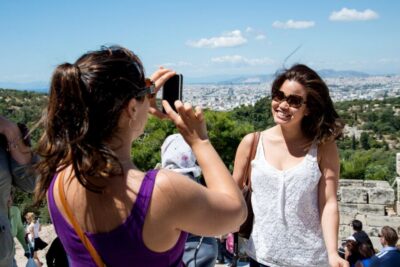
The guides also appear to build in moments for questions and photographs rather than speaking without pause. That balance is valuable, especially for families. One account describes children staying engaged throughout, while another praises the guide for giving exact places to take photographs.
Remember that the tour is not a transfer service. It ends at the top, not at your hotel or back at the original meeting point. Plan the rest of your day from there.
Is $44.03 good value?
At $44.03 per person, the price is reasonable if you want a live Spanish explanation and a clear route through the main monuments. You are paying for an official guide, audio equipment, and a focused two-hour visit, not for transportation or entry.
The extra ticket cost changes the total budget. You should compare the combined price with any other Acropolis options you are considering. The advantage here is that the tour fee is directed toward the guide service, and admission is handled separately.
A group of up to 27 people is not small. If you want a quiet, flexible visit with long pauses at every monument, this may feel too structured. If you want help making sense of the hill and prefer not to manage the route alone, the group format is a fair trade.
The value is strongest for first-time visitors who speak Spanish and want the main historical points without committing to a half-day excursion. At two hours, the tour leaves room for the Acropolis Museum, nearby archaeological sites, lunch, or another Athens activity.
Practical details that matter
Confirmation is provided at booking, and free cancellation is available up to 24 hours before the start time. Cancellations or changes made less than 24 hours before the visit are not refunded.
Service animals are allowed, and the meeting point is near public transportation. No transfers are included, so you remain responsible for reaching Dionysiou Areopagitou 18 on time.
Wear shoes suited to uneven ground and prepare for sun and heat. The supplied details do not promise shaded rest areas or a slow pace, so you should be comfortable walking for roughly two hours.
The tour is suitable for families and for anyone with a moderate fitness level. It is less suitable if you need a fully accessible route, a private guide, or a visit without uphill walking.
Who should book this Spanish Acropolis tour?
I would choose this experience if you want the Acropolis explained in Spanish by an official guide, especially if mythology, architecture, and the later history of the monuments interest you.
It is also a good fit for families. The strongest guide feedback centers on warmth, storytelling, questions, and keeping children involved. Efi receives especially high praise, while Ari, Simon, Maria, and Elfi are also named as engaging guides.
You should think twice if your priority is total independence. The group size can reach 27, the route follows a set schedule, and the entry ticket is separate. You also need to arrive at the meeting point rather than relying on hotel pickup.
Should you book it?
Book it if you want a focused Spanish-language introduction to the Acropolis, with the Parthenon, Erechtheion, Propylaea, theaters, and Temple of Asclepius covered in one morning.
The strongest reasons are the official guide, wireless audio, early start, and the clear historical links between the monuments. The main cautions are the separate entrance ticket, walking demands, and possible group size.
For most Spanish-speaking first-time visitors, this is a sensible way to get your bearings before using the remaining free time for photographs and closer looking. Just arrange admission in advance, arrive early, and bring shoes made for ancient stone.
FAQ
Is entrance to the Acropolis included?
No. The entry ticket is not included in the $44.03 tour price. You must have a separate ticket to enter the Acropolis.
What language is the tour conducted in?
The tour is conducted exclusively in Spanish with an official tourist guide.
How long does the visit last?
The guided visit lasts approximately two hours.
Where does the tour begin?
It begins at the Greek National Tourism Organisation Information Point, Dionysiou Areopagitou 18, Athens 117 42, Greece.
What time does the tour start?
The scheduled start time is 8:30 am.
Where does the tour end?
The tour ends at Theorias 21, at the top of the Acropolis. You can then use your free time to photograph the monuments and continue exploring independently.
New on the Athens shelf
- Acropolis of Athens, Parthenon and Acropolis Museum private tour with dinner★ 5.0 · 77 reviews
- Small-Group Wine Tour in Athens with Tasting★ 5.0 · 33 reviews
- Private Athens Transfer Airport/Port -Greek Tours-Hourly service★ 5.0 · 88 reviews
- VIP Private Guided Tour of Athens Acropolis & Plaka in a Sidecar★ 5.0 · 108 reviews
- Athens Moonlight Waling Tour with Drinks and Meze Dishes★ 5.0 · 259 reviews
- Private Athens Landmarks Layover Tour★ 4.5 · 41 reviews
- Departure Transfer from Athens City to Athens Airport★ 5.0 · 41 reviews
- Classic Athens Food Tour with Local Drink & Market Visit★ 5.0 · 34 reviews
Acropolis Tours, compared.
Acropolis & up to 5 Archaeological Sites Combo Pass
Read our verdict →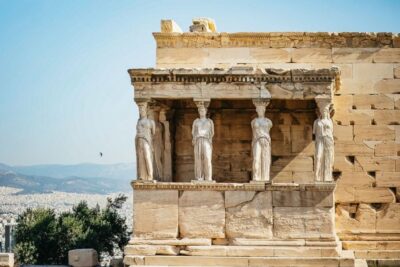
Acropolis, Parthenon & Acropolis Museum Guided Tour
Read our verdict →
Acropolis: Acropolis and Parthenon Guided Walking Tour
Read our verdict →
Acropolis monuments & Parthenon Walking Tour with Optional Acropolis Museum
Read our verdict →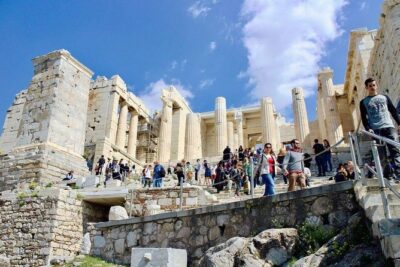
Athens All Included: Acropolis and Museum Guided Tour with Ticket
Read our verdict →Browse the lists this tour appears in