
Review · WALKING TOURS
Athens Social and Political Walk
Athens is more than ancient stones and sunny viewpoints. This walk takes you through the modern capital, using the offices of power and the site of a famous student uprising to explain how Greece moved from independence to dictatorship, democracy, economic crisis, and today’s political divisions. Guide Isaac brings a political scientist’s eye and plenty of current-affairs context.
I like the small group, limited to 15 people, and the chance to ask direct questions rather than listen to a fixed lecture. I also like the route’s clear arc, from the Prime Minister’s office and Presidential residence to Parliament and Athens Polytechnic. The main consideration is focus: if you want ruins, museums, or grand sightseeing stops, this is not that kind of walk.
Key points at a glance

- A modern Athens route: See the country’s main political institutions rather than following only the ancient-city circuit.
- Guide Isaac’s political context: Connect Greek independence, the military Junta, democratic reform, the financial crisis, and current events.
- A useful small-group format: With no more than 15 people, you have a fair chance to ask questions.
- Five meaningful stops: The Prime Minister’s office, Presidential residence, Parliament, Old Parliament House, and Athens Polytechnic shape the route.
- A niche experience with broad appeal: Best for anyone who wants to understand how Greek society and politics developed, not just photograph monuments.
- Simple planning: The walk is in English, takes about 2 hours and 30 minutes, and starts near Syntagma at Leoforos Vasilissis Sofias.
Why this walk adds a missing layer to Athens
Most first visits to Athens naturally focus on the Acropolis, the Ancient Agora, and the city’s museums. Those places explain ancient Greece beautifully, but they do not fully explain the modern country you see around you. This walk shifts attention to the institutions, streets, and public places tied to contemporary Greek life.
That change in subject is the tour’s real value. You are not simply looking at government buildings. You are using them as markers in a political story. The route helps connect the Greek War of Independence, the country’s early modern development, the military dictatorship, the return to democracy, and the economic troubles of recent decades.
I especially like the chance to ask about current events in context. Greek politics can seem confusing when you encounter it only through headlines. A guide with a political science background can explain why certain debates remain heated, how polarization developed, and why past events still shape public life.
The approach is also more flexible than a standard history lecture. You do not need a degree in politics or a stack of books about Greece before you arrive. Isaac’s method, according to the information available about the experience, uses comparisons with other countries and clear examples to make difficult ideas easier to follow.
More Walking Tours in Athens
- Athens: Acropolis and Parthenon Guided Walking Tour
★ 4.6 · 5,882 reviews - Greek Food Walking Tour in Athens
★ 5.0 · 4,740 reviews - Acropolis: Acropolis and Parthenon Guided Walking Tour
★ 4.7 · 3,442 reviews
Starting near the center of power

The walk begins at Leoforos Vasilissis Sofias 2 to 4, in central Athens. That puts you near the formal heart of the modern Greek state, making the starting point a good fit for the subject.
The first stop is the official seat of the Prime Minister of Greece. This is a natural opening because it introduces the executive side of government and gives Isaac a place to explain how political power works in Greece. Expect the emphasis to be on the building’s role and the wider political system, not on an interior visit.
That distinction matters. This is an outdoor walking experience, so you should think of the sites as settings for explanation rather than attractions you enter and tour room by room. You get the story attached to each place, along with the chance to ask how that institution fits into modern Greek life.
The early part of the route should also help you settle into the walking pace. At roughly two and a half hours, the experience is long enough to build a full narrative but short enough to fit into a morning or afternoon of sightseeing.
The Presidential residence and the meaning of institutions
The next major stop is the official residence of the President of the Hellenic Republic. This gives the tour a useful chance to distinguish the roles of the president and prime minister, something that can be unclear if you only read brief political reports.
A good guide can make these distinctions practical rather than technical. Isaac’s role here is to explain how the office fits into Greece’s political structure and how the country’s past shaped its current democratic system. The discussion can also lead into the long path from independence through political instability and authoritarian rule to democratic reform.
I appreciate that this stop is not treated as a photo opportunity alone. Government buildings can seem distant from ordinary life, but the point of a political walk is to show how decisions made in these places affect the society you are seeing around you.
You should also expect a conversation rather than a one-way speech. The tour highlights direct questions about history and current affairs, and the small group makes that format more workable. If you have been wondering about a recent Greek election, the effects of the financial crisis, or political divisions within the country, this is the point to ask.
Parliament of Greece and the story of modern democracy

The Parliament of Greece is the route’s most obvious political landmark. It is also the place where the walk can bring together several threads introduced earlier.
Parliament offers a way to discuss representation, democratic government, and the changes Greece experienced during the twentieth century. Isaac’s broader narrative is reported to run from the Greek independence war through the modern era, including the Junta and the move toward democratic reform. That long view is useful because current politics rarely makes sense when separated from the country’s earlier upheavals.
I would expect this part of the walk to be especially useful if you have read about Greece’s recent economic crisis but feel you are missing the backstory. The experience aims to explain the political and social reasons behind the crisis, rather than treating it as a simple financial problem.
One benefit of a live guide is the ability to test your understanding as you go. You can ask for comparisons with your own country’s political system, or ask Isaac to clarify a term or event. Several aspects of the experience point to his ability to make such comparisons without assuming that you already know the Greek system.
The possible drawback is that the subject can become dense. Politics, economic policy, social conflict, and history cover a lot of ground in 150 minutes. If you prefer a slow, highly detailed treatment of one period, this route may feel brisk. Its strength is synthesis: it gives you a working framework for the country rather than a full academic course.
Close by, and nothing like it:
- Athens: Acropolis & up to 5 Archaeological Sites Combo Pass
★ 4.4 · 12,619 reviews - Athens: Acropolis Ticket with Optional Audio or Live Guide
★ 4.2 · 11,055 reviews - Athens: Acropolis, Parthenon & Acropolis Museum Guided Tour
★ 4.8 · 9,316 reviews - Athens, Piraeus, and Coastline: Blue Hop-On Hop-Off Bus
★ 3.9 · 4,849 reviews
Old Parliament House and the value of looking backward
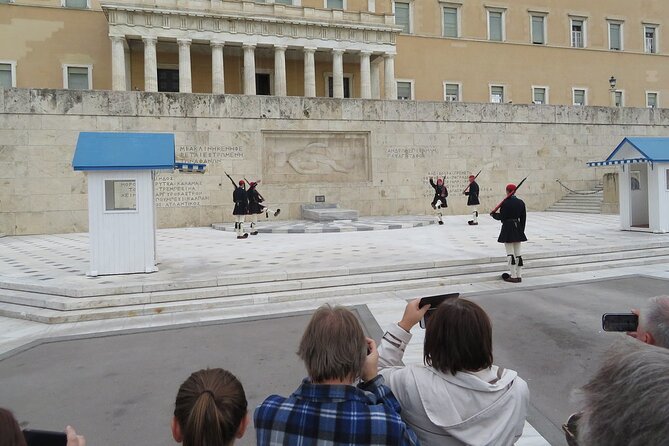
Old Parliament House adds another layer to the route. It gives the group a way to consider an earlier stage of Greek political life and compare it with the institutions you have just seen.
The stop is valuable because modern government did not appear fully formed. Greece’s political system developed through changing institutions, conflicts, and attempts at reform. A building associated with an earlier parliamentary period helps make that process easier to picture.
This is also where a guide’s storytelling matters. Isaac is described as using anecdotes alongside a larger political account, including details connected to recent news. That balance can keep the route from becoming a string of dates and office titles.
I would listen for the connections between the old parliamentary system, the later Junta, and the democratic order that followed. The walk’s subject is not simply what happened, but how one period helps explain the next.
You may find this stop less immediately dramatic than the Parliament building or Athens Polytechnic. That is fair. Its value is interpretive, not visual. If you want a landmark-by-landmark sightseeing tour, it may feel understated. If you want the reasoning behind Greece’s political development, it earns its place.
Athens Polytechnic and the events of November 17, 1973

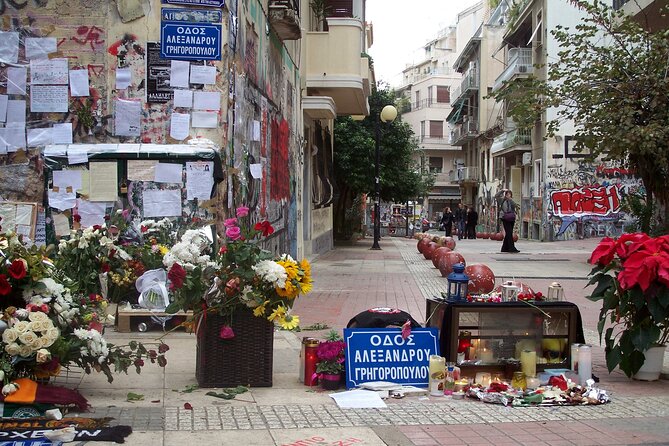
The route ends at the National Technical University of Athens, often called Athens Polytechnic, on Patision Avenue. The university is tied to the Athens Polytechnic uprising of November 17, 1973, one of the most important events in the institution’s history.
This is the walk’s strongest historical finish. The uprising provides a concrete way to discuss the military Junta, resistance, public protest, and the movement toward democratic rule. Ending here gives the route a sense of direction: you have moved from the present-day centers of government back through earlier political institutions and finally to a place linked with opposition to dictatorship.
The site also helps connect political history with student life and public action. You do not need prior knowledge to see why a university can become a major political symbol. Isaac’s role is to explain the event and its place in the broader story of Greece.
The official end point is the main entrance of the National Technical University of Athens. That is useful for planning, since you know exactly where the walk finishes rather than simply being dropped somewhere in central Athens.
Keep in mind that this is still a walking stop, not a full museum visit. The value comes from the setting and the explanation. If the 1973 uprising interests you, you may want to set aside extra time afterward to explore related material on your own, but the tour data does not promise an additional indoor visit.
Isaac’s approach to history and current affairs
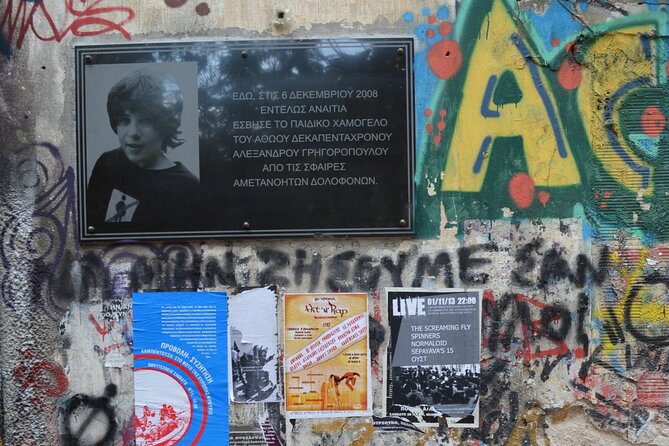
The guide is Isaac, a political scientist who presents the tour in English. The available comments about his work repeatedly point to three qualities: strong command of the subject, an engaging manner, and a balanced approach to difficult issues.
One particularly useful detail is his perspective as a person living in Greece who is not Greek. That can give him a little distance when explaining social divisions and political arguments. It does not make him automatically neutral, and you should still treat any political walk as one guide’s interpretation, but it can help him compare Greek ideas with systems familiar to people from other countries.
I like the promise of recent-news anecdotes. They give the larger historical story a connection to the Athens you are visiting now. A walk about the past can become stale if it never reaches the present. Here, the intended route runs from the independence era to current political conditions, including the economic crisis and its aftermath.
The subject also rewards questions. You can ask about events you have read about, request a comparison with politics in your own country, or ask how a historical conflict still affects Greek society. That open format is one reason the group size matters.
Is $47.92 a fair price?

At $47.92 per person, this is not the cheapest way to spend two and a half hours in Athens. You can walk through central Athens independently for free, and many major outdoor sights cost nothing to see from the street.
The price makes more sense if you value interpretation. You are paying for Isaac’s preparation, the structure of the route, and the chance to ask questions about a complicated subject. A standard sightseeing walk might identify buildings and dates. This experience aims to explain why those buildings matter and how Greek politics reached its current form.
The small maximum of 15 people also supports the price. You are not joining a huge crowd where questions disappear into the group. The format should feel more like a guided discussion, although the exact experience will depend on the group and the guide’s pace.
I would call it good value for a history or politics enthusiast, a first-time visitor who wants modern context, or anyone who has already seen the major ancient sights. It is less convincing value if your priority is access to interiors, archaeological monuments, or a broad list of famous attractions.
Who should book this Athens walk?
I would choose this experience if you want to understand Greece beyond the postcard version. It suits you especially well if you enjoy history, political systems, recent events, and conversations that do not have a simple answer.
It is also a good choice early in an Athens visit. The tour can give you a framework for interpreting news reports, public protests, memorials, and political discussion you encounter afterward. Since the route is in central Athens, it can fit neatly into a day built around nearby sightseeing.
You should have a moderate level of physical fitness. The experience lasts about 2 hours and 30 minutes and takes place on foot. It is near public transportation, service animals are allowed, and the ticket is mobile, all useful practical details for planning.
The walk is offered in English. It requires good weather and a minimum number of participants. If poor weather or low enrollment forces cancellation, you are offered another date or experience, or a full refund. You can also cancel for a full refund up to 24 hours before the start time. Changes or cancellations inside that window are not accepted.
My recommendation for booking
Book this tour if your question is not only What am I looking at? but also Why did Greece become this way? The route uses five politically important places to tell a connected story, and Isaac’s focus on both history and current affairs gives the experience more substance than a basic city walk.
Skip it if you want ancient ruins, museum interiors, panoramic views, or a relaxed stroll with little discussion. For the right audience, though, $47.92 buys a useful introduction to modern Greece, especially if you ask questions and come ready to think rather than simply take photos.
FAQ
How long does the Athens Social and Political Walk last?
The walk lasts approximately 2 hours and 30 minutes.
What language is the tour offered in?
The experience is offered in English.
How much does the tour cost?
The listed price is $47.92 per person.
Where does the tour begin?
It begins at Leoforos Vasilissis Sofias 2 to 4, Athens 106 74, Greece.
Where does the walk end?
It ends at the main entrance of the National Technical University of Athens, also called Athens Polytechnic, on Patision Avenue.
Which political sites are included?
The route includes the official seat of the Prime Minister of Greece, the official residence of the President of the Hellenic Republic, the Parliament of Greece, Old Parliament House, and the National Technical University of Athens.
How many people can join the group?
The maximum group size is 15 people.
Can I cancel for a full refund?
Yes. You can cancel at least 24 hours before the experience start time for a full refund. Cancellations or changes made less than 24 hours before the start time are not accepted, and poor-weather or minimum-participant cancellations offer either another date or a full refund.
New on the Athens shelf
- Acropolis of Athens, Parthenon and Acropolis Museum private tour with dinner★ 5.0 · 77 reviews
- Small-Group Wine Tour in Athens with Tasting★ 5.0 · 33 reviews
- Private Athens Transfer Airport/Port -Greek Tours-Hourly service★ 5.0 · 88 reviews
- VIP Private Guided Tour of Athens Acropolis & Plaka in a Sidecar★ 5.0 · 108 reviews
- Athens Moonlight Waling Tour with Drinks and Meze Dishes★ 5.0 · 259 reviews
- Private Athens Landmarks Layover Tour★ 4.5 · 41 reviews
- Departure Transfer from Athens City to Athens Airport★ 5.0 · 41 reviews
- Classic Athens Food Tour with Local Drink & Market Visit★ 5.0 · 34 reviews
Walking Tours, compared.

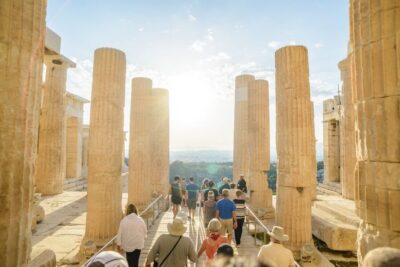
Acropolis: Acropolis and Parthenon Guided Walking Tour
Read our verdict →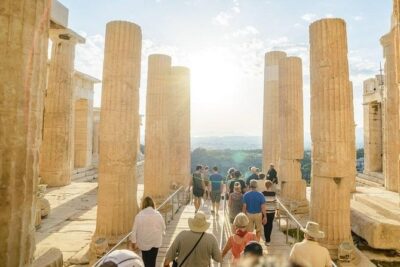
Acropolis monuments & Parthenon Walking Tour with Optional Acropolis Museum
Read our verdict →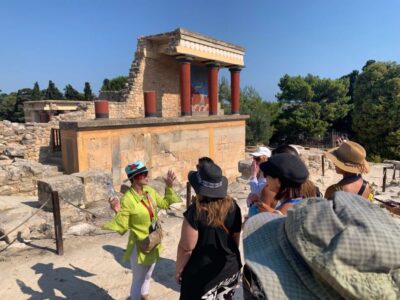
Knossos: Knossos Palace Skip-the-Line Guided Walking Tour
Read our verdict →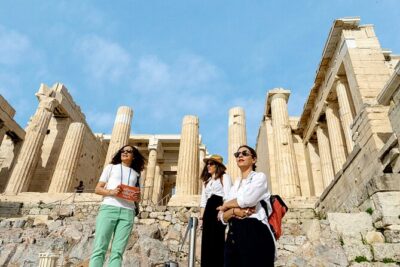

Athens Authentic Greek Food Walking Tour (Small Group)
Read our verdict →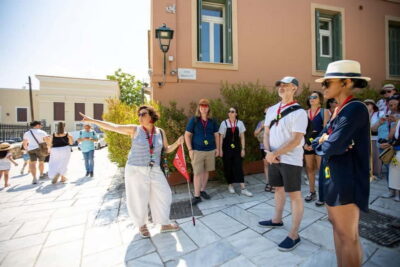
Early Morning Acropolis & Old Athens Guided Walking Tour
Read our verdict →Browse the lists this tour appears in