
Review · MUSEUMS
Lychnostatis Open Air Museum: Entry Ticket with Add-Ons
Cretan life becomes easier to understand when you can step inside a traditional home, inspect an old olive press, and see how raki was made. At Lychnostatis Open Air Museum, the past is presented as a village rather than a row of glass cases. I like the chance to see working traditions, from weaving and plant dyeing to shoemaking and carpentry. I also like the modest $10 price, which gives you a full day to explore at your own pace.
The main consideration is language. The live guide and private tour are in Greek, and the printed information may not always be in perfect condition. One Finnish visitor found that some leaflets had become damp and worn, so you may get more from the optional audiovisual film or tour if you understand Greek.
Key points to know before you go
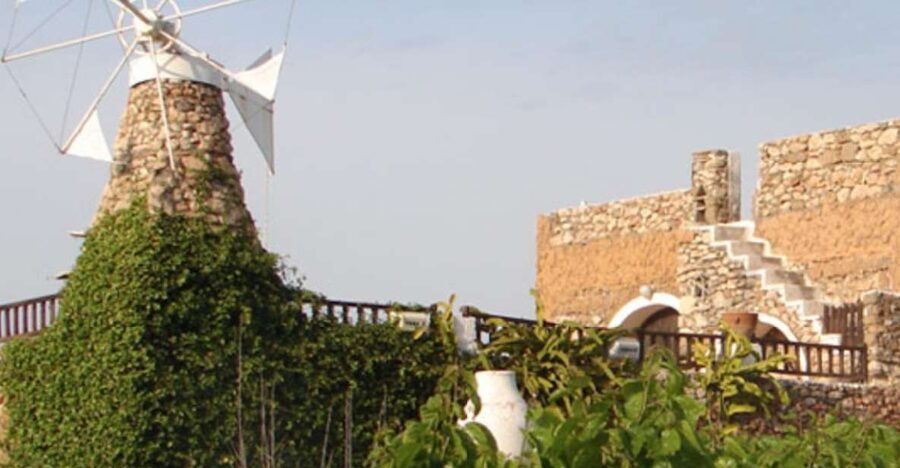
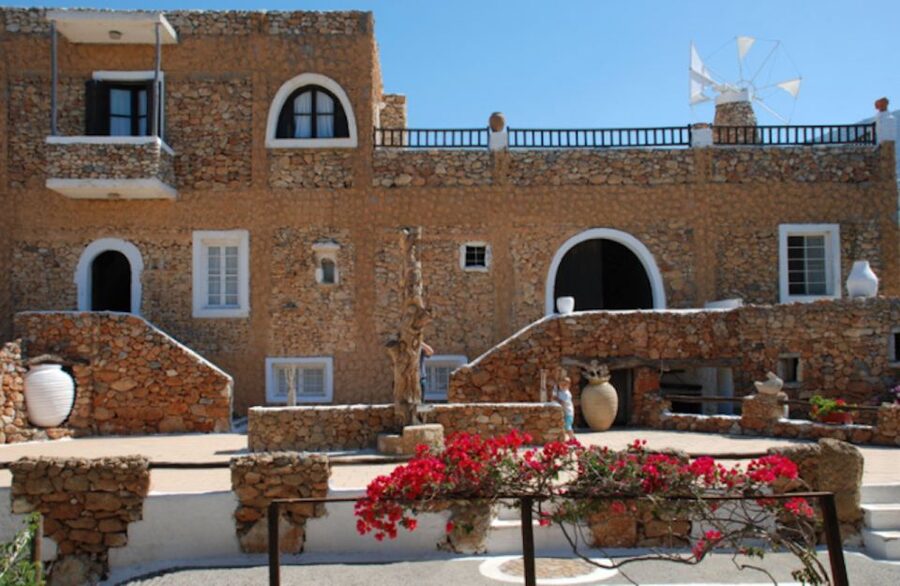
- Traditional Cretan life in one open-air setting: Enter homes, a chapel, workshops, a distillery, and an olive press.
- A useful $10 admission: Your ticket gives you free time to explore for one day, with no transportation or refreshments included.
- Optional ways to add context: Choose an audiovisual film or a private guided group tour in Greek.
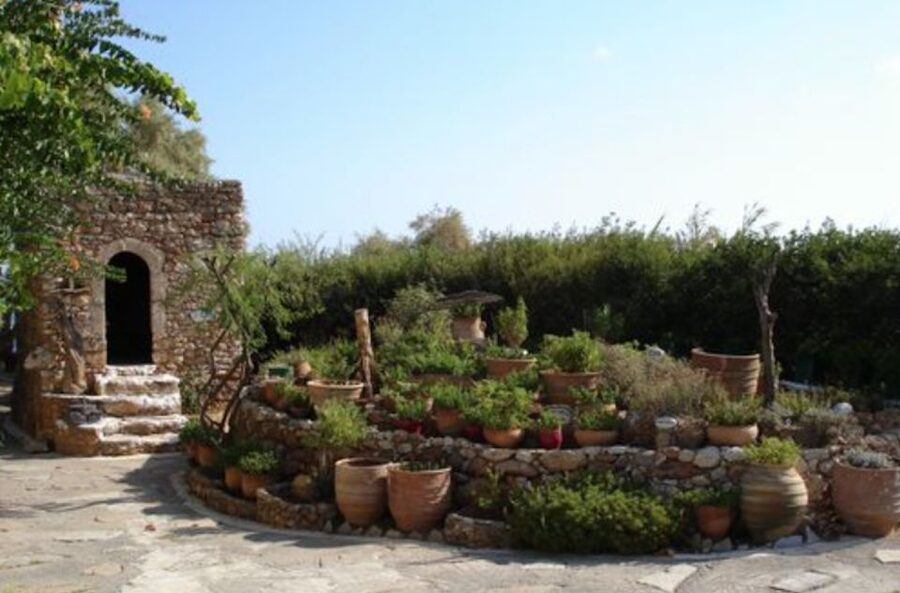
- More than old buildings: The grounds include a library, herbarium, fruit and herb gardens, mineral display, and folk artists’ gallery.
- A pleasant finish at the café: Try a typical Cretan drink or sweet after seeing how local food and drink were made.
- Easy to reach independently: The museum is at its own site and can be reached by car or taxi.
Why Lychnostatis feels different from a standard museum
The strongest feature here is the setting. Instead of moving from one display case to another, you walk through a collection of traditional Cretan buildings and work areas. The museum presents the daily world of Crete from roughly 200 years ago, while also connecting it to traditions that reach much further back.
That approach matters because tools make more sense when you see where they were used. A distillery is easier to understand when it sits alongside the domestic spaces, gardens, and workshops that supported village life. The result is less about memorizing dates and more about seeing how work, food, religion, craft, and nature fitted together.
The museum also covers three broad subjects: Cretan folk tradition and ethnology, Cretan nature and the environment, and Cretan folk culture. That range gives you more than a quick look at rural buildings. You can spend time with objects, plants, minerals, books, craft demonstrations, and cultural displays.
I would allow several hours rather than treating this as a quick stop. The ticket is valid for one day, so you do not need to hurry through every section. That is useful in Crete, where the heat can make a slow visit more comfortable than a rushed one.
More Museum Tours in Crete:
- Athens: Acropolis, Parthenon & Acropolis Museum Guided Tour
★ 4.8 · 9,316 reviews - Athens: Mythology of Delphi, Museum and Arachova Guided Tour
★ 4.6 · 4,008 reviews - Athens: Acropolis, Parthenon & Acropolis Museum Guided Tour
★ 4.8 · 3,579 reviews
Entering the traditional village house
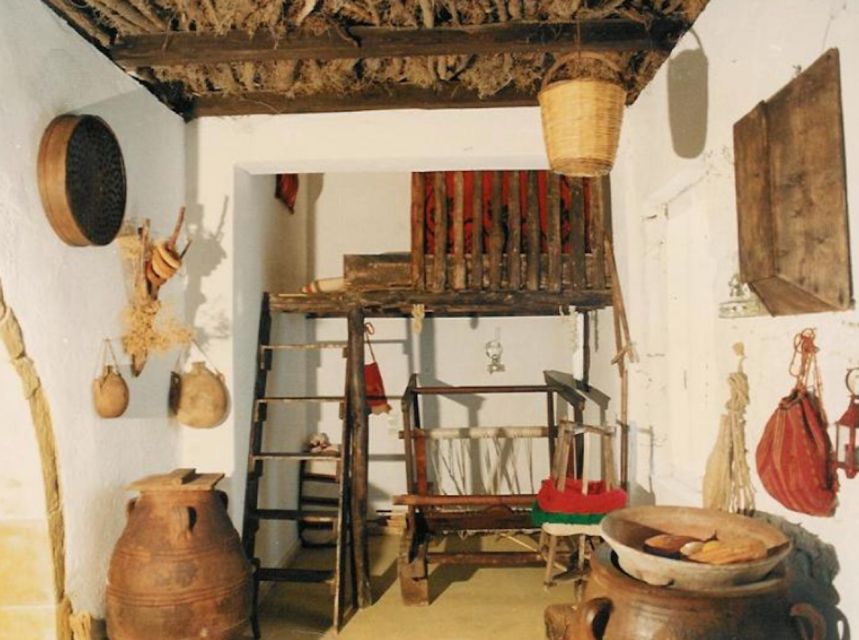
The traditional dwelling is one of the clearest places to begin. Inside, you get a sense of how a Cretan household was arranged and how ordinary domestic life worked before modern conveniences. The value is in the setting: the house connects objects and tools with the people who used them.
You can then compare the home with the work areas around it. The museum includes an olive oil press, a threshing floor, and a tsikoudia distillery. These places show how crops moved from field to household and how food and drink were produced with equipment that required time, labor, and skill.
The raki distillery is likely to be a highlight for anyone curious about Cretan food culture. Tsikoudia, often called raki, is closely tied to local social life, and seeing the equipment gives the drink a clearer place in the story of the island. You can later sample a typical beverage at the café, although food and drinks are not part of the admission price.
The threshing floor offers another useful connection between agriculture and daily life. It helps you picture the work behind the bread and grain that supported a household. The museum does not ask you to imagine an abstract rural past. It gives you the tools and spaces that made that past possible.
Workshops where old skills become visible
The workshops are what keep the visit from feeling like a collection of empty buildings. You can see areas devoted to weaving, plant dyeing, beekeeping and wax, shoemaking, and carpentry. Each one points to a skill that once served a practical need.
The weaving and plant-dying workshop is especially helpful for understanding how materials came from the local environment and became useful household goods. The bees and wax workshop connects farming, household production, and natural materials. Shoemaking and carpentry show how village life depended on local craftspeople rather than ready-made goods brought from elsewhere.
There is also a ceramic shop and a folk artists’ gallery. These sections add a creative side to the more practical workshops. You may find the contrast useful: one area shows how people made what they needed, while another shows how Cretan craft could also become art and cultural expression.
Do not expect every workshop to function as a live demonstration during every visit. The supplied information confirms the presence of the workshops, but not a fixed schedule of working displays. Think of them as places to inspect and understand, with the optional tour or audiovisual presentation available to add explanation.
Gardens, minerals, and the natural side of Crete
Lychnostatis also makes room for the natural world. The herbarium, Cretan fruit garden, and herb garden show plants as part of both the environment and everyday life. Herbs were not just scenery. They could be connected to cooking, household use, and local knowledge.
The mineral and stone exhibition adds another layer. It shifts your attention from village crafts to the physical materials of Crete. You do not need a specialist interest in geology to see why this belongs in a museum about place. Stone, soil, plants, and farming all shaped how people lived.
This part of the museum can make the visit feel less crowded with objects and more spacious in its rhythm. After the indoor dwellings and work areas, the gardens give you room to pause. I would use this section as a natural break, especially during a warm day.
The museum’s environmental focus also helps explain why the collection is not simply about nostalgia. It presents Cretan culture as something linked to land, materials, work, and local resources. That connection gives the older tools a practical meaning.
A few more Crete options worth putting side by side
- Crete: Sunset or Morning Quad with Local Products Tasting
★ 4.9 · 1,135 reviews - Full-Day Small-Group Tour in Crete with Zeus Cave Visit
★ 5.0 · 1,099 reviews - Crete: Quad Safari, Olive Mill with Tasting & Ghost Village
★ 4.9 · 1,004 reviews - Crete: Off-Road Quad Safari with Lunch/Dinner
★ 4.9 · 664 reviews
The chapel, library, and cultural program
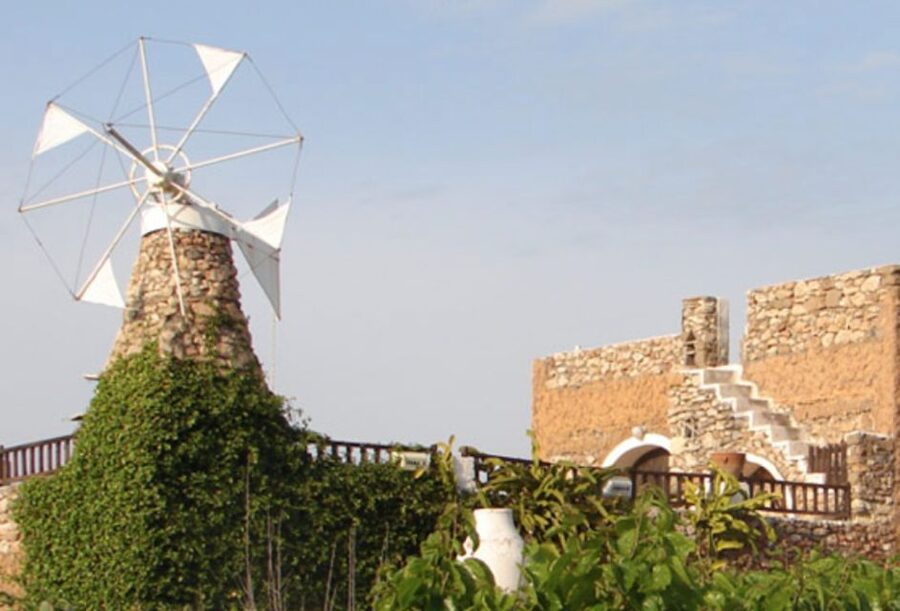
The chapel provides a religious element within the village setting. Along with the homes and workshops, it shows that daily life was shaped by more than work and household production. Religion formed part of the community’s physical and cultural world.
The library is stocked with Cretan books and periodicals. It will appeal most to visitors who want to go beyond the main displays and spend time with written material. You may not need it for a short visit, but it adds value for anyone studying Cretan culture or looking for a quieter corner.
Lychnostatis also has an auditorium with 100 seats for audiovisual shows and seminars. The open-air theater seats 250 people and is used for cultural and artistic events. These facilities show that the museum is not only a static collection. It also supports presentations and performances.
The exact schedule for films, seminars, and events is not provided, so check availability when booking or on arrival. If you choose the audiovisual add-on, it can give you a more structured explanation of what you are seeing. The private guided group tour is another option, though the live guide language is Greek.
Choosing the $10 ticket or an add-on
At about $10 per person, basic admission is good value if you enjoy exploring independently. You receive entry and free time for the day, and there is enough to see that a brief walk-through would not use the ticket fully.
The basic ticket suits you if you prefer to set your own pace. You can linger in a traditional house, move quickly through a section that interests you less, stop at the gardens, and finish at the café. You are not tied to a fixed tour route.
The audiovisual film is worth considering if you want more background but do not need a private guide. It may help you connect the buildings, objects, and customs into one story. The available language information identifies Greek as the language for the live guide, so confirm the language details for any audiovisual option before paying for it.
The private guided group tour gives you a more organized visit. It should be the better choice for a group that wants direct explanation rather than reading at each stop. Keep in mind that the stated guide language is Greek, so this add-on may not suit you if you need an English-language tour.
The pricing is also easier to judge because transportation is not bundled in. You must reach the museum by car or taxi, and food and drinks cost extra. If you are already nearby and want a cultural stop without a full-day guided excursion, the low entry price works in your favor.
Planning your visit by car or taxi
The meeting point is the museum itself. There is no included hotel pickup or group transportation, so plan your route before setting out. A car or taxi is the stated way to reach the site.
This arrangement gives you flexibility, but it also means the total cost depends on how you get there. The $10 ticket is attractive for a couple or family already in the area, while taxi costs could change the value if you are coming from farther away.
The museum is wheelchair accessible, which is useful when planning with different mobility needs. Still, an open-air site can involve movement between buildings and outdoor areas, so you may want to confirm any specific access questions before arrival.
The ticket is valid for one day. You can check the available starting times when booking, and the free-cancellation rule allows a full refund if you cancel at least 24 hours ahead. Reserve now and pay later is also available, which helps if your Crete plans are still shifting.
What to eat and buy before leaving
The café is a small but worthwhile part of the visit. You can stop for a typical Cretan beverage or sweet after seeing the distillery, gardens, and food-related tools. That timing makes the refreshment feel connected to the museum rather than just a standard café break.
Food and drinks are not included, so budget separately. The information does not give a full café menu, and you should not expect the admission ticket to cover tastings.
There is also a souvenir shop. It gives you a chance to take home something connected to the museum’s craft and cultural themes, though specific products are not listed. The ceramic shop and folk artists’ gallery may be especially interesting if you want to look at local making traditions before browsing the shop.
Who will get the most from this museum
I would recommend Lychnostatis to you if you want more than beaches and resort time. It works well for anyone interested in Cretan homes, food production, craft, farming, and local customs. Families may appreciate the open-air format because the visit involves movement and real spaces rather than only text panels.
It also suits independent visitors. You can explore without committing to a long organized excursion, and the one-day validity gives you time to take breaks. The café, gardens, and outdoor theater add variety for people who do not want a museum visit made up entirely of indoor exhibits.
You should think carefully about the language if you want a detailed guided explanation. The live guide is Greek, and the private tour is described as a Greek-language option. If you do not understand Greek, the buildings and objects can still communicate a great deal, but you may prefer the self-guided visit unless the audiovisual option offers a language you understand.
The museum is less suited to someone looking for a fast list of major archaeological finds. Its subject is folk culture and everyday life. You come here to see how people lived, worked, made things, and used local resources.
Should you book Lychnostatis Open Air Museum?
Book it if you want a practical, affordable look at Cretan life beyond the resort strip. The strongest reasons are the traditional house, raki distillery, olive press, varied workshops, gardens, and the chance to finish with a local drink or sweet.
Choose the basic ticket if you like independent exploring and can reach the museum easily by car or taxi. Add the audiovisual film for more structure, or select the private tour if Greek-language guidance suits your group. Skip it only if you need an English-language live tour, included transportation, or a tightly scheduled attraction with a short, guaranteed visit.
For roughly $10, Lychnostatis gives you a useful look at the everyday side of Crete. It is not flashy, and that is part of its appeal. The old tools, workspaces, and domestic rooms help you understand the island through ordinary life.
FAQ
How much does admission to Lychnostatis Open Air Museum cost?
The entry ticket costs $10 per person.
How long is the ticket valid?
The ticket is valid for one day, giving you free time to explore the museum.
What does the basic ticket include?
It includes entry to the museum and free time to explore. Transportation, food, and drinks are not included.
Can I add an audiovisual film?
Yes. An audiovisual film is available when you select that ticket option.
Is a private tour available?
Yes. You can choose a private guided group tour as an add-on.
What language is the live tour in?
The stated live guide language is Greek.
How can I reach the museum?
You can reach Lychnostatis Open Air Museum by car or taxi. The experience begins at the museum, and transportation is not provided.
Is the museum wheelchair accessible?
Yes. The museum is listed as wheelchair accessible.
New on the Crete shelf
- Crete Private Tour: The Secrets of Wine, Olives & Honey★ 4.5 · 59 reviews
- Private tasting of 6 cretan wines in Fres village★ 5.0 · 32 reviews
- Moires: Cooking Class and Olive Oil Tasting at a Family Farm★ 5.0 · 93 reviews
- Crete: Traditional Dance Show and Buffet Dinner with Wine★ 4.1 · 34 reviews
- Crete: Farm Visit with Cheese Tasting and Milking Experience★ 4.9 · 34 reviews
- Self-Drive Jeep Safari to South Coast, Palm Beach & Canyons★ 4.9 · 147 reviews
- e-Bike Guided Tour to Myli Gorge with Lunch included★ 4.8 · 66 reviews
- Crete: Richtis Waterfall Full-Day Tour with Olive Tasting★ 4.8 · 131 reviews
Museums, compared.
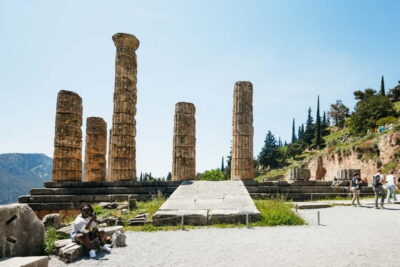
Mythology of Delphi, Museum and Arachova Guided Tour
Read our verdict →
Acropolis, Parthenon & Acropolis Museum Guided Tour
Read our verdict →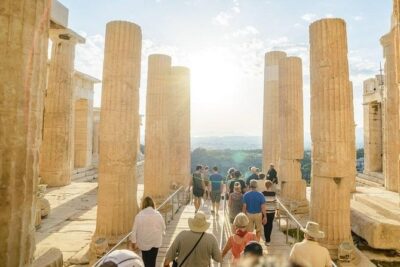
Acropolis monuments & Parthenon Walking Tour with Optional Acropolis Museum
Read our verdict →
Athens All Included: Acropolis and Museum Guided Tour with Ticket
Read our verdict →
Acropolis Museum Ticket with optional Audio Guide
Read our verdict →
Small-Group Delphi, Museum & Arachova Day Trip
Read our verdict →
Parthenon & Acropolis Museum with Audio or Live Tour Option
Read our verdict →
Acropolis, Parthenon and Acropolis Museum Guided Tour
Read our verdict →Browse the lists this tour appears in