
Review · ANCIENT SITES
Athens: National Archaeological Museum Private Guided Tour
The Antikythera mechanism, often described as the world’s oldest analogue computer, is one of the museum’s unforgettable sights. But the real value of this private tour is the way a licensed archaeologist helps you make sense of thousands of objects, from Cycladic figures and Mycenaean gold to Greek sculpture and Roman-era pottery. I especially like the focused two-hour format and the chance to ask questions without being tied to a large group.
I also like that the tour gives you a clear route through a huge museum that can feel intimidating at first. Guides such as Christos Theodoropoulos have been praised for making ancient Greek history lively and easy to follow, even for children. The main drawback is cost: at $400 per group of up to six, plus the €10 museum ticket per person, this makes the most sense when several people share the fee.
Key points to know before you book

- See the Antikythera mechanism: The museum’s famous ancient astronomical device is a major highlight.
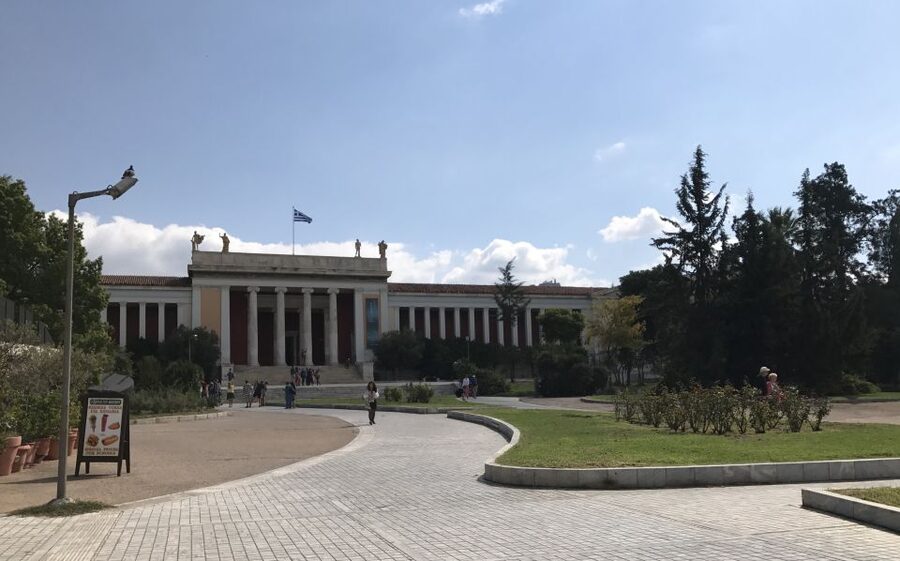
- Meet at the main entrance: Your guide meets you on the steps of the National Archaeological Museum at 44 Patission Street.
- Expect a fast, selective visit: Two hours is enough for an orientation and major highlights, not every gallery.
- Get a private archaeologist guide: The tour is designed for your group, with time for questions and conversation.
- Explore Greek art across thousands of years: The collections cover prehistory, sculpture, pottery, bronzes, Egypt, and the Near East.
- Plan for extra museum time if possible: Several hours are needed to see the museum at a relaxed pace.
Why this museum deserves your time in Athens
Athens is rightly famous for the Acropolis, but the National Archaeological Museum gives you a much broader view of Greek civilization. Its collection reaches from the Neolithic period through late antiquity, bringing together objects from across Greece rather than focusing on one site or one famous monument.
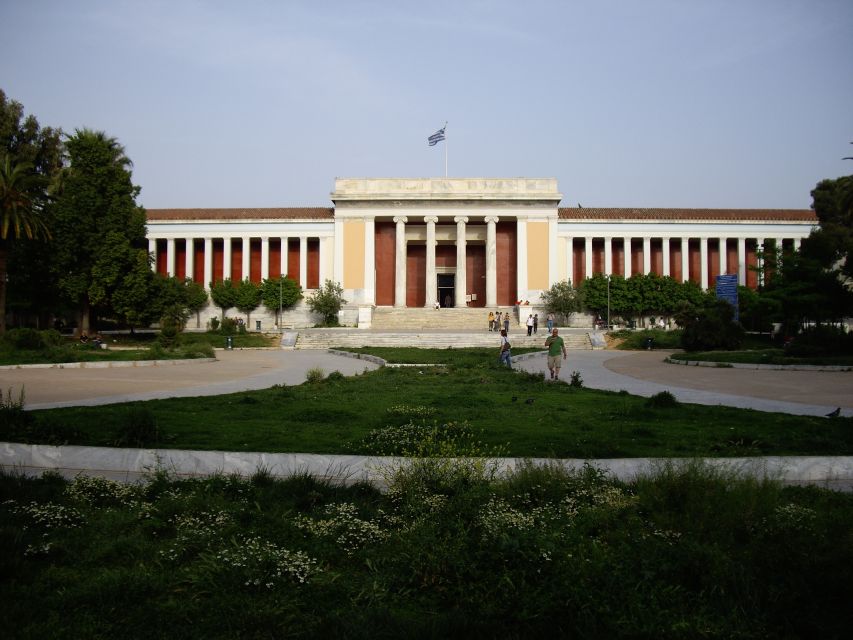
The building itself is part of the experience. It occupies an imposing neoclassical structure designed by L. Lange and remodeled by Ernst Ziller in the late 19th century. Inside, galleries spread across two floors and roughly 8,000 square meters. With more than 11,000 exhibits, this is not a quick stop you can absorb by wandering through a few rooms.
That scale is both the museum’s strength and its problem. You can see remarkable objects almost everywhere, but it is easy to lose your sense of time and sequence. I find a private guide particularly useful here because you get a story rather than a string of labels.
The museum began as a place to protect archaeological finds from excavations around Athens. Over time, it became Greece’s central archaeological museum, receiving important objects from many parts of the country. That broader collection lets you compare different periods and artistic traditions in one visit.
More Ancient Sites in Athens
- Athens: Acropolis & up to 5 Archaeological Sites Combo Pass
★ 4.4 · 12,619 reviews - Athens: Ancient Greek Theater Performance
★ 4.7 · 2,481 reviews - Athens: National Archaeological Museum Ticket & Audio Guide
★ 4.3 · 1,330 reviews
Meeting your guide at 44 Patission Street
The meeting point is on the steps in front of the National Archaeological Museum’s main entrance at 44 Patission Street, 10682, Athens. The activity information also gives 28is Oktovriou 42 as the starting location, so I would rely on the full museum name and the main entrance rather than only entering a street number into a map.
There is no hotel transfer included. You make your own way to the museum, then meet the guide outside before entering. Museum admission is also separate, priced at €10 per person according to the activity details.
The tour lasts two hours. That sounds generous until you see the museum’s size. A guide can take you through important sections and provide a clear introduction, but no two-hour visit can cover every room or object. Several people who took the tour chose to continue exploring on their own afterward, which is the approach I recommend if your schedule allows.
The tour is private, with a stated group limit of up to six people. That arrangement matters because you can hear the guide more easily, ask questions as they arise, and adjust the pace within the available time. It is also a better fit for families or friends with shared interests than a fixed group tour.
Starting with prehistoric Greece
The Collection of Prehistoric Antiquities is one of the museum’s most important sections. It covers the Aegean from the 6th millennium BC to about 1050 BC, including Neolithic, Cycladic, and Mycenaean material.
This is where a guide can provide useful structure. The objects are not simply old versions of later Greek art. They come from societies with different religious practices, technologies, burial customs, and ideas about beauty. Looking at them in sequence helps you see how artistic forms and skills changed over long periods.
The collection also includes finds from the prehistoric settlement at Thera. These objects help place the Aegean world in a wider setting and show that the story of ancient Greece began long before the classical age most people picture.
The Mycenaean material is especially important for visitors who know Greek mythology but want a firmer historical footing. A guide can help separate later stories from the archaeological evidence and explain how the material culture of the Bronze Age fits into the larger Aegean past.
Two hours does not give you time to examine every prehistoric display closely. Still, this part of the museum gives you a strong opening chapter and prevents your visit from jumping straight to the familiar classical statues.
Seeing the development of Greek sculpture
The Sculptures Collection follows the development of Greek sculpture from the 7th to the 5th centuries BC. This is one of the sections where guided explanation can make a major difference.
The visual change from early, rigid forms to more natural movement did not happen all at once. You can watch artists experiment with posture, anatomy, clothing, expression, and the relationship between the human body and stone or bronze. A guide can point out details that are easy to miss when you are simply admiring the overall shape.
I like this part of the visit because it turns famous Greek ideals into something more concrete. Instead of treating classical sculpture as a single style, you begin to see its development. The examples also help explain why Greek art influenced later Roman and European traditions.
The museum’s sculptures include unique masterpieces, but the tour is not only about checking off famous names. The better guides, including Christos when he leads the visit, use individual works to explain larger ideas about religion, public life, funerary customs, and artistic technique.
This section can also be busy in a mental sense. There is a great deal to absorb in a short period. If you want time for close study or photography, you may need to return after the guided portion.
More Museum Tours in Athens
- Athens: Acropolis, Parthenon & Acropolis Museum Guided Tour
★ 4.8 · 9,316 reviews - Athens: Acropolis, Parthenon & Acropolis Museum Guided Tour
★ 4.8 · 3,579 reviews - Acropolis monuments & Parthenon Walking Tour with Optional Acropolis Museum
★ 5.0 · 2,678 reviews - Athens All Included: Acropolis and Museum Guided Tour with Ticket
★ 4.5 · 2,673 reviews
Pottery, small objects, and the details of daily life
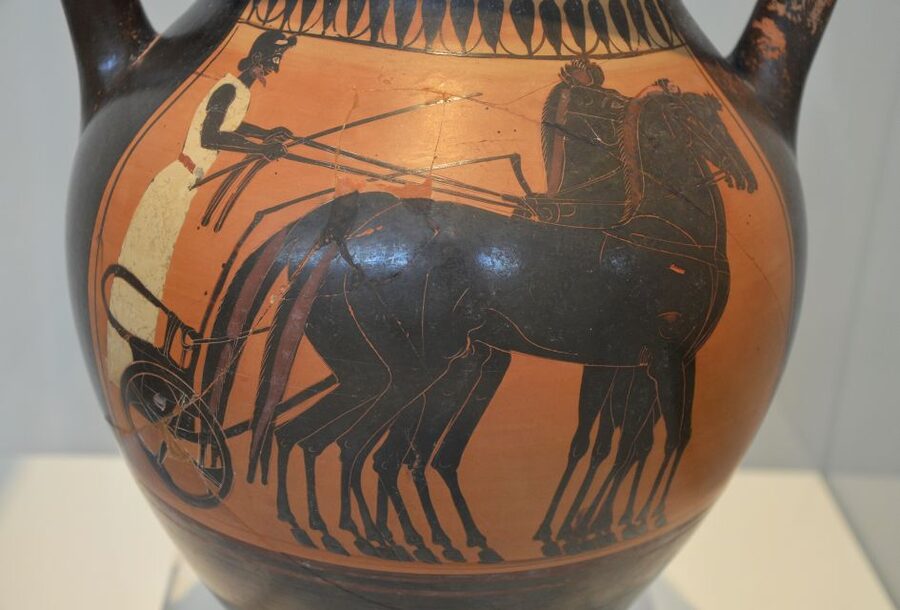
Large statues tend to receive the most attention, but I would not rush past the Vase and Minor Objects Collection. It covers Greek pottery from the 11th century BC through the Roman period and includes the Stathatos Collection of smaller objects from many periods.
Pottery often gives you a more direct sense of ordinary life than monumental sculpture does. Painted scenes can show clothing, rituals, mythology, athletics, warfare, and household activities. The vessels also reveal how artists used shape and decoration for practical as well as symbolic purposes.
Small objects are easy to overlook in a museum packed with major works. With a guide, you can stop long enough to understand why a modest item matters. The point is not that every object is a masterpiece. The point is that these pieces fill in the human details around the grander monuments.
This is another place where questions are welcome. If you are curious about how an object was used, what its decoration means, or how archaeologists date it, a private tour gives you a natural chance to ask.
The Antikythera mechanism and the Bronze Collection
The Antikythera mechanism is the attraction many people already know before arriving. It is described as the world’s oldest analogue computer, and seeing it in the museum gives you a chance to connect ancient technology with a period often reduced to temples and statues.
The mechanism is important because it challenges the simple idea that ancient societies lacked complex engineering. Its presence in the museum offers a useful reminder that ancient Greek achievement included scientific observation, mechanical skill, and careful calculation, not only philosophy and art.
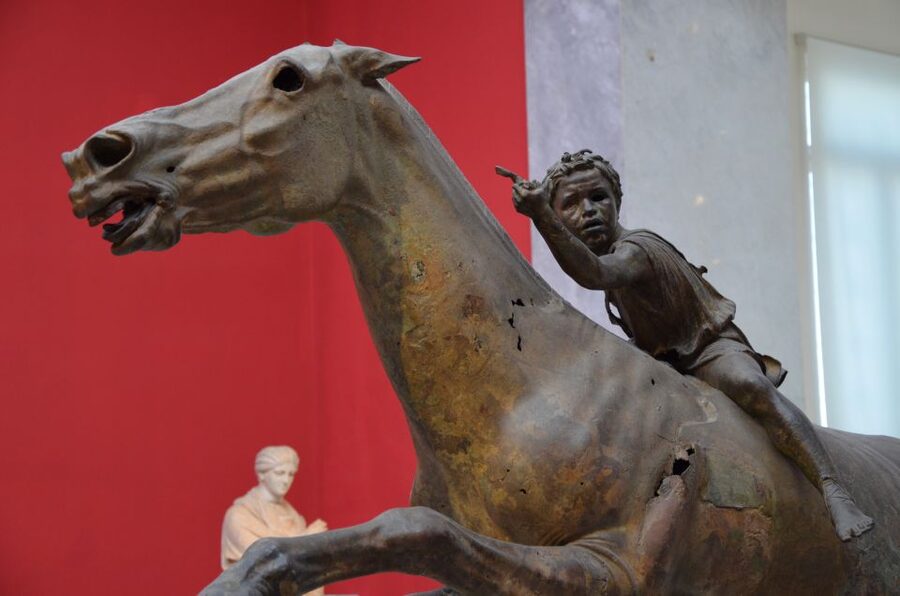
Your guide can place the mechanism in the wider story of the museum’s collections. The surrounding Bronze Collection includes important statues, figurines, and smaller bronze objects. Bronze allowed artists and craftsmen to create forms and details that were not always possible in stone, and the collection gives you another way to compare materials and techniques.
The exact route through the galleries can vary, so I would not assume the guide will spend a fixed amount of time at one display. If the Antikythera mechanism is your priority, mention it at the start. Two hours passes quickly, and telling the guide what interests you helps shape the visit.
Egypt and the Near East inside a Greek museum
The museum also houses Greece’s only Egyptian and Near Eastern Antiquities Collection. Its objects date from the predynastic period, around 5000 BC, to the Roman conquest.
This collection broadens the museum’s scope. You are not looking only at Greek objects in isolation. You can consider how ancient cultures developed alongside one another and how the eastern Mediterranean connected different societies.
For many people, this gallery will be an unexpected part of the visit. It may not be the first priority when time is short, especially if your main goal is classical Greek sculpture or the Antikythera mechanism. Still, a guide can help you decide how much time to spend there based on your interests.
I would treat this collection as a useful bonus rather than the main reason to book the tour. It makes the museum feel less like a single-period collection and more like a broad account of the ancient Mediterranean.
What a two-hour private tour feels like
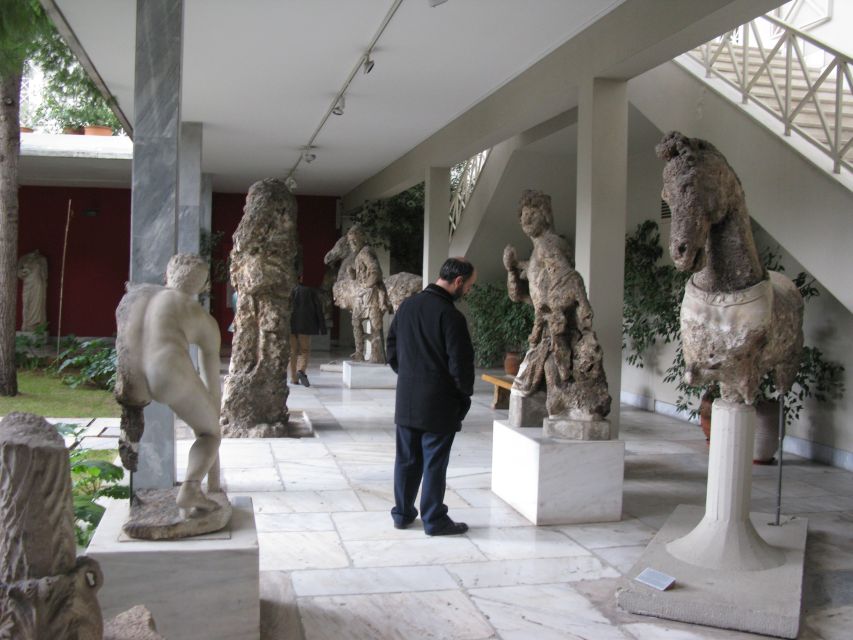
The strongest feature of the experience is its sense of direction. A museum with thousands of exhibits can leave you unsure what deserves your attention. The guide selects major works, explains their place in Greek civilization, and keeps the visit moving.
Previous tours led by Christos have been described as lively, clear, and well paced. He has also adapted explanations for mixed-age groups, including teenagers and younger children. That matters because a long lecture about dates and dynasties can lose a family quickly, while stories, comparisons, and visible details help hold attention.
The pace can be brisk. There is simply too much in the museum for a slow examination of every object in two hours. Think of the tour as an orientation with substance, not as a complete museum visit.
I would allow extra time afterward if you can. One useful plan is to let the guide handle the major route, then return to the galleries that caught your attention. This gives you both context and freedom.
The language options are English, Greek, German, and Turkish. The activity is described as a private group experience, so you are not sharing the guide with a large public group.
Is $400 good value for up to six people?
The price is $400 per group of up to six, and museum admission costs an additional €10 per person. For one or two people, that is a substantial expense. For a full group of six, the guide cost works out to about $67 per person before admission, which makes the value much easier to justify.
The price is paying for more than a person who points out famous statues. You are paying for a licensed archaeologist, a planned route, direct explanations, and the ability to ask questions. The value is highest if you are new to Greek archaeology, traveling with children, or interested in understanding how the pieces fit together.
If you enjoy reading labels at your own pace and already know the major periods of Greek art, you may prefer to visit independently. The museum is arranged in a way that can be followed without a guide, and the labels provide useful information.
For most first-time visitors, I see the private tour as a good use of money when shared among several people. It gives you a strong foundation, then lets you explore alone afterward.
Who should book this experience?
I would recommend it to:
- Families who want children or teenagers to stay engaged
- First-time visitors who find archaeological museums intimidating
- Small groups willing to share the $400 price
- People interested in Greek history beyond the Acropolis
- Visitors who want a licensed archaeologist rather than a general sightseeing guide
- Anyone especially interested in the Antikythera mechanism, prehistoric Greece, or Greek sculpture
I would be more cautious if you have only a few hours in Athens and prefer outdoor sights. The museum requires concentration, and the tour does not include transport or hotel pickup. You must reach the museum yourself and pay the entry fee separately.
The tour also may not satisfy someone who wants a leisurely, room-by-room visit. Two hours is an efficient introduction, not enough time for the entire collection.
Practical details that affect your decision
You can cancel up to 24 hours in advance for a full refund, and the reserve-now, pay-later option keeps payment from being due at booking. Starting times depend on availability, so check the schedule before planning the rest of your day.
The listed provider is Christos Theodoropoulos. The guide may be Christos, and the supplied experience information identifies the tour as available in English, Greek, German, and Turkish. Confirm the language and meeting details when booking.
Bring your attention rather than trying to see everything. The best result comes from accepting that the guide will make choices for you. After the tour, use any remaining time to revisit the objects that stayed in your mind.
Should you book the National Archaeological Museum tour?
Book it if you want ancient Greece explained rather than simply displayed. The private format, licensed archaeologist guide, strong focus on major collections, and access to the Antikythera mechanism make this a useful two-hour introduction.
Skip it if your group is small and budget-conscious, or if you prefer independent museum visits. The admission fee is separate, and the total price is high for one or two people.
For a family or group of friends sharing the cost, I think the tour earns its place. It gives you a clear route through one of Greece’s most important museums, then leaves you free to continue on your own.
FAQ
Where does the tour begin?
The meeting point is on the steps in front of the main entrance of the National Archaeological Museum at 44 Patission Street, 10682, Athens.
How long does the guided tour last?
The guided portion lasts two hours.
What is included in the tour price?
An experienced licensed archaeologist guide is included.
Is museum admission included?
No. The museum entry ticket is separate and listed at €10 per person.
Is hotel transfer provided?
No. Hotel transfer is not included.
How much does the private tour cost?
The price is $400 per private group of up to six people.
Which languages are available?
The available tour languages are English, Greek, German, and Turkish.
Is the tour private?
Yes. The activity is offered for a private group.
What major object can you see during the tour?
The tour includes the Antikythera mechanism, described as the world’s oldest analogue computer.
Can I cancel for a refund?
Yes. You can cancel up to 24 hours in advance for a full refund.
New on the Athens shelf
- Acropolis of Athens, Parthenon and Acropolis Museum private tour with dinner★ 5.0 · 77 reviews
- Small-Group Wine Tour in Athens with Tasting★ 5.0 · 33 reviews
- Private Athens Transfer Airport/Port -Greek Tours-Hourly service★ 5.0 · 88 reviews
- VIP Private Guided Tour of Athens Acropolis & Plaka in a Sidecar★ 5.0 · 108 reviews
- Athens Moonlight Waling Tour with Drinks and Meze Dishes★ 5.0 · 259 reviews
- Private Athens Landmarks Layover Tour★ 4.5 · 41 reviews
- Departure Transfer from Athens City to Athens Airport★ 5.0 · 41 reviews
- Classic Athens Food Tour with Local Drink & Market Visit★ 5.0 · 34 reviews
Ancient Sites, compared.
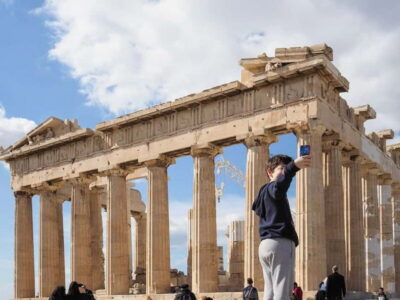
Acropolis & up to 5 Archaeological Sites Combo Pass
Read our verdict →

National Archaeological Museum Ticket & Audio Guide
Read our verdict →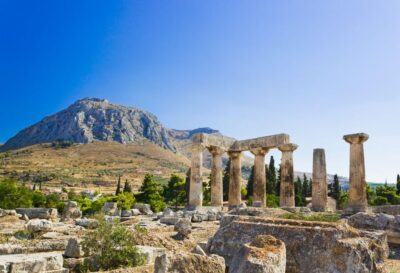
Ancient Corinth Day Trip with Canal & VR Guide
Read our verdict →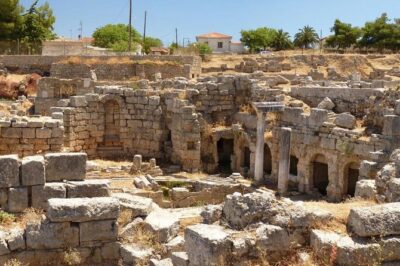
Private Biblical Tour Ancient Corinth & Isthmus Canal from Athens
Read our verdict →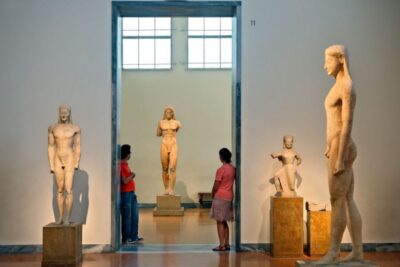
National Archaeological Museum Ticket w/ Opt. Audio
Read our verdict →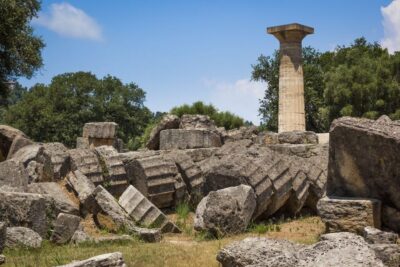
Ancient Olympia: Archaeological Site and Museum Entry Ticket
Read our verdict →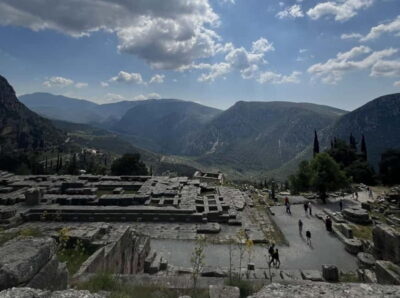
Delphi: Archaeological Site & Museum Ticket with Audio Tours
Read our verdict →Browse the lists this tour appears in