
Review · ANCIENT SITES
Athens: Kotsanas Museum of Ancient Greek Technology Ticket
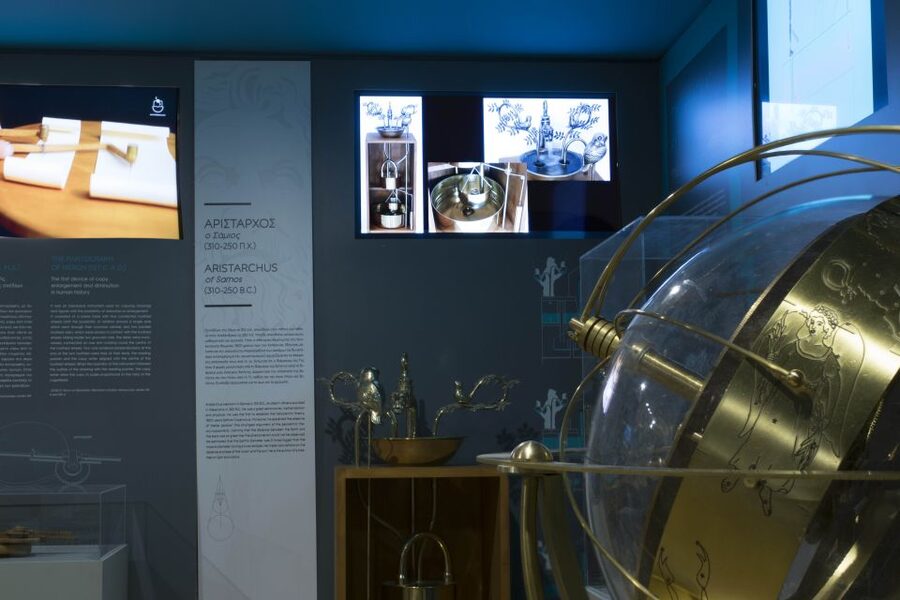
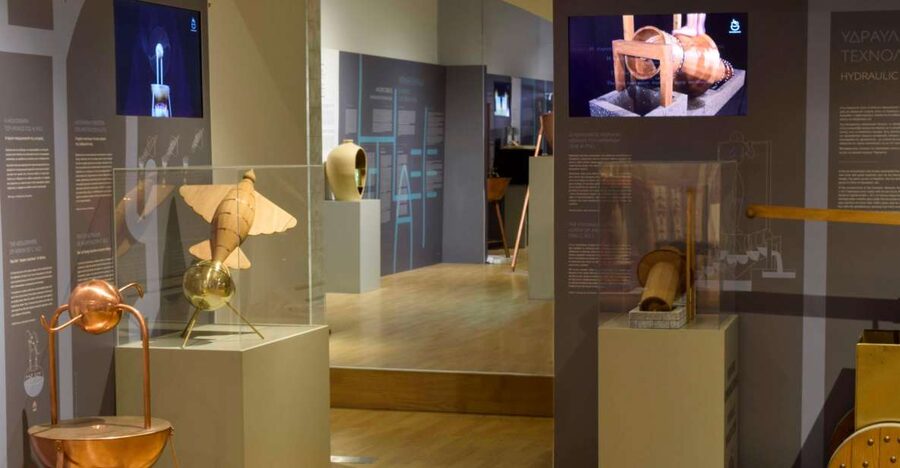
Ancient Greek technology was far more inventive than marble temples and military engines. At the Kotsanas Museum, you can see working models of an analog computer, automatic theater devices, hydraulic clocks, and even early robotic ideas. The clever part is not just seeing old machines. It is watching them move and figuring out how they work.
I like the museum’s hands-on displays, which let you operate some mechanisms instead of simply staring through glass. I also like the clear visual material, with diagrams, photographs, videos, and explanations in Greek and English. The main consideration is that this is a self-guided museum visit, not a guided tour, so you need to give yourself time to read and experiment.
The museum occupies a 700-square-meter Art Nouveau building on Pindarou Street, about five minutes on foot from Syntagma Metro Station. The ticket costs $7.90 per person and is valid for one day. Food and drinks are not allowed inside, but the museum is wheelchair accessible and an English-speaking host or greeter is available.
Key points to know before you go
- See the Antikythera calculating mechanism: Examine a working model of the ancient device often described as the oldest analog computer in the world.
- Try selected mechanisms yourself: Interactive exhibits make the visit more useful for children, families, and anyone who learns by doing.
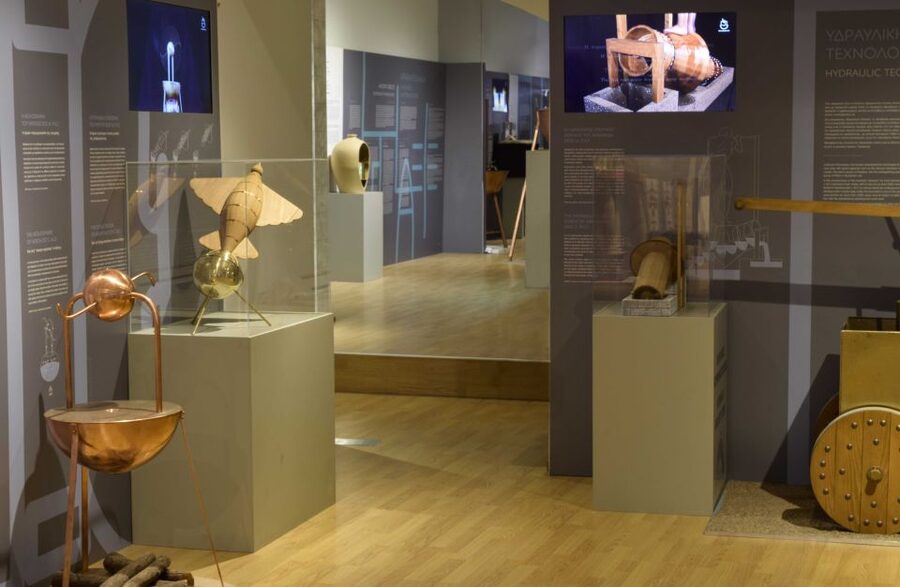
- Expect about 100 operating models: Displays cover clocks, automata, theater effects, hydraulic devices, and other inventions.
- Use the English explanations: Labels, posters, diagrams, video, and animation help explain how each machine functioned.
- Plan a central Athens stop: The museum sits five minutes from Syntagma Metro Station, making it easy to add to a day in the city center.
- Know what your ticket does not include: Entry is included, but a guided tour is not.
Why ancient Greek technology feels surprisingly modern
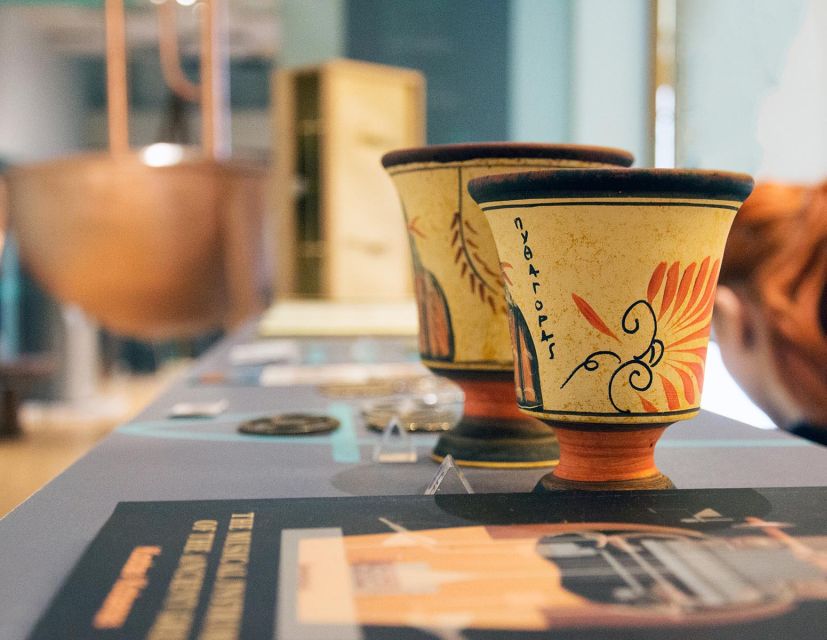
The first thing you notice here is the gap between popular images of ancient Greece and the machines on display. Ancient Greek culture is often presented through sculpture, philosophy, drama, and temples. This museum gives you another angle: engineers building devices that measure time, reproduce movement, create sound and images, and perform tasks automatically.
That contrast gives the visit its spark. You may arrive expecting a collection of static archaeological objects. Instead, you find models that operate. Gears turn, water controls movement, figures perform actions, and mechanical systems show how a result was produced.
The museum focuses on technology as a working process. You are not only told that a device existed. You are shown the parts and their relationship. A diagram may explain the gears, a video may demonstrate the motion, and an interactive station may let you test the idea with your own hands.
That approach matters because ancient mechanisms can be difficult to understand from a written description. A clock or calculating device may look like a pile of parts until you see the movement. Once the model operates, the design becomes easier to follow.
More Ancient Sites in Athens
- Athens: Acropolis & up to 5 Archaeological Sites Combo Pass
★ 4.4 · 12,619 reviews - Athens: Ancient Greek Theater Performance
★ 4.7 · 2,481 reviews - Athens: National Archaeological Museum Ticket & Audio Guide
★ 4.3 · 1,330 reviews
Entering the 700-square-meter Art Nouveau museum
The Kotsanas Museum is located at Pindarou 6 in central Athens, in a historic Art Nouveau building. Its city-center location makes it a practical stop before or after other sights around Syntagma Square.
From Syntagma Metro Station, the walk takes about five minutes. That short connection is useful if you are planning a busy Athens day and do not want to devote an entire outing to a museum outside the center.
Inside, the exhibition is arranged around the theme The Hi-Tech Inventions of Ancient Greeks. The title is deliberately provocative, but the displays give it substance by showing specific machines rather than making a general claim about ancient ingenuity.
You can expect around 100 selected exhibits. That is enough material for a serious visit without turning the museum into an enormous all-day commitment. Your pace will depend on how closely you read the diagrams and how long you spend testing the interactive parts.
The building itself adds a pleasant change from the usual large archaeological museums. You are visiting a smaller, focused institution rather than a vast hall of statues and pottery. That makes it easier to keep your attention on the mechanisms.
Starting with the Antikythera calculating mechanism
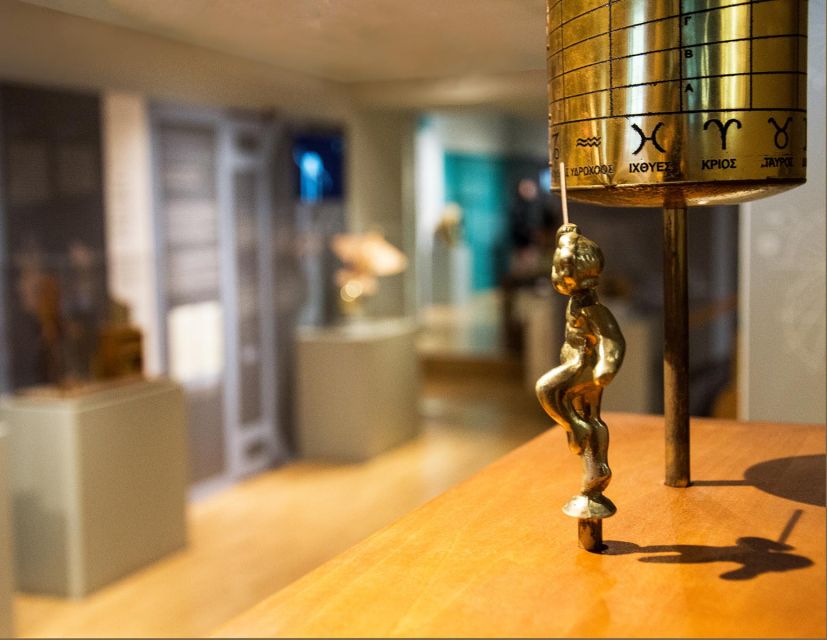
The Antikythera calculating mechanism is one of the main reasons to visit. The museum presents a model of this ancient calculating device, widely described as the oldest analog computer in the world.
Its importance is not only its age. The mechanism shows that ancient engineers could design systems that used coordinated gears to calculate and display information. For you, the model provides a physical way to understand an object that can otherwise seem almost impossible when reduced to a few photographs or a short paragraph.
Take time to look at the explanatory material around it. The museum uses detailed diagrams, photographs, and complete bibliographical references to support the displays. You do not need a technical background, but patience helps. The more carefully you follow the parts, the more sense the machine makes.
This is one place where the museum’s model-based approach is especially useful. You can see the structure and the motion together. The exhibit turns an abstract archaeological puzzle into something you can inspect from a mechanical point of view.
If you are short on time, make this one of your first stops inside the museum. It is the exhibit most likely to shape your understanding of the rest of the collection.
From robot servants to automated theater
The collection also includes devices connected with automation and entertainment. You can see a model of a robot-servant associated with Philon, along with what the museum calls the cinema of Philon.
The word robot can sound too modern, so the display is a useful chance to examine what automation meant in the ancient world. The important idea is that a device could be designed to carry out a sequence of actions with limited human control.
The theatrical devices are equally revealing. Heron’s automotive-puppet show shows how mechanical movement could be used for performance. The point was not only practical work. Ancient technology could also create spectacle, surprise, and storytelling.
I find this part valuable because it connects engineering with everyday culture. A machine does not have to be a calculator or a weapon to be technically important. A self-moving figure or mechanical show demonstrates careful planning, timing, and control.
The working models help you understand the entertainment value. A diagram tells you how a mechanism is arranged. Movement shows you why the mechanism was impressive.
More Museum Tours in Athens
- Athens: Acropolis, Parthenon & Acropolis Museum Guided Tour
★ 4.8 · 9,316 reviews - Athens: Acropolis, Parthenon & Acropolis Museum Guided Tour
★ 4.8 · 3,579 reviews - Acropolis monuments & Parthenon Walking Tour with Optional Acropolis Museum
★ 5.0 · 2,678 reviews - Athens All Included: Acropolis and Museum Guided Tour with Ticket
★ 4.5 · 2,673 reviews
Hydraulic clocks and the control of time
The hydraulic clock of Ktesibios offers another useful change of pace. Instead of depending only on gears, the device uses water as part of its operation.
Clocks are a good subject for a museum like this because timekeeping affects daily life, science, public activity, and ceremony. The model lets you consider how ancient engineers used a steady flow of water to create regular movement and display the passage of time.
Look for the relationship between the water, the container, and the moving parts. This is not a simple matter of pouring water into a bowl. The system depends on control and consistency, which makes the design more impressive than its basic materials might suggest.
The clock also helps you see why the museum does not simply group ancient technology into crude and modern categories. The tools differ from ours, but the engineering questions are familiar. How do you measure something? How do you regulate movement? How do you make a system repeat the same action?
Those questions connect the hydraulic clock with the calculating mechanism and the automated theater, even though the devices have different purposes.
Interactive displays make the visit easier to understand
The museum’s strongest feature is the chance to interact with selected mechanisms. You can put some of the devices into use with your own hands, rather than treating the exhibition as a row of untouchable objects.
That matters for adults as much as children. Mechanical systems are often easier to understand through a handle, lever, or moving part. A small action can show cause and effect more clearly than several paragraphs of text.
The museum also uses projecting stations with video and animation. Documentaries explain the function and use of the mechanisms, and the exhibitor demonstrates how they work. These moving explanations are helpful when a model has several stages or when the internal motion is hard to see from one angle.
You should plan to stop and read. The exhibition has explanatory labels, large posters, diagrams, photographs, and bibliographical references. If you rush from one object to the next, you will see the shapes but miss much of the engineering logic.
English-language material is available, and the host or greeter speaks English. The supplied information also notes Greek and English audio-visual explanations. This makes the museum accessible to international visitors who want more than a quick visual tour.
How long to allow and how to use your time
Your ticket is valid for one day, with entry times based on availability. The ticket information does not set a fixed visit length, so you can shape the stop around the rest of your Athens plans.
I would treat it as a focused museum visit rather than a quick photo stop. The collection includes about 100 models, and the displays are designed to be read, watched, and tested. You might move through quickly if you only want the major inventions, but the interactive elements reward a slower pace.
A sensible approach is to begin with the Antikythera mechanism, then follow the exhibition through the other major themes. After that, return to any model whose operation was not clear on the first pass.
Because there is no guided tour included, you control the pace. That is good if you dislike being hurried. It can be less useful if you want an expert beside you to answer every question as you go.
The attraction works well as a break between outdoor sights. Athens can involve plenty of walking, traffic, heat, and visual overload. A technology museum gives you an indoor change of rhythm while remaining close to the city center.
Is the $7.90 ticket good value?
At $7.90 per person, this is a modestly priced museum stop. The value comes from the number of operating models and the amount of explanatory material included with admission.
You are not paying only to view a collection behind glass. The ticket gives you access to interactive displays, video and animation stations, diagrams, posters, and working reconstructions. For a visitor interested in engineering, science, or ancient Greek culture, that makes the price easy to justify.
The value is less certain if you want a traditional archaeological museum filled with original artifacts. This experience focuses on models and explanations of technology. It is about understanding how devices worked, not viewing a large collection of ancient objects.
Families may find the ticket particularly useful because the mechanisms give children something to do. Adults who enjoy machines, invention, or the history of science should also find plenty to hold their attention.
If you have only a few hours in Athens and are choosing between major archaeological sites, make your decision based on your interests. This museum is a specialist stop. It is not a replacement for the Acropolis or the National Archaeological Museum, but it offers a subject those places do not present in this hands-on way.
Who will enjoy this museum most?
I would recommend the Kotsanas Museum to you if you like understanding how things function. You do not need to be an engineer. Curiosity is enough, especially if you enjoy following a mechanism from its parts to its final action.
It is also a good choice for families because selected displays can be operated directly. The combination of movement, diagrams, and video helps keep the subject from feeling like a standard text-heavy exhibition.
History and science students may appreciate the bibliographical references and detailed explanations. The museum gives more context than a simple novelty attraction, but you can still visit casually if you only want to see the main models.
The experience may be less satisfying if you dislike reading or prefer original artifacts. Since the guided tour is not included, you should be comfortable learning from the displays and audio-visual material.
The building is wheelchair accessible, which makes the museum a practical option for visitors who need an accessible indoor activity. Food and drinks are not permitted inside, so plan to eat before or after your visit.
Should you book the Kotsanas Museum ticket?
Book it if you want a compact, central Athens museum that shows the practical side of ancient Greek culture. The Antikythera mechanism, hydraulic clock, robotic device, and automated theater models offer a different view of the ancient world, while the hands-on elements keep the subject clear and lively.
Skip it if your priority is original sculpture, pottery, or a guided archaeological tour. This is a self-guided technology exhibition, and its best moments come when you stop, read, watch, and test the mechanisms.
For $7.90, it is an easy addition to a Syntagma-area day. Give yourself enough time to do more than glance at the machines, and the visit can turn a familiar Athens itinerary toward a less expected subject: ancient engineers solving problems that still sound remarkably modern.
FAQ
Where is the Kotsanas Museum located?
The museum is at Pindarou 6 in Athens, Greece. It is about a five-minute walk from Syntagma Metro Station.
What does the ticket include?
The ticket includes entry to the Kotsanas Museum of Ancient Greek Technology.
Is a guided tour included?
No. A guided tour is not included. The museum provides explanatory labels, posters, diagrams, photographs, videos, animations, and documentaries, with Greek and English audio-visual material available.
How long is the ticket valid?
The ticket is valid for one day. Available starting times depend on the selected date and availability.
Is the museum wheelchair accessible?
Yes. The activity information states that the museum is wheelchair accessible.
Can I bring food or drinks inside?
No. Food and drinks are not allowed inside the museum.
New on the Athens shelf
- Acropolis of Athens, Parthenon and Acropolis Museum private tour with dinner★ 5.0 · 77 reviews
- Small-Group Wine Tour in Athens with Tasting★ 5.0 · 33 reviews
- Private Athens Transfer Airport/Port -Greek Tours-Hourly service★ 5.0 · 88 reviews
- VIP Private Guided Tour of Athens Acropolis & Plaka in a Sidecar★ 5.0 · 108 reviews
- Athens Moonlight Waling Tour with Drinks and Meze Dishes★ 5.0 · 259 reviews
- Private Athens Landmarks Layover Tour★ 4.5 · 41 reviews
- Departure Transfer from Athens City to Athens Airport★ 5.0 · 41 reviews
- Classic Athens Food Tour with Local Drink & Market Visit★ 5.0 · 34 reviews
Ancient Sites, compared.

Acropolis & up to 5 Archaeological Sites Combo Pass
Read our verdict →

National Archaeological Museum Ticket & Audio Guide
Read our verdict →
Ancient Corinth Day Trip with Canal & VR Guide
Read our verdict →
Private Biblical Tour Ancient Corinth & Isthmus Canal from Athens
Read our verdict →
National Archaeological Museum Ticket w/ Opt. Audio
Read our verdict →
Ancient Olympia: Archaeological Site and Museum Entry Ticket
Read our verdict →
Delphi: Archaeological Site & Museum Ticket with Audio Tours
Read our verdict →Browse the lists this tour appears in