
Review · ANCIENT SITES
Athens: Kotsanas Ancient Greek Technology Museum Guided Tour
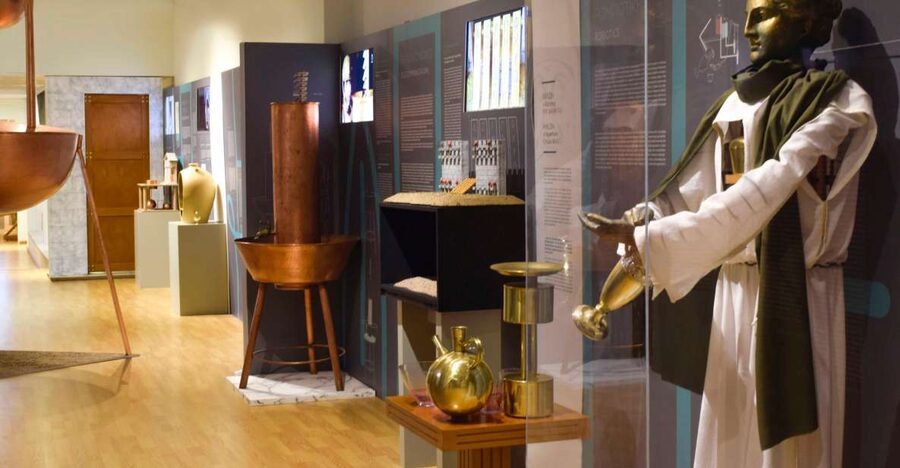
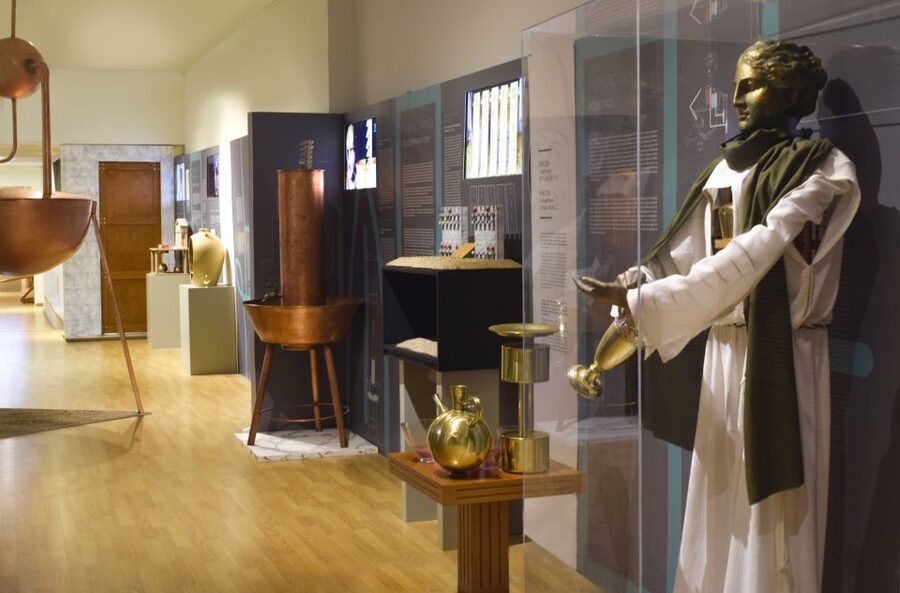
The most surprising thing at Athens’ Kotsanas Museum is how modern ancient Greek technology can feel. A private guide leads you through working models of robots, clocks, automatic theaters, and the Antikythera calculating mechanism, often called the world’s oldest analog computer. This is not a dusty display of broken pottery. You see mechanisms move and learn how they worked.
I like the private format, because your guide can explain a complicated device at your pace. I also like the hands-on displays, which make the ideas stick, especially for children and anyone who does not think of themselves as an engineer. The main limitation is the one-hour length: the museum holds about 300 artifacts, so you will need to focus rather than see every detail.
Key points to know before booking
- Working ancient devices: See operating models of inventions linked to figures such as Heron, Philon, and Ktesibios.
- The Antikythera mechanism: Examine a reconstruction of the ancient calculating device often described as the oldest analog computer in the world.
- Private English tour: Your guide may be an engineer, historian, archaeologist, or museologist. Guides named Vasilis, Irina, and Maria have been praised for clear and engaging explanations.
- Central Athens location: The museum at Pindarou 6 is about a five-minute walk from Syntagma Metro Station.
- One-hour visit: Entry, a private guided tour, and time to look around on your own are included.
- Important limitation: The museum is not suitable for people with mobility impairments, and food and drinks are not allowed inside.
Why ancient Greek technology feels unexpectedly familiar
Many Athens visitors build their day around temples, statues, and open-air ruins. Those places matter, but the Kotsanas Museum offers a different view of Greek culture. Here, the focus is not mainly on gods or marble. It is on problem-solving, measurement, movement, sound, automation, and mechanical design.
That change of subject is the museum’s appeal. You learn that ancient inventors were not only philosophers and builders. They also designed practical and entertaining machines. Some devices were used to measure time or track the heavens. Others served as demonstrations, clever toys, or mechanical theater.
The comparison with modern technology is not exact, of course. Ancient Greek machines did not have electricity, microchips, or modern materials. Still, the basic ideas can feel familiar: programmed movement, automatic action, visual effects, sound, and calculated motion. Seeing a mechanism operate makes that connection much clearer than reading a paragraph about it.
The museum presents roughly 300 artifacts across its collection, with about 100 selected pieces in the exhibition focused on the high-technology inventions of ancient Greece. That is enough material for a serious look, but not so much that the place feels like a warehouse. The one-hour tour gives you a guided path through the most important examples.
More Ancient Sites in Athens
- Athens: Acropolis & up to 5 Archaeological Sites Combo Pass
★ 4.4 · 12,619 reviews - Athens: Ancient Greek Theater Performance
★ 4.7 · 2,481 reviews - Athens: National Archaeological Museum Ticket & Audio Guide
★ 4.3 · 1,330 reviews
Entering the Art Nouveau building on Pindarou Street
The museum is at Pindarou 6, in central Athens, about five minutes on foot from Syntagma Metro Station. That makes it easy to add before or after a visit to Syntagma Square, the National Garden, Plaka, or the Acropolis area.
The setting is part of the experience. The museum occupies a historic Art Nouveau building with about 700 square meters of exhibition space. You are not entering a large national museum with miles of galleries. The scale is more manageable, and the displays are arranged for close viewing.
The tour begins at the meeting point and ends there. Hotel pickup is not included, so plan to reach Pindarou Street on your own. Because the location is central, public transportation is the practical choice, with Syntagma Metro Station nearby.
You should allow a little extra time to find the entrance and arrive ready for the scheduled start. The activity itself lasts one hour, and starting times vary according to availability. Food and drinks are not allowed inside the museum.
What the private one-hour tour adds
You can look at mechanical models on your own, but the private guide makes a large difference here. These exhibits are not always self-explanatory. A device may look like a box, a set of gears, or a decorative object until someone shows you what each part does.
The guide explains the mechanism, its purpose, and the ideas behind its design. Staff members leading the tour may be engineers, archaeologists, historians, or museologists. That range matters because the visit combines technical explanation with historical context.
English is the tour language. Guides named Vasilis, Irina, and Maria have been singled out for making the machines clear and enjoyable. You cannot select a particular guide from the information provided, but those names give you a sense of the staff experience available.
The private setup works especially well for families. Children can ask direct questions, and adults can stop the explanation when a detail needs more attention. One person may want the historical background, while another wants to know how the gears or water pressure made the device move. A shared group tour would have less room for that back-and-forth.
The main tradeoff is pace. A one-hour private tour is focused, not leisurely. If you stop at every display for a long explanation, you will not see the full collection in detail. Use the tour to understand the major inventions, then spend your included free time looking again at the pieces that caught your attention.
The Antikythera mechanism and ancient calculation
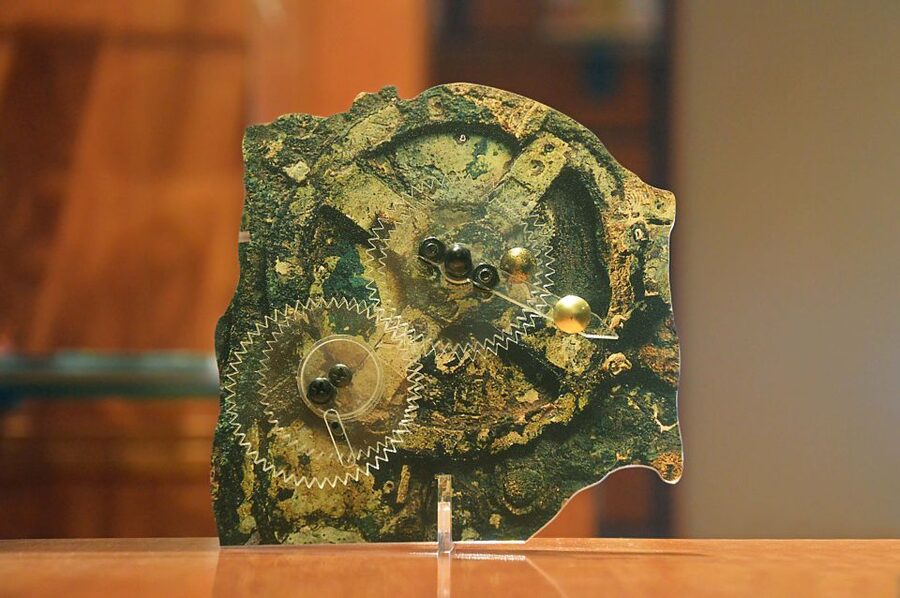
The Antikythera mechanism is likely to be one of the museum’s main draws. It is presented through an operating model, allowing you to see how an ancient calculating device could represent astronomical cycles.
The machine is often described as the oldest analog computer in the world. That label catches attention, but the real value is seeing the physical logic behind it. Instead of treating it as an unexplained wonder, the guide can show you how its moving parts relate to calculation and prediction.
The museum cannot place the original mechanism in front of you, and the experience is based on a model. That is normal for an object this important and fragile. The advantage is that a working reconstruction lets you watch the motion and understand the principle in a way that a static original might not allow.
You do not need an engineering background to enjoy this section. The guided explanation is intended for general visitors, and the interactive approach helps turn a difficult subject into something visible. If you are especially interested in ancient science, this alone may justify the visit.
More Museum Tours in Athens
- Athens: Acropolis, Parthenon & Acropolis Museum Guided Tour
★ 4.8 · 9,316 reviews - Athens: Acropolis, Parthenon & Acropolis Museum Guided Tour
★ 4.8 · 3,579 reviews - Acropolis monuments & Parthenon Walking Tour with Optional Acropolis Museum
★ 5.0 · 2,678 reviews - Athens All Included: Acropolis and Museum Guided Tour with Ticket
★ 4.5 · 2,673 reviews
Robots, automatic theaters, and mechanical entertainment
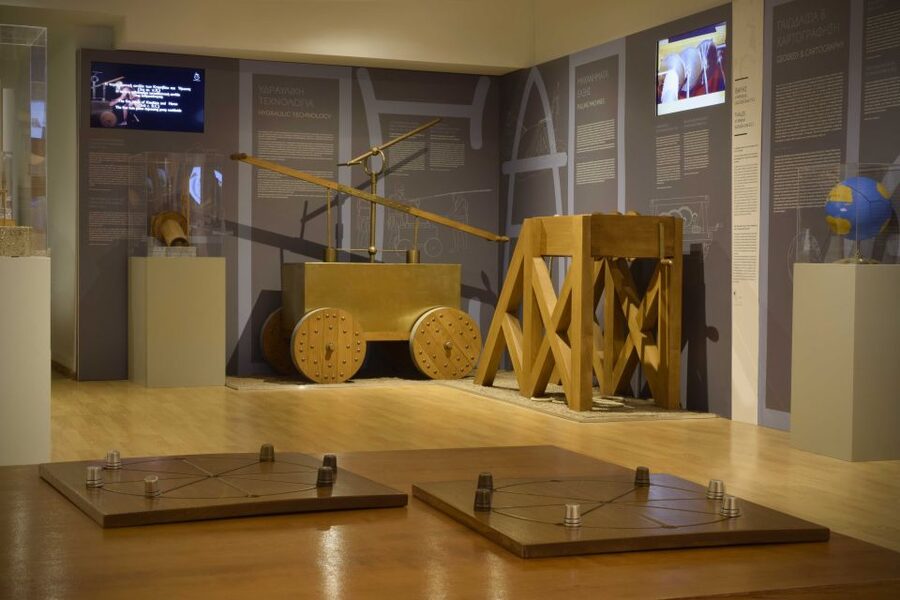
The collection also shows that ancient technology was not limited to calendars and measuring instruments. The exhibition includes the robot-servant of Philon, the so-called cinema of Philon, and an automotive puppet show associated with Heron.
These names point to a playful side of ancient invention. The machines were designed to create movement, surprise, and a sense of automatic action. You may recognize the basic ambition behind modern animation, mechanical toys, and special effects: make an object move in a controlled way and let the audience wonder how it happened.
Heron is also connected with several famous mechanical devices from antiquity. At the museum, the point is not simply to admire a historical name. You get a chance to see how a mechanism can produce a sequence of actions through gears, weights, air, or water.
This is where the museum works well for children. A static timeline can lose a young visitor quickly. A moving figure or automatic show gives them something to watch, while the guide supplies the explanation. Adults who enjoy theater, machines, or early forms of automation will find plenty to think about too.
Clocks, water power, and the logic of measurement
The hydraulic clock of Ktesibios is another important stop. Water clocks used the steady movement of water to measure time, and the model helps show the practical challenge involved. A clock needs more than a container and a trickle of water. It needs controlled flow and a way to mark the passage of time.
The museum’s operating models help you see this as an engineering problem. The ancient designers were working without modern clocks, electric power, or digital displays, yet they still needed reliable ways to measure intervals and organize activity.
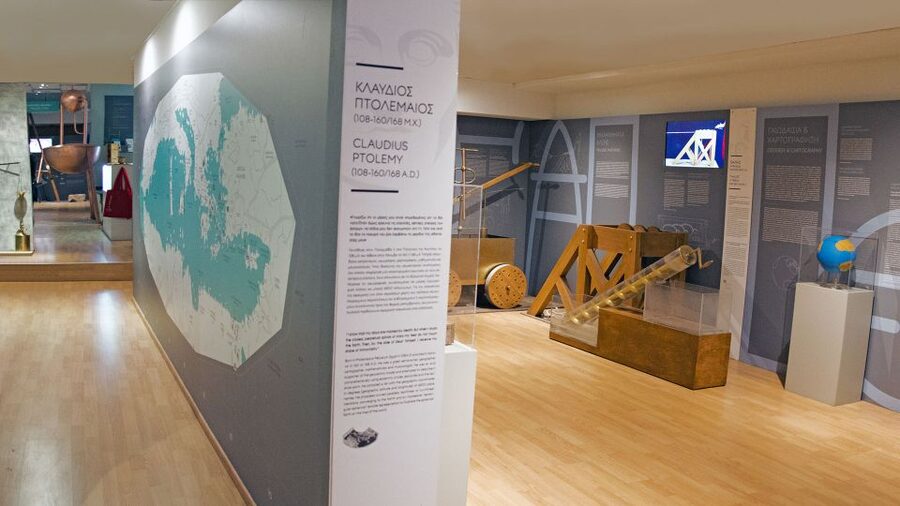
The displays use explanatory labels, large posters, diagrams, photographs, and bibliographical references. Video and animation stations add another layer, while documentaries show how the mechanisms work and how they were used. That range of material is useful because one visitor may understand a device through a physical model, while another needs a drawing or short film.
You should not feel embarrassed if some mechanisms take a second explanation. The point of the private tour is to ask. The guide can slow down and connect the moving parts to a simple idea.
How the museum uses labels, models, and video
The Kotsanas Museum does more than place reconstructed objects behind glass. Many exhibits are interactive, and the visual material is available in Greek and English. The museum uses diagrams and photos alongside the models, so you can move between the broad idea and the small mechanical detail.
This makes the visit more accessible to people who have little technical training. You do not need to read a long book about ancient engineering before arriving. The guide introduces the mechanism, the display shows it in action, and the supporting material fills in the background.
The amount of information can also be a drawback. With around 300 artifacts in the wider museum collection and roughly 100 selected items in the main exhibition, there is more detail here than you can absorb in one hour. The private tour gives you a useful framework, but it does not turn the visit into a complete course in ancient technology.
That is why I would use the included free time carefully. After the guide leaves you to explore, return to the models that were hardest to grasp. Look at the diagrams again, watch the related animation, and compare the working model with the explanatory text.
Who will get the most from this museum visit
This tour is a good choice if you want something beyond the standard Athens route. It suits adults interested in science, design, archaeology, mathematics, or mechanical history. It also works for families because the displays give children something concrete to watch and try.
It is especially useful for a mixed-interest group. One person can enjoy the historical setting, another can focus on the engineering, and a child can follow the moving parts. The private format lets the guide adjust the explanation rather than delivering the same speech to a large crowd.
You may want to skip it if your Athens schedule is already packed with major archaeological sites and you only want monumental art. The museum is specialized, and its subject is technology rather than sculpture, mythology, or classical architecture.
Mobility is another practical concern. The activity is listed as unsuitable for people with mobility impairments. If that applies to someone in your group, confirm the conditions before booking.
Is $54 for up to four people good value?
At $54 per group of up to four, the price works out well for a small family or group. It includes museum entry, a one-hour private guided tour, and free time to continue exploring. The per-person value is weaker if only one person attends, but the private format becomes more attractive as your group gets closer to four.
You are paying for explanation as much as admission. That matters because the central question at this museum is not simply what an object is, but how it works. A guide can connect the Antikythera mechanism, hydraulic clock, robots, and theater devices into a clear story about ancient design.
The visit is also short enough to fit into a busy Athens day. You do not need to give up half a day, and the central location helps reduce transport time. The best value comes when you arrive curious and use the extra time after the tour instead of leaving as soon as the guided portion ends.
Free cancellation up to 24 hours before the activity and reserve-now, pay-later booking make it easier to fit into an uncertain itinerary. Those policies are useful in Athens, where weather, ferry schedules, and long visits at major sites can shift your plans.
Should you book the Kotsanas Museum tour?
Book it if you want an engaging one-hour break from temples and ancient statues, especially if you enjoy seeing ideas work in front of you. The museum gives ancient Greece a practical, inventive side, and the private English tour helps you understand displays that could otherwise seem complicated.
Families, curious adults, and small groups will get the most from the $54 rate for up to four people. I would also choose it if the Antikythera mechanism, ancient clocks, automation, or early mechanical entertainment interests you.
Skip it if you need a fully accessible activity, have no interest in machines, or want a broad survey of Greek art and archaeology. For everyone else, this compact museum offers a focused look at a side of antiquity that many Athens itineraries miss.
FAQ
Where is the Kotsanas Museum of Ancient Greek Technology?
The museum is at Pindarou 6, Athina 106 71, Greece. It is about a five-minute walk from Syntagma Metro Station.
How long does the private guided tour last?
The guided tour lasts one hour. Afterward, you have free time to explore the museum further.
What language is the tour in?
The live guided tour is in English. Explanatory audio-visual material and labels are available in Greek and English.
What is included in the price?
The price includes museum entry, a one-hour private guided tour, and free time to explore. Hotel transfers, food, and drinks are not included.
How many people can join for the listed price?
The price is $54 per group of up to four people. The activity is offered as a private group experience.
Can I cancel the booking?
You can cancel up to 24 hours in advance for a full refund. Reserve-now, pay-later booking is also available.
New on the Athens shelf
- Acropolis of Athens, Parthenon and Acropolis Museum private tour with dinner★ 5.0 · 77 reviews
- Small-Group Wine Tour in Athens with Tasting★ 5.0 · 33 reviews
- Private Athens Transfer Airport/Port -Greek Tours-Hourly service★ 5.0 · 88 reviews
- VIP Private Guided Tour of Athens Acropolis & Plaka in a Sidecar★ 5.0 · 108 reviews
- Athens Moonlight Waling Tour with Drinks and Meze Dishes★ 5.0 · 259 reviews
- Private Athens Landmarks Layover Tour★ 4.5 · 41 reviews
- Departure Transfer from Athens City to Athens Airport★ 5.0 · 41 reviews
- Classic Athens Food Tour with Local Drink & Market Visit★ 5.0 · 34 reviews
Ancient Sites, compared.

Acropolis & up to 5 Archaeological Sites Combo Pass
Read our verdict →

National Archaeological Museum Ticket & Audio Guide
Read our verdict →
Ancient Corinth Day Trip with Canal & VR Guide
Read our verdict →
Private Biblical Tour Ancient Corinth & Isthmus Canal from Athens
Read our verdict →
National Archaeological Museum Ticket w/ Opt. Audio
Read our verdict →
Ancient Olympia: Archaeological Site and Museum Entry Ticket
Read our verdict →
Delphi: Archaeological Site & Museum Ticket with Audio Tours
Read our verdict →Browse the lists this tour appears in