
Review · OLIVE OIL TOURS
Olive Oil Tasting Tour
The heart of this experience is simple: you walk among olive trees, enter a working mill, and learn what actually makes extra virgin olive oil good. At Koronekes Olive Mill in Epano Archanes, the hosts explain organic farming, show the machinery, and finish with a tasting that includes three extra virgin olive oils, flavored oils, vinegar, and grape syrup.
I like the private format, since you can ask questions without keeping pace with a large group. I also like the clear comparison between the older first cold-press method and modern cold extraction using a centrifuge. The main consideration is timing: the visit is short, so this is an introduction rather than a long agricultural tour, and you’ll need to reach the mill on your own.
- A working olive mill in Epano Archanes: See the production room and the machines used to make olive oil.
- A useful tasting lesson: Learn how to taste olive oil and recognize qualities linked with extra virgin oil.
- Seven tasting stops in one visit: Try three extra virgin olive oils, two flavored oils, sweet vinegar, and petimezi.
- Private attention: Only your group takes part, making questions and conversation easy.
- A good road-trip stop: The mill works well during a drive through the olive and wine-growing area south of Heraklion.
- Flexible short format: Choose from different start times, with the visit lasting about one hour to one hour and 20 minutes.
Why this small Cretan mill is worth your time
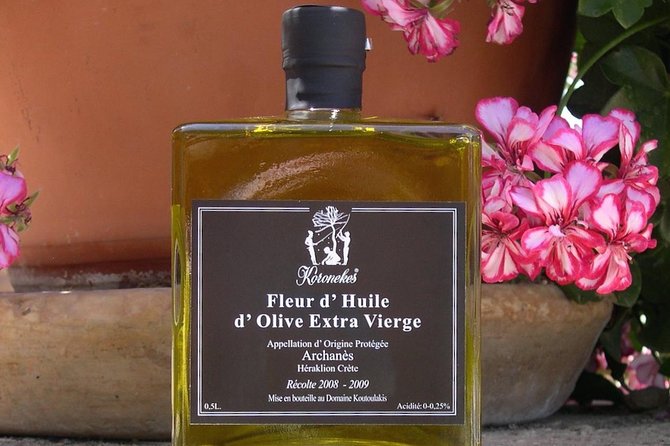
Olive oil is one of those products you may use every day without knowing much about it. A good tasting changes that. Instead of treating the oil as a souvenir sample, this visit shows you how farming, harvesting, machinery, and storage affect what reaches your plate.
The setting helps. You begin in a courtyard surrounded by olive trees, not in a generic shop built only for tastings. That gives the visit a useful sense of place. You are in the same part of Crete where olives are grown, processed, and sold.
The hosts also focus on practical information. You’ll hear about organic olive tree farming, then move into the mill to see how production works. The explanation covers first cold pressing and the more modern cold extraction process, which uses a centrifuge.
That comparison matters because olive oil labels can sound technical. After this visit, terms such as extra virgin, first cold pressed, and cold extracted will have more meaning. You can also ask about the differences between the oils in front of you, rather than trying to make sense of a label in a supermarket.
Starting among the olive trees in Epano Archanes
The meeting point is Koronekes Olive Mill in Epano Archanes, postal code 701 00. There is no street name given for the address, so I would save the meeting point carefully before setting out and allow enough time to find the mill.
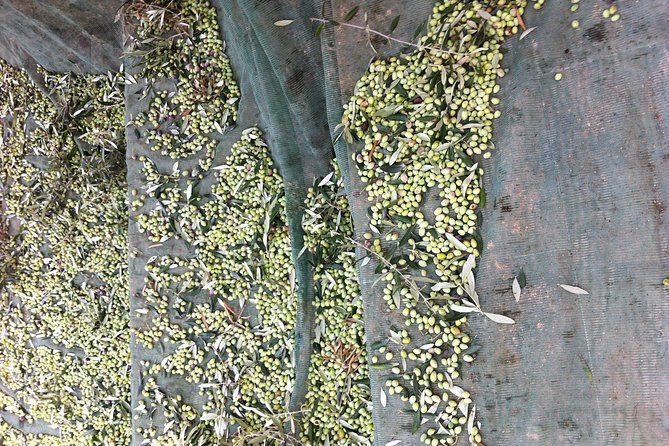
The visit begins in the courtyard. This first section introduces organic olive farming and places the production process in context. You are not simply tasting a finished product. You are looking at the trees and hearing how the raw olives begin their journey.
I like this opening because it keeps the subject grounded. Olive oil can seem like a polished food product once it is in a bottle, but the quality starts with the trees and the handling of the fruit. The courtyard gives the hosts room to explain that connection before you see the machinery.
The visit is offered in English. The English-language explanations have been described as clear, and the format encourages questions. That is useful if you want more than a quick tasting. You can ask about production methods, the qualities of the oil, or the difference between flavored oils and plain extra virgin oil.
More Food Tours in Crete
- Crete: Sunset or Morning Quad with Local Products Tasting
★ 4.9 · 1,135 reviews - Crete: Quad Safari, Olive Mill with Tasting & Ghost Village
★ 4.9 · 1,004 reviews - Crete: Full-Day Cretan Wines, Olive Oil, Raki and Food Tour
★ 5.0 · 264 reviews
Inside the mill: pressing and cold extraction
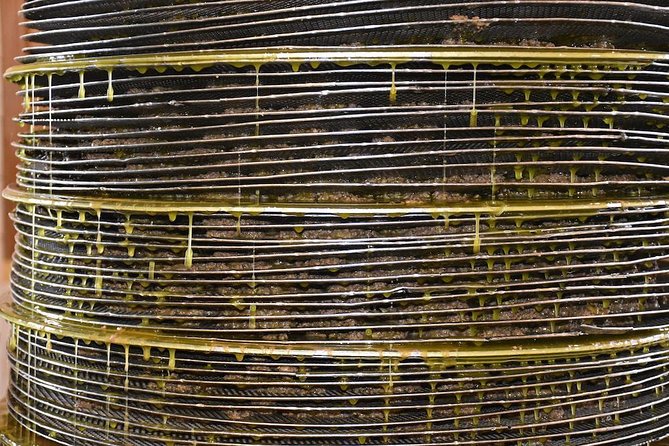
After the courtyard, you enter the olive mill. The hosts explain the first cold-press method and show you each machine. This is the most technical part of the visit, but it is also where the experience earns its price.
The tour also explains cold extraction, a modern process that uses a centrifuge. Seeing both approaches gives you a better way to understand how oil is separated from the olive paste. The tour presents the methods side by side, so you can follow the basic idea instead of hearing only a string of production terms.
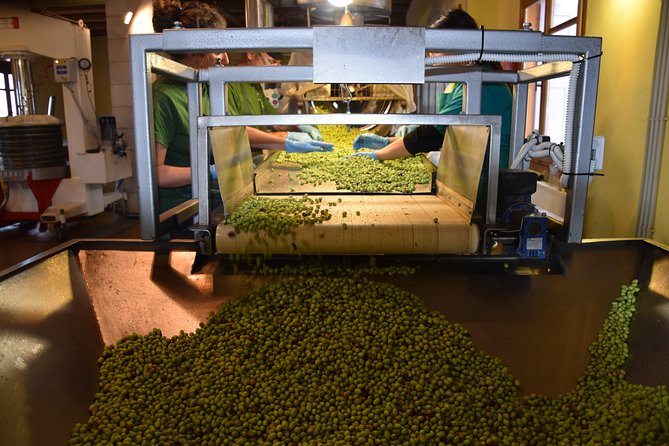
The distinction is especially useful for anyone who buys extra virgin olive oil at home. You will not become an olive-oil producer in an hour, but you will gain a clearer sense of why handling and production matter. The hosts also explain their own approach, including labor-intensive work such as hand sorting olives, according to the details shared during the visit.
That point gives the tour a personal feel. The mill is not presented only as a machine room. It reflects the choices made by the people producing the oil, including attention to sorting and quality.
A small drawback is that the time is limited. The listed visit takes about one hour, while the broader estimate is one hour to one hour and 20 minutes. If you enjoy agricultural technology or want a detailed lesson on every stage of production, you may wish it lasted longer. For most people, the short format is a benefit, especially when fitting the mill into a driving day.
Learning to taste extra virgin olive oil
The tasting is the part that turns the explanation into something you can use. You taste three qualities of extra virgin olive oil, which lets you compare them rather than judge a single sample in isolation.
The hosts explain how to taste olive oil and identify extra virgin olive oil. That practical lesson is valuable. You are encouraged to ask questions, and the private setup means the tasting can stay conversational rather than feeling like a formal lecture.
Pay attention to the differences between the three oils. You may find that one tastes softer, another more assertive, or that the aromas and finish vary. The point is not to pick a winner for everyone. It is to help you notice what you like and understand that extra virgin olive oil has its own range of flavors.
The tasting also includes two flavored oils. These are not the same thing as the three plain extra virgin oils, so it is useful to compare them separately. The flavored samples give you a chance to think about how olive oil works as an ingredient, not just as a product to sample from a spoon.
You also try a sweet vinegar and petimezi, a traditional grape syrup. These additions broaden the tasting beyond olive oil and give you a sweeter finish. Petimezi is particularly interesting for anyone who wants to sample a Cretan food product that is less familiar than olive oil.
I love this part because it connects the mill visit with everyday cooking. You can leave thinking about which oil you would use for bread, salads, vegetables, or a finishing drizzle. The tasting is not only about buying a bottle. It teaches you how to pay attention.
Why the private format changes the experience
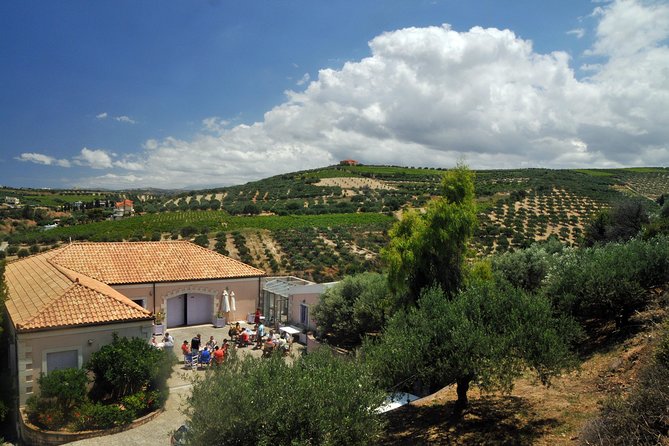
This is a private tour, so only your group participates. That matters most if you have questions or if members of your group have different levels of interest.
One person can ask about organic farming while another asks about the centrifuge. You can spend a little more time on the tasting if that is the part you care about, or keep the visit moving if you have a full day of sightseeing ahead.
The private format is also helpful for families and small groups. Most people can participate, and service animals are allowed. The activity is not described as physically demanding, so the main requirement is simply being able to take part in the courtyard, mill, and tasting.
There is one trade-off: private does not mean long or highly customized in every detail. The visit follows a clear path through the courtyard, mill, and tasting. You get personal attention, but you are still working within the scheduled one-hour format.
More Olive Oil Tours in Crete
- The Terra Creta Olive Oil Experience Tour
★ 4.7 · 344 reviews - Crete Wine and Olive Oil Tour
★ 5.0 · 272 reviews - Cretan Wines & Olive oil tour – The treasures of Crete
★ 5.0 · 147 reviews - Moires: Cooking Class and Olive Oil Tasting at a Family Farm
★ 5.0 · 93 reviews
A smart stop during a drive south of Heraklion
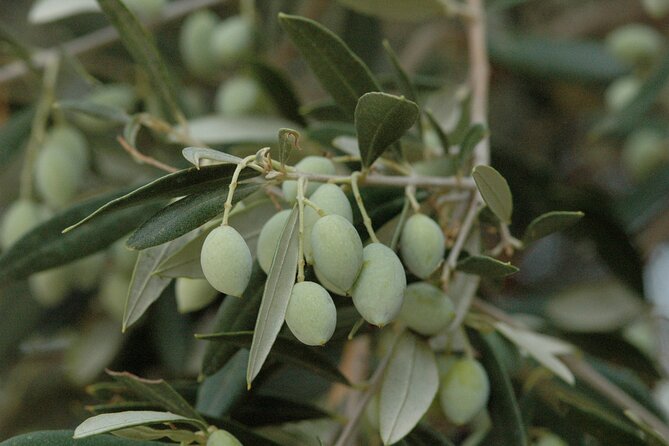
Koronekes Olive Mill fits well into a day exploring the olive and wine-growing area south of Heraklion. The experience itself ends back at the meeting point, so it does not provide transportation to another sight.
That makes your own route important. You can plan the mill as a focused stop rather than treating it as a full-day activity. With the tour lasting about an hour to an hour and 20 minutes, it leaves time for other stops, though you should include extra time for getting to and from Epano Archanes.
I would choose a tour time that gives you breathing room. The experience offers different start times, which makes it easier to fit around a driving itinerary. Still, avoid booking it so tightly against another reservation that a small delay becomes a problem.
The setting also gives you a welcome change from busy town sightseeing. You are surrounded by olive trees, then inside a working production space. That combination makes the visit feel more connected to Crete’s food culture than a standard retail tasting.
Is $19.36 a fair price?
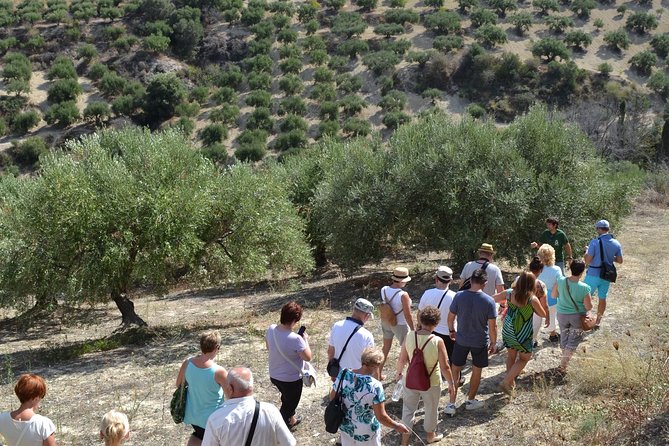
At about $19.36 per person, this is a modestly priced food experience. The value comes from getting both a production explanation and a tasting, rather than paying only for samples.
You are paying for a private visit, English-language guidance, access to the mill, an explanation of two production methods, and several tastings. Three extra virgin olive oils alone give you a useful comparison, while the flavored oils, vinegar, and petimezi add variety.
The price looks strongest for people who are curious about olive oil but do not want to spend half a day on a food tour. You get a focused lesson in roughly an hour. That makes it easy to add to a wider Crete itinerary.
If your main goal is a large meal, extensive winery-style hospitality, or a long farm visit, this will feel more limited. It is a tasting and mill tour, not a full culinary day. For the price and duration, that narrower focus is reasonable.
Who will enjoy this mill visit most
I would recommend this experience to several kinds of visitors:
- Food-minded visitors who want to understand a central Cretan ingredient.
- Drivers exploring near Heraklion who need a short, worthwhile stop.
- Small groups and families who value private attention.
- Home cooks who want to improve their ability to compare olive oils.
- First-time olive oil tasters who need a simple introduction to tasting.
- Repeat visitors to Crete looking for a local food experience beyond the main archaeological sites.
It may be less suitable if you want a long farm walk, a full meal, or detailed instruction lasting several hours. The experience is compact. Its strength is that it uses that time well.
The friendly setting adds to the appeal. The hosts clearly care about explaining what extra virgin olive oil should taste like, and the visit has a relaxed human touch. Even the mill’s friendly dog has become part of the welcome, though the tour itself remains focused on olive production and tasting.
Booking, timing, and cancellation details
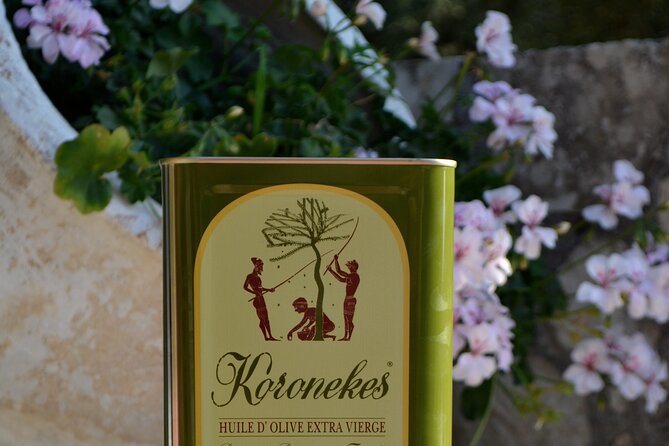
You can choose from different tour times, and confirmation is received when you book. The activity is offered in English and uses a mobile ticket.
The meeting point is Koronekes Olive Mill, Epano Archanes, 701 00, Greece. The tour ends at the same place. Since no street name is provided, check the exact meeting details before leaving and do not assume the mill is in the center of a clearly marked town district.
The activity is typically booked around 19 days ahead, so I would reserve early if your Crete schedule is fixed. That is especially sensible if you need a particular time during a driving day.
Free cancellation is available up to 24 hours before the local start time for a full refund. Cancellations or changes made less than 24 hours before the start are not accepted for a refund.
Should you book the Koronekes olive oil tour?
Book it if you want a short, personal look at how Cretan olive oil is produced, with enough tasting to make the lesson practical. The private format, clear English explanations, and comparison of first cold pressing with centrifuge-based extraction give the visit more substance than a simple shop stop.
I would especially choose it during a driving day south of Heraklion or around Epano Archanes. At $19.36, the combination of mill access, instruction, and seven tasting items offers solid value.
Skip it only if you want a long agricultural outing or a full meal. For everyone else, this is a compact way to connect Crete’s olive trees with the oil on your table.
FAQ
Where does the olive oil tour take place?
The tour takes place at Koronekes Olive Mill in Epano Archanes, Greece, postal code 701 00.
How long does the experience last?
The visit takes about one hour, with the estimated duration listed as one hour to one hour and 20 minutes.
How much does the tour cost?
The listed price is $19.36 per person.
Is this a private tour?
Yes. Only your group participates in the activity.
What language is the tour offered in?
The tour is offered in English.
What will I see during the visit?
You will begin in the courtyard among olive trees, learn about organic olive farming, enter the olive mill, and see the machines used in production.
What will I taste?
The tasting includes three qualities of extra virgin olive oil, two flavored oils, a sweet vinegar, and petimezi, a grape syrup.
Does the tour include transportation?
No transportation is listed. You meet at Koronekes Olive Mill, and the activity ends back at the same meeting point.
Can I cancel for a full refund?
Yes. You can cancel at least 24 hours before the local start time for a full refund. Changes or cancellations made less than 24 hours before the start are not accepted for a refund.
New on the Crete shelf
- Crete Private Tour: The Secrets of Wine, Olives & Honey★ 4.5 · 59 reviews
- Private tasting of 6 cretan wines in Fres village★ 5.0 · 32 reviews
- Moires: Cooking Class and Olive Oil Tasting at a Family Farm★ 5.0 · 93 reviews
- Lychnostatis Open Air Museum: Entry Ticket with Add-Ons★ 4.8 · 49 reviews
- Crete: Traditional Dance Show and Buffet Dinner with Wine★ 4.1 · 34 reviews
- Crete: Farm Visit with Cheese Tasting and Milking Experience★ 4.9 · 34 reviews
- Self-Drive Jeep Safari to South Coast, Palm Beach & Canyons★ 4.9 · 147 reviews
- e-Bike Guided Tour to Myli Gorge with Lunch included★ 4.8 · 66 reviews
Olive Oil Tours, compared.
Knossos-Zeus Cave -Old Traditional Villages-Olive Oil Factory
Read our verdict →
The Governor’s Olive Mill Tour with Olive Oil Tasting
Read our verdict →
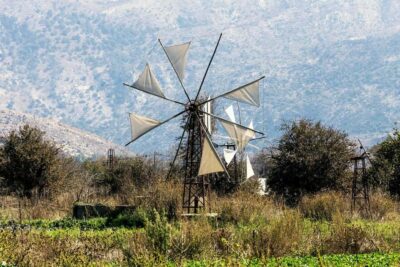
Road-trip to Lasithi Plateau & Olive Mill Farm
Read our verdict →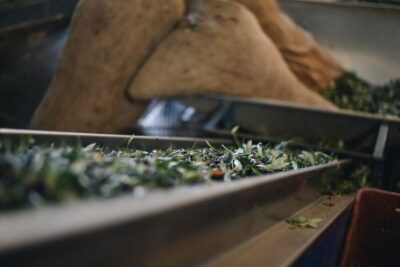
Olive Farm Tour with Tasting of Local Delicacies
Read our verdict →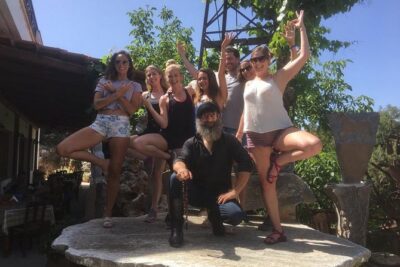
Zeus Cave, Lassithi Plateau, Olive Oil Factory, Kritza, Pottery
Read our verdict →
Browse the lists this tour appears in