
Review · SIGHTSEEING TOURS
Panorama of Athens in 6 hours
The smart idea here is simple: one private vehicle connects nearly every major Athens sight in five to six hours. You can move from the Acropolis to the Panathenaic Stadium, Lycabettus Hill, Monastiraki, and the Ancient Agora without wrestling with taxis or public transport.
I like the flexible, personal service, especially when a driver such as Andrew, Andreas, Evangelos, or Alex adjusts the day to your interests and mobility. I also like the hotel pickup and the chance to reach the Acropolis slopes by vehicle before spending time on foot. The main catch is important: your driver is not a licensed guide inside the archaeological sites, and admission tickets are not included.
Key points to know before booking
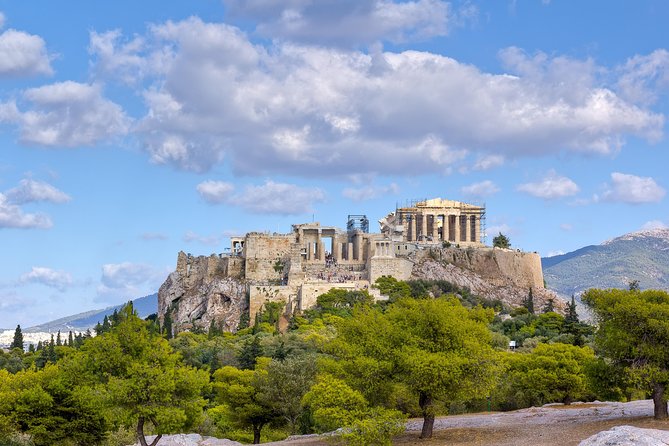
- The Acropolis is the main event: Allow about an hour for the hill, monuments, and city views, with tickets purchased ahead of time.
- You see a lot without changing vehicles: The route links ancient ruins, modern Athens, shopping streets, and high viewpoints.
- Private means flexible: The driver can tailor stops, explain what you are seeing, and adjust the pace for your group.
- The vehicle matters: Transport is provided in an air-conditioned SUV Kodiaq or a luxurious vehicle and C Class taxi.
- The price works best for three people: At $459.74 per group of up to three, the cost is easier to justify when shared.
- Plan for walking: The Acropolis and several sites require time on foot, and the tour calls for moderate physical fitness.
A fast, personal way to get Athens under your belt
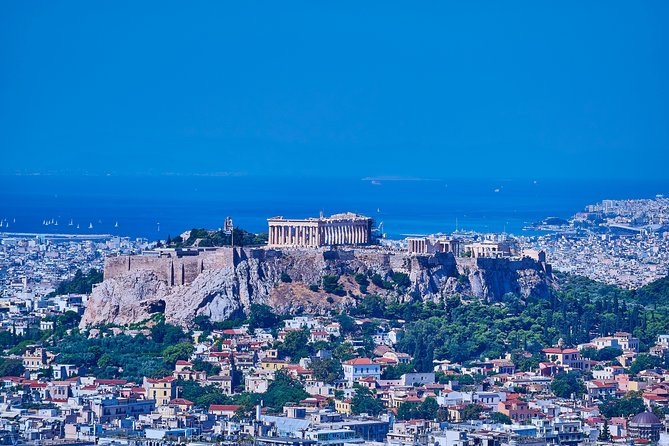
Athens can feel spread out at first. The Acropolis rises above the center, the Panathenaic Stadium sits to the east, Lycabettus Hill overlooks the city from another direction, and the Ancient Agora lies below the Sacred Rock. This tour handles those distances by private car, leaving you with more time for sights and less time figuring out routes.
You spend roughly five to six hours with only your group in the vehicle. That makes a real difference if you are arriving from a cruise ship, have one free day, or want a broad first look before returning for longer visits.
The service has received a perfect 5 rating from 139 reviews, with 100 percent recommending it. The strongest praise centers on the drivers: Andrew, Andreas, Evangelos, and Alex are described as friendly, patient, flexible, clear in English, and good at bringing Athens past and present into the conversation.
That does not turn the tour into a formal guided archaeological visit. Your driver can explain the city and help with practical details, but a licensed guide is not included inside the monuments. Think of this as a private sightseeing drive with historical commentary, not a traditional guided tour with a historian walking beside you at every ruin.
A few more Athens options worth putting side by side
- Athens: Acropolis & up to 5 Archaeological Sites Combo Pass
★ 4.4 · 12,619 reviews - Athens: Acropolis Ticket with Optional Audio or Live Guide
★ 4.2 · 11,055 reviews - Athens: Acropolis, Parthenon & Acropolis Museum Guided Tour
★ 4.8 · 9,316 reviews
The Acropolis gives the tour its backbone
The tour begins at the Acropolis, the naturally fortified hill that shaped Athens for centuries. From here, you walk through the heart of ancient Athenian power, religion, art, and civic life.
The route takes in the Propylaea, the monumental entrance built during the great fifth-century BC building program. You also see the Temple of Athena Nike, the Erechtheion, and the Parthenon, with views stretching across Athens toward the port of Piraeus.
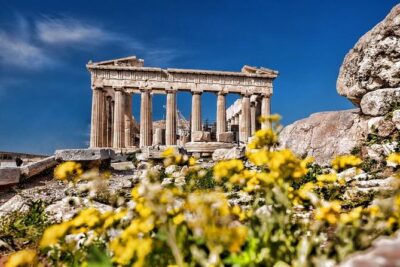
The Parthenon deserves your best attention. Built between 447 and 438 BC for Athena Parthenos, it was the grand expression of Athens at the height of its power. Even with restoration work and crowds, its scale and position on the hill make it the clear centerpiece.
The Erechtheion offers a different mood. Its complex design served several sacred purposes, including worship connected with Athena, Poseidon-Erechtheus, Hephaestus, and Boutes. The temple’s unusual shape and the famous Caryatid porch make it one of the most memorable stops on the hill.
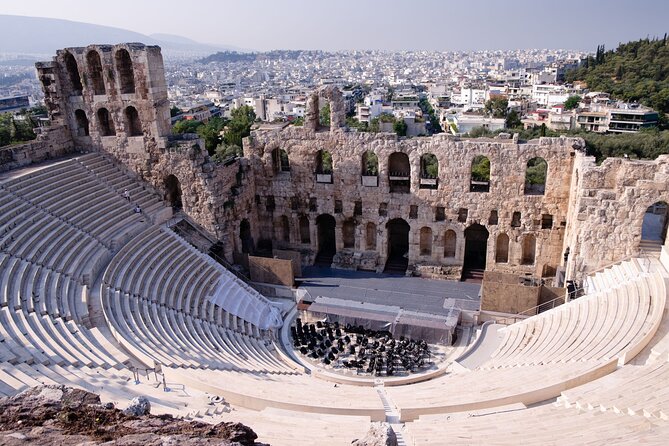
Below the Acropolis, you can see the Theatre of Dionysus, where works by Aeschylus, Sophocles, Euripides, and Aristophanes were performed. The Odeon of Herodes Atticus, a stone Roman theatre on the southwest slope, is another striking sight. You also see the Areopagus, or Mars Hill, from the Acropolis area.
The schedule allows about one hour here. That is enough for a focused visit, but not enough for a slow archaeological study. Buy the Acropolis and slopes ticket in advance, as the tour price does not include it. The stated cost is €30 per person, with free admission up to age 18, according to the tour details.
Because your driver cannot accompany you as a licensed guide inside the site, you should decide how much explanation you need. If you want detailed interpretation of every building, hire a licensed guide separately. If you mainly want the monuments, views, and freedom to explore at your own pace, the arrangement works well.
Propylaea, Athena Nike, and the walk into antiquity
The Propylaea is more than a gateway. Earlier entrances occupied the site, but the monumental version you see today was part of the Periclean building program and was erected between 437 and 432 BC under the architect Mnesicles.
The Temple of Athena Nike is small compared with the Parthenon, yet its position at the entrance gives it unusual importance. Built around 420 BC, it is identified as the earliest fully Ionic temple on the Acropolis.
You may spend only a few minutes at each monument because the overall tour covers so much ground. I would resist rushing the entrance area. It helps you understand that the Acropolis was not one building, but a sacred hill filled with structures from different periods and purposes.
The Temple of Olympian Zeus and the modern city center
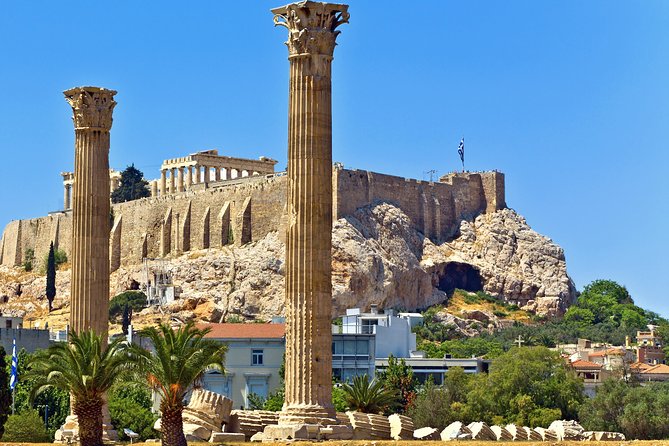
The route continues to the Temple of Olympian Zeus, also called the Olympieion. Its surviving columns give you a sense of the temple’s huge scale, even though the original structure was far larger.
Construction began in the sixth century BC, but the temple was not finished until the second century AD under the Roman emperor Hadrian. That long building period tells you something useful about Athens: its monuments often combine Greek religious traditions with later Roman ambitions.
The tour does not list a long walking time here, so expect a sightseeing stop rather than an extended archaeological visit. Your driver can position you for views and photographs, while you decide if you want to pay for entry to any site.
Close by, and nothing like it:
- Athens: Acropolis and Parthenon Guided Walking Tour
★ 4.6 · 5,882 reviews - Athens, Piraeus, and Coastline: Blue Hop-On Hop-Off Bus
★ 3.9 · 4,849 reviews - Greek Food Walking Tour in Athens
★ 5.0 · 4,740 reviews - Athens: City Sightseeing Hop-On Hop-Off Bus Tour
★ 4.3 · 4,520 reviews
The Evzones and the changing of the guard

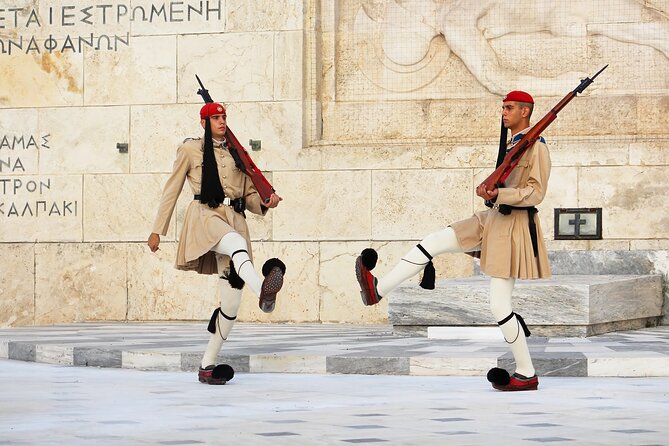
The changing of the guard at the presidential mansion offers a welcome change from ancient stone. The Evzones wear distinctive ceremonial uniforms and perform the change every hour.
The scheduled stop lasts about 15 minutes and is free. Timing matters, so tell your driver if this is a priority. The route includes the general experience at the presidential mansion, but the information does not promise the larger Sunday ceremony or a specific hour.
I like this stop because it gives the day a connection to present-day Greece. After temples and theatres, you see a living national tradition carried out in the center of Athens.
Lycabettus Hill delivers the broad city view
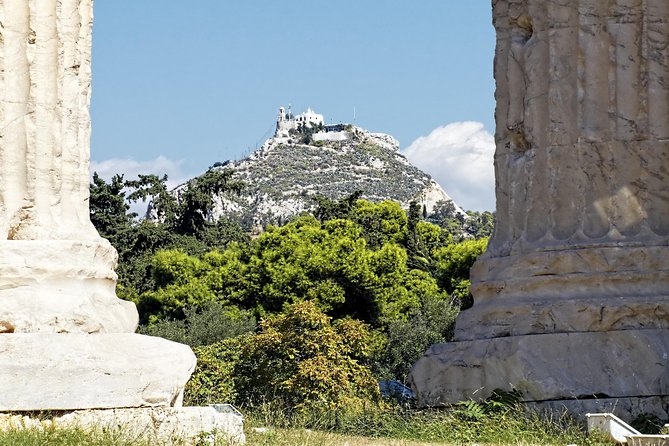
Lycabettus is the highest point in central Athens, rising 277 meters above the city. The stop lasts about 15 minutes, giving you a quick chance to look across Athens and orient yourself.
This is especially useful early in your visit. From a high viewpoint, the Acropolis no longer feels like an isolated monument. You can see how it relates to the surrounding neighborhoods and the wider city.
Do not expect a long hill walk within this schedule. The tour promises a stop at the hill, but not a separate climb to the summit or a specific transport method. Ask your driver what the timing and access will be on your day.
The Panathenaic Stadium connects ancient and modern sport
The Panathenaic Stadium is one of the most unusual stops because it is not simply a field of ruins. The marble stadium preserves the form of the ancient fourth-century BC structure and was renovated for the first modern Olympic Games in 1896.
The tour allows about 15 minutes. That is enough for a quick look and photographs, though the entrance fee is extra. The stadium’s bright marble seating and long, narrow shape make it easy to understand even with only a brief visit.
I find this stop valuable because it ties ancient Athens to the modern Olympic movement. You are not just looking at broken columns. You are seeing a place still connected to a major event in modern history.
The Academy, University, and National Library
A drive along central Athens includes the Academy of Athens, the University of Athens, and the National Library of Greece. These buildings show the city after independence, when Greece was building modern institutions alongside its ancient monuments.
The Academy was founded by constitutional decree in 1926 as a center for sciences, humanities, and fine arts. Its building copies the Propylaea of the Acropolis, creating a deliberate link between modern public life and classical architecture.
The University of Athens was founded in 1837 by King Otto and was the first university in the newly liberated Greek state and the surrounding area of Southeast Europe. The National Library, founded by Ioannis Kapodistrias in 1832, preserves Greek cultural and intellectual records.
These are primarily drive-by or exterior sights in the supplied route. They are useful additions, but they do not replace time at the Acropolis or Agora. If your group cares about architecture and modern Greek history, ask the driver to slow down or stop for photos where possible.
Monastiraki and Plaka show Athens at street level
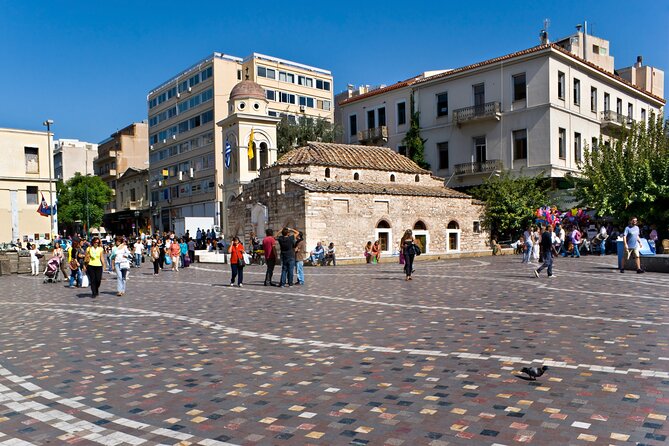
Monastiraki Flea Market brings you down from the hills and monuments into the daily center of Athens. The stop lasts about 30 minutes, and admission is free.
You can browse small shops and market stalls around Monastiraki Square, though the exact shopping experience will depend on the day and time. This is a good place to see the city as a commercial center rather than only an archaeological site.
Nearby Plaka offers a more residential and village-like feel beneath the Acropolis. Its narrow streets, neoclassical buildings, cafés, souvenir shops, and museums make it a pleasant place to walk. The scheduled stop is only about 10 minutes, so consider it a short orientation rather than a full neighborhood visit.
If you want lunch, ask your driver for a recommendation. Alex is specifically praised for knowing where to park and where to eat, and one private visit included lunch at a Greek grill. That example does not make lunch part of the tour, but it shows how the private format can help you build a meal into the day if time allows. Food and drinks are not included.
The Ancient Agora is where Athens worked
The Ancient Agora was the political, commercial, administrative, social, religious, and judicial center of Athens. It helps explain the city better than a collection of isolated temples because this was where public life happened.
The visit is scheduled for about 20 minutes, followed by the Stoa of Attalos for about 30 minutes. Entrance fees are extra. The Stoa dominates the north side of the Agora and now houses the main museum for the site.
The Temple of Hephaestus receives another 15 minutes. It is dedicated to Hephaestus, the god of fire, and is among the best-preserved ancient temples in Greece.
This section of the tour rewards context. The Parthenon shows the public face of Athenian power, while the Agora shows how the city functioned. Still, the time is tight. If you want to examine the museum and temple carefully, you may need a separate visit.
What the private vehicle adds
Hotel pickup and drop-off are included, along with bottled water and private air-conditioned transport. The vehicle may be a Kodiaq SUV or a luxurious vehicle and C Class taxi.
The private format matters most when your group has different needs. One account describes Andrew helping a person with a broken knee get as close as possible to the sights and assisting with access to the Acropolis elevator. That kind of help cannot be guaranteed, but it shows why private transport can be useful when mobility is a concern.
The tour requires moderate physical fitness. You still walk on the Acropolis and around archaeological areas, and the driver cannot remove every uneven surface or uphill section. Contact the provider before booking if your group needs specific accessibility arrangements.
You also avoid sharing the vehicle with strangers. That gives you room to ask questions, skip a stop, or spend a little more time at a favorite sight, subject to the fixed five to six-hour window.
Is $459.74 good value for three people?
The price is $459.74 per group of up to three people. Split three ways, that is about $153 per person before admission tickets, food, and drinks. For one person, it is expensive. For three people who value a private car and hotel pickup, it becomes easier to justify.
You are paying for transport, a driver with historical knowledge, bottled water, and the convenience of covering a wide section of Athens in half a day. You are not paying for a licensed guide inside the monuments, airport transfers, meals, or entrance tickets.
The best value comes when you have limited time or do not want to organize several separate rides. If you are staying in Athens for several days and enjoy walking or public transportation, you could visit many central sights for less money. This tour earns its price through speed, privacy, and flexibility.
Who should book this Athens tour?
I would choose this for a couple or family of up to three with a short stay, a cruise stop, or a strong desire to see the major sights in one outing. It also suits anyone who prefers a car between sites and wants hotel pickup rather than a meeting point.
It is a good match for people who want practical historical commentary but do not need a formal guide at every monument. The drivers are praised for explaining Athens, tailoring the route, helping with photographs, and answering questions.
I would hesitate if your main goal is detailed archaeology. The Acropolis, Agora, and Stoa all deserve more time than this route can provide. In that case, consider using this tour for orientation and transport, then return later with a licensed guide.
The tour is usually booked well ahead, with an average booking lead time of 147 days. That suggests planning early if your dates are fixed. You can cancel for a full refund up to 24 hours before the start time, while poor weather may lead to a new date or full refund.
Should you book Panorama of Athens in 6 hours?
Book it if you want a private overview with strong transport and a flexible driver, especially when three people can share the cost. The Acropolis, stadium, guard change, Lycabettus view, Agora, Plaka, and Monastiraki make a sensible first-day route.
Skip it if you want long, detailed visits at each site or if the extra admission costs push the budget too high. For most short stays, though, this is an efficient way to get your bearings, see Athens’ major landmarks, and decide where to return for a slower look.
FAQ
How long does the Panorama of Athens tour last?
The experience lasts approximately five to six hours.
How many people can join the private tour?
The price covers one private group of up to three people.
Is hotel pickup and drop-off included?
Yes. Hotel pickup and drop-off are included. Airport pickup and drop-off are not included.
Are Acropolis entrance tickets included?
No. Entrance tickets are not included. The tour details state that the Acropolis and slopes ticket costs €30 per person and should be purchased in advance. Admission is free for people up to age 18.
Is a licensed tour guide included?
No. The included drivers have historical knowledge but are not licensed to accompany you inside the archaeological sites.
What happens if bad weather cancels the tour?
If poor weather causes cancellation, you will be offered a different date or a full refund. For other cancellations, you must cancel at least 24 hours before the start time to receive a full refund.
New on the Athens shelf
- Acropolis of Athens, Parthenon and Acropolis Museum private tour with dinner★ 5.0 · 77 reviews
- Small-Group Wine Tour in Athens with Tasting★ 5.0 · 33 reviews
- Private Athens Transfer Airport/Port -Greek Tours-Hourly service★ 5.0 · 88 reviews
- VIP Private Guided Tour of Athens Acropolis & Plaka in a Sidecar★ 5.0 · 108 reviews
- Athens Moonlight Waling Tour with Drinks and Meze Dishes★ 5.0 · 259 reviews
- Private Athens Landmarks Layover Tour★ 4.5 · 41 reviews
- Departure Transfer from Athens City to Athens Airport★ 5.0 · 41 reviews
- Classic Athens Food Tour with Local Drink & Market Visit★ 5.0 · 34 reviews
Sightseeing Tours, compared.


Speedboat Trip to Symi with Free Time to Explore
Read our verdict →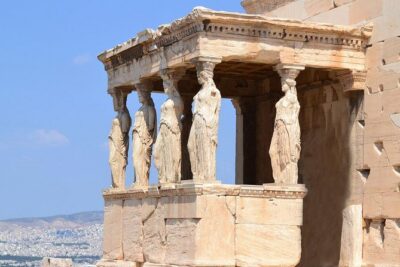
Athens & Acropolis Highlights: Greek Mythology Small-Group Tour
Read our verdict →
Acropolis and Mythology Highlights Small Group Tour
Read our verdict →
City Sightseeing Athens, Piraeus & Beach Riviera Hop-On Hop-Off Bus Tours
Read our verdict →
Explore Ionian Sea with its 50 shades of blue on Makedonia Palace
Read our verdict →
Peloponnese Highlights Day Trip and V.R. Audio Guide
Read our verdict →Browse the lists this tour appears in