
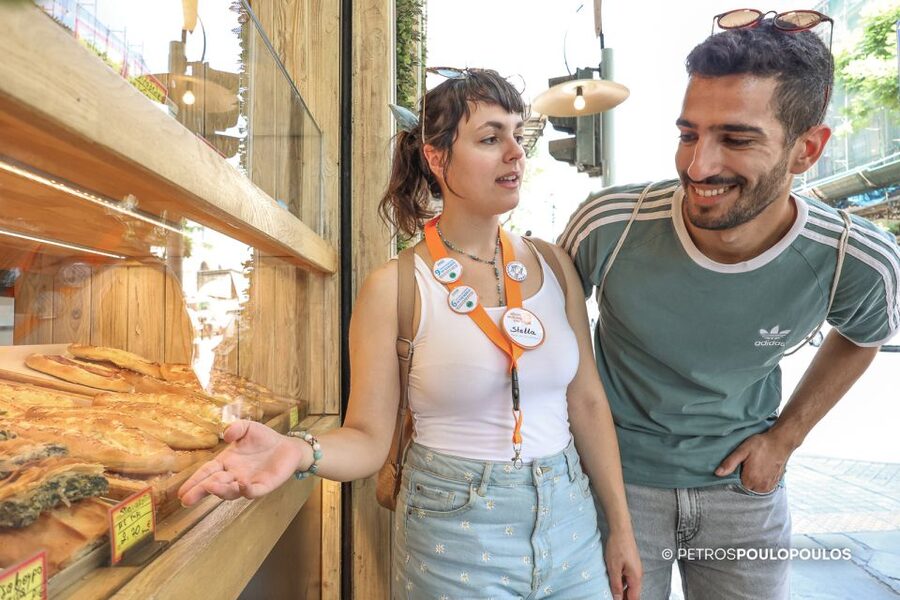
Review · FOOD & DRINK
Athens: the Original Greek Food Guided Walking Tour
Athens reveals itself especially well through food. This three-hour walk links street stalls, specialty shops, Monastiraki, and the Varvakios Central Market, with generous tastes of souvlaki, filo pies, feta, olives, and sweets along the way. You get more than a meal: you see where Athenians shop and hear how food fits daily life.
I like the wide range of samples, from savory spanakopita and fresh-grilled meat to honey-soaked loukoumades. I also like the practical orientation, including a city map, guide magazine, neighborhood suggestions, and tips you can use for the rest of your stay. The main drawback is that the Central Market is closed on afternoon and Sunday departures, and the route uses narrow streets, cobbles, and uneven pavement.
Key points at a glance
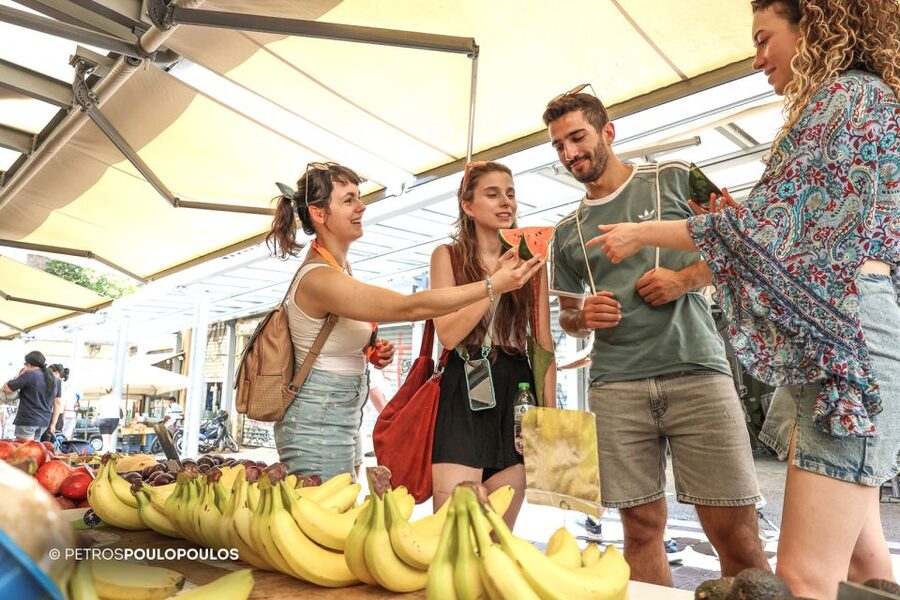
- Varvakios Central Market: See Athens meat, fish, cheese, and produce market when booking a morning tour.
- A full Greek tasting: Try souvlaki, spanakopita, feta, olives, bougatsa, nuts, figs, dates, and loukoumades.
- A satisfying three hours: Plan on substantial portions and skip breakfast before setting out.
- Food with context: Learn how Greek customs, regional products, and the Mediterranean diet connect.
- Useful first-day orientation: Finish in Psyri with a map, magazine, and suggestions for places to eat.
- Small-group or private format: Choose the format available for your date and meeting point.
A Greek breakfast that keeps going
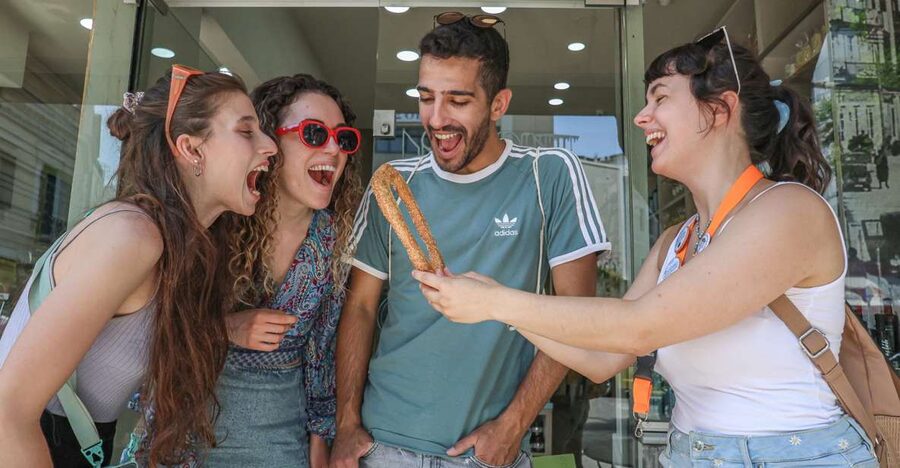
This is not a quick stop for one pita and a coffee. The food arrives in a steady series of tastes, and several past itineraries have included enough food to replace breakfast and lunch for many people.
You may begin with a simple Greek breakfast item such as koulouri, a ring-shaped bread covered with sesame seeds. From there, the route can move into bakeries, delis, specialty food shops, and street-food counters. The exact order of stops can vary, but the aim is clear: show you the everyday foods that Athenians buy, not just the dishes prepared for visitors.
Come hungry. That advice appears again and again for good reason. Tastings can include spanakopita, locally made filo, feta, olives, nuts, figs, dates, and a meat or chicken souvlaki. Dessert may arrive in the form of loukoumades, small fried dough pieces covered with honey, or bougatsa, a layered filo pie often associated with northern Greece.
The portions are generous enough that you should avoid a large breakfast. If you have dietary needs, vegetarian items specifically included are spanakopita and loukoumades. The listed souvlaki comes with pork or chicken. Ask about any other requirements before booking, since the supplied information does not promise a fully customized menu.
More Food Tours in Athens
- Greek Food Walking Tour in Athens
★ 5.0 · 4,740 reviews - Athens: Street Food Tasting Tour
★ 4.9 · 2,557 reviews - Small Group Greek Traditional Food Tour in Athens 20+ Tastings
★ 5.0 · 1,759 reviews
Starting at Syntagma and walking into local Athens
The usual starting point is near Starbucks at Syntagma Square, though the meeting point depends on the option you book. Syntagma is easy to recognize and gives the tour a central beginning, but allow time to find the precise meeting spot.
The first part of the walk uses city streets and takes about 10 minutes. That short distance matters because the experience is not built around a bus or a string of distant restaurants. You move through central Athens on foot, shifting from public squares to ordinary shopping streets and food businesses.
I like this format for a first morning in the city. A local food expert can explain what you are seeing while also helping you get your bearings. Guides who have led this experience include Georgia, Lucy, Christina, Despina, Artemis, Vicki, Rena, and Orestes. The guide on your date will be different, but the repeated pattern is a warm, personal style with time for questions and local suggestions.
Do not expect a polished sightseeing route with every stop announced far in advance. The value lies in seeing working parts of Athens and learning how the food is bought, prepared, and eaten. The streets can be narrow, with cobblestones and uneven pavements. Comfortable shoes are essential, and this is not suitable for wheelchair users.
Varvakios Central Market: the food supply in plain view
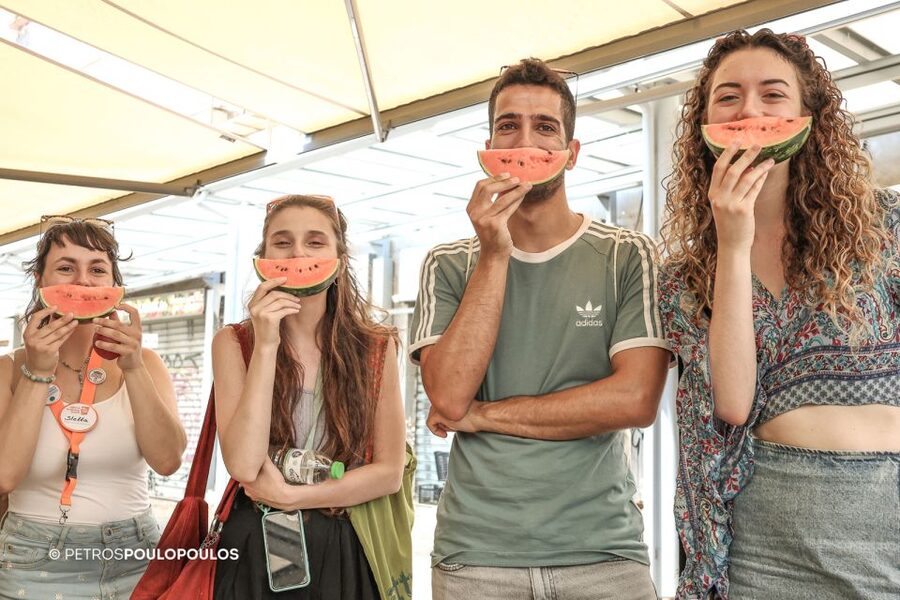
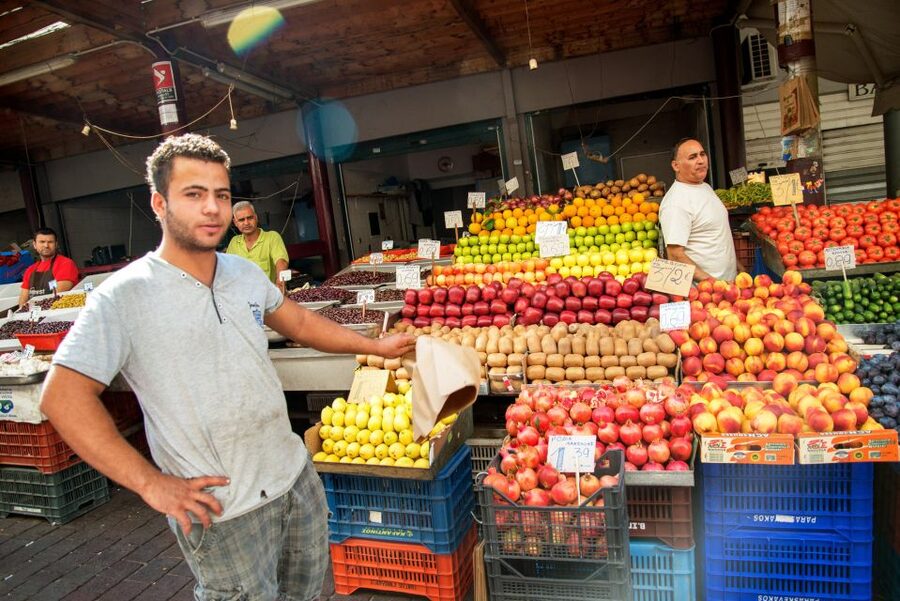
On morning departures, the route reaches the Central Municipal Athens Market, also called Varvakios. The market is one of the most useful stops because it shows food before it becomes a restaurant dish.
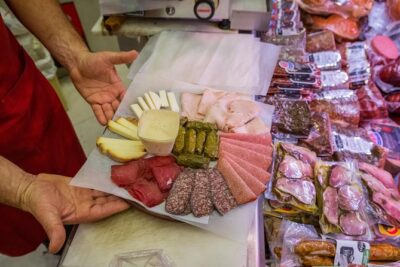
Inside, you can expect rows of meat, fish, cheese, and produce sold for local kitchens. The setting is active and direct, with vendors calling out and bargaining over the day’s goods. It is a working market rather than a staged food display, so it can feel noisy, crowded, and strongly scented.
Your guide helps turn the market into a lesson. You learn which products matter in Greek cooking and how the Mediterranean diet depends on fresh produce, olive oil, legumes, herbs, fish, dairy, and moderate portions of meat. The tour does not simply tell you that Greek food is healthy. It connects the idea to the ingredients you are looking at and tasting.
Specialty shops on both sides of Varvakios add another layer. Their displays can include spices, nuts, figs, dates, and many kinds of olives. These are good places to learn the difference between foods you may have seen in a supermarket and the way they are sold in Greece.
There is an important scheduling catch. Afternoon and Sunday tours do not visit Varvakios because the market is closed then. If the market is a major reason for booking, choose a morning departure and check the schedule carefully.
Monastiraki tastes, from filo to souvlaki
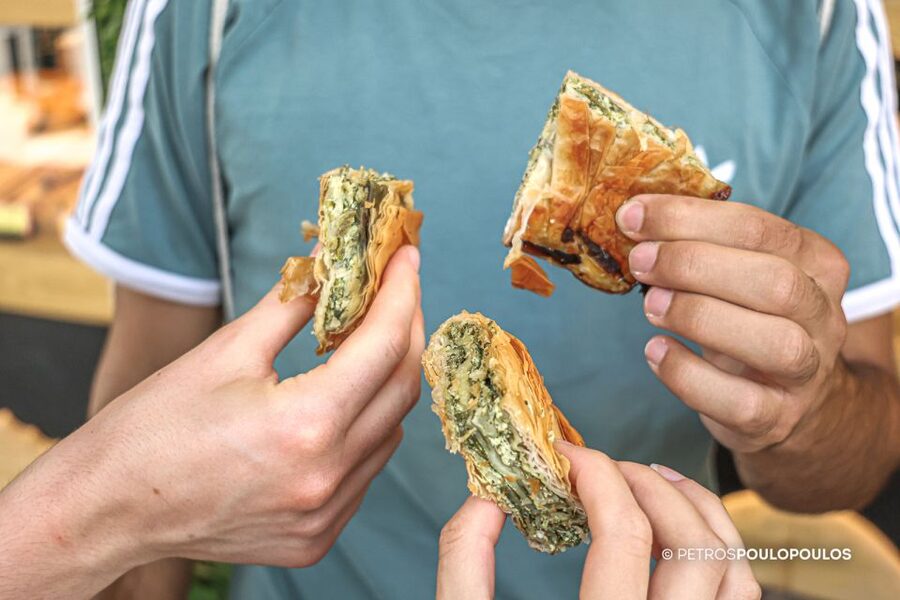
The route continues toward Monastiraki, with about 20 minutes of walking and food stops in the area. Monastiraki is one of central Athens’s best places for a first look at the city’s mix of shopping streets, old neighborhoods, food counters, and pedestrian lanes.
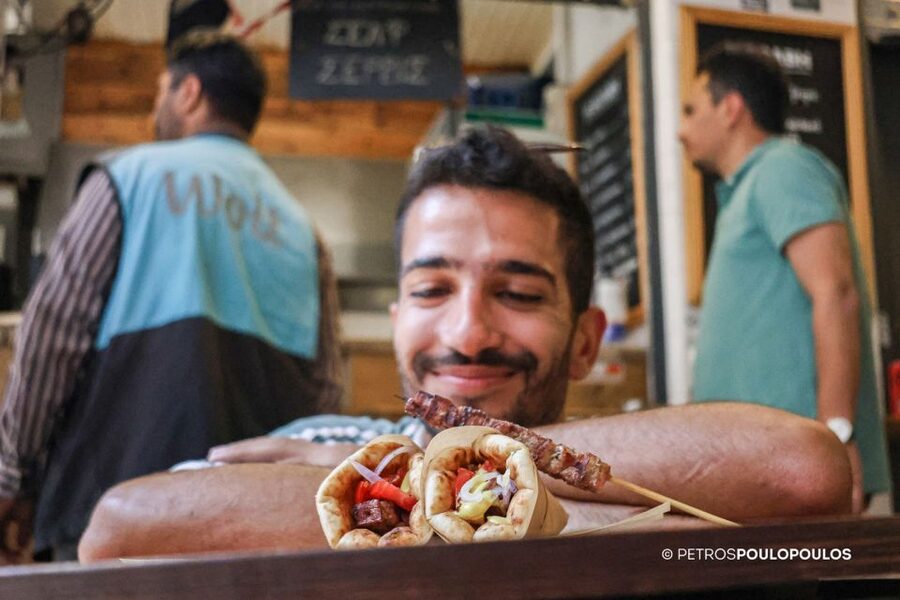
Here the tour focuses on tasting rather than just looking. Souvlaki is a key stop, served with pork or chicken. Fresh-grilled meat, bread, and the simple balance of herbs, vegetables, and sauce explain why this food is such a central part of Athens eating.
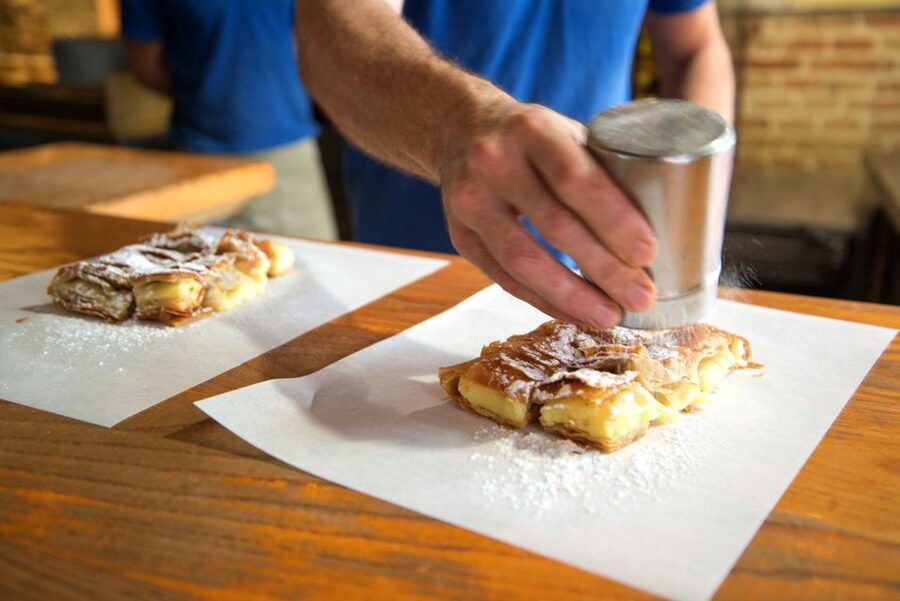
Filo is another important theme. You may taste spanakopita, the savory spinach pie, and bougatsa, a layered pastry with a crisp, delicate shell. These foods reward close attention to texture. The pastry is not merely a wrapper, and your guide can explain how regional habits shape the fillings and preparation.
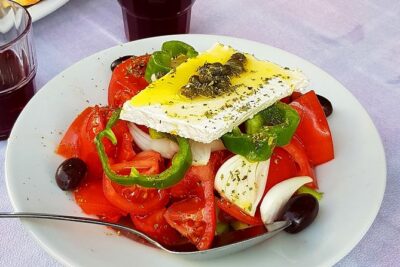
Feta and olives show the strength of simple Greek ingredients. The tour includes tastings of both, along with locally produced nuts, figs, and dates. I find this part especially useful because it gives you shopping ideas for later. If you are staying in an apartment, you can use the tour to decide which foods are worth buying for breakfast, a picnic, or a light evening meal.
The final sweet stop may be loukoumades. These honey-soaked dough treats are a fitting end to a walk that has emphasized modest ingredients used well. By this point, you may be full enough to share or take your time rather than eat every bite.
More Walking Tours in Athens
- Athens: Acropolis and Parthenon Guided Walking Tour
★ 4.6 · 5,882 reviews - Acropolis: Acropolis and Parthenon Guided Walking Tour
★ 4.7 · 3,442 reviews - Acropolis monuments & Parthenon Walking Tour with Optional Acropolis Museum
★ 5.0 · 2,678 reviews - Athens Acropolis and Parthenon Walking Tour
★ 4.5 · 1,355 reviews
Finishing in Psyri with more than a full stomach
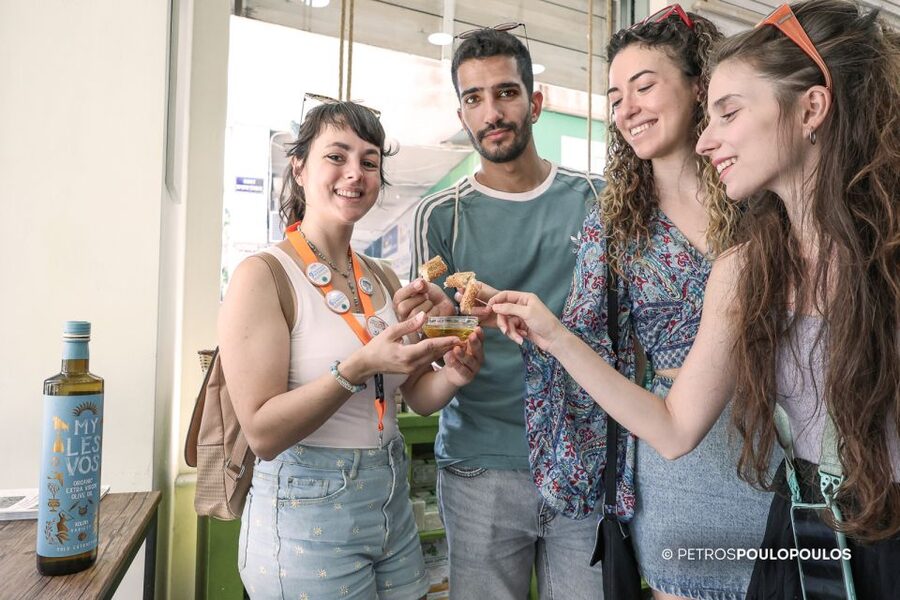
The tour ends in Psyri, not back at Syntagma. That makes the final location useful and slightly inconvenient at the same time.
The advantage is that you finish in an area with plenty of food and drink options nearby, and you can continue exploring central Athens on foot. You also receive an Athens guide magazine, an Athens map, and orientation tips. Guides have also offered restaurant, café, and bar suggestions tailored to what people wanted to do next.
The drawback is simple: you need to know where you are going after the tour. One past participant had trouble finding the starting place and another noted the importance of carrying a map because the tour does not return you to the meeting point. The map supplied during the experience helps, but keep your own navigation app available too.
Psyri is also a practical place to continue your day. You can use the guide’s suggestions, browse nearby streets, or head toward other central sights. The food walk works well as an early activity because it gives you a better sense of where to eat later, but it also fits travelers who want a relaxed midday plan.
What the $81 price really covers
At $81 per person, this is not the cheapest way to eat in Athens. You could buy a souvlaki and a pastry on your own for far less. The price makes more sense when you count the food variety, the three-hour guide service, the market orientation, the walking route, and the practical city information.
Included are the local food expert, walking tour, souvlaki, loukoumades, spanakopita, an Athens guide magazine, an Athens map, and city orientation tips. The experience also includes tastings of foods such as feta, olives, filo items, bougatsa, nuts, figs, and dates as described in the route.
Other drinks are not included, and hotel pickup and drop-off are not provided. Entry to attractions and sites is also not part of the experience. Since the tour is centered on food businesses and public streets, that is not a major weakness, but you should not expect museum admission or a private transfer.
I consider the price reasonable for a first day in Athens if you are interested in food and want personal guidance. It is less compelling if you only want a cheap lunch, dislike walking, or plan to spend the morning at Varvakios on your own.
How the guide shapes the experience
The guide matters a great deal here. The strongest pattern across the supplied comments is not a particular dish, but the way guides explain food while keeping the group moving and involved.
Georgia is repeatedly described as funny, patient, warm, and able to give useful restaurant and café advice. Lucy has led guests through the history of foods such as souvlaki and spinach pie, and one particularly useful habit was giving the group a written list of places visited. Christina has been praised for explaining the origins and background of many foods while keeping the route well organized.
Other named guides include Despina, Artemis, Vicki, Rena, Marianna, Basilikh, Evelina, and Orestes. The details of your experience depend on who leads your departure, but the tour is designed around a live English-speaking guide rather than an audio recording or a printed route.
Private and small-group options are available. A small group usually gives you more room to ask about ingredients, shopping, and local customs. A private option can be useful if your party wants a slower pace or has particular interests, though the information provided does not promise a different menu or extra stops.
Who should book this food walk
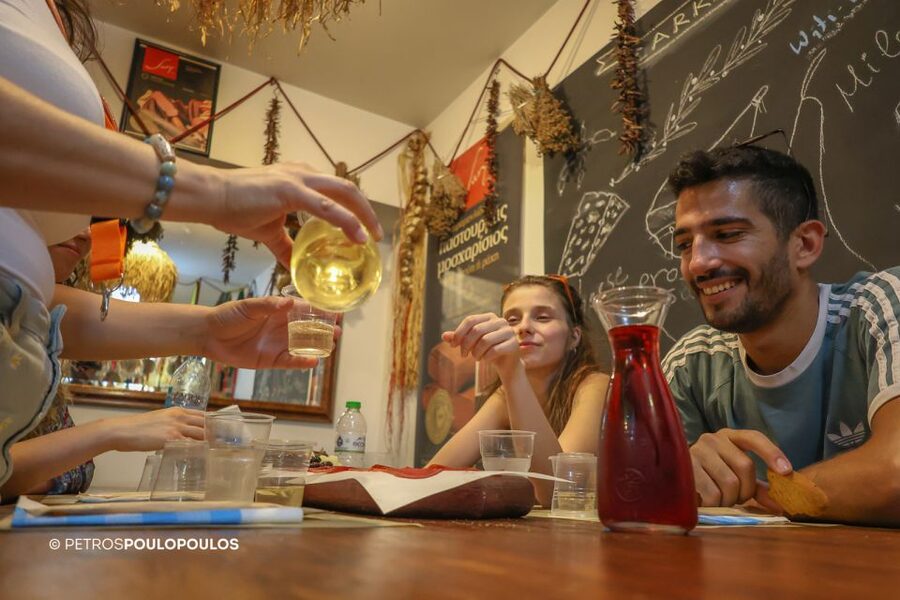
I would choose this tour for a first or second day in Athens, especially if you want help deciding what to eat for the rest of your stay. It suits people who enjoy trying several small portions, asking questions, and walking through ordinary parts of a city.
Families can enjoy it too. The supplied experiences include a three-year-old child and groups with young children, though uneven pavements and narrow streets can make strollers awkward. Children who like tasting new foods will have more fun than children who need a familiar meal at every stop.
It also works well for solo visitors and couples. A food walk gives you an easy way to meet others, and the small-group setting can feel more personal than a large sightseeing group. People who dislike organized tours may still appreciate this one because much of the time is spent eating, browsing, and talking rather than listening to long speeches.
You should think twice if you use a wheelchair, need completely level surfaces, have a very restricted diet, or dislike full meals spread across several stops. The tour is also a poor fit if Varvakios is essential but your only available departure is on a Sunday or in the afternoon.
Practical tips for a better morning
- Skip breakfast: The food can be substantial, so arrive ready to eat.
- Wear walking shoes: Expect narrow streets, cobblestones, and uneven pavements.
- Bring a hat and camera: Both are specifically recommended for the outdoor route.
- Avoid oversized luggage: It is not allowed on the experience.
- Choose morning if you want Varvakios: The market is closed for afternoon and Sunday tours.
- Keep the map handy: You finish in Psyri rather than at Syntagma Square.
- Ask questions early: Use the guide’s local advice to shape the rest of your Athens stay.
The activity has free cancellation up to 24 hours before departure, with a full refund, and you can reserve now and pay later. Check the available start times and the exact meeting point for your chosen option.
Should you book the Athens Greek food walk?
Book it if you want a generous introduction to Greek food, a look at the Central Market, and useful local advice in one three-hour outing. The strongest reasons are the range of tastings, the market setting, and the guides’ emphasis on how food connects to Greek daily life.
Choose a morning departure if Varvakios matters to you, and plan to eat lightly beforehand. I would not book it for a level-access route or a quick, inexpensive snack. For most food-minded visitors who want to understand Athens through what people cook, sell, and eat, the $81 price is a fair trade for three hours of food and orientation.
FAQ
How long is the Athens food walking tour?
The tour lasts three hours.
Where does the tour start?
One listed starting point is Starbucks at Syntagma Square. The exact meeting point may vary depending on the option booked.
Where does the tour finish?
The tour finishes in Psyri, Athens, rather than at the starting point.
Is the Central Market included?
The route includes a guided visit to the Central Municipal Athens Market, also called Varvakios, when the market is open. Afternoon and Sunday tours do not visit it because it is closed.
What food is included?
Included tastings specifically include pork or chicken souvlaki, vegetarian loukoumades, and vegetarian spanakopita. The experience also features foods such as feta, olives, filo, bougatsa, nuts, figs, and dates.
Are drinks included?
Other drinks are not included in the price.
Is the tour offered in English?
Yes. The activity has a live English-speaking guide.
Is the tour suitable for wheelchair users?
No. The activity is listed as unsuitable for wheelchair users, and the route includes narrow streets, cobblestones, and uneven pavements.
Can I cancel the booking?
You can cancel up to 24 hours in advance for a full refund. A reserve-now, pay-later option is also available.
New on the Athens shelf
- Acropolis of Athens, Parthenon and Acropolis Museum private tour with dinner★ 5.0 · 77 reviews
- Small-Group Wine Tour in Athens with Tasting★ 5.0 · 33 reviews
- Private Athens Transfer Airport/Port -Greek Tours-Hourly service★ 5.0 · 88 reviews
- VIP Private Guided Tour of Athens Acropolis & Plaka in a Sidecar★ 5.0 · 108 reviews
- Athens Moonlight Waling Tour with Drinks and Meze Dishes★ 5.0 · 259 reviews
- Private Athens Landmarks Layover Tour★ 4.5 · 41 reviews
- Departure Transfer from Athens City to Athens Airport★ 5.0 · 41 reviews
- Classic Athens Food Tour with Local Drink & Market Visit★ 5.0 · 34 reviews
Food & Drink, compared.

Small Group Greek Traditional Food Tour in Athens 20+ Tastings
Read our verdict →
Santorini Wine Stories: Sunset Tour with Tasting & Dinner
Read our verdict →
Food Market Visit and Cooking Class with Wine
Read our verdict →
Browse the lists this tour appears in