
Review · FOOD & DRINK
Thessaloniki Food Tour with a Local Chef
Thessaloniki’s best food stories are found in its market stalls, family-run shops, and neighborhood restaurants, not just on a standard sightseeing route. This tour puts local guide Tonia at the center of that experience, pairing tastings with practical advice about Greek ingredients, food customs, and places to eat later.
I like the generous range of samples, especially the honey, olive oils, olives, teas, rare spices, and farm-to-table charcuterie. I also like the small-group format, capped at fewer than 10 people, which gives the walk a personal feel. The main consideration is timing: the advertised duration is 3.5 hours, while the listed food stops add up to four hours, so leave room in your schedule.
Key points to know before booking
- Tonia leads a personal food walk: Expect stories about Greek eating habits, local traditions, and everyday food choices, not just a list of dishes.
- The market visit takes about two hours: You will browse food stalls, spice shops, olive oil stores, and long-established family businesses.
- Tastings go beyond the usual Greek plate: Honey varieties, balsamic glazes, olives, Greek teas, charcuterie, cheeses, and locally made drinks are part of the experience.
- Lunch is included: The tour finishes with a substantial meal at a local restaurant rather than ending after a few small bites.
- It is best early in your stay: Tonia provides restaurant and bar suggestions that can help shape the rest of your time in Thessaloniki.
- Bring practical walking gear: Comfortable shoes, water, sunscreen, and a sun hat are sensible for the market walk.
Why this Thessaloniki food tour feels different
Many food tours follow a simple pattern: taste a pastry, sample a prepared dish, and move on. This one gives you a closer look at the ingredients behind Greek cooking.
You start with baked goods, cheeses, cold cuts, and locally made Greek drinks. From there, the focus shifts to products you can smell, compare, and ask about. Honey is not treated as one generic sweetener. You taste different varieties and learn how their flavors differ. Olive oil gets the same attention, with a proper tasting rather than a passing drizzle over bread.
That approach matters because Greek food is shaped by its raw materials. The quality of the oil, the type of olive, the herbs used in a dish, or the source of the honey can change the final flavor. Tonia explains these differences in plain terms and connects them to the way people shop and cook in Thessaloniki.
You also get a useful look at local food culture. The tour includes Greek teas and their benefits, rare spices, unusual balsamic vinegar glazes, and farm-to-table meats and cheeses. You are not simply eating. You are learning what to look for when you visit a food shop on your own.
The tone is warm and relaxed. Tonia is described as a Thessaloniki native with a strong interest in food, and her role is more than guiding you from stop to stop. She helps you speak with shop owners, understand unfamiliar products, and decide what is worth trying.
More Food Tours in Thessaloniki
- Thessaloniki: Open Market Food Tour with Tasting
★ 4.8 · 186 reviews - Thessaloniki: Food Tastings and Drinks tour with a Chef
★ 5.0 · 181 reviews - Thessaloniki: Walking Open Market Food Tour and Tasting
★ 5.0 · 75 reviews
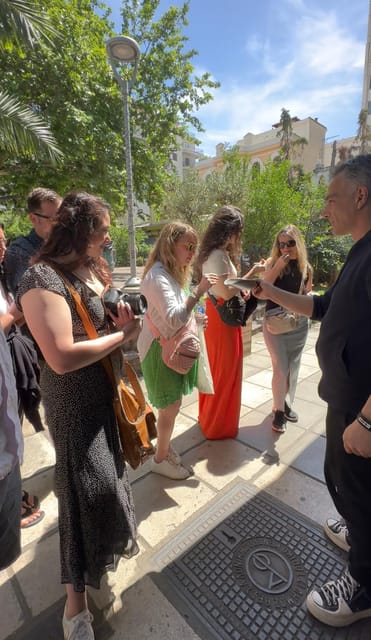
Meeting Tonia at the Grigori Lampraki monument
The meeting point is the Grigori Lampraki monument, with the tour beginning and ending near TSANTES ONLINE. You need to arrange your own way to the meeting point, since transportation is not included.
Once the group gathers, expect an introduction to the city through food rather than a long formal history talk. Tonia’s explanations focus on how people eat, shop, cook, and share meals. That makes this a useful first-day activity because you begin to understand the city through its everyday habits.
The group size is small, fewer than 10 people. That is important on a food tour. You can hear explanations in a shop, ask questions, and get help with food preferences without being lost in a crowd. It also gives the experience a more social feel, since everyone is tasting the same foods and comparing reactions.
Wear shoes that can handle several hours on foot. The market and shops are close together, so this is not a strenuous walking tour, but you will still be standing and moving for much of the morning or afternoon.
The opening table: baked goods, cheeses, and local drinks
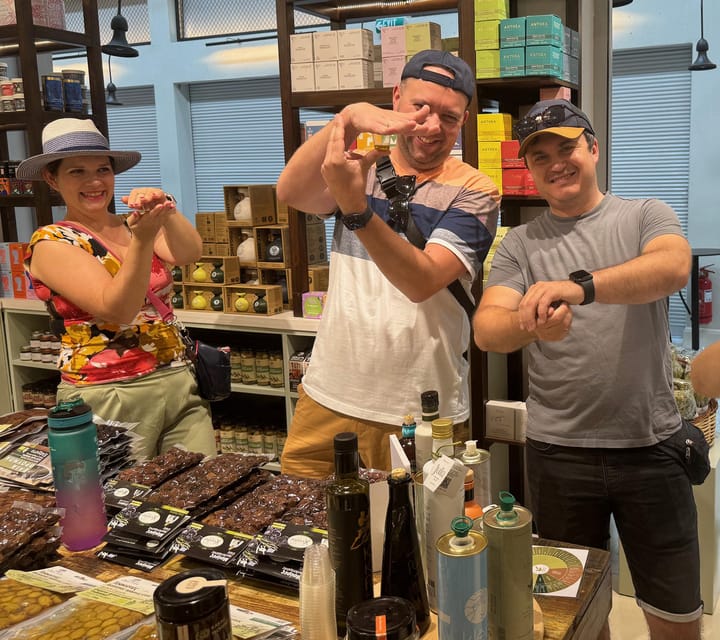
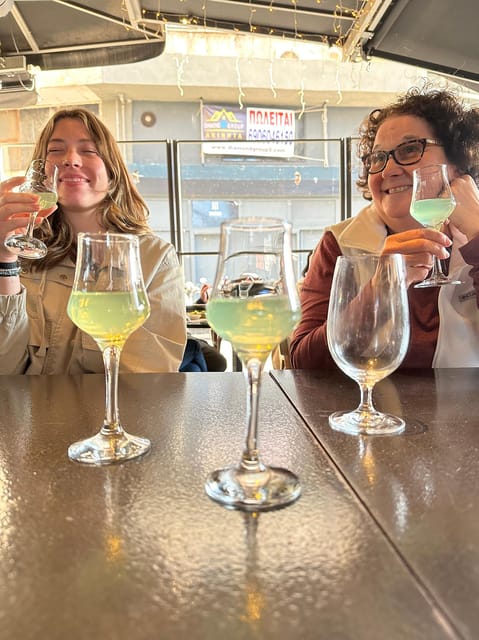
The first food section brings together baked goods, cheeses, cold cuts, and locally crafted Greek beverages. This is a useful introduction because you get several tastes at once, with pairings that show how Greek ingredients work together.
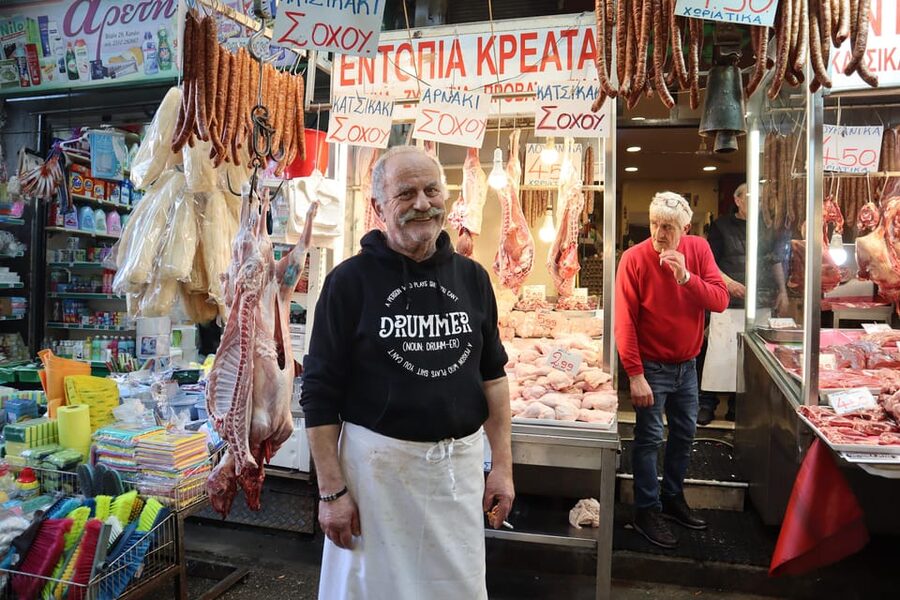
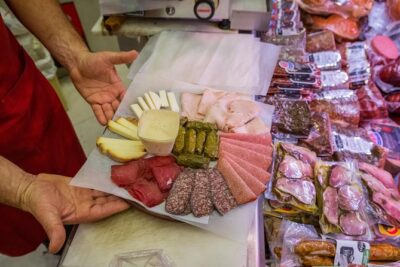
The charcuterie board is presented as farm-to-table, with a selection of meats and cheeses rather than one fixed item. That gives you a chance to compare salty, creamy, sharp, and smoky flavors before moving into the market.
The locally made drinks add another layer. The exact beverages can vary, but the purpose is clear: you are tasting products made in Greece and learning how they fit alongside food. This is a better use of time than filling the opening stop with familiar items you could order anywhere.
Come hungry, but not so hungry that you rush through the first tastings. There is a full lunch later, and the tour is designed to build from small samples into a proper meal.
Two hours in Thessaloniki’s historic food market
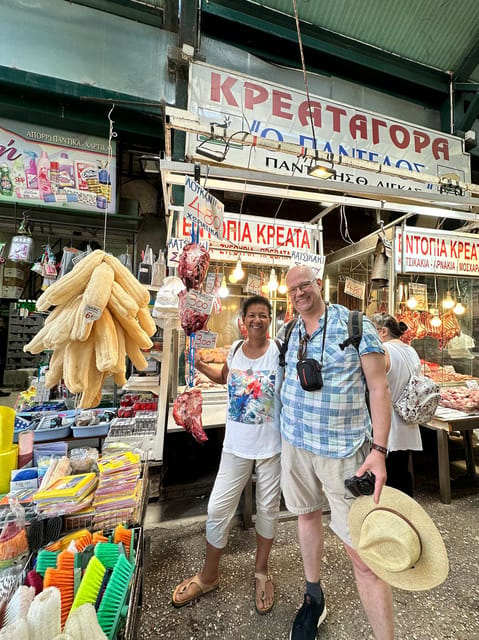
The market section is the heart of the tour. You spend about two hours walking through food stalls and small shops, with time for tastings and explanations.
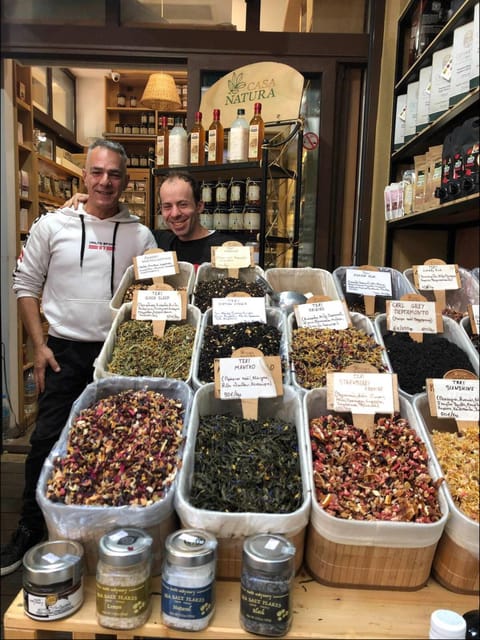
This is where the experience moves beyond prepared restaurant dishes. You see the ingredients that shape Thessaloniki cooking and learn how to recognize them. The route includes shops selling herbs and spices, olive oil, olives, honey, and other local products.
Some of the businesses are family-run shops with several generations behind them. That detail gives the market visit a stronger sense of place. You are not simply entering a store selected for tourists. You are being shown the kind of specialist food businesses that make a city’s eating culture work.
The spice stop should be especially useful if you cook at home. Tonia introduces rare spices and explains how they can be used in your own kitchen. You might not buy every unusual ingredient, but you leave with a better idea of how Greek cooks build flavor with herbs, seasonings, and good oil.
The market is also where you can ask the questions that rarely get answered on a standard restaurant tour. How should you store olive oil? What makes one honey taste different from another? Which olives are mild, and which are more intense? How do Greek teas fit into daily life? Tonia’s explanations give you a practical starting point.
Close by, and nothing like it:
- From Thessaloniki: Pozar Thermal Baths and Edessa Day Trip
★ 4.7 · 1,243 reviews - Thessaloniki: OTE Tower Rotating Experience with Light Meal
★ 4.6 · 857 reviews - Thessaloniki: Vergina and Pella Day Trip
★ 4.8 · 673 reviews - Thessaloniki Hop-on Hop-off Sightseeing Bus Tour
★ 4.0 · 473 reviews
Olive oil, olives, honey, and balsamic glazes
The olive oil tasting is one of the strongest parts of the tour for anyone who wants to understand Greek food rather than simply eat it. You sample different oils and learn to notice their flavor and texture.
Olive oil can taste grassy, peppery, mild, or fruity. Trying several side by side helps you understand why locals may use one oil for cooking and another as a finishing ingredient. It also gives you a better chance of choosing a good bottle later.
The olive tasting follows a similar idea. You sample a variety of olives and learn that they are not interchangeable. Color, texture, saltiness, and size all affect how they work in a meal.
Honey gets its own introduction, with different varieties presented for comparison. This is a fine detail for shoppers because honey makes an easy food souvenir, but only if you know what you like. A lighter honey may be delicate and floral, while a darker variety can have a stronger, more pronounced taste.
The rare balsamic vinegar glazes add a less expected note. They show how a familiar ingredient can be used in a more refined way, and they break up the focus on oil and olives. You get a wider view of Greek pantry goods rather than a narrow tour built around one famous product.
Lunch at a local restaurant
The final stop is lunch at a local restaurant, where the tour shifts from tasting ingredients to enjoying a complete meal. The lunch is included in the price and is described as high quality, so you should expect more than a token plate at the end.
This finish is valuable for two reasons. First, it gives you a proper meal after several hours of sampling. Second, it lets you see how the ingredients from the market come together in a restaurant kitchen.
The setting is intended to be away from the typical tourist route, with local cooking and kitchen skill taking priority. The exact dishes are not fixed in the information provided, so you should not book expecting one named specialty. Instead, think of the meal as a chance to encounter Greek dishes you might not choose on your own.
Several parts of the experience can be adapted for dietary needs, but you should mention allergies or restrictions before booking and remind the guide at the start. The tour includes many different foods, so clear communication matters.
What $129 buys you
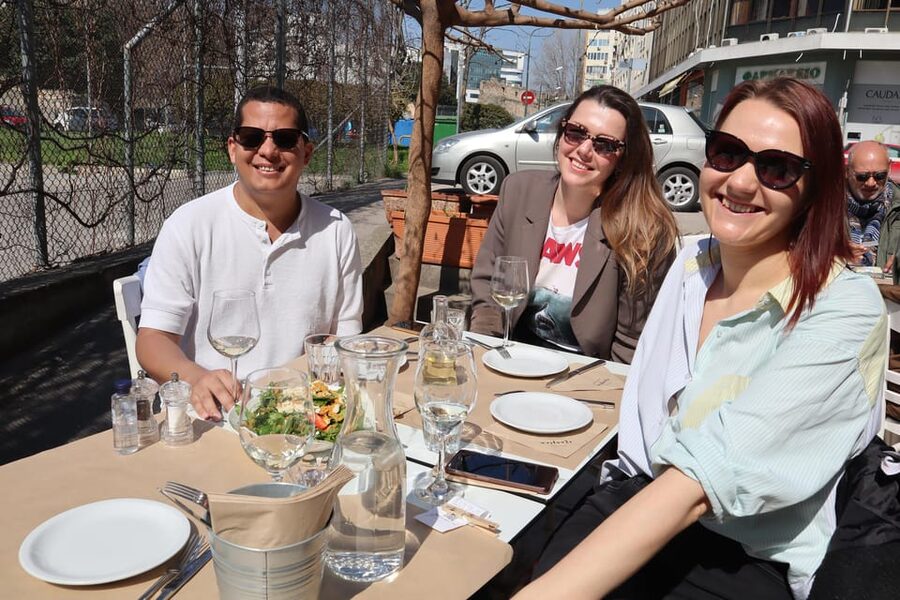
At $129 per person, this is not a bargain snack walk. It is priced as a longer, food-heavy experience with a guide, multiple tastings, market visits, product education, and a full lunch.
The value improves if you use the tour as an introduction to the rest of your stay. Tonia provides suggestions for restaurants and bars, along with advice about avoiding tourist-focused places. If even a few of those recommendations help you choose better meals later, the tour becomes more useful than a one-off tasting.
You also get products that are costly to sample individually, including several olive oils, honey varieties, charcuterie, cheeses, specialty glazes, teas, spices, olives, drinks, and lunch. The price makes less sense if you only want a quick taste of one or two Greek dishes. It makes more sense if you want food, shopping guidance, and cultural context in one afternoon.
The tour earns its value through time and variety. It is not built around a single famous restaurant or one oversized meal. It gives you a working knowledge of Thessaloniki’s food shops and eating habits.
Plan it near the start of your stay
I would book this tour early in your Thessaloniki visit. The practical reason is simple: you receive food advice before you have already spent several meals guessing where to eat.
You also gain a sense of direction around the market and central food streets. That can make later wandering easier. You may return to a shop for olive oil, honey, tea, or spices, or use Tonia’s suggestions to plan an evening meal.
The tour works well for food-focused couples, small groups of friends, and first-time visitors who want local context. It also suits repeat visitors who have already seen the main sights and want a closer look at daily life.
It may be less suitable if you dislike several tastings in a row, have serious food allergies that make sampling difficult, or want a fast walk with only one main dish. This is a slow, social food experience with plenty of pauses.
Timing, comfort, and small practical details
The stated duration is 3.5 hours, with starting times depending on availability. The supplied schedule lists one hour of food tasting, two hours at the market, and one hour for lunch, which totals four hours. I would treat the tour as a half-day activity and avoid booking another fixed appointment immediately afterward.
Bring a refillable water bottle, especially in warm weather. A camera is welcome, and sunscreen and a hat are sensible because parts of the walk are outdoors. Smoking and pets are not allowed.
English is the tour language. Free cancellation is available up to 24 hours before the experience for a full refund, and you can reserve now and pay later, which helps if your schedule is still changing.
Should you book the Thessaloniki food tour?
Book it if you want to understand Greek food through ingredients, markets, family shops, and local eating habits. The best parts are the personal guidance from Tonia, the small group, the wide range of tastings, and the final restaurant meal.
I would especially recommend it for your first day or two in Thessaloniki. You get a full introduction to the city’s food culture and useful advice for the meals that follow.
Skip it if you want a cheap street-food stroll, a short sightseeing walk, or a fixed menu of named dishes. At $129, the experience asks you to pay for time, instruction, and variety. For a curious eater who values local context, that is a fair trade.
FAQ
How long does the Thessaloniki food tour last?
The advertised duration is 3.5 hours. The listed activity segments total four hours, so it is wise to allow at least half a day.
Where does the tour meet?
The meeting point is the Grigori Lampraki monument. The tour begins and ends near TSANTES ONLINE.
Is transportation included?
No. Transportation to the meeting point is not included.
What foods and drinks are included?
The experience includes baked goods, cheeses, cold cuts, farm-to-table charcuterie, olives, olive oils, honey, Greek teas, rare spices, balsamic vinegar glazes, locally crafted Greek beverages, and lunch.
Is lunch included?
Yes. The tour finishes with a high-quality lunch at a local restaurant.
What language is the tour in?
The live tour is conducted in English.
Can I reserve now and pay later?
Yes. You can reserve your place and pay later.
What is the cancellation policy?
You can cancel up to 24 hours in advance for a full refund.
What should I bring?
Bring comfortable walking shoes, water, sunscreen, a sun hat, and a camera. You should also share any food allergies or dietary restrictions before the tour.
New on the Thessaloniki shelf
- Thessaloniki: Aristotle’s Birthplace and Mt. Athos Cruise★ 4.4 · 52 reviews
- Thessaloniki: Walking Tour★ 4.9 · 27 reviews
- Thessaloniki: Small-Group Wine Tasting Tour with Appetizers★ 4.8 · 31 reviews
- Thessaloniki: Self-Guided Audio Walking Tour & Narrative★ 3.5 · 28 reviews
- Thessaloniki:Selfie Museum, a 60-minute immersive experience★ 4.8 · 33 reviews
- Thessaloniki: Food and Walking Tour with Tastings★ 4.8 · 27 reviews
- Thessaloniki: Bike Tour★ 4.7 · 75 reviews
- Thessaloniki: Cooking & Dining Experience with Greek Family★ 4.9 · 85 reviews
Food & Drink, compared.
Small Group Greek Traditional Food Tour in Athens 20+ Tastings
Read our verdict →
Santorini Wine Stories: Sunset Tour with Tasting & Dinner
Read our verdict →
Food Market Visit and Cooking Class with Wine
Read our verdict →
Browse the lists this tour appears in