
Review · FOOD & DRINK
Explore the hidden food gems of Athens
Athens reveals itself through its food, and this tour gets you away from the menu boards aimed at tourists. You’ll walk through the Central Market, browse neighborhood shops, and taste family recipes, Greek coffee, pastries, olives, honey, spices, and a full meal with wine. Julia, Douk, George, and Dimitri are among the guides who may lead the experience.
I like the generous amount of food and the chance to try ingredients you might otherwise miss, from unusual olives to regional honey and specialty teas. I also like the personal touch: guides explain family traditions, introduce local shopkeepers, and may demonstrate how to make tzatziki. The main caution is simple: do not eat beforehand, since the tastings can add up to a very large meal.
Key points at a glance
- Central Market access: Walk through Athens’s meat and fish market while learning how local food shopping works.
- Family-run stops: Visit small shops used by neighborhood residents, not only restaurants listed for tourists.
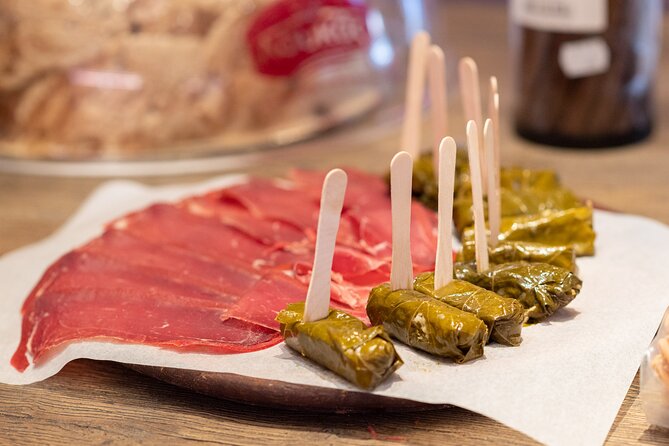
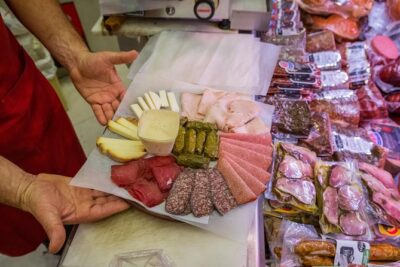
- A generous menu: Expect coffee, pastries, olives, cheese, cold cuts, honey, spices, grilled meat, wine, and a full Greek meal.
- Guides with personality: Julia, Douk, George, Dimitri, and other guides bring food, local customs, and Athens history together.
- Small group format: The maximum group size is 10, which makes questions and personal attention easier.
- Useful for the rest of your trip: Guides offer food tips for Athens and the Greek islands.
Why this Athens food tour feels different

Many city food tours move from one famous address to the next. This one puts more weight on the places where Athenians shop and eat day to day. That means market stalls, specialty stores, neighborhood cafés, and an established restaurant rather than a parade of postcard stops.
The tour lasts about three and a half hours and begins at Athinas 37. It ends at the same meeting point, so you do not need to arrange a separate ride back. The route covers the Central Market, Psiri, and Monastiraki, three central areas that are easy to connect on foot.
I especially like the balance between food and explanation. You are not simply handed a plate and told its name. The guides discuss ingredients, recipes, Greek customs, and the family stories behind local businesses. The food becomes a way to understand the city.
That approach also makes the tour useful early in your stay. You can ask where to eat later, what to order, and which dishes are worth seeking out on the islands. Several guides also give broader suggestions for Athens after the tour.
More Food Tours in Athens
- Greek Food Walking Tour in Athens
★ 5.0 · 4,740 reviews - Athens: Street Food Tasting Tour
★ 4.9 · 2,557 reviews - Small Group Greek Traditional Food Tour in Athens 20+ Tastings
★ 5.0 · 1,759 reviews
Starting with coffee, pastries, and the Central Market
The morning tours can begin with Greek coffee and pastries at a neighborhood coffee and bakery shop. The exact food may change with the season, but the opening sets the tone: this is breakfast as local routine, not a quick snack before sightseeing.
From there, the route leads into the Central Market. You may walk through the meat and fish sections and see the ingredients that form the basis of many Greek meals. The market is practical and working, so it may feel more direct and less polished than a food hall designed for tourists.
This is one of the strongest parts of the experience for curious eaters. You can learn how Greek cooks think about freshness, seasoning, cuts of meat, seafood, and produce. The guide’s explanations help you understand why a dish tastes the way it does once it reaches the table.
The market can also be crowded and noisy. If you prefer quiet cafés and carefully staged tastings, this part may feel rough around the edges. That is also its value. You are seeing an operating food market, not a set built for sightseeing.
Tasting olives, oils, honey, and Greek spices
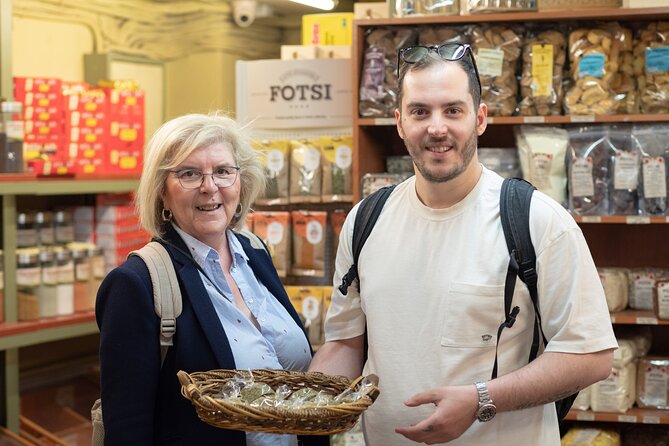
After the market, the tour moves through small shops where tastings may include olives, olive oil, balsamic, bread, honey, tea, and spices. This is where the range of Greek food becomes clear.
Greek olives are not all the same. You might encounter different sizes, colors, textures, and levels of saltiness. The guides explain where products come from and how they are used. Olive oil tastings can show how much flavor comes from the oil itself, rather than treating it as a background ingredient.
Honey is another useful stop. Greek honey varies by the plants and places where bees feed, and tasting it beside bread or another simple food makes the differences easier to notice. One particularly popular purchase is pistachio cream, which some people return for after the tour.
The spice shop is a good reminder that Greek cooking is not limited to feta, tomatoes, and olive oil. The tour covers herbs and seasonings used in traditional cooking, along with influences that came through the Ottoman, Mediterranean, and Middle Eastern worlds.
These stops are practical because you can buy ingredients to take home. Personal purchases are not included, so bring room in your budget if a particular olive oil, honey, tea, or spread catches your attention.
Psiri and Monastiraki, with food beyond the postcard streets
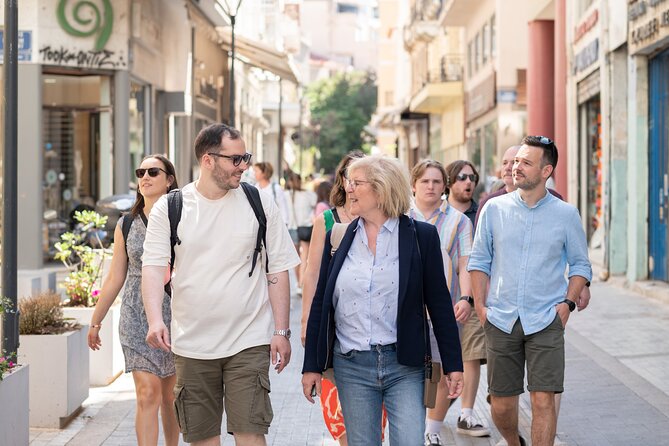
The route through Psiri and Monastiraki adds a city walk to the food program. These central neighborhoods are full of shops, cafés, restaurants, and street life. The tour focuses on smaller local businesses instead of only the most visible places aimed at passing sightseers.
The guides explain how food fits into social life in Athens. A meal is not merely fuel. It is a reason to sit, talk, share plates, and take time. That context helps explain why a Greek lunch can feel larger and slower than you may expect.
You may also taste foods with influences from beyond mainland Greece. Greek cuisine has absorbed ideas from nearby regions over many centuries, and the route gives the guide room to explain those connections without turning the walk into a formal lecture.
The walking is manageable for most people, but you should expect to be on your feet and moving between stops. Comfortable shoes make sense. The tour is near public transportation, and most people can participate, but the exact route may involve busy streets and market conditions.
Close by, and nothing like it:
- Athens: Acropolis & up to 5 Archaeological Sites Combo Pass
★ 4.4 · 12,619 reviews - Athens: Acropolis Ticket with Optional Audio or Live Guide
★ 4.2 · 11,055 reviews - Athens: Acropolis, Parthenon & Acropolis Museum Guided Tour
★ 4.8 · 9,316 reviews - Athens: Acropolis and Parthenon Guided Walking Tour
★ 4.6 · 5,882 reviews
What you may eat during the tour
The published menu includes a broad mix of savory foods, drinks, and sweets. The exact selection depends on the season and the shops open that day, but you can expect substantial portions rather than tiny decorative bites.
Possible tastings include:
- Greek coffee and pastries
- Cheese and cold cuts
- Olives and olive oil
- Honey and specialty tea
- Bread with oil or balsamic
- Grilled meat with retsina
- Pies and other savory or sweet bites
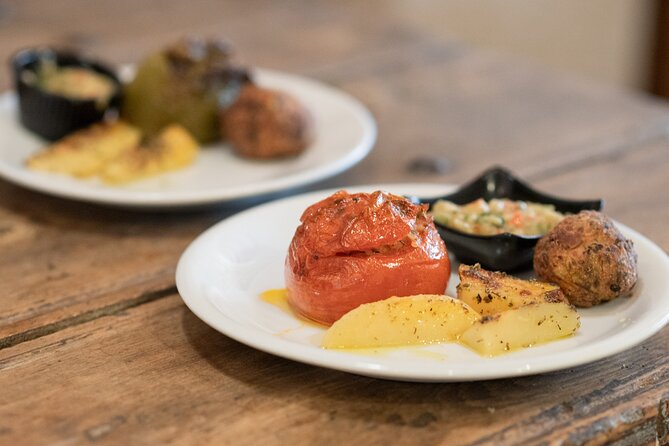
- Stuffed vegetables
- Zucchini balls
- Oven-roasted potatoes
- Tzatziki and other traditional dishes
- A full seasonal Greek meal
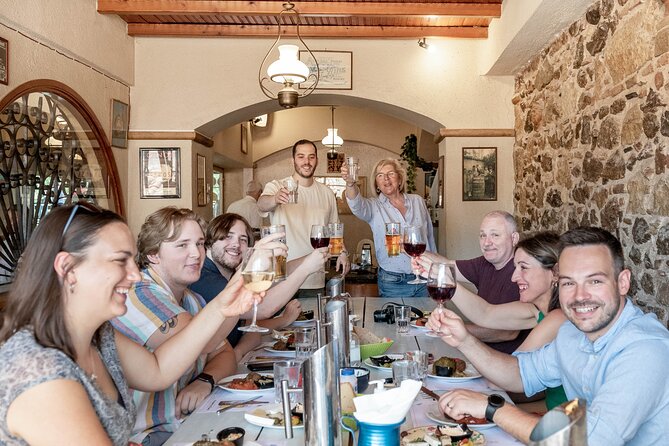
The final meal is a major part of the value. It may be served in a private room or upper-floor dining space, and some groups have enjoyed views toward the Acropolis. The setting can provide a calm finish after the market walk.
Wine is included, and the listed inclusions also cover alcoholic beverages, coffee or tea, snacks, lunch, and breakfast. Since this is a food-heavy experience, tell the provider about dietary needs when booking if you have them. The supplied information does not promise specific substitutions, so do not assume every restriction can be handled.
The guides make the difference

The guide roster includes Julia, Douk, George, Dimitri, and Ste. Julia is described as especially comfortable discussing Greek food, family traditions, and the background of local vendors. Douk is known for sharing food knowledge with humor and warmth, while Dimitri brings local history, jokes, and, on one occasion, poetry to the walk.
Guide assignments can vary, so you should not book expecting one particular person unless the provider confirms it. Still, the recurring style is clear: expect a conversational host who answers questions and gives personal suggestions for eating in Athens.
Julia and George sometimes work as a pair, with one guide moving ahead to coordinate the next stop. That can keep the route moving while allowing the group to stay relaxed. The small maximum of 10 people helps here. You are less likely to be lost in a large crowd, and it is easier to ask about ingredients or recipes.
The personal side is important. Guides may explain how their own family prepares tzatziki or describe the background of a shop that has served local residents for generations. Those details give the food a sense of place that a standard restaurant meal may not provide.
How much value do you get for $82.27?
At $82.27 per person, this is not a cheap snack walk. It is a meal-sized experience with drinks, coffee or tea, tastings, and a guide for roughly three and a half hours.
The value depends on how you use it. If you only want a few samples and plan to eat a separate lunch, you may find the price high. If you count the included food as breakfast, snacks, lunch, dessert-style bites, and drinks, the cost becomes easier to justify.
You are also paying for access and interpretation. A shop visit means more when someone explains how to compare olive oils, where honey comes from, or how Greek spices fit into regional cooking. The local food advice can save you from spending later meals in places chosen only for their location.
I would book it near the start of an Athens stay. You can use the guide’s recommendations for the rest of your trip, and you will have a better idea of what to order when you eat on your own.
Who should book this experience?

This tour suits people who want a full introduction to Greek food without planning every stop themselves. It is also a good fit if you like markets, small businesses, local stories, and a relaxed walking pace.
It works well for couples, families, and small groups who enjoy tasting many things. The maximum of 10 people makes it more personal than a large coach excursion. Service animals are allowed, and most people can participate.
You may want to think twice if you have severe food allergies, strict dietary rules, or little interest in eating meat, dairy, bread, or alcohol. The menu is broad, but the available information does not promise a fixed allergy-friendly or vegetarian version.
Also consider the timing. Some descriptions place the tour in the morning, while others refer to an evening food walk. Confirm the start time when booking and plan your meals around it. Either way, arrive hungry.
Practical details before you go
The meeting point is Athinas 37 in central Athens. The activity ends back there, and it is near public transportation. Confirmation is provided when you book, and free cancellation is available if you cancel at least 24 hours before the start time.
Wear comfortable shoes and leave plenty of room for food. The walk includes the Central Market, Psiri, and Monastiraki, so you will be moving through active city streets rather than sitting in one restaurant.
Bring a little extra money for personal purchases. The tour includes the food and drinks listed, but products from the market and specialty shops are not included.
Should you book it?
I would book this tour if you want Greek food explained through markets, family businesses, and shared meals rather than only through restaurant menus. The strongest reasons are the generous food, the small group, the local shopping stops, and the guides’ practical advice.
I would skip it only if you dislike large tastings, walking through working markets, or traditional foods served in several courses. For most curious eaters, the $82.27 price is fair because it covers far more than a few bites. Just arrive hungry, start early in your Athens stay, and be ready for lunch to be the finale rather than the whole event.
FAQ
Where does the Athens food tour begin?
The tour begins at Athinas 37, Athina 105 54, Greece.
Where does the tour end?
The activity ends back at the meeting point.
How long does the tour last?
The tour lasts approximately 3 hours and 30 minutes.
What areas does the tour visit?
The route includes the Central Market, Psiri, and Monastiraki.
How many people can join the tour?
The maximum group size is 10 people.
Is lunch included?
Yes. Seasonal and traditional Greek food is included, along with snacks.
Are drinks included?
Yes. Alcoholic beverages and coffee or tea are included. Greek wine and retsina may be served with the food.
Is the tour offered in English?
Yes. The tour is offered in English and includes a mobile ticket.
Can I cancel for a full refund?
Yes, if you cancel at least 24 hours before the experience begins. Cancellations made less than 24 hours in advance are not refunded, and changes within that period are not accepted.
New on the Athens shelf
- Acropolis of Athens, Parthenon and Acropolis Museum private tour with dinner★ 5.0 · 77 reviews
- Small-Group Wine Tour in Athens with Tasting★ 5.0 · 33 reviews
- Private Athens Transfer Airport/Port -Greek Tours-Hourly service★ 5.0 · 88 reviews
- VIP Private Guided Tour of Athens Acropolis & Plaka in a Sidecar★ 5.0 · 108 reviews
- Athens Moonlight Waling Tour with Drinks and Meze Dishes★ 5.0 · 259 reviews
- Private Athens Landmarks Layover Tour★ 4.5 · 41 reviews
- Departure Transfer from Athens City to Athens Airport★ 5.0 · 41 reviews
- Classic Athens Food Tour with Local Drink & Market Visit★ 5.0 · 34 reviews
Food & Drink, compared.

Small Group Greek Traditional Food Tour in Athens 20+ Tastings
Read our verdict →
Santorini Wine Stories: Sunset Tour with Tasting & Dinner
Read our verdict →

Food Market Visit and Cooking Class with Wine
Read our verdict →
Browse the lists this tour appears in