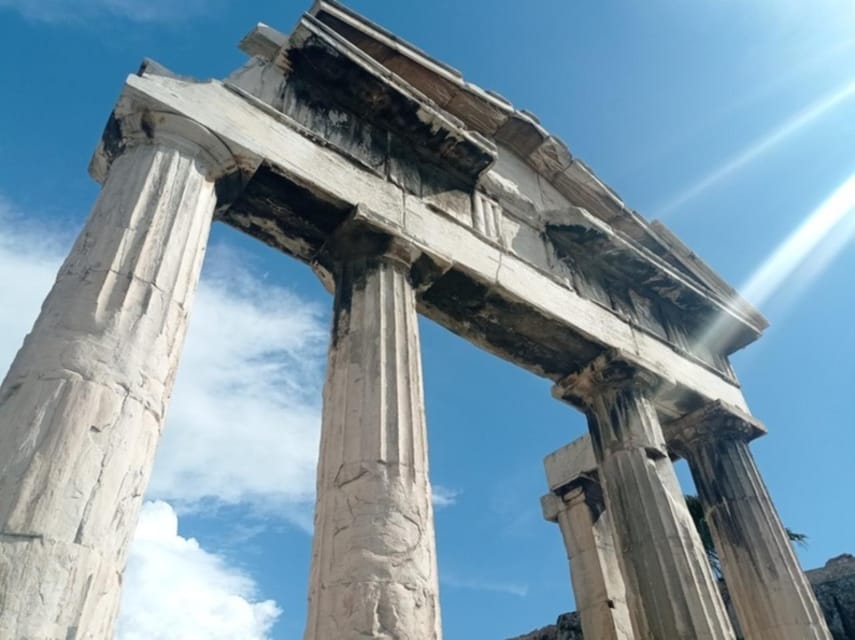
Review · GUIDED
Athens: the Great Greek Philosophers Guided Tour in Spanish
Ancient Athens makes more sense when you follow its ideas, not just its stones. This 150-minute walk links the statue of Plato, the Areopagus, the Greek Agora, Pnyx Hill, and Socrates Prison to the birth of Western philosophy.
I like two things here: the route focuses on places tied to real debates and public life, and the guide turns philosophy into conversation rather than a dry lecture. Guides named Gregory, Gregori, and Sunny have led this experience, with Gregory especially praised for clear explanations, humor, questions, and thoughtful answers.
The main catch is the format: it is a walking tour, not a museum visit, and philosophy takes focus. The tour is listed in Spanish, so confirm the language offered for your date if you need Spanish service.
Key points at a glance
- Plato’s statue is the meeting point: Arrive 10 minutes early and look for the group in front of the statue.
- Socrates Prison adds a human story: The tour connects philosophy with the personal cost Socrates paid for his ideas.
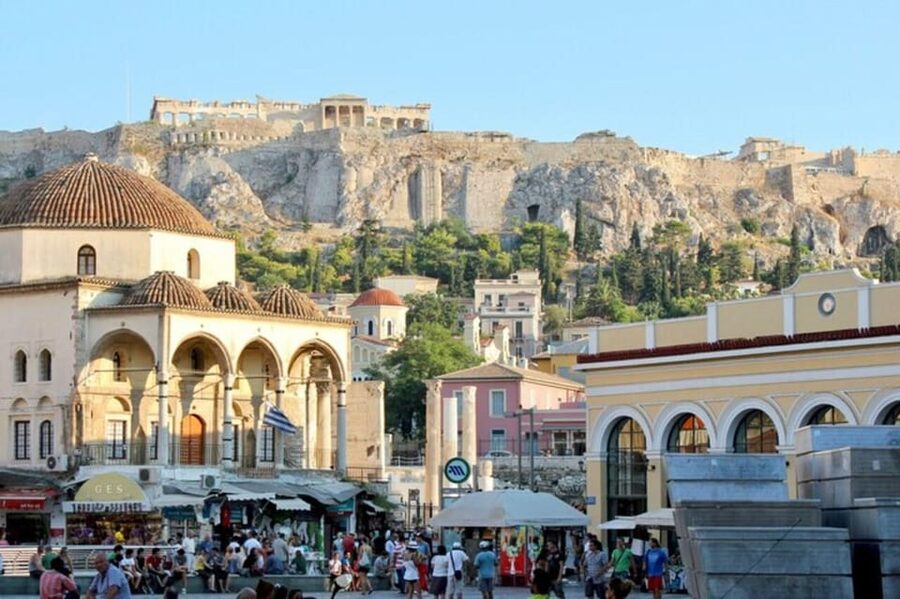
- The Agora and Pnyx explain public thought: These places show how discussion, citizenship, and debate shaped ancient Athens.
- The Areopagus brings history under your feet: You visit a landmark tied to Athens’ political and social life.
- Questions are part of the experience: Guides use thought exercises and everyday examples to make difficult ideas easier to grasp.
- The $34 price is strong value: You get 150 minutes with an official guide, but food, drinks, and personal costs are extra.
Why this Athens philosophy walk is different
Athens offers plenty of tours about temples, battles, and famous ruins. This one follows a less obvious thread: how people began asking what justice, virtue, knowledge, and a good life actually mean.
That gives the walk a clear purpose. You are not simply ticking off ancient locations. You are looking at each place through the ideas that grew there, and at the people who argued over them.
The experience covers figures such as Socrates, Plato, Aristotle, and Pythagoras. Socrates gets particular attention, especially the tension between his questions and the society around him. The tour presents wisdom as something that could carry a price, not just a noble decoration in a history book.
I like this approach for a first or second day in Athens. It helps you read the city with sharper eyes afterward. A stone meeting place is no longer just an old wall. It becomes part of a story about who had a voice, how people tested ideas, and why public argument mattered.
The activity lasts 150 minutes, or two and a half hours. That is enough time to develop a proper theme without taking up an entire day. Still, you should expect a steady walk and a fair amount of listening. Comfortable shoes and water are specifically advised, and that is sensible advice in Athens.
A few more Athens options worth putting side by side
- Athens: Acropolis & up to 5 Archaeological Sites Combo Pass
★ 4.4 · 12,619 reviews - Athens: Acropolis Ticket with Optional Audio or Live Guide
★ 4.2 · 11,055 reviews - Athens: Acropolis, Parthenon & Acropolis Museum Guided Tour
★ 4.8 · 9,316 reviews
Meeting Plato at the start
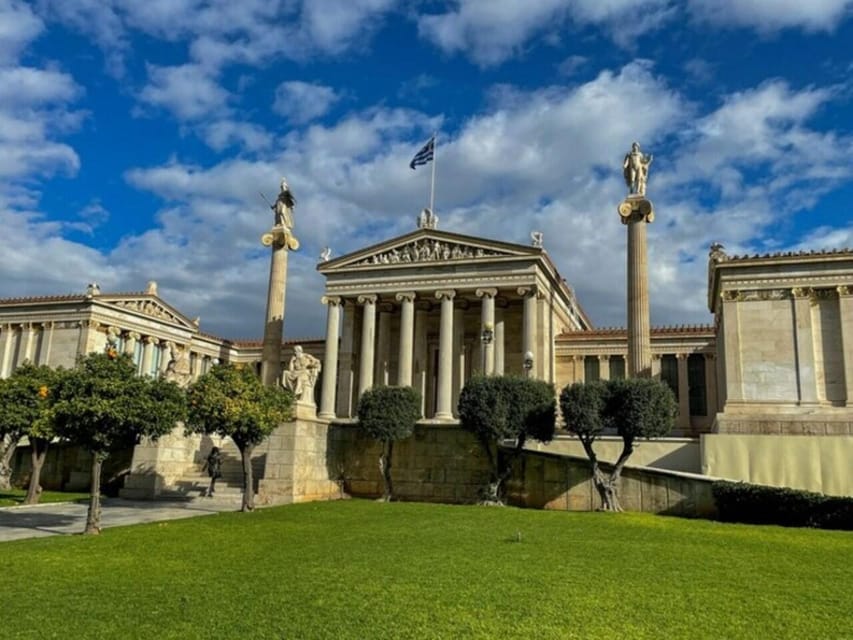
The tour begins in front of the Statue of Plato. You are asked to arrive 10 minutes before the starting time, which gives you a useful buffer in central Athens.
Plato is a fitting place to begin. He is one of the central figures in the story of Greek philosophy, and his work helped preserve and develop the questions associated with Socrates. Starting beside his statue gives the tour an immediate focus instead of a vague meeting point near a large attraction.
The meeting point also tells you what kind of experience this is. The emphasis is on people, ideas, and the city around them. You do not begin with a long formal introduction in a museum room. You begin outdoors, in the middle of Athens, then follow the subject through its historic settings.
Because the guide is listed as Spanish-speaking, make sure the language suits your booking before you set out. The supplied tour information names Spanish as the operating language. Several published comments describe guides using English, so it is worth checking the language shown for your specific departure rather than assuming.
The Greek Agora and the public life of ideas
The Greek Agora is one of the most important stops because it helps explain how philosophy was connected to ordinary civic life. This was not philosophy kept behind closed doors. It developed amid public business, political debate, legal questions, and daily encounters.
Your guide uses the Agora to explain the role of ancient society and the way ideas moved through it. That setting matters. Socrates is remembered for asking difficult questions in public, and the Agora gives you a better sense of why conversation was central to Athenian life.
The value here is context. It is easy to treat philosophers as isolated geniuses, separated from the world around them. The walk instead places them in a city where public speech and argument had real weight.
You may also appreciate the way the guide connects famous names with broader schools of thought. The tour is not limited to a list of dates and biographies. It touches on different approaches to philosophy and uses simple comparisons from daily life to clarify harder points.
That teaching style is especially useful if you have only dabbled in philosophy. You do not need to arrive with a background in Plato or Aristotle. The tour is designed to work for beginners, while still leaving room for detailed questions.
The Areopagus and the physical feel of Athens
The Areopagus gives the route a change of pace. You are dealing with a real place in the city rather than an abstract lesson, and the guide explains its importance in ancient Athenian society.
This stop is also a reminder that the tour is partly about atmosphere and physical setting. You hear the ideas, then look around at the ground, slopes, and surrounding city where public life unfolded. The experience asks you to picture ancient voices in the same broad setting.
Take care with your footing and wear proper shoes. The tour itself tells you to bring comfortable footwear, and the advice should not be ignored. You are walking between several outdoor locations, and the Areopagus is not the place for flimsy sandals or shoes that offer no grip.
The stop works well for people who enjoy a little visual drama with their history. You are not only hearing about philosophy in a classroom style. You are being shown locations that help attach the subject to the city.
Close by, and nothing like it:
- Athens: Acropolis and Parthenon Guided Walking Tour
★ 4.6 · 5,882 reviews - Athens, Piraeus, and Coastline: Blue Hop-On Hop-Off Bus
★ 3.9 · 4,849 reviews - Greek Food Walking Tour in Athens
★ 5.0 · 4,740 reviews - Athens: City Sightseeing Hop-On Hop-Off Bus Tour
★ 4.3 · 4,520 reviews
Socrates Prison and the cost of asking questions
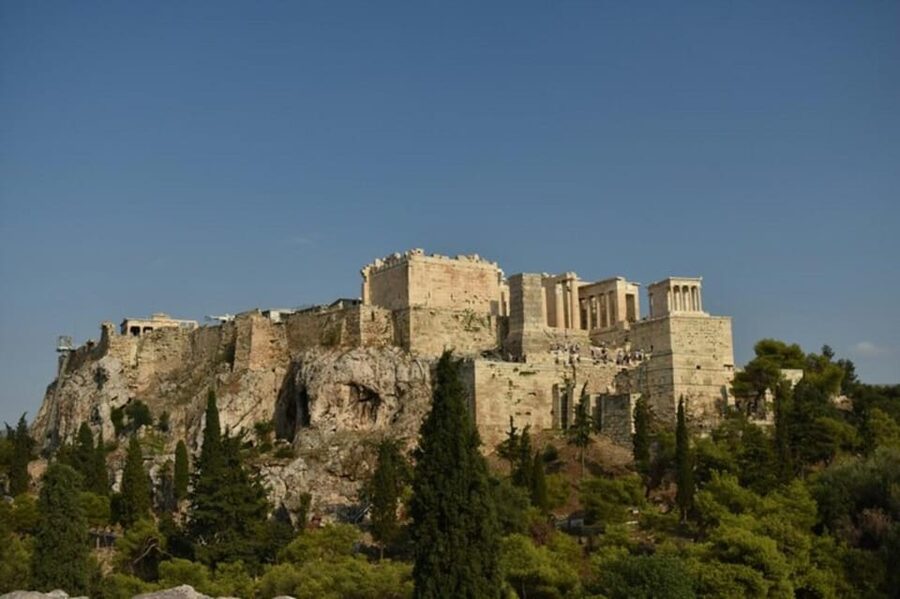
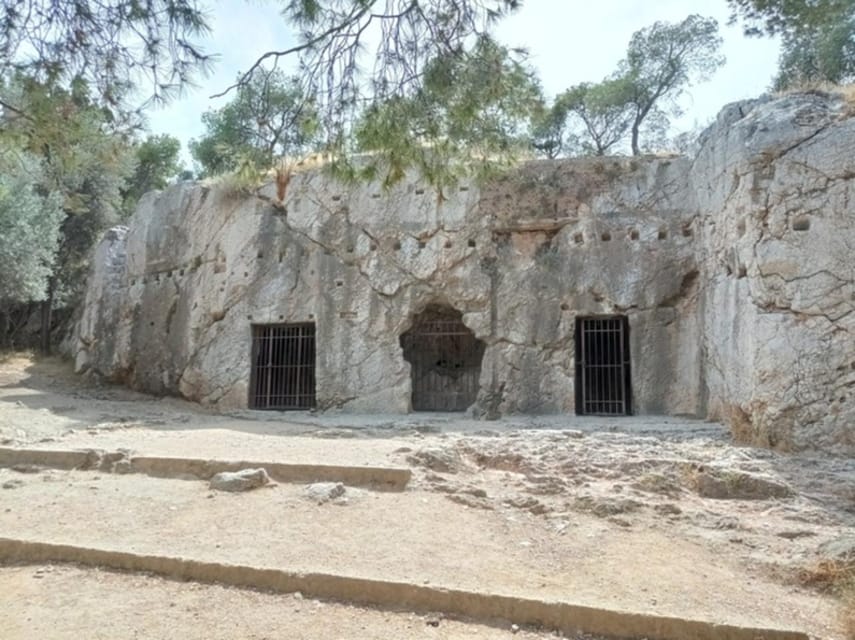
Socrates Prison is one of the most memorable named stops. Its importance comes from the story attached to Socrates and the idea that wisdom, questioning, and public challenge could lead to serious consequences.
The guide uses this location to bring the philosopher’s story down to a personal level. Socrates was not simply a name in a textbook. He was a man whose way of questioning created conflict, and the tour considers how being seen as wise could come at a high cost.
This part should appeal to you if you prefer history told through people. The location gives the discussion an emotional center without turning the tour into a simple hero story. You get a chance to think about the balance between personal freedom, social order, and the duty to question accepted beliefs.
Do not expect a large museum complex or a long indoor visit here. The appeal is the connection between place and story. The guide’s explanation does most of the work, so the quality of the presentation matters. Gregory has been praised for dramatizing historical stories while keeping the ideas understandable, and that style fits this stop particularly well.
Pnyx Hill and the birth of public debate
The route also reaches Pnyx Hill, a place used to explain the public side of Athenian life and the larger setting in which philosophical thought developed.
The tour connects the sites to the symbolism of ancient Athens. You learn why these locations mattered, how they related to society, and how they helped create conditions for major changes in human thought.
Pnyx is useful because it widens the story beyond individual philosophers. Plato and Socrates did not work in a vacuum. Their ideas grew from a city shaped by citizens, speeches, arguments, rules, and competing views of how society should work.
This is also where the tour’s discussion-based style can be most rewarding. The guide may ask you to consider what you believe, how you judge an action, or which principles shape your decisions. The questions are not only there to fill time. They connect ancient debates with your own life.
That personal element is one of the strongest features of the experience. You are encouraged to examine your assumptions and look at a problem from more than one angle. If you prefer a tour that gives you facts and moves on, this may feel more active than expected. If you enjoy conversation, it gives the walk its spark.
Gregory, Sunny, and the guide’s role
The guide can make or break a philosophy tour. A list of thinkers is easy to recite. Making their questions clear, lively, and relevant takes more care.
Gregory receives the strongest praise in the supplied comments. He is described as passionate about philosophy and history, patient with questions, organized about the plan, and able to adjust the discussion to the group’s interests. He also helped with general Athens recommendations and directed one participant toward the metro at the end.
Several people valued his use of humor, mind games, everyday comparisons, and open discussion. That matters because terms such as virtue, morality, and schools of thought can become heavy very fast. A guide who explains them in plain language gives you a much better chance of staying engaged.
The tour has also been led by Sunny, and another comment uses the name Gregori. Since guide assignments can change, I would treat the guide’s personality as part of the experience but not assume a specific person unless your booking confirms it.
The published rating is 4.9 from 59 reviews, which is unusually strong. The praise centers on the guide’s ability to explain, adapt, tell stories, and invite questions. That does not remove the need to check the language or route details, but it does point to a consistent strength in the presentation.
What you get for $34
At $34 per person, this is a reasonable price for 150 minutes with an official tour guide. You are paying for a focused interpretation of Athens rather than simply walking from one landmark to another.
The value is strongest if you want context. A short stop at a famous site can be easy to forget. A guide who links the Agora, Areopagus, Pnyx, and Socrates Prison into one story gives the places a shared meaning.
The price does not include food, drinks, or personal expenses. There is no meal component, and the tour should be treated as a walking experience. Bring your own water, especially since the activity specifically asks you to do so.
Free cancellation is available up to 24 hours before the tour for a full refund. You can also reserve now and pay later, which helps if your Athens plans are still shifting.
Who should book this experience
I would choose this tour if you want Athens beyond the standard temple checklist. It suits curious beginners, students of philosophy, history fans, and anyone who likes a guide to ask questions instead of delivering a nonstop speech.
You do not need to know the difference between Plato’s ideas and Aristotle’s before you arrive. The guide is expected to explain the concepts clearly, and the experience has been praised for working well with people at different levels of interest.
It can also suit couples or small groups looking for a more reflective walk. One person described it as romantic, and that makes sense: the route combines old Athens, big questions, and quiet moments of thought.
I would be more cautious if you dislike walking, need frequent indoor breaks, or want an attraction ticket with extensive ruins to explore on your own. The included item is an official guide. Food, drinks, and personal expenses are not included, and the main product is the conversation.
Practical tips before you go
Arrive 10 minutes early at the Statue of Plato. Central Athens can be distracting, and you do not want to search for the meeting point after the group has started.
Wear comfortable shoes and bring water. The walk covers multiple outdoor sites, including the Areopagus and Pnyx Hill, so practical clothing matters more than dressing up.
Keep some mental space for discussion. The guide may ask you to think about morality, beliefs, or the meaning of a good life. You will get more from the tour if you take part instead of treating it as background audio.
Finally, confirm that Spanish is the language scheduled for your date. The activity is advertised with a live Spanish-speaking guide, while several comments refer to English-language guiding. That small check can prevent a major disappointment.
Should you book the Great Greek Philosophers tour?
Book it if you want to understand why Athens became such an important place for human thought, and if you enjoy learning through stories, questions, and real locations.
At $34, the tour offers solid value for a focused two and a half hours. Its best features are the clear theme, the unusual stops, and guides such as Gregory who make philosophy feel approachable. Just remember that it is a walking discussion, not a standard ruins tour, and confirm the language before paying.
FAQ
How long does the tour last?
The tour lasts 150 minutes, or two and a half hours.
What language is the tour offered in?
The listed live tour language is Spanish.
Where is the meeting point?
You meet in front of the Statue of Plato.
How early should I arrive?
You should arrive 10 minutes before the tour begins.
Which places are included?
The experience includes the Statue of Plato, the Areopagus, Socrates Prison, the Greek Agora, and Pnyx Hill.
Is a guide included?
Yes. An official tour guide is included.
Are food and drinks included?
No. Food and drinks are not included.
What should I bring?
Bring comfortable shoes and water.
Can I cancel for a refund?
Yes. You can cancel up to 24 hours in advance for a full refund.
New on the Athens shelf
- Acropolis of Athens, Parthenon and Acropolis Museum private tour with dinner★ 5.0 · 77 reviews
- Small-Group Wine Tour in Athens with Tasting★ 5.0 · 33 reviews
- Private Athens Transfer Airport/Port -Greek Tours-Hourly service★ 5.0 · 88 reviews
- VIP Private Guided Tour of Athens Acropolis & Plaka in a Sidecar★ 5.0 · 108 reviews
- Athens Moonlight Waling Tour with Drinks and Meze Dishes★ 5.0 · 259 reviews
- Private Athens Landmarks Layover Tour★ 4.5 · 41 reviews
- Departure Transfer from Athens City to Athens Airport★ 5.0 · 41 reviews
- Classic Athens Food Tour with Local Drink & Market Visit★ 5.0 · 34 reviews
Guided, compared.

Cape Sounio & Poseidon Temple Trip with Audio Guide
Read our verdict →
Mythology of Delphi, Museum and Arachova Guided Tour
Read our verdict →
Acropolis, Parthenon & Acropolis Museum Guided Tour
Read our verdict →
Acropolis: Acropolis and Parthenon Guided Walking Tour
Read our verdict →