
Review · FOOD & DRINK
Athens Greek Food Tour Small-Group Experience
Athens tastes best away from the big sightseeing corridors, at a deli counter, a souvlaki stop, or a family-run taverna where plates are set in the middle of the table. This three-and-a-half-hour food walk links those places from Syntagma Square to Monastiraki, with enough food to replace dinner.
I like the small group, capped at 10 to 12 people, and the useful local advice you get along the way. Guides such as Emi, Yota, Fotis, Jenny, and Amy have been praised for mixing food with Greek history, family stories, and practical tips on where to eat later. The main drawback is simple: you walk quite a bit, and noisy streets or restaurants can make a guide harder to hear.
Key points at a glance
- A full meal, not just nibbles: Expect olive oil, cheeses, olives, street food, meze, drinks, and dessert.
- A smart central route: The walk runs from Syntagma through Ermou, Agia Eirini, Aiolou, Psyrri, and Monastiraki.
- Small groups matter: With no more than 12 people, your guide can answer questions and keep the pace personal.
- Local food in ordinary places: The stops focus on Greek delis, casual street food, a family-run taverna, and local dessert shops.
- Useful first-day orientation: You finish near Monastiraki and receive advice on what to eat and where to go during the rest of your stay.
- Come hungry and wear good shoes: Portions are generous, and the route includes regular walking between stops.
Why this Athens food walk works so well
The best food tours do more than hand you a plate. They explain how people eat, what belongs on a Greek table, and why certain dishes matter. This experience aims for that broader picture while moving through central Athens.
You begin at Syntagma Square, the city’s political and cultural center. It is a useful place to meet because it gives your guide a clear starting point for explaining Athens today. From there, the route leaves the formal square and heads into streets where shopping, old trade, cafés, food stores, and neighborhood life overlap.
The group size is one of the tour’s strongest features. A maximum of 12 people is small enough for questions and conversation, without the price of a private tour. It also helps at food stops, where a large crowd can quickly become awkward. The exact group may be smaller, and one group of nine found the size comfortable and social.
You should think of this as a walking dinner with cultural notes, not a cooking class. You will taste and learn, but the focus is on eating at local establishments rather than preparing dishes yourself.
More Food Tours in Athens
- Greek Food Walking Tour in Athens
★ 5.0 · 4,740 reviews - Athens: Street Food Tasting Tour
★ 4.9 · 2,557 reviews - Small Group Greek Traditional Food Tour in Athens 20+ Tastings
★ 5.0 · 1,759 reviews
Syntagma Square and Ermou Street
The first half hour at Syntagma gives you an introduction to the tour and to Athens. This is not a long sightseeing lecture. It is a short orientation before the food begins, which makes the tour especially useful on your first day in the city.
Next comes Ermou Street, Athens’ main shopping route. You will pass boutiques and local stores while your guide points out everyday city life. The street itself is more commercial than intimate, but it helps you see how the polished center connects with the older food districts nearby.
I like this opening because it eases you into Athens rather than dropping you straight at a restaurant. You get a sense of the city’s layout, then gradually move toward the smaller lanes and food businesses that give the walk its character.
The pace matters here. Each section is listed as roughly 30 minutes, but the food stops and walking sections will not feel identical. If you have trouble keeping pace or need frequent rests, contact the operator before booking. A private version can offer more flexibility for an extra cost.
Agia Eirini and the old Commercial Triangle
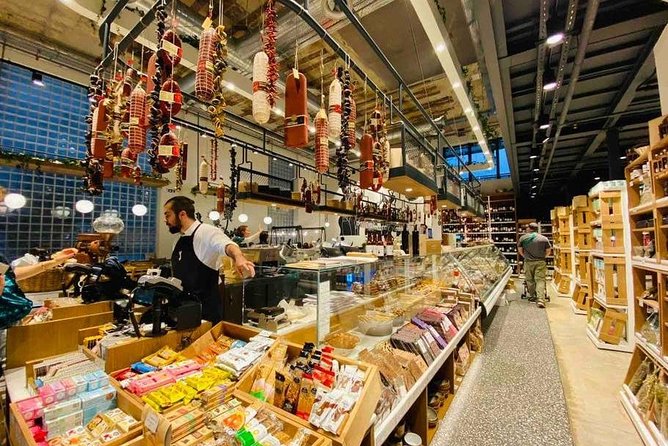
The route then enters the Commercial Triangle, centered around Agia Eirini. This part of Athens mixes old trade streets with cafés, boutiques, and food shops. It is a good setting for discussing the way traditional Greek products fit into modern city life.
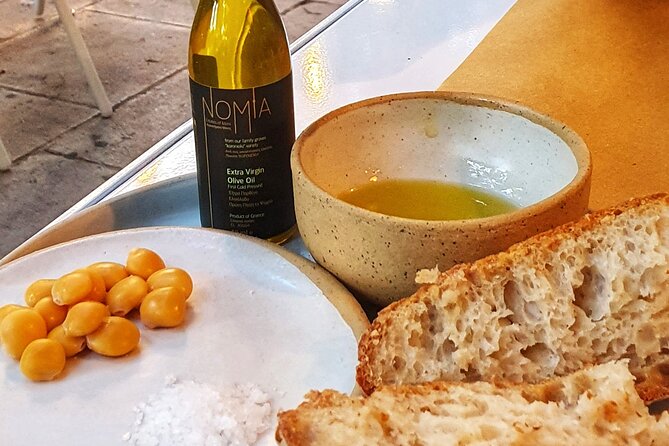
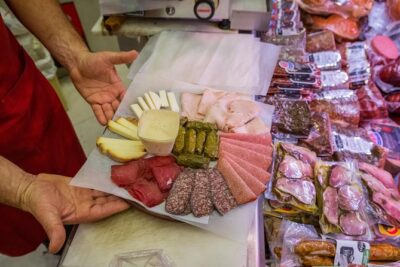
At a local deli, you can expect premium Greek products such as olive oil, honey, cheeses, olives, bread, and tapenades. The sample menu lists Kalamata olives, local cheeses, and tapenades as starters. This may sound modest, but it is an important introduction to Greek eating: quality ingredients, strong flavors, and food meant to be shared.
The olive oil tasting is particularly useful if you plan to shop for food in Greece. Your guide can explain what you are tasting and how products such as oil, cheese, and honey are used at home. You also get a chance to ask about what to buy during the rest of your trip.
This is a good point to slow down and ask questions. Greek food is often reduced to a short list of familiar dishes, but the deli stop broadens the picture before the tour moves to more recognizable street food.
Aiolou and the Greek street-food stop
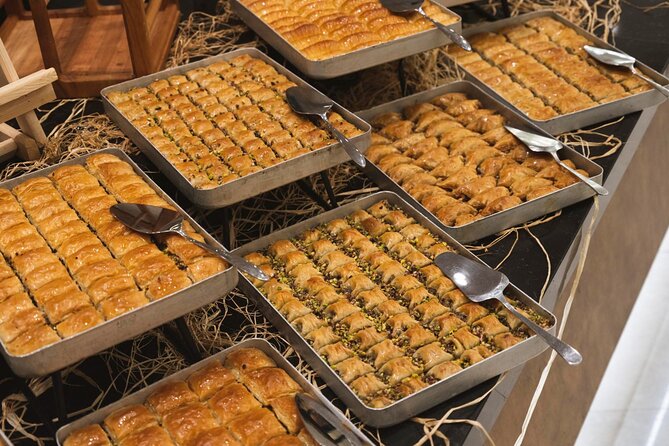
At Aiolou, the focus shifts to casual Greek comfort food. Depending on the arrangements that day, you might receive souvlaki, a gyro-style serving, spanakopita, or a vegetarian option.
Souvlaki is one of the best foods to try in Athens because it is quick, local, filling, and easy to compare from one place to another. Spanakopita gives you something different, with crisp pastry and a savory filling. The exact tasting can vary, but the aim is clear: show you the food Athenians eat without ceremony.
Several guides have been praised for explaining where dishes come from, how they are made, and how families eat them. That context helps. A plate of food becomes more memorable when you know how it fits into daily life rather than treating it as a photo stop.
The portions are not token samples. Multiple people found the food generous, and one guide specifically warned participants to arrive hungry. If you plan a major dinner immediately afterward, you may regret it.
Close by, and nothing like it:
- Athens: Acropolis & up to 5 Archaeological Sites Combo Pass
★ 4.4 · 12,619 reviews - Athens: Acropolis Ticket with Optional Audio or Live Guide
★ 4.2 · 11,055 reviews - Athens: Acropolis, Parthenon & Acropolis Museum Guided Tour
★ 4.8 · 9,316 reviews - Athens: Acropolis and Parthenon Guided Walking Tour
★ 4.6 · 5,882 reviews
Psyrri and the family-run taverna
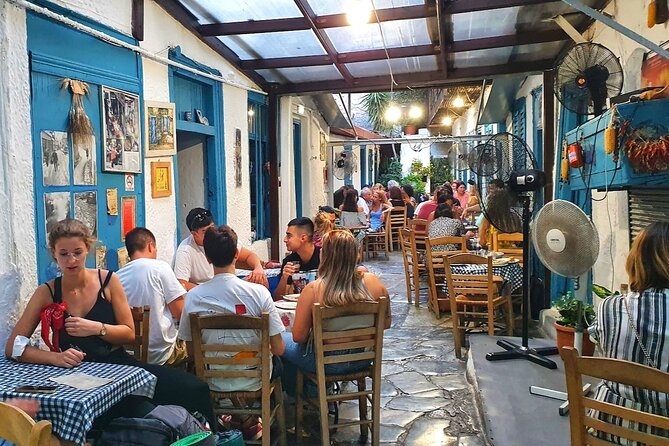
Psyrri brings a different mood. The neighborhood is known for street art, local bars, independent shops, and a creative feel. You will walk through the area before settling into a family-run taverna for a shared meal.
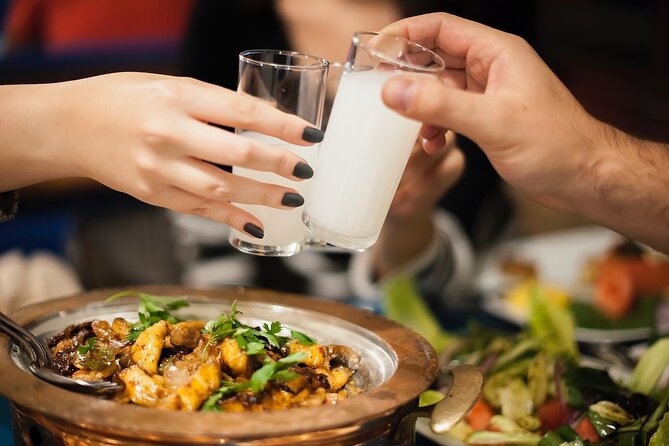
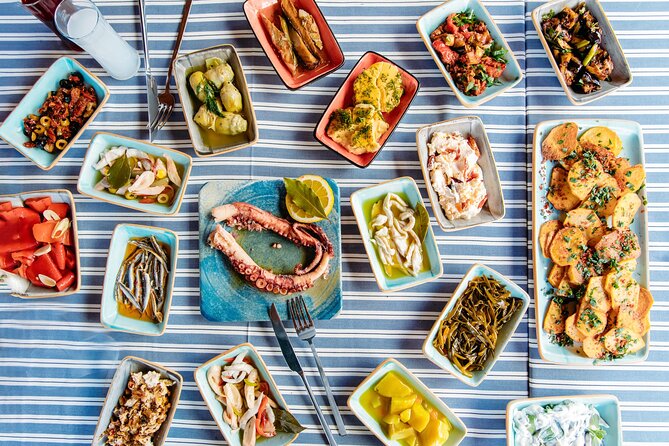
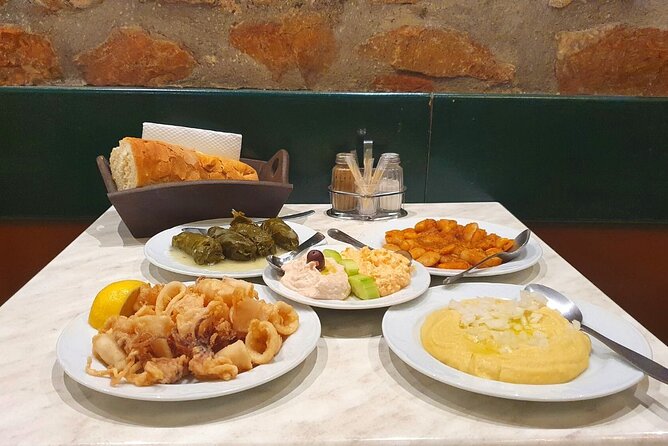
This is where the tour becomes most social. Greek meals are built around sharing, and the menu may include dishes such as saganaki, dolma, zucchini fritters, salads, meat dishes, or other meze-style plates. The food is placed in the middle, so you can try several things rather than commit to one main course.
Local drinks are part of the experience. You may taste ouzo, tsipouro, or wine with the meal. Your guide explains how Greeks toast, eat slowly, and treat a meal as a social occasion. That lesson can be just as valuable as the food itself.
The family-run setting also gives the guide room to discuss home cooking and regional traditions. Emi, in particular, has been praised for sharing stories connected to Kalamata and for explaining the food through personal experience. Other guides, including Yota and Fotis, have been singled out for bringing humor, history, and energy to the meal.
One practical issue is sound. Street noise and busy restaurants can make spoken explanations difficult to follow. Stay close to the guide and ask for repetition when needed. A quiet dining room should not be assumed.
Monastiraki and the sweet finish
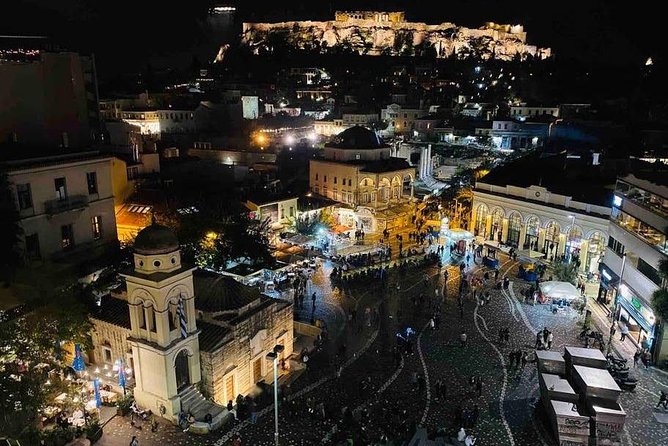
The final stop is Monastiraki, with views toward the Acropolis and the old Plaka district. Finishing here is convenient because Monastiraki is one of Athens’ main central areas, and you can continue exploring after the tour.
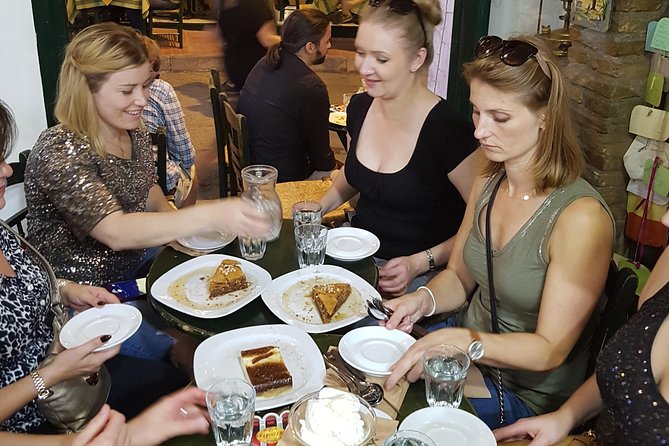
Dessert may include an orange cake, baklava-style sweets, sweet spoon preserves, or masticha ice cream. Masticha has a distinct flavor made from the resin of the mastic tree, and the ice cream offers a memorable way to end the meal.
You will also taste a special local product with a flavor found only in Greece, according to the tour description. The exact item can vary, but it adds a sense of discovery beyond the standard baklava-and-coffee ending.
This last stop is more than a sugar break. Greek desserts often use citrus, syrup, nuts, fruit preserves, and unusual local flavors. Your guide can help you understand the difference between a dessert you might find anywhere and one tied to Greek ingredients and habits.
How much food do you really get?
The advertised tastings add up to a substantial meal. A typical progression can include:
- Olives, cheeses, tapenades, bread, honey, or olive oil
- Souvlaki, gyro-style street food, or spanakopita
- Several meze plates at the taverna
- Ouzo, tsipouro, wine, or other drink pairings
- Orange cake, baklava-style sweets, spoon preserves, or ice cream
The menu is not necessarily identical at every departure. Food tours need some flexibility, and the exact dish may depend on the day’s local arrangements. Still, you should expect more than a few bites.
For me, that is where the $107.63 price makes sense. You are paying for a 3.5-hour guided walk, several food stops, drinks, a full shared meal, and access to local places you might not find easily on your own. It is not the cheapest way to eat in Athens, but it is reasonable if you value an introduction to the city and expect to use the restaurant advice afterward.
If you already know Athens well and prefer to choose your own inexpensive meals, the cost may feel high. For a first visit, especially if you want food and orientation in one booking, the value is stronger.
Dietary needs, walking, and group comfort
Vegetarian options are available at every stop. Nut-free choices can be arranged, but the operator cannot guarantee that food has no traces of nuts. Gluten-free, vegan, low-carb, and lactose-free diets have limited options.
Serious allergies and dietary requirements should be shared before the tour. Do not wait until the first stop. The more specific you are in advance, the better the operator can judge if the experience suits you.
The tour is near public transportation, starts at Syntagma Square, and ends at Monastiraki Square. Both meeting points are central, but the route itself is on foot. Wear supportive shoes and bring a refillable bottle or flask. Water is not listed as an included item.
Most people can take part, but this is not an ideal choice if walking is difficult. The route includes several sections between stops, and one part of the walk was specifically described as long. A private tour may be the better choice if your group needs a slower pace or more frequent breaks.
The experience is offered in English and accepts mobile tickets. Free cancellation is available up to 24 hours before the start time. If the minimum number of participants is not reached, the operator offers another date or a full refund.
The guide can make or break the evening
The food is important, but the guide shapes the experience. The strongest guide reports point to a mix of clear food explanations, Greek history, personal stories, and good humor.
Emi, also referred to as Emmi in some feedback, has been praised for explaining food, language, culture, and family traditions. Yota has been noted for combining history, food, and fun. Fotis has been described as high-energy and well informed about Greek culture and the surrounding neighborhoods. Jenny has received praise for her English, warmth, and ability to make solo participants feel comfortable.
Amy and Marina have also been praised for their enthusiasm and food knowledge. You may not receive a particular guide, but the repeated emphasis on guide quality is worth noting. Ask questions. The more curious you are, the more you will get from the walk.
Tipping is not required, but it is appreciated if you enjoyed the guide’s work. The small group makes it easier to have a real conversation rather than simply follow someone holding a sign.
Who should book this Athens food tour?
I would choose this tour for a first or second day in Athens. You get your bearings, sample many core Greek foods, see several central neighborhoods, and collect advice for later meals.
It also suits solo visitors, couples, families, and small groups who enjoy trying several dishes in one evening. The shared plates encourage conversation, and the group size is small enough that solo participants do not have to feel stranded.
Food lovers who have already done several city food walks should still find value in the combination of street food, deli products, meze, local drinks, and desserts. The experience is less about one signature dish and more about how Greek eating fits together.
I would hesitate if you dislike walking, need strict control over every ingredient, or want a quiet, formal dinner. Noise, movement, and changing food choices are part of the format.
Should you book it?
Book it if you want a generous, practical introduction to Greek food with a guide who can explain the customs behind the dishes. The route covers a useful slice of central Athens, and the meal is substantial enough to make the price easier to justify.
Skip it if you prefer to eat cheaply and independently, or if walking and limited dietary choices create problems. Otherwise, schedule it early in your stay, arrive hungry, wear good shoes, and use the guide’s restaurant tips for the days that follow.
FAQ
How long does the Athens Greek Food Tour last?
The tour lasts approximately 3 hours and 30 minutes.
Where does the tour start?
The tour starts at Syntagma Square, Plateia Syntagmatos, in Athens.
Where does the tour end?
The tour ends at Monastiraki Square.
How large is the group?
The maximum group size is 12 people. The usual group is described as approximately 10 to 12 participants.
What food is included?
You can expect Greek products such as olives, cheeses, olive oil, honey, bread, and tapenades, plus street food such as souvlaki or spanakopita, a meze-style meal, and Greek desserts.
Are drinks included?
Local drinks such as ouzo, tsipouro, or wine may be served with the food.
Are vegetarian options available?
Vegetarian options are available at every stop.
Can the tour accommodate food allergies?
You should report serious allergies and dietary requirements in advance. Nut-free choices are available, but traces of nuts cannot be ruled out. Gluten-free, vegan, low-carb, and lactose-free choices are limited.
Is the tour suitable for people with limited mobility?
The tour includes regular walking between stops. Most people can participate, but it may be difficult if you cannot keep pace with the group. A private tour can offer more flexibility.
What is the cancellation policy?
You can cancel up to 24 hours before the start time for a full refund. Cancellations or changes made less than 24 hours in advance are not accepted.
New on the Athens shelf
- Small-Group Wine Tour in Athens with Tasting★ 5.0 · 33 reviews
- Acropolis of Athens, Parthenon and Acropolis Museum private tour with dinner★ 5.0 · 77 reviews
- Private Athens Transfer Airport/Port -Greek Tours-Hourly service★ 5.0 · 88 reviews
- VIP Private Guided Tour of Athens Acropolis & Plaka in a Sidecar★ 5.0 · 108 reviews
- Athens Moonlight Waling Tour with Drinks and Meze Dishes★ 5.0 · 259 reviews
- Private Athens Landmarks Layover Tour★ 4.5 · 41 reviews
- Departure Transfer from Athens City to Athens Airport★ 5.0 · 41 reviews
- Classic Athens Food Tour with Local Drink & Market Visit★ 5.0 · 34 reviews
Food & Drink, compared.

Small Group Greek Traditional Food Tour in Athens 20+ Tastings
Read our verdict →
Santorini Wine Stories: Sunset Tour with Tasting & Dinner
Read our verdict →

Food Market Visit and Cooking Class with Wine
Read our verdict →
Browse the lists this tour appears in