
Review · ANCIENT SITES
Athens: Agora and Hephaistos Temple Entrance Ticket
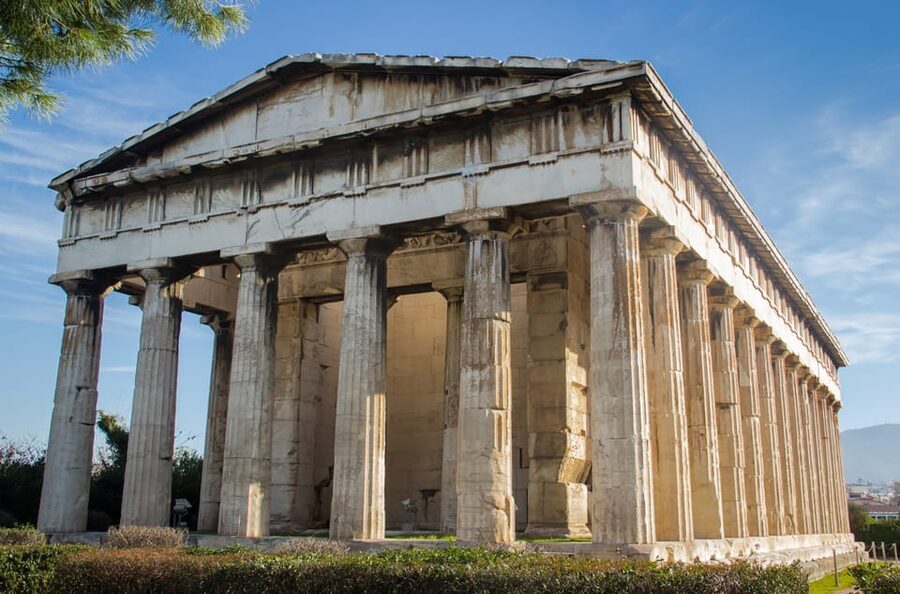
The Temple of Hephaistos is the prize here: a complete, beautifully preserved Doric temple rising above the old civic center of Athens. The Agora itself gives you something the Acropolis cannot, a look at where ordinary city life, trade, debate, religion, and politics once met.
I like the freedom of a one-day ticket, since you can walk at your own pace, and I like the easy digital entry once you reach the correct gate. The optional audio guide adds useful stories about the ruins and the Church of the Holy Apostles. The main drawback is the entrance information, which has caused confusion, and the open site offers little shade on hot days.
Key points to know
- Hephaistos Temple is the star attraction: It is one of the best-preserved ancient Greek temples anywhere.
- The Agora explains daily Athenian life: You see more than scattered stones, including political, commercial, religious, and meeting spaces.
- Use the Thissio Square entrance: Entry and exit have been directed there, rather than to an older entrance shown in some maps.
- The audio guide is optional: It comes in English, German, Spanish, Italian, and French, but its route may not perfectly match the current entrance.
- Your time slot matters: Entry is allowed only at the selected time, or within 15 minutes before or after it.
- The site takes time to walk: You could spend several hours here, especially if you include the museum and stop often.
Why the Ancient Agora deserves time beyond the Acropolis
The Acropolis gives you Athens at its most monumental. The Ancient Agora gives you Athens at street level.
This was the city’s marketplace and public center, a place where business, elections, lawsuits, religious activity, speeches, and casual meetings all took place. Much of the Agora is now foundations and low walls, so you need to use your imagination. Yet the layout makes sense as you walk it, and the surviving buildings give the ruins a strong sense of place.
I find this site especially useful after visiting the Acropolis. You begin to see how the famous temple above the city connected to the people below. The Agora was not simply a collection of old buildings. It was part of the machinery of Athenian life.
The site is also close enough to the main Acropolis area for a straightforward walk. That makes it a practical addition to a day in central Athens, though you should not treat it as a quick ten-minute stop. The grounds are broad, and the uphill paths, open sun, and many archaeological remains reward a slower visit.
More Ancient Sites in Athens
- Athens: Acropolis & up to 5 Archaeological Sites Combo Pass
★ 4.4 · 12,619 reviews - Athens: Ancient Greek Theater Performance
★ 4.7 · 2,481 reviews - Athens: National Archaeological Museum Ticket & Audio Guide
★ 4.3 · 1,330 reviews
The Temple of Hephaistos is the main event
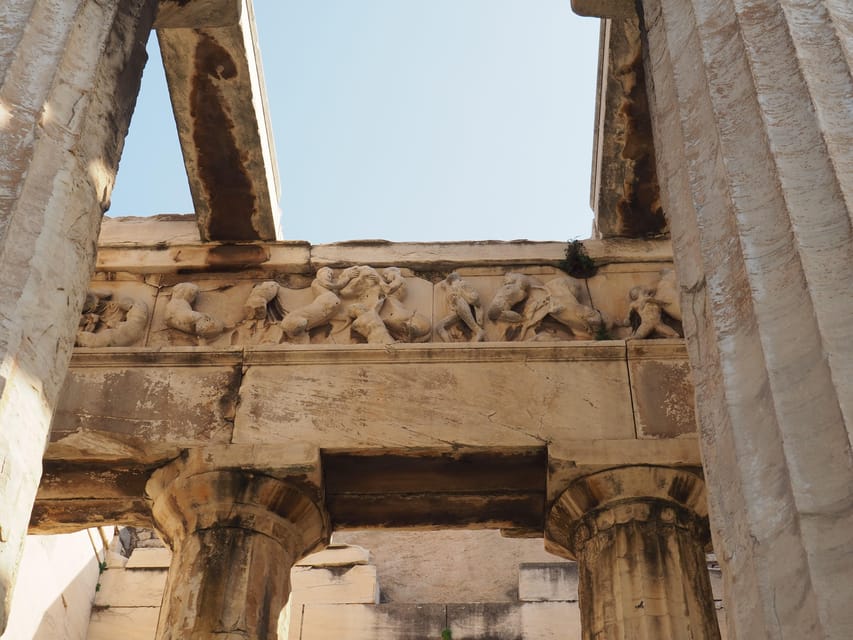
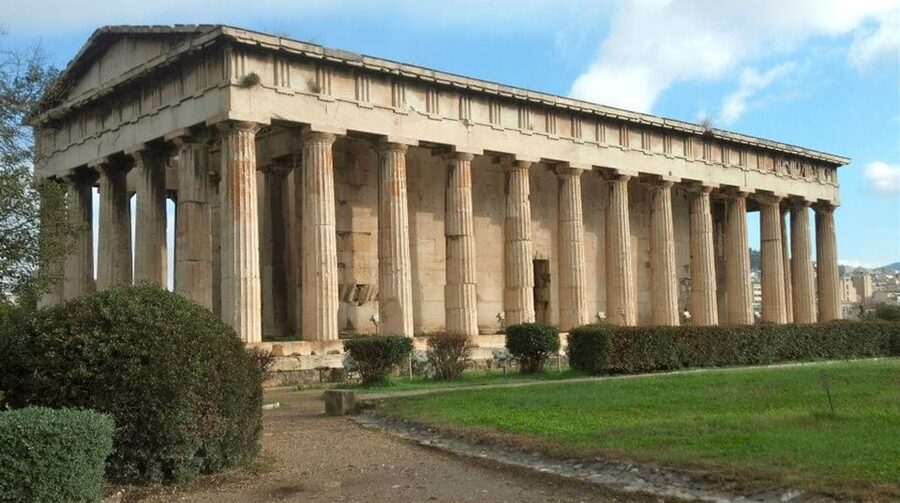
The Temple of Hephaistos is the clearest reason to buy this ticket.
Dedicated to Hephaistos, the god associated with metalworking and craftsmanship, it is a Doric temple with its columns, proportions, and overall structure remarkably intact. Compared with many ancient Greek temples, where only fragments remain, this one lets you understand what a complete temple looked like.
You cannot simply walk inside and explore the interior, but the exterior provides plenty to study. Walk around it slowly. Look at the columns, the pediment, and the way the temple sits above the Agora. From different parts of the grounds, you get changing views of the building and the surrounding ruins.
I like this stop because it does not require a specialist background. You can appreciate its shape immediately, then use the audio guide or nearby information to add detail. It is also an excellent place for photographs, particularly if you want a view that feels less dominated by modern Athens.
The temple is on higher ground, so reaching it involves walking uphill. That is manageable for most people, but comfortable shoes matter. In summer, bring water, sunscreen, and a hat. The open setting offers limited shade, and one visitor had to cut the visit short after overheating.
Walking through the Agora’s public world
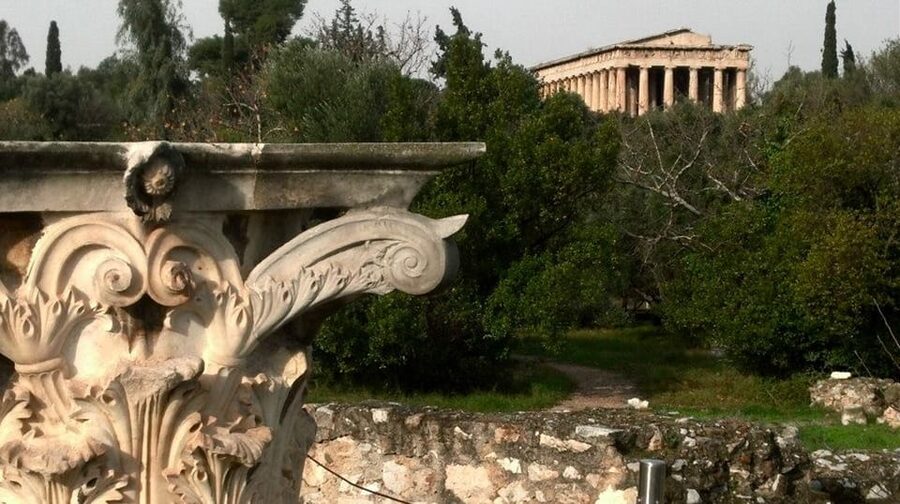
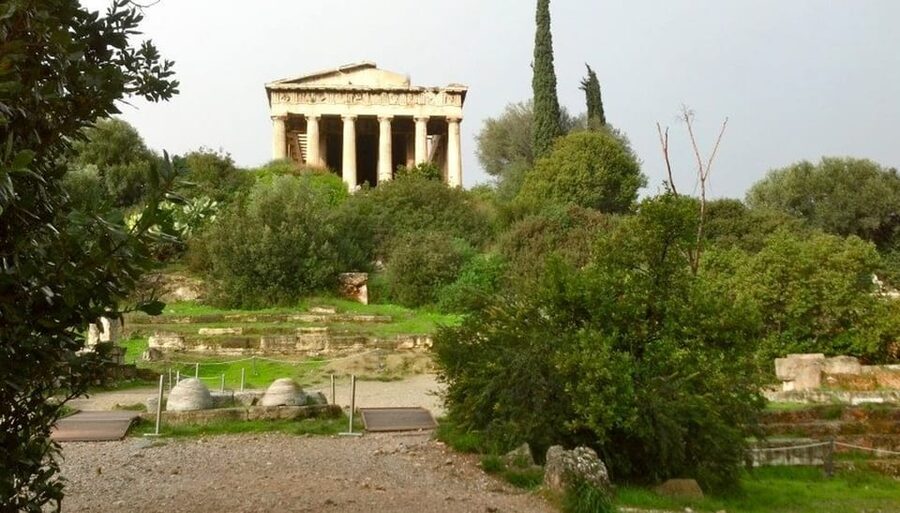
After the temple, give yourself time to explore the wider archaeological site. The ruins include traces of buildings that once served political, commercial, religious, and civic purposes.
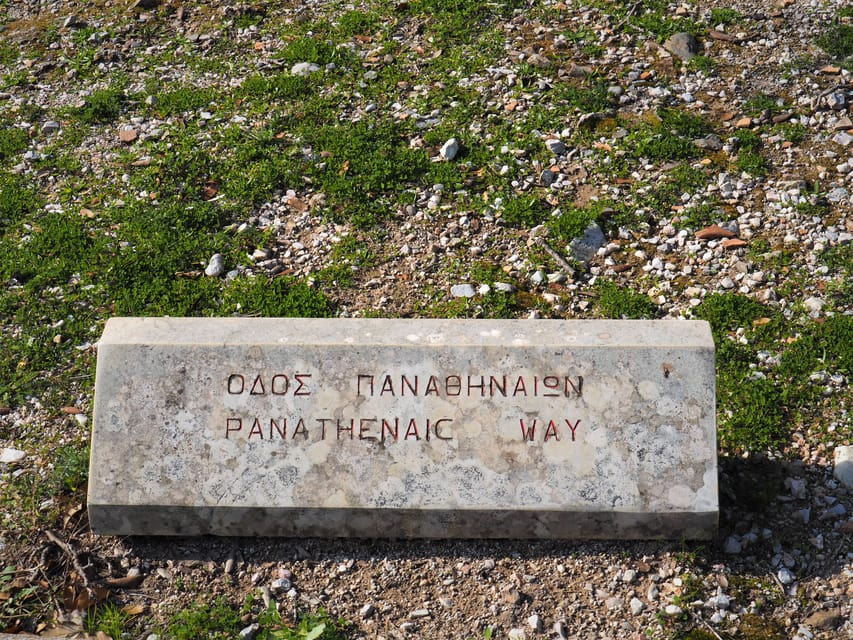
You will not see every ancient structure intact. Instead, you walk among foundations, columns, steps, walls, and partial remains. That can sound modest on paper, but the arrangement helps you picture a city organized around public life. This is where Athenians came to buy goods, meet other citizens, hear arguments, take part in public business, and attend to religious matters.
Some parts require patience. A broken foundation does not explain itself, and the experience is better if you stop at the information panels or listen to the audio guide. The optional commentary adds small stories and side details that can turn an unmarked stretch of stone into part of a larger picture.
Allow at least a couple of hours if you want to walk without rushing. One person spent four hours seeing the entire site, though that included a thorough pace. If you are combining the Agora with the Acropolis, two hours may be enough for the major sights, but a longer visit gives the place more meaning.
The Church of the Holy Apostles and the Christian chapter
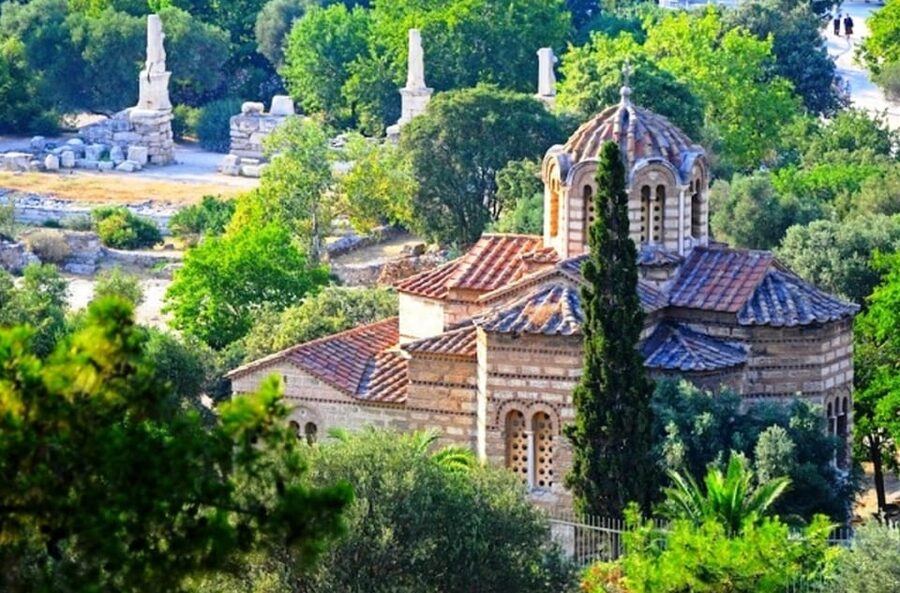
The Church of the Holy Apostles adds a different layer to the site.
The Ancient Agora is usually associated with classical Athens, but this small church reminds you that the area continued to matter long after the city’s famous temples were built. It is connected with the Christian history of Athens and is described here as the place where St. Paul used to preach.
That connection makes the church worth more than a quick photograph. You are looking at a later building within an ancient civic center, a useful reminder that historic sites are often reused and reshaped over many centuries.
The church is one of the included attractions, along with the Temple of Hephaistos. If you use the audio guide, listen for its explanation before moving on. The Agora is easier to understand when you notice these different periods rather than treating every ruin as part of one single ancient moment.
Close by, and nothing like it:
- Athens: Acropolis Ticket with Optional Audio or Live Guide
★ 4.2 · 11,055 reviews - Athens: Acropolis, Parthenon & Acropolis Museum Guided Tour
★ 4.8 · 9,316 reviews - Athens: Acropolis and Parthenon Guided Walking Tour
★ 4.6 · 5,882 reviews - Athens, Piraeus, and Coastline: Blue Hop-On Hop-Off Bus
★ 3.9 · 4,849 reviews
The museum adds useful context
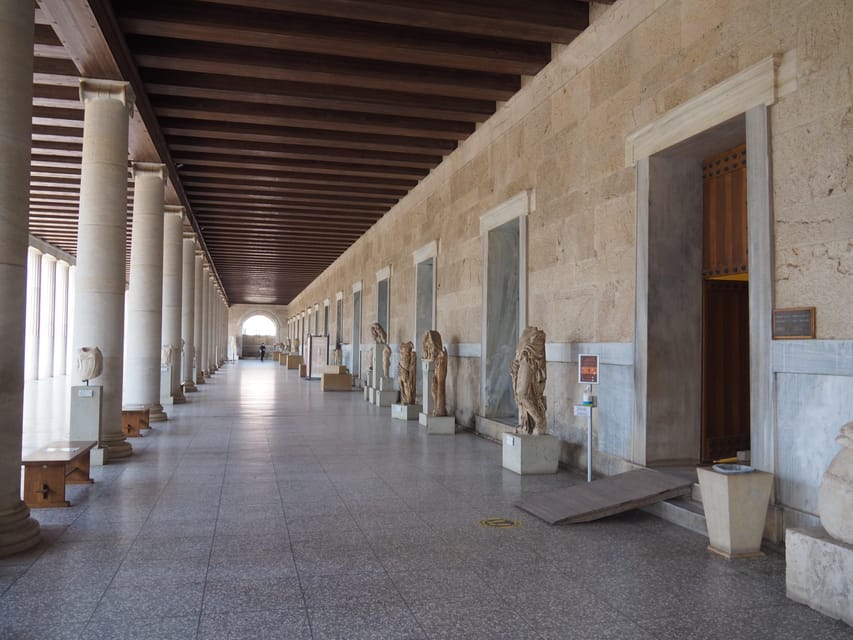
The Agora museum is worth including if it is open during your visit. One person specifically found it worthwhile, and it can help solve a common problem at archaeological sites: understanding what the fragments once did.
The outdoor ruins show foundations and structures in place. A museum can give you objects, labels, and a closer look at the tools, decorations, and everyday items connected with the site. The supplied information does not specify the museum’s opening hours or whether a separate ticket is required, so check locally before planning your visit around it.
If you have limited time, see the Temple of Hephaistos first, then the church, then the museum. If you have several hours, follow the site in a relaxed loop and use the museum as a final indoor stop.
Getting to the current entrance
The entrance is the practical weakness of this experience.
The current instructions say visitors enter and exit from Thissio Square, also called Jacqueline de Romilly Square, on the pedestrian street of Apostolou Pavlou. This arrangement was scheduled to remain in place until the end of 2025, so check the latest instructions if your visit is later than that.
Some digital maps and older directions have pointed people toward an entrance that is no longer in use. The result has been extra uphill and downhill walking, locked gates, and anxiety about missing a timed entry. The distance may only add about ten minutes each way, but it is frustrating when you have a fixed slot.
My advice is simple: do not follow an old pin without checking the current entrance details. Approach from the Apostolou Pavlou pedestrian area and look for the active entrance near Thissio Square. If you are already at the wrong gate, do not keep searching around the back of the site. Ask staff or local pedestrians for the current entrance.
This matters because your ticket is valid only for the selected time, with entry allowed from 15 minutes before to 15 minutes after. The site is not a free-timing attraction where you can arrive whenever convenient.
How the timed digital ticket works
The ticket is delivered for the specific date and time slot you choose. You go directly to the archaeological site, then scan the ticket at the ticket-validating machines.
That process is straightforward once you reach the correct gate. Several people found the scan-and-enter system easy, and pre-purchasing helped them avoid a long line. At quieter times, though, the ticket may cost more than buying directly at the site. One person found there was little crowding and felt the advance purchase had not been necessary.
The value depends on your priorities:
- If you want certainty for a busy date, the timed ticket can be useful.
- If you are visiting in a quieter period and the ticket office has availability, buying in person may be cheaper or simpler.
- If you book online, treat the time slot as fixed. The date and entry time cannot be changed.
- The ticket is listed at $30 per group up to one person, so confirm the final price and ticket terms before paying.
The offer is for a regular adult-price ticket. People of all ages can use it, but they pay the full price under this offer. From April 1, 2025, EU citizens under 25 and non-EU citizens under 18 can receive free admission by presenting identification at the ticket booth. People with disabilities can also receive free admission with a Disability Certificate. These concessions are handled at the ticket booth, so bring the required proof.
Is the audio guide worth adding?
The self-guided audio tour is designed for independent sightseeing. You listen through headphones while walking, with narration from professional guides and storytelling specialists. It is available in English, German, Spanish, Italian, and French.
I like the idea here because the Agora needs explanation. A temple is easy to recognize, but political buildings and foundations are harder to read. Short stories and historical notes can help you connect a bare outline of stones with the people who once used the place.
The audio guide also includes a map, which can be useful for finding your way around. However, the route may begin at an old entrance rather than the current one. That can make the opening directions confusing, especially if you are already trying to reach the site on time.
One person found the commentary’s extra stories enjoyable but had trouble following the route. Another preferred the written signs and found them easier than the audio tour. I would choose the audio option if you enjoy listening while walking and want more background. I would skip it if you prefer to move freely, read at your own pace, or already have a good guidebook.
Bring your own headphones if the booking instructions do not specify that they are supplied. The information confirms the audio guide but does not detail the equipment provided.
Comfort, access, and the best time to visit
The site is wheelchair accessible, which is important, though the grounds include uphill walking and uneven archaeological areas. Ask at the entrance if you need route guidance, since the most comfortable path may not be obvious.
Wear shoes with good support. This is not a quick paved museum visit. You will walk between ruins, climb toward the temple, and spend time outdoors. Bring water, sunscreen, and a hat, especially in warm weather.
There is not much shade. If you visit during a hot part of the day, keep the visit flexible and take breaks when possible. The open setting is part of the appeal, since it gives you views across the site and toward the Acropolis, but it also leaves you exposed to the sun.
A quieter visit can make it easier to study the temple, follow the signs, and photograph the ruins. A busy visit may make advance booking more useful. The supplied information does not give a precise crowd calendar, so check availability for your chosen date rather than assuming every day will be equally busy.
Who will get the most from this ticket?
This experience suits you if you have already planned to see the Acropolis and want to understand the city around it. It is also a good choice for anyone interested in ancient politics, public life, architecture, religion, or the transition from classical Athens to later Christian Athens.
It works particularly well for:
- Independent visitors who do not need a live guide.
- People who want to walk at their own pace.
- History fans who will spend time reading signs and examining foundations.
- Families or mixed-age groups who prefer a flexible visit.
- Anyone who wants the Temple of Hephaistos without booking a full guided tour.
It is less suitable if you want a live expert explaining each building in person. A live guided tour is not included. It may also frustrate you if you dislike fixed entry times, outdoor walking, or sites where many structures survive only as foundations.
Should you book the Agora and Hephaistos Temple ticket?
Book it if the Temple of Hephaistos is high on your Athens list, you want the convenience of a reserved entry, or you plan to spend two to four hours understanding the Agora at your own pace.
The strongest reason to go is the temple. The strongest reason to stay is the wider civic setting, where Athens feels less like a collection of famous monuments and more like a functioning ancient city. The main caution is the entrance confusion, so verify the current gate before leaving and set out early enough to protect your time slot.
The audio guide is a useful extra, but not essential. If you like storytelling, add it. If you prefer signs and independent wandering, the site can still work well without it. For a first visit to central Athens, this is a worthwhile companion to the Acropolis, provided you arrive prepared for sun, walking, and a little archaeological detective work.
FAQ
Where is the Ancient Agora entrance?
The stated entrance and exit are at Thissio Square, also called Jacqueline de Romilly Square, on the pedestrian street of Apostolou Pavlou. This arrangement was scheduled to remain in place until the end of 2025, so check current instructions for later visits.
How long is the ticket valid?
The ticket is valid for one day, but entry is tied to the selected time slot. You may enter only at that time or within 15 minutes before or after it.
Can I change my travel date or entry time?
No. The travel date and entry time cannot be amended.
Is a live guide included?
No. This is an independent visit. A self-guided audio tour is included only when you select that option.
Which languages are available for the audio guide?
The audio guide is available in English, German, Spanish, Italian, and French.
What does the ticket include?
It includes entry to the Temple of Hephaistos and the Church of the Holy Apostles. The self-guided audio tour is included only with the relevant booking option.
Is the site wheelchair accessible?
Yes, the activity information lists the archaeological site as wheelchair accessible. The grounds do include uphill walking and archaeological surfaces.
Are reduced or free tickets available?
This offer provides a regular adult-price ticket for people of all ages. From April 1, 2025, EU citizens under 25 and non-EU citizens under 18 can receive free admission with identification at the ticket booth. People with disabilities can receive free admission with a Disability Certificate.
What should I bring?
Bring comfortable shoes, a hat, a camera, sunscreen, and water. There is limited shade across the site.
New on the Athens shelf
- Acropolis of Athens, Parthenon and Acropolis Museum private tour with dinner★ 5.0 · 77 reviews
- Small-Group Wine Tour in Athens with Tasting★ 5.0 · 33 reviews
- Private Athens Transfer Airport/Port -Greek Tours-Hourly service★ 5.0 · 88 reviews
- VIP Private Guided Tour of Athens Acropolis & Plaka in a Sidecar★ 5.0 · 108 reviews
- Athens Moonlight Waling Tour with Drinks and Meze Dishes★ 5.0 · 259 reviews
- Private Athens Landmarks Layover Tour★ 4.5 · 41 reviews
- Departure Transfer from Athens City to Athens Airport★ 5.0 · 41 reviews
- Classic Athens Food Tour with Local Drink & Market Visit★ 5.0 · 34 reviews
Ancient Sites, compared.
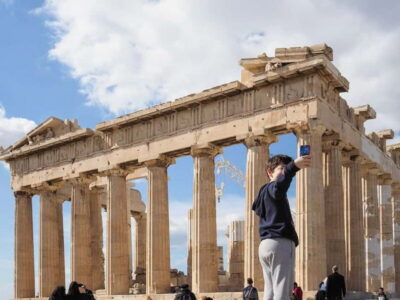
Acropolis & up to 5 Archaeological Sites Combo Pass
Read our verdict →

National Archaeological Museum Ticket & Audio Guide
Read our verdict →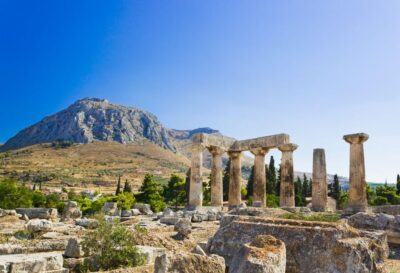
Ancient Corinth Day Trip with Canal & VR Guide
Read our verdict →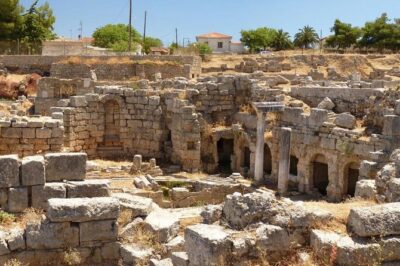
Private Biblical Tour Ancient Corinth & Isthmus Canal from Athens
Read our verdict →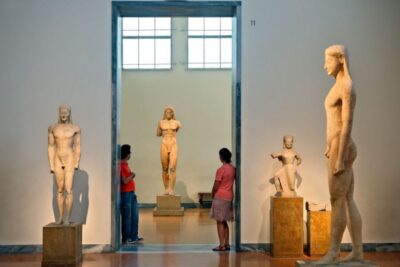
National Archaeological Museum Ticket w/ Opt. Audio
Read our verdict →
Ancient Olympia: Archaeological Site and Museum Entry Ticket
Read our verdict →
Delphi: Archaeological Site & Museum Ticket with Audio Tours
Read our verdict →Browse the lists this tour appears in