Review · ATHENS TOURS
Unexpected Athens Orientation Tour
Athens reveals itself in layers on this four-hour walk, from royal palaces and grand 19th-century civic buildings to Ottoman lanes, central markets, and the hard-edged streets around Omonia. The route gives you a useful answer to a common Athens question: how did an ancient city become a modern European capital?
I like the neighborhood-by-neighborhood route, which takes you beyond the standard ancient sights, and I like the city map showing changes across 2,500 years. Guides including Andreas, Simos, and Antigoni have earned praise for clear explanations, friendly pacing, and strong local insight.
The main consideration is physical: you’ll walk for four hours through several central districts, so bring comfortable shoes and expect city streets rather than a relaxed museum visit. The World War II prison stop is also closed on Mondays and Tuesdays.
Key points to know before booking
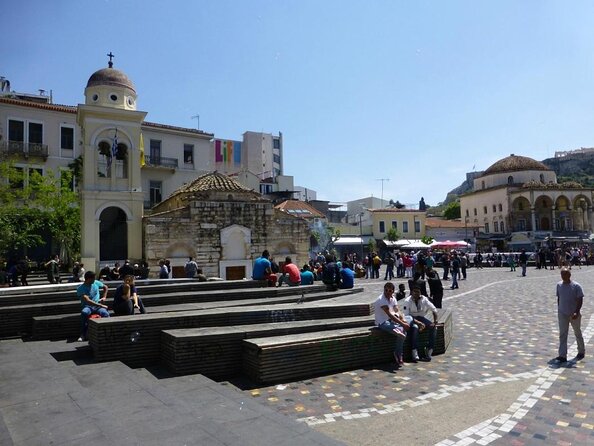
- Syntagma to Monastiraki: The walk begins at Constitution Square and ends at Monastiraki Square, giving you a practical route through central Athens.
- Four distinct districts: Kolonaki, Exarcheia, Psiri, and Monastiraki each reveal a different side of the city.
- A WWII prison stop: You may descend to a notorious wartime prison site, but it is closed Mondays and Tuesdays.
- Grand civic architecture: The Parliament, Academy, University, and National Library help explain the making of modern Athens.
- Ottoman traces remain: Psiri and Monastiraki preserve parts of the old city’s Ottoman-era character.
- English or French guiding: Private groups are available, and the supplied city map helps place each period in context.
Why this Athens walk feels different

Many first visits to Athens revolve around the Acropolis, the Ancient Agora, and the Plaka. Those places matter, but they do not explain the whole city. This walk takes you into the spaces between the headline sights, where royal government, commerce, immigration, protest, war, and ordinary city life have left their mark.
I find that approach useful because Athens can feel confusing at first. Ancient ruins sit beside apartment blocks. Neoclassical institutions share streets with rougher commercial districts. Ottoman traces survive near modern cafés and busy squares. The guide’s job is to connect those pieces rather than simply point at buildings.
The city’s recorded past reaches back more than 3,400 years, but this experience pays special attention to the transition from old settlement to modern capital. You’ll see how 19th-century Athens used government buildings, schools, libraries, and palaces to present itself as a European capital after independence.
You also get a look at the less polished side of the city. Omonia, Psiri, Exarcheia, and the central markets are not presented as decorative backdrops. They help you understand the social and political pressures that shaped Athens and continue to shape daily life.
A few more Athens options worth putting side by side
- Athens: Acropolis & up to 5 Archaeological Sites Combo Pass
★ 4.4 · 12,619 reviews - Athens: Acropolis Ticket with Optional Audio or Live Guide
★ 4.2 · 11,055 reviews - Athens: Acropolis, Parthenon & Acropolis Museum Guided Tour
★ 4.8 · 9,316 reviews
Starting at Syntagma and entering Kolonaki
The meeting point is at Syntagma, or Constitution Square, with two possible starting locations depending on the option you book. This is a sensible beginning because the square sits at the center of modern Athens and near the Parliament.
From here, the route moves toward Kolonaki. The district helps set up the story of the modern capital, with its connection to government, wealth, formal streets, and the city’s 19th-century development.
This part of the walk is especially useful if you want more than a quick photograph of the Parliament. You’ll learn how major civic buildings contributed to the construction of a contemporary Greek state. The Academy, University, and National Library are also part of the wider architectural story, and their design reflects the period’s effort to link new Athens with European ideals.
The tour also includes 19th-century landmarks tied to the industrial revolution and royal palaces. The supplied details do not promise entry into every building, so treat this as an exterior-focused city walk unless your guide tells you otherwise.
I like starting here because the route gives you context before it becomes more complex. You are not simply moving from attraction to attraction. You are watching the city change from formal government center to working neighborhood and old commercial quarter.
Exarcheia and Athens away from the postcard
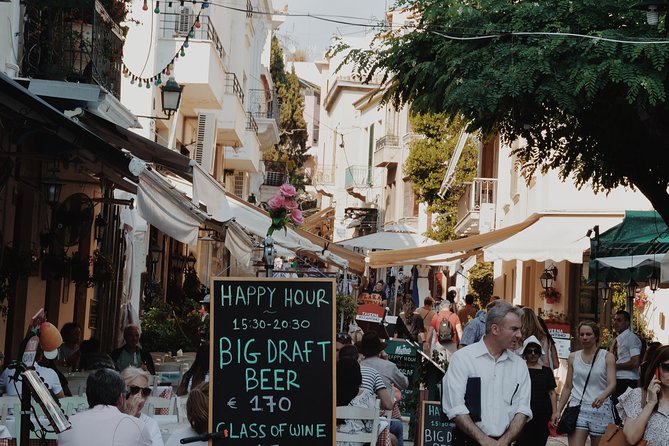
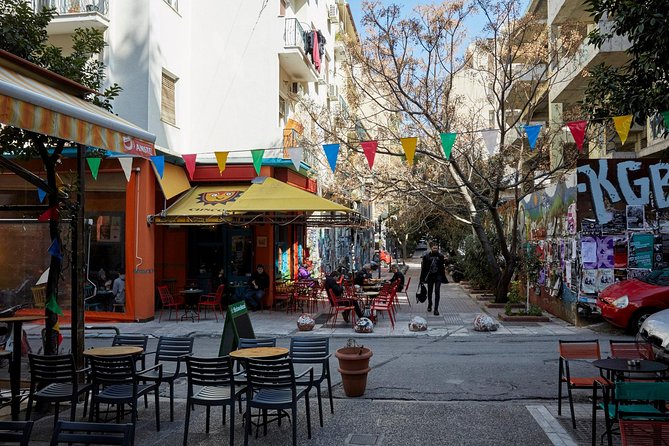
After about an hour in Kolonaki, the walk continues into Exarcheia for another guided hour. This shift is one of the tour’s strongest features. The atmosphere and appearance of the neighborhood contrast with the formal buildings around Syntagma and the central state institutions.
The point is not just to see a different district. Exarcheia helps you consider the tensions within modern Athens, including the way political ideas, social pressures, and city life meet on the street. The guide provides the background, so you can better understand why Athens feels less uniform than many European capitals.
This section may appeal most to people who have already checked off the main ancient sights. You get a sense of how the modern city works rather than another rehearsal of classical mythology.
The route is still a walking tour, not a political lecture. The best guides, including Andreas and Simos according to the supplied feedback, keep the pace moving while making room for questions. Their praised qualities were clear explanations, attention to the group, and a comfortable walking rhythm.
Still, you should know what you are booking. This is not a quiet garden stroll or a polished sightseeing loop. Central Athens can feel busy, uneven, and visually rough around the edges. That is part of the subject, but it may not suit someone seeking only grand monuments.
A wartime prison and the city beneath the surface
One of the more unusual elements is the chance to descend to a notorious prison connected with World War II. This gives the tour a darker historical turn and reminds you that Athens is not only a city of ancient temples and elegant civic buildings.
The site is closed Mondays and Tuesdays, so check the day before booking if this stop matters to you. The provided information does not say how long you spend inside or exactly what access is available, so the guide’s schedule and site conditions will determine the visit.
The prison is valuable because it shifts the time frame from antiquity and the 19th century to the upheavals of the 20th century. You begin to see Athens as a place repeatedly reshaped by war, occupation, politics, and changing governments.
The walk also refers to ancient rivers that still flow and tombs from an earlier era. These details give you a glimpse of the city’s buried geography. Athens has not simply replaced one city with another. Older routes, watercourses, burial places, and street patterns continue to influence what you see above ground.
I would not book this tour expecting a major archaeological excavation. Instead, think of these stops as brief clues woven into a city walk. Their value comes from the connection between the visible street and the older city below it.
Close by, and nothing like it:
- Athens: Acropolis and Parthenon Guided Walking Tour
★ 4.6 · 5,882 reviews - Athens, Piraeus, and Coastline: Blue Hop-On Hop-Off Bus
★ 3.9 · 4,849 reviews - Greek Food Walking Tour in Athens
★ 5.0 · 4,740 reviews - Athens: City Sightseeing Hop-On Hop-Off Bus Tour
★ 4.3 · 4,520 reviews
Psiri, Omonia, and the central markets
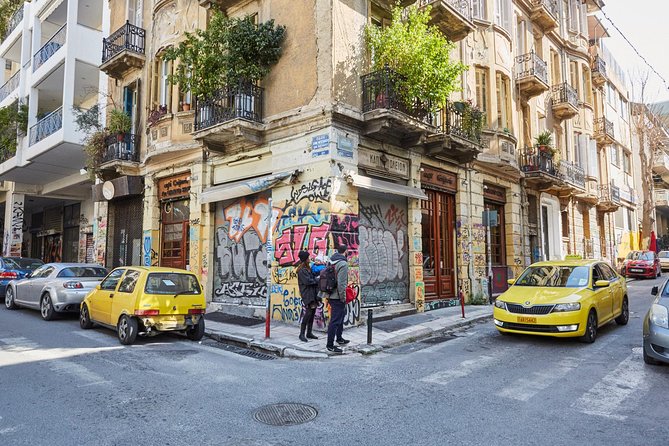
The third major neighborhood stop is Psiri, with about an hour of guided exploration. Psiri is a good place to examine the meeting of older local traditions and newer urban life. The route uses the district to explain how the old city mixed, and sometimes failed to mix, with Western European ideas.
Omonia Square and Kotzia Square are also included, along with the central markets and other central sites. These areas give the walk a more everyday character. Instead of seeing Athens only through state buildings or ancient monuments, you watch commerce and ordinary movement shape the city.
The central markets are particularly useful for orientation. They help you understand where the old city traded, gathered, and changed. Food is not included, so this is not a market tasting tour, but you may receive useful suggestions for places to eat afterward.
Antigoni, one of the named guides, is specifically associated with recommendations for a local taverna and a Greek coffee stop. Those suggestions are not part of the paid inclusions, but they show how the tour can help you plan the rest of your day.
I like this section because it gives the tour a human scale. Grand buildings explain power. Markets explain daily life. Put together, they show why Athens can feel both historic and hurried within a few blocks.
Monastiraki and the Ottoman imprint

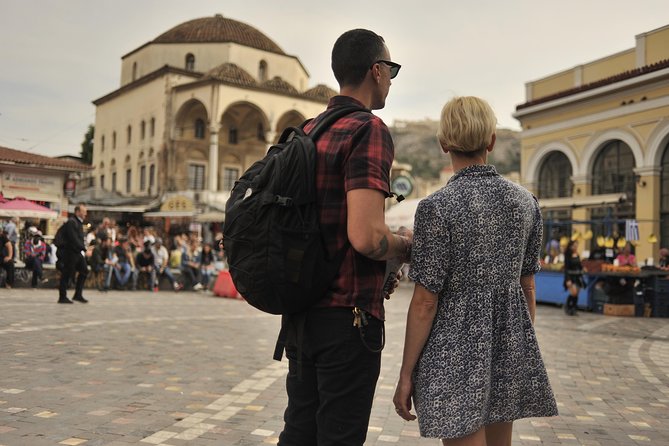
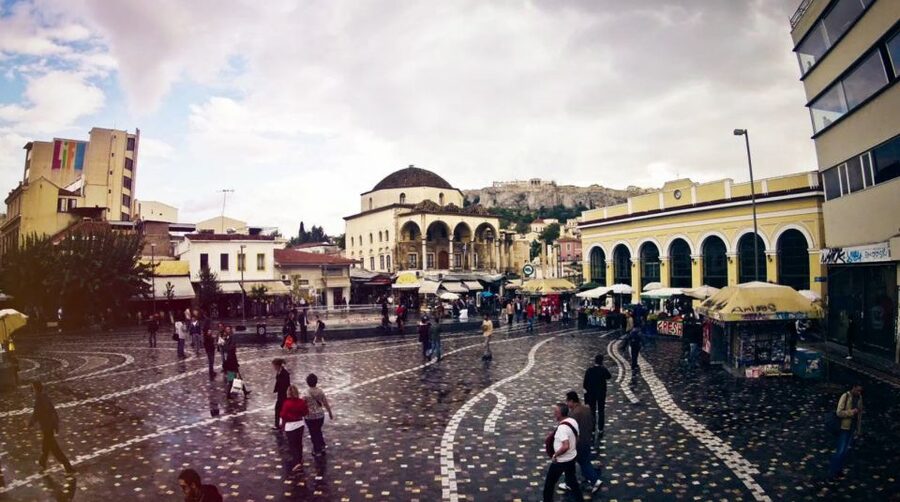
The final neighborhood section is Monastiraki, with about 30 minutes of guided time before the walk ends at Monastiraki Square. This makes the route easy to use as a first-day orientation. Afterward, you are already near one of central Athens’ main meeting points and can continue exploring on your own.
Monastiraki and Psiri preserve visible traces of the Ottoman period. The tour uses these streets to explain how older customs and urban forms survived as Athens moved toward Western European models.
That comparison is one of the best reasons to choose this experience. You are not asked to view Ottoman influence as a separate footnote. It becomes part of the city’s long story, alongside ancient foundations, royal government, modern commerce, and 20th-century conflict.
The final 30 minutes are shorter than the earlier neighborhood visits, so expect a compact finish rather than a second full tour of Monastiraki. If you want extensive time for shopping or food, plan to stay after the official end.
What the four-hour pace is really like
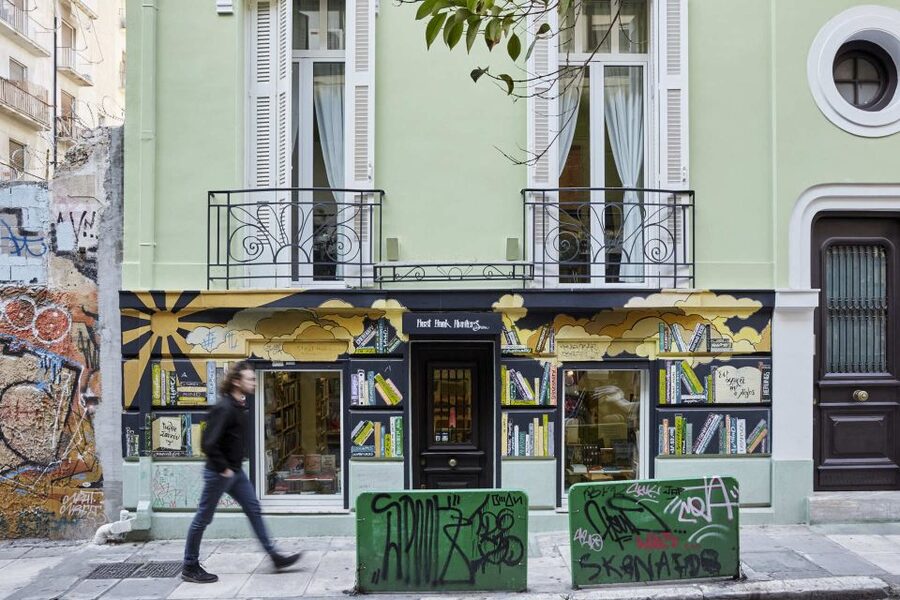
Four hours is long enough to build a picture of Athens, but short enough to fit into a first full day without taking over your schedule. The route divides roughly into one hour in Kolonaki, one hour in Exarcheia, one hour in Psiri, and 30 minutes in Monastiraki, with walking time and transitions between them.
That structure makes the tour more useful than a quick two-hour overview if you want context. You have time to ask questions and notice how one neighborhood gives way to another.
The tradeoff is stamina. You will be on your feet through central streets, and some stops may involve uneven pavement or stairs, especially around the prison site. The only stated equipment advice is comfortable shoes, but I would also plan for water and weather appropriate clothing.
The tour runs in English or French. Private groups are available, which can be worthwhile if you want the guide to adjust the pace or focus. A regular small group can also offer a friendly atmosphere without the feel of a large coach tour. The supplied feedback repeatedly highlights good pacing, attentive guides, and the benefits of a small group.
The guides make the difference
The experience depends heavily on the individual guide. Andreas is praised for explaining Athens from ancient times through present-day concerns, while Simos is noted for attentiveness and a well-judged pace. Antigoni is associated with a warm, useful approach and practical food recommendations.
Those details matter because this route contains fewer headline monuments than a conventional Athens sightseeing tour. A guide who simply names buildings would leave you with a string of stops. A guide who explains why neighborhoods changed, how institutions shaped the capital, and where different traditions meet can turn the walk into a coherent story.
The supplied feedback also includes a strong French-language experience with an excellent French-speaking guide. If language matters to you, select English or French when booking and confirm the available option.
The overall rating is 4.8 from 43 reviews, with repeated praise for the guides’ preparation, friendliness, pacing, and ability to show places people would not find alone. I would give those strengths more weight than the rating itself because they match what this particular route requires.
Is $62 a fair price?

At $62 per person, this is not the cheapest way to walk around Athens. You could visit many central streets independently for nothing. The value comes from the interpretation, route design, and access to a connected story that is easy to miss on your own.
You receive a four-hour guided walk, an English or French-speaking guide, and a city map showing the city’s changes over 2,500 years. Food, drinks, and gratuity are not included.
The price makes the most sense if you are visiting Athens for the first time and want a strong orientation before exploring alone. It can also work well on a return visit, since the route avoids relying only on the standard ancient sights. Several people with previous Athens experience found new districts and new context.
I would skip it if you prefer to move at your own pace, stop often for food, or spend four hours inside major archaeological sites. I would choose it if you want the city explained as a living place, with its awkward contrasts left visible.
Who should book this Athens experience?
You are a good match if you want to:
- See Athens beyond the Acropolis and Plaka
- Understand how ancient, Ottoman, royal, and modern periods overlap
- Visit neighborhoods you might not choose independently
- Hear about the city’s social and political challenges
- Get practical orientation for later independent walks
- Travel with a private group or a smaller walking group
- Use English or French for the tour
Families with older children may also find the changing neighborhoods more engaging than a long sequence of formal monuments. The four-hour length still requires attention and steady walking, so consider your group’s comfort before booking.
Should you book the Unexpected Athens Orientation Tour?
Book it if you want Athens explained through its streets rather than reduced to its famous ruins. The strongest parts are the route through four contrasting districts, the mix of grand institutions and everyday markets, the Ottoman-era traces, and the guide’s ability to connect the periods.
It is especially worthwhile for first-time visitors who want to get their bearings fast, and for repeat visitors who have already seen the major ancient sites. Skip it if your priority is archaeological entry, food tasting, or a slow, unstructured stroll.
Before booking, choose your language, check the starting option, and avoid Mondays and Tuesdays if the World War II prison is important to you. Bring comfortable shoes, keep the afternoon free for Monastiraki, and ask your guide for a local food recommendation at the end.
FAQ
How long does the Unexpected Athens Orientation Tour last?
The tour lasts four hours.
Where does the tour start?
There are two possible starting locations at Syntagma, or Constitution, Square. The exact meeting point may vary with the option booked.
Where does the tour finish?
The tour finishes at Monastiraki Square.
Which neighborhoods does the tour visit?
The route includes Kolonaki, Exarcheia, Psiri, and Monastiraki. It also passes through Omonia Square, Kotzia Square, the central markets, and other central Athens sites.
Is the World War II prison open every day?
No. The prison stop is closed on Mondays and Tuesdays.
What languages are available?
The tour is offered in English or French with a live guide.
Is this a private tour?
Private groups are available. The experience may also be booked in another group format, depending on the option selected.
What is included in the price?
The price includes an English or French-speaking guide and a city map showing changes across 2,500 years.
Are food and drinks included?
No. Food and drinks are not included. Gratuity is optional.
New on the Athens shelf
- Acropolis of Athens, Parthenon and Acropolis Museum private tour with dinner★ 5.0 · 77 reviews
- Small-Group Wine Tour in Athens with Tasting★ 5.0 · 33 reviews
- Private Athens Transfer Airport/Port -Greek Tours-Hourly service★ 5.0 · 88 reviews
- VIP Private Guided Tour of Athens Acropolis & Plaka in a Sidecar★ 5.0 · 108 reviews
- Athens Moonlight Waling Tour with Drinks and Meze Dishes★ 5.0 · 259 reviews
- Private Athens Landmarks Layover Tour★ 4.5 · 41 reviews
- Departure Transfer from Athens City to Athens Airport★ 5.0 · 41 reviews
- Classic Athens Food Tour with Local Drink & Market Visit★ 5.0 · 34 reviews
Athens Tours, compared.
Acropolis & up to 5 Archaeological Sites Combo Pass
Read our verdict →

Athens, Piraeus, and Coastline: Blue Hop-On Hop-Off Bus
Read our verdict →