
Review · ANCIENT SITES
3-Day Ancient Greek Archaeological Sites Tour from Athens
The best thing about this tour is its sweep: in three busy days, you connect the major archaeological sites of mainland Greece without arranging trains, buses, hotels, entrance tickets, or long transfers yourself. Mycenae, Olympia, and Delphi each reveal a different side of ancient Greece, from heroic legend to athletic ritual to Apollo’s famous Oracle.
I like the way the guides put the stones into context, then give you time to look around on your own. I also like the thoughtful route, which adds the Corinth Canal, Epidaurus, Nafplio, Arachova, and the Rio-Antirrio bridge instead of treating the archaeological sites as isolated stops. The drawback is the pace: long drives and several hours in the sun at Olympia and Delphi can leave you tired, especially in summer.
Key points to know before booking
- Three major sites in three days: Visit Mycenae, Olympia, and Delphi, plus Epidaurus and several scenic towns.
- A guide makes the ruins readable: Guides including Anna, Marianna, Evan, and Dimitris are praised for clear explanations, mythology, and site organization.
- Meals and hotels are included: You receive two hotel nights, breakfasts, dinners, entrance fees, and bus transport, while lunches and drinks remain your responsibility.
- The route is efficient but full: Expect substantial road time, winding roads, short stops, and a steady schedule.
- Small-group comfort can vary: Some departures use a mid-sized vehicle with air-conditioning and charging ports, while other groups have used larger minibuses.
- Summer heat matters: Olympia and Delphi can involve long outdoor walks with limited shade, so spring or autumn may be more comfortable.
Why this route works for a first look at ancient Greece
It is difficult to visit these places independently in only three days. The sites are spread across the Peloponnese and central Greece, and public transport does not give you the same direct connection between them.
This tour turns a complicated route into one continuous journey from Athens. You leave the city, cross the Corinth Canal, follow the roads through the Peloponnese, continue west to Olympia, cross the Gulf of Corinth, and finish at Delphi before returning to Athens.
That efficiency comes with a trade-off. You are not settling into one region for several nights, and you will not have unlimited time at each ruin. Still, for a first visit, I think the route gives you an unusually strong introduction to the ancient Greek world.
The tour is described as carbon-neutral, which gives the organized road travel an environmental benefit beyond convenience. It also includes an English-speaking guide, entrance fees, two nights of accommodation, breakfast, and dinner. At $506 per person, the value depends on how much you would otherwise spend arranging transport and lodging, but the package covers many of the costly and awkward pieces.
More Ancient Sites in Athens
- Athens: Acropolis & up to 5 Archaeological Sites Combo Pass
★ 4.4 · 12,619 reviews - Athens: Ancient Greek Theater Performance
★ 4.7 · 2,481 reviews - Athens: National Archaeological Museum Ticket & Audio Guide
★ 4.3 · 1,330 reviews
Day 1: Corinth Canal, Epidaurus, Nafplio, and Mycenae
Pickup from most centrally located Athens hotels usually takes place about an hour before departure. You can also meet at the Key Tours office 15 minutes before leaving, but confirm your exact pickup point and time in advance.
The first major stop is the Corinth Canal, the narrow waterway cut through the Isthmus of Corinth. It is a quick but worthwhile introduction to the day: the canal links the Saronic Gulf with the Gulf of Corinth and reflects an ambitious 19th-century engineering project.
Do not expect a long visit here. Think of it as a chance to stretch, take photographs, and understand the geography of the journey. The canal also marks the point where Athens gives way to the Peloponnese.
Epidaurus and its remarkable theater
At Epidaurus, the ancient theater is the star. Its careful design allows sound to carry across the seating area with remarkable clarity, and the guide normally explains how the theater functioned within the sanctuary.
The site is more than a pretty semicircle of stone. Epidaurus was connected with healing and the worship of Asclepius, giving you a look at how religion, medicine, performance, and public life could overlap in ancient Greece.
You will spend much of the visit outdoors, so good walking shoes, water, a hat, and sun protection are sensible. The tour gives you a guided introduction, but you should use your free time to examine the theater from different angles.
Nafplio and the Argos plain
The route continues to Nafplio, a handsome harbor town and former capital of the First Hellenic Republic. The stop is part sightseeing, part transition, so the exact amount of free time may feel limited.
You then drive through the plain of Argos toward Mycenae. This stretch helps connect the sites geographically. Instead of seeing each ruin as a separate museum piece, you begin to understand the roads, fields, hills, and settlements that shaped the ancient kingdoms.
Close by, and nothing like it:
- Athens: Acropolis Ticket with Optional Audio or Live Guide
★ 4.2 · 11,055 reviews - Athens: Acropolis, Parthenon & Acropolis Museum Guided Tour
★ 4.8 · 9,316 reviews - Athens: Acropolis and Parthenon Guided Walking Tour
★ 4.6 · 5,882 reviews - Athens, Piraeus, and Coastline: Blue Hop-On Hop-Off Bus
★ 3.9 · 4,849 reviews
Mycenae and the Tomb of Agamemnon
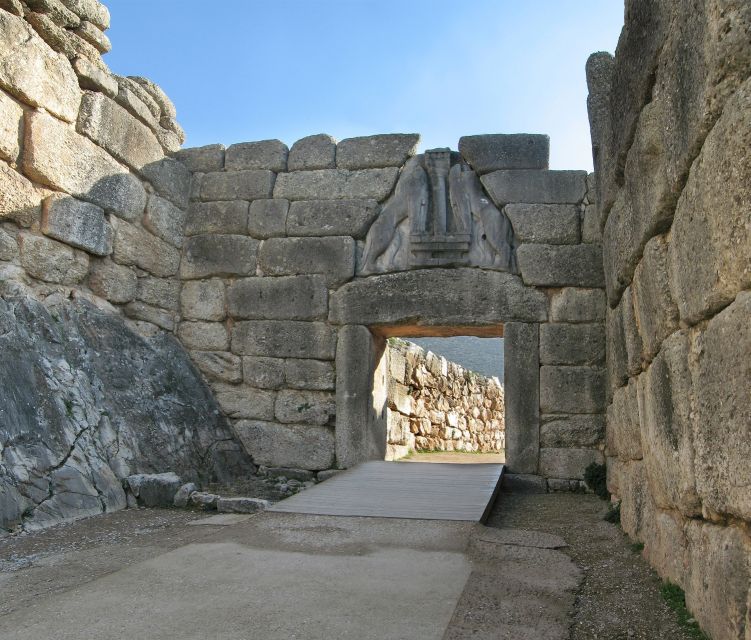
Mycenae is one of the most atmospheric stops on the route. The citadel rises above the surrounding countryside, with massive stone walls, gateways, and remains linked to the Mycenaean civilization.
The Lion Gate is the famous entrance, but the wider setting is just as important. You walk among the remains of a fortified center associated with the heroic age described in Greek mythology.
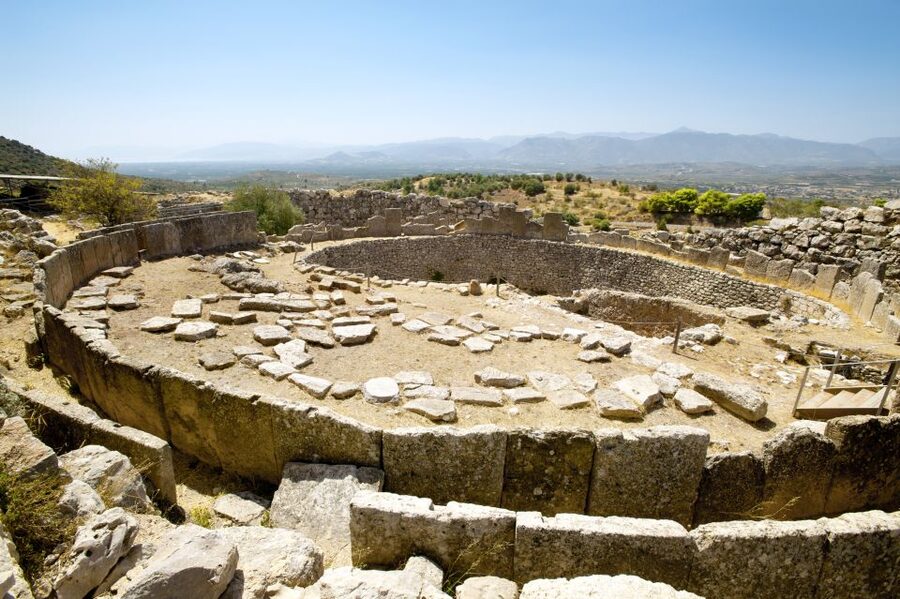
The Tomb of Agamemnon, also called the Treasury of Atreus, is a large beehive-shaped tomb built with carefully laid stone. The name connects the site with the legendary king from the Trojan War, though the archaeological evidence and later myth do not always line up neatly. A good guide helps you keep both stories in view.
Mycenae involves uneven ground and walking over exposed archaeological terrain. The guide will usually take you first to the main points, then allow time to explore. One useful habit is to take photographs as you go, since you may not have enough time to retrace your steps later.
Evening in Olympia
After Mycenae, the bus continues toward Olympia, with short stops around Tripolis and Megalopolis. These breaks are practical rather than major sightseeing visits. You can stretch your legs, buy a snack, or pick up a souvenir.
The first night is in Olympia. The hotel may be a three-star or four-star property, depending on the option you choose and availability. The included dinner is useful after a long day, and staying in town means you may have a little time outside the formal tour schedule.
Hotel quality can vary. Some three-star stays have been described as quite comfortable, while accommodation at Delphi has occasionally needed maintenance. If room standards matter greatly to you, choose the four-star option if available and confirm the property details before departure.
Day 2: Olympia, the Rio-Antirrio bridge, and Delphi
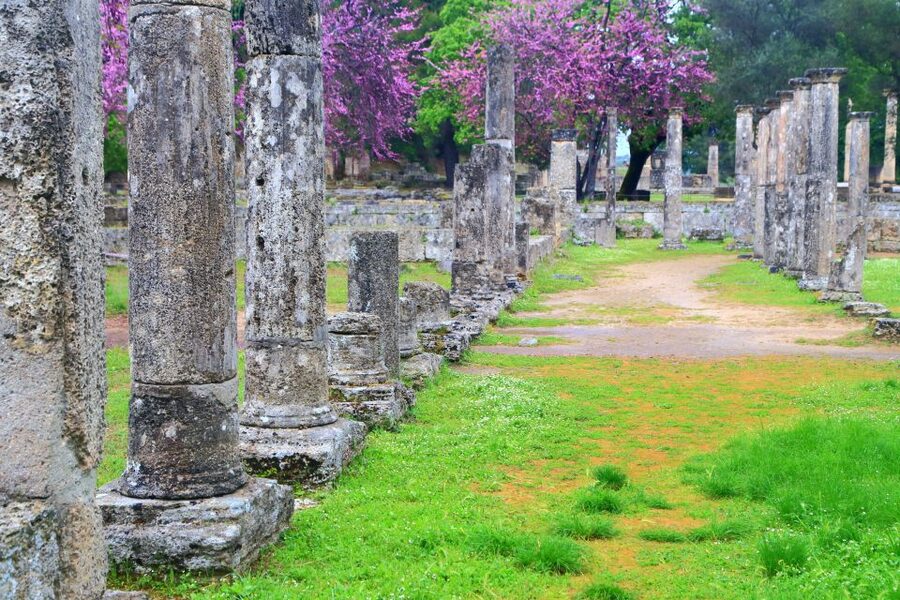
Olympia deserves a full visit because it is both an archaeological site and a place of powerful symbolism. The ancient Games were held here in honor of Zeus, and the sanctuary attracted Greek communities from across the ancient world.
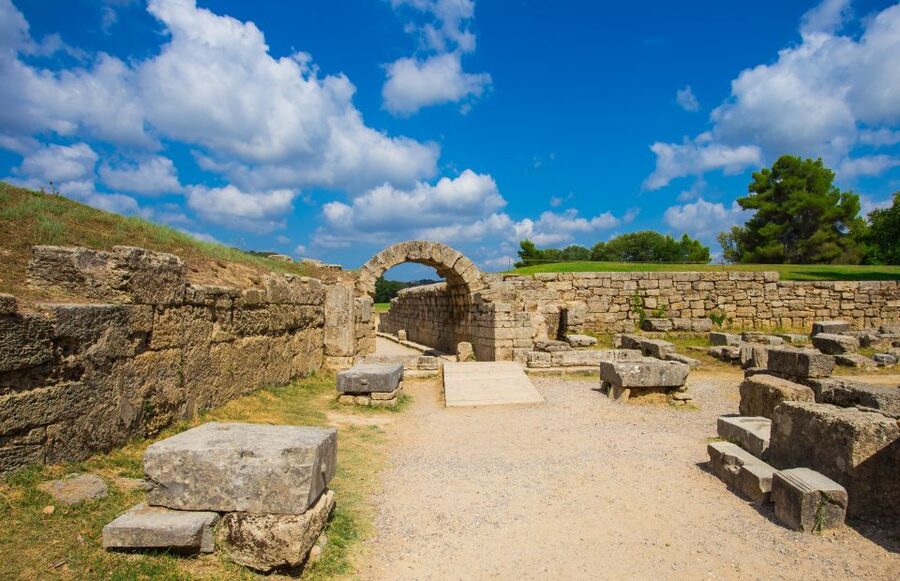
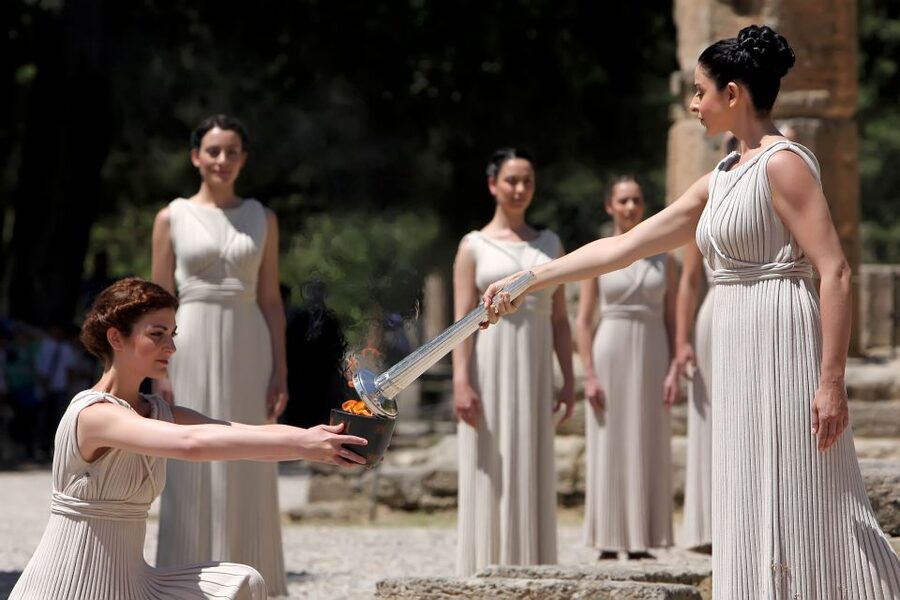
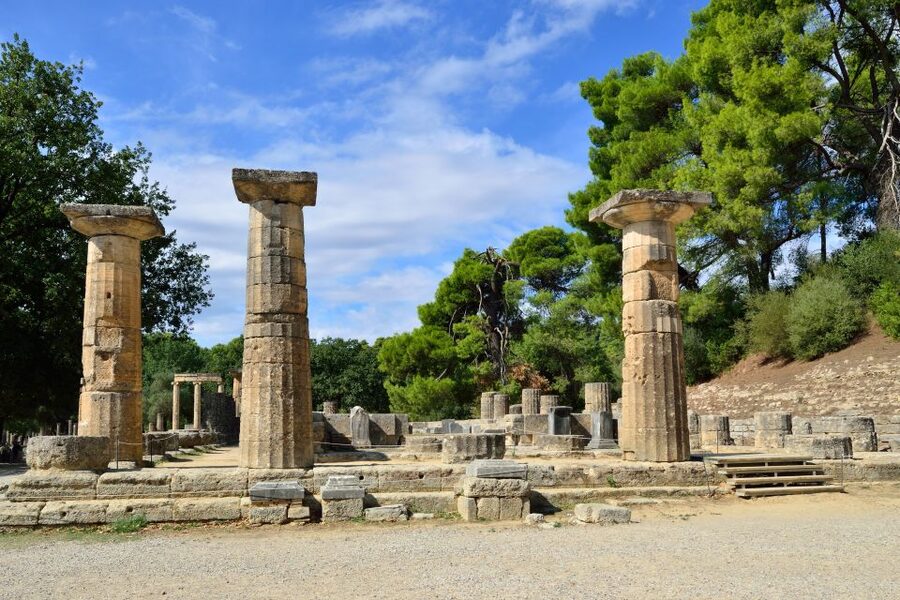
You will see the remains of the Temple of Zeus and the Temple of Hera, the ancient Stadium, and the altar associated with the Olympic flame. Much of the site is open and exposed, so the quality of the guide’s explanation matters. Without context, the remains can look like scattered columns and foundations. With a clear explanation, you can picture the sanctuary as a busy religious and athletic center.
The Archaeological Museum of Olympia sits opposite the site and is included in the visit. This is one of the tour’s most valuable features because the museum gives you the original objects and sculpture that help explain what the ruins once contained.
Allow time to listen carefully, but do not feel you must remain with the group every minute. The best rhythm is often to hear the main explanation, inspect the key objects, and then use free time to focus on the pieces that interest you most.
Crossing the Gulf of Corinth
After Olympia, the coach travels to Rio and crosses the Gulf of Corinth on the new bridge to Antirrio. This is one of the tour’s more modern contrasts: ancient sanctuaries give way to a major piece of contemporary infrastructure.
The coastal road then leads toward Nafpaktos, a small harbor city with a more relaxed feel than the archaeological sites. You may see it as a passing stop rather than a full town visit, but it breaks up the drive and adds variety to the day.
The bus rides are a major part of this tour. Air-conditioning is essential, and some departures use comfortable mid-sized vehicles with charging ports. Other departures have used larger minibuses. If you like road trips and scenery, the transfers help connect the story. If you prefer long stretches of free time at each site, the schedule may feel tight.
Arachova before the Delphi overnight
In the afternoon, the route reaches Arachova, a mountain village on the slopes of Mount Parnassus. Its stone buildings and mountain setting offer a sharp change from the open plains around Olympia and Argos.
This stop is usually brief, but it is a pleasant place to look around and buy a snack or souvenir. It also prepares you for Delphi, which sits high in the same mountain region.
You spend the second night in Delphi. Dinner and breakfast are included, while drinks and personal expenses are not. Hotel tax is extra, currently listed as €5 per room per night for three-star hotels and €10 per room per night for four-star hotels, paid directly to the hotel.
Day 3: Delphi, Apollo, and the Oracle
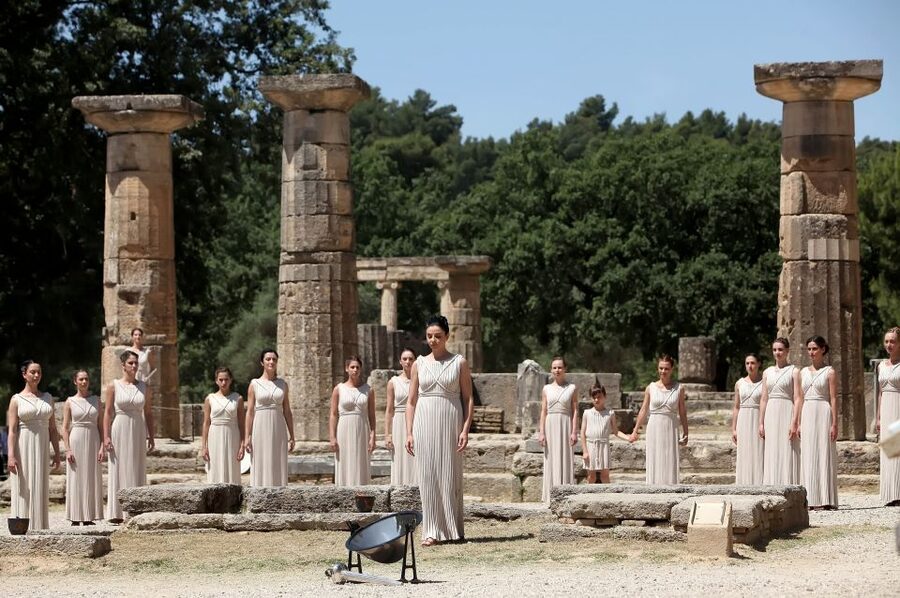
Delphi is the emotional high point for many people on this route. The sanctuary was regarded by ancient Greeks as the center of the world, and its steep setting gives the site a strong sense of place.
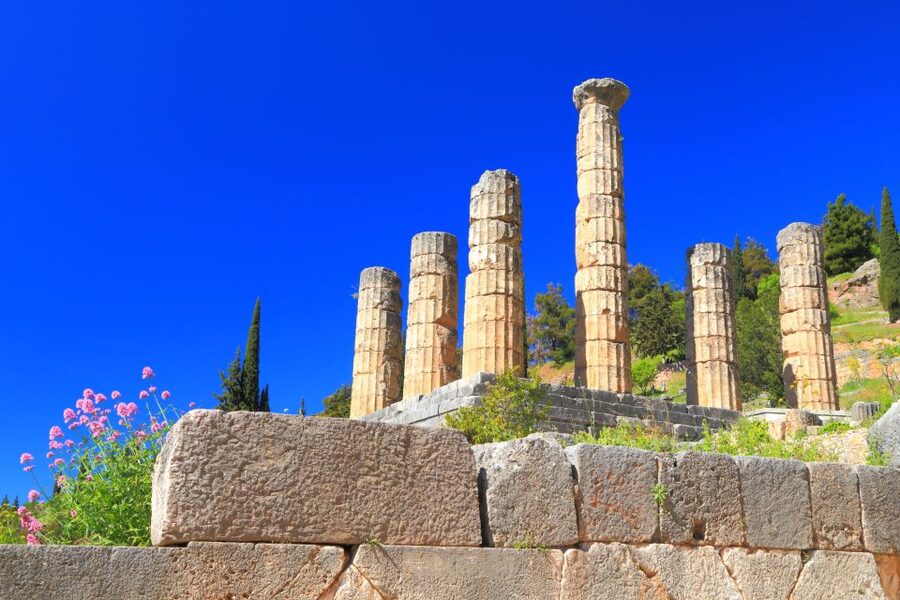
The visit begins at the archaeological site, where you climb through the remains connected with Apollo. The Temple of Apollo is central to the story of the Oracle, whose pronouncements influenced kings, city-states, and ordinary people seeking guidance.
Your guide may also explain the older religious traditions connected with Gaia, or Mother Earth, and the Python dragon said to have guarded the area before Apollo defeated it. These myths are not just decoration. They help show how Greek religious ideas changed and layered one belief over another.
The path continues to the ancient theater, which could hold about 5,000 spectators. From the upper part of the site, you get broad views over the valley and toward the Parnassus Mountains.
Delphi is physically demanding. The site is built on a slope, and the walk includes uneven ground and exposed sections. Guides such as Marianna, Evan, and Dimitris have been praised for finding shaded places to pause and for explaining the ruins in a way that connects mythology with the visible remains.
The Archaeological Museum of Delphi
The museum is an important part of the visit, not an optional extra. It contains objects and sculptures associated with Delphi, allowing you to see the artistic quality and religious purpose behind the sanctuary.
A guide can make a large difference here. The tour may cover the main works first and then leave you some time to return to displays that catch your attention. Since the site and museum together can feel like a lot of information, listen for the recurring themes: Apollo, prophecy, offerings, athletic contests, and the political importance of the sanctuary.
After Delphi, the bus returns to Athens through the hills and the Valley of Phocis, passing vineyards and olive trees along the way. The return is long, but the route completes the geographical loop rather than forcing you to retrace the entire journey.
Guides, group size, and the feel of the trip
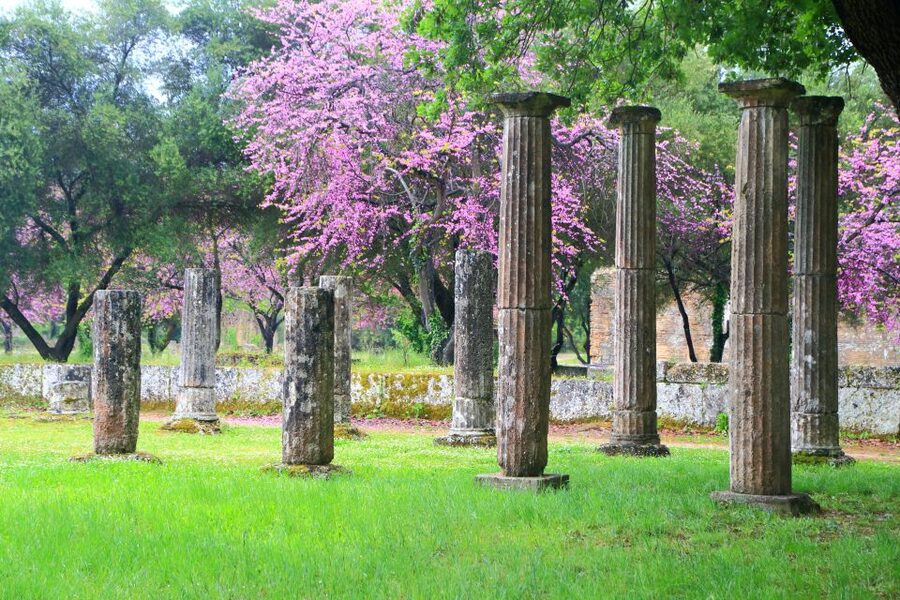
The strongest part of this experience is the guiding. Anna has been praised for clear instructions and cultural explanations, while Marianna is known for bringing mythology to life and finding shade during site visits. Evan has been described as attentive and especially strong on Greek mythology, and Dimitris has been praised for handling the practical side of the tour with calm professionalism.
Those names do not guarantee your assigned guide, but they give you a sense of the guiding style to expect. The best guides on this route do more than list dates. They explain how the myths, monuments, geography, and modern Greek towns fit together.
Group size can change by departure. One small group of nine used a comfortable mid-sized vehicle, while other departures used a 20-seat minibus. A smaller group generally makes instructions easier and can create a more sociable atmosphere, but you should not assume every departure will be identical.
The tour also involves occasional changes between groups, particularly at major sites. Pay close attention when the guide gives meeting points and times. The sites are large enough that a few minutes of confusion can cost you valuable free time.
Meals, hotels, and the real value of $506
At $506 per person, this is not the cheapest way to see Greece. It is a practical package for someone who values a fixed route and a guide over independent flexibility.
The price includes:
- Two nights in three-star or four-star hotels, depending on your selection
- Breakfast and dinner
- Entrance fees
- Air-conditioned bus transfers
- An English-speaking guide
- Pickup from most centrally located Athens hotels on request
Lunch, drinks, personal spending, and hotel tax are extra. Lunch stops are part of the daily rhythm, but you pay for those meals yourself. If you have dietary needs, mention them before departure. Gluten-free meals have been accommodated on this route, but advance notice is still wise.
Room bookings normally correspond to a double or triple room. If you want a single room, you need a separate booking for one person. That detail can change the final cost, so check it before paying.
The hotels are selected for convenience, but standards are not perfectly uniform. Some stays have been described as comfortable, well located, and especially good in Olympia. Another stay in Delphi was described as worn and in need of repair. I would treat the accommodation as functional rather than the main reason to book.
Who should book this three-day tour?
Book it if you want a strong first look at classical Greece and prefer someone else to handle the long-distance transport. It suits you especially well if you enjoy guided storytelling, do not want to rent a car, and are happy to trade leisurely exploration for broad coverage.
It also works well for first-time visitors who want help understanding mythology and archaeology. The ruins can be hard to read without explanation, and the guides provide the connecting thread between Mycenae, Olympia, and Delphi.
Think twice if you need an accessible route. The tour is not suitable for wheelchair users, and the archaeological sites include slopes, steps, uneven ground, and long periods outdoors.
You should also think twice about booking in the hottest months if you dislike strong sun. Olympia and Delphi can involve around three hours of outdoor sightseeing, with limited shade in places. Spring and autumn should be more comfortable, though availability and weather can vary.
Should you book it?
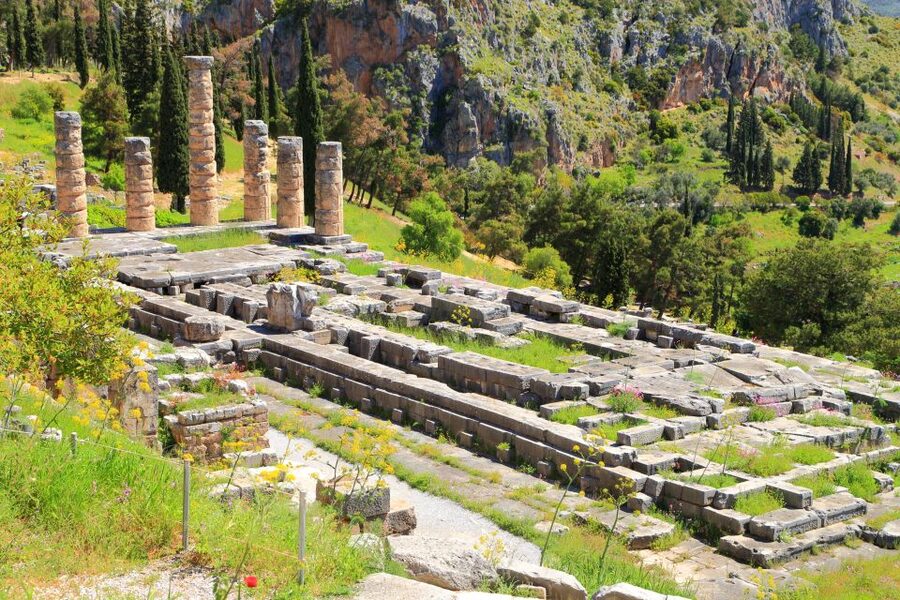
I would book this tour for an efficient, story-led introduction to mainland Greece. The route is ambitious, but it covers the three sites most visitors hope to see, then adds Epidaurus, Mycenae, the Corinth Canal, Arachova, Nafpaktos, and the Rio-Antirrio bridge.
The best reason to choose it is the guiding. A good guide turns broken columns and stone foundations into places connected with Apollo, Agamemnon, Zeus, athletic contests, prophecy, and ancient power.
The main warning is simple: this is a busy road trip, not a slow village holiday. Pack light, bring sturdy shoes, carry water and sun protection, and stay alert for meeting times. If that sounds like a fair exchange for seeing so much in three days, the $506 price offers solid value.
FAQ
What sites are included on the three-day tour?
The route includes the Corinth Canal, Epidaurus, Nafplio, Mycenae, Olympia, Arachova, Delphi, and a drive through or near Tripolis, Megalopolis, and Nafpaktos. It also includes the Rio-Antirrio bridge crossing.
Is transportation included?
Yes. Transfers are provided by an air-conditioned luxury bus. Some departures may use a mid-sized passenger vehicle, while others may use a larger minibus.
What meals are included?
Breakfast and dinner are included. Lunch, drinks, and personal expenses are not included.
Are hotel stays included?
Yes. The tour includes two nights in three-star or four-star accommodation, depending on the option selected. The hotel tax is paid directly to the property and is extra.
Is the tour offered in English?
Yes. The tour includes a live English-speaking guide.
Is pickup available from my Athens hotel?
Free pickup is available from most centrally located Athens hotels on request. Pickup usually takes place about one hour before departure, and you should contact Key Tours for the exact time and location.
Can I cancel the booking?
You can cancel up to 24 hours in advance for a full refund. The reserve-now, pay-later option also lets you hold a place without paying immediately.
More 3-Day Experiences in Athens
- 3-Day Classical Greece Tour: Epidaurus, Mycenae, Nafplion, Olympia, Delphi
★ 4.5 · 342 reviews - From Athens: 3 Days in Meteora & Delphi with Tours & Hotel
★ 4.6 · 97 reviews - Meteora & Delphi 3 Days Semi Private Tour
★ 4.5 · 80 reviews - Athens: 3 days 2 nights Meteora with small size tours & hotel
★ 5.0 · 63 reviews
New on the Athens shelf
- Acropolis of Athens, Parthenon and Acropolis Museum private tour with dinner★ 5.0 · 77 reviews
- Small-Group Wine Tour in Athens with Tasting★ 5.0 · 33 reviews
- Private Athens Transfer Airport/Port -Greek Tours-Hourly service★ 5.0 · 88 reviews
- VIP Private Guided Tour of Athens Acropolis & Plaka in a Sidecar★ 5.0 · 108 reviews
- Athens Moonlight Waling Tour with Drinks and Meze Dishes★ 5.0 · 259 reviews
- Private Athens Landmarks Layover Tour★ 4.5 · 41 reviews
- Departure Transfer from Athens City to Athens Airport★ 5.0 · 41 reviews
- Classic Athens Food Tour with Local Drink & Market Visit★ 5.0 · 34 reviews
Ancient Sites, compared.
Acropolis & up to 5 Archaeological Sites Combo Pass
Read our verdict →
National Archaeological Museum Ticket & Audio Guide
Read our verdict →
Ancient Corinth Day Trip with Canal & VR Guide
Read our verdict →
Private Biblical Tour Ancient Corinth & Isthmus Canal from Athens
Read our verdict →
National Archaeological Museum Ticket w/ Opt. Audio
Read our verdict →
Ancient Olympia: Archaeological Site and Museum Entry Ticket
Read our verdict →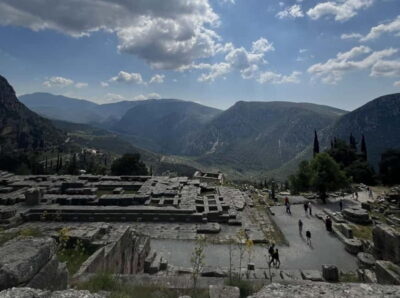
Delphi: Archaeological Site & Museum Ticket with Audio Tours
Read our verdict →Browse the lists this tour appears in