
Review · ANCIENT SITES
Ancient Agora: Audiovisual self-guided tour with 3D models
The Ancient Agora was where Athens handled its most important business: politics, trade, law, religion, and public debate. This self-guided Culture App tour helps you picture that vanished city, using 3D models and 360-degree views to show how its monuments may have looked in antiquity.
I like the freedom to explore before, during, or after your visit, and I like the range of material packed into a low-cost digital guide. The main drawback is that the €10 entrance ticket is not included, and the experience depends on your own phone, battery, headphones, and internet preparation.
Key points at a glance
- See the birthplace of democracy: Explore the civic center where public decisions, courts, and administration shaped ancient Athens.
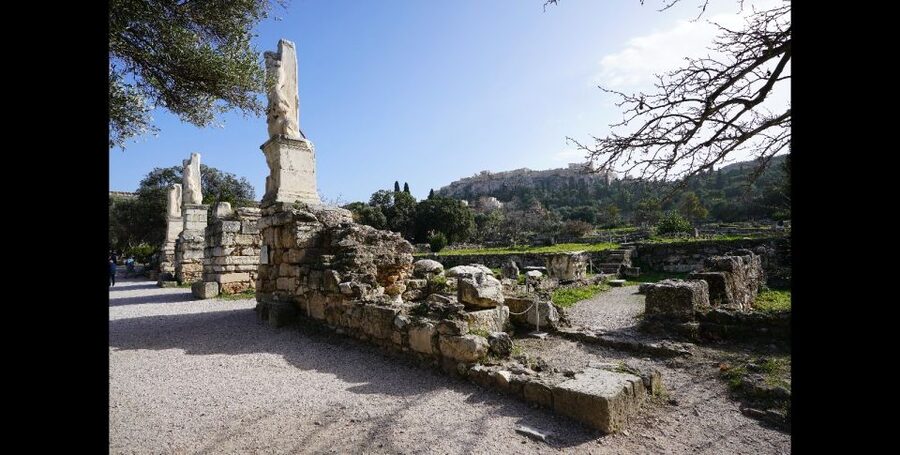
- Reconstruct lost buildings: Use 3D models, videos, and panoramic views to understand monuments that survive only in part.
- Cover 16 monuments: Written and audio information gives you a clear route through the Agora’s temples, stoas, workshops, fountains, and public buildings.
- Visit at your own pace: Your purchase remains valid for five days from first activation, so you can listen on-site or prepare at your hotel.
- Bring your own setup: You need a charged smartphone, earphones, about 200MB of storage, and internet access for effective use.
- Pay separately at the entrance: The app costs $7.89 per person, while admission is €10 for adults and €5 at the reduced rate.
Why the Ancient Agora matters
If the Acropolis shows Athens at its grandest, the Agora shows Athens at work. This was the city’s main meeting place, commercial center, administrative district, religious site, and public forum.
The word Agora refers to an assembly place or marketplace, but this was much more than a row of shops. Citizens met here to discuss public affairs, conduct business, worship, attend festivals, and take part in legal and political life.
The app’s focus on democracy gives your visit a useful theme. You are not simply looking at scattered ruins. You are tracing the setting where ancient Athens developed a system in which citizens took part in public decisions.
That idea needs a little care. The democracy of Athens did not include everyone. Women, enslaved people, foreigners, and others were excluded from citizenship. Still, the Agora was the physical setting for a major political experiment, and the guide helps connect the stones to that larger story.
More Ancient Sites in Athens
- Athens: Acropolis & up to 5 Archaeological Sites Combo Pass
★ 4.4 · 12,619 reviews - Athens: Ancient Greek Theater Performance
★ 4.7 · 2,481 reviews - Athens: National Archaeological Museum Ticket & Audio Guide
★ 4.3 · 1,330 reviews
Entering a city of politics, trade, and debate
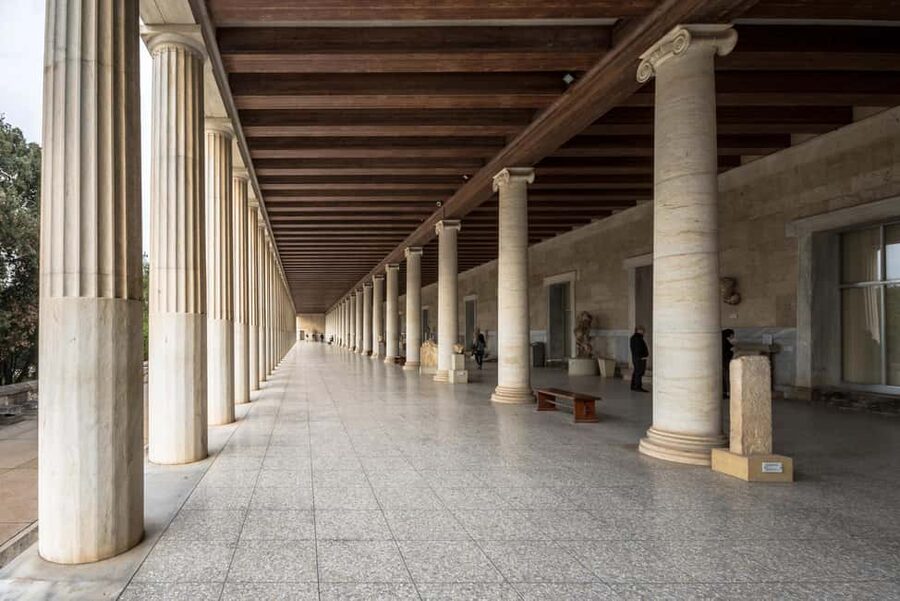
The tour begins with the Agora as a whole, then uses an integrated map to identify its monuments. This matters because the site can otherwise feel like a wide field of foundations and broken columns.
I find the map feature especially useful for first-time visitors. It gives you a basic sense of where the administrative buildings, temples, stoas, fountains, workshops, and courts fit together. You can move from one point to the next without treating the site as a random collection of ruins.
The written information covers 16 monuments, while audio information is also provided for all 16. That gives you two ways to tour. You can read a short explanation when you want control over your pace, or put on your headphones and listen while looking at the remains.
This flexibility is one of the best reasons to choose a self-guided format. You can pause for photographs, spend extra time at a monument that catches your attention, or skip material that feels less relevant. You are not tied to a group’s walking speed.
The trade-off is just as clear. There is no in-person guide to answer a question, point out a feature you missed, or adjust the explanation to your interests. If you prefer conversation and live interpretation, this app will feel limited.
Rebuilding the Agora with 3D models

Many ancient sites are difficult to read because the original buildings are gone or survive only as foundations. The 3D models are intended to solve that problem.
Fourteen monuments have 3D reconstructions, giving you a visual way to compare the ruins in front of you with their earlier appearance. This can be more useful than a long paragraph describing a building’s shape, columns, roof, or position within the Agora.
Use the models as a visual aid, not as a reason to stare at your screen for the whole visit. Look at a reconstruction, then lift your eyes to the actual remains. The value comes from making that comparison.
The app also includes immersive videos for 14 monuments and 360-degree panoramic views from 14 locations. These features are helpful before your visit, when you are trying to understand the site’s layout, and afterward, when you want to revisit a building you did not fully grasp on the day.
The digital material can also help you notice the difference between what survives and what has been supplied by reconstruction. That distinction is important. A 3D model can make the ancient Agora easier to imagine, but it is still an interpretation of a lost or damaged monument.
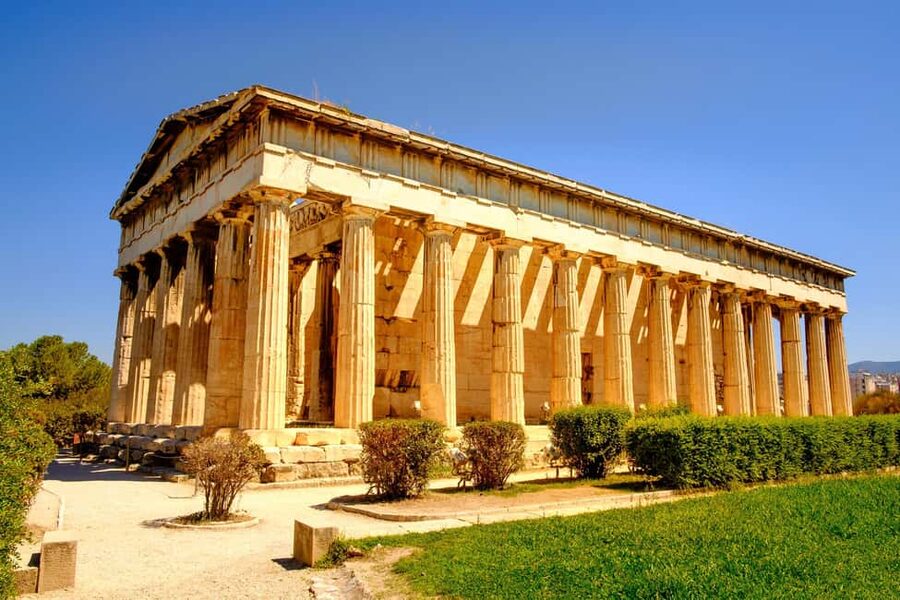
The Temple of Hephaistos and the best-preserved view
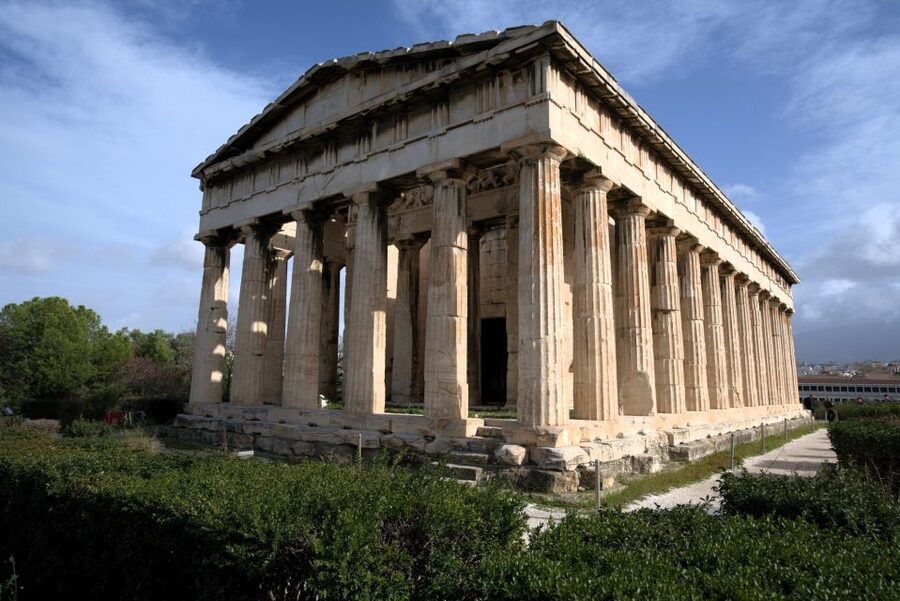
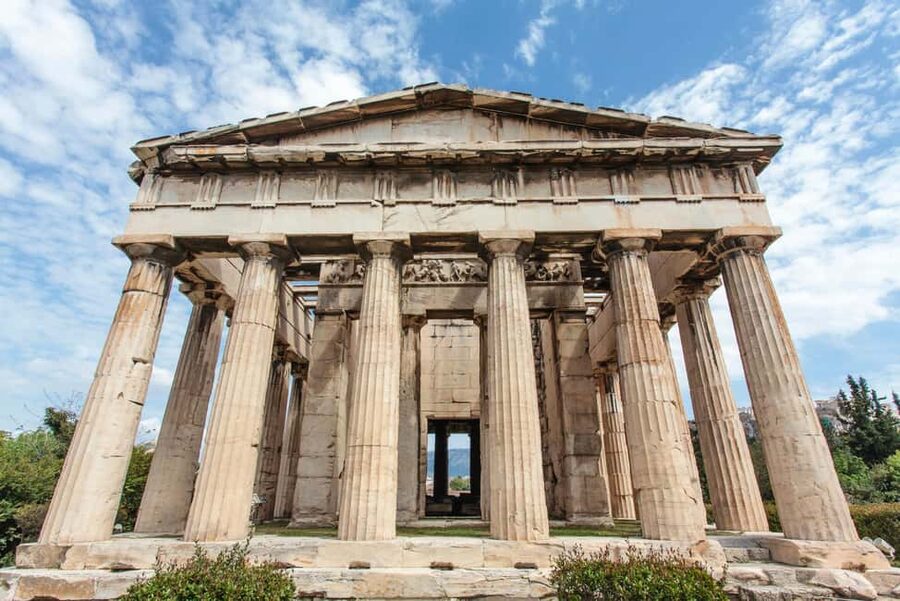
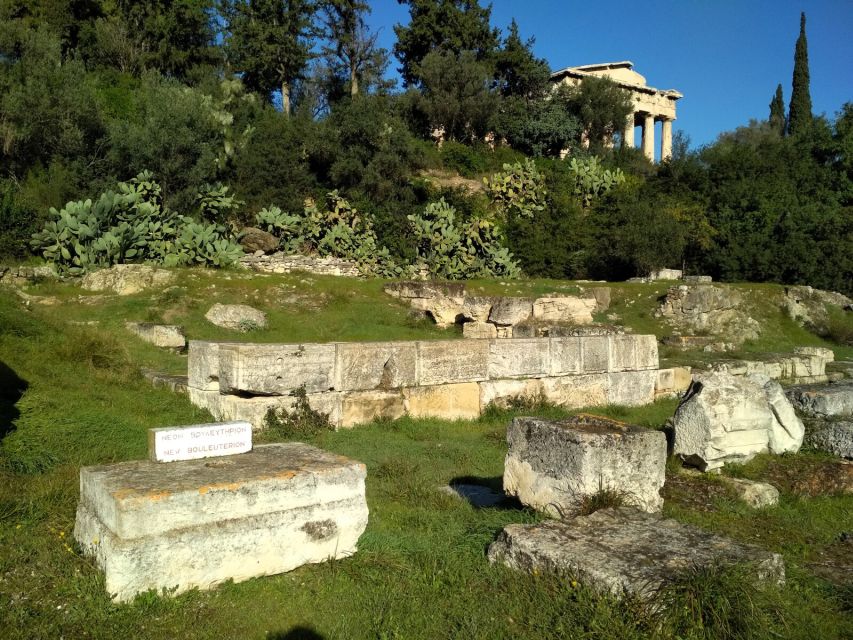
The Temple of Hephaistos is the major visual prize within the Agora. It is described as one of Greece’s finest-preserved ancient temples, and the app gives it the attention it deserves.
Here, the surviving structure makes the past easier to picture. Instead of relying only on foundations, you can study a substantial temple and then use the digital material to place it within the wider Agora.
The temple was dedicated to Hephaistos, the god associated with metalworking, and Athena Ergane, linked with crafts. That connection fits the Agora’s practical side, where workshops and commercial activity formed part of daily life.
The guide’s written and audio sections can help you connect the temple to the people who worked, traded, worshipped, and met around it. You should not rush this stop. It offers a useful contrast with the lower fragments elsewhere on the site.
The app is most valuable here when it adds context rather than simply pointing out the obvious. You can see the temple with your own eyes, but the surrounding story helps explain why it belongs in this particular civic and commercial setting.
Close by, and nothing like it:
- Athens: Acropolis Ticket with Optional Audio or Live Guide
★ 4.2 · 11,055 reviews - Athens: Acropolis, Parthenon & Acropolis Museum Guided Tour
★ 4.8 · 9,316 reviews - Athens: Acropolis and Parthenon Guided Walking Tour
★ 4.6 · 5,882 reviews - Athens, Piraeus, and Coastline: Blue Hop-On Hop-Off Bus
★ 3.9 · 4,849 reviews
Following Socrates and the philosophers
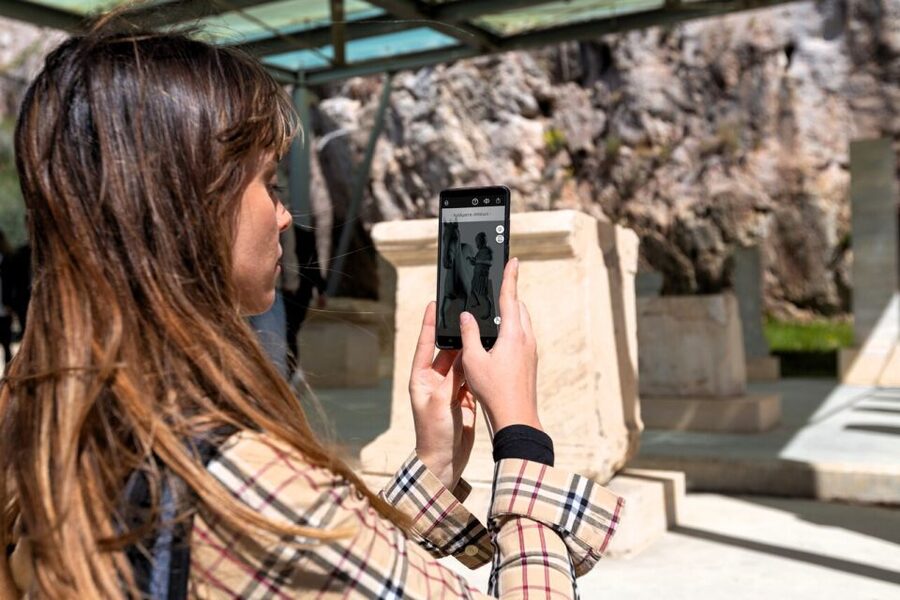
The Agora is also tied to Socrates and the philosophers who taught and debated in ancient Athens. That association gives the site a human scale.
Instead of thinking only about officials and monuments, you can imagine public discussion taking place among citizens, teachers, students, merchants, and passersby. The Agora was not a quiet museum. It was a place where ideas were tested in public.
The tour includes related stories for 13 monuments, which should help connect individual structures to broader cultural themes. A story-based approach is useful here because philosophy did not happen in isolation from ordinary city life. It shared the same setting as business, courts, worship, and political administration.
The guide also includes a gift collection of 68 written and audio items about culture and facts in ancient Greece. This extra material can add background before or after your site visit.
You will get the most from it if you treat the extra stories as optional reading, not required homework. The main tour already covers 16 monuments. The additional content is best for curious visitors who want to continue learning after leaving the archaeological site.
How the audiovisual format works on site
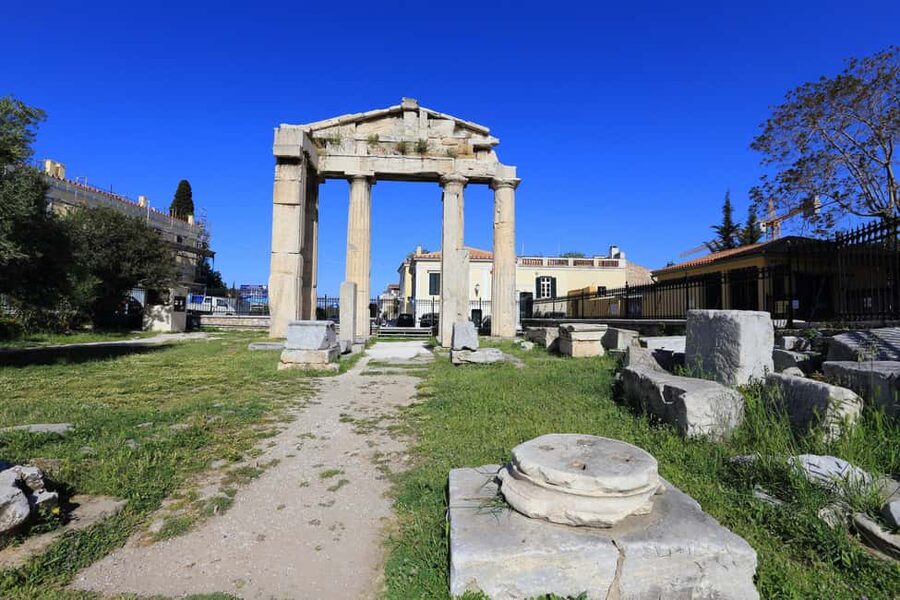
Before you go, download the tour while connected to Wi-Fi. Internet access is required to use the tour effectively, and downloading ahead of time reduces the risk of weak service or expensive mobile data at the site.
The app requires iOS 11.0 or later, or Android 5.1 or later. Allow about 200MB of storage, and bring earphones. You will also want a fully charged phone because audio, video, panoramic views, and 3D material can use power quickly.
The content can be used anywhere and anytime. You can preview the Agora at your hotel, use the guide during the visit, or listen again afterward. This five-day period begins with your first activation, not simply at the time of purchase.
That timing gives you useful control. You might activate it before arrival to learn the basic layout, then return to specific sections inside the archaeological site. You could also use the five-day window to split your attention between the physical ruins and the digital explanations.
Remember that your phone is also your map, camera, ticket reference, and audio player. A drained battery would remove most of the app’s value. Charge before leaving and carry your headphones rather than relying on the phone’s speaker.
What the $7.89 price really buys
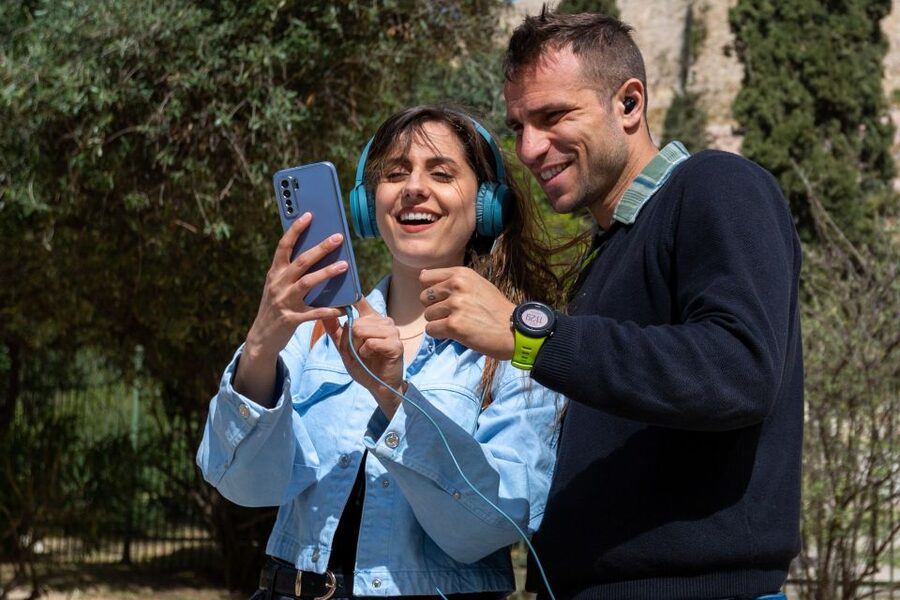
At $7.89 per person, the app is a modest add-on to the site visit. Its value depends on how much you want interpretation.
For that price, you receive written and audio material for 16 monuments, 3D models for 14, 360-degree views for 14, immersive videos for 14, related stories for 13, and the additional collection of 68 cultural items. That is a substantial amount of material for a self-guided product.
The entrance fee is separate: €10 for a full-price ticket and €5 for a reduced ticket. You should think of the app as an interpretation tool, not as admission. It does not get you through the gate, provide transport, supply food or drinks, or replace a human guide.
The price makes the most sense if you want to explore independently and expect to spend time with the site. It is less useful if you plan a very quick visit, dislike listening through headphones, or already have another detailed guide.
The overall rating is 3.9 out of 5 from 31 ratings. I would read that as a sign to keep expectations sensible. This is a practical digital companion, not a private archaeological tour. Its success depends partly on how carefully you prepare your phone and how actively you use the visual tools.
Who should choose this Agora guide
I would recommend it most strongly for independent visitors who want structure without a fixed schedule. Families may also find the 3D models and videos helpful, especially when younger visitors need a clearer picture of buildings that now appear as stones and columns.
It suits history-minded visitors who want more than labels, and it works well for people who prefer reading or listening in their own language. Audio is available in English, Greek, German, Spanish, Italian, French, Dutch, and Chinese.
It is also useful for repeat visitors. Since the content remains available for five days after activation, you can take a second look at the Agora instead of trying to understand every monument in one pass.
You may want something else if your main goal is live discussion. No guide services are included, and the app cannot respond to questions or change its explanations based on what interests you.
The same applies if you are uncomfortable with phone-based touring. The experience requires preparation, storage, battery power, and headphones. Those are small tasks, but they shape the quality of your visit.
Practical tips for a better visit
Download the content on Wi-Fi before you leave. Check that the files are present, your operating system is supported, and you have enough storage.
Activate the tour when you are ready to use it, since the five-day validity period starts with first activation. Once you download the paid content, the price is not refundable, so make sure the app works on your device before relying on it.
Bring earphones and charge your phone fully. The audio, videos, 3D models, and panoramic views are central parts of the experience, not minor extras.
Start with the map and the Agora overview. Then move through the monuments in a logical order, using the reconstructions only after you have looked at the actual remains.
Save the 68 extra culture items for later if you are short on time. They can add useful background, but they should not distract you from the physical site.
Check current opening days, hours, and admission details through the official archaeological site information before setting out. The app itself does not include the entrance fee.
Should you book the Ancient Agora audiovisual tour?
Book it if you want a low-cost, flexible way to make sense of the Agora’s scattered remains. The combination of 16 monument descriptions, 14 3D models, 14 panoramic views, videos, and multiple language options gives you more help than a bare site visit.
I would especially choose it if you are visiting without a live guide, want to explore at your own pace, or like having material available before and after your visit. The five-day validity also makes it easier to spread the experience out.
Skip it if you need personal interaction, do not want to use your phone at an archaeological site, or plan only a short visit. Also budget separately for the €10 entrance fee, and prepare your device before arrival.
For most independent visitors, the $7.89 cost is reasonable, provided you treat the app as a useful companion rather than a substitute for the site itself.
FAQ
Is the Ancient Agora entrance ticket included?
No. The audiovisual guide is separate from admission. The entrance fee is €10 for a full-price ticket and €5 for a reduced ticket.
How long is the digital tour valid?
The tour is valid for five days from the time you first activate it.
Can I use the guide before or after visiting the Agora?
Yes. The self-guided tour can be used anywhere and anytime, including before, during, or after your visit.
Which languages are available?
Audio is available in English, Greek, German, Spanish, Italian, French, Dutch, and Chinese.
Do I need internet access?
Yes. Internet access is required to use the tours effectively. You are advised to download the content over Wi-Fi before visiting unless you have enough mobile data.
What phone systems are supported?
The tour requires iOS 11.0 or later, or Android 5.1 or later.
How much phone storage do I need?
You need approximately 200MB of storage space for the self-guided tour.
Do I need to bring headphones?
Yes. A smartphone and headphones are not provided, so bring your own earphones and make sure your phone is fully charged.
More Self-Guided Routes in Athens
- Athens: Acropolis Ticket & Optional Self-Guided Audio Tours
★ 4.1 · 2,542 reviews - Acropolis & Parthenon Admission Ticket w/ self guided audio tours
★ 3.5 · 172 reviews - Combo Ticket: Acropolis & 6 Sites with optional self-guided tours
★ 3.5 · 73 reviews - Acropolis: 3D representations & audiovisual self-guided tour
★ 4.0 · 42 reviews
New on the Athens shelf
- Acropolis of Athens, Parthenon and Acropolis Museum private tour with dinner★ 5.0 · 77 reviews
- Small-Group Wine Tour in Athens with Tasting★ 5.0 · 33 reviews
- Private Athens Transfer Airport/Port -Greek Tours-Hourly service★ 5.0 · 88 reviews
- VIP Private Guided Tour of Athens Acropolis & Plaka in a Sidecar★ 5.0 · 108 reviews
- Athens Moonlight Waling Tour with Drinks and Meze Dishes★ 5.0 · 259 reviews
- Private Athens Landmarks Layover Tour★ 4.5 · 41 reviews
- Departure Transfer from Athens City to Athens Airport★ 5.0 · 41 reviews
- Mercedes Transfer Athens Airport★ 5.0 · 26 reviews
Ancient Sites, compared.
Acropolis & up to 5 Archaeological Sites Combo Pass
Read our verdict →

National Archaeological Museum Ticket & Audio Guide
Read our verdict →
Ancient Corinth Day Trip with Canal & VR Guide
Read our verdict →
Private Biblical Tour Ancient Corinth & Isthmus Canal from Athens
Read our verdict →
National Archaeological Museum Ticket w/ Opt. Audio
Read our verdict →
Ancient Olympia: Archaeological Site and Museum Entry Ticket
Read our verdict →
Delphi: Archaeological Site & Museum Ticket with Audio Tours
Read our verdict →Browse the lists this tour appears in