
Review · GREEK NIGHT SHOWS
Steps to tradition: Greek Traditional Dances in Athens
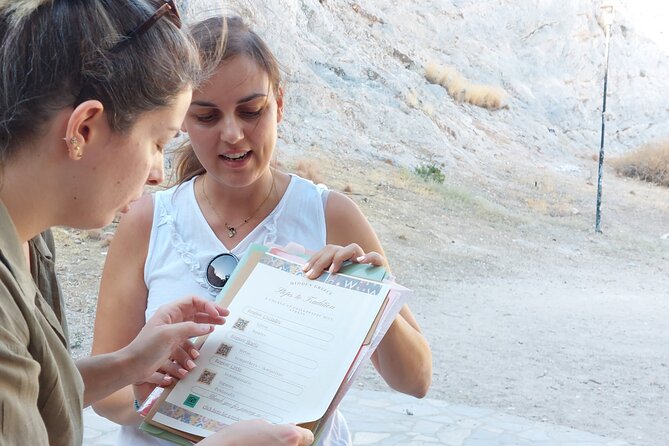
Dancing beside ancient ruins with the Acropolis in view is the heart of this Athens experience. Tania leads you up Philopappou Hill, then teaches several Greek folk dances in a quiet outdoor spot, with music, stories, and plenty of repetition.
I like the small group size, capped at 12, and the way the lesson connects dances to different Greek regions. I also like the short walk past sights such as Socrates’ Prison, which gives the class a sense of place rather than leaving you in an ordinary studio.
The main catch is practical: this is an outdoor activity, and the listed start time is 6:00 am, so check the booking details carefully. The hill also involves a short uphill walk, and dancing for two and a half hours takes some energy.
Key points at a glance
- Acropolis views while you dance: The class takes place on Philopappou Hill, near ancient sites and quiet green spaces.
- Several dances in one lesson: You may learn five to seven dances from different Greek regions and islands.
- Tania teaches with stories: Expect step-by-step instruction, cultural background, and repeated practice.
- A social experience: You hold hands in a circle and gradually become part of a small dancing group.
- Useful for families: Previous participants included children aged 11 and 13, and instruction is adapted to ability.
- Good value at $41.52: The price covers about two and a half hours of instruction, culture, music, and a memorable Athens setting.
Dancing on Philopappou Hill with the Acropolis ahead
Many Athens activities keep you looking at the past from behind a rope. This one asks you to move through it. You meet Tania at the main entrance to Philopappou Hill, at the corner of Dionysiou Areopagitou and Apostolou Pavlou, then walk for about 10 minutes to the place where the lesson begins.
That walk matters. Philopappou Hill is not simply a convenient patch of open ground. It is part of Athens’ historic center, close to the Acropolis and ancient remains. Along the way, Tania may point out nearby sights, including Socrates’ Prison, and explain the role of traditional dance festivals in Greek life.
The class itself takes place in a quiet outdoor setting, with the Acropolis visible. One detailed account describes dancing near a church and park with very few other people around. That combination gives you something a city studio cannot: open air, old stone, trees, and a famous monument in the distance.
You should not expect a polished theatrical production. The appeal is more direct. You learn the movements, make mistakes, laugh, repeat them, and slowly find the rhythm with the rest of the circle.
More Greek nights with dinner and dancing:
- Athens Night Sightseeing Tour with Greek Dinner Show
★ 3.5 · 268 reviews - Athens: Dora Stratou Greek Dancing Show Experience
★ 4.6 · 68 reviews - Dora Stratou Greek Dancing Show Skip-the-Line Ticket
★ 4.5 · 32 reviews
What Tania teaches during the two-and-a-half-hour class
Tania is the main teacher, and Kostas may assist. The instruction begins with simple steps and builds from there. You are not expected to arrive with dance experience, and the teaching is described as clear, patient, and encouraging.
Greek traditional dance is not one single style. Each region has its own patterns, pace, posture, and feel. During the class, you may learn dances from mainland Greece, the islands, or Crete. One couple learned easier dances first and later tried Cretan steps with quicker movements and kicks. The instructors adjusted the level to suit them and even considered places they planned to visit later in their trip.
That is a useful feature. You are not just memorizing a routine for one afternoon. You may learn a dance you can recognize and join later at a taverna or local celebration. A few participants were able to use the steps after class in a taverna, which is exactly the kind of practical cultural connection I like.
The number of dances varies in the descriptions, from several to five, six, or seven. Plan on learning a selection rather than mastering one complete regional dance. The goal is to give you a broad taste of Greek movement and music.
Tania also explains where the dances come from and what they mean. The tradition of circular dancing reaches back thousands of years, with roots often linked to ancient Greece and Minoan Crete. More important for your visit, these dances continued through families, villages, and regions, changing as they passed from one generation to the next.
You will probably remember the simple structure first: people joining hands, moving together, and following the lead of the person at the front. That circle creates the social side of the lesson. You are not performing alone, and nobody has to carry the whole class.
Why the circle matters more than perfect footwork
Greek folk dance can look effortless when you see an experienced group at a festival. It is less effortless when your feet are trying to remember three directions at once. This class handles that problem sensibly by using repetition and group movement.
You follow the teacher, repeat the pattern, and get another chance. Several accounts describe Tania as patient and motivational, with explanations that are easy to follow. That is especially helpful if you are nervous about dancing in public or assume you have two left feet.
The circle also changes the mood. Instead of watching a demonstration, you become part of a small community for the lesson. You hold hands, move in time, and help keep the shape of the group. One participant described the class as becoming a little community, which captures the appeal better than any technical description.
You should still be ready for a workout. Fast steps, repeated practice, and outdoor heat can make this more physical than expected. Water was provided during at least one session, but you should wear comfortable clothing and shoes that handle a short hill walk and several hours on your feet.
There is no indication that special dance clothing is required. Practical clothes are the sensible choice. You want freedom of movement, not a costume that makes every knee bend a negotiation.
The cultural stories behind the music
A good dance lesson explains more than where to put your feet. Tania connects the steps with the places and communities that shaped them. You may hear about dances from different islands or mainland regions, and about how local traditions remain part of Greek social life.
That background gives the music more meaning. A quick Cretan sequence feels different when you know it belongs to a particular regional tradition. A slower circle dance becomes more than a string of steps when you understand how group dancing brings people together at celebrations.
The lesson also helps you read what happens later in Greece. If you visit a village festival, a taverna, or a performance such as the Dora Stratou Theatre, you will recognize some of the patterns and music. You may not be ready to lead the circle, but you will understand more of what you are watching.
I would not book this expecting an academic lecture. The cultural material supports the dancing. Tania gives stories and context, then gets you moving again. That balance is right for a short Athens activity.
A few more Athens options worth putting side by side
- Athens: Acropolis & up to 5 Archaeological Sites Combo Pass
★ 4.4 · 12,619 reviews - Athens: Acropolis Ticket with Optional Audio or Live Guide
★ 4.2 · 11,055 reviews - Athens: Acropolis, Parthenon & Acropolis Museum Guided Tour
★ 4.8 · 9,316 reviews - Athens: Acropolis and Parthenon Guided Walking Tour
★ 4.6 · 5,882 reviews
A closer look at the walk, setting, and views
The 10-minute walk to the class is short, but it is part of the experience. You begin near Dionysiou Areopagitou and Apostolou Pavlou, a useful central location near the Acropolis area. From there, Tania leads the group into Philopappou Hill.
The route adds a little uphill effort. If you have mobility concerns, ask before booking because the activity includes walking on a historic hill and dancing outdoors. The information provided says most people can participate, and service animals are allowed, but it does not promise a fully accessible route.
Once you reach the class location, the setting does much of the work. The Acropolis provides an unmistakable backdrop, while the quieter parts of the hill give you room to concentrate. You get the pleasure of being close to Athens’ most famous monument without standing in the thick of the main sightseeing crowds.
The return walk ends at the original meeting point. Depending on the exact light and time of day, you may get further views of the Acropolis and the Parthenon on the way back. The activity information lists a 6:00 am start, while some descriptions refer to dancing under the sun and others describe an evening feel. Confirm the current departure time before you commit, especially if you are arranging breakfast, a museum visit, or a late night around it.
What is included beyond the dance steps
The central product is the lesson, but the experience can include a few thoughtful extras. Water has been provided, and one session ended with a participation certificate. That certificate included QR codes for a Greek traditional music playlist and an overview of the dances learned, along with the regions where they are commonly performed.
Photos and videos may also be taken during the class. One participant appreciated having recordings of the dancing as a keepsake. Do not assume a professional photography package, but you may come away with images that show the group in motion, something that is harder to capture when everyone is busy trying to remember the next step.
Some sessions have also included food and ouzo. These details may vary, so I would not book solely for them. Still, if offered, they extend the lesson into the social customs that make Greek dancing feel at home in a shared meal.
The instructors are another part of the value. Tania teaches with Kostas on many sessions, and Alexandra has also assisted in at least one private lesson. The teaching team appears comfortable working with couples, families, and mixed-ability groups.
Is $41.52 a fair price?
At $41.52 per person, this is a reasonable price for two and a half hours in central Athens. You are paying for more than a short dance demonstration. The fee covers instruction, regional context, time in a special setting, and a small-group format with a maximum of 12 people.
The value improves if you want an activity that combines culture and movement. A standard sightseeing walk can tell you about Greek customs, but this lets you try one. A dance show can be more polished, but you remain in the audience. Here, you take part.
It is less compelling if you dislike group activities, physical exercise, or learning by repetition. You may also feel the price is high if your only goal is a quick introduction to Greek dance. The class makes sense when you value the setting and personal instruction as much as the steps themselves.
There is a chance of a smaller group, including a private lesson if bookings are light. That is not guaranteed, but it can make the $41.52 feel especially strong because Tania can spend more time adjusting the pace and choosing dances for your interests.
Who will enjoy this Athens dance class most?
I would recommend it most strongly to people who want a hands-on cultural activity. It suits solo visitors who enjoy meeting others, couples looking for something beyond monuments, and families with older children. Children aged 11 and 13 took part successfully, though the activity is still two and a half hours long, so younger children may need extra patience.
It also works well early in an Athens stay. You can use the dances later in your trip, perhaps at a taverna or festival. If you are visiting Greek islands after Athens, tell the instructors your plans. They may be able to include dances connected with those places, as they did for one couple.
You do not need previous training. You do need a willingness to be a beginner in front of other people. The tone appears friendly and relaxed, but you will still be learning in a group and repeating steps until they settle into your feet.
This is not the best choice for someone who wants an air-conditioned activity or a tightly timed sightseeing tour. Weather matters, and the class may be canceled if conditions are poor. In that case, you are offered another date or a full refund.
Booking details worth checking before you go
The activity uses a mobile ticket, and confirmation is sent within 48 hours, subject to availability. The group is limited to 12, which helps keep the instruction personal.
Free cancellation is available if you cancel at least 24 hours before the start time. Changes or cancellations made later are not accepted for a refund. Since the class depends on good weather and a minimum group size, the provider may cancel and offer another date, another experience, or a full refund.
The meeting point is Dionysiou Areopagitou and Apostolou Pavlou in Athens, and the class returns there. Public transportation is nearby. Arrive ready for the short walk up Philopappou Hill rather than treating the meeting point as the exact dance location.
Should you book Steps to Tradition?
Book this if you want to do more than look at Greek culture from the outside. The Acropolis view is memorable, but the real value is learning a few dances you may recognize and join later. Tania’s patient instruction, the regional stories, and the circle format make the class approachable even if you have no dance background.
Skip it if you want a quiet morning, dislike physical activity, or need a fully indoor and level setting. Also check the start time carefully, since the listed 6:00 am departure may not suit every Athens schedule.
For most curious visitors, the $41.52 price buys a personal connection to Greece that a museum label cannot provide. You leave with steps in your head, music in your ears, and a better chance of saying opa with some idea of what you are doing.
FAQ
Where does the Greek traditional dance class begin?
You meet at Dionysiou Areopagitou and Apostolou Pavlou, Athina 117 41, Greece, at the main entrance to Philopappou Hill.
How long does the experience last?
The activity lasts approximately two hours and 30 minutes, including the short walk to the dance location and the lesson.
What time does the class start?
The listed start time is 6:00 am. Confirm the current time when booking, since some descriptions refer to daytime or evening conditions.
How many people can join the class?
The group has a maximum of 12 participants.
Do I need previous dance experience?
No specific experience is listed as necessary. The instructors teach the steps gradually, repeat them, and adapt the difficulty to the group’s level.
What happens if the weather is poor?
The activity requires good weather. If it is canceled because of poor conditions, you will be offered a different date or a full refund.
New on the Athens shelf
- Acropolis of Athens, Parthenon and Acropolis Museum private tour with dinner★ 5.0 · 77 reviews
- Small-Group Wine Tour in Athens with Tasting★ 5.0 · 33 reviews
- Private Athens Transfer Airport/Port -Greek Tours-Hourly service★ 5.0 · 88 reviews
- VIP Private Guided Tour of Athens Acropolis & Plaka in a Sidecar★ 5.0 · 108 reviews
- Athens Moonlight Waling Tour with Drinks and Meze Dishes★ 5.0 · 259 reviews
- Private Athens Landmarks Layover Tour★ 4.5 · 41 reviews
- Departure Transfer from Athens City to Athens Airport★ 5.0 · 41 reviews
- Classic Athens Food Tour with Local Drink & Market Visit★ 5.0 · 34 reviews
Greek Night Shows, compared.
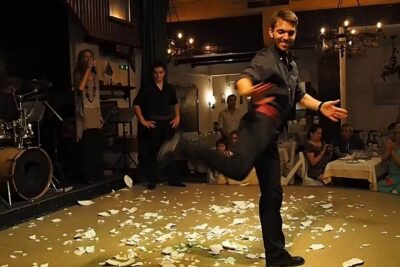
Athens Night Sightseeing Tour with Greek Dinner Show
Read our verdict →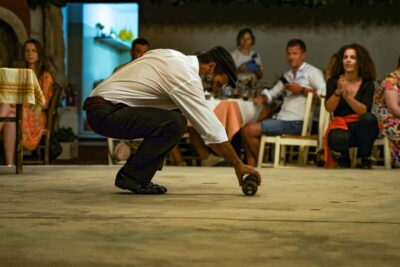
Cretan Night: Dinner & Live Show at Pano Karouzanos Village
Read our verdict →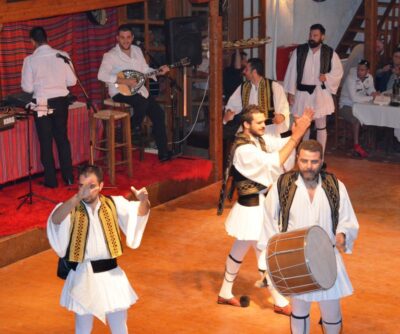
Traditional Dance Show and Buffet Dinner with Wine
Read our verdict →

Greek Night with Buffet Dinner and Plate Smashing
Read our verdict →Traditional Dance Show and Buffet Dinner with Wine
Read our verdict →
Dora Stratou Greek Dancing Show Skip-the-Line Ticket
Read our verdict →Browse the lists this tour appears in