
Review · WORKSHOPS IN ATHENS
Philosophy Experiential Workshop at Plato’s Academy Park -Athens
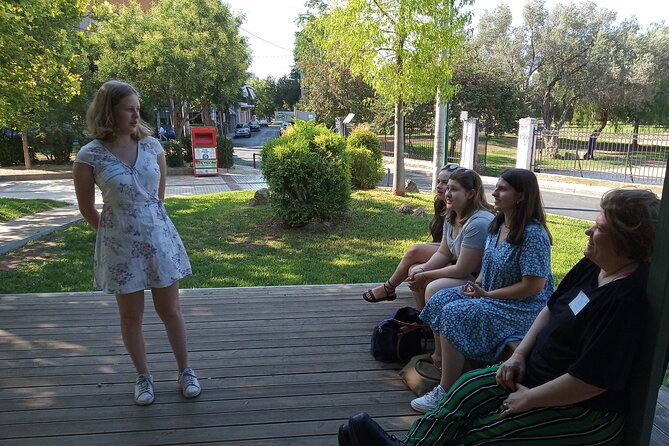
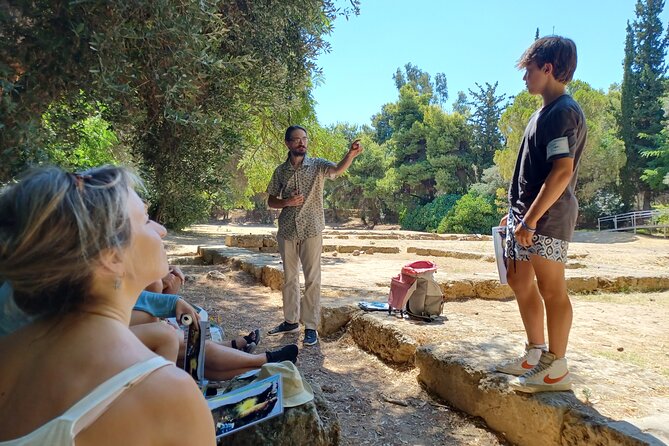
The best part of this Athens experience is that you do not simply look at old stones and move on. You use Plato’s Academy Park as a setting for an active discussion about ideas, choice, education, and truth. The session includes ancient texts, the Allegory of the Cave, and a debate controlled by a replica of an ancient water-timer.
I like the small group size, capped at 10 people, because philosophy works better when you have time to speak. I also like the plain-English approach. You do not need a background in Greek thought, and the facilitator keeps the discussion practical rather than academic.
The main drawback is the setting. This is an outdoor workshop, not a conventional guided tour, so poor weather can cancel it. The Digital Museum is also small, and its opening schedule can change, so the museum portion may be replaced by a discussion.
Key points before you book
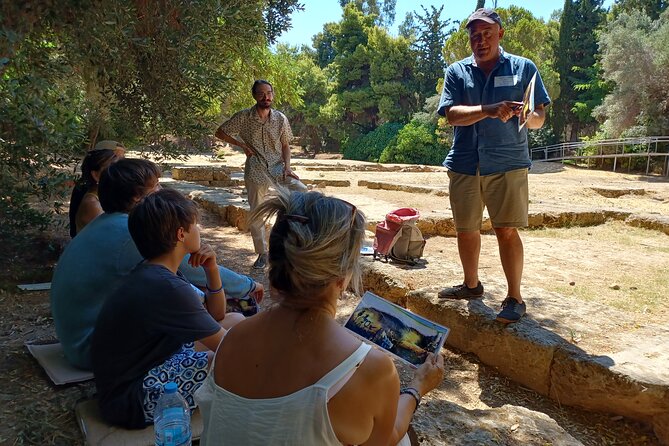
- Plato’s Academy becomes a classroom: You discuss philosophy beside the ancient Gymnasium ruins instead of only hearing dates and names.
- The two-hour format stays focused: The session includes the museum, a park walk, text interpretation, the Cave allegory, and a role-play debate.
- The water-timer makes debate physical: A replica of an ancient clepsydra limits speaking time during the final activity.
- No previous study is needed: The facilitator uses clear English and avoids difficult terminology.
- The workshop suits ages 14 and up: A minor must book with an adult who remains responsible for supervision.
- An Aristotle add-on is available: You can extend the session by one hour for a game about virtue and choice.
Why this is different from a standard Athens tour
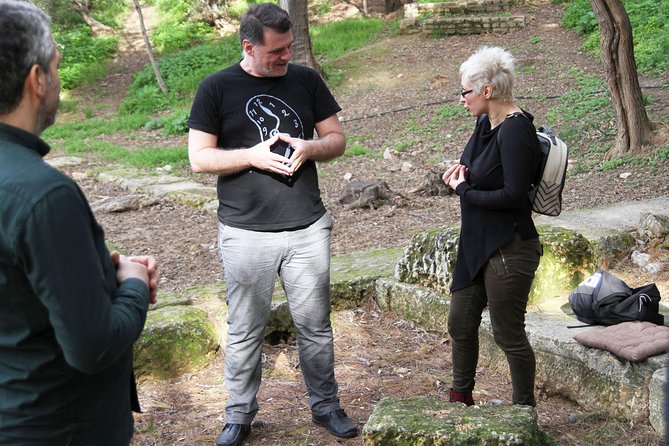
Plato’s Academy is often reduced to a name in a history book. This workshop gives that name a place, a rhythm, and a set of questions. You begin by considering short ancient Greek passages, then connect them to the people who shaped Greek philosophy: Socrates, Plato, and Aristotle.
I find this format more useful than a fast walk past archaeological remains. The ruins are not the whole point. They provide the setting for a conversation about how people learn, how they decide what is real, and how they should live.
That distinction matters. If you want a traditional guide explaining every visible stone, this may not be your best choice. The provider clearly describes it as an educational interactive workshop, not a guided archaeological tour. You are expected to take part, answer questions, and listen to other people in the group.
The tone is meant to be relaxed and accessible. One facilitator associated with the experience is Olga, whose style is described as informal, practical, and discussion-based. The strongest praise centers on the way the question-and-answer format makes difficult ideas easier to follow. That is the real value here: you are asked to think, not simply remember.
More Workshops in Athens
- Athens Airport Private Transfer by Mercedes-Benz E Class Wagon to City Center
★ 5.0 · 232 reviews - Athens: Make your own Leather Sandals Workshop
★ 5.0 · 105 reviews - Athens: Wine Workshop Create your Own Wine under the Acropolis
★ 5.0 · 77 reviews
Starting at Plato’s Digital Museum
The meeting point is Plato’s Academy Digital Museum at Alkmeonos 1 in Athens. The workshop begins with a brief visit inside, when the museum is open.
The museum has free admission, so the $53.92 price is not paying for an expensive museum ticket. You are paying for the facilitator, the planned activities, the historical setting, liability insurance, and local VAT. The museum itself is small, but it is designed to give you a clear starting point before you enter the park.
Do not expect hours of gallery time. This is a short orientation. You will gain basic context about Plato, the Academy, and the ideas that shaped the workshop. That is enough to help you understand what you are about to discuss without turning the first part into a lecture.
The museum schedule requires attention. It is listed as open Tuesday through Friday from 10 a.m. to 4 p.m., but operating days and hours can change, and it may occasionally close without notice. If it is unavailable, the facilitator replaces the visit with a discussion covering the same key points.
That replacement is important. The experience does not depend entirely on getting through the museum doors. Still, if the museum matters to you, confirm the timing before you book or make other plans around it.
Walking through Plato’s Academy Park
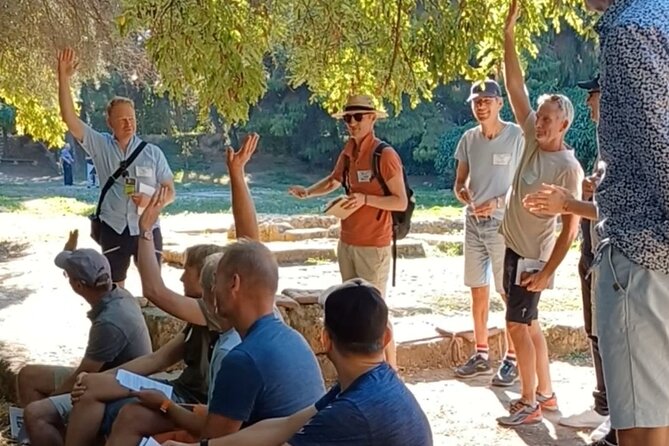
After the museum, you head into Plato’s Academy Park. This is where the workshop shifts from indoor orientation to a more active look at the site.
The facilitator introduces a timeline of Greek philosophical thought and links Socrates, Plato, and Aristotle. You will not be asked to arrive with specialist knowledge. The aim is to understand how these thinkers relate to one another and why their questions still shape discussions about education, ethics, and public life.
The walk leads toward the ancient Gymnasium ruins. These remains give the session its strongest sense of place. Rather than hearing about Plato in a modern classroom, you discuss his ideas in the park connected with his Academy.
The archaeological remains are not presented as a large, intact monument. Keep your expectations realistic. You are visiting a park with ruins, not entering a fully preserved ancient school. There is also a small chance that excavation work may be taking place. If so, you may view the Gymnasium from a short distance and hold the session at another spot in the park.
That possibility does not ruin the experience, but it can affect how close you get to the remains. The workshop depends more on the setting and the discussion than on a particular viewing angle.
Reading ancient texts without a philosophy degree
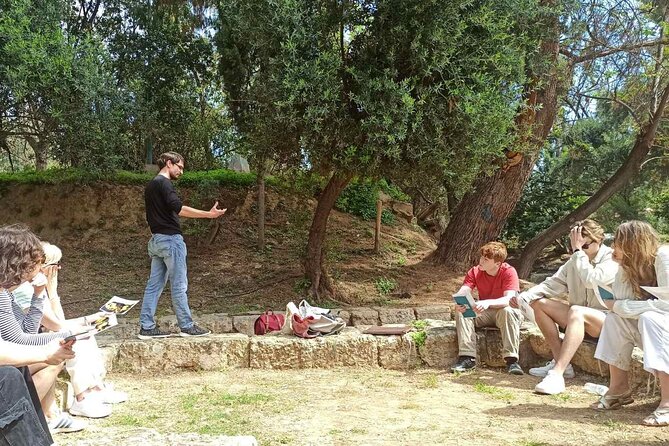
The warm-up asks you to read and interpret ancient Greek texts. This can sound intimidating, but the activity is intended for beginners. The facilitator uses plain English and does not rely on difficult terms.
I like this part because it gives you something concrete to work with. Instead of hearing a polished explanation of what Plato meant, you begin with words and questions. What does the passage suggest? What might it mean in its own time? Does it still apply to modern life?
The group format is useful here. With no more than 10 people, you have a reasonable chance to speak without the session becoming a lecture or a free-for-all. A private option is also available by request, which may suit a family or a small party that wants more control over the discussion.
The experience is suitable for adults and teenagers aged 14 and older. Younger participants cannot book alone, and an adult must accompany them and supervise them. The subject matter can work well for a family with older teens, especially if everyone is willing to take part rather than simply watch.
Close by, and nothing like it:
- Athens: Acropolis & up to 5 Archaeological Sites Combo Pass
★ 4.4 · 12,619 reviews - Athens: Acropolis Ticket with Optional Audio or Live Guide
★ 4.2 · 11,055 reviews - Athens: Acropolis, Parthenon & Acropolis Museum Guided Tour
★ 4.8 · 9,316 reviews - Athens: Acropolis and Parthenon Guided Walking Tour
★ 4.6 · 5,882 reviews
Plato’s Allegory of the Cave in the park
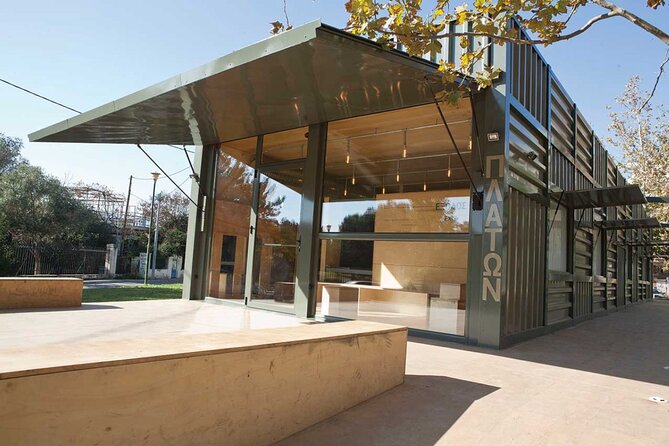
The central activity is a discussion of Plato’s Allegory of the Cave using the Socratic method. This is the section most likely to stay with you after the workshop.
You examine the story through questions rather than a long explanation. The discussion considers how people form beliefs, how they respond to new information, and why changing one’s view can be uncomfortable. The facilitator connects Plato’s ideas with the modern world, so the allegory does not remain a remote ancient puzzle.
This format works best if you enjoy open-ended questions. There is not one quick answer that everyone must repeat. You may be asked to explain your thinking, respond to another person, or reconsider an assumption.
That can be a strength or a weakness. If you prefer a clear stream of facts and a guide who does all the talking, you may find the pace less satisfying. If you enjoy thoughtful conversation, the discussion gives the visit a purpose that a standard sightseeing stop often lacks.
The location adds something, too. Sitting near the ruins while discussing a text linked with Plato creates a direct connection between the site and the subject. It is not a theatrical reconstruction, and the park does not pretend to be unchanged ancient Athens. The value comes from using the place as a prompt for thought.
The ancient water-timer debate
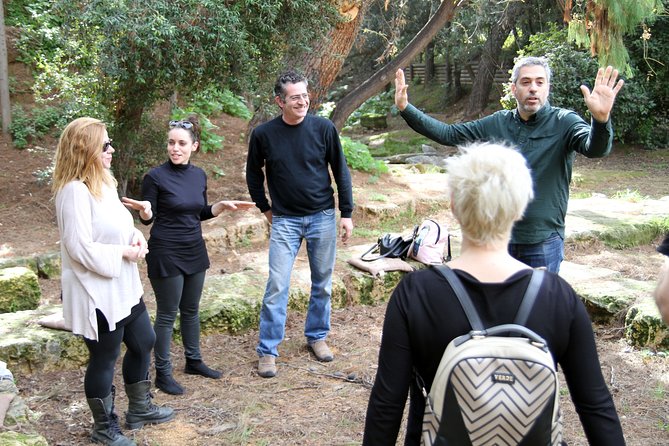
The final activity turns philosophy into a role-play debate. A real replica of an ancient water-timer, or clepsydra, controls the speaking time.
This is a clever choice. In an ancient debate, speakers could not simply talk without limit. The water-timer gives the exercise a rule, a little pressure, and a touch of humor. You must organize your point, listen carefully, and make your case before time runs out.
The activity also gives quieter members of the group a reason to speak. You are not asked to deliver a formal speech, but the timed structure helps keep one person from taking over the whole conversation.
The role-play makes the closing section lively, but it is still tied to the historical setting. You are not playing a random party game. You are trying out a style of discussion associated with ancient public life and the Socratic approach.
The exact debate topic is not specified in advance, so you should expect the facilitator to shape it around the group. That flexibility can make the activity more natural, though it also means you cannot prepare for a particular argument beforehand.
The optional Aristotle hour
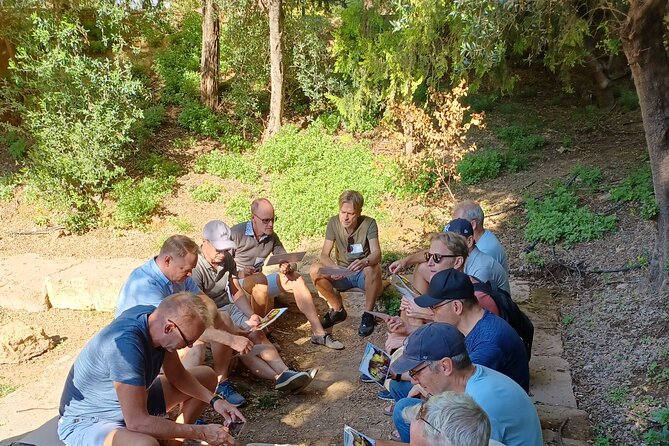
You can add one hour focused on Aristotle’s philosophy. This extra section includes a game about virtue and choice.
The add-on makes sense if you want a fuller philosophical program rather than a short introduction to Plato. The main session already links Socrates, Plato, and Aristotle, but the additional hour gives Aristotle more room.
The virtue-and-choice game should appeal to people who prefer practical ethical questions. Instead of focusing only on what knowledge is or how we understand reality, the activity asks you to consider decisions and character.
The extra hour also changes the value calculation. At $53.92 per person, the standard two-hour workshop is a specialized experience rather than a cheap sightseeing stop. If you are already interested in philosophy, the added time may make the outing feel more complete. If your group includes teenagers with limited patience for discussion, the two-hour version may be enough.
What the $53.92 price includes
The price covers the expert facilitator, liability insurance, and 24 percent local VAT. It does not include a traditional guided tour, and the Digital Museum has free entrance.
The value depends on how you like to spend time in Athens. You are not paying mainly for access to a major monument. You are paying for structure, instruction, and a chance to take part in activities that would be difficult to arrange on your own.
The maximum group size of 10 helps justify the price. A large crowd would weaken the discussion, especially during the text interpretation and timed debate. Group discounts may be available, and a private option can be arranged upon request.
For a family or small group that wants something beyond the usual archaeological circuit, this can be a worthwhile use of two hours. For someone who only wants photographs and a quick look at ruins, the price may feel high.
Practical details that affect your day
The workshop lasts about two hours and starts and ends at the Digital Museum meeting point. It is offered in English and is close to public transportation. Most people can participate, and service animals are allowed.
Wear clothing suitable for an outdoor activity and treat the park as a historical site. The provider asks for respectful conduct, including appropriate dress, moderate noise, cleanliness, and care with photography and video. Participation can be ended without a refund if someone behaves disrespectfully.
Weather is the main practical risk. If poor conditions require cancellation, you should be notified at least three hours ahead. You can then choose another date, a similar workshop, or a full refund.
The standard cancellation policy allows a full refund when you cancel at least 24 hours before the start time. Cancellations or changes made within 24 hours are not accepted for a refund.
Photography and video may take place during the public workshop. You can withdraw your consent by contacting the provider in writing, but the provider is not responsible for images taken or used by other participants.
Who will enjoy this workshop most
I would recommend it to adults, older teenagers, families, students, and curious visitors who want Athens to be more than a checklist of monuments. It is especially good for people who enjoy asking why, not just what happened.
It also suits a small group with mixed experience. Beginners can follow the plain-English explanations, while people who already know something about Plato can bring more challenging questions. The format leaves room for both.
You should think twice if you want a quiet walk with minimal participation. You should also check the weather and museum hours before setting aside a fixed part of your day. The park setting is part of the appeal, but it also means conditions are less predictable than in a museum.
Should you book it?
Book this if you want to connect an ancient Athenian site with questions that still matter now. The most rewarding parts are the discussion of the Cave allegory, the small-group format, and the water-timer debate. The experience gives Plato’s Academy a human scale.
Skip it if your priority is a conventional archaeological tour, a large collection of artifacts, or a fast visit with no group discussion. For everyone else, the $53.92 fee buys more than a look at ruins. It buys a carefully shaped chance to think in the place where Plato’s school is remembered, with enough structure to keep the conversation moving and enough freedom for your own ideas.
FAQ
How long does the Plato’s Academy workshop last?
The main workshop lasts about two hours. You can add one extra hour focused on Aristotle’s philosophy, including a game about virtue and choice.
Where does the experience begin and end?
It begins at Plato’s Academy Digital Museum, Alkmeonos 1, Athens 104 42, Greece. The activity ends back at the meeting point.
Is the Digital Museum included?
The museum has free admission. The workshop begins with a brief museum visit when the museum is open, but it is not a long museum tour.
What happens if the museum is closed?
The museum portion is replaced with a discussion covering the same key insights. The museum is listed as open Tuesday through Friday from 10 a.m. to 4 p.m., but its schedule can change and it may sometimes close without notice.
Do I need previous knowledge of philosophy?
No. The workshop is designed for people without previous knowledge and is conducted in plain English without difficult terminology.
What ages can take part?
The experience is suitable for adults and teenagers aged 14 and older. A minor cannot book alone. At least one adult must book and supervise any underage participant.
What happens if the weather is poor?
The workshop requires good weather because it takes place outdoors. If it is canceled, you will be notified at least three hours ahead and offered another date, a similar workshop, or a full refund.
New on the Athens shelf
- Acropolis of Athens, Parthenon and Acropolis Museum private tour with dinner★ 5.0 · 77 reviews
- Small-Group Wine Tour in Athens with Tasting★ 5.0 · 33 reviews
- Private Athens Transfer Airport/Port -Greek Tours-Hourly service★ 5.0 · 88 reviews
- VIP Private Guided Tour of Athens Acropolis & Plaka in a Sidecar★ 5.0 · 108 reviews
- Private Athens Landmarks Layover Tour★ 4.5 · 41 reviews
- Athens Moonlight Waling Tour with Drinks and Meze Dishes★ 5.0 · 259 reviews
- Departure Transfer from Athens City to Athens Airport★ 5.0 · 41 reviews
- Classic Athens Food Tour with Local Drink & Market Visit★ 5.0 · 34 reviews
Workshops in Athens, compared.
Athens Airport Private Transfer by Mercedes-Benz E Class Wagon to City Center
Read our verdict →

Wine Workshop Create your Own Wine under the Acropolis
Read our verdict →

Create and paint your own ceramic piece in a workshop in Athens
Read our verdict →
Discover your talent in sculpture, in a country where golden section was born.
Read our verdict →
Create Your Own Wine-Workshop under the Acropolis
Read our verdict →
Browse the lists this tour appears in