Review · ATHENS TOURS
Philosophical Tour in Athens
Athens becomes more interesting when you stop treating its ruins as photo backdrops and start asking what happened there. This walking tour follows ideas as much as stones, from tragedy at the Theater of Dionysus to democracy at the Pnyx and happiness in the thinking of Socrates, Plato, Aristotle, and Epicurus. Guide Lampros uses short videos, speakers, and conversation to keep the subject alive.
I like the private format for up to six people, since you can ask questions without fighting a crowd. I also like the practical care built into the route: Lampros has chosen shady places for talks in hot weather, and the tour includes fine views of the Acropolis and Athens. The main consideration is simple: this is a serious philosophy walk, not a standard highlights tour, so some sections may feel dense if you want only quick facts and photographs.
Key points at a glance
- Philosophy on location: Discuss Plato at the Prison of Socrates, Aristotle at the Pnyx, and Epicurus near ancient Athens.
- Private group of up to six: Your party receives the guide’s full attention and can shape the discussion.
- Short multimedia lessons: Videos and speakers help explain difficult ideas without relying only on long talks.
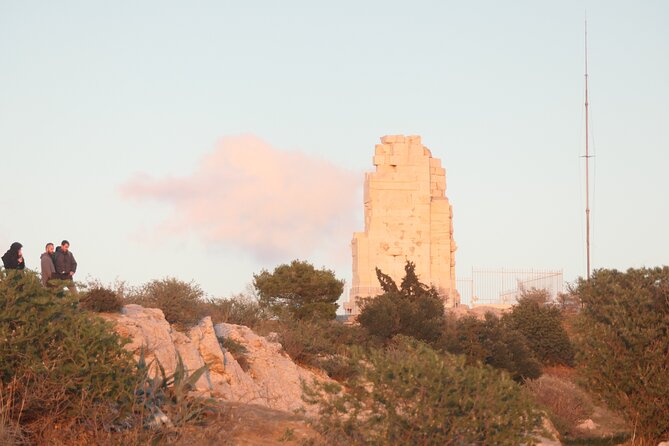
- A strong range of views: See the Acropolis from Philopappos Monument and Athens from the Pnyx.
- A walk through major turning points: Theater, democracy, Stoicism, philosophy, and ancient civic life all appear along the route.
- About two and a half hours: The pace is steady, with stops for discussion rather than a rushed march between monuments.
Why this Athens walk feels different
The tour’s central idea is that Athens is not just a city of old buildings. It is a place where people argued about how to live, how to govern, how to face suffering, and what happiness means. That gives the walk a clear purpose.
At the Theater of Dionysus, the discussion begins with tragedy. You consider why ancient Athenians were expected to watch tragic plays, and how confronting difficult stories could make people less quick to judge. The conversation also brings in Carl Jung, Buddhism, and evolutionary psychology, so this is not a narrow lesson in classical archaeology.
That mix tells you what to expect from Lampros. He connects ancient philosophy with psychology and modern questions about the self. One session may move from a monument to a Greek thinker, then toward a question about awareness, healing, free thought, or even artificial intelligence. If you enjoy conversation and reflection, this gives the walk more purpose than a list of dates.
A few more Athens options worth putting side by side
- Athens: Acropolis & up to 5 Archaeological Sites Combo Pass
★ 4.4 · 12,619 reviews - Athens: Acropolis Ticket with Optional Audio or Live Guide
★ 4.2 · 11,055 reviews - Athens: Acropolis, Parthenon & Acropolis Museum Guided Tour
★ 4.8 · 9,316 reviews
From the Theater of Dionysus to the Odeon
The Theater of Dionysus Eleuthereus is the first major stop, with about 15 minutes set aside for the discussion. It is presented as the birthplace of tragedy, and the subject is not limited to the theater’s construction or ancient performances.
You look at tragedy as a tool for self-knowledge. The idea that difficult drama can help us become better at judging ourselves and others gives the site a human angle. Jung’s ideas about personal growth are brought into the conversation, alongside Buddhist and psychological views.
Next comes the Herod Atticus Odeon, where the stop lasts about 10 minutes. The focus shifts to the idea of the persona, along with the animus and anima as parts of personality. This is a useful place for anyone interested in how public identity and inner life can differ.
The two theater stops work well together. The first asks what drama can teach us. The second asks what roles we perform as people. I would not expect a full theater history lesson here, since the time is short and the focus stays on ideas.
Plato’s cave at the Prison of Socrates
The Prison of Socrates receives about 20 minutes, giving the group more time to discuss Plato’s Allegory of the Cave. This is one of the tour’s clearest links between a physical place and a famous philosophical argument.
You consider the difference between appearance and reality, and how people can mistake familiar beliefs for truth. The location gives the discussion a useful sense of place, even though the main value comes from the interpretation rather than from a long archaeological explanation.
This is also where the private format matters. Plato’s cave is familiar to many people, but not everyone reads it in the same way. You can ask Lampros to explain the argument in simpler terms, or push further into questions about education, perception, and change.
The tour does not treat philosophy as something locked in a textbook. The aim is to bring the ideas into ordinary life. That approach suits families with older children, university students, and adults who have studied philosophy before but want to return to it in a more practical setting.
Democracy at Agios Dimitrios Loumbardiaris
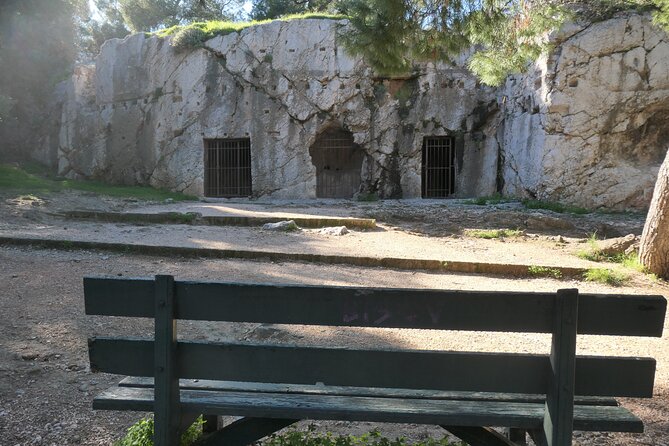
At the church of Agios Dimitrios Loumbardiaris, the tour turns toward democracy. The stop lasts about 20 minutes and examines the birth of democratic thought in this part of Athens.
The value here is the connection between political ideas and physical space. Democracy can sound abstract when discussed in a classroom. Standing in Athens while considering how citizens gathered, debated, and took part in public life makes the subject easier to grasp.
You should keep in mind that this is not a dedicated political history tour. Democracy is one part of a broader route that also covers psychology, happiness, personality, Stoicism, and ancient religion. That variety will suit you if you like connections across subjects. It may feel less focused if you want a detailed account of Athenian government alone.
Close by, and nothing like it:
- Athens: Acropolis and Parthenon Guided Walking Tour
★ 4.6 · 5,882 reviews - Athens, Piraeus, and Coastline: Blue Hop-On Hop-Off Bus
★ 3.9 · 4,849 reviews - Greek Food Walking Tour in Athens
★ 5.0 · 4,740 reviews - Athens: City Sightseeing Hop-On Hop-Off Bus Tour
★ 4.3 · 4,520 reviews
Philopappos Monument and the search for happiness
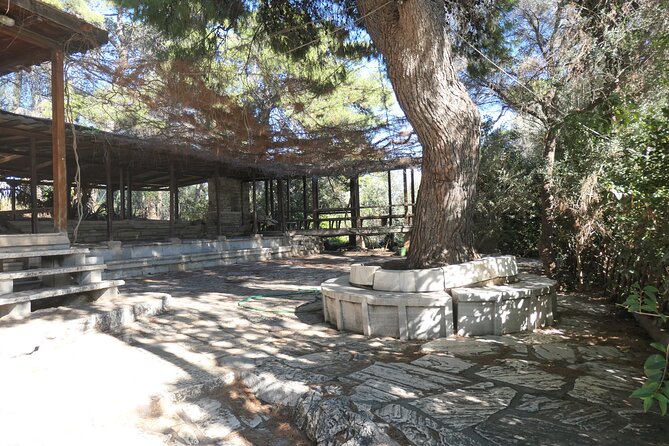
The Philopappos Monument is one of the tour’s best scenic pauses. It is described as one of the most energetic points in Athens, with a fine view toward the Acropolis and Parthenon. About 15 minutes are set aside for a discussion of happiness in the thinking of Plato and Socrates.
The view matters because it gives you a mental break after several abstract subjects. You can look across Athens while considering whether happiness comes from pleasure, virtue, knowledge, or a well-ordered life. The setting helps keep the conversation grounded.
The language of energy is personal and interpretive, so do not expect a formal scientific claim about the location. Treat it as a reflective stop with a strong city view. It is also a good place for photographs, though the tour’s purpose remains the discussion rather than a dedicated photo session.
The Pnyx and Aristotle’s idea of a good life
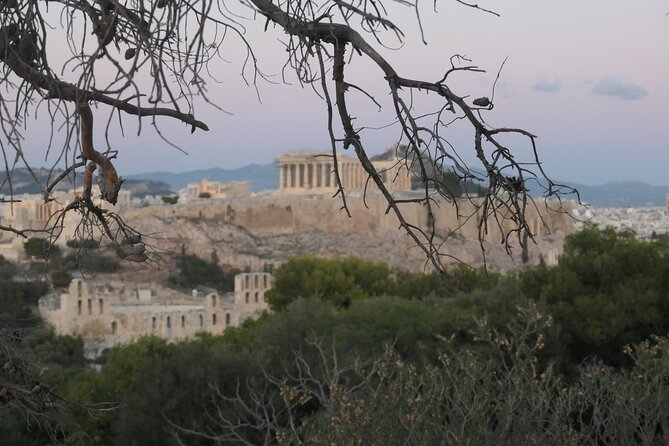
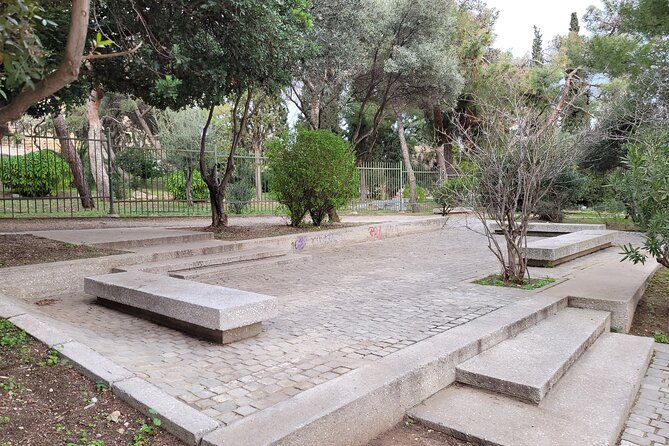
At the Pnyx, the route reaches the assembly area of Athenian citizens. The stop lasts roughly 15 minutes and focuses on Aristotle’s idea of eudaimonia, often translated as flourishing or blissful living.
This is one of the most fitting locations on the walk. The Pnyx connects public life with personal ethics. You are asked to think about what makes a life go well, not simply what produces short bursts of pleasure.
The tour also points to a less obvious place associated with Socrates. That sense of looking beyond the main monuments is one of its strengths. You are not simply moving from one famous landmark to another. You are being shown how smaller places can support a larger story about Athens.
An admission ticket is included for the Pnyx stop. Since the tour involves walking outdoors and the meeting time is 11 a.m., the heat deserves attention, especially in summer. Lampros has been praised for choosing shady places and taking breaks during explanations, but you should still bring water, a hat, and suitable walking shoes.
Keramikos and Epicurus’ garden
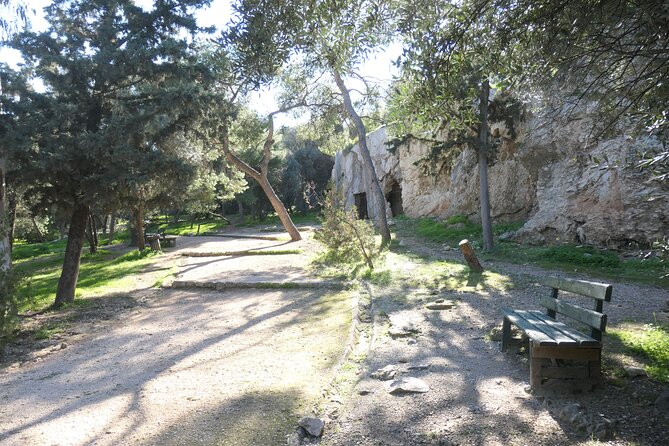
Keramikos Archaeological Site introduces another side of ancient Athens: the cemetery. The stop lasts around 15 minutes and links the setting with Epicurus and his ideas about happiness.
Epicurean thought is often reduced to simple pleasure. The tour gives you a chance to consider a more careful version of the subject, including the value of friendship, peace of mind, and freedom from needless fear. The ancient cemetery adds a fitting reminder that questions about happiness are tied to how people face mortality.
This is another stop where the discussion matters more than a long list of remains. If you want a detailed archaeological tour of Keramikos, you may need a separate visit. Here, the site serves as a place to think about Epicurus and the choices that shape a good life.
The route also passes places tied to the birth of philosophy, theater, and democracy, as well as a place where Stoicism was born or taught. These extra references broaden the walk, though the schedule means some may be viewed briefly rather than treated as full stops.
Roman Agora, Stoicism, and the old center
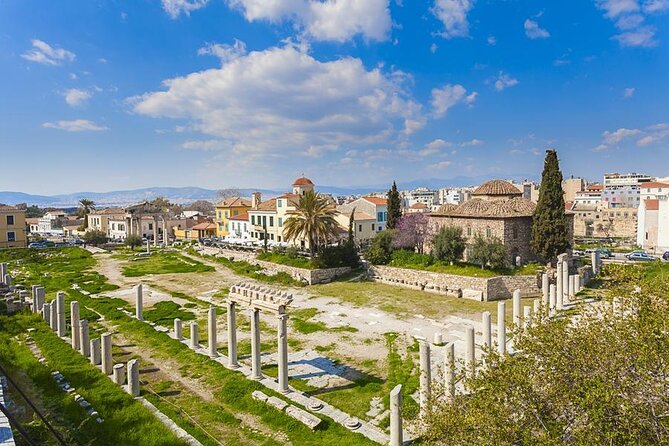
The Roman Agora is the main later stop on the route. About 15 minutes are planned here, with attention given to Stoicism as a philosophy of life.
The appeal of this section is practical. Stoicism is not presented only as a set of ancient names. It becomes a way to discuss control, response, duty, and the difference between what happens to you and how you meet it.
The route also points out what is described as the first meteorological station in the world. You then reach the area around the Mnisikleous steps, known as a meeting place for philosophical discussion and a good place for lunch.
That lunch tip is useful because the tour ends back at its original meeting point, and you may want food soon after the walk. Lampros has also offered suggestions for rooftop bars, open-air cinema, and local places to eat, including a restaurant known for meatballs. These recommendations are a helpful extra, though they are not the main product.
Lysikratous Square and Anafiotika
At Lysikratous Square, the discussion turns to Nietzsche’s ideas about the Apollonian and Dionysian sides of Athens. The stop lasts about 15 minutes.
This pairing brings together order, reason, instinct, art, and emotion. It also returns the tour to the world of theater, showing how one city can be read through different philosophical lenses.
The final stop is Anafiotika, reached for about 10 minutes. The area feels like a Cycladic island tucked beside the Acropolis, making it a pleasant visual change after the larger archaeological sites.
Anafiotika is not treated as just a picturesque lane. It becomes the tour’s second highly energetic point, a place to reflect on the contrast between ancient monuments, city life, and small neighborhood spaces. The ending is atmospheric rather than grand, and the activity returns to the meeting point afterward.
What the price means for your group
The cost is $90.11 per person, with one private group covering up to six people. For a full group, that works out to about $540.66 total. The value depends heavily on group size and on how much you want discussion rather than standard sightseeing.
For one or two people, the per-person cost is higher than a large group walking tour. For four to six people, the private setup becomes easier to justify because you are paying for dedicated time, questions, and a guide who can adjust explanations to your interests.
You also avoid the common weakness of a large philosophy talk: standing at the back while the guide speaks to strangers. Here, your group can ask about Stoicism, the myth of the cave, Epicurean ideas, psychology, or the future of AI. The tour’s strongest value is intellectual access, not admission to expensive monuments.
The experience is offered in English and includes a mobile ticket. Most travelers can participate, service animals are allowed, and the route is near public transportation. The supplied information does not promise full step-free access, so anyone with mobility concerns should confirm the route before booking, especially because it includes outdoor archaeological areas, hills, and old Athens streets.
Who will enjoy this private philosophy tour?
I would choose this experience if you want Athens to give you something to think about after the walk ends. It suits adults, older children, university students, and anyone curious about the links between ancient philosophy and psychology.
It is especially useful early in an Athens visit. The route can give you a better frame for later visits to the Acropolis and other ancient sites. One family found it so useful that they wished they had booked it earlier, since Lampros also shared ideas for food, bars, cinema, and other places around town.
The tour can also work for people who know little about philosophy. Lampros adjusts the conversation to the group, and the short videos help make difficult ideas easier to follow. At the same time, people with previous study can ask more searching questions and keep the conversation going.
I would hesitate if you want a fast, conventional city tour, a detailed archaeology lecture, or a visit focused mainly on entering major monuments. The experience uses sites as prompts for discussion. Its success depends on your willingness to listen, ask, and think.
Booking and weather details
The experience begins at 11 a.m. at AcropoliAthens, 117 42, Greece, and ends back at the meeting point. It lasts about two hours and 30 minutes, though the walking between stops and the number of discussions can make the time pass quickly.
You receive confirmation when booking, and the activity is private for your group. Free cancellation is available up to 24 hours before the start time. Changes or cancellations inside that window are not refunded, and poor weather can lead to a different date or a full refund.
Should you book it?
Book this tour if you want Athens explained through questions about human character, happiness, democracy, tragedy, and the good life. Lampros brings together philosophy, psychology, short multimedia lessons, local sights, and plenty of room for conversation.
The best reason to choose it is the private setting and the thoughtful route. You will see important places, but the real payoff is learning how to look at them. Skip it only if you prefer a traditional sightseeing walk with more monuments and fewer ideas.
FAQ
How long is the Philosophical Tour in Athens?
The tour lasts approximately two hours and 30 minutes.
What time does the tour start?
The tour starts at 11:00 a.m.
Where does the tour begin and end?
It begins at AcropoliAthens, 117 42, Greece, and ends back at the meeting point.
Is this a private tour?
Yes. Only your group participates, with a maximum group size of six people.
What language is the tour offered in?
The tour is offered in English.
Is the tour suitable for most people?
Most people can participate, and service animals are allowed. The route is a walking activity through archaeological areas and Athens streets.
Are admission tickets included?
Admission is listed as free at most stops. An admission ticket is included for the Pnyx stop.
What happens if the weather is poor?
Because the experience requires good weather, it may be canceled or moved to another date. If it is canceled due to poor weather, you are offered a different date or a full refund.
New on the Athens shelf
- Acropolis of Athens, Parthenon and Acropolis Museum private tour with dinner★ 5.0 · 77 reviews
- Small-Group Wine Tour in Athens with Tasting★ 5.0 · 33 reviews
- Private Athens Transfer Airport/Port -Greek Tours-Hourly service★ 5.0 · 88 reviews
- VIP Private Guided Tour of Athens Acropolis & Plaka in a Sidecar★ 5.0 · 108 reviews
- Athens Moonlight Waling Tour with Drinks and Meze Dishes★ 5.0 · 259 reviews
- Private Athens Landmarks Layover Tour★ 4.5 · 41 reviews
- Departure Transfer from Athens City to Athens Airport★ 5.0 · 41 reviews
- Classic Athens Food Tour with Local Drink & Market Visit★ 5.0 · 34 reviews
Athens Tours, compared.
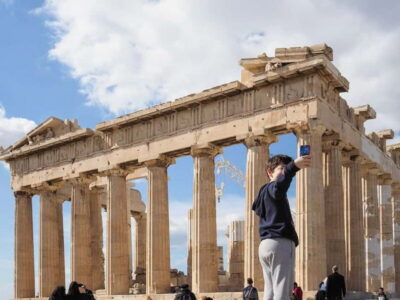
Acropolis & up to 5 Archaeological Sites Combo Pass
Read our verdict →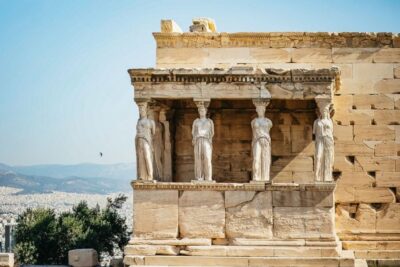
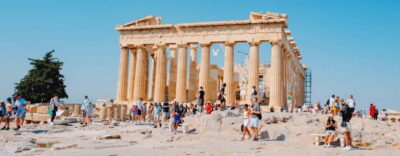

Athens, Piraeus, and Coastline: Blue Hop-On Hop-Off Bus
Read our verdict →