
Review · CORINTH TOURS
Biblical Tour Letters to The Corinthians – St Paul’s Footsteps
The most meaningful part of this day is the link between Paul’s letters and real places. At Mars Hill, you can picture Paul addressing Athens about the Unknown God. In Corinth, you reach the city where he preached for about 18 months, faced the Roman authorities, and built one of the earliest Christian communities.
I like the private format for two reasons: you can adjust the plan, and the cost of $386.18 is shared by up to four people. Drivers such as Alex, Kostas, Spyros, Constantine, and Pericles have been praised for their history knowledge, patience, and flexibility. The main catch is that your driver is not a licensed guide and will not enter the archaeological sites with you.
Key points to know before you book
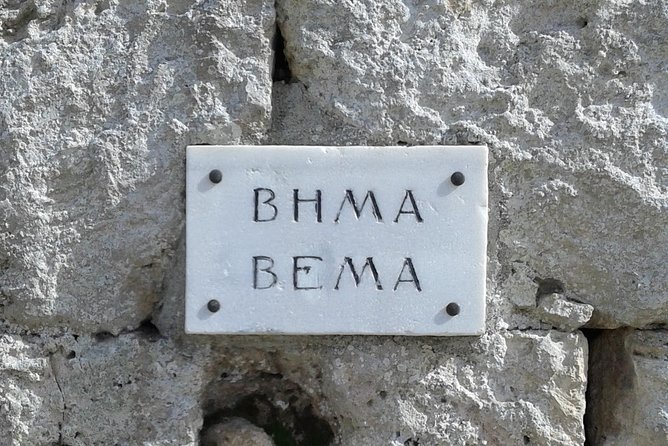
- Paul’s Corinth comes alive at the Bema: See the judgment platform linked to Paul’s hearing before Gallio.
- The route mixes famous and quieter sites: The Corinth Canal gets the photographs, while Cenchreae and the Diolkos provide a more personal sense of Paul’s working world.
- A private car makes the long day easier: Pickup from your accommodation, WiFi, water, air conditioning, and room for up to four people are included.
- The driver is not an official guide: Expect useful commentary in English from the vehicle, but arrange a licensed guide if you want site-by-site interpretation.
- Site admission costs extra: Ancient Corinth and the Archaeological Museum of Corinth require an entrance fee of €15 per person.
- The schedule is full: You may cover a lot in eight hours, but tell the driver early if you prefer fewer stops and more time at each place.
Why this Corinth tour matters to Christian history
This is not simply a sightseeing drive to a famous canal and a ruined city. It follows the geography of Paul’s ministry, from the intellectual center of Athens to the commercial crossroads of Corinth and its eastern port at Cenchreae.
That route helps you understand why Corinth mattered. The city sat on the narrow land bridge joining mainland Greece to the Peloponnese. Ships, merchants, athletes, soldiers, religious pilgrims, and political leaders all passed through this corridor. Paul did not preach in a quiet backwater. He worked in a busy, mixed society filled with old gods, new ideas, wealth, trade, and sharp social divisions.
I find that setting especially useful when reading First and Second Corinthians. Paul’s letters stop feeling like distant religious texts and begin to sound like correspondence with a difficult, very real community. The tour connects the letters to the Roman Forum, the harbor, the athletic grounds, and the temples that shaped daily life.
The day lasts about eight hours and is private for your group. That matters here because the route is broad, and your interests may be specific. A family focused on biblical sites may want more time at the Bema and Apostolou Pavlou Church. A history-minded group may prefer the museum, Diolkos, Isthmia, and the Temple of Apollo.
More trips in the footsteps of St Paul:
- Biblical Tour Letters ToThe Corinthians St Paul’s Footsteps 6Hour
★ 5.0 · 1,065 reviews - Private Biblical Tour Ancient Corinth & Isthmus Canal from Athens
★ 5.0 · 762 reviews - Private Tour of Apostle Paul’s Footsteps in Ancient Corinth
★ 5.0 · 275 reviews
From Athens to Mars Hill
The day begins with pickup from your accommodation in Athens. The first stop is Areopagus Hill, also called Mars Hill, near the Acropolis. Admission is free, and the visit lasts about 20 minutes.
This is the place associated with Paul’s speech to the Athenian council. He addressed people shaped by philosophy and polytheistic worship, using an altar dedicated to an unknown god as a starting point for his Christian message. The attraction is not a large monument. It is the setting itself, a rocky platform tied to one of Paul’s best-known speeches.
The footing can be uneven, so sensible shoes are useful. Twenty minutes is enough to look over the area and consider the biblical connection, but not enough for a long Acropolis visit. If you have already seen Mars Hill, you can ask to use that time elsewhere. One couple specifically appreciated being able to skip familiar Athens sights and spend more of the day in Corinth.
The Corinth Canal and the old crossing
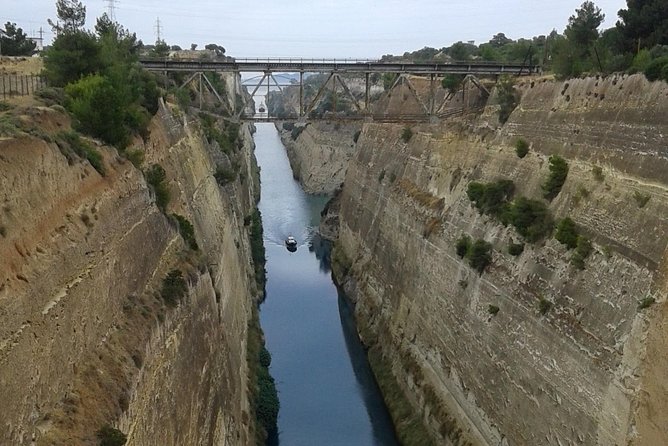
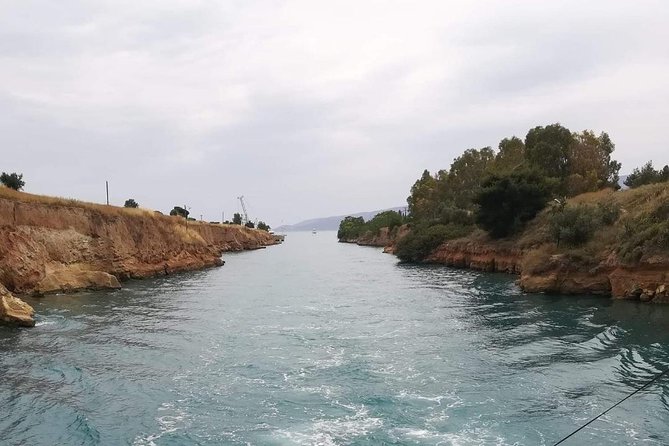
The drive west brings you to the Corinth Canal, with about 30 minutes for photographs and a look at the waterway. The modern canal was completed in the 19th century, but the idea of cutting through the isthmus reaches back more than 2,000 years.
Before the canal, ships had to sail roughly 185 nautical miles around the Peloponnese. The channel you see today is a reminder of why Corinth became so important. It links the Gulf of Corinth with the Saronic Gulf and separates the Peloponnese from mainland Greece.
The canal is dramatic, but keep its role clear. Paul did not see the modern waterway. Its value on this tour is geographical. It shows you the narrow passage that made Corinth a natural commercial and military center long before the canal was built.
The Diolkos offers an older connection. This ancient paved route was used to move ships across the isthmus between the Aegean and Ionian seas. The stop lasts around 20 minutes and is less polished than the main archaeological sites, but it helps you picture the practical world Paul entered. Trade here was not an abstract idea. Goods, vessels, and people had to be hauled across land.
Isthmia, the games, and Paul’s working world
Isthmia is one of the most interesting parts of the day for visitors who want more than the standard Corinth ruins. The area hosted the Isthmian Games, one of the major athletic contests of the ancient Greek world, second only to the Olympics in importance.
The games honored Poseidon and drew athletes and spectators from across Greece. The tour connects Paul with this setting through his work as a tentmaker, presenting him as someone who made a living among athletes and visitors while sharing his faith with people from many places.
The practical value of this stop is context. Athletic imagery appears often in Paul’s letters, and a stadium full of competitors gives those images a sharper edge. You can think about running a race, training, competing, and receiving a prize while looking at the setting that may have influenced Paul’s language.
The Archaeological Museum of Isthmia takes about 30 minutes. Its collection includes objects from the sanctuary of Poseidon, statues, offerings, burial finds, and glass panels from Kenchreai. Those glass panels are particularly useful because they connect the museum to Paul’s eastern port departure.
The museum also helps correct an overly simple picture of the ancient world. Paul’s Corinth was not only Roman or only Greek. It was a meeting place of religions, languages, trades, and customs. The driver may explain the broader setting, but remember that drivers do not enter the sites as official guides.
A few more Corinth options worth putting side by side
- From Athens: Ancient Corinth Day Trip with Canal & VR Guide
★ 4.6 · 1,073 reviews - Corinth Half-Day Trip from Athens with Entrance Tickets
★ 4.5 · 242 reviews - Sea Kayak Epidavros – Ancient Sunken City Tour
★ 5.0 · 213 reviews - From Athens: Ancient Corinth Tour Official Guide & Tickets
★ 4.6 · 208 reviews
Ancient Corinth and the Bema
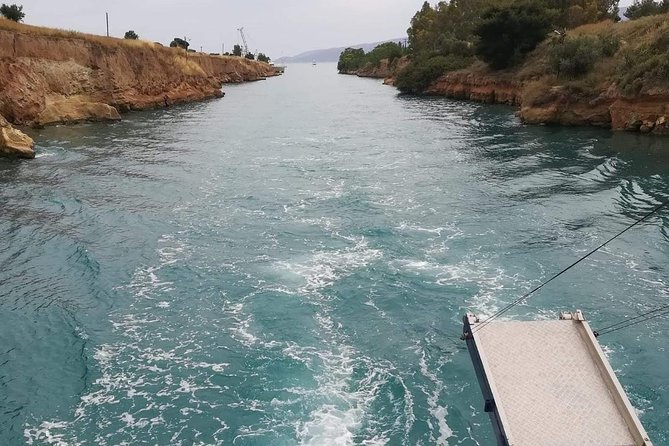
Ancient Corinth is the heart of the excursion. Plan roughly an hour here, though the full experience depends on whether you add a licensed guide and how much time you spend inside the ruins.
Paul lived and preached in Corinth for about 18 months around AD 51 and 52. The city became the base for an early Christian community, and his letters dealt with disputes, worship, ethics, social divisions, and the meaning of Christian life. This is the place where those letters gain physical grounding.
The Bema is the key biblical sight. This stone platform in the Roman Forum is associated with Paul’s appearance before the proconsul Gallio. According to Acts, Paul was accused of illegal teaching, but Gallio treated the matter as an internal religious dispute and refused to take action.
You can stand near the platform and consider the practical effect of that decision. Paul was able to continue his work without Roman interference. The site later became a Christian worship place in the Byzantine period, adding another layer to its story.
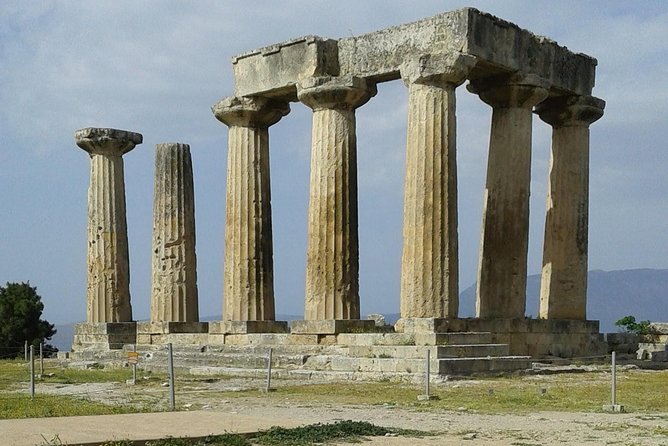
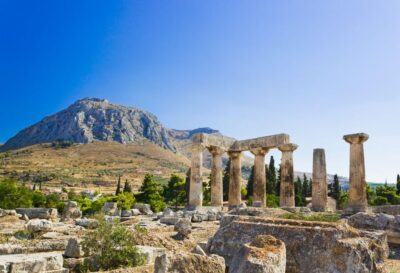
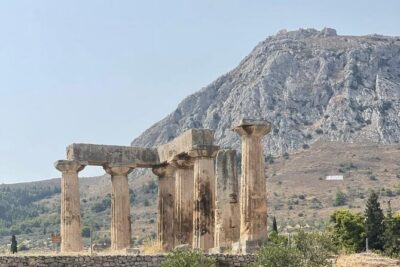
The Temple of Apollo is another major sight within Ancient Corinth. Built around 560 BC, it is an early Doric temple with large limestone columns. Only part of the original structure remains, but the surviving columns make a strong visual point: Paul preached in a city already dominated by monumental pagan worship.
I like this stop because it avoids turning Corinth into a simple contest between old temples and new Christianity. Paul’s message took shape within a complex city. The Temple of Apollo, Roman Forum, Bema, shops, roads, and public spaces all show the social world in which the Christian community had to function.
Ancient Corinth and the Archaeological Museum of Corinth require an entrance fee of €15 per person, paid separately. The price is worth including in your planning, especially for a group of four. Ask whether the fee covers the combination you want before entering, since the supplied tour details specifically identify Ancient Corinth and the museum as extra costs.
The sanctuary and theater at Isthmia
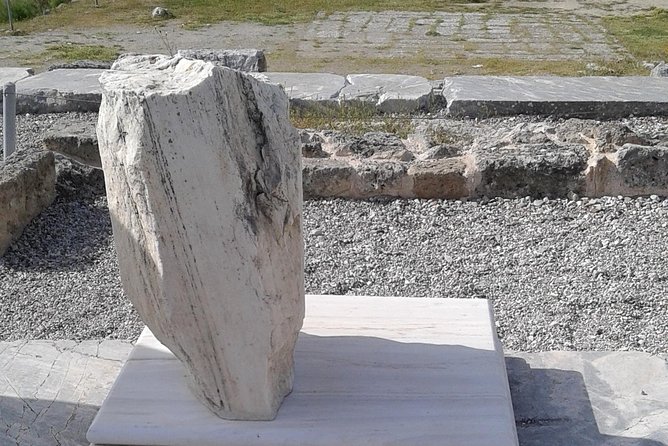
The Archaeological Site of Isthmia is listed separately from the museum and takes about 40 minutes. Here you can see the remains linked to the Temple of Poseidon, the stadium, and the Sanctuary of Palaimon, a deity connected with sailors.
The ancient theater was used for musical events during the Isthmian Games. Roman mosaics with sea creatures and Dionysian scenes add a glimpse of the entertainment culture Paul encountered. This is a useful counterpoint to the more direct biblical sites. Paul’s audience was not living in a Christian setting. He was speaking into a world of temples, contests, myths, public shows, and competing loyalties.
Isthmia also served as a place for political and military meetings. That detail helps explain why the area carried influence beyond sport and religion. Paul’s work unfolded in a region where leaders and delegates already gathered to make decisions and exchange ideas.
Because several Isthmia stops appear in the full route, clarify the exact plan before departure. The itinerary can include the museum, sanctuary, stadium, theater, and nearby historical points, but the amount of time at each one may vary.
Cenchreae and the eastern sea route
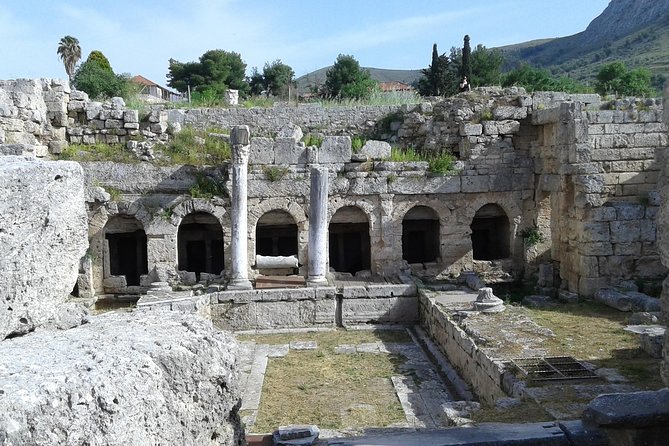
Kechries, the modern name used for ancient Cenchreae, was Corinth’s eastern port. The visit takes about 30 minutes and has a different feel from the inland ruins. It is a quieter coastal stop tied directly to Paul’s travel.
Acts places Paul here during his second missionary journey, before he sailed for Syria with Priscilla and Aquila. The account also mentions Paul cutting his hair to fulfill a vow. Cenchreae later had an early Christian community, and Paul commended Phoebe, a respected church servant from the port, in his letter to the Romans.
That reference gives Cenchreae unusual importance. It is not only a place Paul passed through. It also points to the role of local Christian communities and to the work of Phoebe, one of the prominent women connected with the early Church.
The site is not as visually grand as Ancient Corinth, so its value comes from the story. I would give it time for quiet reflection rather than expecting a large collection of ruins. It is also a good place to remember that Paul’s ministry depended on roads, ports, work, travel, and personal networks.
Apostolou Pavlou Church and lunch
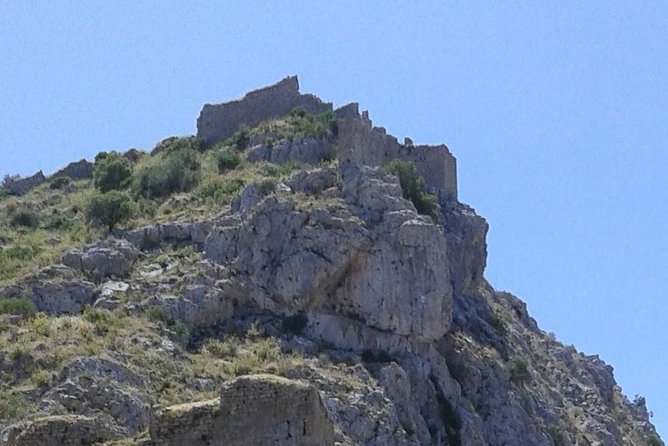
Apostolou Pavlou Church honors Paul’s long stay in Corinth. The stop lasts about 20 minutes and provides a living Christian setting after the pagan temples and archaeological remains.
The church is tied to the tradition of Paul preaching and establishing the early Christian community in Corinth. It is a natural place to pause, especially if the main purpose of your trip is devotional rather than purely archaeological.
Lunch is scheduled for an hour at a traditional seaside Greek taverna in Corinth. Lunch is not included in the tour price, so budget separately. The restaurant is part of the day’s structure, but the exact meal and cost are not specified. Ask the driver about the stop if you have dietary needs or want a longer meal.
Akrokorinthos and the final view
Akrokorinthos is the fortress above Ancient Corinth, and the stop lasts about 40 minutes. Its height gives you broad views over the city and the surrounding area.
The fortress is linked to the route Paul would have known, although the main appeal here is the combination of strong walls, elevation, and perspective. From above, the reason for Corinth’s power becomes easier to grasp. You can see the corridor between mainland Greece and the Peloponnese, along with the routes toward the sea.
The stop may require walking on uneven ground. The supplied details do not promise a full fortress hike, so ask what section you will visit and how much time is available. Forty minutes can provide a good look, but it is not a long climb-and-explore session.
Driver, guide, car, and pacing
This is a private vehicle tour, not a traditional walking tour with a guide beside you at every site. Your English-speaking driver provides historical commentary while driving and can answer questions, but the driver is not licensed to guide inside the archaeological areas.
That distinction matters. Several drivers have been praised for being on time, flexible, patient, and well informed. Alex helped one group adjust the plan around sights they had already seen. Kostas was praised for navigation and for finding good photo positions. Constantine was described as patient with the time needed at each stop, while Spyros, Pericles, and others were praised for their local knowledge and pleasant manner.
You can request a licensed guide, subject to availability. I would strongly consider doing so if you want detailed explanations of inscriptions, architecture, biblical passages, and archaeological evidence. Without one, you gain privacy and flexibility but may spend more time reading signs or piecing together the sites yourself.
The vehicle comes with air conditioning, bottled water, WiFi, and private transportation. Several vehicle types may be available, so confirm what you are booking. One unhappy experience involved a guest expecting a larger vehicle after booking a private sedan. The lesson is simple: check the vehicle category, passenger count, and comfort level before paying.
The schedule can feel full. One group completed the route in about six hours and felt rushed by the pace, while others enjoyed having enough time at each stop. Tell the driver at the start that you prefer a slower visit, and identify the places you most want to see.
Is $386.18 good value for four people?
At $386.18 per group of up to four, the tour works out to about $96.55 per person for a full private day if you have four people. That is a fair value for pickup, private transportation, an air-conditioned vehicle, water, WiFi, and the ability to adjust the route.
The value drops for a solo traveler or a couple because the price is per vehicle, not per person. You also need to add lunch, site admission, and possibly a licensed guide.
I would compare this with the cost and effort of arranging a rental car, navigating the Corinth route, finding parking, and studying each site independently. The private format is most useful if you want a driver who knows the roads and can adapt the plan. It is less ideal if you want a formal guide leading every minute of the day.
The tour is booked around 90 days ahead on average, so advance planning is sensible, particularly if you want a specific vehicle or licensed guide. Free cancellation is available up to 24 hours before the start time. Changes or cancellations inside that window are not accepted for a refund.
Who should book this St. Paul tour?
I would choose this experience if you are interested in Christian history, biblical geography, ancient Corinth, or a private day outside Athens. It suits families, couples, and small groups who want control over the pace and a pickup from their accommodation.
It is especially good for people who have already seen the main Athens sights and want to connect Paul’s Athenian speech with his longer mission in Corinth. It also works well for visitors who value a driver’s local knowledge more than a fixed group itinerary.
I would hesitate if you dislike long drives, want every site explained by a licensed guide, or prefer to linger at one archaeological area. The route covers a lot, and the advertised eight hours may feel short if you want a slow visit to every stop.
My best advice is to choose your three priorities before leaving. For a first visit, I would put Ancient Corinth and the Bema first, then Isthmia and its museum, followed by Cenchreae or Akrokorinthos. Add Mars Hill if you have not already seen it. That approach gives you the strongest biblical and historical experience without turning the day into a race.
FAQ
How long does the tour last?
The tour lasts approximately eight hours, though the actual timing can vary depending on traffic, stops, and how long you spend at each site.
Where does pickup take place?
Pickup is offered from your place in Athens. The tour is private, so only your group participates.
How many people can join the private tour?
The advertised price covers one private group of up to four people.
Is a licensed tour guide included?
No. The professional driver can provide historical information in fluent English but is not licensed to accompany you inside the archaeological sites. A licensed guide can be requested, subject to availability.
What entrance fees must I pay separately?
Ancient Corinth and the Archaeological Museum of Corinth require an entrance fee of €15 per person. Lunch and any licensed guide are also not included.
Is lunch included?
No. The itinerary includes a one-hour lunch stop at a traditional seaside Greek taverna, but you pay for lunch separately.
Can I cancel for a full refund?
Yes. You can cancel at least 24 hours before the experience start time for a full refund. Cancellations or changes made less than 24 hours beforehand are not accepted for a refund.
New on the Corinth shelf
- The Apostle Paul’s Missionary Journey in Athens and Corinth★ 5.0 · 50 reviews
- Ancient Corinth, Sanctuary of Hera, Blue Lake & Canal from Athens★ 5.0 · 26 reviews
- Biblical Corinth Taste Faith & History with wine & Oil Tasting★ 5.0 · 28 reviews
- Ancient Olympia (birth place of Olympic Games) & Corinth Canal, Private Day Tour★ 5.0 · 28 reviews
- Biblical Corinth: St. Paul and His Letters to the Corinthians★ 5.0 · 70 reviews
- Footsteps of Apostle Paul from Athens to Corinth, Private Day Tour★ 5.0 · 54 reviews
- Ancient Corinth Half Day Private Tour from Athens★ 5.0 · 34 reviews
- Corinth Canal Cruise, Ancient Corinth & Acrocorinth Private tour★ 5.0 · 36 reviews
Corinth Tours, compared.
Ancient Corinth Day Trip with Canal & VR Guide
Read our verdict →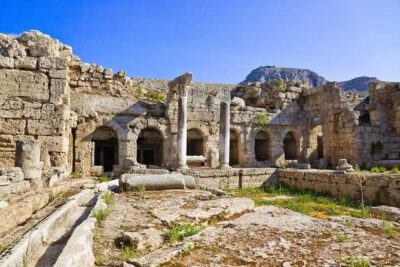
Biblical Tour Letters ToThe Corinthians St Paul’s Footsteps 6Hour
Read our verdict →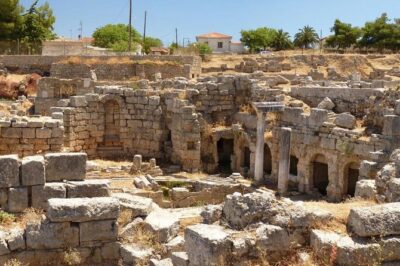
Private Biblical Tour Ancient Corinth & Isthmus Canal from Athens
Read our verdict →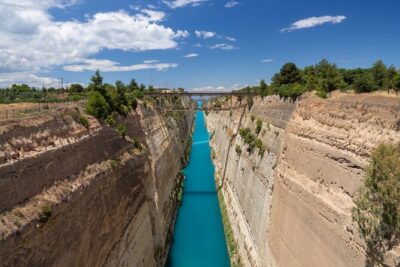
Private Tour of Apostle Paul’s Footsteps in Ancient Corinth
Read our verdict →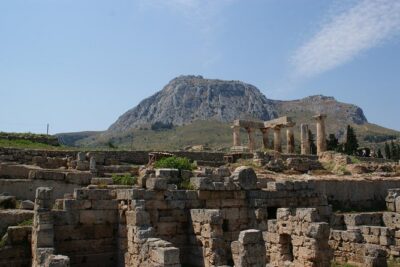
Corinth Half-Day Trip from Athens with Entrance Tickets
Read our verdict →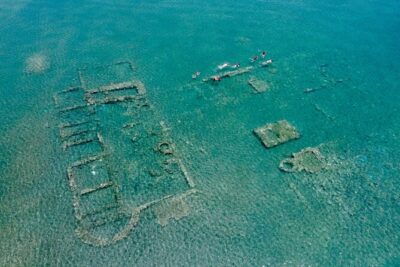
Sea Kayak Epidavros – Ancient Sunken City Tour
Read our verdict →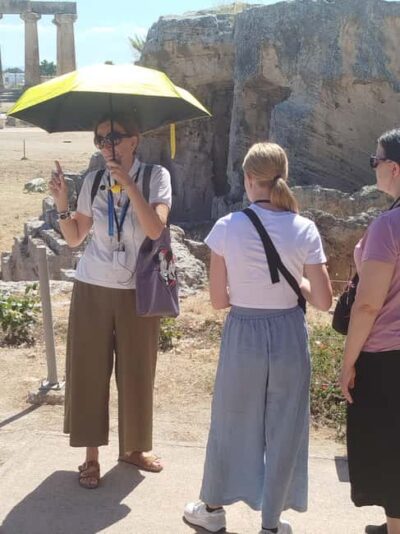
Browse the lists this tour appears in