
Review · CORINTH TOURS
The Apostle Paul’s Missionary Journey in Athens and Corinth
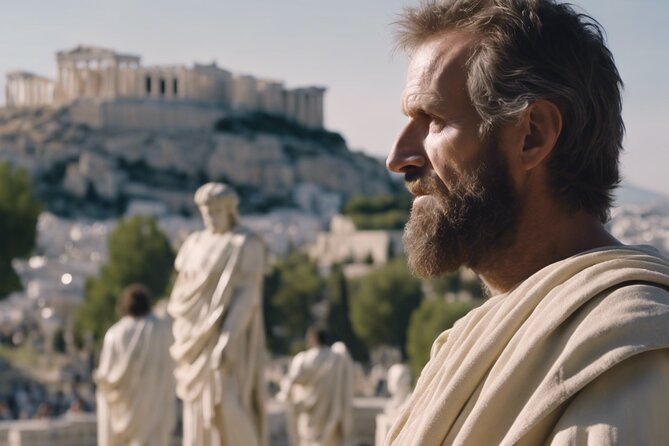
Paul’s visit to Athens comes alive most clearly at the Ancient Agora and Areopagus, where philosophy, politics, trade, and religious debate crowded into daily life. The journey then heads west to Corinth, where Paul worked, preached, and faced Roman authority.
I like the door-to-door pickup and the private format. You avoid the stress of driving outside Athens, and your driver can adjust the pace for your group. I also like the mix of biblical and classical history, from the Bema at Corinth to the Temple of Apollo and the port at Kenchreai.
The main drawback is the long day and rough walking. The tour driver provides context but is not a licensed guide inside the archaeological sites, and entrance fees are extra. Wear real walking shoes, not city sandals.
Key points to know before booking
- Paul’s Athens begins at the Agora: You see the setting for public debate before reaching the Areopagus, tied to Paul’s speech in Acts 17.
- Private transport saves time: Hotel and port pickup, bottled water, Wi-Fi, and an air-conditioned vehicle make the long Corinth run easier.
- Corinth has the strongest biblical connection: The Bema, Agora, port, and Roman ruins help place Paul’s letters in a real setting.
- Your driver shapes the day: Ruslan, Yannis or Giannis, Kostas, George, Fortis, and Katerina are among the guides and drivers praised for clear explanations and personal care, though the assigned person varies.
- Plan for uneven ground and heat: The sites have rough surfaces, exposed areas, and little shelter. Bring sunscreen, a hat, water, and comfortable shoes.
- The price is for a private day out: At $200.25 per person, value improves with a small group, but site admission and lunch are additional.
Why Paul’s Athens and Corinth make a strong day trip
This is not simply a ride from Athens to a famous ruin. It links three kinds of history: the world Paul entered, the Christian community he helped form, and the Greek and Roman cities that shaped public life in the first century.
Athens gives you the intellectual setting. Corinth gives you the working city. Between them, the Corinth Canal and the old port at Kenchreai explain why this part of Greece mattered so much for trade and travel.
You can book the experience for about $200.25 per person, with group discounts available. For one or two people, that is a serious spend. For a small private group, the cost can make good sense because you receive a dedicated vehicle, hotel or port pickup, and a flexible day rather than joining a large coach.
The experience is offered in English and usually runs 8 to 9 hours. For groups of one to four, the vehicle is a sedan. That detail matters: you get a more personal ride, but you should not expect a large tour bus with lots of room for luggage.
More trips in the footsteps of St Paul:
- Biblical Tour Letters ToThe Corinthians St Paul’s Footsteps 6Hour
★ 5.0 · 1,065 reviews - Private Biblical Tour Ancient Corinth & Isthmus Canal from Athens
★ 5.0 · 762 reviews - Private Tour of Apostle Paul’s Footsteps in Ancient Corinth
★ 5.0 · 275 reviews
Starting in the Agora, where Paul met Athens
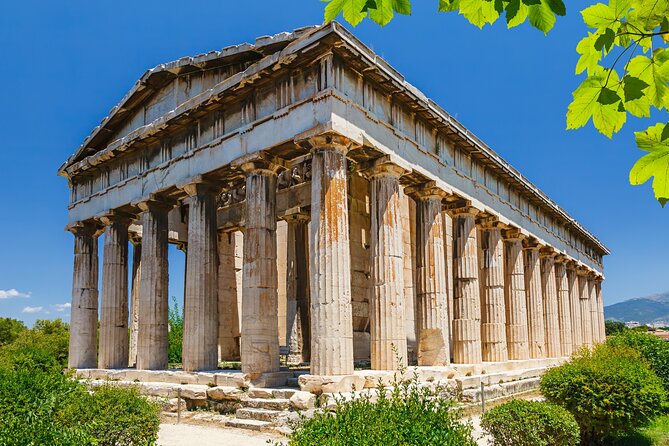
The Ancient Agora is the right place to begin. In ancient Athens, this was the city’s center for politics, commerce, social life, and religious activity. It was not just a market. It was where public business happened and ideas were tested in front of other people.
That setting helps explain why Paul’s message in Athens took the form of public argument. He was not speaking in an isolated church building. He was addressing people in a city that prized philosophy, debate, and public reasoning.
You have about an hour here. The site includes open ground, columns, foundations, and important ancient structures. The Temple of Hephaistos is a highlight mentioned during the Athens portion, and it gives you a strong sense of the city’s religious world.
Admission to the Agora is not included, so budget for that separately. Your driver can explain what you are seeing, but the tour does not include a licensed guide accompanying you through each archaeological site. If you want a formal site lecture at every stop, confirm that arrangement before booking.
I like beginning here because the Agora gives the biblical story a social setting. You are not only hearing that Paul visited Athens. You are considering the sort of public place where a visiting preacher would have encountered local thinkers.
The Areopagus and Paul’s famous Athenian speech
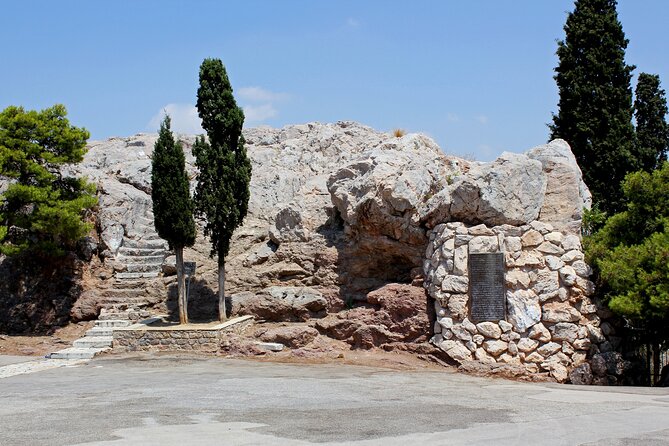
The Areopagus is a short visit, usually around 30 minutes, but it carries great weight. This rocky hill northwest of the Acropolis served as a court and political meeting place. It was also associated with intellectual discussion.
Paul’s speech to the Athenians is one of the best-known episodes in the New Testament. He referred to the city’s religious life and presented Christianity in terms his audience could consider. From this point, you can picture the city below and understand why Athens was both an opportunity and a challenge for a new message.
The footing here can be uneven, and the stone may be slippery. Take your time. The site is free, but the short stop is more about location and reflection than a long archaeological visit.
This is one of the places where a good driver makes a real difference. Ruslan, Yannis, Giannis, Kostas, George, and Fortis have each been singled out for explaining historical and biblical details in a clear way. The assigned driver varies, so think of those names as examples rather than a guarantee.
Saint Dionysius and Athens’ early Christian story
The Church of Saint Dionysius the Areopagite in Kolonaki adds a later Christian layer to the day. Dionysius is traditionally linked with Paul’s preaching and is remembered as Athens’ first bishop.
The church visit takes about 20 minutes and is free. It is not an archaeological site in the same sense as the Agora, but it helps connect Paul’s message with the continuing Christian identity of Athens.
Keep your expectations realistic. This is a brief stop, not a long church tour or service. One account of the day included a Greek Orthodox service, but that should not be treated as a standard part of every departure. The schedule and timing may not allow it.
The Kolonaki setting also gives you a quick look at a modern part of Athens before the road trip begins. It is a useful change of pace after the exposed stones of the Areopagus.
A few more Corinth options worth putting side by side
- From Athens: Ancient Corinth Day Trip with Canal & VR Guide
★ 4.6 · 1,073 reviews - Corinth Half-Day Trip from Athens with Entrance Tickets
★ 4.5 · 242 reviews - Sea Kayak Epidavros – Ancient Sunken City Tour
★ 5.0 · 213 reviews - From Athens: Ancient Corinth Tour Official Guide & Tickets
★ 4.6 · 208 reviews
Crossing to Corinth by way of the canal
The drive toward Corinth is a major part of the experience. This is why the air-conditioned vehicle, Wi-Fi, bottled water, and hotel or port pickup matter. You are covering a good stretch of Greece, and you do not need to manage unfamiliar roads or parking.
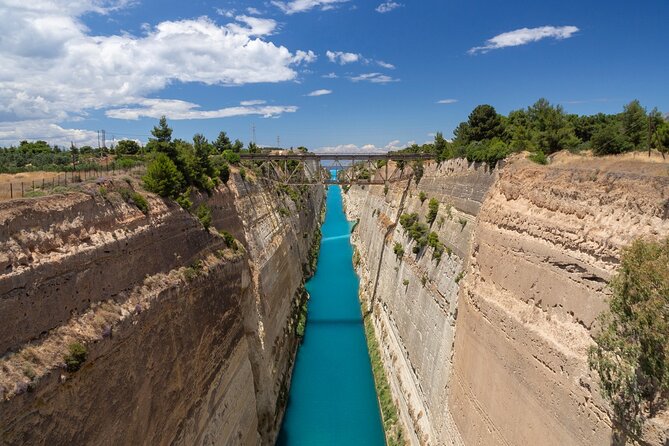
The Corinth Canal stop lasts about 20 minutes. The canal cuts through the Isthmus of Corinth and links the Gulf of Corinth with the Saronic Gulf. It separates the Peloponnese from mainland Greece, making the peninsula almost an island in practical geographic terms.
The canal was built long after Paul’s time, so it is not a biblical site. Its value is geographical. It shows why Corinth occupied such a useful position between mainland Greece and the Peloponnese.
You will have time for photographs and a quick look rather than a long visit. If you want a relaxed lunch, extra shopping, or extended time at a single monument, the full itinerary may feel tight.
Kenchreai, the port where the Corinth journey begins
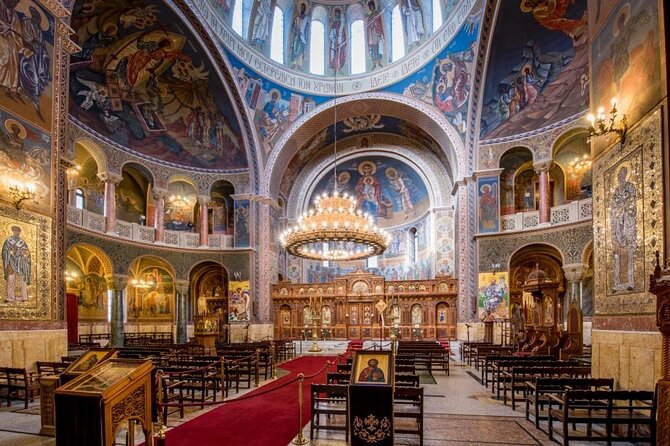
At ancient Kenchreai, also written Kechrees, you reach Corinth’s eastern port. This is one of the most meaningful stops for someone following Paul because the tradition places his arrival here in A.D. 51.
Much of the ancient harbor is underwater or reduced to ruins, but you can still see traces of the port’s former function. Roman engineering, storage areas, breakwaters, a nymphaeum, sanctuaries, and a fourth-century Christian basilica help show how commercial and religious life overlapped.
You have about 20 minutes here. That is enough to understand the setting, but not enough for a slow archaeological study. The site has a more open, unfinished feel than Ancient Corinth, which some people will find atmospheric and others may find less immediately impressive.
I like this stop because it gives Paul a route, not just a list of monuments. He arrived by sea, entered a major commercial center, and began working in a city connected to the wider Roman world.
Ancient Corinth and the Bema
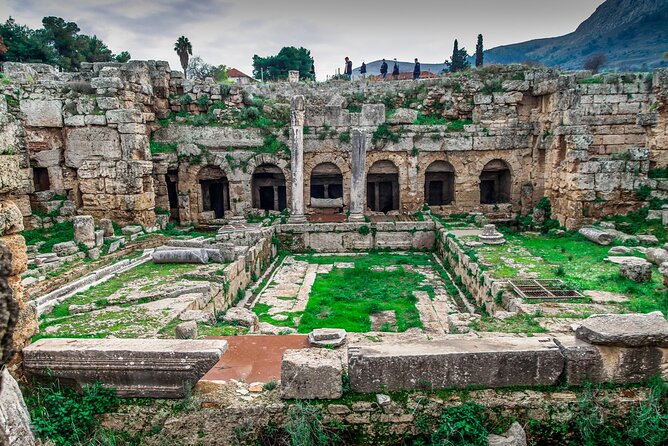
Ancient Corinth is the heart of the tour. Allow about an hour at the archaeological site, followed by 45 minutes in the museum.
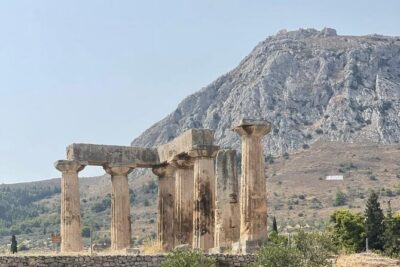
Corinth was wealthy, politically important, and strategically placed. Its Agora, streets, temples, and public buildings show a city built around trade, civic life, and religious practice. The Temple of Apollo is especially striking, with its surviving columns set against the open site.
For Christian visitors, the Bema is the key point. This raised platform was used for public speaking and Roman legal proceedings. Paul is traditionally associated with standing before the Roman proconsul here, making the site one of the clearest physical links between his life and the city.
The Agora is just as important. It helps you imagine the everyday world behind Paul’s letters to the Corinthians. His concerns about worship, social divisions, food, morality, and community life were directed at people living in a real urban center, not an abstract congregation.
The archaeological ground is uneven and exposed. You will walk over stones and open surfaces, so comfortable shoes are essential. June and other hot months can be hard in the sun, even with complimentary water in the vehicle.
Admission fees are not included at Ancient Corinth. Check the current cost when booking and keep a little cash or a payment method ready. A licensed guide is not included inside the site, so the driver’s explanation may be your main source of context unless you arrange additional guiding.
The museum gives the ruins a human scale
The Archaeological Museum of Ancient Corinth fills in details that ruins cannot. Its displays cover prehistoric material, finds from the Sanctuary of Asklepios, religious objects, sculpture, and evidence of daily life.
The museum visit lasts about 45 minutes. That is a useful amount of time for an overview, though not enough for every display. Look for the objects that show how people worshipped, traded, decorated their homes, and handled illness and public life.
The museum is especially helpful after the Agora. Outside, you see foundations and columns. Inside, you see the small objects that make the city feel inhabited. The museum is listed as free in the tour details, while other archaeological entrance fees are excluded.
Acrocorinth brings the biggest views
Acrocorinth closes the day with height and drama. The fortified hill guarded Corinth for centuries and also served as a religious center. Its association with the Temple of Aphrodite adds another layer to the religious world Paul encountered.
The stop is scheduled for about 30 minutes, but the practical experience depends on how far you walk and how much of the fortress you explore. The climb can be demanding, and the ground is rough. If you have mobility limitations, tell the provider before booking and ask how much of Acrocorinth is realistic for you.
The payoff is the broad view over Corinth and the surrounding countryside. After seeing the port, Agora, and public buildings below, the hill helps you understand the city’s defensive position.
One account of the day included lunch at Taverna Kastro near Acrocorinth. That meal is not included, but your driver may help arrange a local restaurant stop if time permits. Do not assume lunch is built into the price. Ask about the plan when you confirm your departure.
What the private format really gives you
Pickup is available from an Athens hotel, apartment, or port. At a hotel or apartment, the driver waits outside. At the port, the driver waits in the arrival area with a sign showing your name. Airport pickup costs extra.
The private setup is valuable for families, couples, and small groups with a shared interest in Paul or ancient Greece. You can ask questions without competing with a busload of people, and the driver can slow down when a site matters more to you.
Past drivers have helped with practical extras such as finding coffee, choosing a local restaurant, taking souvenir stops, and adjusting the drop-off point. Those touches are not guaranteed, but they show why a private day can feel more personal than a fixed coach route.
Do remember the distinction between a driver and a licensed guide. Your English-speaking driver has historical knowledge and provides explanations, but a licensed archaeological guide is not included. That arrangement works well if you want orientation and flexibility. It is less ideal if you want a formal lecture at every ruin.
Is $200.25 a fair price?
The price is easiest to justify when two to four people share the private vehicle. You are paying for transport across Athens and the Corinth region, pickup and drop-off, bottled water, Wi-Fi, an air-conditioned car, and a full day focused on your interests.
For a solo visitor, $200.25 is expensive before admission fees and lunch. For a couple, it is still a premium day, but you avoid car rental, fuel, parking, route planning, and the strain of driving after a long archaeological walk.
The tour has a strong record of satisfaction, with a 4.9 rating from 50 reviews and recommendation from 96 percent of participants. The praise focuses on punctual pickup, careful driving, clear explanations, kindness, and the ability to connect biblical events with Greek and Roman history.
Those strengths matter more here than fancy equipment. This is a long, information-heavy day. A calm driver who watches the clock and your comfort can make the difference between an inspiring outing and a tiring checklist.
Who should book this day
I would choose this tour if you want Paul’s story placed in its ancient setting and prefer private transport over public buses or a rental car. It works especially well for cruise passengers, couples, families, church groups, and small groups sharing an interest in biblical history.
You should also like a full day with several short stops. The itinerary moves quickly, and you will not spend half a day at one museum or ruin.
I would hesitate if you want a slow archaeological study, dislike driving between sites, or have difficulty walking over rough ground. Acrocorinth and the Agora require care, and the heat can be serious. If your priority is expert site interpretation, arrange a licensed guide in advance.
Should you book the Athens and Corinth tour?
Book it if the chance to stand at the Areopagus, see the Bema, visit Paul’s port at Kenchreai, and reach Acrocorinth matters more to you than a relaxed day in Athens. The combination of biblical meaning, classical ruins, private transport, and local meal suggestions gives the day real purpose.
Before paying, confirm the assigned driver, pickup point, entrance costs, and lunch plan. Ask about walking at Acrocorinth if mobility is a concern. Cancel at least 24 hours before the start time for a full refund, and remember that poor weather can lead to a new date or refund.
FAQ
How long does the tour last?
The experience lasts approximately 8 to 9 hours.
What locations are included?
The route includes the Ancient Agora, Areopagus, Church of Saint Dionysius the Areopagite, Corinth Canal, ancient Kenchreai, Ancient Corinth, the Archaeological Museum of Corinth, and Acrocorinth.
Is hotel pickup available?
Yes. Pickup and drop-off are available from Athens hotels or apartments. The driver waits outside at the agreed location.
Can I be picked up at the port?
Yes. For port pickup, the driver waits in the arrival area holding a sign with your name.
Is airport pickup included?
No. Airport pickup is optional and costs extra.
Are entrance fees included?
No. Entrance fees to archaeological sites and museums are not included. The Agora and Ancient Corinth specifically list admission as extra.
Is this a private tour?
Yes. Only your group participates. Groups of one to four use a sedan vehicle.
What should I bring?
Wear comfortable shoes for uneven ground, and bring a hat and sunscreen for hot, sunny conditions. Bottled water is provided in the vehicle.
New on the Corinth shelf
- Ancient Corinth, Sanctuary of Hera, Blue Lake & Canal from Athens★ 5.0 · 26 reviews
- Biblical Corinth Taste Faith & History with wine & Oil Tasting★ 5.0 · 28 reviews
- Biblical Tour Letters to The Corinthians – St Paul’s Footsteps★ 5.0 · 60 reviews
- Ancient Olympia (birth place of Olympic Games) & Corinth Canal, Private Day Tour★ 5.0 · 28 reviews
- Biblical Corinth: St. Paul and His Letters to the Corinthians★ 5.0 · 70 reviews
- Footsteps of Apostle Paul from Athens to Corinth, Private Day Tour★ 5.0 · 54 reviews
- Ancient Corinth Half Day Private Tour from Athens★ 5.0 · 34 reviews
- Corinth Canal Cruise, Ancient Corinth & Acrocorinth Private tour★ 5.0 · 36 reviews
Corinth Tours, compared.
Ancient Corinth Day Trip with Canal & VR Guide
Read our verdict →
Biblical Tour Letters ToThe Corinthians St Paul’s Footsteps 6Hour
Read our verdict →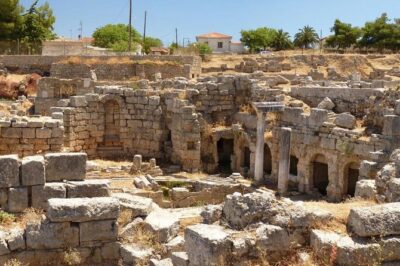
Private Biblical Tour Ancient Corinth & Isthmus Canal from Athens
Read our verdict →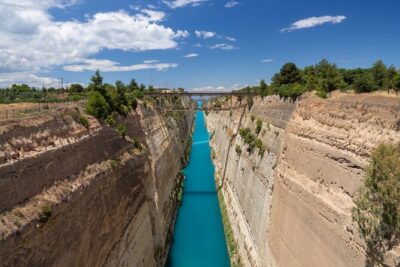
Private Tour of Apostle Paul’s Footsteps in Ancient Corinth
Read our verdict →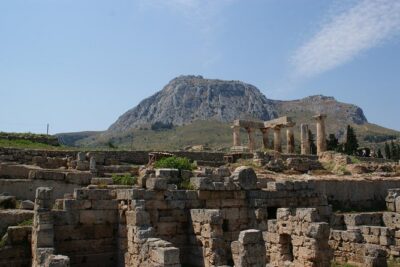
Corinth Half-Day Trip from Athens with Entrance Tickets
Read our verdict →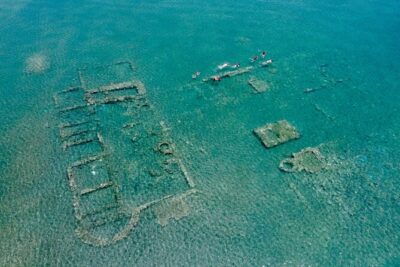
Sea Kayak Epidavros – Ancient Sunken City Tour
Read our verdict →
Browse the lists this tour appears in