
Review · CORINTH TOURS
Biblical Corinth: St. Paul and His Letters to the Corinthians
The most meaningful part of this private day trip is the connection between St. Paul’s ministry and the actual places around Corinth. You will see the Bema where Paul faced Gallio, the port at Kechries, and the broad setting of the city where he spent about 18 months building an early Christian community.
I like the freedom to set your own pace, and I like the range of stops. You get far more than a quick look at Ancient Corinth: there is Mars Hill in Athens, the canal, Isthmia, the old ports, churches, a traditional lunch, and the climb to Akrokorinthos.
The main thing to understand is that this is a private driver-led tour, not a standard guided sightseeing tour. Your driver can explain what you are seeing and answer questions in English, but drivers do not enter the archaeological sites. A licensed guide is available by request for an extra fee.
Key things to know before booking
- Paul’s Corinth comes to life at the Bema: Visit the Roman Forum and the platform linked with Paul’s hearing before Gallio.
- The day includes much more than Ancient Corinth: Mars Hill, Isthmia, Kechries, the Corinth Canal, and Akrokorinthos all add useful context.
- You control the rhythm: Private transport lets you linger, shorten a stop, or adjust the plan around your interests.
- The driver is not an official site guide: Expect commentary in the vehicle and at the entrances, but arrange a licensed guide if you want an expert tour inside the ruins.
- Akrokorinthos requires effort: The fortress offers sweeping views, but the uphill walk can be harder than some people expect.
- Lunch can be part of the experience: Choose the Greek traditional food option, or ask to stop at a local taverna and pay separately.
Why this Corinth trip is different from a standard day tour

Many Athens excursions treat Corinth as one archaeological stop on a long sightseeing loop. This one follows a clear theme: the places connected with Paul and the early Christian world.
That theme gives the day shape. At the Corinth Canal, you are looking at the route that divides mainland Greece from the Peloponnese. At Isthmia, you see the religious and athletic setting Paul would have encountered. At Ancient Corinth, the Roman city, forum, temple, and Bema bring the New Testament setting into focus.
I also like that the trip does not stop at the famous ruins. Kechries, the eastern port, connects directly with Acts 18:18 and Paul’s departure for Syria. The church of Apostolou Pavlou adds a modern religious link to the ancient city.
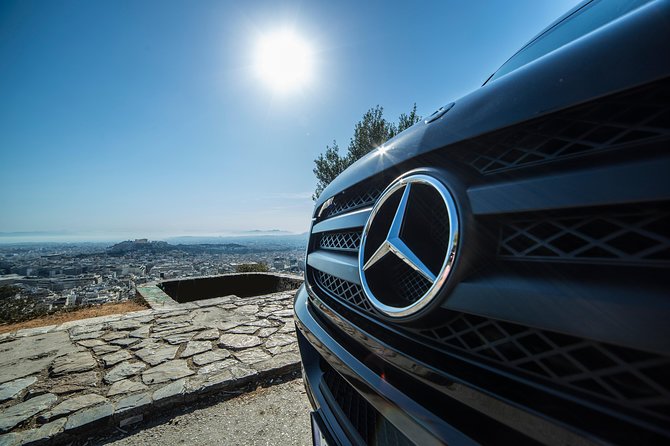
You travel in a private, air-conditioned vehicle with bottled water and onboard Wi-Fi. Pickup and return are available from a hotel, apartment, or port. The pickup time can be adjusted, which matters if you are arriving by cruise ship or want an earlier start.
The advertised price is $218.43 per person. That is not a budget bus outing, but it becomes more reasonable when you consider that the vehicle and driver are private, the day lasts eight to nine hours, and hotel or port transport is included. Entrance fees are extra, and the two listed paid sites cost €15 per person in total. If you want a licensed guide to enter the sites with you, budget for that separately.
More trips in the footsteps of St Paul:
- Biblical Tour Letters ToThe Corinthians St Paul’s Footsteps 6Hour
★ 5.0 · 1,065 reviews - Private Biblical Tour Ancient Corinth & Isthmus Canal from Athens
★ 5.0 · 762 reviews - Private Tour of Apostle Paul’s Footsteps in Ancient Corinth
★ 5.0 · 275 reviews
Mars Hill connects Athens with Paul’s mission
The day begins, or can begin, with Areopagus Hill, also called Mars Hill, in Athens. Paul addressed the council here after seeing the city’s many religious monuments. His reference to the altar dedicated to an unknown god became one of his best-known speeches.
You get about 20 minutes at the hill. That is enough for a short visit, reflection, and photographs, but not enough for a broad Acropolis tour. The stop is best understood as a symbolic opening to the day rather than a full visit to the Acropolis.
If Mars Hill is especially important to you, say so when arranging the tour. One group specifically wanted this stop included, and the private format made that possible. The tour can be shaped around your priorities, which is one of its strongest advantages.
The Corinth Canal is an excellent first stop outside Athens

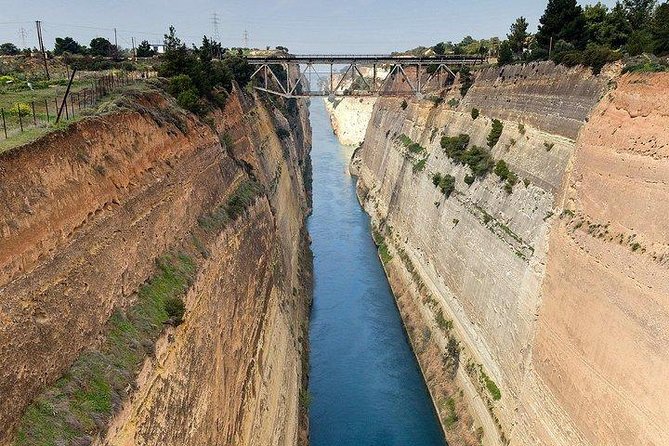
The drive from Athens brings you to the Corinth Canal, a dramatic cut through the Isthmus of Corinth. The canal is about 6.4 kilometers long and only about 21.4 meters wide at its base. It has no locks and sits at sea level.
You will usually view it from above, looking down at the steep limestone walls and the vessels below. The canal is impressive not only as scenery but also as a key to Corinth’s importance. This narrow strip of land linked two seas and made the area a natural crossing point for trade, armies, pilgrims, and merchants.
The canal stop lasts about 30 minutes and has no admission fee. It is an easy introduction to the geography that shaped Corinth. You quickly see why control of this isthmus mattered for so many centuries.
The Diolkos shows how ships crossed before the canal
Near the canal, the Diolkos offers a more unusual piece of ancient engineering. This roadway allowed ships or cargo to be hauled across the isthmus long before the modern canal was cut.
The surviving section is not a large, fully reconstructed attraction. Its value comes from imagination. As you look at the remains, you can picture sailors, merchants, and goods being moved between the Aegean and Ionian seas.
Your driver can explain the basic story before you walk around. Since the stop takes about 20 minutes and admission is free, it adds a useful layer without taking too much time from the main sites.
A few more Corinth options worth putting side by side
- From Athens: Ancient Corinth Day Trip with Canal & VR Guide
★ 4.6 · 1,073 reviews - Corinth Half-Day Trip from Athens with Entrance Tickets
★ 4.5 · 242 reviews - Sea Kayak Epidavros – Ancient Sunken City Tour
★ 5.0 · 213 reviews - From Athens: Ancient Corinth Tour Official Guide & Tickets
★ 4.6 · 208 reviews
Isthmia reveals the world around Paul
Isthmia was home to the Isthmian Games, a major athletic and cultural festival held in honor of Poseidon. The games ranked just below the Olympic Games in importance and drew people from across the Greek world.
This is where the biblical theme becomes more human. Paul worked as a tentmaker, and the area’s athletes, merchants, sailors, and visitors may have provided the kind of audience he could reach through everyday work. The connection between Paul and the games is presented as a historical possibility, not as a scene directly described in the Bible.
The sanctuary, stadium, and theater show a society shaped by public religion, sport, performance, and travel. Paul was not preaching in an isolated village. He was speaking in a busy meeting point where ideas and people crossed paths.
The archaeological museum of Isthmia adds objects to the story. You will see material from the Sanctuary of Poseidon, including statues, offerings, burial pieces, and glass panels from nearby Kenchreai. The glass panels are especially interesting because Kenchreai was the port from which Paul sailed toward Syria.
The museum requires an additional ticket. The listed entrance cost for Ancient Corinth and the Archaeological Museum of Isthmia is €15 per person. Check the exact opening arrangements when booking, since an unexpected closure once required a group to move its Corinth visit to the following day.
The theater and stadium add useful context

The ancient theater at Isthmia was first built for musical competitions connected with the games. Later Roman changes added decorative features, including mosaics with sea creatures and scenes tied to Dionysian mythology.
This stop helps you picture the public culture Paul encountered. Athletic contests, religious celebrations, theater, and political gatherings all took place in the same wider region. The Christian message was entering a world with established gods, rituals, festivals, and civic traditions.
The itinerary also connects Isthmia with political and military meetings. Its location made it a practical gathering place for Greek city-states and leaders. That detail helps explain why Paul’s work in the Corinthian area mattered beyond one local congregation. He was operating in a major crossroads.
Ancient Corinth puts the letters into place

Ancient Corinth is the centerpiece of the excursion. Paul spent about 18 months here during the early 50s AD, and the Christian community he established became the setting for the letters now known as First and Second Corinthians.
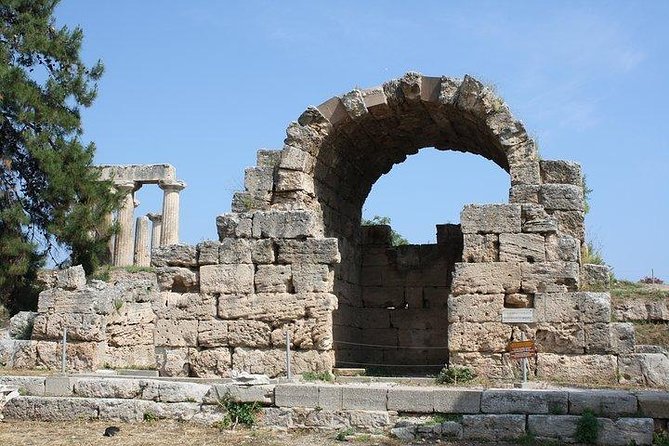
The site is larger and more varied than a quick photo stop suggests. You will see remains of the Roman Forum, public buildings, streets, and the Temple of Apollo. The museum at Ancient Corinth adds objects from the city and helps you read the ruins with more purpose.
The Bema is the key Paul connection. According to Acts, Paul was brought before Gallio, the Roman proconsul, after accusations about his teaching. Gallio declined to treat the dispute as a Roman legal matter. That decision allowed Paul to continue his work.
You can stand near the stone platform and consider the practical setting of the story. This was not only a religious community. Corinth was a Roman city with courts, officials, trade, money, and competing religious ideas.
The important catch is the guide arrangement. Your driver will bring you to the entrance and give you background, but will not normally enter the ruins. Several drivers, including Alex, George, Spiros, Stefanos, and Panos, have been praised for explaining what to look for before you go inside. Still, if you want a continuous explanation beside each monument, request a licensed guide.
The site entrance is not included. Allow at least an hour here, and more if you read signs, visit the museum, or want time for photographs.
The Temple of Apollo shows the older Corinth
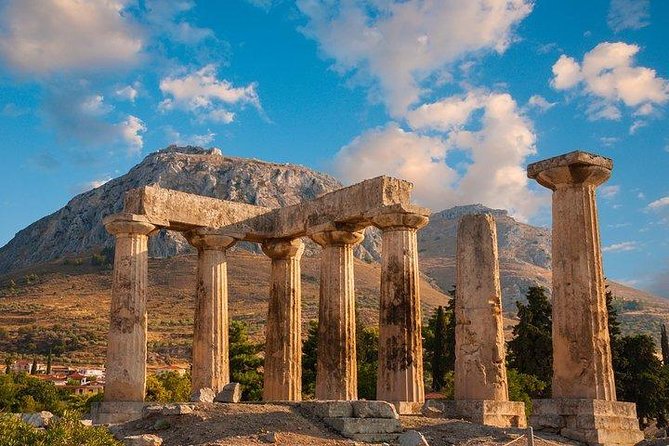
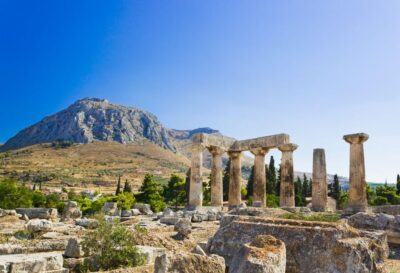
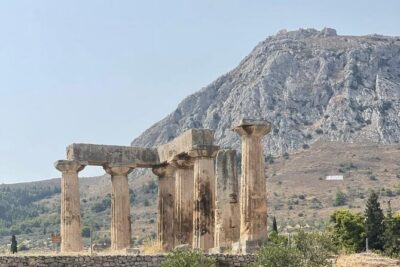
The Temple of Apollo is one of the most striking remains at Ancient Corinth. Built around 560 BC, its large Doric columns predate the Roman city that Paul knew, but the temple would still have dominated the area when he arrived.
Apollo represented prophecy and light. The temple therefore gives you a clear picture of the religious setting Paul challenged while preaching one God and Jesus Christ.
You cannot walk into the ancient temple as if it were an intact building, but the surviving columns are powerful. They also help you separate different eras of Corinth. Paul lived in a city shaped by older Greek foundations, Roman power, commerce, and many forms of worship.
Kechries links Corinth to Paul’s next journey
Kechries, ancient Cenchreae, was Corinth’s eastern port. Acts 18:18 connects the place with Paul’s departure for Syria, along with Priscilla and Aquila. The account also describes Paul cutting his hair because of a vow.
Today, the site is quieter than Ancient Corinth. That is part of its appeal. You can look across the shore and understand the practical side of Paul’s travel. His work moved by roads and ships, and ports were essential links between small Christian communities.
Kechries also connects with Phoebe, whom Paul commends in Romans as a servant of the church at Cenchreae. This gives the stop a strong connection to the role of women in the earliest Christian communities.
You get about 30 minutes here. It is a reflective stop rather than a major ruin complex, so it works best for people who care about the biblical route itself.
Apostolou Pavlou offers a modern Christian connection
The Apostolou Pavlou church honors Paul’s time in Corinth. It recalls the 18 months he spent preaching and helping establish one of the first Christian communities in Greece.
The church is not an ancient site from Paul’s own lifetime, but it gives the day a living religious endpoint. After visiting temples, theaters, ports, and Roman ruins, you see how Paul’s presence is remembered in the modern city.
The visit lasts about 20 minutes and is easy to fit into the day. If your interest is mainly archaeological, it may feel less essential than Ancient Corinth or Isthmia. If your focus is Christian history, it can be one of the most meaningful stops.
Lunch works best as a flexible break
The schedule includes about an hour for lunch in Corinth. With the Greek traditional food option, the meal is included. Otherwise, you can arrange your own lunch.
The food stop is not filler. It breaks up a long day of walking and driving, and a local taverna gives you a chance to eat at a slower pace. Dishes and location can vary, so ask your driver what fits the day and your appetite.
Several visitors have especially enjoyed meals near the archaeological area or on the route around Akrokorinthos. One group chose a meat platter and called it the best meal of its Greek trip. Another packed lunch to save time. Both approaches make sense: choose the included meal for ease, or bring food if every extra minute matters.
Akrokorinthos rewards effort with wide views
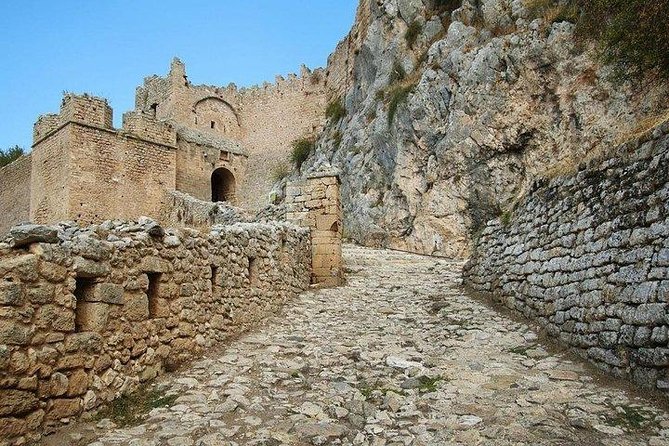
Akrokorinthos is the fortress above Ancient Corinth. The climb and uneven paths are the most demanding part of the day, but the views explain why the site mattered.
From above, you can look across the city, the isthmus, and the surrounding mountains. The setting gives Paul’s Corinth a much clearer shape. You can see the connection between the ancient city, the sea routes, and the fortified height above it.
Do not underestimate the walk. One person described the climb as harder than expected, while also saying the view near the top was worth the effort. Wear firm shoes and tell your driver if you need a slower pace. The private format makes that adjustment easier than it would be in a fixed group.
The itinerary allows about an hour here, but the exact time should depend on weather, energy, and how far you want to go. The site may be the highlight for active visitors, while those who prefer easy walking may want to spend more time in the museum instead.
Who will get the most from this private tour
I would choose this experience if you want Paul’s Corinth presented as a connected story rather than as one isolated ruin. It suits Christian pilgrims, readers of Acts and the Corinthian letters, and anyone interested in how ancient religion, trade, sport, and travel shaped early Christianity.
It also works well for families or small groups with different interests. One person can spend longer at a ruin while another takes photographs or rests, and the driver can adjust the order when conditions change.
The tour is less suitable if you want a fully guided archaeological lecture at every stop. In that case, pay for the licensed guide. It is also a long day, with several walks and a possible climb, so you should plan around your energy.
Pickup is available from Athens hotels, apartments, and the port. For a ship excursion, give yourself a clear return time and confirm it before departure. One driver even helped a group communicate its actual location and make it back before sailing, but you should still build in a generous buffer.
Should you book Biblical Corinth?
Book it if you value private timing, biblical connections, and a broad Corinth itinerary. The combination of Mars Hill, Isthmia, Ancient Corinth, Kechries, and Akrokorinthos gives you a fuller picture than a basic Athens to Corinth transfer.
Before paying, be clear about the guide issue. The driver can be excellent at history and English commentary, but the standard service does not include walking through the ruins with you. Add a licensed guide if that is important.
At $218.43 per person, the value is strongest for a small group that wants private transport, hotel or port pickup, flexibility, Wi-Fi, water, and the option of lunch. For a solo visitor, the price is harder to justify. For a family or group sharing the vehicle, it becomes a practical way to cover a wide area in one day.
FAQ
How long does the tour last?
The experience lasts approximately eight to nine hours.
Where does the tour begin?
Pickup is available from hotels, apartments, and the port in Athens. The pickup time can be adjusted by request.
Is this a private tour?
Yes. Only your group participates, and the vehicle and transportation are private.
Is a licensed tour guide included?
No. The standard tour includes a professional driver with historical knowledge, but the driver is not licensed to accompany you inside the archaeological sites. A licensed guide can be requested for an additional fee, subject to availability.
Does the driver speak English?
The tour is offered in English, and the drivers provide commentary and answer questions in fluent English.
Are entrance tickets included?
No. Entrance to Ancient Corinth and the Archaeological Museum of Isthmia is not included. The listed combined cost is €15 per person and can be paid on-site.
Is lunch included?
Lunch is included only when you select the With Greek Traditional Food option. The tour also allows time for a traditional seaside Greek taverna.
Does the tour include hotel and port transportation?
Yes. Hotel and port pickup and drop-off are included. At a port, the driver waits at the gate with a sign showing your name.
Is Wi-Fi available during the drive?
Yes. The air-conditioned vehicle has onboard Wi-Fi and bottled water.
Can I cancel for a full refund?
Yes, if you cancel at least 24 hours before the experience starts. Cancellations made less than 24 hours in advance are not refundable, and late changes are not accepted.
New on the Corinth shelf
- The Apostle Paul’s Missionary Journey in Athens and Corinth★ 5.0 · 50 reviews
- Ancient Corinth, Sanctuary of Hera, Blue Lake & Canal from Athens★ 5.0 · 26 reviews
- Biblical Corinth Taste Faith & History with wine & Oil Tasting★ 5.0 · 28 reviews
- Biblical Tour Letters to The Corinthians – St Paul’s Footsteps★ 5.0 · 60 reviews
- Ancient Olympia (birth place of Olympic Games) & Corinth Canal, Private Day Tour★ 5.0 · 28 reviews
- Footsteps of Apostle Paul from Athens to Corinth, Private Day Tour★ 5.0 · 54 reviews
- Ancient Corinth Half Day Private Tour from Athens★ 5.0 · 34 reviews
- Corinth Canal Cruise, Ancient Corinth & Acrocorinth Private tour★ 5.0 · 36 reviews
Corinth Tours, compared.
Ancient Corinth Day Trip with Canal & VR Guide
Read our verdict →
Biblical Tour Letters ToThe Corinthians St Paul’s Footsteps 6Hour
Read our verdict →
Private Biblical Tour Ancient Corinth & Isthmus Canal from Athens
Read our verdict →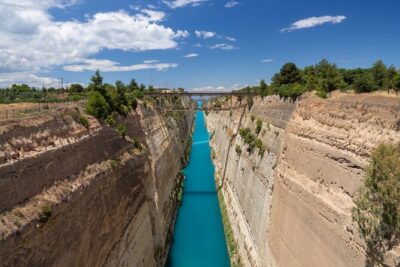
Private Tour of Apostle Paul’s Footsteps in Ancient Corinth
Read our verdict →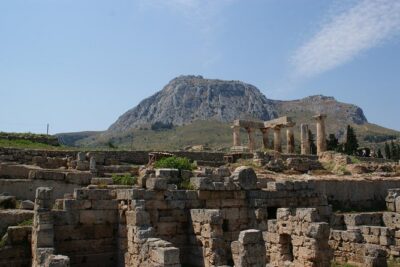
Corinth Half-Day Trip from Athens with Entrance Tickets
Read our verdict →
Sea Kayak Epidavros – Ancient Sunken City Tour
Read our verdict →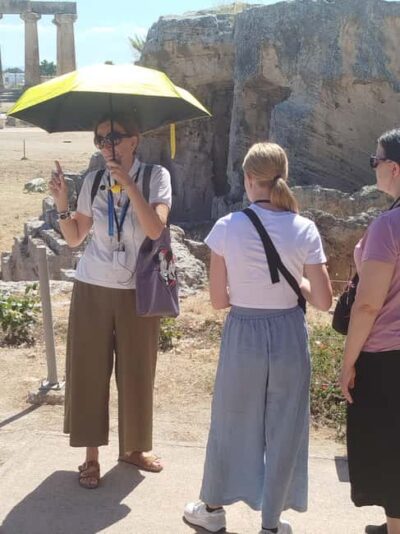
Browse the lists this tour appears in