
Review · FOOD & DRINK
Athens Food Tour
Athens tastes best when you stop treating food as a quick break between ancient sites. This four-hour walk with Eva of Estia Food Tours takes you from Plaka toward the Central Market and lesser-known food stops, with enough samples to replace a full meal. Come hungry, because this is not a dainty nibble tour.
I like two things right away: the mix of classic Greek foods and everyday market life, and Eva’s warm, personal style. She brings food, neighborhood knowledge, and local customs together without making the experience feel like a lecture. The main consideration is the amount of walking and eating. If you cannot walk comfortably, or prefer a short tasting with only a few stops, this tour may feel demanding.
Key points to know before booking
- Eva leads the experience: She is praised for her warmth, energy, food knowledge, and ability to connect with families, couples, and small groups.
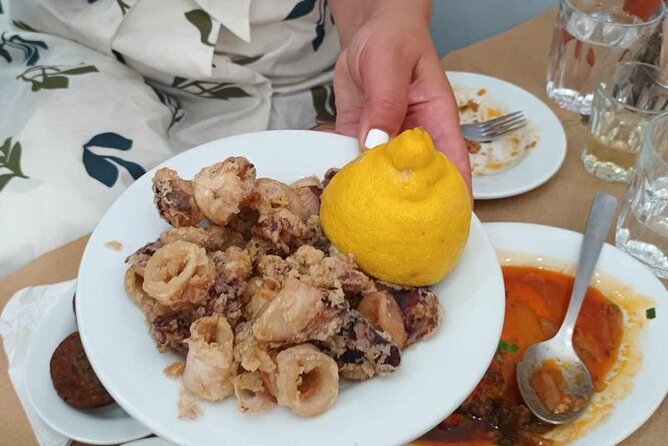
- The food is substantial: Spanakopita, koulouri, olives, cheese, charcuterie, sweets, coffee, honey, nuts, and a full serving of traditional mezedes are part of the spread.
- Plaka is the starting point: You begin near the Acropolis Metro station and walk through central Athens on foot.
- The Central Market adds local character: This is more than a restaurant crawl, with food culture tied to the city’s daily life.
- Plan on a lot of walking: Comfortable shoes matter, and the experience is not recommended for someone unable to walk.
- The group stays small: A maximum of 12 people makes conversation with the guide easier.
Starting in Plaka, with Athens on foot
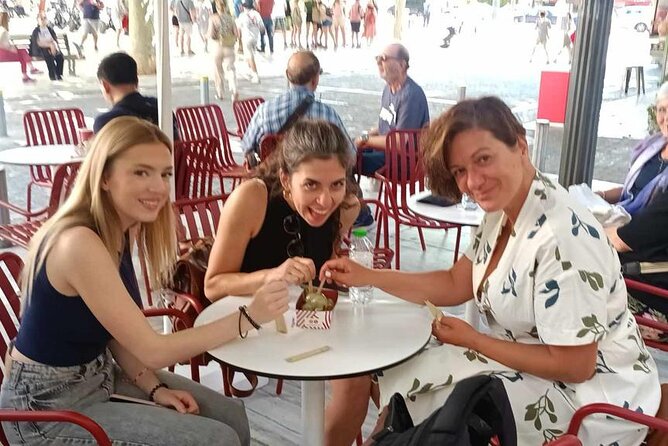
The tour begins at an ATM near the Acropolis Metro station in Plaka, one of the most useful starting points for an Athens food walk. You meet there, then finish back at the same point, so you do not need to arrange a taxi or figure out a new meeting place after dinner.
Plaka gives the experience a strong opening. Its lanes sit beneath the Acropolis area, and the walk lets you see Athens at street level rather than from behind a coach window. You move through alleys, food stops, and market areas while Eva explains how Greek dishes fit into local life.
This walking format is valuable because food in Athens is tied to place. A koulouri from a street vendor, a plate of mezedes, a coffee, and a market ingredient each tell you something different about how people eat. You are not simply checking off dishes. You are learning what belongs to breakfast, what works as a shared meal, and why hospitality often involves feeding people far more than they expect.
The pace also gives you a useful first look at the city. Several people who joined Eva’s walks found neighborhoods and places they would not have located alone. That makes this a smart choice early in your stay, especially if you want food ideas for later meals.
More Food Tours in Athens
- Greek Food Walking Tour in Athens
★ 5.0 · 4,740 reviews - Athens: Street Food Tasting Tour
★ 4.9 · 2,557 reviews - Small Group Greek Traditional Food Tour in Athens 20+ Tastings
★ 5.0 · 1,759 reviews
The Central Market stop
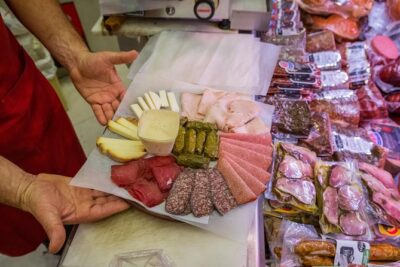
The Central Market is the named stop on the route, and it supplies the clearest connection between Athens food and daily shopping. Markets are where ingredients become easier to understand. You can connect cheeses, olives, meats, honey, nuts, and pastries with the dishes you taste later.
The supplied details do not promise a specific market stall or a fixed sequence within the market, so you should not expect an exact shop-by-shop route. Instead, think of it as a guided walk through central Athens with food stops shaped around the day’s experience.
That flexibility can be useful. A local guide can explain foods as you encounter them, rather than forcing every group through an identical script. The trade-off is that the precise order and selection may vary, so the published menu is best understood as the expected range of tastings rather than a restaurant-style printed menu.
Greek classics from spanakopita to koulouri
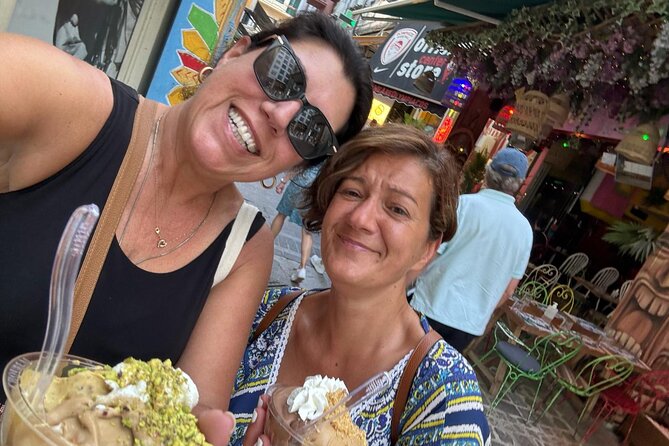
The first bites introduce familiar Greek staples. Spanakopita, the savory pastry filled with greens and cheese, gives you a crisp, salty start. It is a good example of how Greek food can be simple in its ingredients but satisfying in texture.
You also taste koulouri, the round sesame bread sold across Greece. It is a practical street food, often eaten on the go, and a useful contrast to the richer pastries and shared dishes later in the walk.
These early foods matter because they show the everyday side of Athens. The experience is not built only around expensive restaurants or carefully arranged plates. It includes food that belongs to ordinary routines, which is exactly what you want from a city food walk.
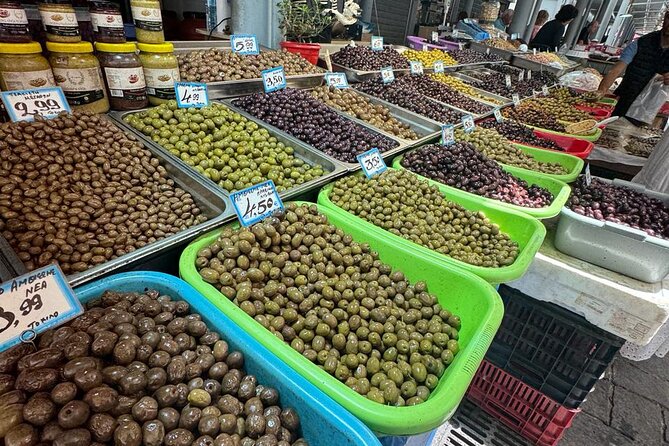
There is also a tasting of Greek olives. That may sound basic, but olives are central to the country’s cooking and table customs. Tasting several kinds side by side gives you a better sense of differences in flavor and texture than ordering a single bowl with dinner.
Cheese, charcuterie, and the shared table
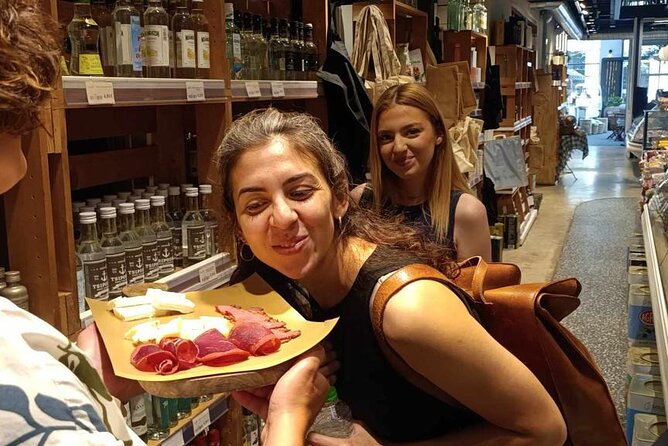
A tasting of Greek cheese and charcuterie brings you into the social side of eating. Greek meals often work best when dishes are placed in the middle and everyone shares. This is not a tour built around one main plate served to each person. It is designed around variety and conversation.
The cheese and cured meats also prepare you for the main meal of traditional mezedes. Meze are small shared dishes, but do not mistake small for light. The food can accumulate quickly when it follows pastries, bread, olives, and other tastings.
One useful tip comes directly from the shape of the experience: pace yourself. The main meal arrives after several stops, and the amount of food is one of the most praised features of this tour. If you eat a large lunch beforehand, you may spend the final part wishing for a little more room.
For families, this sharing style can work well because everyone can try a little. Children do not have to commit to one unfamiliar dish, and the operator offers an exclusive discount and a gift for every child. The exact discount details are not specified, so check the booking terms before you rely on a particular price.
Close by, and nothing like it:
- Athens: Acropolis & up to 5 Archaeological Sites Combo Pass
★ 4.4 · 12,619 reviews - Athens: Acropolis Ticket with Optional Audio or Live Guide
★ 4.2 · 11,055 reviews - Athens: Acropolis, Parthenon & Acropolis Museum Guided Tour
★ 4.8 · 9,316 reviews - Athens: Acropolis and Parthenon Guided Walking Tour
★ 4.6 · 5,882 reviews
The full meze meal
The tour includes a large lunch or dinner with traditional mezedes. This is the point where the experience shifts from tasting to dining. You are not merely sampling four or five small items and being sent on your way. The food portion is substantial enough that several people found it more generous than expected.
That quantity is a real value factor. At $105.72 per person, the price is higher than simply buying a few snacks in Athens. But it includes a guided four-hour walk, many tastings, a full shared meal, bottled water, coffee or tea, and local explanation. If you would otherwise pay separately for lunch or dinner and several snacks, the cost becomes easier to justify.
Still, value depends on what you want. If your priority is a cheap meal, this is not the right purchase. If you want a local host to handle the food choices, explain customs, and lead you through central Athens, the package offers more than the food alone.
Eva’s role is especially important here. She is described as energetic, friendly, and deeply connected to the places she visits. Her style appears personal rather than formal. She remembers people, engages with children, and treats the meal as time shared with friends. That can make the difference between a useful food orientation and a standard list of tastings.
Sweets, honey, coffee, and bougatsa
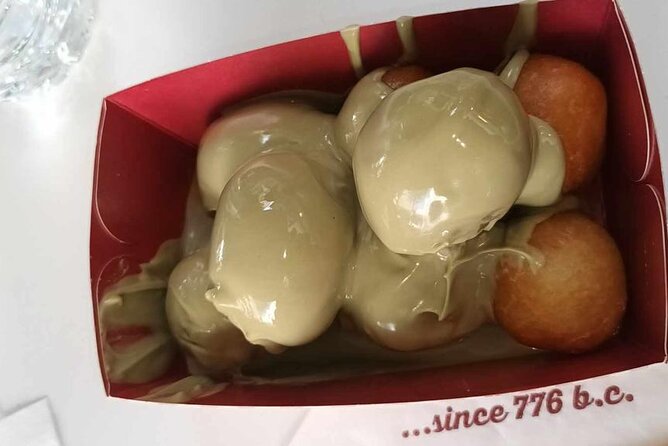
The sweet course is broad. You can expect loukoumades, traditional Greek nuts, several kinds of honey, traditional Greek coffee, and bougatsa. Because so many sweet items are included, this part is best viewed as a guided tour of Greek flavors rather than one final dessert.
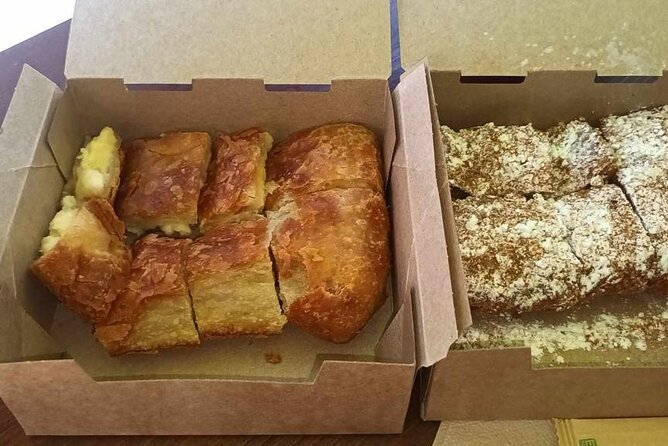
Loukoumades are small fried dough sweets, commonly associated with honey and syrup. They provide a rich, festive finish. Bougatsa brings pastry into the picture again, this time as a traditional Greek specialty that can be sweet or savory depending on the version. The supplied menu identifies bougatsa but does not specify the filling, so you should ask Eva what is being served on your date.
The honey tasting is one of the more distinctive details. Instead of treating honey as a single generic topping, you get several kinds to compare. That gives you a better appreciation for how a familiar ingredient can vary.
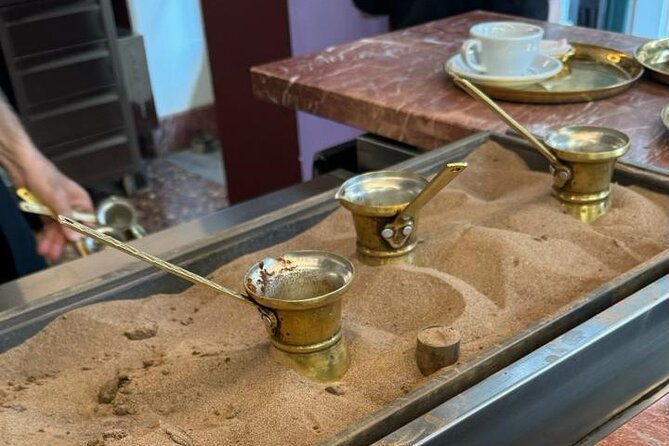
Traditional Greek coffee closes the food story in a distinctly local way. Coffee here is not simply a caffeine stop. It is part of the rhythm of conversation and lingering. You also receive tea or coffee as part of the inclusions, though the exact drink served may depend on your preference or the stop.
By the time you reach these sweets, the walk has covered savory pastries, bread, olives, dairy, cured foods, shared dishes, and dessert. The range is the main strength. You leave with a much broader sense of Greek eating than a tour focused on one famous dish.
What the guide adds to the food
Food tours succeed or fail on the guide, and Eva is the central reason to consider this one. Her approach combines Athens history, food customs, and personal connection. She is praised for explaining traditional dishes clearly while keeping the mood relaxed.
You should expect a social experience, not a silent tasting. Eva’s responses to people who joined her show a host who enjoys family groups, mother-daughter trips, couples, and mixed small groups. That matters if you want conversation and questions rather than a guide who delivers a fixed speech.
The maximum group size is 12. That is small enough for a more personal exchange, though it is not a private tour. If every place is filled, you will still be sharing the experience with other people. The small size should make it easier to hear Eva and ask about dishes, ingredients, and the neighborhoods you pass through.
The strongest fit is someone who likes food with context. You do not need advanced knowledge of Greek cuisine. You do need curiosity, a willingness to try several foods, and enough appetite to keep going after the first few stops.
Walking, timing, and practical comfort
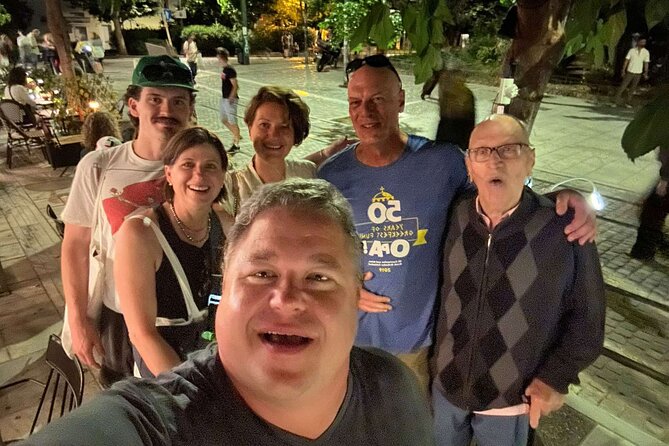
The experience lasts about four hours. That is long enough for a proper meal and a serious range of tastings, but it also means you should plan the rest of your day around it. Do not schedule a rushed museum entry or an important appointment immediately afterward.
Wear comfortable shoes. You will walk through Plaka and other central areas, and the food is spread across the route rather than served in one location. The experience is not recommended for someone who cannot walk, so mobility should be your first practical check.
The meeting point is near public transportation at the Acropolis Metro station. Private transportation is not included. That is not a problem for most visitors staying in central Athens, but you are responsible for reaching the starting point and returning from the end point if your hotel is elsewhere.
The tour is offered in English and uses a mobile ticket. Confirmation is provided at booking. Service animals are allowed, and most people can participate, but food allergies, dietary restrictions, and substitutions are not specified in the supplied details. If those issues affect your decision, ask the operator before paying.
The experience requires good weather. If bad weather causes cancellation, you are offered another date or a full refund. You can also cancel for a full refund up to 24 hours before the start time. Changes or cancellations inside that window are not accepted, and the amount paid is not refunded.
Who will get the most from this Athens food walk?
I would recommend it to first-time visitors who want a practical introduction to Athens food. It also suits repeat visitors who have seen the major monuments and now want help finding everyday dishes and local eating places.
Families are a clear fit. The food is shared, the route has variety, and the child discount and gift make the experience more family-friendly. Children who enjoy trying small portions may have an easier time here than at a formal restaurant.
It is also a good choice for couples and small groups who want a host with personality. Eva’s warm manner appears to be a major part of the experience, so book this if you prefer a conversational guide over a strictly scripted tour.
I would hesitate if you dislike long meals, cannot eat a wide range of foods, or want exact control over every dish. I would also avoid it if walking for four hours is difficult. The generous food can be a plus or a problem, depending on your appetite.
Is the $105.72 price fair?
At $105.72, this is a mid-to-high priced food activity in Athens. The fare includes lunch or dinner, snacks, bottled water, coffee or tea, and a substantial run of tastings. You are also paying for the guide’s time, route planning, and ability to connect the food with Athens neighborhoods and customs.
The strongest value comes if you would normally book a meal and a walking tour separately. Here, those two needs are combined, and the meal is more than a token plate. The small group limit also helps justify the cost.
The price is less attractive if you mainly want quick street food or if you already know Athens well and prefer to choose every stop yourself. This is a hosted experience, and the value rests heavily on Eva’s ability to make the walk informative and personal.
Should you book Estia Food Tours?
Book this Athens food tour if you want a generous meal wrapped inside a walking introduction to the city. Eva’s warmth, the broad menu, the Central Market stop, and the small group size give it a strong appeal for first-time visitors and families.
Skip it if you need a short route, have limited mobility, or prefer a tightly defined tasting menu. For everyone else, the best advice is simple: wear good shoes, eat lightly beforehand, and leave room for loukoumades, honey, coffee, bougatsa, and whatever else Eva adds to the table.
FAQ
How long does the Athens Food Tour last?
The experience lasts approximately four hours.
Where does the tour begin?
It begins at the ATM of Piraeus Bank near the Acropolis Metro station in Plaka, Athens.
Where does the tour end?
The tour ends back at the meeting point.
What food is included?
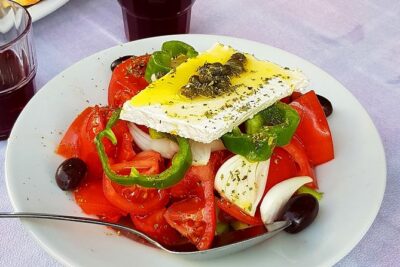
The expected tastings include spanakopita, koulouri, Greek cheese and charcuterie, olives, traditional mezedes, loukoumades, several kinds of honey, traditional Greek coffee, Greek nuts, and bougatsa.
Is lunch or dinner included?
Yes. The experience includes a large traditional lunch or dinner with mezedes, along with snacks and the listed tastings.
How large is the group?
The activity has a maximum of 12 travelers.
Can I cancel for a refund?
You can cancel at least 24 hours before the start time for a full refund. Cancellations or changes made less than 24 hours before the start time are not accepted, and poor weather may lead to a rescheduled date or full refund.
New on the Athens shelf
- Acropolis of Athens, Parthenon and Acropolis Museum private tour with dinner★ 5.0 · 77 reviews
- Small-Group Wine Tour in Athens with Tasting★ 5.0 · 33 reviews
- Private Athens Transfer Airport/Port -Greek Tours-Hourly service★ 5.0 · 88 reviews
- VIP Private Guided Tour of Athens Acropolis & Plaka in a Sidecar★ 5.0 · 108 reviews
- Athens Moonlight Waling Tour with Drinks and Meze Dishes★ 5.0 · 259 reviews
- Private Athens Landmarks Layover Tour★ 4.5 · 41 reviews
- Departure Transfer from Athens City to Athens Airport★ 5.0 · 41 reviews
- Classic Athens Food Tour with Local Drink & Market Visit★ 5.0 · 34 reviews
Food & Drink, compared.

Small Group Greek Traditional Food Tour in Athens 20+ Tastings
Read our verdict →
Santorini Wine Stories: Sunset Tour with Tasting & Dinner
Read our verdict →

Food Market Visit and Cooking Class with Wine
Read our verdict →
Browse the lists this tour appears in