
Review · CORINTH TOURS
Private Tour of Apostle Paul’s Footsteps in Ancient Corinth
Corinth is where the New Testament becomes a place you can walk through. On this private trip from Athens, you see the harbor where Paul arrived, the marketplace where he preached, the Bema where he faced Roman authority, and the fortress rising above the old city. Ancient Corinth gives the biblical story physical landmarks.
I like the efficient route, which links the Corinth Canal, both ancient ports, the archaeological site, and Acrocorinth in one half-day outing. I also like the private format: guides such as Giannis, Nick, Ruslan, George, and Fotis have adjusted the pace, helped older family members, allowed extra photo time, and recommended local food when time allowed.
The main thing to understand is that this is a driver-led tour, not a full guided visit inside every archaeological area. Your English-speaking driver explains the history, but a licensed guide is not included, and the €15 entrance charge for the archaeological sites and museum is extra. If you expect a formal Bible study at every stop, the tour may feel more historical than religious.
Key points to know before booking
- The Bema and Agora connect directly with Paul’s ministry: You can picture the public setting where he preached and faced trial.
- Acrocorinth is the visual high point: The old fortress offers wide views, but its steep, uneven paths require steady footing.
- The private car saves time: Pickup and drop-off are available at Athens hotels, apartments, and the port, with airport service available for an added €50 per booking.
- The tour covers more than biblical sites: The canal, Diolkos, Temple of Apollo, museum, fortress, and modern Saint Paul’s Church give you a broader view of Corinth.
- Your driver makes a big difference: Giannis, Nick, Ruslan, George, Dennis, Fotis, Johnny, and others have been praised for safe driving, patience, and clear explanations, though you cannot select a particular driver from the information provided.
- Plan for walking and sun: Wear firm shoes, bring a hat and sunscreen, and expect travel time to count within the five to six hours.
From Athens to the Corinth Canal
The tour begins with pickup at your hotel or apartment entrance. At the port, the driver waits at the gate with a sign bearing your name. For groups of one to four people, the vehicle is a sedan, while larger groups use a suitable larger vehicle.
The air-conditioned car, onboard Wi-Fi, and bottled water matter here. Corinth is not next door to Athens, and the tour packs several stops into a limited period. A comfortable vehicle makes the road time useful rather than tiring, especially if you are combining this outing with a cruise arrival or departure.
Several people have used the tour for a port transfer, with pickup at Piraeus and drop-off at an Athens hotel or airport afterward. Airport pickup or drop-off is possible, but it costs an extra €50 per booking. Confirm that added charge before you finalize your plans.
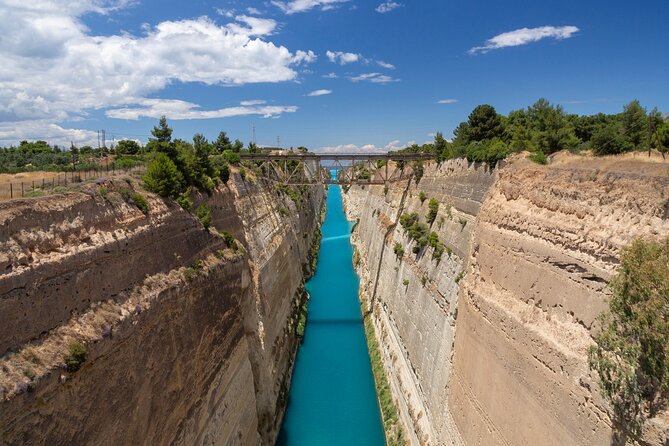
The first stop is the Isthmus of Corinth, the narrow strip of land joining mainland Greece to the Peloponnese. The modern canal cuts through the isthmus, linking the Saronic Gulf with the Gulf of Corinth.
You get about 20 minutes here. That is enough to take in the steep sides of the canal, photograph the waterway, and understand why this crossing has mattered for centuries. The canal itself dates to 1893 and cuts through a strip of land about 6.3 kilometers wide.
This is a quick stop, not a full canal visit. You will not spend the morning studying its construction, but the scale makes a strong opening. It also gives you a useful geographical point: Paul’s Corinth was a crossroads between mainland Greece and the Peloponnese.
More Ancient Sites in Corinth
- From Athens: Ancient Corinth Day Trip with Canal & VR Guide
★ 4.6 · 1,073 reviews - Private Biblical Tour Ancient Corinth & Isthmus Canal from Athens
★ 5.0 · 762 reviews - Sea Kayak Epidavros – Ancient Sunken City Tour
★ 5.0 · 213 reviews
The Diolkos and ancient Greek engineering
A short drive brings you to the remains of the Diolkos, an ancient stone-paved route across the isthmus. Before the canal, ships could be hauled overland along this trackway instead of sailing around the Peloponnese.
You have about 10 minutes here, so think of it as a brief look rather than a long archaeological visit. The value is in the idea. The Diolkos shows that Corinth was not important only because of religion or politics. Its position made it a practical link for trade and naval movement.
This stop also helps explain why Paul found a city connected to people, goods, and ideas from many places. Your driver can add local context during the short visit, but the amount of detail depends on the individual assigned to your group.
Kenchreai, the port where Paul arrived
At the eastern port of Kenchreai, also written as Kechrees, you reach one of the most personal stops for anyone following Paul’s story. Paul is associated with arriving here during his first visit to Corinth around AD 51. He later sailed from this port toward Ephesus.
The site has only modest remains, so set your expectations correctly. You are not walking through a complete ancient harbor. You are visiting a coastal place tied to Paul’s movement through the eastern Mediterranean and to the early Christian community.
Kenchreai also connects with Phoebe, a prominent Christian woman and deaconess associated with the local church. Paul entrusted his Letter to the Romans to her when she traveled from this area. That detail gives the port a human scale and widens the story beyond Paul alone.
The stop lasts about 20 minutes. You will have time to look around and take photographs, but the site may feel quiet and sparse compared with Ancient Corinth. I find that its importance comes from the connection to Paul’s journeys, not from the number of surviving stones.
Ancient Corinth, the heart of the tour
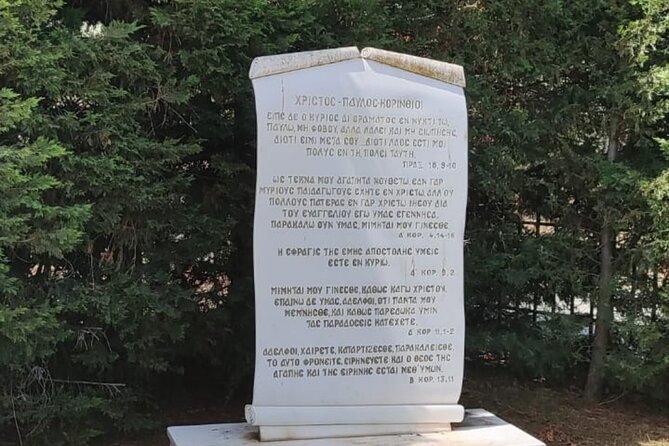
The main archaeological site is Ancient Corinth, or Archaia Korinthos. This is where the tour earns its name. You walk through the old public center, including the Agora, where Paul is understood to have spoken and worked among the people of Corinth.
The Agora was the city’s marketplace and civic center. Picture it as a public setting filled with commerce, legal business, religious activity, and ordinary conversation. It is easier to understand Paul’s ministry here than from a distant viewpoint, because the remains show the kind of social setting in which his message would have been heard.
The Bema, a raised stone platform, is another key stop. Paul is traditionally associated with standing before the Roman proconsul here. The Bema gives you a physical point for the account in Acts, though the ruins cannot answer every historical question with certainty.
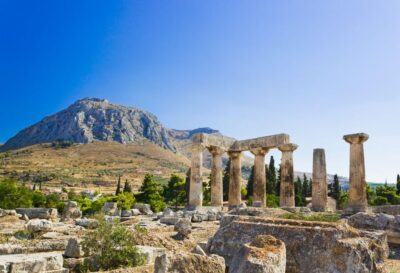
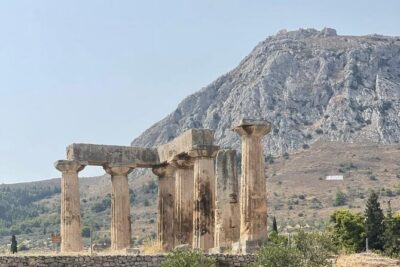
Near the public center, the Temple of Apollo recalls the religious world Paul encountered. Its surviving columns are among the most recognizable remains at Corinth. The temple also helps you see the contrast between older pagan worship and the Christian message Paul brought to the city.
The site visit is scheduled for about 40 minutes. That is a useful overview, but it is not enough for a slow archaeological study of every building. If you want to read every sign and spend time with each ruin, you may need to ask your driver where to focus.
The site entrance is not included. The stated charge for the archaeological sites and museum is €15 per person. Since a licensed guide is also not included inside the archaeological areas, ask your driver how much explanation you will receive at each feature and decide if you want to arrange a separate guide.
More trips in the footsteps of St Paul:
- Biblical Tour Letters ToThe Corinthians St Paul’s Footsteps 6Hour
★ 5.0 · 1,065 reviews - Paul”s Footsteps Ancient Corinth Biblical Tour
★ 5.0 · 184 reviews - Private Luxury Biblical Tour: Apostle Paul in Athens & Corinth
★ 5.0 · 162 reviews - Private Luxury Biblical Tour: Apostle Paul’s Footsteps – Corinth
★ 5.0 · 148 reviews
The museum adds the details the ruins cannot
The Archaeological Museum of Corinth sits beside the ancient site and gives you a more complete view of daily life. Built in 1932, it holds objects found during excavations, including prehistoric material and finds from the Sanctuary of Asklepios.
You have about 45 minutes here. That is enough to see the principal galleries without turning the museum into a full morning. The exhibits help fill in what open-air ruins leave out: household life, religious practice, art, and the long sequence of cultures that shaped Corinth.
I consider the museum an important part of the tour, not an optional extra. Ancient stones can feel abstract. Objects inside display cases show how people worshiped, worked, decorated their homes, and cared for the sick.
The museum also provides useful balance. Paul’s Corinth was not only a Christian setting waiting for a new message. It was an older city with established religious traditions, civic customs, and a working population. That wider context makes the biblical references more meaningful.
The museum entrance is included in the same stated €15 per-person site and museum charge. Allow time for the museum even if your main interest is Paul. You will get more from the Agora and Temple of Apollo after seeing the objects that came from them.
Acrocorinth, the strongest view of old Corinth
Next comes Acrocorinth, the fortified acropolis above Ancient Corinth. This is often the most memorable physical stop because the site combines walls, towers, gates, religious remains, and broad views over the surrounding area.
The fortification was built and reinforced across Greek, Byzantine, Frankish, Venetian, and Ottoman periods. That long sequence is visible in the mix of walls and defensive structures. You are not looking at one single monument from one era. You are walking through a site repeatedly adapted to changing rulers and military needs.
Acrocorinth also had religious importance. It was associated with the Temple of Aphrodite, whose sanctuary was known in ancient accounts for a large community of priestesses. The tour presents this as part of the religious world Paul encountered, giving you another contrast with early Christianity.
You have about 40 minutes here. The visit can be physically demanding, with uneven surfaces and uphill sections. One family even turned the climb toward the Temple of Aphrodite into a friendly race, but do not treat that as a requirement. If your knees or balance are not strong, stay at the lower sections and enjoy the views.
Comfortable shoes are essential. The driver can assist with practical needs around the vehicle, and several guides have been especially attentive to older passengers, but the ground at a fortress remains uneven. Bring water, use the bottle provided, and protect yourself from the Greek sun.
Saint Paul’s Church and a modern final note
The final stop is the Apostolos Pavlos Church, a modern church in the heart of Ancient Corinth. Inside, a large mosaic by artists Pastorutti and Tsotsonis depicts Paul’s journey and work in the city.
You have about 20 minutes here. After the open-air ruins, the church offers a quieter and more direct Christian focus. It connects the ancient story with the way Paul is remembered in Corinth today.
This stop will matter most to you if you want a clear religious ending. If your interest is mainly classical archaeology, it is still a useful modern counterpart to the Temple of Apollo and the ancient Agora.
What the private format is really worth
The price is $169.03 per person, with group discounts available. The value depends heavily on how many people are in your party. For a couple, the price is higher than joining a large coach trip, but you receive hotel or port pickup, private transportation, an English-speaking driver, bottled water, and a schedule built around your group.
For a family or small group, the calculation improves. You are not waiting for a large bus, and you can ask for photo stops, restroom breaks, or a little more time at a site. Drivers such as Dennis and George have helped older passengers in and out of the vehicle, while Nick and Ruslan have been praised for safe driving, clean vehicles, and useful local suggestions.
The private format does not turn the driver into a licensed archaeologist. That distinction matters. The drivers are described as professional English-speaking tour drivers with strong knowledge of Greek history, but licensed site guiding is not included.
I would ask before departure how much time the driver plans to spend at each stop and how the €15 admission fee will be handled. The published route gives you about 195 minutes at the stops, while the rest of the five to six hours is road time and transitions. You will see a lot, but you will not have unlimited time anywhere.
Food, comfort, and small practical touches
Lunch is not listed as included, but some drivers recommend a local restaurant if the schedule allows. One stop led to lamb chops, Greek salad, and dessert, while another recommendation was a highly praised gyro.
Do not book this tour expecting a scheduled food experience. Instead, treat a meal as something your driver may help arrange if time permits. If you have dietary needs or a tight port schedule, say so at the start.
The tour is offered in English. Child seats are available on request, and most people can participate, but the walking at Ancient Corinth and Acrocorinth makes sturdy shoes more important than formal clothing.
The weather policy also matters. The tour requires good weather. If poor weather cancels it, you are offered another date or a full refund. Otherwise, you can cancel for a full refund up to 24 hours before the start time. Changes or cancellations within 24 hours are not refunded.
Who should book this Corinth tour?
I recommend it most for a small family, a couple with a strong interest in Paul, or anyone arriving by cruise ship who wants a private connection between Athens and Corinth. It also works well if you want a broad first look at the canal, Ancient Corinth, the museum, and Acrocorinth without planning several separate transfers.
The tour is especially useful for people who value a calm car ride, flexible pacing, and a driver who can explain Greece beyond the fixed points on a map. The repeated praise for Giannis, Nick, Ruslan, George, Fotis, Dennis, and Johnny points to a strong standard of courtesy and safe driving, though the assigned driver can vary.
I would choose something else if you want a formal religious pilgrimage with Scripture readings and extended prayer at every stop. I would also reconsider if you prefer to spend several hours inside the archaeological site, since this route gives you a brisk overview of many locations.
Should you book the Apostle Paul tour from Athens?
Book it if you want to connect Acts and Paul’s letters with real places while still seeing Corinth’s wider Greek and Roman story. The Bema, Agora, Kenchreai, Acrocorinth, and Saint Paul’s Church give the day a clear theme, while the canal, Diolkos, Temple of Apollo, and museum keep it from becoming a narrow Bible-only outing.
Before booking, budget for the €15 admission fee per person, wear shoes suited to uneven ground, and confirm any airport transfer charge. If you understand that your driver is not a licensed archaeological guide, this private trip offers a practical and memorable way to reach Corinth from Athens.
FAQ
How long does the private Corinth tour take?
The tour lasts approximately five to six hours, including travel time between Athens and the Corinth sites.
Where can I be picked up?
Pickup is offered from an Athens hotel or apartment, where the driver waits at the entrance. Port pickup is also available, with the driver waiting at the gate while holding a sign with your name.
Is airport pickup included?
No. Airport pickup or drop-off is optional and costs an additional €50 per booking.
Is the tour private?
Yes. Only your group participates in the activity.
What type of vehicle is used?
Groups of one to four people use a sedan. The vehicle is air-conditioned and includes Wi-Fi and bottled water.
Is a licensed archaeological guide included?
No. The tour includes an English-speaking professional tour driver, but a licensed guide to accompany you inside the archaeological sites is not included.
Are entrance fees included?
No. Entrance fees for the archaeological sites and museum are listed as €15 per person.
Is the tour offered in English?
Yes. The tour is offered in English.
What should I wear and bring?
Wear comfortable shoes for walking over archaeological ground. A hat and sunscreen are recommended because the weather can be hot and sunny.
Can children join the tour?
Most people can participate, and child seats are available upon request.
Can I cancel for a full refund?
Yes, if you cancel at least 24 hours before the experience start time. Cancellations made less than 24 hours in advance are not refunded. If poor weather cancels the tour, you are offered another date or a full refund.
New on the Corinth shelf
- The Apostle Paul’s Missionary Journey in Athens and Corinth★ 5.0 · 50 reviews
- Ancient Corinth, Sanctuary of Hera, Blue Lake & Canal from Athens★ 5.0 · 26 reviews
- Biblical Corinth Taste Faith & History with wine & Oil Tasting★ 5.0 · 28 reviews
- Biblical Tour Letters to The Corinthians – St Paul’s Footsteps★ 5.0 · 60 reviews
- Ancient Olympia (birth place of Olympic Games) & Corinth Canal, Private Day Tour★ 5.0 · 28 reviews
- Biblical Corinth: St. Paul and His Letters to the Corinthians★ 5.0 · 70 reviews
- Footsteps of Apostle Paul from Athens to Corinth, Private Day Tour★ 5.0 · 54 reviews
- Ancient Corinth Half Day Private Tour from Athens★ 5.0 · 34 reviews
Corinth Tours, compared.
Ancient Corinth Day Trip with Canal & VR Guide
Read our verdict →
Biblical Tour Letters ToThe Corinthians St Paul’s Footsteps 6Hour
Read our verdict →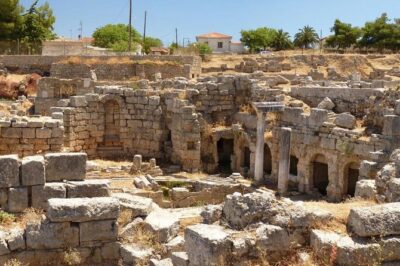
Private Biblical Tour Ancient Corinth & Isthmus Canal from Athens
Read our verdict →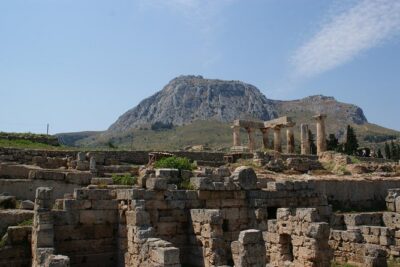
Corinth Half-Day Trip from Athens with Entrance Tickets
Read our verdict →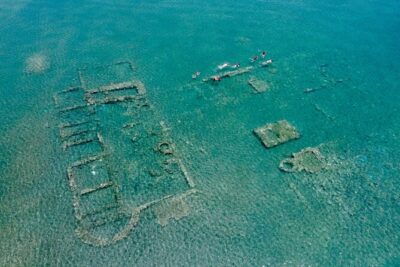
Sea Kayak Epidavros – Ancient Sunken City Tour
Read our verdict →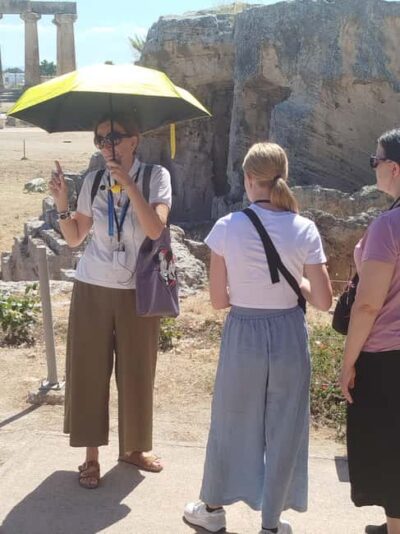
Private Luxury Biblical Tour: Apostle Paul in Athens & Corinth
Read our verdict →Browse the lists this tour appears in