
Review · KNOSSOS PALACE TOURS
Knossos Palace Guided Walking Tour (Without Tickets)
Knossos is more than a heap of Bronze Age stones. It is a huge, puzzling palace complex where the Minotaur story, royal ceremony, clever plumbing, painted walls, and ancient power politics all meet. With a licensed English-speaking guide, you get the story in the right order instead of trying to piece together a sprawling ruin on your own.
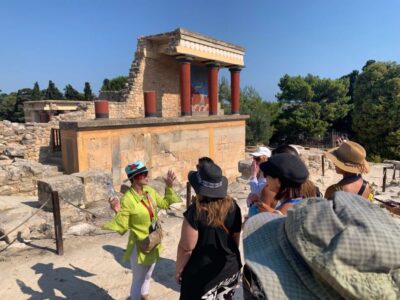
I like two things right away: the group is capped at 16, and the guide helps you avoid the ticket-counter queue. The 90-minute visit also gives you a clear route through the main palace features, including the throne area, sanctuaries, royal rooms, storage spaces, workshops, and water systems.
The catch is the price. You pay $70 for the tour, then another €20 for general admission by cash onsite, unless you qualify for a free or reduced ticket and can show the required ID or passport. The tour is also not suitable for wheelchair users or people with mobility or back problems.
Key points to know before booking
- The €20 entry ticket is extra: Pay cash onsite for the skip-the-line admission, with your guide helping at the entrance.
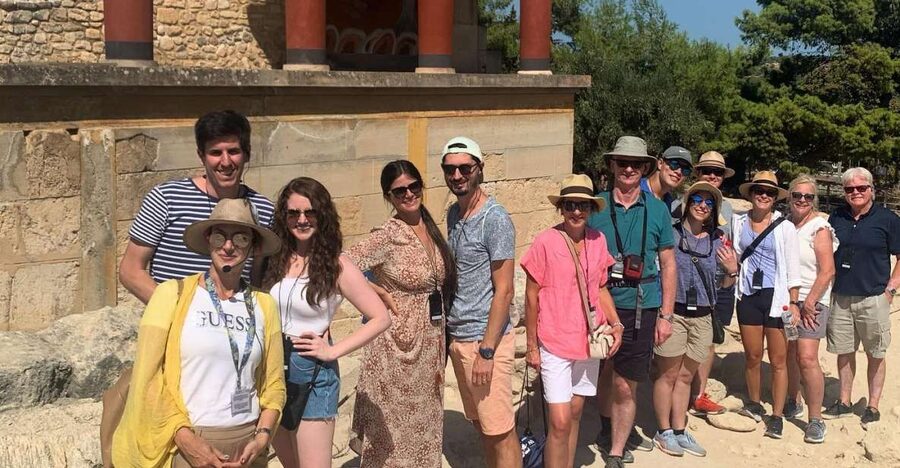
- The group stays small: Up to 16 people can join, and groups larger than six use headsets.
- Akrivi and Katerina have made strong impressions: Both guides are praised for clear English, humor, enthusiasm, and vivid explanations.
- The 9:00am start can be a smart choice: One visitor found Knossos noticeably quieter at that hour.
- You see major palace features in 90 minutes: Expect the throne area, sanctuaries, royal quarters, storage rooms, workshops, courtyards, and water systems.
- Bring shade and sturdy shoes: Knossos is an outdoor archaeological site, so sun, uneven ground, and walking are part of the deal.
Why a guide helps at a palace built like a maze
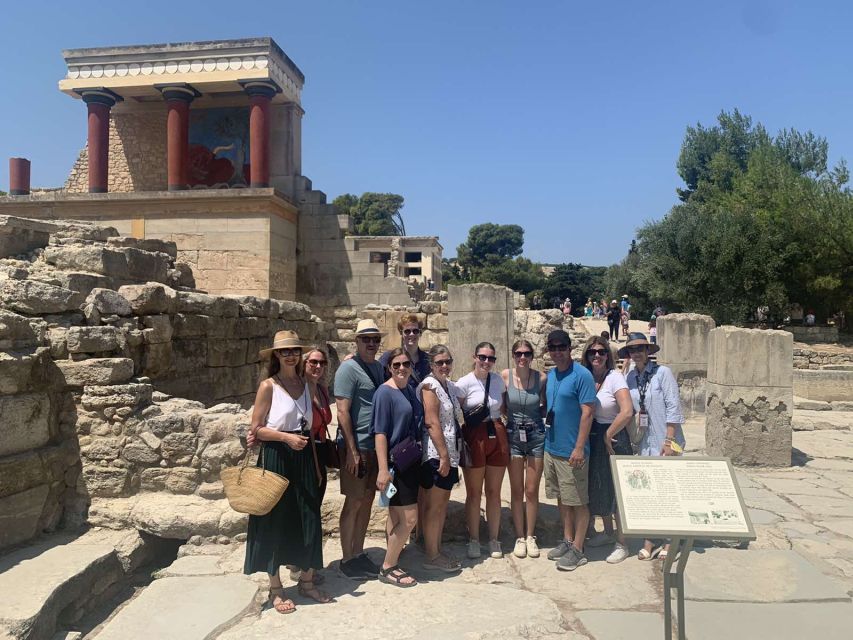
Knossos can be hard to read without context. More than 1,500 rooms once formed an enormous Bronze Age complex, with spaces linked across several levels and organized around courts, storage areas, workrooms, and ceremonial zones. From the ground, it is not always obvious which walls mattered most or how the palace functioned.
That is where this tour earns its keep. A good guide turns scattered walls into a working place: the seat of a powerful ruler, a center for ceremony, a storehouse for supplies, and a busy administrative hub. You are not simply looking at old masonry. You are being shown how the parts may have fitted together.
The Minotaur and Labyrinth story gives the site its famous hook, but the tour also puts the myth beside what is known about Minoan Crete. You can learn about the palace as a political and religious center, then see the practical systems that made it work.
Guide Akrivi Chatzigeorgiou has been singled out for clear English, strong storytelling, and a helpful manner. Katerina has also been praised for using imagination to make Minoan life easier to picture. That matters here, because Knossos requires you to imagine painted walls, wooden elements, upper storeys, stored goods, ceremonies, and rooms that have not survived intact.
More Minoan palaces you can walk around:
- Crete: Knossos Palace Entry Ticket with Optional Audio Guide
★ 3.9 · 2,251 reviews - Crete: Palace of Knossos E-Ticket and Audio Guide
★ 3.8 · 1,540 reviews - Knossos: Knossos Palace Skip-the-Line Guided Walking Tour
★ 4.8 · 1,380 reviews
Meeting at the main entrance
You meet at the main entrance to Knossos, in front of the ticket office. Look for the WeGuide.gr Meeting Point sign held by the check-in operator.
This arrangement is simple, but pay attention to the exact meeting place. The tour does not include hotel pickup or transport, so you need to make your own way to the palace entrance. Once assembled, the group handles the admission process, and you pay the skip-the-line entry fee in cash onsite.
The phrase skip the line needs a little explanation. It means the guide helps you avoid the regular ticket-counter queue. It does not mean admission is included in the $70 tour price. General admission is listed as €20 for adults, and free or reduced categories require an ID or passport.
If you qualify for a special fare, bring the right document. Do not assume the guide can arrange a discount without proof. This is one of the most important practical details to settle before you arrive.
The first palace and the great rebuilding
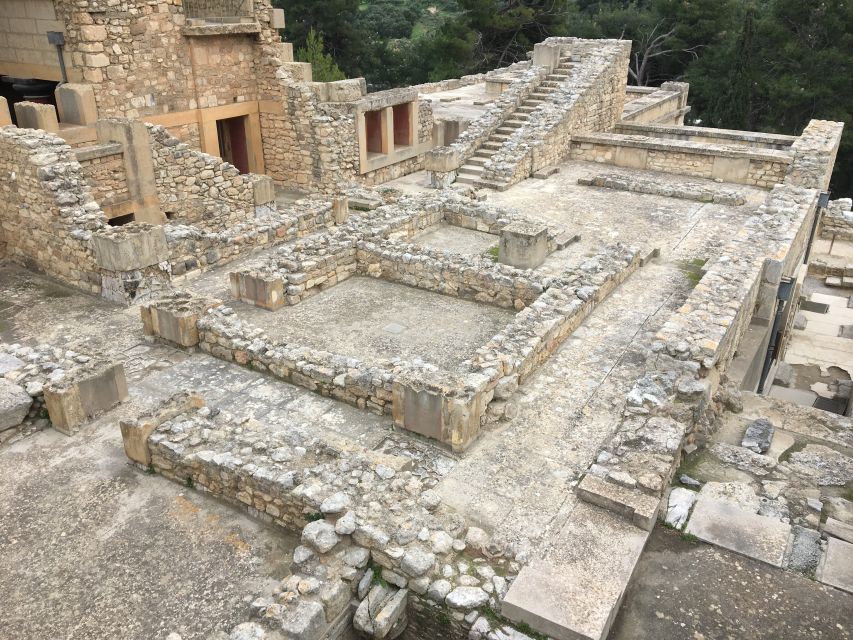
Your guide begins with the broad story of Knossos. The first palace was built soon after 2000 BC, then destroyed by a major earthquake around 1700 BC. A new palace followed quickly, becoming the largest and most powerful version of the complex.
That rebuilding is central to understanding the site. Knossos was not a small residence that slowly expanded by accident. It became a huge center of authority, with hundreds of rooms spread across four storeys, large courtyards, storage areas, workshops, and spaces for public ceremony.
The palace remained a major power center for more than 300 years. As you move through the ruins, the guide can help you separate royal and ceremonial spaces from the areas that supported daily work. You will also hear how earthquakes in the last decades of the 14th century BC brought the final destruction of the palace.
The value of this explanation is easy to miss until you walk through the site. Without a timeline, Knossos can look like one confusing ruin. With the timeline, you can see layers of construction, destruction, rebuilding, and changing power.
Seeing the throne area and royal rooms
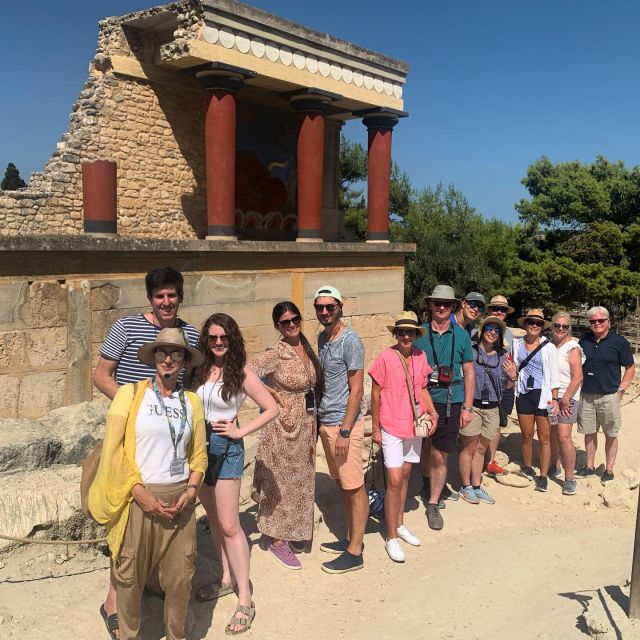
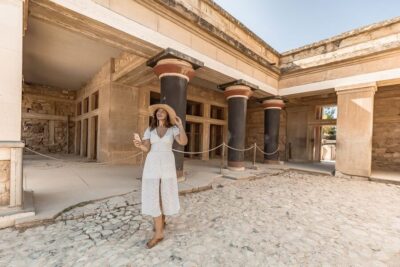
The throne area is one of the most memorable stops because it gives the palace a human focus. Instead of picturing an abstract ancient kingdom, you can picture a ruler seated in a formal setting, surrounded by a system built to display authority.
The guide explains what is known about the original throne of Minos and the surrounding spaces. This is also where a careful guide can distinguish archaeological evidence from later storytelling. The Minotaur legend is famous, but the physical palace tells a larger story about administration, ritual, status, and control.
The royal domestic quarters add another layer. These rooms help you picture how the ruling family lived, although the surviving remains are not a complete house in the modern sense. The guide supplies the missing connections, pointing out the layout and explaining why these spaces were considered luxurious for their time.
If you enjoy architecture, this part of the tour is especially useful. The palace was planned with more than appearance in mind. It included circulation routes, storage rooms, courtyards, and systems for handling water. You get a better sense of a functioning royal compound rather than a collection of famous names.
More Walking Tours in Heraklion:
- Heraklion: Food Tastings Walking Tour
★ 5.0 · 136 reviews - Archaeological Museum of Heraklion: Guided Walking Tour
★ 4.9 · 26 reviews - Athens: Acropolis and Parthenon Guided Walking Tour
★ 4.6 · 5,882 reviews - Greek Food Walking Tour in Athens
★ 5.0 · 4,740 reviews
Sanctuaries, frescoes, and the palace’s working side
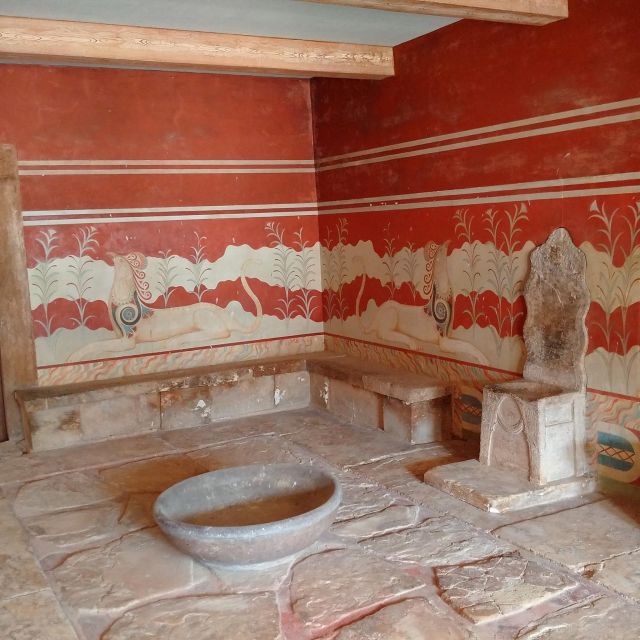
Knossos is often reduced to the Minotaur, but the sanctuaries reveal the religious side of Minoan society. Your guide explains the role of these spaces and helps connect them to the wider ceremonies that took place in the palace courts.
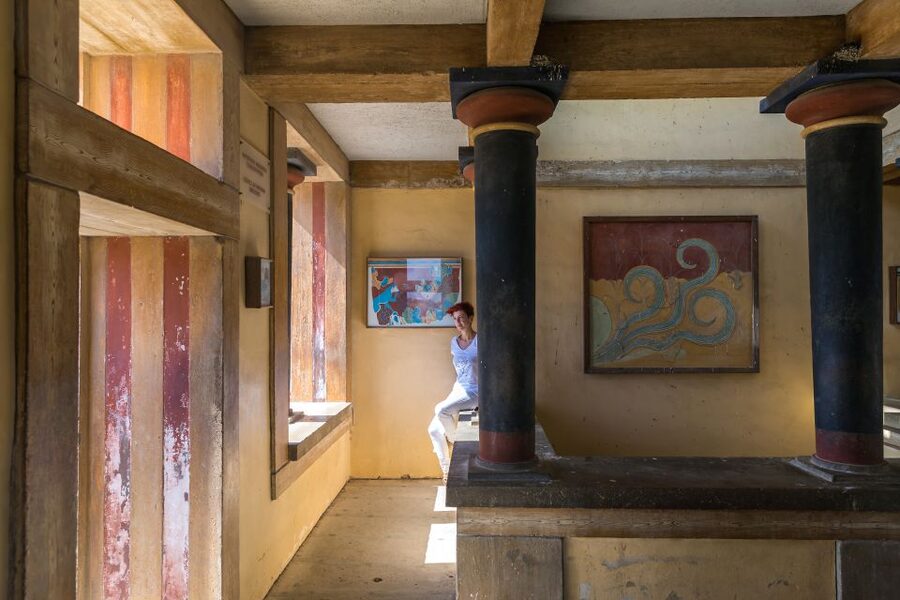
You may also see the remains or settings associated with the frescoes that once decorated the palace. The original colors and scenes were important parts of the building’s appearance, not minor decoration added after the fact. A guide can help you picture how different the palace would have looked when walls were painted and upper levels were in place.
Then come the less glamorous but very important features: the pantries, storage rooms, workshops, and water-management systems. These details explain how the palace supported a large population and maintained its power.
I like this balance. The tour does not treat Knossos only as a myth site or only as an archaeological diagram. You get royal spectacle, religious practice, household life, and basic infrastructure in the same visit.
The water systems are particularly useful for making the site feel practical. Ancient palaces needed ways to manage water and waste, and these systems show that Knossos was planned with serious engineering. The guide can point out features you might walk past without noticing.
What the 90-minute route can and cannot do
Ninety minutes is long enough for a clear introduction, but it is not enough to explain every corner of a complex this large. You will see the main highlights with a planned route, yet you should not expect a full archaeological study of all 1,500-plus rooms.
One visitor specifically advised spending extra time exploring after the guided portion because the tour did not cover everything. I think that is good advice. The guided visit gives you a framework, then you can look around independently and revisit the areas that caught your attention.
The short format is useful if you have limited time in Crete, children with you, or little patience for a long lecture. It also keeps the visit focused. Families may appreciate that a lively guide can hold attention better than a long, technical explanation. One parent found that an archaeologist guide’s stories kept three children interested in the subject.
The tradeoff is depth. If you want extended discussion of every structure, decorative detail, and archaeological debate, 90 minutes may feel brief. Think of this as a strong guided introduction with time afterward for your own wandering.
Group size, headsets, and guide quality
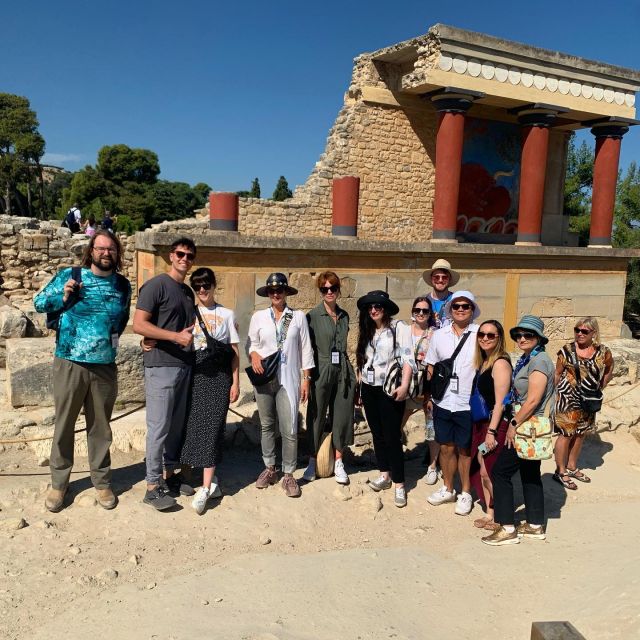
The maximum group size is 16, which is small enough to feel more personal than a large coach tour. Several bookings have been especially small, including one private-feeling visit with only a few people and another with a single participant. You should not count on having a private tour, but low-season or less popular departures may be quiet.
Groups larger than five or six use headsets, depending on the setup. The supplied information specifies headsets for groups over six, while the practical guidance says they are used over five, so expect audio equipment once the group is more than a handful of people.
That is useful at Knossos. You need to keep moving through an open archaeological area, and the guide may be explaining something while you are standing several steps away. Headsets reduce the strain of trying to hear over other groups and general site noise.
The strongest part of the experience is clearly the guiding. Akrivi is praised for her English, courtesy, and ability to answer questions. Katerina is praised for enthusiasm and for helping visitors use their imagination. Another guide was described as particularly effective at explaining the myths and giving new insights into the palace.
Guide quality can vary on any scheduled tour, but the format gives you a real chance to ask questions when the group is small. If you want facts without a human voice, you could visit independently. If you want the palace to make sense as you walk, the guide is the reason to book.
Timing, heat, and what to bring
Knossos is exposed, and warm days can be tiring. Wear comfortable walking shoes, bring water, and use sunscreen, sunglasses, and a sun hat. The site is not suited to flimsy footwear or anyone who finds uneven walking difficult.
The 9:00am departure deserves serious consideration. An early visit may be quieter, and one booking found that timing especially pleasant. It also helps you handle the sun before the hottest part of the day, though exact conditions vary.
Do not bring pets, luggage, or large bags. The experience does not include food or drinks, so carry water with you. Since the tour begins and ends at the main entrance, plan your refreshments and transport separately.
The activity is explicitly unsuitable for wheelchair users, people with mobility impairments, and people with back problems. This is not just a matter of pace. Archaeological ruins can involve uneven surfaces and extended walking, so choose another way to experience the site if those conditions would cause trouble.
Is $70 plus admission good value?
At $70 per person, plus the €20 adult admission fee paid separately, this is not the cheapest way to enter Knossos. You are paying mainly for the licensed guide, the small group, the queue assistance, and the chance to understand what you are seeing.
I think the value is strongest for first-time visitors who want historical context without spending hours preparing beforehand. The guide can explain the palace’s timeline, myths, architecture, rituals, and engineering in one concentrated visit. That is a fair trade if you would otherwise walk around wondering what each room was for.
The price may feel high if you are comfortable reading signs, researching in advance, and exploring independently. One booking found the tour expensive for its length, and that is a reasonable criticism. Ninety minutes passes quickly, and admission is not bundled into the advertised price.
The small group improves the calculation. A group of 16 is more manageable than a large crowd, and a smaller departure can feel almost private. Headsets also help when the group is larger. If the guide is as engaging as Akrivi or Katerina, you are paying for interpretation, not just access.
Who should book this Knossos tour?
I would point this tour toward:
- First-time visitors who want the palace explained in plain English.
- Families who need a guide to keep children interested.
- History and archaeology fans who want a structured introduction.
- Anyone who wants help avoiding the ticket-counter queue.
- Visitors with limited time who prefer a focused 90-minute route.
- People who enjoy asking questions in a small group.
I would hesitate if you want a slow, independent visit, dislike scheduled tours, or need step-free access. I would also check the total cost carefully, since the €20 adult ticket is separate and cash is required onsite.
Should you book it?
Book this tour if the Minotaur story has brought you to Knossos but you want more than the legend. The guide adds the missing structure: first palace, earthquake, rebuilding, royal power, religious spaces, storage, workshops, and final destruction.
Choose an early departure if available, bring water and sun protection, and plan to stay a little longer after the 90-minute tour. That extra time lets you look again at the features you were introduced to instead of rushing straight away.
Skip it if you prefer to explore alone or if the combined cost feels too steep for a short visit. For most first-time visitors who want Knossos to make sense, though, the licensed guide and small group make this a practical and worthwhile choice.
FAQ
How long does the Knossos guided tour last?
The guided visit lasts 1.5 hours, or 90 minutes.
Is the Knossos admission ticket included?
No. General admission is listed as €20 for adults and is paid separately in cash onsite for the skip-the-line entry. Free or reduced fare categories require an ID or passport.
Where does the tour meet?
Meet at the main entrance to the Palace of Knossos, in front of the ticket office. The check-in operator holds a WeGuide.gr Meeting Point sign.
What language is the tour in?
The live guided tour is in English.
How large is the group?
The group can include up to 16 people. Headsets are provided when the group is larger than six participants.
Is hotel pickup included?
No. Hotel pickup and drop-off are not included.
What should I bring?
Bring comfortable walking shoes, sunglasses, a sun hat, sunscreen, and water, especially on warm days.
Is the tour suitable for wheelchair users?
No. The activity is not suitable for wheelchair users, people with mobility impairments, or people with back problems.
New on the Heraklion shelf
- Knossos Palace and Pottery experience (Luxury Adventure)★ 4.5 · 32 reviews
- Heraklion: Dia Island Sunset Boat Tour with Dinner★ 5.0 · 61 reviews
- Heraklion: Sunset Safari with Dinner & Prosecco★ 4.9 · 38 reviews
- Heraklion: Self-Driving 4X4 Jeep Off-Road Tour with Lunch★ 4.6 · 26 reviews
- Hersonissos: Rent a Boat – No License Needed★ 4.9 · 93 reviews
- From Hersonissos/Malia: Guided Sunset Quad Safari★ 4.8 · 99 reviews
- Heraklion: Knossos Private Guided Tour & Skip-the-Line Entry★ 5.0 · 59 reviews
- Knossos Palace & Heraklion Full-Day Tour from Rethymno Areas★ 4.5 · 197 reviews
Knossos Palace Tours, compared.
Knossos Palace Entry Ticket with Optional Audio Guide
Read our verdict →
Knossos: Knossos Palace Skip-the-Line Guided Walking Tour
Read our verdict →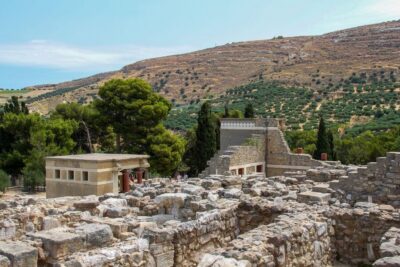
Knossos Palace and Museum E-Tickets with Audio Guides
Read our verdict →
Knossos-Zeus Cave -Old Traditional Villages-Olive Oil Factory
Read our verdict →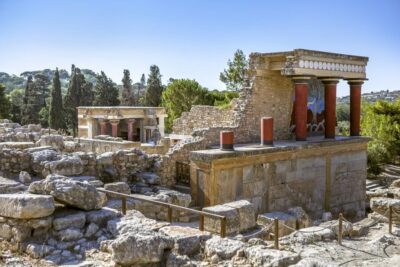
Knossos Palace Skip-the-Line Ticket & Private Guided Tour
Read our verdict →
Knossos, Lasithi, Lasinthos and Olive Farm Combo Tour
Read our verdict →Browse the lists this tour appears in