
Review · METEORA TOURS
Kastraki: Meteora Via Cordata Hiking Tour to the Great Saint
Meteora is famous for its monasteries perched on tall rock pillars, but this three-hour Via Cordata hike takes you into the rock country itself. From old Kastraki, you scramble up sandstone, follow paths once used by monks, and reach Great Saint for broad views of the towers and monasteries.
I like the tiny group size, with no more than six people and as few as three per mountain guide. I also like the mix of mild climbing, local history, and safety gear. Guides such as Kostas help with balance, explain the area, and even take photos when your hands are busy.
The catch is that this is not a casual village walk. You need a good fitness level, closed-toe shoes, and enough confidence for steep, uneven rock. The route is called moderate to challenging, though several participants found it manageable and less intimidating than a full via ferrata.
Key points at a glance
- Monk-carved paths: Follow old routes cut into Meteora’s sandstone rather than simply viewing the rocks from the road.
- Via Cordata climbing: Use helmets and harnesses on sections that require scrambling, balancing, and added security.
- Great Saint summit: Reach a high point with 360-degree views over Meteora’s rock towers and monasteries.
- Small guide groups: The maximum group size is six, with a stated ratio of three people per mountain guide.
- Kostas and other local guides: Expect English instruction, safety coaching, historical stories, and help with photographs.
- Early starts help: Morning departures can reduce the heat, and shaded parts of the climb offer some relief.
Starting in old Kastraki
Your meeting point is in the center of the old habitation of Kastraki village, at Qastiro Meteora. This is a useful starting place because Kastraki sits directly below the Meteora rock formations, so you move from village lanes into rough mountain terrain without a long approach by vehicle.
The tour begins with a safety briefing. Your guide supplies the required equipment, including a helmet and harness, and explains how the Via Cordata sections work. Water is included, but food and other drinks are not, so you should eat beforehand and bring anything else you need.
The guide also checks the basic demands of the route. This matters because the hike is not just a scenic stroll. You will step over uneven rock, use your hands for balance, and manage some upward sections. The guide remains with you to give instructions and support, but you still need to take an active part in the climb.
An optional pickup service is available, but transport from Kalambaka or Kastraki is not included as a standard part of the tour. If you are staying nearby, plan on reaching the village meeting point yourself unless you arrange pickup.
More Hiking Tours in Meteora
- Meteora Small Group Hiking tour with Transfer and Monastery Visit
★ 5.0 · 484 reviews - Kalabaka: Meteora Small-Group Hiking Tour w/ Monastery Visit
★ 4.9 · 205 reviews - Hiking Tour to Meteora from Kalambaka – Local Agency
★ 5.0 · 73 reviews
Following paths shaped by monks
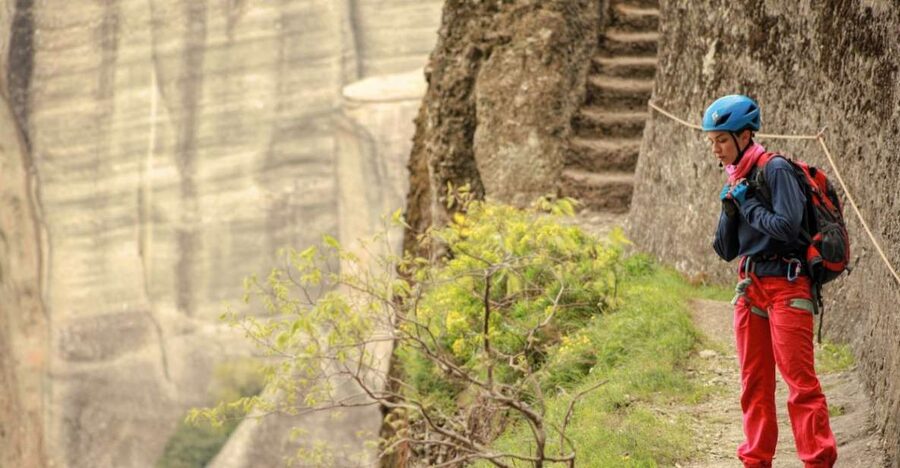
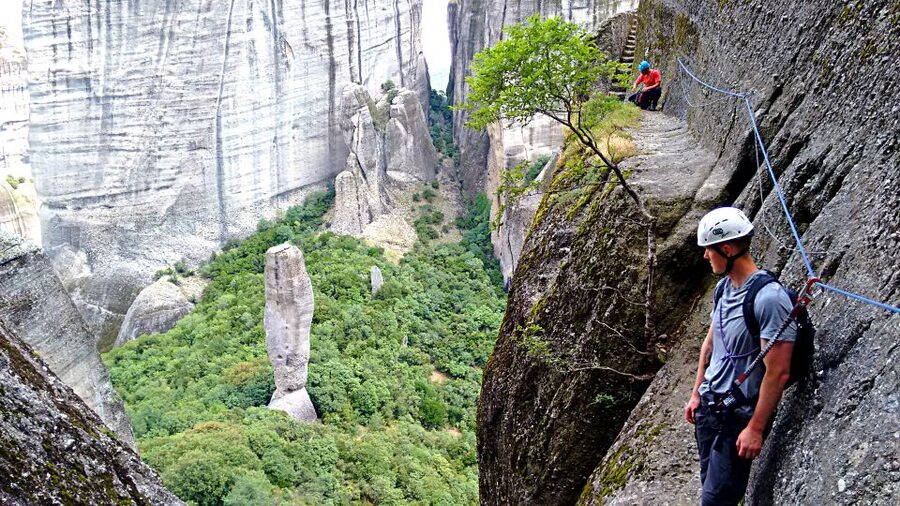
The first part of the outing takes you along old routes through the sandstone formations. Some sections are described as ancestral paths and paths carved by monks into the rock. These details give the walk more meaning than a simple climb to a viewpoint: you are moving through routes connected with the early religious life of Meteora.
You will encounter rock surfaces that call for careful foot placement. This is where the experience becomes a scramble rather than a normal hike. You may need to balance across uneven ground, place your hands on the rock, and climb short sections under the guide’s direction.
The route is not presented as technical climbing, and the Via Cordata sections are meant to make the route safer and more approachable. Still, the name should not fool you into expecting an easy path. One participant with little regular exercise found the route manageable, while another experienced climber found it fairly easy. Your own comfort with heights, rock, and exertion will shape the experience.
The shaded portions are useful in summer. An early departure is the best choice if you want cooler conditions, especially since the route climbs steadily. You should not count on shade for the entire outing, and the exposed rock can feel warm in the Greek sun.
What Via Cordata means here
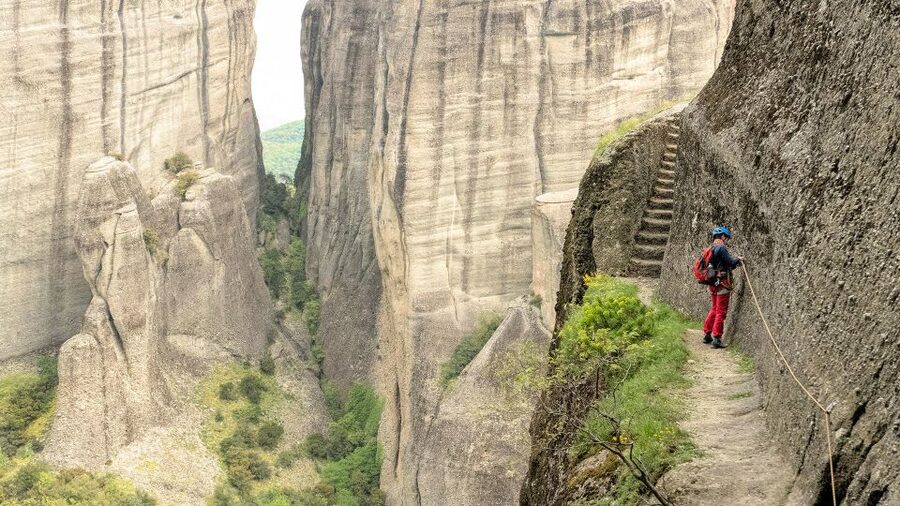
Via Cordata means a protected route that uses fixed safety equipment to help people move across rock. On this tour, the helmet and harness are supplied, and the guide shows you how to use them. At points on the climb, you may be attached to a rope for extra security.
This is different from a demanding rock-climbing session. You are not expected to scale a sheer wall under your own power. Instead, you combine walking, scrambling, and assisted rock movement. That makes the activity a good choice for someone who wants a stronger adventure than a standard viewpoint walk but does not want a full technical climbing day.
You should still wear proper footwear. Closed-toe shoes are required, and sandals or flip flops are not allowed. Shoes with a secure sole are the sensible choice for the uneven rock, though the tour information does not specify a particular type of hiking shoe.
One practical tip comes from the route itself: gloves are not required, but they may make hand contact with the rock more comfortable. Bring them only if you already own a light pair. They are not listed among the included items.
Climbing toward Great Saint
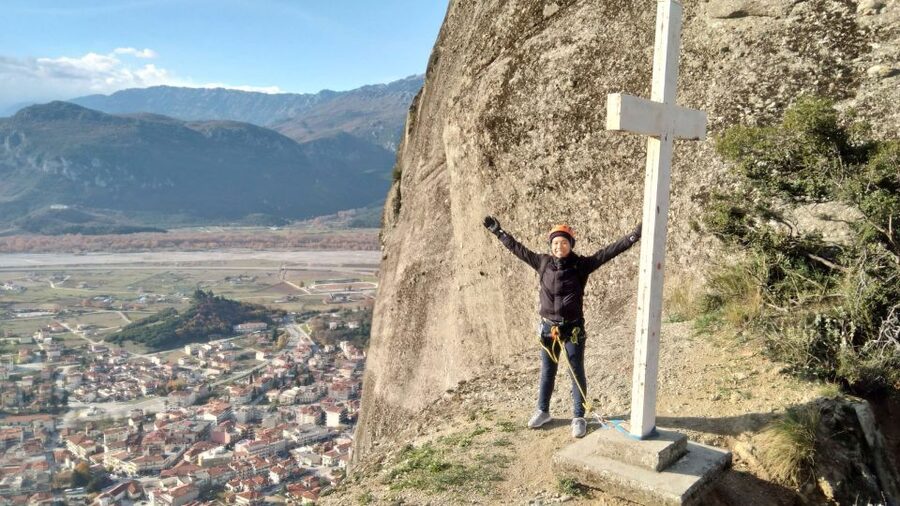
As you climb, the route gives you changing views of the surrounding rock towers. The appeal is not just the final lookout. Meteora’s formations appear differently as you gain height, and the movement through the rock brings you closer to the shapes that make the area special.
The guide is important here. You may need help choosing a foothold or deciding how to approach a short scramble. Guides have also been praised for giving clear instructions, staying patient with nervous participants, and sharing stories about Meteora’s past along the way.
The historical side adds welcome balance to the physical work. You are not simply burning energy on a hill. You are learning why these routes matter and how people once moved through this difficult terrain. The supplied information does not promise a formal history lecture, but the guiding includes local stories and explanations about Meteora.
The group limit also changes the feel of the climb. With no more than six participants, the guide can watch each person more closely than on a large walking tour. The stated arrangement of three people per mountain guide is especially helpful on rock, where a crowded line would make it harder to move at your own pace.
More climbing and via ferrata routes:
- Rock Climbing at Kardamili- West Mani
★ 5.0 · 192 reviews - Rhodes: Ladiko Bay Rock Climbing and Rappelling Experience
★ 5.0 · 39 reviews
The Great Saint viewpoint
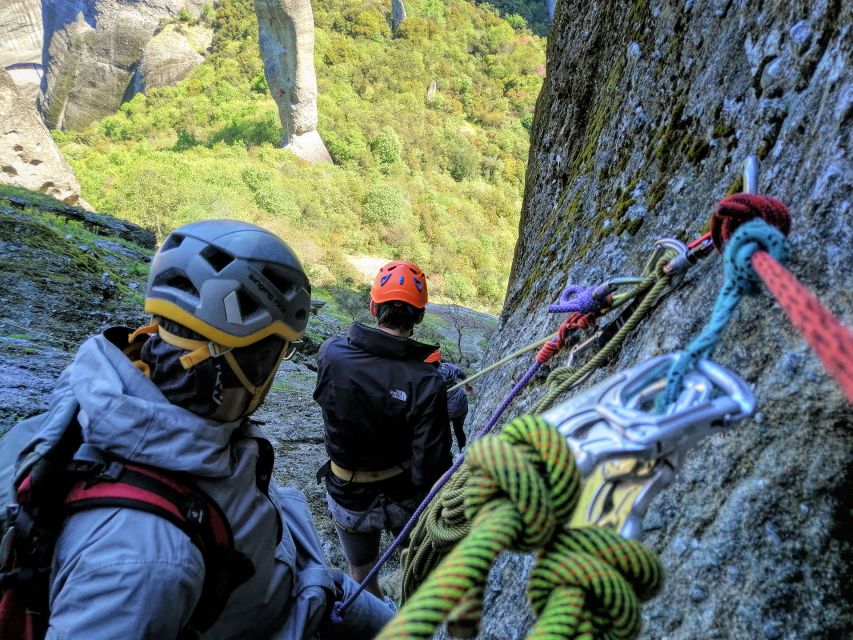
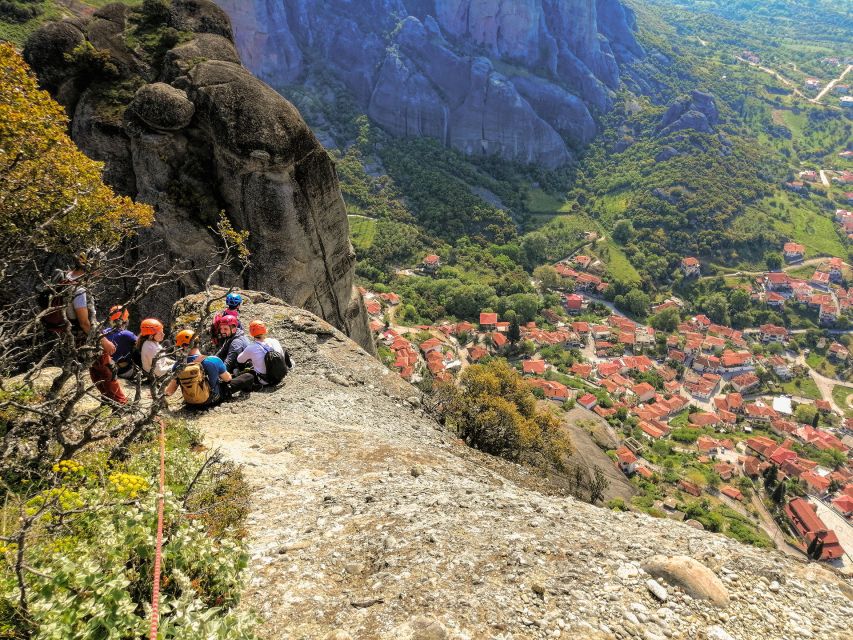
The reward comes at Great Saint, where you can pause and take in 360-degree views of the Meteora rocks and monasteries. This is the moment to catch your breath, drink some water, and take photographs.
The setting is especially strong for pictures because you are seeing the formations from above and from a route that most casual sightseers do not use. Your guide can help with photos during stops, a small but useful service when you are carrying equipment or standing on uneven ground.
Do not expect a long summit stay. The full experience lasts about three hours, including the approach, climb, stops, and descent. That makes the outing a good fit for a morning or afternoon in Meteora, but it is not a full-day mountain trek.
The view is also the clearest reason to accept the physical effort. From ordinary road viewpoints, you can photograph the monasteries and rock pillars. From Great Saint, you earn a more unusual angle by moving through the formations themselves. The final panorama gives the climb a clear purpose.
Descending with care
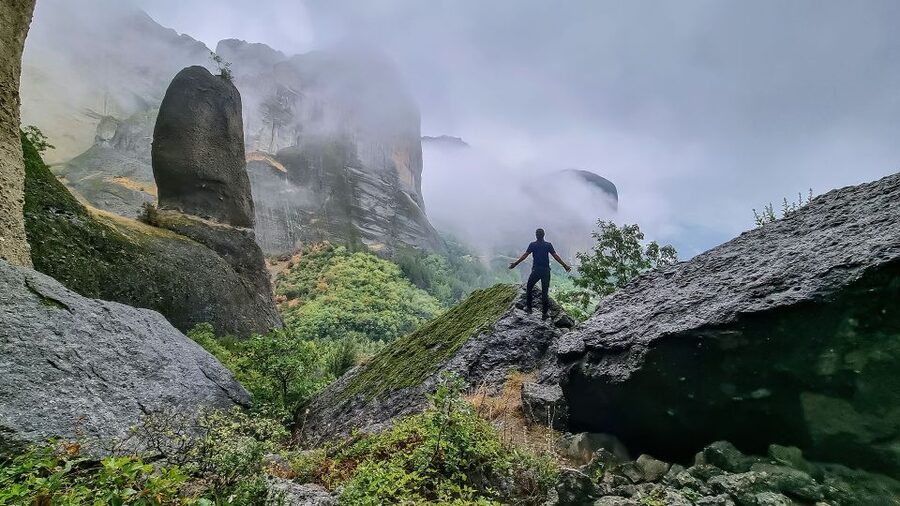
The return follows the trail back down. Descending can feel easier on your lungs, but uneven rock still demands attention. Keep your hands free where possible, follow the guide’s instructions, and avoid rushing simply because the highest point is behind you.
This is another reason the small group matters. The guide can adjust the pace and offer help when someone feels tired or less secure. One family group included a daughter who was initially nervous, but the instruction and support helped her feel safe during the activity.
Rain is a firm concern. The tour is cancelled in rainy weather, with the choice of a full refund or another date. Wet sandstone and scrambling are a poor combination, so this policy is sensible rather than a sign of weakness in the tour. Check the forecast before setting out and keep your schedule flexible if the weather looks unsettled.
Who will enjoy this hike most
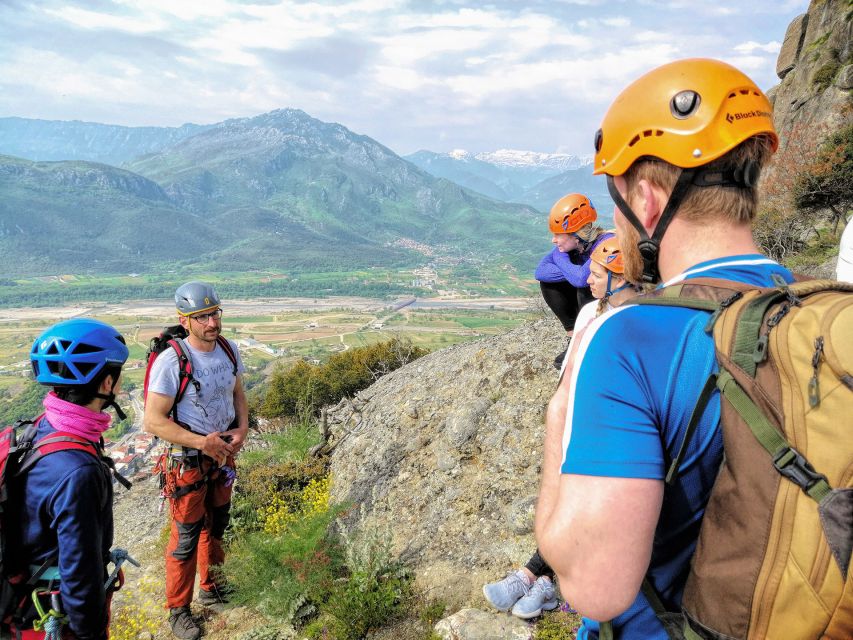
I would recommend this experience to adults and older children with a good fitness level who want more action than a monastery visit. It suits you if you enjoy hiking, are comfortable using your hands on rock, and like the idea of a guided route with a little controlled exposure.
It can also work for active families. Children under eight are not accepted, and the activity is not suitable for people with a low fitness level. The supplied age guidance does not give a maximum age, so your own mobility and confidence matter more than a number.
You do not need to be an experienced climber. The route has been described as less physical and less vertiginous than a via ferrata, and one participant who did not exercise regularly found it manageable. Even so, you should not book it if you want a flat path or feel uncomfortable on steep, uneven ground.
I would also choose this tour if you have already seen Meteora’s monasteries and want a different angle. It gives you rock, stories, views, and a hands-on route in one short outing.
Who should choose another activity
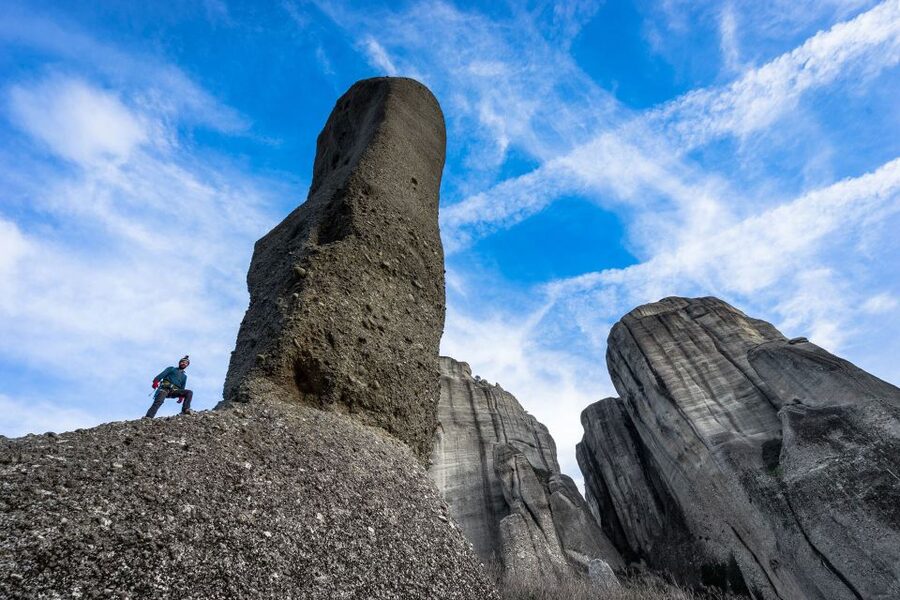
Skip this one if you are looking for a relaxed sightseeing tour with minimal effort. The climb requires balance and steady movement, and the tour description specifically excludes people with a low fitness level.
Sandals and flip flops are not allowed, so footwear is not a minor detail. You also need to accept that weather can change the plan. Rain means cancellation, a refund, or a new date.
The tour may feel too easy for a serious climber. One experienced participant found it short and easy, while describing the setting and professional supervision positively. For an advanced climber seeking long technical pitches, this is unlikely to provide enough challenge. For a fit beginner, it offers a more suitable introduction.
Is $88 a fair price?
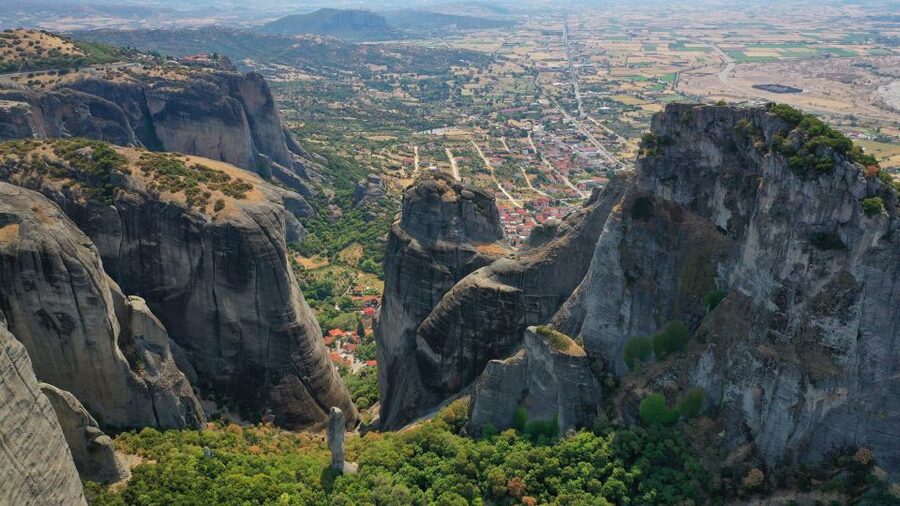
At $88 per person, the value depends on what you want from Meteora. You are paying for three hours, an English-speaking mountain guide, the necessary helmet and harness, water, route support, and access to a more unusual part of the area. The small group is the main value point, since the guide can give individual help on the rock.
The price does not include food, extra drinks, or standard hotel pickup and drop-off. If you are based in Kalambaka or Kastraki, allow for your own transport to the meeting point unless you arrange the optional pickup.
I think the price is reasonable for someone who would otherwise pay for a standard walking tour but wants more active time and a guide who can manage safety on the rock. It is less compelling if you only want to see the monasteries from viewpoints, or if you already have the skills and equipment to explore independently.
Free cancellation up to 24 hours before the start and the reserve-now, pay-later option also reduce the risk when your plans are still changing. Those terms are useful in Meteora, where rain can affect a rock route.
Practical preparation for the three hours
Plan on wearing closed-toe shoes with a secure fit. Avoid loose sandals and flip flops, even in hot weather. Comfortable clothing that allows you to lift your legs and use your arms is the practical choice.
Eat before the start because food is not included. Water is provided, but you may still prefer to carry a small personal supply if permitted by the guide. The route includes shade in places, yet early timing remains the best way to limit heat.
Keep your phone or camera easy to reach, but do not let photography distract you during the scrambling sections. The strongest photographs come during the stops, when you can focus on the view instead of balancing on the rock.
Finally, be honest about your fitness and comfort with heights. The guide can provide instruction and safety support, but you still need to climb, balance, and descend under your own power.
Should you book the Great Saint Via Cordata hike?
Book it if you want to experience Meteora from the rock rather than only from the road. The strongest reasons are the small groups, careful equipment support, old monk-carved routes, and the 360-degree view from Great Saint. The stories from guides such as Kostas add useful context, while their help with balance and photos makes the outing feel well managed.
I would choose an early start in dry weather, wear solid closed-toe shoes, and treat the route as a real hike with climbing sections. If you are fit and curious, $88 buys a memorable change of pace from monastery sightseeing. If you want a gentle walk, have limited fitness, or prefer a long technical climb, choose something else.
FAQ
Where does the Meteora Via Cordata tour meet?
You meet the guide at the center of the old habitation of Kastraki village, at Qastiro Meteora.
How long does the hike last?
The activity lasts three hours, including the climb, viewpoints, and descent.
How many people are in the group?
The group is limited to six participants, with up to three people per mountain guide.
Is climbing equipment included?
Yes. The tour provides the necessary equipment, including helmets and harnesses, along with water.
What should I wear?
You must wear closed-toe shoes. Sandals and flip flops are not allowed.
What happens if it rains?
The tour is cancelled in rainy weather. You can receive a full refund or move the booking to another date.
New on the Meteora shelf
- Athens: Meteora 2-Day Tour Sunset & Morning Small Group + Hotel★ 5.0 · 188 reviews
- 2-Day Delphi and Meteora Tour from Athens★ 4.5 · 262 reviews
- Thermopylae, Meteora and Delphi Private Full Day Tour★ 5.0 · 216 reviews
- Athens: 3 days 2 nights Meteora with small size tours & hotel★ 5.0 · 63 reviews
- Private Full-Day Trip to Meteora by Train From Athens – Local Agency★ 5.0 · 28 reviews
- Delphi and Meteora, 2-Days Private Tour★ 5.0 · 30 reviews
- Meteora Full Day Private Tour from Athens including Lunch★ 5.0 · 124 reviews
- Delphi and Meteora Private Day Trip from Athens including Dinner★ 5.0 · 200 reviews
Meteora Tours, compared.
Meteora Monasteries Day Trip with Caves and Lunch
Read our verdict →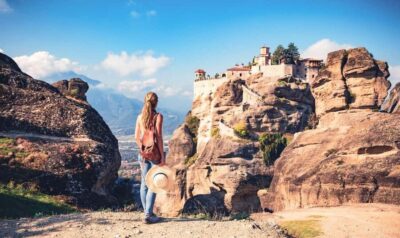
Meteora Tour with Local Guide and Greek Lunch
Read our verdict →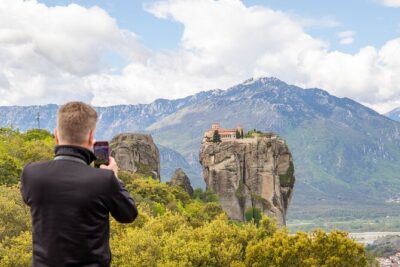
Meteora Monasteries, Caves & Coastal Stopovers with Lunch
Read our verdict →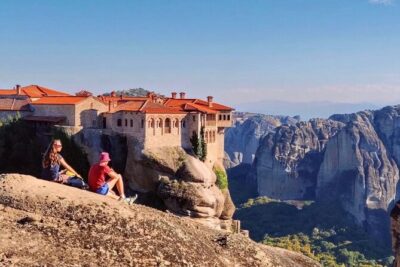
Meteora Monasteries & Caves DayTrip from Athens with Greek Lunch
Read our verdict →
4-Day Classical Greece Tour: Epidaurus, Mycenae, Olympia, Delphi, Meteora
Read our verdict →
Meteora Monasteries, Hermit Caves Tour with Pickup
Read our verdict →Browse the lists this tour appears in