
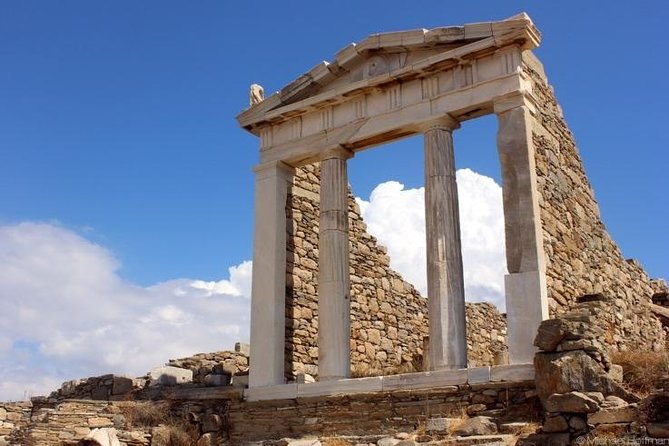
Review · DELOS TOURS
Half-Day Delos Tour from Mykonos
Delos is not just a pile of fallen marble. It is an entire ancient city spread across a small, mostly open island, with homes, shops, sanctuaries, cisterns, theaters, and the remains of a once-famous religious center. This half-day Delos tour from Mykonos gives you a useful map of the site before the ruins begin to blur together.
I like the easy ferry connection and the presence of a specialist guide who explains what you are seeing instead of leaving you to guess. I also like the wireless audio system, which lets you hear guides such as Celia, Lea, or Sylvia while walking through the excavations. The main caution is time: the guided route covers a lot, but you may have only a short window for the museum or outlying monuments.
Key points to know before you book
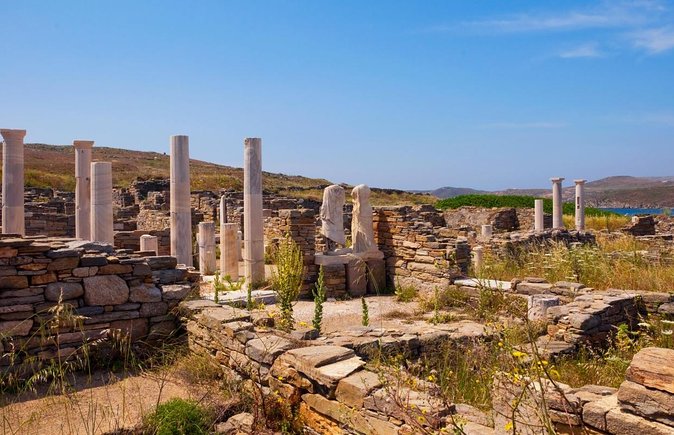
- Delos is a full ancient city: See the House of Dionysos, Theatre, market, Sanctuary of Apollo, and marble lions in one organized visit.
- The €20 site fee is extra: Bring cash in euros, since admission to the archaeological site and museum is paid at check-in.
- The ferry takes about 30 minutes: You meet at the Delos Tours kiosk in Mykonos Old Port and should arrive 60 to 30 minutes before departure.
- The walking is uneven: Comfortable shoes, water, sunscreen, and a small backpack make a real difference.
- The guide is the heart of the tour: Guides including Celia, Lea, and Sylvia are praised for clear explanations and an ability to make the ruins feel like a former city.
- Free time can be tight: If the museum matters to you, ask about a later return boat or consider a longer visit.
Why Delos deserves a half-day from Mykonos
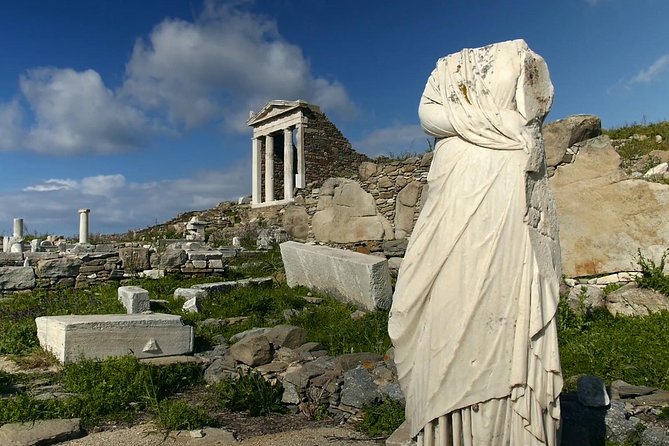
Mykonos is famous for white lanes, beach clubs, and sunset views. Delos offers the sharpest change of pace nearby. Within a short ferry ride, you trade island nightlife for the remains of a place that once drew worshippers, merchants, sailors, and political power from across the Aegean.
The island was linked to Apollo and Artemis in Greek mythology and later grew into a major religious and commercial center. The ruins show more than temples. You see private houses with mosaics, public buildings, markets, water systems, and the practical remains of daily life.
I find that scale important. A quick look at one temple cannot tell you much about Delos. Walking through the Hellenistic City, then moving toward the Sanctuary zone, helps you understand how religion, trade, housing, and public life fitted together.
This tour works well because the guide gives you that framework before you wander among the stones. Without one, it is easy to notice the marble but miss the story.
A few more Delos options worth putting side by side
- Athens: Cape Sounion & Poseidon Temple Sunset Half-Day Trip
★ 4.8 · 8,241 reviews - Best of Athens Half Day Private Tour
★ 5.0 · 3,714 reviews - Cape Sounion and Temple of Poseidon Half-Day Small-Group Tour from Athens
★ 4.5 · 3,205 reviews
Meeting at Mykonos Old Port
The tour begins at the Delos Tours kiosk at Mykonos Old Port. You can make your own way there, or request a shared hotel or port transfer for an additional fee of about €12 per person each way. Pickup is not included automatically, so give the operator your location when booking if you want to ask about it.
Allow extra time to find the kiosk and complete check-in. The instructions require you to arrive 60 to 30 minutes before departure, since you need to receive the boat ticket and group information. Your voucher alone does not guarantee boarding, so do not treat the departure time as your arrival time.
The check-in process can feel less obvious than it should. You receive your group number and site arrangements at the kiosk, and the admission payment is handled there. Have €20 in cash for each person. This covers the archaeological site and museum admission, but it is not part of the advertised tour price.
The ferry ride across to Delos
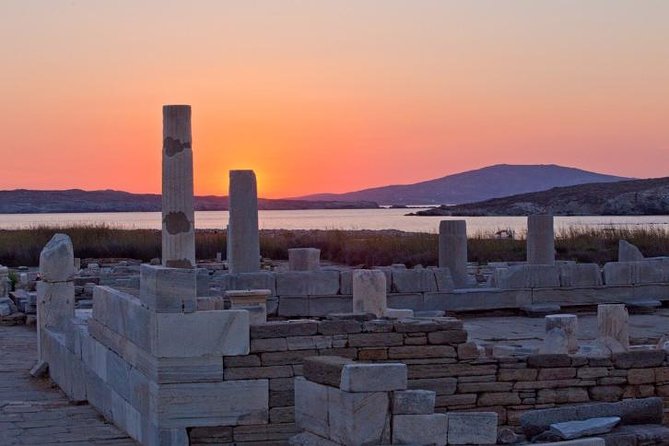
The crossing takes about 30 minutes. The boat has bathrooms and snacks, but drinks are not included in the tour price. Wind can make the ride rough, so if you are sensitive to motion, sit where you feel most comfortable and keep water handy.
The ferry is more than a transfer. It gives you a short break before the walking begins and helps place Delos in its island setting. Since the tour lasts about four hours in total, the crossing also takes a noticeable part of the morning or afternoon schedule.
Departure times can shift. One visit had a boat leave roughly half an hour late, so avoid planning a tight connection immediately afterward. If you are arriving by cruise ship, check your ship’s all-aboard time carefully and leave a generous buffer.
Entering the archaeological site
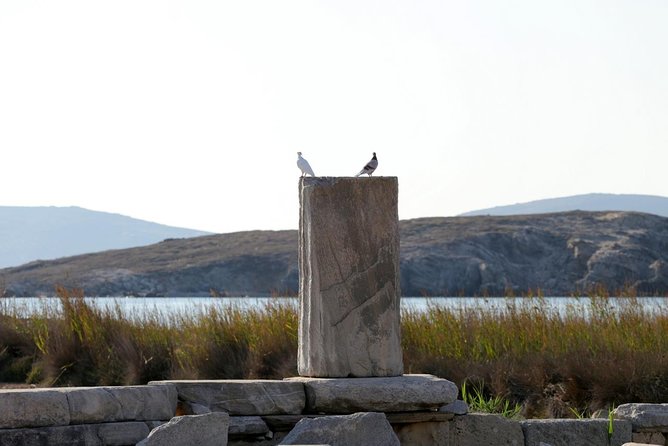
When you reach Delos, the guide distributes the site tickets and introduces the island’s mythological, prehistoric, and historical background. The site entry is arranged for the group, but the €20 admission fee is still paid separately in cash at check-in.
The route covers roughly three hours, though the guided portion and personal exploration time can vary. You walk over exposed, rocky ground and through narrow ancient streets. There is little reason to bring anything bulky. A small backpack with water, sunscreen, a camera, and perhaps a hat is enough.
The wireless audio system helps when the group spreads out. It also has limits. The sound may cut out if you move more than about 10 meters from the guide or turn behind thick walls. Keep an eye on the guide and stay close enough to maintain the signal.
The equipment is supplied free of charge, but loss or damage brings a €150 penalty. That is worth taking seriously, especially if you are moving between stones, steps, and uneven paths.
Close by, and nothing like it:
- Shared Mykonos Sail Cruise to Delos and Rhenia Islands
★ 5.0 · 705 reviews - Mykonos Sail Cruise to Rhenia, Guided Tour of Delos, Lunch&Drinks
★ 4.5 · 608 reviews - The Authentic Rhenia-Delos Cruise
★ 4.5 · 498 reviews - From Paros: Delos and Mykonos Full-Day Boat Trip
★ 4.3 · 340 reviews
House of Dionysos and the Hellenistic City
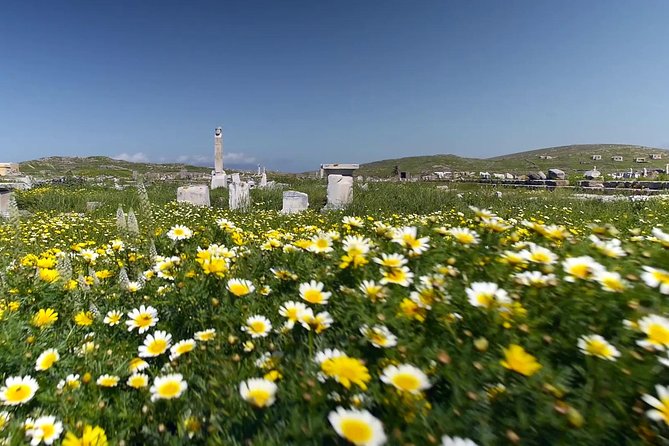
The first major part of the walk leads through the Hellenistic City, built in the fourth century BC. Here, Delos becomes personal. Instead of seeing only monumental temples, you see where people lived, decorated their floors, and moved through their neighborhoods.
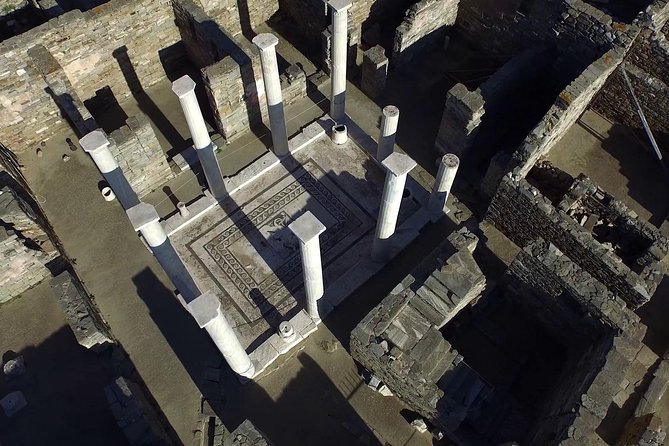
The House of Dionysos is a key stop. Its mosaics and layout show the money and taste available to wealthy residents. The decoration is not simply attractive. It helps you picture a domestic world of courtyards, rooms, and social gatherings.
You also see the statue of Cleopatra and other sculptural remains. The name can be confusing, since this Cleopatra was connected with Delos rather than the famous Egyptian queen. The guide’s explanation is useful here, since names and fragments alone do not provide much context.
The House of the Trident adds another look at private life. These homes are valuable because they prevent Delos from becoming only a story about gods and grand marble. You get glimpses of the people who lived, worked, traded, and entertained themselves on the island.
Theatre of Delos and the city cistern
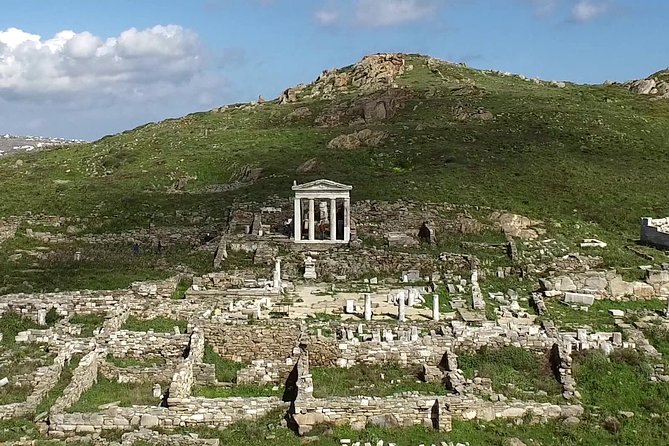
The route continues to the Theatre of Delos, one of the site’s most memorable public spaces. Even in ruins, a theater gives you an immediate sense of shared civic life. Look beyond the seating and notice how the surrounding streets and buildings fit into the wider city.
Nearby, the guide points out the public cistern. Water was always a serious concern on a small island, and this structure helps explain how a large population managed daily needs. The ruins include signs of practical problem-solving, not only religious devotion.
This section also shows why a guide adds value. A theater is easy to recognize, but the cistern may pass unnoticed. The best explanations connect the two, showing you the city as a working place rather than a collection of famous names.
From the market to the Sanctuary of Apollo
After the residential quarter and theater, the walk follows the main street back toward the market and Sanctuary zone. The Stoa of Phillipe and other monuments reflect the wealth and influence brought to Delos by powerful patrons.
The Propylaia marked the approach to the Sanctuary of Apollo. The Colossus of the Naxians, now surviving only in pieces, hints at the scale and ambition of ancient offerings. You will not see every part of the original monuments intact, but the scattered blocks still show how much labor went into making this place important.
The Temples of Apollo form the core of the religious area. This is where the island’s sacred identity becomes clearest. The guide’s job here is not just to name the buildings, but to explain how processions, dedications, and public worship shaped the site.
The route can feel information-heavy. Some guides give long explanations, and the amount of detail may be ideal for a history enthusiast but tiring if you prefer to roam freely. Stay patient through the main commentary, then use any remaining time for your own photographs and close looks.
Sacred Lake and the marble lions
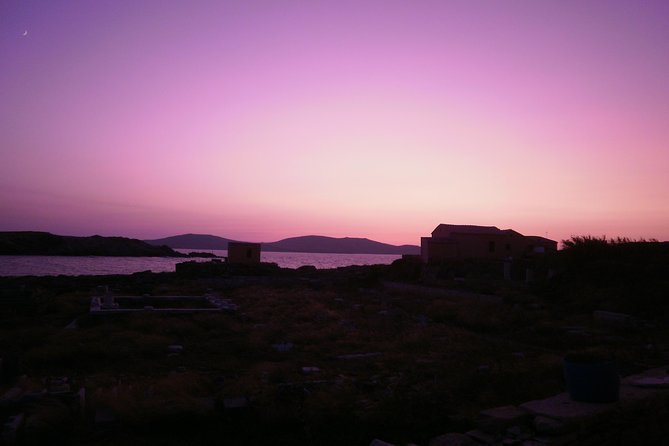
The final major stop is the Sacred Lake, watched over by the famous Naxian Lions. The lake itself is no longer the open body of water it once was, but the setting remains one of Delos’s strongest visual moments.
The lions were dedicated by the people of Naxos. Their surviving forms and alignment create a memorable finish to the guided walk, even though the originals have been moved for protection and the site is largely made up of archaeological remains.
This is a good place to pause and let the island’s layers settle. Delos was a sacred center, a busy city, a marketplace, and later a place marked by decline and abandonment. The lions connect the natural setting with the island’s religious role.
Is there enough time for the museum?
The Archaeological Museum of Delos is included as a possible stop, but admission is part of the same €20 cash fee and time is limited. You may have around 20 minutes or so after the guided route, depending on the pace of the group and the ferry schedule.
The museum is small compared with the outdoor site, yet it helps you see sculptures and objects that are difficult to appreciate in the open air. If museum time is a priority, tell the guide early and ask about the return schedule.
A later ferry may be available at 13:30, 15:00, except Mondays, or as late as 18:30, depending on the day’s schedule. That flexibility is not always made clear at the start, so ask at the kiosk or during check-in. If you want time for the museum, the Temple of Isis, or a walk farther across the island, do not assume the standard half-day return is your only choice.
Price, group size, and overall value
The listed cost is $72.41 per person, but your real outlay is higher once you add the €20 site admission. Hotel or port transfers cost about €12 per person each way if arranged, and drinks or food are extra.
That makes this more than a simple ferry ticket. You are paying for round-trip transport, a certified guide, the guided audio system, safety equipment, taxes, and organized access to the archaeological site. For a first visit, I think the guide makes the price reasonable, especially if ancient history is a main reason you came to Greece.
The group can reach 40 people, though some departures are smaller. A large group may slow the walk and make it harder to hear if your audio device cuts out. On the other hand, a guide can keep a big group moving through a complicated site without losing the main landmarks.
Crowds on Delos depend on the wider day, including cruise ship arrivals and the number of other boats in the bay. The tour cannot control the total number of people on the island. An afternoon visit may feel calmer, but confirm the schedule before choosing it.
Who should book this Delos tour?
I would choose this tour if you want a clear introduction to Delos without arranging the ferry, admission process, and route yourself. It suits you especially well if you like archaeology, ancient religion, architecture, and long explanations delivered while walking.
It is also practical for a cruise ship stop, provided your schedule allows a wide margin for delays. Children can come, but they must be accompanied by an adult, and the uneven ground may be tiring for anyone who struggles with walking.
I would think twice if your main goal is quiet photography, extended museum time, or a long visit to every outlying monument. The guided route takes much of the available time. A full-day option or a later return boat may fit you better.
Wear sturdy, comfortable shoes. Bring water, sunscreen, a camera, and cash in euros. Bug spray may also be useful, and local currency helps with purchases at the site shop.
Should you book it?
Book this half-day tour if you want the main story of Delos, a reliable ferry connection, and a guide who can turn scattered stones into a readable ancient city. The best part is the guided route through the homes, theater, Sanctuary, and lions, with specialists such as Celia, Lea, and Sylvia bringing clear energy to the walk.
Skip it in favor of a longer visit if you need the museum, Temple of Isis, and distant parts of the island without watching the clock. For most first-time visitors to Delos, though, this is a practical and worthwhile way to see the island from Mykonos, as long as you budget for the extra €20 admission and arrive early for check-in.
FAQ
How long does the Half-Day Delos Tour take?
The experience lasts about four hours in total. The archaeological site portion is listed as approximately three hours, with ferry travel making up much of the remaining time.
What is included in the tour price?
The price includes the round-trip boat ticket, a certified guide, the wireless tour guide system, taxes, safety equipment, and organized access through the site entrance process. Food, drinks, hotel transfers, and admission fees are not included.
How much is admission to Delos?
Admission to the Archaeological Site and Museum is €20 per person. You must pay in cash at the Delos Tours kiosk during check-in.
Where does the tour begin?
The meeting point is the Delos Tours kiosk at Mykonos Old Port. The activity ends at the same meeting point after the ferry returns from Delos.
Is hotel pickup available?
Pickup or drop-off can be requested, but it is not included in the standard tour. Shared transfer costs approximately €12 per person each way and should be requested when booking.
What should I bring?
Bring comfortable walking shoes, water, sunscreen, a camera, spending money, and a small backpack. Local currency is useful for purchases, and bug spray may be helpful.
Can I cancel for a full refund?
You can cancel at least 24 hours before the experience start time for a full refund. Cancellations or changes made less than 24 hours before the start time are not accepted, and poor weather or failure to meet the minimum of eight participants may lead to a new date or full refund.
New on the Delos shelf
- From Paros: Delos & Mykonos Full-Day Trip by Catamaran★ 4.3 · 51 reviews
- Mykonos: Delos and Rhenia Full-Day Sailing Cruise with Meal★ 4.8 · 90 reviews
- Small group,pass by Delos,swim in Rhenia,snap LVenice, free trans★ 5.0 · 164 reviews
- Delos Day Trip from Mykonos★ 3.5 · 109 reviews
- All inclusive cruise-Mykonos Delos&Rhenia beaches(free transport)★ 4.5 · 114 reviews
- Rhenia island – Small group Sailing adventure (up to 8 guests)★ 5.0 · 98 reviews
- From Mykonos: Ancient Delos Tour★ 4.0 · 138 reviews
- Ancient Delos Tour★ 4.0 · 218 reviews
Delos Tours, compared.

Shared Mykonos Sail Cruise to Delos and Rhenia Islands
Read our verdict →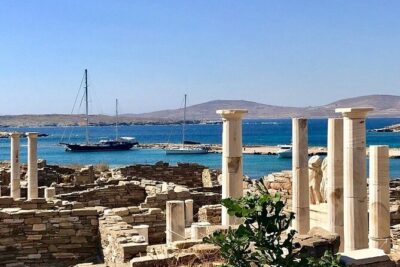
Mykonos Sail Cruise to Rhenia, Guided Tour of Delos, Lunch&Drinks
Read our verdict →
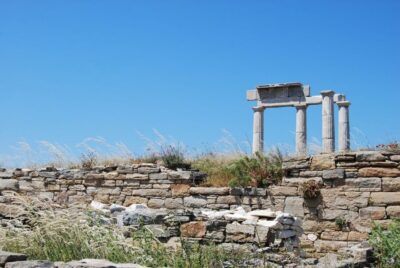
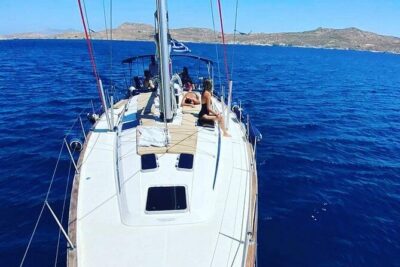
All inclusive Delos & Rhenia Islands tour up to 12 pax (free transportation)
Read our verdict →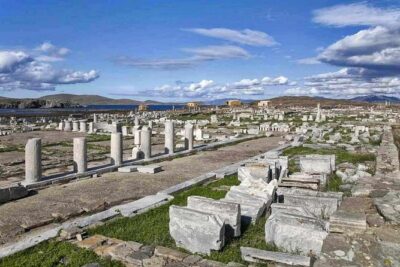
Small group,pass by Delos,swim in Rhenia,snap LVenice, free trans
Read our verdict →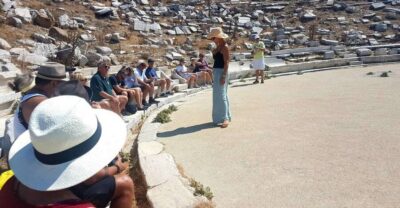
Browse the lists this tour appears in