
Review · COOKING CLASSES
Chania: Authentic Cooking Class
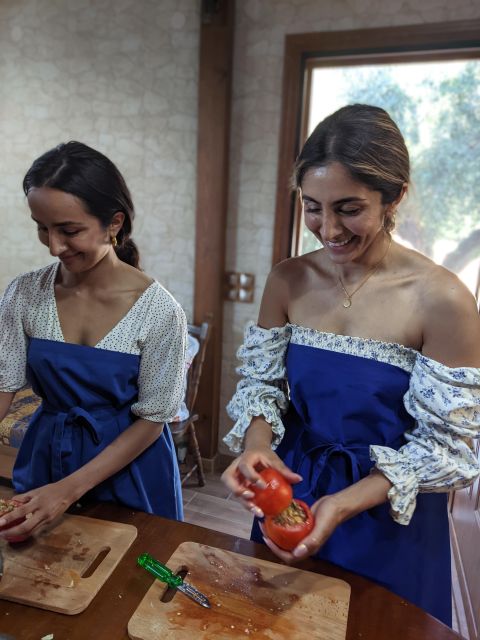
The best part of this Chania cooking class begins before the first recipe: you are welcomed into Veerna’s family home, with a homemade drink or Greek coffee, garden produce, and an olive grove beyond the kitchen. The wood-fired oven, local stories, and family-style meal make this feel like a real Cretan gathering rather than a standard tourist lesson.
I like the fresh ingredients picked from the garden and the way Veerna turns each dish into a small lesson in Cretan life. I also like the generous meal at the end, with local wine, raki, dessert, and time to talk with the family and other people in the group.
The main drawback is the location. You need to arrange your own car or taxi unless you pay extra for a transfer, and the four-hour session can run to about four and a half hours. That is fine if you have the time, but less convenient on a tightly planned cruise day.
Key points at a glance
- Family kitchen in Nerokourou: Reach the class in about 10 to 15 minutes from central Chania by car or taxi.
- Five Cretan staples: Prepare oven-roasted lamb, stuffed vegetables, dolmades, kalitsounia, tzatziki, and dakos.
- The thieves dinner: Learn the story behind the lamb dish and its place in Cretan history.
- Garden to table cooking: Pick herbs and vegetables from the property, with other ingredients coming from local farmers.
- A full social meal: Eat what you make with local wine, raki, dessert, and plenty of time around the table.
- Good for families: Children have taken part successfully, and vegetarian alternatives can be provided when arranged.
A family kitchen outside Chania

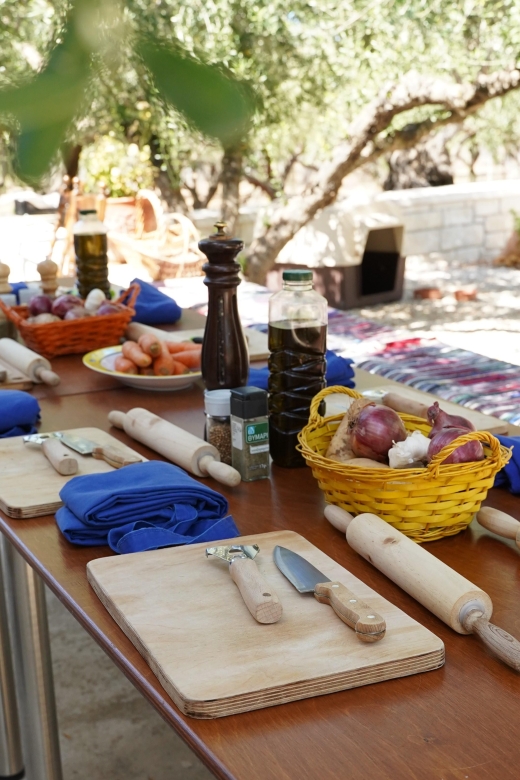
This is not a class in Chania’s old harbor. It takes place in Nerokourou, a beautiful neighborhood roughly 10 to 15 minutes from the city center. The setting is a family property with olive trees, avocado trees, a herb garden, farm animals, and a purpose-built outdoor cooking area.
That change of scene matters. Instead of watching the city pass by from a restaurant table, you see where some of the food begins. You may walk through the garden for herbs and vegetables, then return to the kitchen and use them in the meal. The olive grove gives the afternoon or evening a relaxed pace, though you should allow time for the drive in both directions.
Veerna leads the class, with help from family members including her brothers Kostas and Nikos. The family atmosphere is a major part of the experience. People may stop by to say hello, children can take part, and the final meal feels more like a shared family dinner than a formal cooking demonstration.
You should know that this is a social class, not a quiet private lesson. The group may include people from several countries, and the cooking is mixed with conversation, jokes, drinks, and stories. If you want one-on-one instruction or a highly technical chef’s course, this may feel loose. If you want a welcoming evening with food and people, the format works very well.
More Cooking Classes in Chania:
- Chania: Authentic Cooking Class in the White Mountains
★ 4.9 · 529 reviews - Chania Cooking Class-The Authentic Enjoy traditional Cretan meal
★ 5.0 · 339 reviews - Athens: Classic Cooking Class with Market Visit and Wine
★ 5.0 · 1,101 reviews
Starting with coffee, cookies, and Cretan food culture
The session begins with a homemade refreshment or Greek coffee from Veerna. Cookies come with the drink, giving everyone a chance to settle in and meet the others before work begins.
Veerna explains the menu and the Mediterranean ideas behind it. This opening is useful because the dishes are not treated as isolated recipes. You get some context about ingredients, family traditions, and the way Cretan food is built around vegetables, herbs, olive oil, cheese, and slow cooking.
The pace is one of the class’s strengths. Cooking starts with the dish that needs the most time, then moves through recipes that can be prepared while something else is in the oven. One person is not left standing around while the hosts do all the work. You should expect demonstrations, hands-on preparation, questions, and short pauses while food cooks.
The instruction is in English. Previous participants have described the recipes as clear enough to try at home, and the class sends the recipes afterward. That last detail makes the $129 price more useful because you leave with more than a full stomach. You have a practical record of what you made.
The thieves dinner and the wood-fired oven
The first major dish is oven-roasted lamb, sometimes called the thieves dinner. It goes into the wood-fired stone oven early so it can cook for more than two hours.
The name leads to one of the more interesting history lessons of the afternoon. You learn why the dish is linked with thieves and how the cooking method relates to Cretan history. The story gives the recipe a sense of place, rather than making it just another roasted meat dish.
The long cooking time also shapes the whole class. While the lamb cooks, you have time to work on the stuffed vegetables, grape leaves, and pies. The wood-fired oven adds a traditional touch, but it also means you should not expect the tight timing of a restaurant kitchen. The class is built around a slow meal, and the schedule can stretch beyond the advertised four hours.
If you eat meat, the lamb is likely to be one of the meal’s main attractions. If you do not, ask about the vegetarian alternative when booking. A vegetarian version has been provided before, but the class is not presented as a fully vegetarian experience by default.
Garden herbs, stuffed vegetables, and dolmades
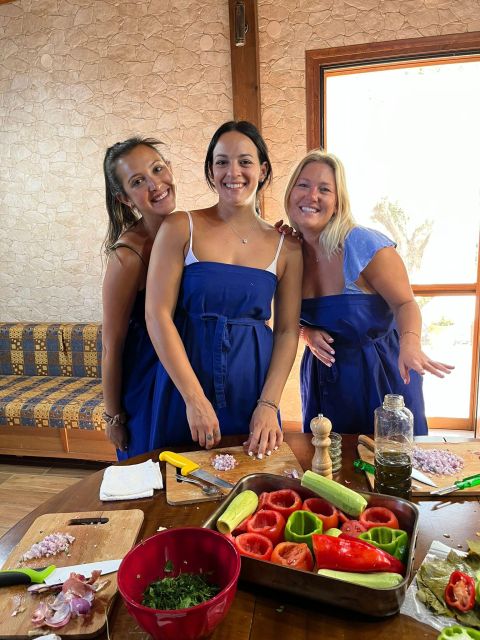
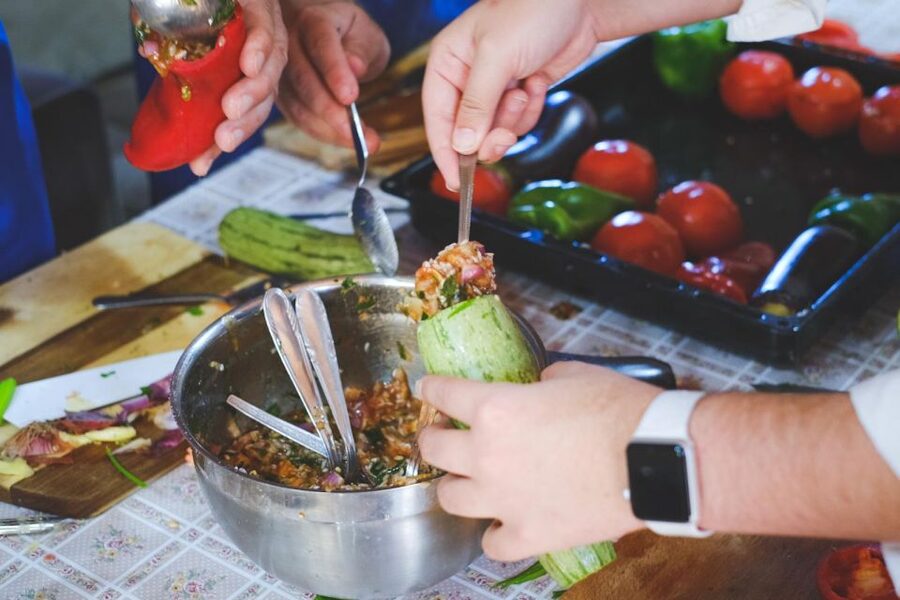
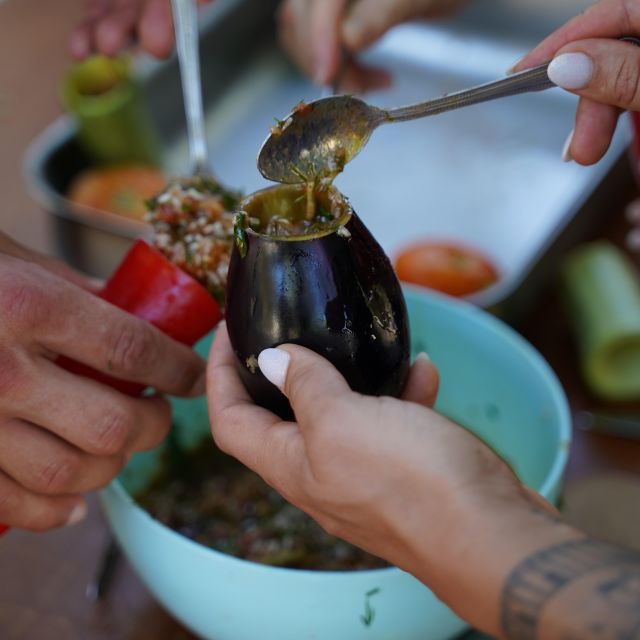
Next comes the filling for stuffed vegetables and dolmades. You gather herbs and vegetables from the garden, then prepare the mixture used inside them.
Rolling grape leaves is treated as a skill rather than a quick task. You learn how to place the filling, fold the leaf, and roll it so the package holds together in the oven. This is the sort of small technique you can actually use at home, though your first dolma may not look as neat as Veerna’s.
The garden adds a sensory side to the lesson. You are not simply handed bowls of premeasured ingredients. You see the plants, handle the herbs, and connect the final dish with the property around you. That is valuable for anyone interested in the Cretan diet, where simple vegetables and herbs do much of the work.
Stuffed vegetables and dolmades are also good group dishes. Several people can prepare them at once, and the rolling process gives the class an easy shared activity. It is hands-on without requiring advanced cooking skills.
A few more Chania options worth putting side by side
- From Kissamos Port: Boat Cruise to Balos Lagoon & Gramvousa
★ 4.2 · 6,755 reviews - From Chania: Full-Day Samaria Gorge Trek Excursion & Guide
★ 4.6 · 3,191 reviews - From Chania: Day Trip to Elafonisi Island Pink Sand Beach
★ 4.5 · 2,014 reviews - Crete: Rethimno, Chania, and Kournas Lake Day Trip
★ 4.4 · 1,694 reviews
Rolling dough for kalitsounia
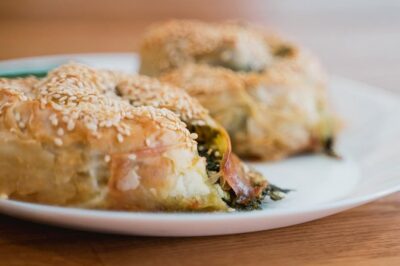
After the savory dishes are under control, the class turns to kalitsounia, traditional Cretan pies made with dough, cheese, and wild greens. Veerna is especially associated with these pies, which have been sold for years.
You get out the rolling pins and prepare the dough, then fill and shape the pies. This section may be the most useful for home cooks who assume that homemade pastry is too difficult. The technique is shown step by step, and the process is approachable enough for beginners to follow.
Still, do not mistake approachable for effortless. Dough work takes patience, and the final result depends on how thinly you roll and how carefully you seal the filling. That is part of the fun. You are learning a real kitchen task, not assembling a preprepared dish for a quick photo.
The wild greens and cheese show another side of Cretan cooking. The ingredients are modest, but the finished pies are substantial and satisfying. Save room for them, since they are part of a much larger meal.
Tzatziki and dakos, prepared last and eaten first
The class saves the simplest dishes for the end of the cooking work: tzatziki and dakos. These are quick to prepare and can be enjoyed while the other food finishes cooking.
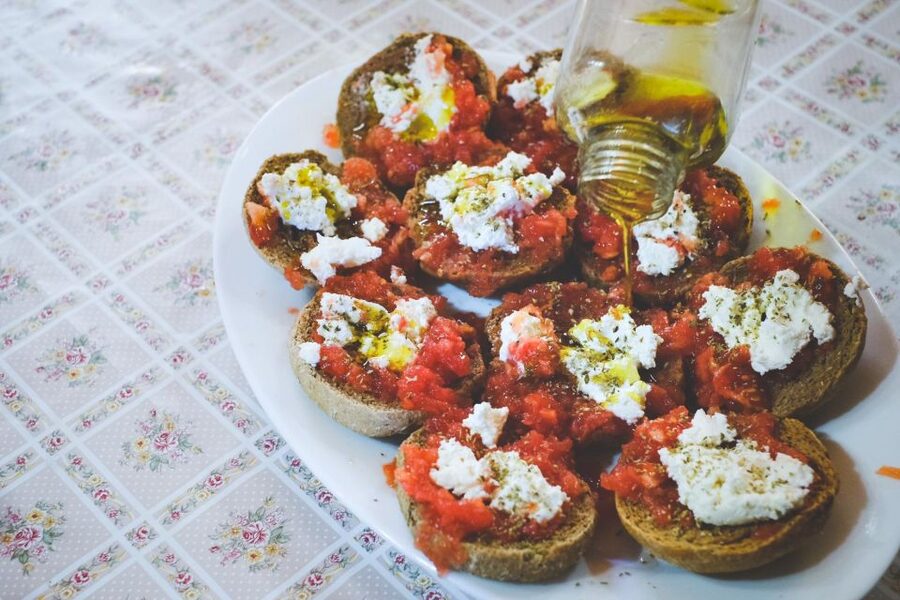
Dakos is a Cretan staple built around rusks, tomatoes, cheese, olive oil, and herbs. Tzatziki is familiar to many people, but making it with fresh ingredients gives you a better sense of its balance. These dishes are easy to repeat at home, which makes them especially useful after a busy holiday.
I like the decision to prepare the appetizers last. You can eat them first, so the long wait for the lamb and stuffed dishes never feels empty. Snacks, breaks, and drinks keep the class moving while the oven does its work.
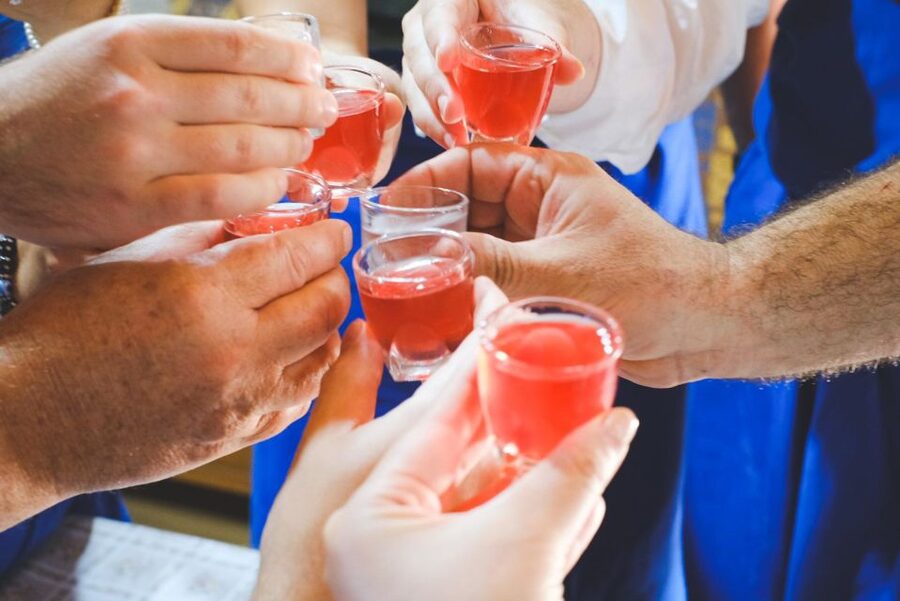
This is also a good point to pace yourself. Wine and raki are served generously, and the food continues for hours. If you are driving, skip the alcohol or arrange a taxi. The property is easy to reach by car, but a relaxed cooking class is not the place to underestimate Cretan hospitality.
Sitting down to the meal
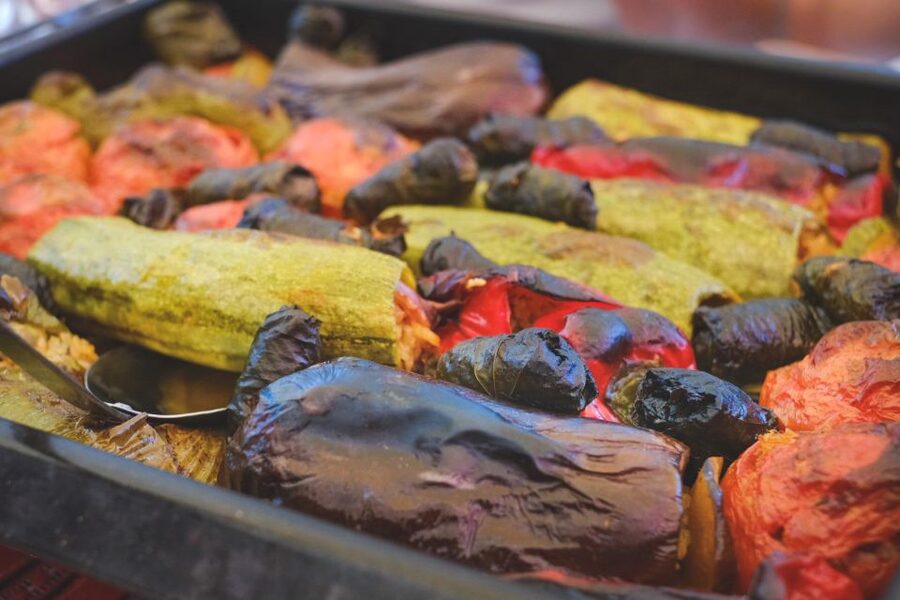
At the end, everyone sits down to eat the dishes prepared together. Expect lamb, stuffed vegetables, dolmades, kalitsounia, tzatziki, dakos, dessert, wine, and raki.
The meal is one reason the price feels reasonable. At $129 per person, this is not a cheap cooking demonstration, but it includes ingredients, instruction, a full lunch or dinner, drinks, dessert, and a four-hour setting outside central Chania. You are also paying for the family welcome, the garden, the oven, and the time spent around the table.
For comparison, a standard restaurant meal may cost less, but it will not teach you how to roll grape leaves or make kalitsounia. A shorter class may cost less too, but this session gives you several dishes and a complete meal. The value is strongest if you want a cultural activity and dinner in one booking.
The hosts do not appear to rush people out after eating. You have time to talk, finish your drink, and enjoy the setting. That is important because the final conversation is part of the point. You are not just eating Cretan food. You are sharing the family’s way of presenting it.
Dessert comes at the end, though the exact sweet is not specified. You can expect something homemade, but do not book this expecting a particular dessert menu.
What the class does especially well
The welcome is the clearest strength. Veerna and her family create an easy atmosphere from the start, and the class works for couples, families, solo visitors, and mixed groups. Children aged 11 and 14 have taken part successfully, including eating vegetables they might otherwise have avoided.
The instruction is another strong point. The recipes are explained in plain English, with practical help at the counter. One participant with a broken wrist was assisted, and a vegetarian alternative was prepared when needed. You should still mention dietary or mobility needs in advance rather than assume every request can be handled on the day.
The setting is memorable without feeling staged. You cook under avocado and olive trees, visit the herb garden and olive grove, and may see farm animals and puppies. The property is attractive, but the main benefit is that it gives the cooking a real home base.
The class also works well for meeting people. If you are on a cruise or traveling alone, the shared table gives you an easy way to talk with others. Birthday surprises have even been arranged, including a cake, so you can ask in advance if you are marking a special occasion.
One small improvement would be more help with photographs. Your hands are often covered in dough, filling, or food, so taking pictures during the active parts is awkward. If photos matter to you, ask the hosts whether they can take a few during the class or share a group folder afterward.
Getting there and planning your time
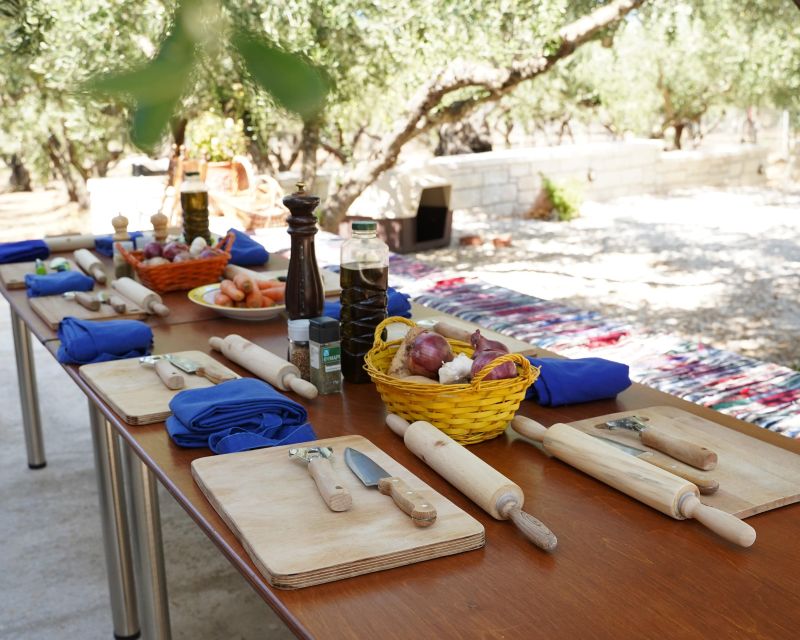
The class is easy to reach by car, with parking along the fence. A taxi is another practical choice, and one previous participant paid about 20 euros from the cruise port. That amount can change, so treat it only as a guide.
Transfers are available for an extra fee. The transport uses a nine-seat van and a five-seat electric vehicle, and you may share with other people attending the class. Add your pickup request when booking and ask for the price based on your location.
The advertised duration is four hours, but plan on four and a half hours to be safe. The meal, conversation, and final drinks can extend the evening. Cruise passengers should leave a generous buffer before ship departure, especially if they are arranging their own taxi back to the port.
The class is wheelchair accessible, and the location details are provided after booking. The exact meeting point is in Nerokourou, not central Chania, so check the map before setting out.
Free cancellation is available up to 24 hours before the activity for a full refund. You can also reserve now and pay later, which helps if your plans around Chania are still shifting.
Who should book this Cretan cooking class?
I would choose this class if you want food, family contact, and a slower afternoon or evening away from the old harbor. It suits first-time cooks because the dishes are explained clearly, but experienced home cooks should enjoy the dough, grape leaves, wood-fired oven, and local methods too.
Families should give it serious consideration. The hands-on tasks keep children involved, and the family hosts make an effort to include everyone. Couples and solo visitors can also fit in easily because the shared table encourages conversation.
This is less suitable if you want a short, polished demonstration with no alcohol, no group interaction, and a fixed finish time. It is also not the best choice if your Chania schedule leaves no room for a drive outside the center.
Should you book it?
Yes, if you want one of Chania’s more personal food experiences and can spare half a day. The strongest reasons are the garden ingredients, Veerna’s friendly teaching, the family meal, and the chance to learn dishes you can repeat at home.
Book it with transport sorted, an open schedule, and a willingness to eat a lot. At $129, the class is not a budget activity, but it combines instruction, dinner, drinks, local context, and a memorable setting. For many people, that makes it a better use of an evening than another restaurant meal.
FAQ
How long does the Chania cooking class last?
The listed duration is four hours. You should allow about four and a half hours, since the meal and conversation may continue after the cooking is finished.
How much does the class cost?
The price is $129 per person. Ingredients, the cooking experience, lunch or dinner, local wine, and raki are included.
What dishes will I prepare?
The menu includes oven-roasted lamb, stuffed vegetables, stuffed grape leaves called dolmades, kalitsounia with cheese and wild greens, tzatziki, and dakos. Dessert is also served at the end.
Where is the cooking class located?
It is in Nerokourou, about 10 to 15 minutes from central Chania. The exact location is provided with the booking information.
Is transportation included?
Transportation is not included in the basic price. You can drive and park along the fence, take a taxi, or request a shared transfer for an extra fee.
Is the class taught in English?
Yes. The instructor and class are in English.
Can I cancel or pay later?
You can cancel up to 24 hours in advance for a full refund. Reserve now and pay later is also available.
New on the Chania shelf
- Chania Area: Food Tasting Tour with Winery Visit & Swim Stop★ 4.5 · 58 reviews
- Rethymno: Glyka Nera, Loutro, & Sfakia Day Trip★ 4.9 · 26 reviews
- Samariá Gorge Hike: Day Excursion from Chania★ 4.4 · 49 reviews
- Crete: Samaria Gorge Hike★ 4.4 · 201 reviews
- Rethymno: Gramvousa & Balos Lagoon Day Trip with Boat Ticket★ 4.6 · 249 reviews
- From Rethymno: Lake Kournas and Villages Full-Day Tour★ 4.4 · 45 reviews
- Chania: Paratriking Experience with a Professional Pilot★ 4.7 · 43 reviews
- From Chania: Guided Tour to Loutro (Boat tickets Included)★ 4.9 · 37 reviews
Cooking Classes, compared.
Classic Cooking Class with Market Visit and Wine
Read our verdict →
Food Market Visit and Cooking Class with Wine
Read our verdict →
Greek Cuisine Cooking Class in Santorini with Recipes and Wine
Read our verdict →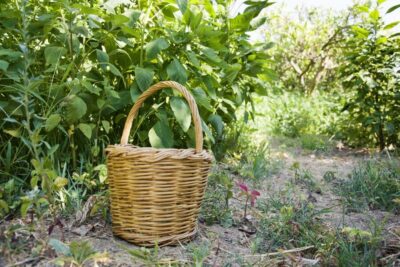
Half-Day Cooking Class at Basiliko Family Tavern
Read our verdict →
Greek Cooking Class in Athens Including Rooftop Dinner with Acropolis View
Read our verdict →
Greek Small-Group Athens Cooking Class & Dinner
Read our verdict →
Exclusive Cooking Experience in our Cave Home by Petra Kouzina
Read our verdict →
Authentic Cooking Class in the White Mountains
Read our verdict →Browse the lists this tour appears in