
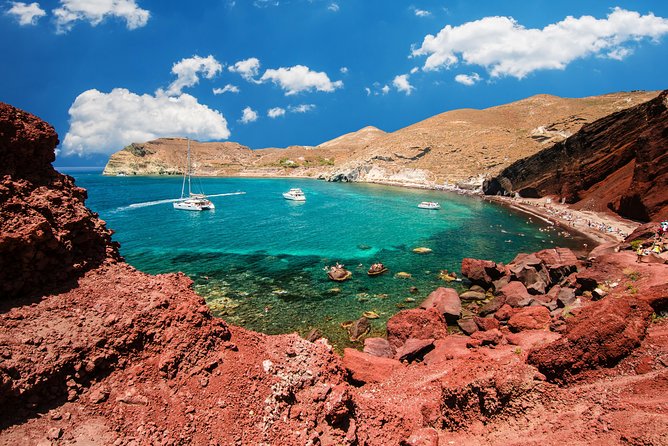
Review · ANCIENT SITES
Archaeological Bus Tour To Akrotiri Excavations & Red Beach
Akrotiri is the star here: a Bronze Age settlement preserved under volcanic ash, with streets, buildings, and clues to life before Santorini’s great eruption. This tour adds the island’s mountain-top monastery, a traditional village, colorful volcanic shores, and time in the sea, giving you a broad look at southern Santorini in one day.
I especially like the guided visit inside Akrotiri, where a site guide such as Eugenia can explain what the stones and structures mean. I also like the practical route for visitors without a car: you can see several far-flung sights from an air-conditioned vehicle while guides such as Tania add local stories, humor, and useful context.
The main drawback is the pace. Seven hours covers a lot of ground, but beach time and village wandering are limited, lunch may come late, and the final beach stop can be Perissa rather than Perivolos. You should also expect walking, uneven ground, and a separate €20 entrance fee at Akrotiri.
Key points to know before booking
- Akrotiri is the main event: The excavations offer a rare look at a settlement from around 1600 BC, preserved by volcanic ash.
- Tania is often the guide: She is praised for her energy, humor, language skills, island stories, and help with photos, though guide assignments can change.
- The tour covers southern Santorini efficiently: Prophet Elias, Megalochori, Akrotiri, Red Beach, and a black-sand beach fit into one outing.
- The €57 price does not include Akrotiri: Add €20 per person for the excavation entrance.
- Beach plans can vary: You may see Red Beach from above and finish at Perissa or Perivolos, with swimming time depending on the schedule and conditions.
- Prepare for a long day: Wear comfortable shoes, bring modest clothing for the religious stop, and expect limited time at some locations.
Why Akrotiri makes this more than a beach tour
Santorini is easy to reduce to white houses, blue domes, and sunset photographs. Akrotiri gives the island a much older and more powerful story.
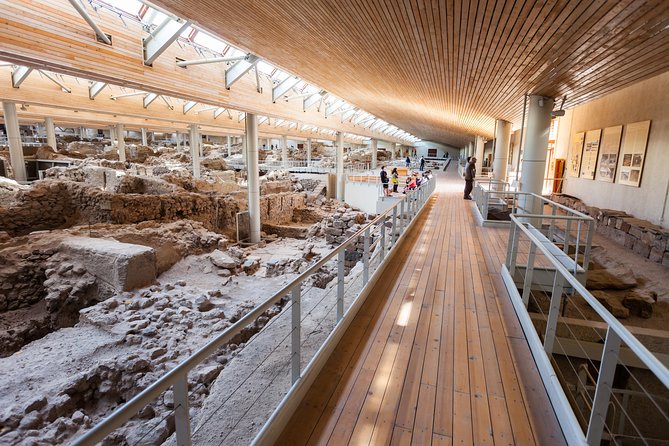
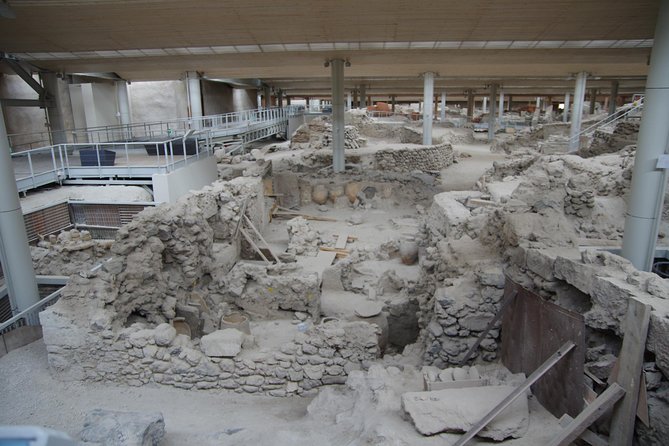
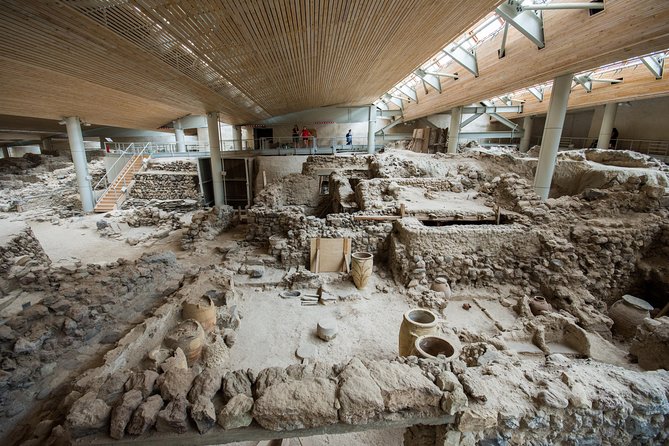
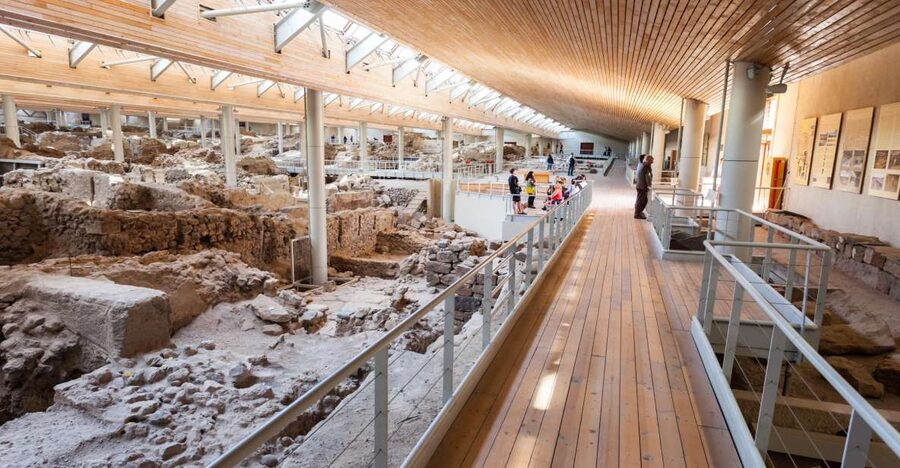
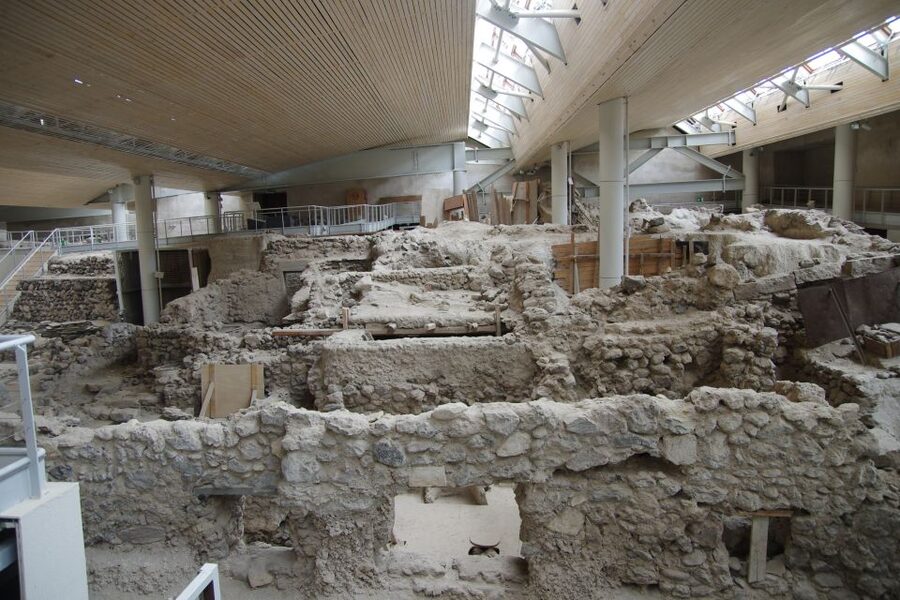
The settlement was covered by volcanic ash after a major eruption, preserving parts of its streets and buildings. You do not simply walk past a few broken columns. You see an ancient town protected under a modern shelter, with walls, rooms, and traces of daily life still visible.
The site guide inside the excavations is separate from the main tour guide. Eugenia is one guide frequently assigned to the archaeological visit, and she has received praise for explaining the site clearly and with humor. That extra layer of interpretation matters. Without it, some remains can look like piles of stone. With guidance, you begin to understand the planning of the town, the scale of the disaster, and how much archaeologists can learn from ash-preserved structures.
I recommend visiting the Museum of Prehistoric Thera in Fira before this tour if you have time. One person who did so found that the museum helped put Akrotiri’s buildings and artifacts into context. The museum visit is not part of this outing, and you should not count on seeing every famous mural at the excavation itself. The advertising imagery can create expectations that the site may not meet.
The €20 entrance fee is not part of the $57 tour price. Even so, I think the archaeological visit is where much of the tour’s value lies, especially if you care about ancient history. You are paying for transport and guiding, then adding the admission cost at the gate.
More Beach Tours in Santorini
- Santorini Horse Riding to Black Sandy Beach
★ 5.0 · 1,010 reviews - Akrotiri: Guided Horseback Riding Day Trip to a Beach
★ 4.9 · 477 reviews - Perivolos Beach: Sun-Bed Experience FortyOne Bar Restaurant
★ 4.8 · 449 reviews
Prophet Elias gives you Santorini from above
The day usually begins with a stop at Prophet Elias, a high point with broad views across Santorini. The site is connected with a Greek Orthodox monastery, so this is not only a viewpoint stop. Your guide may explain aspects of Greek Orthodox tradition and the role of the monastery.
The height gives you a useful orientation. Instead of seeing Santorini only from the famous caldera side, you get a sense of the island’s villages, dry interior, vineyards, and volcanic form. It is a good early stop because it helps you understand the places you visit later.
Dress with the monastery in mind. A cropped top caused one visitor to miss entry, and modest clothing is specifically recommended. The stop is not a formal religious service, but respectful dress is still the sensible choice.
You will also want sun protection and sturdy footwear. The tour combines viewpoints with village streets and archaeological paths, so sandals or shoes with poor grip may become tiresome over a full day.
Megalochori shows a quieter side of the island

Megalochori is one of the most appealing stops because it feels different from Santorini’s famous cliff towns. It is a traditional settlement with narrow lanes, old houses, and a slower rhythm. The village was nearly abandoned after a major earthquake, which gives its revival an added human story.
I like this stop because it breaks up the sightseeing. After the high viewpoint and before the archaeology, you get a sense of how people live away from the postcard center of Oia and Fira. Your guide may point out local customs, agriculture, or small details that you would miss while walking alone.
Do not expect a long shopping visit. The schedule is shared with several other stops, and one drawback is that Megalochori may receive less time than you want. You may have time for a short walk, an ice cream, and a look at the village, but not an extended browse through every shop.
That limitation is worth knowing before you book. If you want a slow village morning, take a local bus or taxi and visit independently. If you want a useful introduction to several parts of the island in one day, the shorter stop works well.
Inside the Akrotiri Excavations

The archaeological visit is the point where the tour shifts from scenic sightseeing to serious history. The buildings were preserved beneath volcanic ash, and the remains offer a rare view of an ancient community rather than one isolated monument.
Your main guide may bring you to the entrance, where a specialist site guide leads the visit. The guiding is generally offered in English or German, and the excavation explanation is the most detailed part of the day. Expect to stand and walk as the guide describes what you are seeing.
The site can be fascinating if you enjoy archaeology, ancient settlements, and the story of natural disasters. If ancient walls do not interest you, this will probably be the least exciting stop. The tour does not pretend Akrotiri is a fully rebuilt ancient town. Much of the pleasure comes from learning how to read the remains.
I would keep your expectations focused. You are not visiting a museum filled with every artifact found on Santorini. You are seeing the settlement in place, under its protective roof, and learning about the people who lived there before the eruption.
Allow extra money for the €20 admission. This is the one major cost not covered by the advertised tour price. Bring water, wear comfortable shoes, and listen for the meeting instructions before wandering away, since the group must continue on schedule.
More Ancient Sites in Santorini:
- Athens: Acropolis & up to 5 Archaeological Sites Combo Pass
★ 4.4 · 12,619 reviews - Athens: Ancient Greek Theater Performance
★ 4.7 · 2,481 reviews - Athens: National Archaeological Museum Ticket & Audio Guide
★ 4.3 · 1,330 reviews - From Athens: Ancient Corinth Day Trip with Canal & VR Guide
★ 4.6 · 1,073 reviews
Red Beach is best treated as a short scenic stop
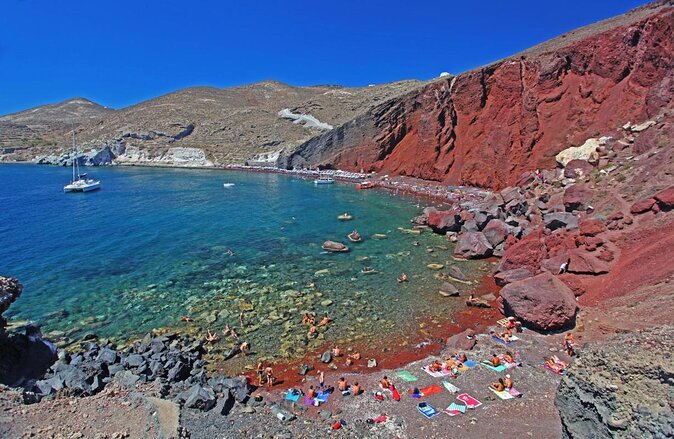
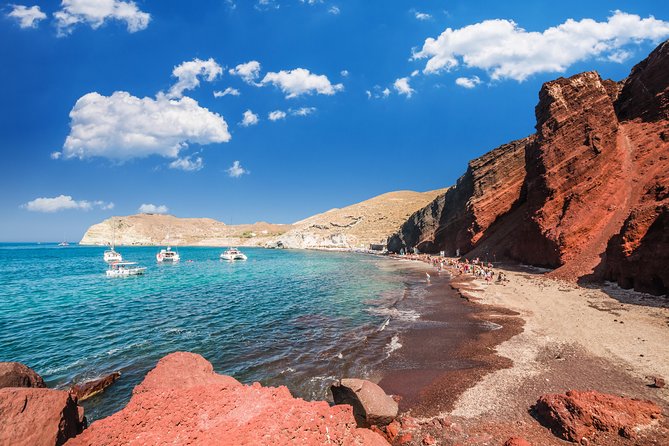
Red Beach is one of Santorini’s most recognizable volcanic sights. From the viewing area, you can look across red and dark rock formations toward the shore. The colors make a sharp contrast with the island’s pale buildings and bright sea.
The tour gives you free time to view the beach from above or continue toward Akrotiri Bay for lunch, drinks, or a relaxed break. This choice is useful because the beach access can involve a hot, uneven walk. One person specifically warned that the trek to Red Beach felt demanding in the heat.
I would not book this excursion expecting a long Red Beach swim. The stop is more about the view and the volcanic formations, while the later black-sand beach is the better place for swimming. If the day is very hot, windy, or crowded, staying near the café and enjoying the bay may be the more comfortable option.
Bring water, a hat, and shoes suited to rough ground. The shore is beautiful, but this is not the polished, easy-access beach experience some visitors expect from a resort.
Lunch timing and Akrotiri Bay
The free time near Akrotiri Bay gives you a chance to buy lunch, coffee, drinks, or snacks. It also provides a pause between the archaeological visit and the final beach stop.
Lunch timing is a real practical issue. Some departures did not stop for a full meal until around 3:30 p.m., although a snack stop may come earlier. If you get hungry quickly, eat breakfast, carry a small snack, and do not assume lunch will arrive at midday.
The advantage of the late stop is that you have flexibility. You can choose a taverna, order a drink, or simply enjoy the water and volcanic setting. The disadvantage is that a shared tour cannot always match everyone’s appetite.
I would bring a refillable water bottle and a little food, especially in summer. That simple preparation makes the long stretch between breakfast and lunch much easier.
Finish at Perissa or Perivolos Beach
The final beach stop adds a welcome change of pace. Perissa is known for black volcanic sand, and the beach gives you time to swim, walk, sit by the water, or eat at a local taverna. Fresh-cooked fish is available for purchase in the area.
Some tour information refers to Perivolos Beach, while several actual departures ended at Perissa. Treat the exact beach as subject to the day’s operating plan. This matters if you have already visited one of them or have arranged an evening plan nearby.
The swim stop is one of the tour’s strongest features. After a morning of viewpoints, village streets, and archaeological explanations, time in the water feels well placed. You are not rushed straight from one historic site to another.
Still, do not assume you will receive a full afternoon at the beach. The day covers many sights, so the beach portion is limited. One person who had already visited Perissa found this ending disappointing, while others considered the swim an excellent way to finish.
If you want an easy, unstructured beach day, book a beach outing instead. If you want a swim as the final reward after seeing much of southern Santorini, this arrangement works nicely.
The bus, pickup points, and pace
Pickup is available from set points in Oia, Fira, Kamari, Monolithos, Messaria, Karterados, Pyrgos, Perissa, Perivolos, Emporio, Vlichada, Akrotiri, and Megalochori. The listed collection times range from 10:00 a.m. in Oia to about 10:50 a.m. in Pyrgos, though delays can occur.
You must wait outside your chosen hotel or pickup point on the main road. Not every hotel can be reached by bus, and this is not a private door-to-door transfer. Confirm the exact meeting place before the morning of the tour.
The vehicle is air-conditioned, which matters in Santorini’s summer heat. Drivers such as Nicolas, Costas, Andreas, Yanis, Dimitris, Spiros, and Vangelis have been praised for handling narrow, winding roads, but the roads can still make the ride feel active. If you are prone to motion sickness, sit where you feel most comfortable and carry whatever helps you.
The group may travel in a minibus rather than a large coach. A smaller vehicle can get closer to stops and feels easier to manage, though the size may vary. Allow for some coordination and waiting, especially if passengers are transferred between vehicles. One pickup involved a change in Pyrgos and a wait of about 30 minutes before the main bus arrived.
The guide usually speaks English and German. Tania is often singled out for her ability to switch between languages, keep the group together, answer questions, and make long transfers entertaining. Other guides, including Anna, may lead the day, so you should not book solely on the promise of one particular person.
What the $57 price really covers
At $57 per person, the tour offers solid value if you do not have a car and want to see several parts of Santorini in one day. You receive transport, a guide, and a structured route covering sights that would take more planning by public transport.
The price does not include the €20 Akrotiri entrance, meals, drinks, or personal purchases. Once you add the excavation ticket and lunch, your actual spending will be higher than the headline price.
I see the value in the transport and the guiding. Renting a car can give you more freedom, and one person strongly preferred independent driving after a pickup mix-up. But driving Santorini’s narrow roads, finding parking, and managing the route takes time and attention. The bus removes those tasks and gives you historical commentary along the way.
The tradeoff is control. You cannot linger in Megalochori, skip a stop, or turn the beach portion into a full afternoon without affecting the group. I would choose this tour for convenience and interpretation, not for complete independence.
Who will enjoy this tour most
I would recommend it to you if you:
- Want to see southern Santorini without renting a car
- Care about Akrotiri and ancient history
- Like mixing villages, viewpoints, archaeology, and swimming
- Prefer a guide to explain what you are seeing
- Are comfortable with walking, heat, and a fairly full schedule
I would think twice if you:
- Want a slow beach day
- Need an early lunch
- Dislike group transport or fixed departure times
- Have difficulty walking on uneven ground
- Are pregnant, since the activity is not considered suitable for pregnant women
Children under four can ride free, but they do not receive their own bus seat and must sit on a parent’s lap. That arrangement may not suit every family on a seven-hour outing.
Cancellation is free up to 24 hours before departure, and you can reserve while paying later. Those policies help if your plans are still shifting, but they do not change the tour’s basic pace or walking demands.
Should you book the Akrotiri and Red Beach tour?
Book it if Akrotiri is high on your Santorini list and you want the island’s southern half explained rather than simply photographed. The combination of a specialist archaeological guide, Tania-style island commentary, Prophet Elias, Megalochori, volcanic beaches, and air-conditioned transport gives you a useful first look at places that are hard to combine on your own.
Skip it if your priority is a relaxed beach day, long village walks, or complete control over timing. In that case, rent a car or plan separate visits.
For most first-time visitors without a car, I think the tour earns its place, provided you budget the extra €20 for Akrotiri, eat a good breakfast, wear practical shoes, and accept that Perissa or Perivolos may receive less time than you hope.
FAQ
How long does the Akrotiri and Red Beach tour last?
The tour lasts about seven hours. Starting times depend on your pickup location, and delays can affect the schedule.
What is included in the tour price?
Pickup from a designated meeting point and the guided tour are included. The Akrotiri Excavations entrance fee, listed as €20, is not included.
Where does pickup take place?
Pickup is available from specific meeting points across Santorini, including Oia, Fira, Kamari, Perissa, Perivolos, Akrotiri, Megalochori, and other listed areas. You must wait on the main road outside the selected hotel or pickup point because not every hotel is accessible by bus.
Is the tour offered in English?
Yes. Live guiding is available in English and German.
Does the tour include swimming?
The itinerary includes free time at a black-sand beach, usually Perissa or Perivolos, where you can swim. Swimming time depends on the day’s schedule and conditions.
Is Red Beach included?
Yes. You can view Red Beach from above and enjoy the volcanic formations. You may also choose to spend free time near Akrotiri Bay for lunch or drinks.
Can children under four join the tour?
Yes. Children under four can ride free, but they do not reserve a separate bus seat and must sit on a parent’s lap.
More Bus Tours in Santorini
- Athens: City Sightseeing Hop-On Hop-Off Bus Tour
★ 4.3 · 4,520 reviews - Thessaloniki: Full-Day Bus Trip to Meteora
★ 4.8 · 3,471 reviews - City Sightseeing Athens, Piraeus & Beach Riviera Hop-On Hop-Off Bus Tours
★ 4.0 · 1,887 reviews - From Rhodes: Bus Tour to Lindos and the Seven Springs
★ 4.2 · 1,854 reviews
New on the Santorini shelf
- Private Day Trip to Santorini from Athens: Sightseeing Highlights★ 5.0 · 39 reviews
- Private Tour: Santorini Highlights with Akrotiri★ 5.0 · 47 reviews
- Small-Group Tour: Best of Santorini★ 4.7 · 42 reviews
- Santorini Wine Roads: Tour of 3 Wineries with a Sommelier★ 4.8 · 79 reviews
- Santorini: Private Sightseeing Tour with Local Guide★ 4.9 · 105 reviews
- Santorini Volcano, Hot Springs Adventure★ 3.6 · 54 reviews
- Santorini: Wine Tour with Sunset in Oia★ 4.6 · 199 reviews
- From Santorini: Volcano Cruise With Oia Sunset★ 4.3 · 97 reviews
Ancient Sites, compared.
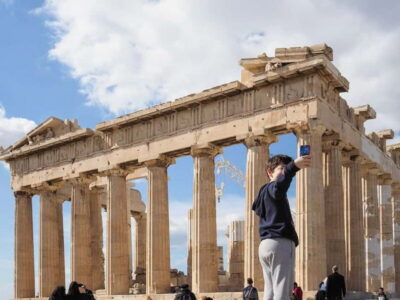
Acropolis & up to 5 Archaeological Sites Combo Pass
Read our verdict →

National Archaeological Museum Ticket & Audio Guide
Read our verdict →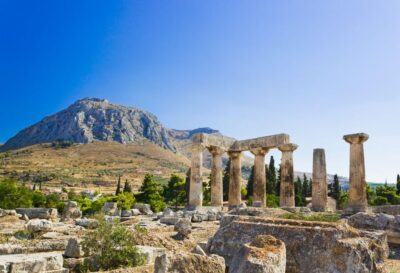
Ancient Corinth Day Trip with Canal & VR Guide
Read our verdict →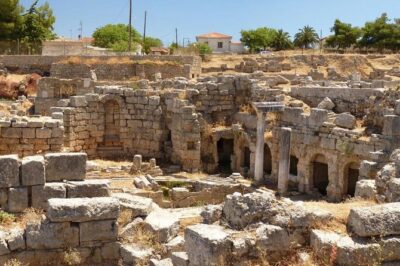
Private Biblical Tour Ancient Corinth & Isthmus Canal from Athens
Read our verdict →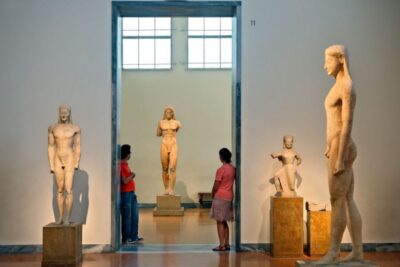
National Archaeological Museum Ticket w/ Opt. Audio
Read our verdict →
Ancient Olympia: Archaeological Site and Museum Entry Ticket
Read our verdict →
Delphi: Archaeological Site & Museum Ticket with Audio Tours
Read our verdict →Browse the lists this tour appears in