
Review · METEORA TOURS
Meteora Small Group Hiking tour with Transfer and Monastery Visit
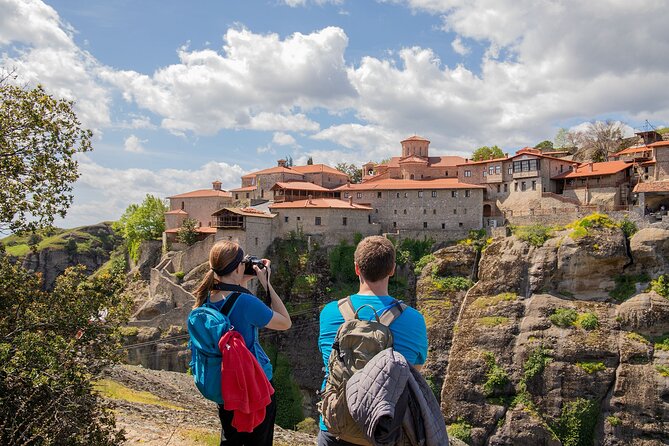
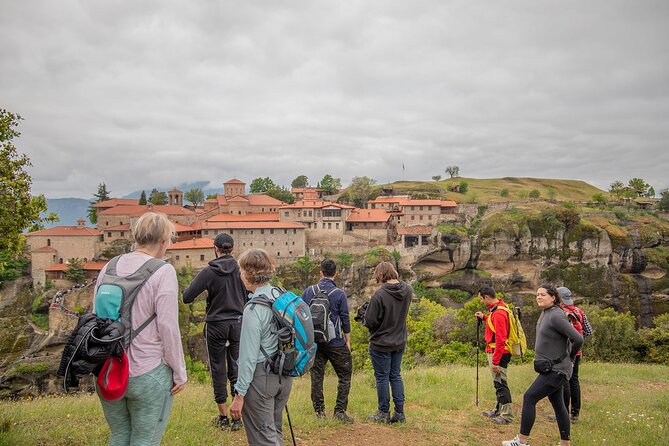
Meteora is best understood on foot. The giant stone pillars are impressive from a minivan window, but the old paths between them show how monks, pilgrims, plants, and local people have shared this strange corner of Thessaly for centuries. This tour takes you along quieter trails, then adds visits to Great Meteoro and the unusual Ypapanti Monastery.
I especially like two things here: the small maximum of 12 people, which allows the guide to adjust the pace, and the mix of geology, monastic history, and local nature. Guides including Chris, Christos, Evan, and Dimitris are praised for explaining everything from medieval monks to tortoises and wild plants. The main consideration is fitness. The walk is manageable for many people, but parts after the monastery visit can feel more demanding, especially in heat or if you have not hiked for some time.
Key points before you book
- Quiet trails through Meteora: Walk away from the busiest viewpoints and see the rock formations from angles a road tour cannot provide.
- Two very different monasteries: Great Meteoro is the grand, historic centerpiece, while Ypapanti sits inside a rock cavity and feels far more secluded.
- Small-group format: The tour accepts no more than 12 people, with hotel pickup and drop-off from Kalambaka or Kastraki.
- Strong local guiding: Chris, Christos, Evan, Dimitris, and other local guides explain history, geology, plants, animals, and village life.
- Good value at $36.28: Transport, guiding, bottled water, and the hike are included, though monastery entrance fees are extra.
- Plan for modest hiking demands: Wear proper walking shoes, expect breaks, and be ready for a tougher section after the monastery visit.
Why Meteora makes more sense on foot
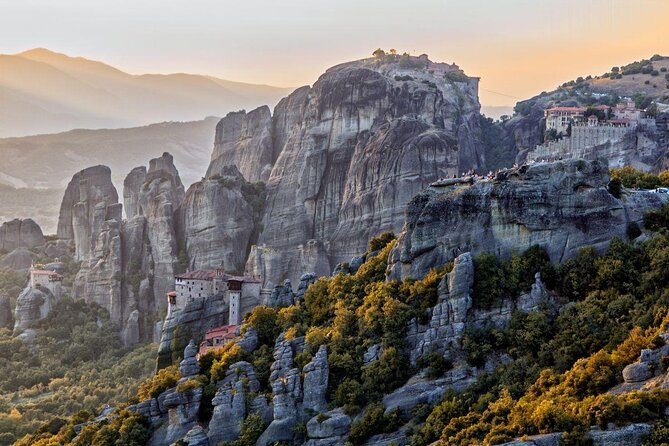
Meteora covers only a few square kilometers, yet it packs together a rare geological spectacle and an ancient monastic community. Huge rock pillars rise above the plain of Thessaly, with Kalambaka and Kastraki gathered below them.
From the road, you see the drama. On the trail, you understand it. A walking route lets you notice the changing rock shapes, shaded woodland, small plants, and the way the monasteries were placed high above the settlements. You also get time to ask questions rather than simply point a camera at the next viewpoint.
The area is a UNESCO World Heritage Site, an archaeological site, and an officially recognized holy place. Those labels matter, but the tour makes them tangible. Your guide can connect the cliffs to the monks who arrived more than 15 centuries ago and explain how the later organized monasteries developed.
The walk is described as roughly two hours, within a tour lasting about four hours in total. The rest of the time is used for transfers, stops, and the monastery visits. You are not signing up for a technical climb, but this is still an active outing, not a stroll around town.
More Hiking Tours in Meteora
- Kalabaka: Meteora Small-Group Hiking Tour w/ Monastery Visit
★ 4.9 · 205 reviews - Hiking Tour to Meteora from Kalambaka – Local Agency
★ 5.0 · 73 reviews - Meteora: Sunset Hike to Secret Caves
★ 4.9 · 56 reviews
The morning pickup from Kalambaka or Kastraki
The tour begins at about 8:30 am, with pickup from hotels and Airbnbs in Kalambaka and Kastraki. Round-trip transport is provided in an air-conditioned minivan, a useful touch in summer and a real convenience if you are staying away from the main road to the monasteries.
The small vehicle also keeps the morning simple. You do not need to arrange a taxi to a trailhead or work out which local road leads to the monasteries. The guide collects you, drives you toward the walking area, and returns you to your accommodation afterward.
A previous January booking received quick confirmation of the pickup time, and the guide arrived punctually at the hotel. That is the sort of small practical detail that matters when you have a train connection, a limited stay, or a full day planned after the hike.
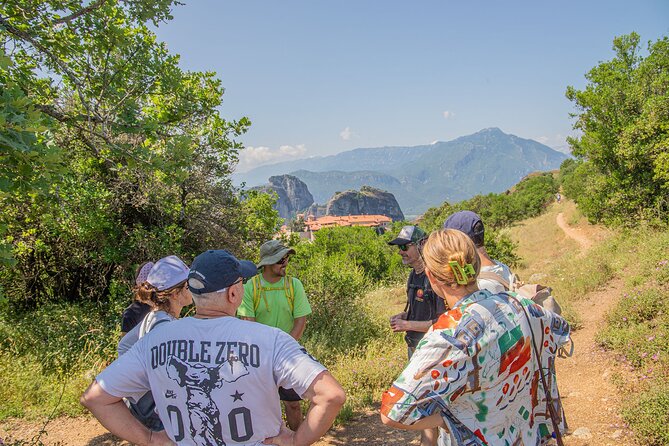
The group limit is 12 people. That is large enough to meet fellow hikers but small enough for the guide to stop, explain a plant, answer a question, or slow the pace when needed. Guides have also been praised for keeping people hydrated and adding extra rests when required.
Through Meteora’s rock forest
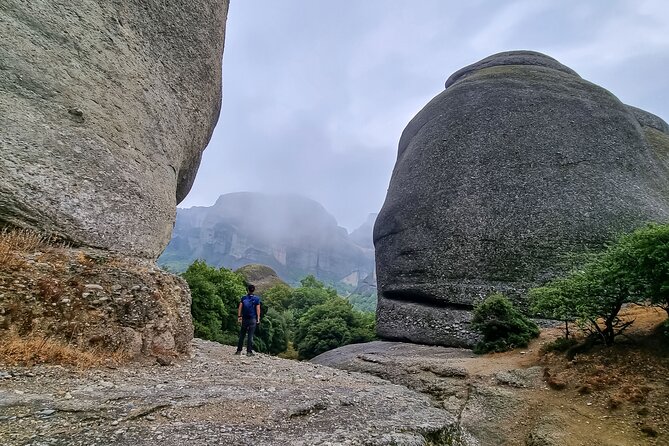
The central portion of the tour leads through what can fairly be called Meteora’s rock forest. The route uses lesser-known paths rather than keeping you beside the main road or moving from one coach stop to another.
Expect big views, but do not expect one continuous postcard scene. The pleasure comes from variety: trees close around the path, then the rock pillars open up; a monastery appears from an unexpected angle; the trail rises and the plain spreads below. A guide may also point out local flora and fauna, including tortoises and plants that are easy to miss when you are focused only on the cliffs.
This is where the guide makes the largest difference. Chris and Christos are repeatedly praised for combining local stories with history, geology, and humor. Evan is noted for setting a comfortable pace and explaining the sights along the way. Dimitris and Kristos have also been praised for connecting the natural setting with the area’s past.
The pace is not meant to be a race. Several accounts describe regular pauses for water, photographs, plant identification, and stories. One older hiker completed the route with careful support from the guide, while another person with knee injuries found it doable. At the same time, a fit person may find it a proper workout rather than an easy walk.
You should bring comfortable hiking shoes. Sandals and smooth-soled trainers are poor choices on uneven paths. The route can feel different depending on heat, fog, rain, and your own condition. In warm weather, the early start is welcome. In poor weather, the operator may change the activity, as happened on one rainy day when the hiking tour became a minivan visit to several monasteries.
Great Meteoro, the monastery above the plain
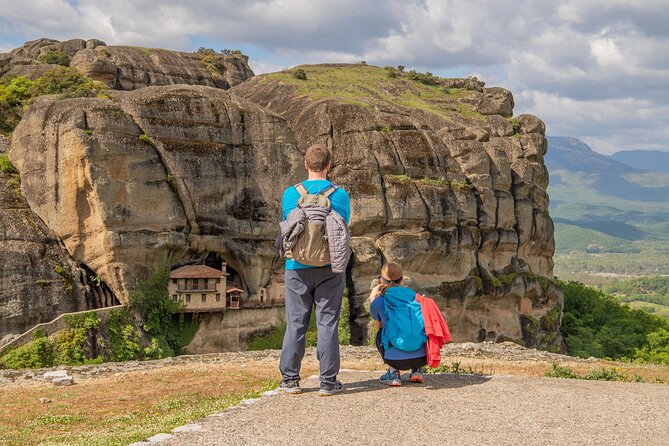
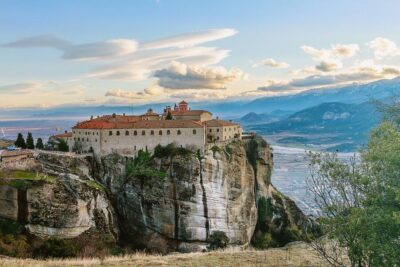
Great Meteoro, also called the Great Meteoron Monastery, is the largest and oldest of the Meteora monasteries. Its name refers to the idea of being suspended in the air, a fitting description for a building perched on one of the towering rock formations.
The monastery was founded by Saint Athanasios the Meteorite, born Andronikos around 1302 in New Patras, now called Hypati. He organized the monastery as a communal religious foundation, making it a turning point in the development of organized monastic life at Meteora.
This stop gives the natural setting a human scale. The cliffs may look impossible from below, but the monastery shows how determined monks made use of the high rock platforms. You can better appreciate the labor involved, the isolation sought by the monks, and the role of the site as a spiritual center.
Allow about an hour for the visit. Entrance fees are not included, with the listed extra fee set at €5 per person. The monasteries also enforce a strict dress code. Men need trousers and long sleeves. Women need a long skirt. If your clothing is unsuitable, trousers and skirts are provided, but it is more comfortable to arrive dressed correctly.
Do not expect this tour to take you inside every monastery in Meteora. Its strength is the combination of walking and selected visits. If you want a detailed interior visit to several monasteries, add independent monastery visits on another part of your trip.
More Monastery Tours in Meteora
- Athens: Meteora Monasteries Day Trip with Caves and Lunch
★ 4.7 · 2,964 reviews - Athens: Meteora Monasteries Day Tour with Lunch
★ 4.8 · 2,196 reviews - Athens: Meteora Monasteries, Caves & Coastal Stopovers with Lunch
★ 4.5 · 1,432 reviews - Meteora Monasteries & Caves DayTrip from Athens with Greek Lunch
★ 4.5 · 879 reviews
Ypapanti, the quieter surprise
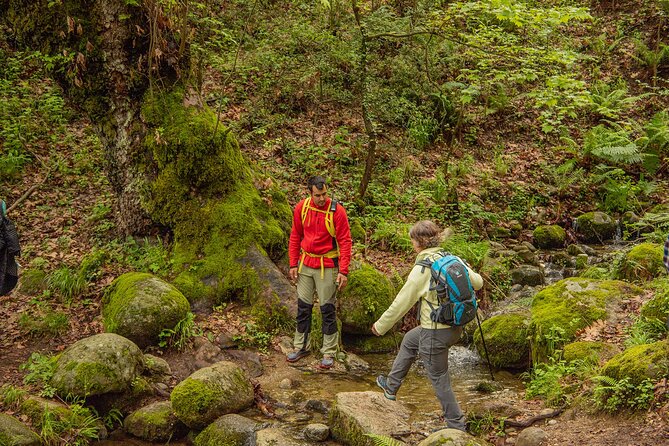
Ypapanti Old Monastery is one of the most distinctive stops because it is built inside a large cavity in the rock rather than placed on a prominent summit. The setting helps you picture the earlier, more secluded form of monastic life.
Two monks, Nilos and Cyprianus, founded the monastery in 1367. It was later destroyed in 1809, when local rebel Papathymios Vlahavas was arrested there by the forces of Ali Pasha. That story gives the stop a sharper edge than a simple photo break. This was not an empty monument. It was part of a place shaped by faith, conflict, and local resistance.
The route to Ypapanti is described as simple and pleasant, though you still need proper footwear. The stop lasts about 30 minutes and has no entrance fee listed. Compared with Great Meteoro, it feels less grand and more intimate, which is exactly why it adds something to the day.
I would pay close attention here. The main monasteries can dominate your first impression of Meteora, but Ypapanti helps you see that the area’s religious history was not limited to the most famous buildings. Its position inside the rock also makes it a fine example of how the monks adapted to the terrain.
The monasteries you see from the route
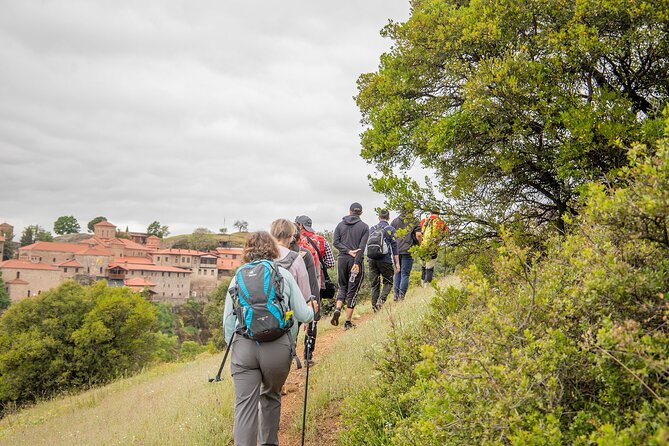
The tour also takes in views and explanations of other important monasteries, including Varlaam and Saint Nicholas of Anapafsas. The exact balance between walking time, viewpoints, and access can vary with conditions, so do not book this expecting a full interior tour of every site.
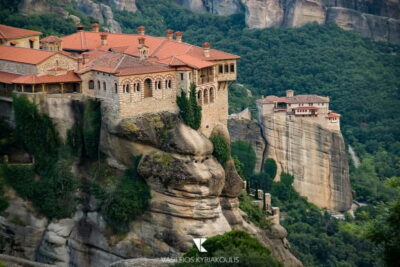
Varlaam is the second-largest monastery and sits opposite Great Meteoro. It was founded in the mid-14th century by the ascetic monk Hosios Varlaam. Its main church, or katholikon, was built in 1541 and 1542 by the priest-monks Theophanes and Nectarios Apsarades from Ioannina. The interior paintings were completed in 1548 and are attributed, on stylistic grounds, to the painter Frago Catelano of Thebes.
Saint Nicholas of Anapafsas is the first monastery encountered on the usual approach to Holy Meteora. Founded at the end of the 14th century, it may have served as a resting place for pilgrims before they continued uphill. The name has several explanations, including a link to a benefactor and the monastery’s position along the route.
These sites are valuable even when you see them from outside or across the rocks. Their positions explain how the monastic community was organized and why the road route alone misses part of the story. The guide can put the buildings into a wider setting rather than treating each monastery as an isolated stop.
How hard is the hike?
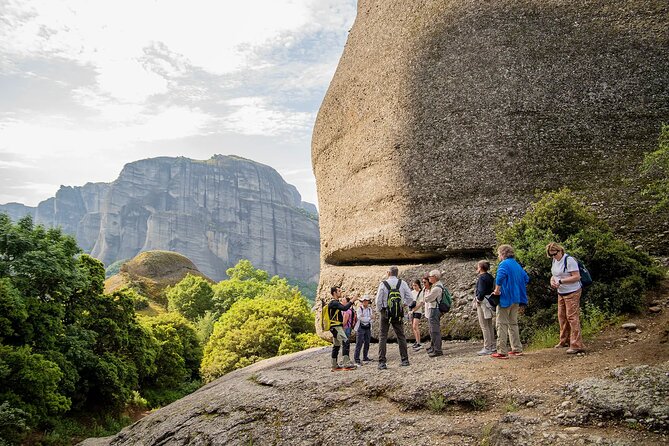
The safest description is moderate. One person called the route easy, while another found parts intense as a middle-aged hiker who was not in top shape. Both views can be true because the difficulty depends on your fitness, the weather, and how your knees handle uneven ground.
The most demanding section may come after the monastery visit. You should be ready for some uphill or rougher walking, even if the first part feels relaxed. Breaks are built into the pace, and guides have been praised for adjusting to different abilities, but you remain responsible for deciding if this is suitable for you.
A moderate fitness level is required. Bring water, although bottled water is included, and wear shoes made for walking on natural trails. If you have recent injuries or serious mobility limits, ask the operator before booking. Service animals are allowed, but the tour is still an active outdoor experience.
Fog does not necessarily ruin the morning. One guide made the route worthwhile in poor visibility, and cloudy conditions can still leave good views. Heavy rain is another matter. The activity may be changed to a vehicle-based monastery tour for safety and access.
What the $36.28 price really covers
At $36.28 per person, this is a strong value if you want transport and a guide without paying for a full private tour. The price includes pickup and drop-off in Kalambaka or Kastraki, an air-conditioned minivan, an English-speaking mountain guide, bottled water, and the walk to Ypapanti.
The cost does not include monastery entry fees. Budget an additional €5 per person based on the stated fee, and remember that access can depend on the day’s arrangements and conditions.
The best value is not simply the ride. It is the local interpretation. You could drive around Meteora and see the famous buildings, but the trail adds the quieter side of the area, including plants, animals, rock formations, and routes connected with the earliest monks.
At four hours, the tour also leaves room for lunch and further sightseeing. One guide recommended a local lunch place after returning a group to its hotel, though that recommendation is not a guaranteed part of the tour. If you have only one morning in Meteora, this format uses it well.
Who should book this Meteora hike?
I would choose this for an active first visit, especially if you want more than roadside photographs. It suits couples, families with older children, solo visitors, and older hikers who can manage moderate walking and appreciate a patient guide.
It is also a good choice if you dislike large coach groups. The group limit of 12 and the local guides create more room for questions and a less rushed feel. The guides often add details about local transport, food, plants, and daily life, not just prepared facts about monasteries.
You may want a different plan if your priority is entering many monasteries or avoiding physical exertion. In that case, a vehicle tour or independent visits to the individual monasteries may fit better. A useful combination is this hike plus separate monastery visits on another day, giving you both the natural setting and more time inside the religious sites.
The tour is offered in English. Confirmation is provided at booking, and cancellation is free up to 24 hours before the start time for a full refund. Changes or cancellations inside that window are not accepted, so check your plans before the cutoff.
Should you book it?
Book this tour if you want to feel the shape of Meteora rather than simply photograph it. The quiet trails, Ypapanti’s rock-cut setting, Great Meteoro’s importance, and the chance to learn about tortoises, plants, geology, and monks make the morning feel varied and grounded.
I would be cautious only if you have limited walking ability, dislike uneven paths, or expect a complete monastery-by-monastery interior tour. For most reasonably active visitors, the $36.28 price is hard to argue with, particularly because transport and a local guide are included.
Wear suitable clothes for the monasteries, bring proper shoes, and expect a few harder stretches. If you do that, this is one of the more rewarding ways to meet Meteora, with less time beside tour buses and more time among the rocks.
FAQ
How long does the Meteora hiking tour last?
The tour lasts approximately four hours. The guided hike itself is listed at about two hours, with the remaining time used for transport and monastery visits.
What time does the tour start?
The stated start time is 8:30 am.
Where does pickup take place?
Pickup and drop-off are available from hotels and Airbnbs located in Kalambaka and Kastraki village.
Is transport included?
Yes. Round-trip transport in an air-conditioned minivan is included from Kalambaka or Kastraki.
What monasteries are visited?
The tour includes Great Meteoro Monastery and the Holy Monastery of Ypapanti. The route also provides views and information about Varlaam and Saint Nicholas of Anapafsas, but it is not described as a full interior visit to every monastery.
Are entrance fees included?
No. Monastery entrance fees are not included. The stated additional fee is €5 per person.
What clothing should I wear?
Wear comfortable hiking shoes. The monasteries require men to wear trousers and long sleeves, and women to wear a long skirt. Clothing can be provided if you arrive in unsuitable attire.
How many people are in the group?
The maximum group size is 12 people.
New on the Meteora shelf
- Athens: Meteora 2-Day Tour Sunset & Morning Small Group + Hotel★ 5.0 · 188 reviews
- 2-Day Delphi and Meteora Tour from Athens★ 4.5 · 262 reviews
- Thermopylae, Meteora and Delphi Private Full Day Tour★ 5.0 · 216 reviews
- Athens: 3 days 2 nights Meteora with small size tours & hotel★ 5.0 · 63 reviews
- Private Full-Day Trip to Meteora by Train From Athens – Local Agency★ 5.0 · 28 reviews
- Delphi and Meteora, 2-Days Private Tour★ 5.0 · 30 reviews
- Meteora Full Day Private Tour from Athens including Lunch★ 5.0 · 124 reviews
- Delphi and Meteora Private Day Trip from Athens including Dinner★ 5.0 · 200 reviews
Meteora Tours, compared.
Meteora Monasteries Day Trip with Caves and Lunch
Read our verdict →
Meteora Tour with Local Guide and Greek Lunch
Read our verdict →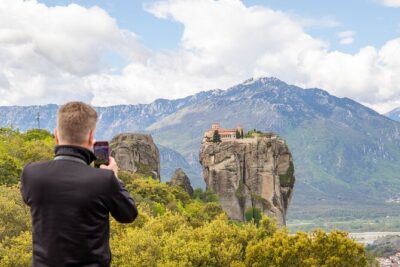
Meteora Monasteries, Caves & Coastal Stopovers with Lunch
Read our verdict →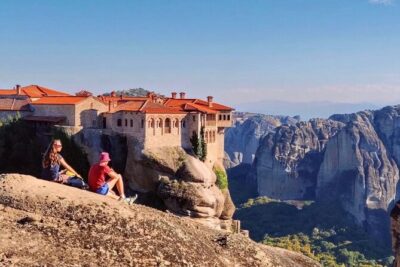
Meteora Monasteries & Caves DayTrip from Athens with Greek Lunch
Read our verdict →
4-Day Classical Greece Tour: Epidaurus, Mycenae, Olympia, Delphi, Meteora
Read our verdict →
Meteora Monasteries, Hermit Caves Tour with Pickup
Read our verdict →Browse the lists this tour appears in