
Review · METEORA TOURS
2-Day Delphi and Meteora Tour from Athens
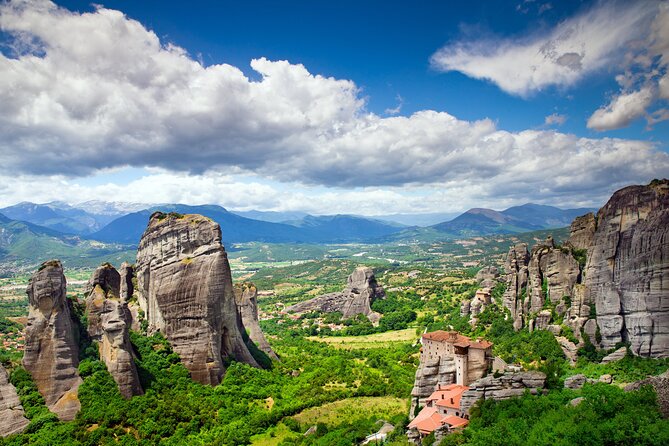
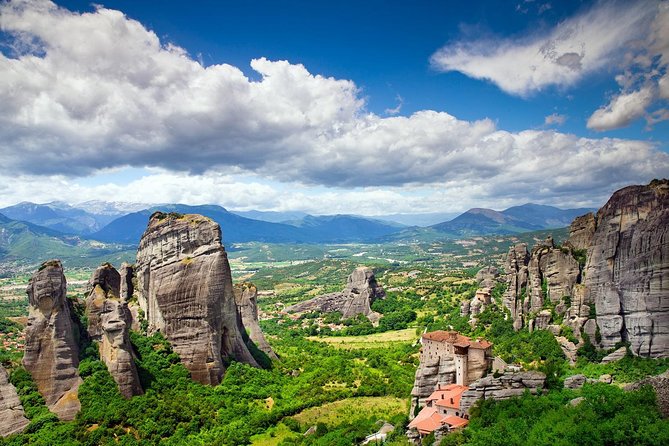
The real prize here is Meteora, where Byzantine monasteries perch on tall sandstone pillars above the Thessalian Plain. Pairing that strange, beautiful place with Delphi gives you two of mainland Greece’s most memorable sights in just two days, without arranging trains, hotels, meals, and local transport yourself.
I like the overnight stop in Kalambaka, because Meteora deserves more than a rushed day trip from Athens. I also like the guides’ role on the long drives. Guides such as Michael, Christina, Evan, Marianna, and Irini have been praised for making the roads through central Greece feel like part of the tour, not just dead time.
The trade-off is clear: you spend many hours on the bus, and Delphi receives only about 90 minutes at the archaeological site. If you want a leisurely museum visit or time to walk all the way to the stadium, this schedule will feel tight.
Key points to know before booking
- Two UNESCO-level highlights in one trip: Explore Delphi and visit two Byzantine monasteries at Meteora.
- A practical overnight plan: Sleep in Kalambaka instead of attempting Meteora as a tiring day trip from Athens.
- Long but useful bus journeys: The air-conditioned coach has Wi-Fi, storage for luggage, and regular toilet stops.
- Delphi is the rushed half: The Temple of Apollo and main ruins fit the schedule, but the museum and stadium may not.
- Meteora requires proper clothing and shoes: Expect steep paths, steps, gravel, and monastery dress rules.
- The $265.49 price covers a lot: Transport, guide, hotel, breakfast, dinner, and the Delphi archaeological entry are included, but lunches, drinks, and monastery fees are extra.
Two extraordinary sites beyond Athens
This tour works because Delphi and Meteora feel completely different. Delphi is a sacred ancient site set high on the slopes of Mount Parnassus. Meteora is a collection of Eastern Orthodox monasteries built on isolated rock pillars. One speaks to the religious world of classical Greece; the other brings you into the medieval Orthodox world.
You leave Athens at 8:15 a.m., with hotel pickup offered from selected central hotels about an hour before departure. The exact pickup details are sent before the tour, so read that message closely. A few people have found the pickup instructions confusing, and one reported needing to make their own way to the office, so I would not leave this detail until the last minute.
The tour can carry up to 42 people, although some departures have been much smaller. A group of 13, or even only six people, gives you more room on the coach and makes it easier to hear the guide. Larger departures still benefit from the organized schedule and audio equipment used by some guides.
A few more Meteora options worth putting side by side
- From Athens: Delphi and Meteora 2-Day Guided Tour
★ 4.5 · 825 reviews - 2-Day Tour to Delphi & Meteora with Guide and Tickets From Athens
★ 4.0 · 692 reviews - From Athens: Delphi and Meteora 2-Day Tour with Hotel
★ 4.4 · 392 reviews
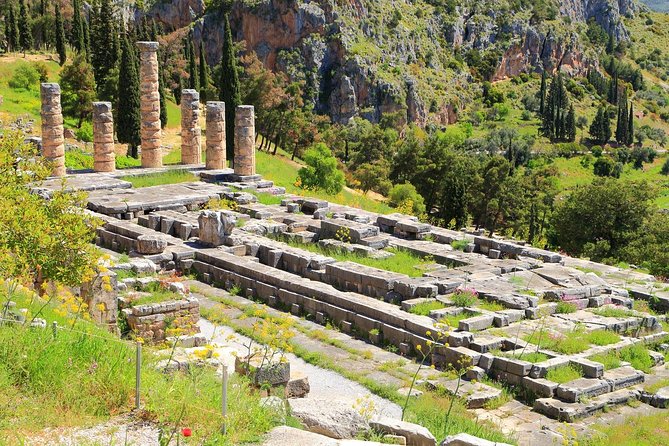
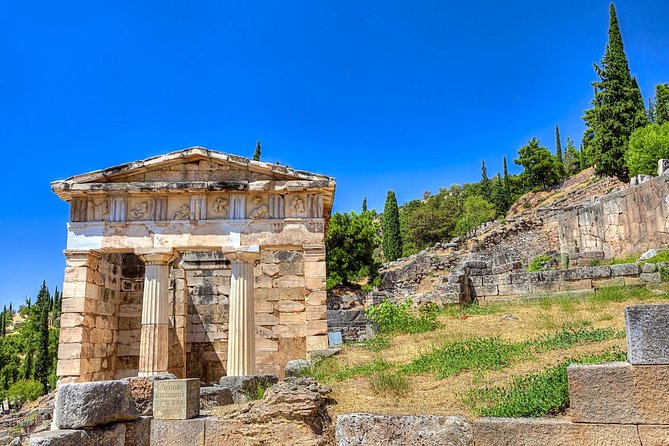
Delphi and the Temple of Apollo
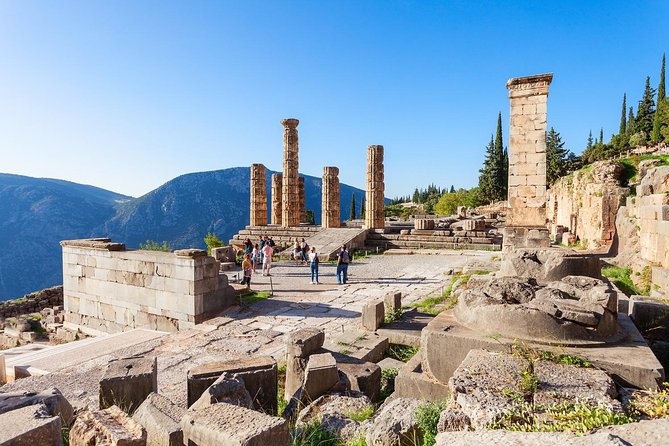
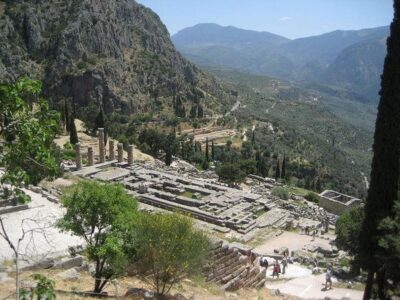
You reach Delphi around midday. The ancient sanctuary climbs the mountainside, so this is not a flat stroll through ruins. Wear shoes with a good grip. Parts of the path are gravel, and the climb takes effort, especially under the midday sun.
The central sight is the Temple of Apollo, where the famous oracle once delivered prophecies. Delphi was viewed by ancient Greeks as the center of the world, and its setting helps explain the site’s power. Mountains rise around the sanctuary, while the valley opens below. Even if you are not deeply interested in ancient religion, the location gives the ruins a strong sense of place.
The archaeological area also includes a theater, and the wider site contains the stadium. With only about an hour and a half, your guide must keep the group moving. That timing is enough for an introduction to the main ruins and the Temple of Apollo, but it is not enough for a slow visit to every corner.
The museum is the main compromise. The tour information is not perfectly consistent about museum entry, but it does make clear that the guide does not provide a museum tour. You may have access through the Delphi site ticket, yet the schedule often leaves little free time after the guided visit. If the museum matters to you, tell your guide early and ask how much time you can spare.
This is where the departure time matters. A start closer to 7:30 a.m. would give more breathing room, but the scheduled departure is 8:15 a.m., followed by the Athens pickup route. Traffic or delays can reduce your time even further. I would treat Delphi as a focused introduction, not a complete archaeological study.
The central Greek road to Kalambaka
After Delphi, you stop for lunch at your own cost, then continue through central Greece. The route passes through Lamia, with a short stop, and Trikala before crossing the Thessalian Plain toward Kalambaka.
This is a long road day, but the scenery earns some of the time. You see rural Greece, mountain roads, small towns, and the changing terrain between Delphi and Meteora. The route also includes rest breaks, which keeps the journey manageable.
Some sections are winding, with steep hills. If bus motion bothers you, bring the medicine you normally use for motion sickness. Dramamine was useful to at least one passenger, and it is sensible to carry water and snacks since water is not supplied on the coach. Lunch stops vary in quality, so you may want a backup snack rather than relying on the roadside meal.
There may also be brief stops for souvenirs or photo opportunities. The schedule is not built around frequent scenic viewpoints, though, and this can disappoint photographers. A stop at a shop near Arachova, for example, may give you less time than you would like in the town itself. The tour is designed to get you to Kalambaka on time, not to explore every attractive roadside view.
Overnight in Kalambaka
Kalambaka sits at the foot of Meteora’s gray rock formations. The town is the practical base for the night and gives you a chance to see the rocks in late afternoon or evening, even if only from the streets near your hotel.
You choose between an A class or T class hotel, generally described as three or four star accommodation. The better hotel option has been worthwhile for some people, with a comfortable room and acceptable dinner and breakfast. Others found older mattresses, bare-bones three star rooms, or buffet food that was only average.
That makes the hotel upgrade a personal choice. If you care mainly about having a bed for roughly 12 hours, the three star option may do the job. If you want a more comfortable room and are willing to pay a little more, the four star choice is the safer bet, though it is not a guarantee of a good mattress or memorable meal.
Dinner and breakfast are included, but drinks are not. Coffee may cost extra, even at the four star hotel. Accommodation tax is also paid directly to the hotel. The supplied details give different figures, listing €3 or €7 in one place and €5 or €10 in another depending on hotel category and booking format. Confirm the current amount before departure rather than relying on the advertised figure.
Close by, and nothing like it:
- Thessaloniki: Full-Day Bus Trip to Meteora
★ 4.8 · 3,471 reviews - Athens: Meteora Monasteries Day Trip with Caves and Lunch
★ 4.7 · 2,964 reviews - Athens: Meteora Monasteries Day Tour with Lunch
★ 4.8 · 2,196 reviews - Athens: Meteora Tour with Local Guide and Greek Lunch
★ 4.8 · 1,561 reviews
Meteora’s monasteries above the plain
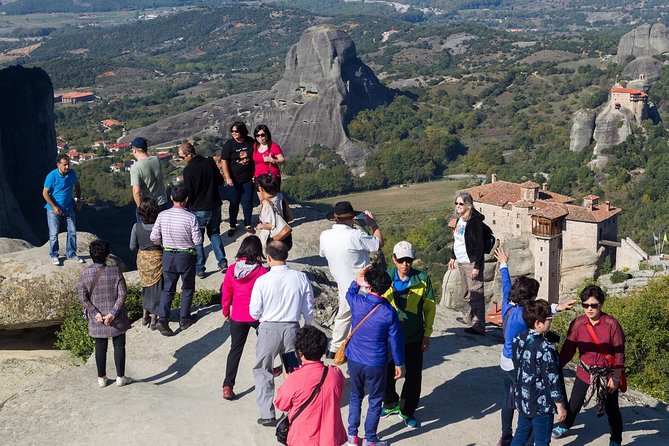
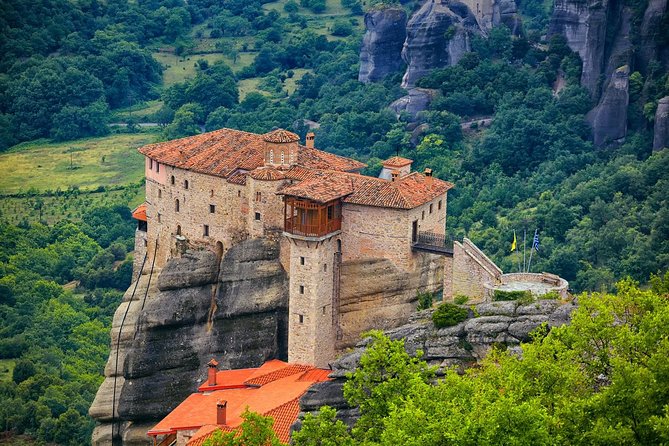
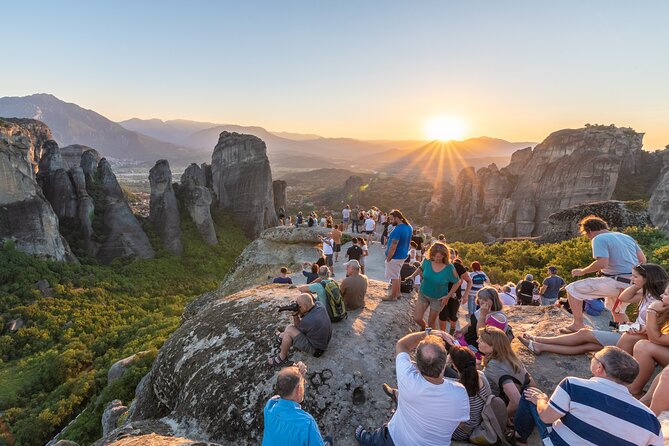
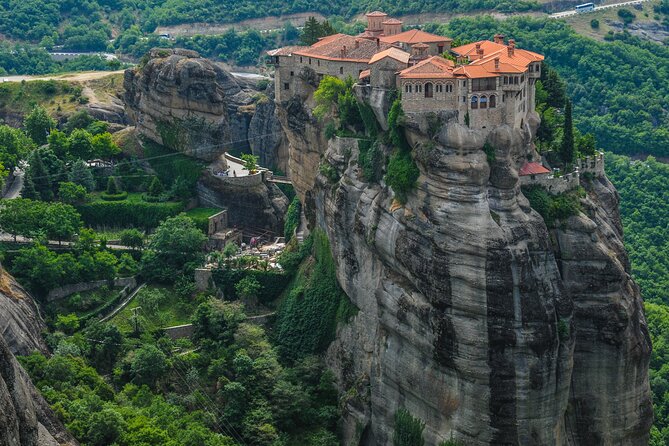
Day two begins with the main event. You travel up into Meteora and visit two monasteries built on top of sandstone pillars. The rock formations are extraordinary on their own, but the monasteries make the scene feel almost unreal.
Meteora means suspended in the air, and the name fits. Monks once used these high retreats for isolation, and the buildings still seem to balance between earth and sky. Inside, you can see Byzantine religious art and architecture. Outside, the views stretch over the plain and surrounding hills.
The monastery visit lasts about two and a half hours. That is a much better fit for the site than the Delphi schedule. You have time to enter two monasteries, absorb the setting, take photographs, and listen to the guide without sprinting from one point to the next.
You will climb steps and walk steep paths. Good walking shoes matter here, as does a bottle of water. The route is manageable for most people who can handle hills and stairs, but this is not a suitable outing for someone expecting an easy coach tour with no walking.
Dress rules are strict. Women need long sleeves and must not wear short skirts. Men may not wear shorts. Some monasteries provide skirts or wraps to borrow, but I would bring suitable clothing rather than depend on that. Dress modestly from the start and you will avoid wasting time at the entrance.
The €10 monastery entry fee per person is not included. Carry money for this charge, along with drinks and any lunch you buy during the day.
The Leonidas stop and return to Athens
On the way back, the tour may stop at the Leonidas Monument at Thermopylae. The scheduled stop is short, about 15 minutes, so think of it as a photo stop rather than a full historical visit.
Leonidas was the Spartan king associated with the defense of Thermopylae against the Persian army. Your guide may explain the battle and the surrounding area during the drive. The stop adds a useful piece of Greek history to the return route, but timing can change. One departure visited the monument on a different day from the published order, so keep an eye on the guide’s instructions rather than assuming every stop will happen at the exact advertised point.
The coach returns to Athens in the late afternoon, usually around 6:30 p.m. The tour ends back at the meeting point, though drop-off can sometimes differ because of central Athens traffic restrictions. Do not schedule a tight evening flight or dinner reservation.
The guides and the coach experience
The guide can make or break a two-day bus trip. Names praised in connection with this route include Michael, Christina, Evan, Marianna, Irini, Harula, Dimitrios, and Katia. Their strengths are clear: solid explanations of Greek history, clear meeting times, stories about the regions outside the windows, and practical help with hotel check-in and steep walks.
Some departures use two guides, with one handling Delphi and another joining the group afterward for Meteora. That arrangement can work well because the second guide brings fresh energy and local context for the northern part of the route.
The coach is air-conditioned and includes free Wi-Fi. Several people found the seats comfortable, the vehicle clean, and the driver careful on the winding roads. The bus has storage for carry-ons and larger luggage, so you do not need to travel with only a small daypack.
Still, comfort does not erase distance. You can spend several hours seated each day. Regular toilet breaks help, but roadside facilities can be crowded, especially for women. Bring water, a snack, and motion sickness medication if you need it.
What the $265.49 price really buys
At $265.49 per person, the cost is fair for a two-day trip that includes round-trip transport from Athens, a licensed guide, one hotel night, breakfast, dinner, Wi-Fi-equipped transport, and entry to the Delphi archaeological site.
The price is especially reasonable if you would otherwise need to arrange a hotel in Kalambaka, find transport to Meteora, and work out how to reach both monasteries. You are paying for convenience and structure as much as for admission tickets.
Budget for the extras:
- Lunches and drinks
- The Meteora monastery entry fee of €10 per person
- Hotel accommodation tax
- Optional purchases at food and souvenir stops
The included meals are functional rather than a major reason to book. If food is important to you, keep your expectations modest and consider carrying snacks. The sites, guide, and transport are the real value.
Who should book this two-day route
I would choose this tour if you have limited time in Athens and want to see two major mainland sights without renting a car. It also suits anyone who prefers a guide to explain the history and handle the roads, hotel, timing, and monastery access.
It is a strong choice for history fans, first-time visitors to Greece, and people who want Meteora but do not want to manage a complicated independent trip. The overnight stay gives Meteora the attention it deserves.
I would look elsewhere if your priority is slow photography, a full Delphi museum visit, long meals, or frequent village stops. You may prefer a private tour or a longer independent itinerary. The same applies if long, winding coach journeys are a serious problem for you.
Should you book the Delphi and Meteora tour?
Yes, if you accept the bus time and understand that Delphi is a brisk visit. The combination is hard to beat: the Temple of Apollo in the morning, a night beneath the rocks of Kalambaka, then two monasteries suspended above the plain.
Choose the four star hotel if a better room matters to you, wear proper shoes, bring water and motion sickness medication, and pack clothing that meets monastery rules. If you do that, the $265.49 package offers a practical way to reach two remarkable places that are difficult to fit into a short Athens stay.
Cancellation is free up to 24 hours before the start time. The tour requires a minimum number of participants, so a cancellation by the operator may lead to another date, another experience, or a full refund.
FAQ
How long is the tour?
The experience lasts approximately two days. It leaves Athens at 8:15 a.m. on the first day and usually returns to Athens around 6:30 p.m. on the second day.
What is included in the price?
The price includes breakfast, dinner, one night of hotel accommodation, a professional licensed guide, selected central hotel pickup and drop-off, round-trip air-conditioned coach transport with free Wi-Fi, and entry to the Delphi archaeological site.
Are lunches included?
No. Lunches and drinks are not included, so you should budget for them separately.
Is the Meteora monastery entry fee included?
No. The entrance fee is €10 per person and is paid separately.
Do I need special clothing for Meteora?
Yes. Women should wear long sleeves and should not wear short skirts. Men may not wear shorts. Some monasteries may provide skirts or wraps to borrow, but suitable clothing is the safer choice.
Is there much walking?
Yes. Delphi involves a mountainside archaeological site with gravel and uphill walking. Meteora includes steep paths and stairs to the monasteries, so comfortable walking shoes are important.
Can I bring large luggage?
Yes. The coach has storage space for carry-ons and larger luggage.
Can I visit the Delphi Museum?
The tour does not include a guided museum visit. The site ticket may allow you to enter the museum without an extra fee, but the schedule at Delphi is tight, so there may be limited time to see it.
New on the Meteora shelf
- Athens: Meteora 2-Day Tour Sunset & Morning Small Group + Hotel★ 5.0 · 188 reviews
- Thermopylae, Meteora and Delphi Private Full Day Tour★ 5.0 · 216 reviews
- Athens: 3 days 2 nights Meteora with small size tours & hotel★ 5.0 · 63 reviews
- Private Full-Day Trip to Meteora by Train From Athens – Local Agency★ 5.0 · 28 reviews
- Delphi and Meteora, 2-Days Private Tour★ 5.0 · 30 reviews
- Meteora Full Day Private Tour from Athens including Lunch★ 5.0 · 124 reviews
- Delphi and Meteora Private Day Trip from Athens including Dinner★ 5.0 · 200 reviews
- Athens to Meteora Panoramic Day Tour with transfer option★ 5.0 · 63 reviews
Meteora Tours, compared.
Meteora Monasteries Day Trip with Caves and Lunch
Read our verdict →
Meteora Tour with Local Guide and Greek Lunch
Read our verdict →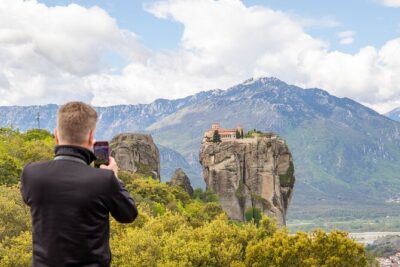
Meteora Monasteries, Caves & Coastal Stopovers with Lunch
Read our verdict →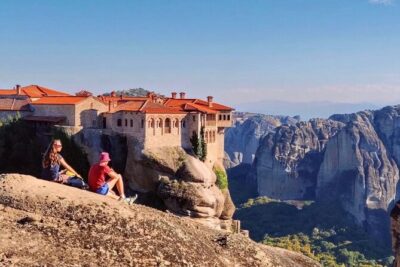
Meteora Monasteries & Caves DayTrip from Athens with Greek Lunch
Read our verdict →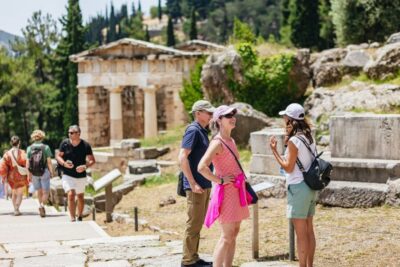
4-Day Classical Greece Tour: Epidaurus, Mycenae, Olympia, Delphi, Meteora
Read our verdict →
Meteora Monasteries, Hermit Caves Tour with Pickup
Read our verdict →Browse the lists this tour appears in