
Review · METEORA TOURS
4-Day Classical Greece Tour: Epidaurus, Mycenae, Olympia, Delphi, Meteora
The big draw here is the sheer sweep of the route. In four days, you move from the Corinth Canal and the theater at Epidaurus to Mycenae, Olympia, Delphi, and the monasteries of Meteora, with the Leonidas Monument at Thermopylae as a final historical stop. I love the range: this is not just a ruins tour, but a fast-moving lesson in Greek theater, myth, sport, religion, and warfare.
I also like that transport, hotels, breakfast, dinner, and major entrance fees are bundled together. Guides such as Joy, Maria, Xenia, and Foteini have made especially strong impressions with their warm, clear explanations. The tradeoff is real: long bus rides, limited free time, and hotel rooms that may feel more like solid 3-star accommodation than North American 4-star lodging.
Key points to know before booking
- Five major UNESCO World Heritage Sites: Epidaurus, Mycenae, Olympia, Delphi, and Meteora anchor the route.
- A true mainland Greece overview: You cover roughly 2,500 kilometers, with long but scenic stretches between ancient sites.
- Three hotel nights and meals included: Breakfast and dinner are provided, while lunches are paid separately.
- Group size can change: Some departures run with fewer than 20 people, while others may reach the stated maximum of 40.
- Comfortable shoes matter: Expect uneven stones, marble, open archaeological grounds, steps, heat, and very little shade at some sites.
- Hotel quality is the main uncertainty: Tourist-class and 4-star options are offered, but the meaning of 4-star can vary by property and local standards.
Why this four-day route works
Classical Greece is spread across the mainland, and arranging these places independently takes time, research, and a rental car. This tour solves the basic problem: you can sleep in three different towns, reach distant sites by air-conditioned coach, and have a guide explain what you are seeing.
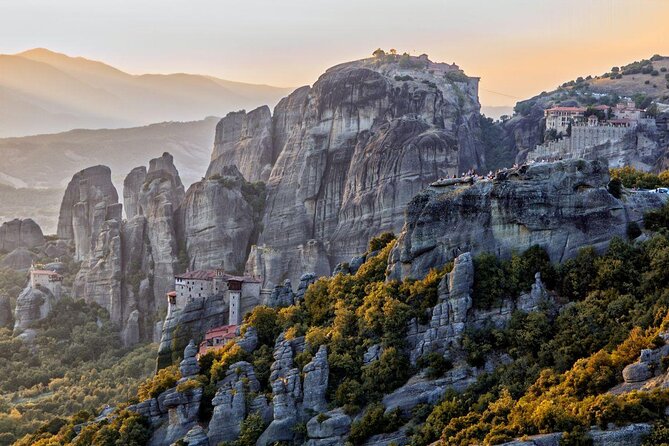
The route is also well chosen. Epidaurus introduces Greek theater. Mycenae brings Homeric legend and Bronze Age archaeology. Olympia connects ancient religion with athletic competition. Delphi shifts the focus to prophecy and Apollo. Meteora then adds a very different sight, monasteries perched on towering rock formations.
You will not have hours to wander at each stop. The pace is closer to a well-organized survey course than a relaxed archaeological holiday. If you want to see the main sites and understand how they fit together, the speed is useful. If you prefer to sit quietly at one ruin, take endless photographs, or explore every museum label, it may feel rushed.
The tour normally leaves the central meeting point on Leoforos Vasilisis Amalias at 8:30 a.m., with hotel pickups from about 7:30 to 8:15. Return to Athens on day four is planned for around 7 p.m., though traffic can change that. Port, airport, private apartment, and Airbnb pickup are not available.
A few more Meteora options worth putting side by side
- 4-Day Tour of Mycenae, Epidaurus, Olympia, Delphi & Meteora
★ 4.8 · 168 reviews - 4-Day Greece Highlights Tour: Epidaurus, Mycenae, Olympia, Delphi and Meteora
★ 5.0 · 79 reviews - 4day Spanish tour in Epidaurus Mycenae Olympia Delphi and Meteora
★ 4.5 · 27 reviews
Day one: Epidaurus, Mycenae, and the Corinth Canal
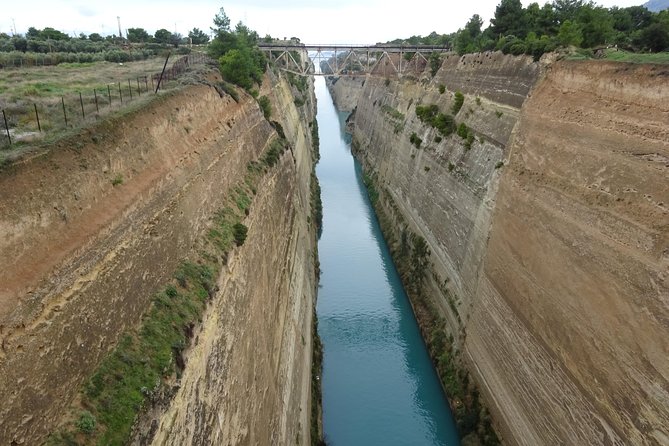
The first day packs several important places into one long outing. The Corinth Canal is a short but worthwhile opening stop. Cut through the narrow Isthmus of Corinth, it separates the Peloponnese from mainland Greece and links the Gulf of Corinth with the Saronic Gulf. You get about 20 minutes here, enough for photographs and a quick sense of the engineering involved.
At Epidaurus, the ancient theater is the star. Built into a natural slope, it is famous for its clean design and remarkable acoustics. Your visit lasts about an hour and includes admission. The setting helps explain why Greek theater was more than entertainment. Drama, music, civic life, and religious festivals were closely connected.
The archaeological museum follows, with about 15 minutes included in the schedule. That is not enough for a slow museum visit, but it gives you a chance to see architectural pieces and sculpture connected to the sanctuary. Bring a hat and water, since much of the site is open and sun exposure can be strong.
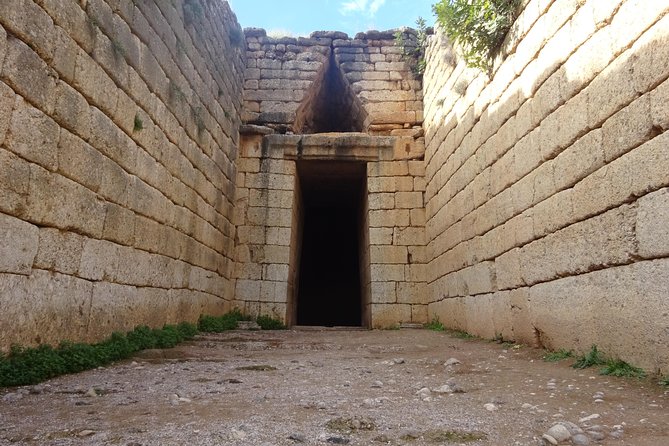
Mycenae is the day’s other major stop. This Bronze Age citadel is linked in Greek legend with Agamemnon, the king who led the Greek forces at Troy in Homer’s epic tradition. The archaeological remains include monumental walls, palace ruins, and the famous beehive-shaped tomb commonly associated with Agamemnon.
You have about 90 minutes at Mycenae, including the main archaeological area and its tombs. The ground is uneven, with stone paths and exposed sections that can be hot. Comfortable shoes are more useful here than stylish ones.
Dinner is included at the hotel, but lunch is not. The overnight stop is normally in Nafplio, though it can sometimes be in Olympia instead. That detail matters because it can change the feel of the first evening. Nafplio offers a more attractive town setting, while an Olympia overnight can make the next morning’s schedule easier.
Day two: Olympia and the journey west
Olympia is one of the most meaningful stops on the route. The sanctuary was the home of the ancient Olympic Games, held in honor of Zeus. This was not simply an athletic stadium. The site was a major religious center, with temples, training spaces, monuments, and facilities for competitors.
The archaeological visit lasts about 90 minutes. You can expect the guide to connect the remaining ruins with the ancient festival, including the athletic events and the religious purpose behind them. Much of Olympia is open ground, so heat and sun can affect your comfort, especially in summer.
The Archaeological Museum of Olympia receives about an hour. It holds major sculpture and architectural pieces from the site, giving you a clearer picture of buildings that now survive only in fragments. The museum also helps bridge the gap between flat stones in the ground and the grand sanctuary they once formed.
Lunch is at your own expense. The route then continues across a spectacular sea bridge before dinner at the hotel. That drive is part of the experience, but it also explains why this tour can feel tiring. You are crossing large parts of the mainland rather than hopping between nearby attractions.
Breakfast and dinner are included. Hotel dinners are generally buffet-style, with Greek dishes, vegetables, fruit, desserts, and familiar options. Some diners have found the meals repetitive or only average, while others have appreciated the choice and convenience after a full day on the road. I would treat the included dinner as practical fuel, not a reason to choose this trip.
Day three: Delphi and the sanctuary of Apollo
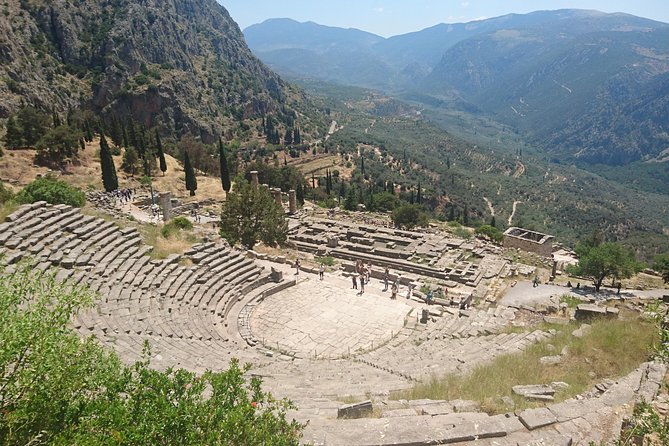
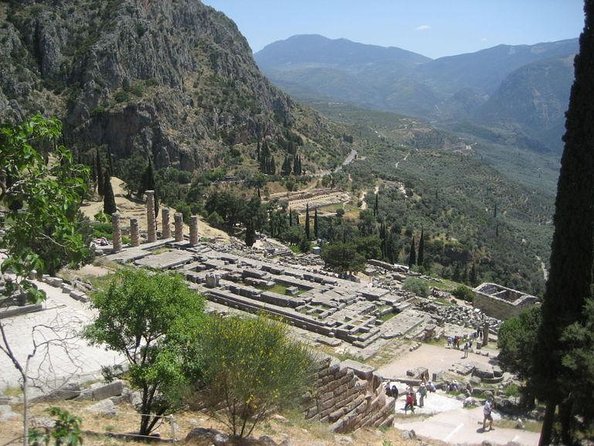
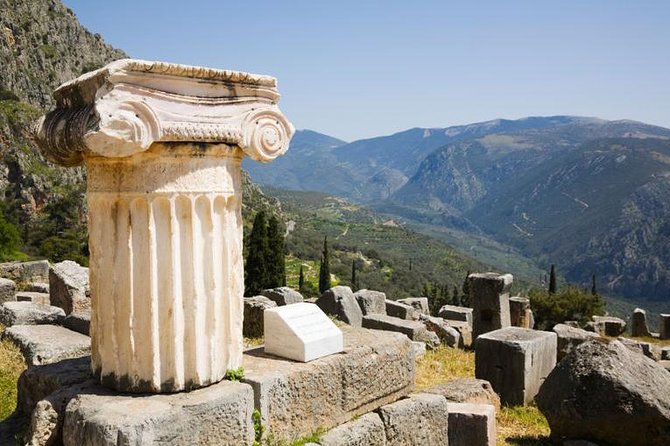
Delphi may be the most atmospheric archaeological site on the tour. Built on the slopes of Mount Parnassus, it was one of the ancient Greek world’s main religious centers. Apollo’s sanctuary drew people seeking guidance from the oracle, and its location gives the visit a powerful sense of place.
The main archaeological site receives about 90 minutes. The Temple of Apollo is the central focus, though the sanctuary includes several monuments spread along a mountainside path. You will walk over stone and uneven ground, with some uphill sections. The views are part of the reward, but this is not a stop for anyone expecting flat, easy pavement.
The Delphi Archaeological Museum follows for about an hour. Its most famous pieces include the bronze Charioteer of Delphi and the dancers sculpture. The museum is compact enough to visit in the allotted time, and it provides vital context for the sanctuary outside.
The Tholos of Athena Pronaia is a separate stop of about 30 minutes. Its circular design is one of the most recognizable images from Delphi, even though only part of the structure survives. Admission is included where required for the main sites, and the guide distributes the entrance tickets.
Lunch is not included. The schedule keeps moving, so you should not count on a long, leisurely meal. In return, you get a strong combination of site explanation, museum time, and mountain scenery in one day.
This is also the point where group arrangements may shift. Some departures have moved from a smaller coach to a larger bus for the Delphi to Meteora section. If you specifically want a small-group experience, ask about the operating arrangement for your date rather than assuming the entire four days will use the same vehicle and group.
Close by, and nothing like it:
- Thessaloniki: Full-Day Bus Trip to Meteora
★ 4.8 · 3,471 reviews - Athens: Meteora Monasteries Day Trip with Caves and Lunch
★ 4.7 · 2,964 reviews - Athens: Meteora Monasteries Day Tour with Lunch
★ 4.8 · 2,196 reviews - Athens: Meteora Tour with Local Guide and Greek Lunch
★ 4.8 · 1,561 reviews
Day four: Meteora and Thermopylae
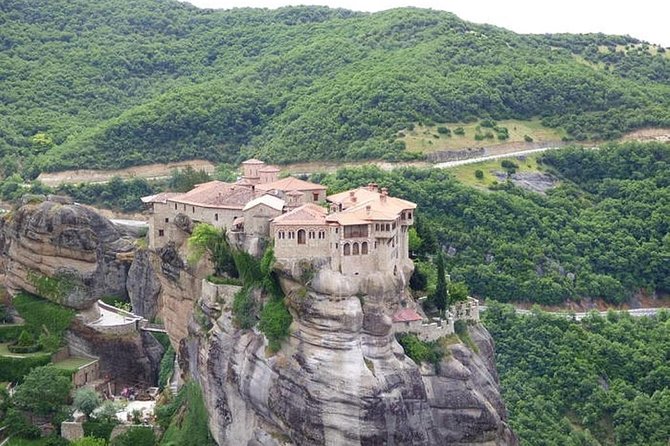
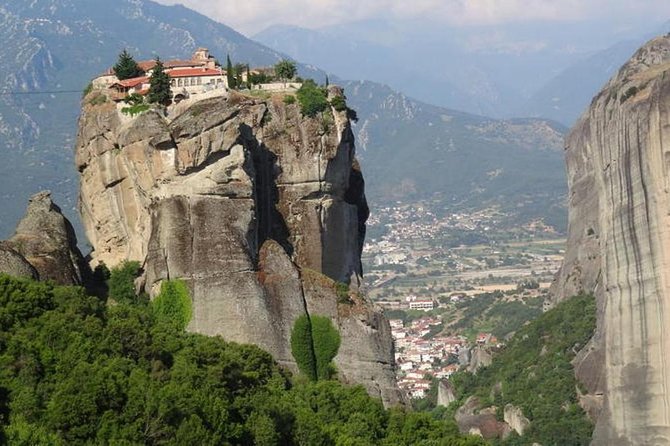
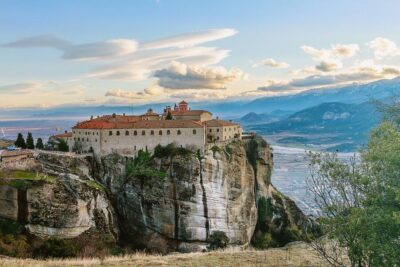
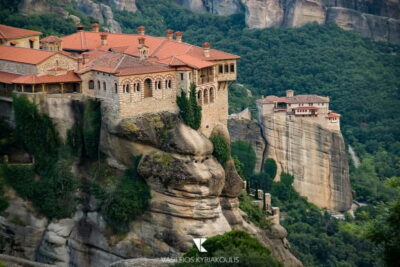
Meteora gives the tour its visual finale. The monasteries sit high on dramatic rock pillars near Kalambaka, creating one of mainland Greece’s most striking sights. Two monastery entrance fees are included, but the schedule allows only about an hour for the Meteora visit itself.
That short time is the main limitation. You will see the setting and enter the selected monasteries, but you will not have the freedom of a full-day Meteora visit. Religious sites also require modest clothing. Knees and shoulders must be covered for both men and women, and this rule applies at selected museums and places of worship as well.
The return route includes Thermopylae and the Leonidas Monument, with about 15 minutes for the stop. This is a brief memorial visit rather than a full archaeological exploration. The monument recalls the Spartan defense against the Persian army, a story that has become central to modern ideas about courage, sacrifice, and military discipline.
You then continue to Athens, arriving at the original meeting point at roughly 7 p.m. Traffic can make the return later. Do not schedule a tight evening flight, ferry, or special dinner unless you have plenty of extra time.
Hotels, meals, and what the price really buys
At $766.70 per person, the tour offers strong value if you want several major sites without managing trains, buses, hotels, tickets, and rural connections yourself. Three breakfasts, three dinners, transportation, a professional guide, and entry to Mycenae, Epidaurus, Olympia, Delphi, and two Meteora monasteries are included.
The price is less compelling if your main goal is upscale lodging. The tour offers tourist-class or 4-star hotels, often in the Amalia chain. These properties have been described as clean and comfortable, with pools at some locations, balconies or patios at some rooms, and good buffet breakfasts. They can also feel dated, and the air conditioning may not cool every room as well as you expect in hot weather.
The biggest point to clarify is the hotel category. A 4-star label here may not match the service, food, or room finish you associate with a 4-star hotel in North America. Some bookings have delivered comfortable rooms and excellent service. Others have found the furniture, beds, meals, or overall finish closer to 2 or 3 stars.
Room arrangements also deserve attention. Each booking covers one room: two adults in a double or twin room, three adults in a triple room, and larger parties split across rooms. A single supplement applies when needed, and a €10 environmental fee per room per night is paid at the hotel reception, for €30 per booking over three nights.
Lunch is always separate. Stops can be convenient and the food can be good, but prices may be higher at places used by multiple coaches. Budget for three lunches, drinks, and personal purchases.
Guides, coaches, and the daily pace
The guide can make or break a history-heavy trip, and this format depends heavily on having someone who can explain mythology, architecture, and archaeology in clear English. Guides named Joy, Maria, Xenia, Foteini, Emilia, Eleni, Dimitra, and Jordan have all been associated with especially strong experiences, with praise for their storytelling, organization, and ability to answer questions.
Drivers matter too. The route includes narrow roads, hairpin turns, mountain sections, and tight parking areas. Several guide and driver teams have been praised for safe driving and good coordination.
Group size varies. Some departures have used a small coach with nine, twelve, fourteen, or seventeen people. Other departures have included about 26 people, and the stated maximum is 40. A larger group can mean less personal attention and slower loading, while a small group makes site visits and questions easier.
French is available only on Mondays. During winter, tours operate in English only. On a bilingual Monday departure, explanations may take longer and feel less focused if you expected an English-only group. Check the language arrangement before booking.
Who should take this tour
I would choose this tour if you want a broad introduction to mainland Greece and prefer having the practical details handled for you. It suits history fans, archaeology enthusiasts, families with older children, and first-time visitors who want the essential ancient sites in one trip.
Children who already enjoy mythology may get a lot from the stories of Apollo, Agamemnon, Zeus, and Leonidas. Very young children may struggle with the long drives, repeated ruins, heat, and walking. Children aged 5 to 12 need a passport or ID to receive the discounted rate, or they may be charged the regular archaeological entrance fees.
You should also be comfortable with a moderate level of physical activity. Wear sturdy walking shoes, carry water, bring a hat, and pack a light cover-up for monasteries and other religious sites. An umbrella can provide useful shade at exposed ruins.
I would not pick this trip if you want boutique hotels, quiet meals, long museum visits, or a slow pace. I would also think twice if you dislike coach travel. The distance covered is impressive, but several days run from morning until early evening.
Should you book the Classical Greece tour?
Book it if your priority is seeing the main mainland sites efficiently. The combination of five major UNESCO locations, included transport, entrance fees, hotel nights, breakfast, and dinner gives you a lot for the money. The best part is the route itself, supported by guides who can turn scattered stones and broken columns into understandable stories.
Go in with realistic expectations about the hotels and pace. Think clean, functional, sometimes dated accommodation rather than luxury. Expect long drives, paid lunches, busy schedules, and limited time at each stop.
If those tradeoffs sound fair, this is a practical and rewarding way to meet Classical Greece. If you want more time at Delphi or Meteora, or you care deeply about hotel quality, consider a slower private itinerary instead.
FAQ
How long is the tour?
The experience lasts approximately four days. Departure from Athens is at 8:30 a.m., with pickup from selected hotels between 7:30 and 8:15 a.m. Return on day four is planned for about 7 p.m., depending on traffic.
Which sites are included?
The route includes the Corinth Canal, Epidaurus, Mycenae, Olympia, Delphi, Meteora, and the Leonidas Monument at Thermopylae. Main entrance tickets are included for Mycenae, Epidaurus, Olympia, Delphi, and two Meteora monasteries.
Are hotels and meals included?
Three hotel nights, three breakfasts, and three dinners are included. Lunches are not included and are paid separately.
Where does the tour start and end?
The main departure point is Leoforos Vasilisis Amalias 10 in Athens. The tour ends back at the same meeting point, with selected hotel pickup and drop-off available.
Is the tour offered in languages other than English?
French is available only on Mondays. During winter, the tour operates in English only.
How large is the group?
The maximum group size is 40 people, but some departures use smaller groups and minibuses. The vehicle and group arrangement can change during the route, especially between Delphi and Meteora.
What clothing should I pack?
You need clothing that covers your knees and shoulders for selected museums and places of worship, including the Meteora monasteries. Comfortable walking shoes, a hat, and water are also important because several sites have uneven ground and limited shade.
New on the Meteora shelf
- Athens: Meteora 2-Day Tour Sunset & Morning Small Group + Hotel★ 5.0 · 188 reviews
- 2-Day Delphi and Meteora Tour from Athens★ 4.5 · 262 reviews
- Thermopylae, Meteora and Delphi Private Full Day Tour★ 5.0 · 216 reviews
- Athens: 3 days 2 nights Meteora with small size tours & hotel★ 5.0 · 63 reviews
- Private Full-Day Trip to Meteora by Train From Athens – Local Agency★ 5.0 · 28 reviews
- Delphi and Meteora, 2-Days Private Tour★ 5.0 · 30 reviews
- Meteora Full Day Private Tour from Athens including Lunch★ 5.0 · 124 reviews
- Delphi and Meteora Private Day Trip from Athens including Dinner★ 5.0 · 200 reviews
Meteora Tours, compared.
Meteora Monasteries Day Trip with Caves and Lunch
Read our verdict →
Meteora Tour with Local Guide and Greek Lunch
Read our verdict →
Meteora Monasteries, Caves & Coastal Stopovers with Lunch
Read our verdict →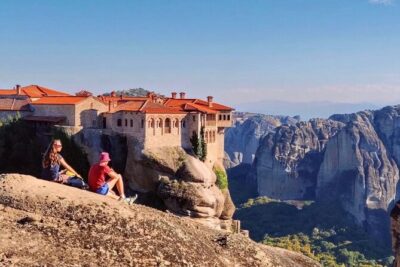
Meteora Monasteries & Caves DayTrip from Athens with Greek Lunch
Read our verdict →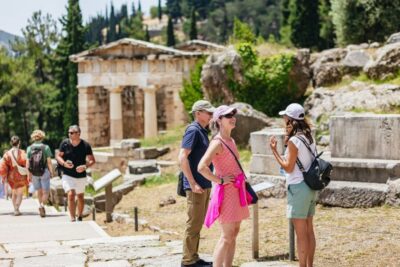

Meteora Monasteries, Hermit Caves Tour with Pickup
Read our verdict →
Meteora Sunset with Monastery & Hermit Caves Tour in Small Group
Read our verdict →Browse the lists this tour appears in