
Review · METEORA TOURS
2 Day Private Tour Of Delphi, Thermopylae & Meteora From Athens
The big appeal here is the sheer amount of Greece packed into two long days. You go from Apollo’s oracle at Delphi to the battlefield of Thermopylae, then on to Meteora’s monasteries perched above Kalambaka. It is a road trip through myth, war, religion, and some remarkable mountain views.
I like the private vehicle and door-to-door pickup, especially since the route involves many hours on the road. I also like the onboard Wi-Fi and fast-track entry to Delphi’s archaeological site and museum. The catch is simple: this is a busy schedule, and the $767.70 per-person price does not include your hotel, food, drinks, tips, or a licensed guide inside the sites.
Key points to know before booking
- Three major Greek sights in two days: Delphi, Thermopylae, and Meteora make this an efficient choice for a short visit.
- Your own private group: You travel with your party rather than joining a large coach.
- Yannis is one named guide: His storytelling and historical explanations earned especially strong praise.
- Delphi admission is included: Fast-track entry covers the archaeological site and museum.
- Meteora needs careful planning: You may visit one to four monasteries on the first day and continue with the remaining sites on day two.
- The return drive takes about five hours: Expect a full second day before arriving back in Athens.
Why this two-day route works
This is not a gentle sightseeing outing. It is a focused circuit for people who want to see important places beyond Athens without arranging several trains, taxis, hotel bookings, and transfers on their own.
The private format matters. Your driver picks you up at an Athens hotel, Airbnb, apartment, port, or, for an added cost, the airport. You can travel with your own group, ask questions as you go, and avoid the fixed rhythm of a large bus. The vehicle includes air conditioning, bottled water, and Wi-Fi, which helps during the long stretches between sites.
The route also has a good historical shape. Delphi represents the sacred and political world of ancient Greece. Thermopylae brings you to the famous clash between Leonidas and the Persian army. Meteora then shifts the story into the medieval Orthodox world, with monasteries built high on dramatic rock formations.
The price is high for a two-day tour, but it covers private transport, a professional driver, pickup and return service, and Delphi admission. You still need to add one night of accommodation, meals, and any extra guide or entrance costs. The value is strongest if you place a high price on comfort and saved planning time.
A few more Meteora options worth putting side by side
- From Athens: Delphi and Meteora 2-Day Guided Tour
★ 4.5 · 825 reviews - 2-Day Tour to Delphi & Meteora with Guide and Tickets From Athens
★ 4.0 · 692 reviews - From Athens: Delphi and Meteora 2-Day Tour with Hotel
★ 4.4 · 392 reviews
Delphi, where ancient Greeks sought answers
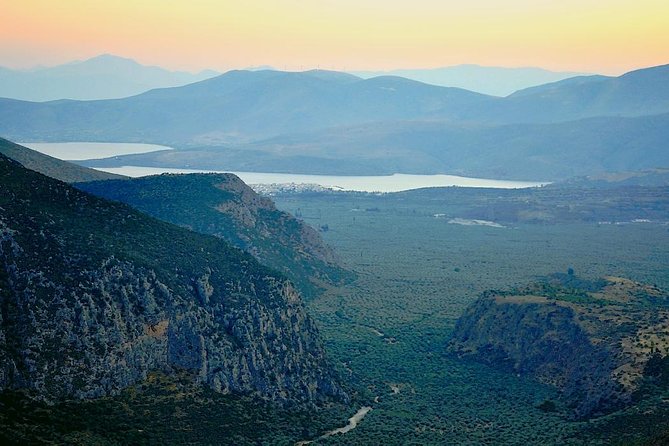
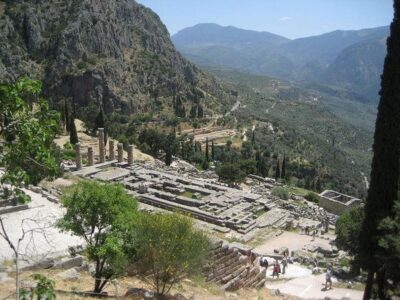
Delphi is the first major stop, and you should allow plenty of time here. The sanctuary grew around the oracle Pythia, whose advice was sought by powerful people across the ancient Greek world. Ancient Greeks viewed Delphi as the center of the world, symbolized by the Omphalos stone.
The archaeological site climbs along the slope of Mount Parnassus. You can see the Temple of Apollo, the ancient theater, the stadium, the Athenian Treasury, and the Sanctuary of Athena Pronaia. Each area adds something different, from religious ritual to athletic competition and civic pride.
I particularly like the way Delphi combines ruins with a larger story. This was not simply a temple complex. It was also a place for the Pythian Games, cultural events, political messages, and offerings from Greek city-states eager to display their wealth.
The fast-track tickets for the Delphi site and museum are included. A licensed guide inside the site and museum is not included, but you can request one at an additional cost. Your driver provides historical information, but a licensed guide may be worthwhile if you want a detailed explanation of the art, architecture, and religious customs.
The Delphi Museum’s small treasures
Do not rush through the museum. It holds some of the most important objects found during excavations at Delphi, and it gives shape to the broken stone outside.
Look for the Charioteer of Delphi, part of a larger group that once included a four-horse chariot and another male figure. Its calm expression and careful bronze work make it one of the museum’s most memorable pieces.
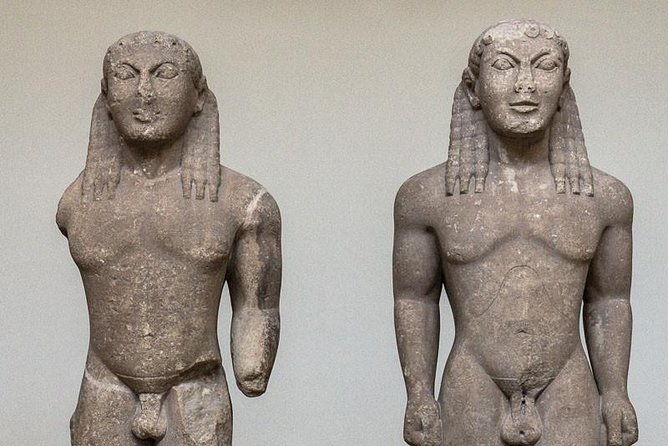
The Naxian Sphinx dates to about 560 BC. Its lion’s body, wings, and woman’s head show how ancient artists could make a creature both elegant and unsettling. The statues of Kleobis and Biton, two brothers from Argos, are early examples of the kouros type and date to the end of the seventh century BC.
You will also see the Omphalos, the statue of Antinoos, the frieze from the Treasury of the Sifnians, and reliefs from the Athenian Treasury. These displays are useful because they let you see details that are hard to understand when you are looking at weathered ruins outdoors.
The plan includes lunch in the Delphi area, with a view toward Itea and Amfissa. Food and drinks are at your own expense. The village of Delphi has tavernas, hotels, guesthouses, and cafes, so you have a choice of setting, though the schedule does not promise a specific restaurant.
Thermopylae and the story of Leonidas
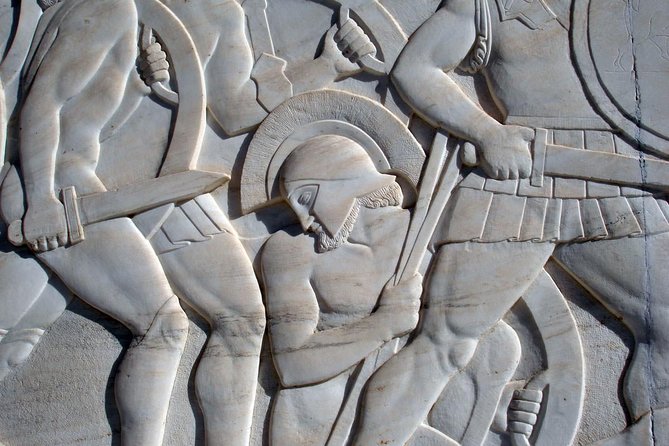
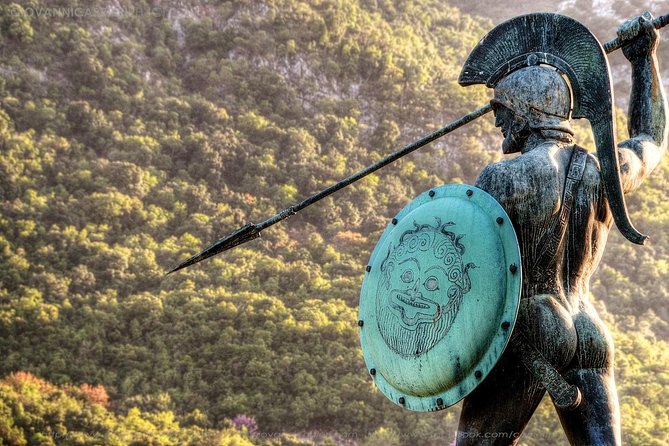
After Delphi, the route continues to Thermopylae. In antiquity, this was a narrow coastal passage. Today, the physical setting has changed, but the name remains tied to the 480 BC battle between the Greek alliance led by King Leonidas of Sparta and the Persian army of Xerxes.
The stop includes the monument to Leonidas, erected in 1955. The bronze figure shows the Spartan king with spear and shield. It is a compact visit, but the monument gives you a clear focal point for the story.
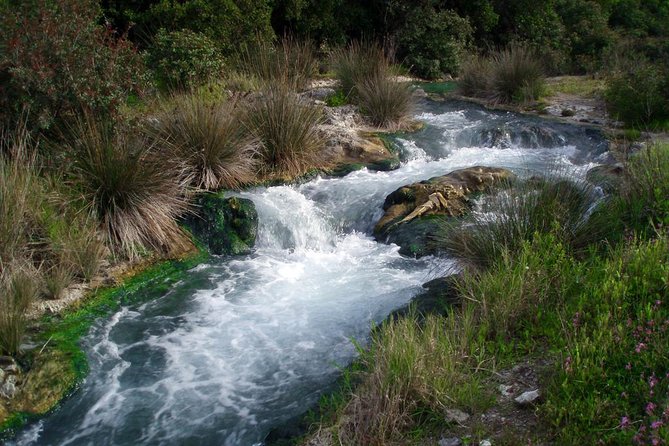
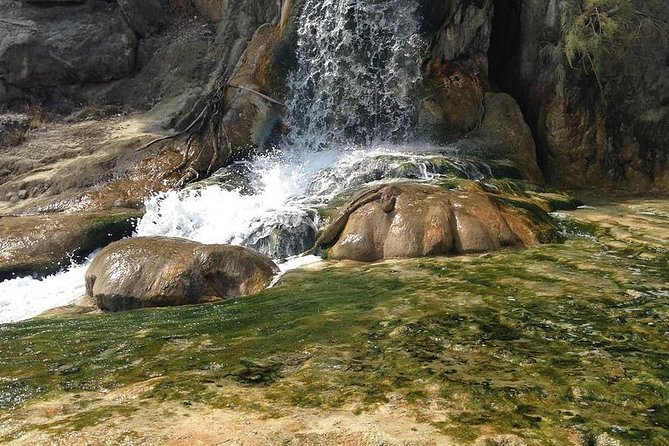
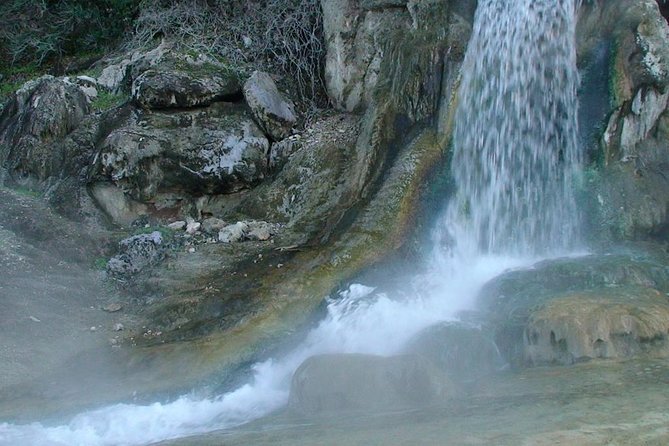
The Thermopylae museum is dedicated to the battle and the way it influenced Greek history and the wider Western world. You also have the option to see the hot springs. Thermopylae takes its name from the hot gates, linked to the sulphur springs and, in Greek mythology, entrances to the underworld.
The itinerary allows about 45 minutes here. That is enough for a purposeful stop, but not for a slow spa visit and a long museum session. If the springs are especially important to you, ask the driver how much time can be given to them without cutting into Delphi or Meteora.
Close by, and nothing like it:
- Thessaloniki: Full-Day Bus Trip to Meteora
★ 4.8 · 3,471 reviews - Athens: Meteora Monasteries Day Trip with Caves and Lunch
★ 4.7 · 2,964 reviews - Athens: Meteora Monasteries Day Tour with Lunch
★ 4.8 · 2,196 reviews - Athens: Meteora Tour with Local Guide and Greek Lunch
★ 4.8 · 1,561 reviews
Arrival at Meteora after a long road day
The drive to Meteora comes after Delphi and Thermopylae, so day one is demanding. You check into your chosen hotel in Kalambaka or Kastraki, then head out to see the monasteries and the sunset.
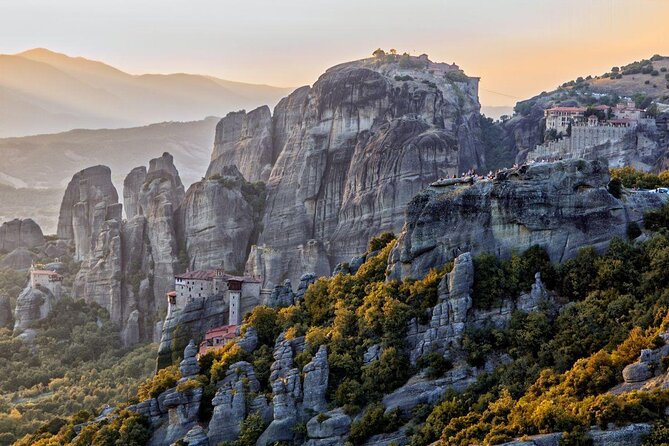
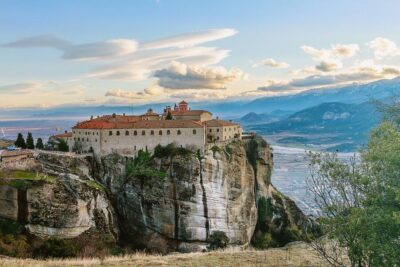
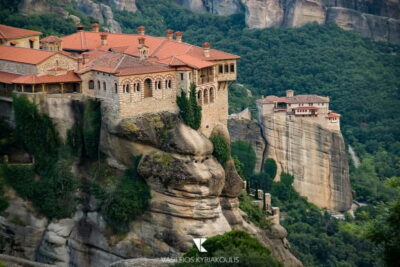
Meteora is one of Greece’s most unusual sights. Orthodox monasteries sit on tall rock pillars above the plain, giving the area its familiar nickname, the hanging monasteries. The setting is striking, but the religious purpose matters just as much. These monasteries were built as places of prayer and withdrawal, not simply as scenic lookout points.
You may visit one to four monasteries on the first afternoon. The exact selection and order can vary, and the full group includes St Nicolaos, Rousanou, Varlaam, the Grand Monastery of Metamorphosis Sotiros, St Trinity, and St Stefanos.
The sunset visit is one of the strongest parts of the schedule. Late light changes the color of the rock and gives you a calmer moment after the road miles. You also have time in Kalambaka or Kastraki for a traditional taverna meal and a walk among village shops.
Handmade souvenirs are available in the villages. This is a useful part of the trip because the day is not only a sequence of monuments and photo stops. You get a little time to sit down, eat, and see the local towns.
Choosing between Kalambaka and Kastraki
The overnight stay is not included, and the tour provider can suggest and arrange a hotel on request. You can stay in Kalambaka or Kastraki, both of which serve as bases for Meteora.
The information provided does not name particular hotels or set a hotel category, so check the accommodation details before booking. This matters because the tour price is listed per person, but your final cost depends on the room you choose and how many people share it.
Kastraki is the smaller village option mentioned in the plan, while Kalambaka is the town used for meals, coffee, and the return route. Your driver can help with the practical order of the evening, but confirm exactly where you will sleep before you pay for the tour.
A full second day among the monasteries
Day two begins with breakfast at Meteora, followed by visits to the remaining monasteries. This is the right way to handle the area. Trying to see everything in one rushed afternoon would leave little time for the religious buildings, views, village meal, or sunset.
The six monasteries named for the route are:
- St Nicolaos
- Rousanou
- Varlaam
- Metamorphosis Sotiros, also called the Grand Monastery
- St Trinity
- St Stefanos
The plan says you may visit the remaining monasteries after seeing one to four on day one. It does not promise that all six will be open or visited in a single fixed order, so ask for the day’s plan. Opening arrangements can affect the schedule.
Meteora is an active religious setting. Wear clothing that covers your shoulders and knees, and avoid shorts, short skirts, or revealing clothes when visiting temples, monasteries, and other official or religious buildings. This is not just a packing suggestion. Proper clothing helps you enter the sites without an avoidable problem.
After the monasteries, lunch and coffee are planned in Kalambaka or Kastraki. Again, you pay for your own food and drinks. Then comes the roughly five-hour drive back to Athens, with return to your hotel, Airbnb, or apartment.
The driver, the vehicle, and the pace
The driver is central to the experience. The tour describes professional drivers with strong knowledge of ancient and modern Greek history, but a driver is not automatically the same as a licensed archaeological guide. If you want formal commentary inside Delphi’s museum or the monasteries, request the additional guide service.
One named guide is Yannis, who is described as a strong storyteller with a talent for bringing the history to life. You are not guaranteed that Yannis will lead your departure, so ask when booking if having him is important to you.
The vehicle is private and first class, with air conditioning, bottled water, and Wi-Fi. Those details may sound minor until you face several hours between Athens, Delphi, Thermopylae, Meteora, and Athens again. Wi-Fi can help you send messages, check plans, or keep children occupied during the longer drives.
Pickup is straightforward. At a hotel, meet the driver in the lobby. At an Airbnb, the driver contacts you on arrival so you can meet at the building entrance. For port or airport pickup, the driver meets you at the gate with an Ancient Greece Tours sign. Airport pickup and drop-off cost extra, based on the vehicle type.
Who should book this road trip
I would choose this tour if you have only two days for northern and central Greece and want private transport rather than public connections. It also suits families or small groups that can share the cost and prefer a vehicle arranged from start to finish.
It works well for people who enjoy ancient sites but also want a second theme. Delphi and Thermopylae provide ancient Greek history, while Meteora adds Orthodox monasteries, village life, and dramatic rock formations.
I would hesitate if you dislike early starts, long drives, or a packed schedule. The route covers a lot of ground, and the five-hour return to Athens on day two is not a minor detail. I would also calculate the full price carefully by adding accommodation, meals, tips, and any licensed guide service.
You should be able to participate if you are comfortable with the physical demands of the archaeological sites and monasteries. The tour states that most people can participate, but it does not provide a detailed mobility assessment for every stop.
Should you book the Delphi, Thermopylae, and Meteora tour?
Book it if your priority is efficiency, privacy, and seeing three major destinations without managing the transport yourself. The private pickup, Wi-Fi, Delphi admission, and driver who can explain the route make the high price easier to justify for a small group.
Skip it if you want a slow visit, a low-cost trip, or complete control over how long you spend at each monastery. This is a tightly packed road adventure, not a leisurely village holiday.
For the best experience, confirm your hotel, ask which Meteora monasteries are planned each day, check the extra cost for a licensed guide, and budget separately for meals and admission charges not listed as included. If those details suit you, this two-day journey gives you an unusually large slice of Greece from one Athens pickup.
FAQ
How long is the tour?
The tour lasts approximately two days. Day one includes Delphi, Thermopylae, and arrival at Meteora. Day two includes more monasteries and the return drive to Athens.
Where can pickup and drop-off take place?
Pickup and return are available at an Athens hotel, Airbnb, apartment, port, or rental location. Airport pickup and drop-off are available for an additional cost based on the vehicle type.
Is the tour private?
Yes. Only your own group participates in the private activity.
Is accommodation included?
No. Overnight accommodation in Kalambaka or Kastraki is not included. The provider can suggest and arrange a hotel upon request.
Are meals included?
No. Food and drinks are not included. Lunch is planned around Delphi, and meals and coffee are planned in the Meteora area.
Are Delphi entrance tickets included?
Yes. Fast-track entry tickets for the Delphi archaeological site and museum are included.
Is a licensed guide included inside the sites?
No. A licensed guide to accompany you into the archaeological site and museum can be requested for an additional cost.
How many Meteora monasteries will be visited?
The plan allows visits to one to four monasteries on the first day, followed by the remaining monasteries on the second day. The named monasteries are St Nicolaos, Rousanou, Varlaam, Metamorphosis Sotiros, St Trinity, and St Stefanos.
What should I wear at the monasteries?
Wear clothing that is not sleeveless and does not include shorts, short skirts, or revealing clothing when visiting religious sites and official buildings.
Can I cancel for a full refund?
Yes, if you cancel at least 24 hours before the experience start time. Cancellations made less than 24 hours before the start time are not refunded, and changes made within that period are not accepted.
New on the Meteora shelf
- Athens: Meteora 2-Day Tour Sunset & Morning Small Group + Hotel★ 5.0 · 188 reviews
- 2-Day Delphi and Meteora Tour from Athens★ 4.5 · 262 reviews
- Thermopylae, Meteora and Delphi Private Full Day Tour★ 5.0 · 216 reviews
- Athens: 3 days 2 nights Meteora with small size tours & hotel★ 5.0 · 63 reviews
- Private Full-Day Trip to Meteora by Train From Athens – Local Agency★ 5.0 · 28 reviews
- Delphi and Meteora, 2-Days Private Tour★ 5.0 · 30 reviews
- Meteora Full Day Private Tour from Athens including Lunch★ 5.0 · 124 reviews
- Delphi and Meteora Private Day Trip from Athens including Dinner★ 5.0 · 200 reviews
Meteora Tours, compared.
Meteora Monasteries Day Trip with Caves and Lunch
Read our verdict →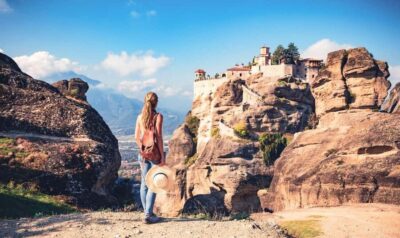
Meteora Tour with Local Guide and Greek Lunch
Read our verdict →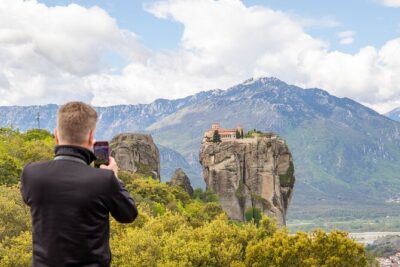
Meteora Monasteries, Caves & Coastal Stopovers with Lunch
Read our verdict →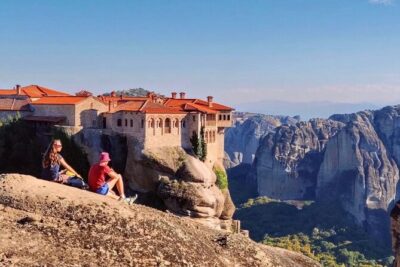
Meteora Monasteries & Caves DayTrip from Athens with Greek Lunch
Read our verdict →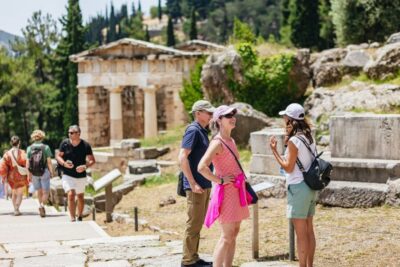
4-Day Classical Greece Tour: Epidaurus, Mycenae, Olympia, Delphi, Meteora
Read our verdict →
Meteora Monasteries, Hermit Caves Tour with Pickup
Read our verdict →Browse the lists this tour appears in